5 Steps to Perfect, Crispy Lemon and Parsley Chicken Milanese
Origin and History of Lemon and Parsley Chicken Milanese
The story of lemon and parsley chicken milanese is a fascinating tale of migration, culinary adaptation, and love for intense flavors. It all begins in Milan, Italy, where the famous Cotoletta alla Milanese was born—a breaded and fried veal cutlet dating back to the 12th century. Some historians place its first documented mention at a banquet in 1134. However, other scholars point out that similar breading techniques already existed in medieval Arab cuisine, particularly in Al-Andalus, making this dish a true point of cultural confluence.
At the end of the 19th and beginning of the 20th century, millions of Italians emigrated to the Río de la Plata region, mainly Argentina and Uruguay. With them came the tradition of breading meat in breadcrumbs and frying it until golden and irresistible. In Buenos Aires, the technique became so popular so quickly that the milanesa became the most emblematic dish of River Plate cuisine, even surpassing grilled meat in everyday consumption.
The chicken variation emerged as a natural response to household economics and the search for lighter options. Chicken breast, leaner than beef and more affordable, helped democratize the dish and bring it to all tables. Thus the chicken milanesa was born, which over time crossed the borders of the Río de la Plata and reached Mexico, Chile, Paraguay, and much of Latin America.
The addition of lemon and parsley represents a brilliant natural evolution of the original dish. The citrus, known in different regions as lemon, yellow lemon, or limão siciliano, provides acidity that balances the grease of frying and awakens the palate. Fresh parsley adds an aromatic chlorophyll touch that refreshes the palate and gives an elegant visual note to the breading. Together, lemon and parsley transform an everyday classic into a memorable gastronomic experience.
Today, lemon and parsley chicken milanesas are the stars of Sunday lunches, family dinners, and gatherings with friends throughout Latin America and Spain. Every cook personalizes them with their own special touch, from the type of breadcrumb to the oil chosen for frying, but the heart of the recipe remains intact: tender meat, crispy crust, and that incomparable aroma of citrus and fresh herbs.
What is lemon and parsley chicken milanese and why should you make it at home?
Lemon and parsley chicken milanese is, without a doubt, one of the most beloved and comforting dishes in Latin American cuisine. It consists of thin chicken breast fillets, gently pounded, covered with a crust of breadcrumbs flavored with lemon zest, fresh parsley, and garlic, then fried to that irresistible golden brown that crackles at first bite. Despite its apparent simplicity, this dish embodies a refined technique that, once mastered, guarantees spectacular results every time.
What sets lemon and parsley chicken milanese apart from more traditional versions is precisely that perfect balance between the richness of the fried breading and the freshness of the citrus. The lemon, whether as zest added to the beaten egg or a few drops of juice, provides an elegant acidity that cuts through the grease and awakens the palate. The parsley, for its part, introduces an herby note reminiscent of the most authentic Mediterranean and Latin American cuisines.
Making this dish at home has advantages that no fast-food establishment can offer. First, you control the quality of every ingredient: you can choose free-range chicken breasts, artisanal breadcrumbs, or even Japanese panko for a lighter, airier texture. Second, you adjust the seasonings to your taste: more garlic if you love bold flavors, more parsley if you prefer a more pronounced vegetal note, or extra lemon zest if you want that citrus touch that transforms everything.
From a nutritional standpoint, lemon and parsley chicken milanese is an excellent source of high-quality protein. Each serving provides approximately 32 g of protein, making it an ideal dish for those with an active lifestyle or looking to maintain muscle mass. Lemons contribute vitamin C and antioxidants, while parsley is one of the herbs with the highest content of non-heme iron and vitamin K among everyday ingredients.
Ingredients for Lemon and Parsley Chicken Milanese
Makes 4 servings.
Main ingredients
- 2 large chicken breasts (supremes or chicken steaks)
- 300 g breadcrumbs (or panko for extra crispiness)
- 3 eggs
- 100 g all-purpose flour
- Zest of 2 yellow lemons
Seasonings & optional
- 1 bunch fresh parsley, finely chopped (preferably flat-leaf)
- 2 fresh garlic cloves, minced
- High-oleic sunflower oil for frying (or corn oil)
- Salt to taste
- Freshly ground black pepper to taste
- A few drops of yellow lemon juice (optional, for the egg wash)
How to make lemon and parsley chicken milanese step by step
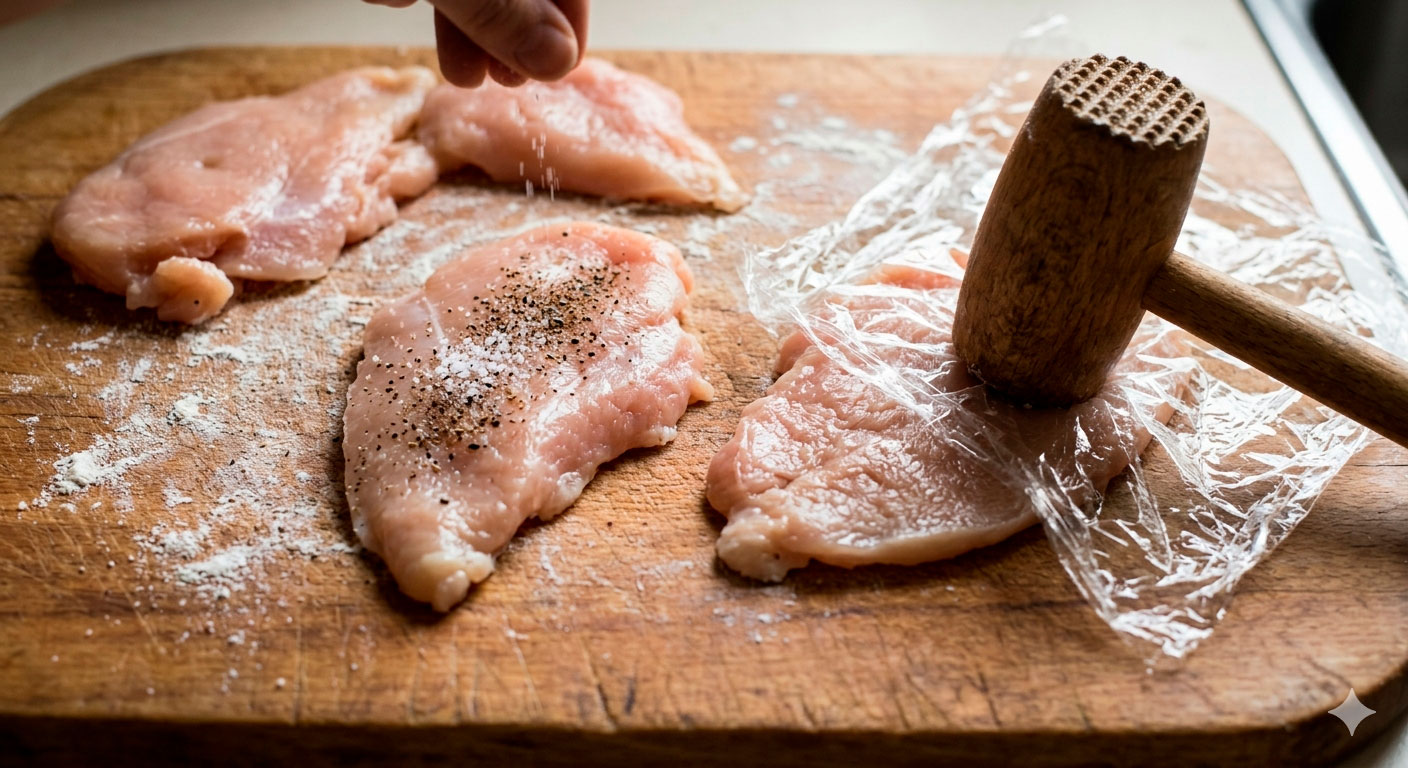
- Prepare the chicken fillets: Cut each chicken breast into uniform fillets about 1 cm thick. Place them between two sheets of plastic wrap and gently pound with a meat mallet or the bottom of a pan to even out the thickness. This step is crucial: uniform thickness ensures even cooking and prevents the thinner parts from burning before the inside is ready. Once flattened, season generously with salt and pepper on both sides. Let rest for 5 minutes at room temperature so the flavors penetrate the meat.
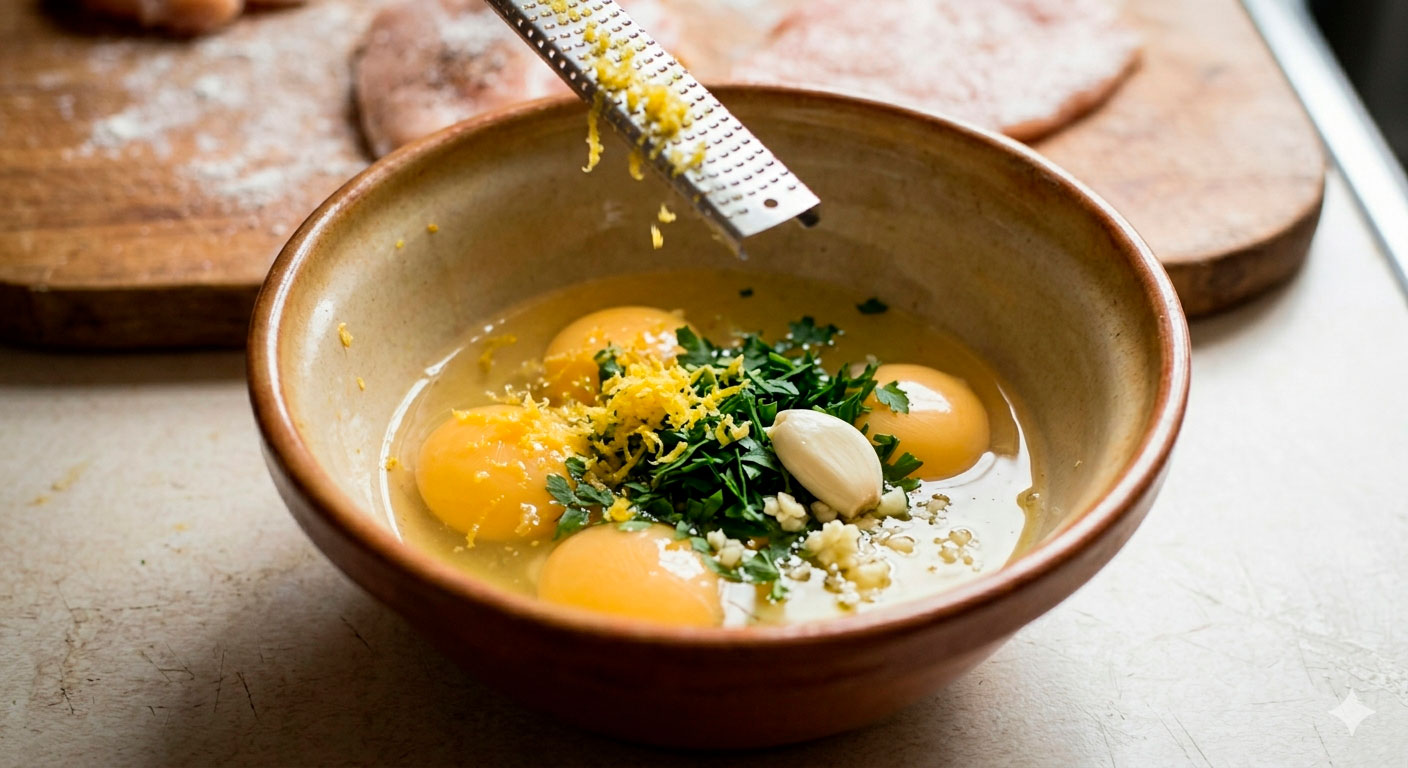
- Make the aromatic egg wash: In a large, deep bowl, crack the 3 eggs and beat them with a fork until the yolks break. Add the zest of the 2 yellow lemons, the finely chopped fresh parsley, and the 2 minced garlic cloves. If you want a more intense citrus flavor, also add a few drops of lemon juice at this point; this helps break down the egg white density and better distributes the aroma. Mix everything and let the preparation rest for 5 minutes so the essential oils from the lemon and parsley fully infuse the egg.
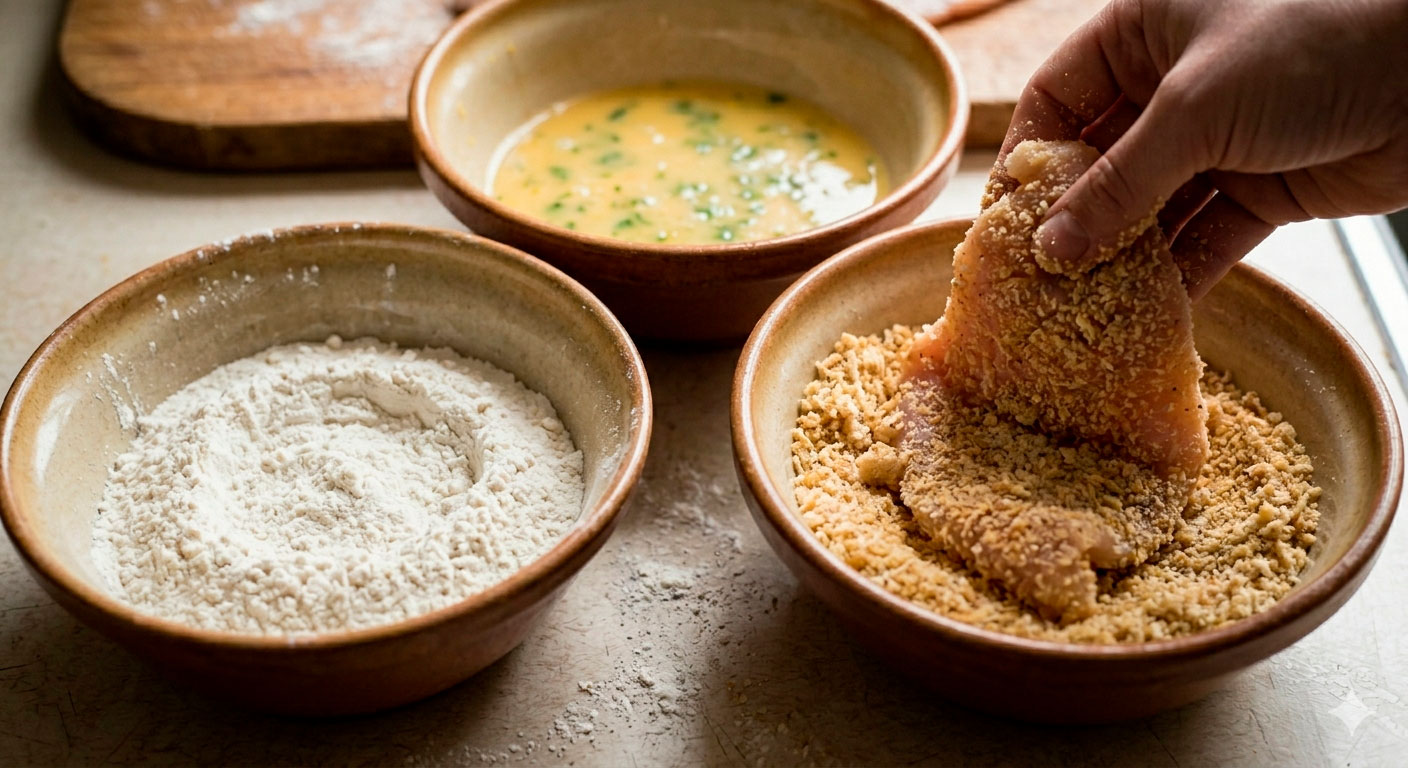
- Set up the breading station: Prepare three shallow containers in a line on your work surface. In the first, place the flour; in the second, the aromatic egg mixture; and in the third, the breadcrumbs. Dip each fillet first in the flour, shaking off excess (the flour acts as glue for the egg). Then submerge it in the lemon and parsley egg wash, making sure to cover the entire surface. Finally, pass it through the breadcrumbs and press firmly with the palm of your hand on both sides to ensure a compact crust that won’t come off when frying. For a thicker, crunchier breading, you can repeat the egg and breadcrumb step a second time.
- Chill before frying: Place the breaded milanesas on a tray and refrigerate for at least 30 minutes. This step, which many cooks skip, is the most valuable professional secret: the cold contracts the breading and adheres it to the meat much more effectively, preventing the crust from separating during cooking. If you’re in a hurry, even 15 minutes helps.
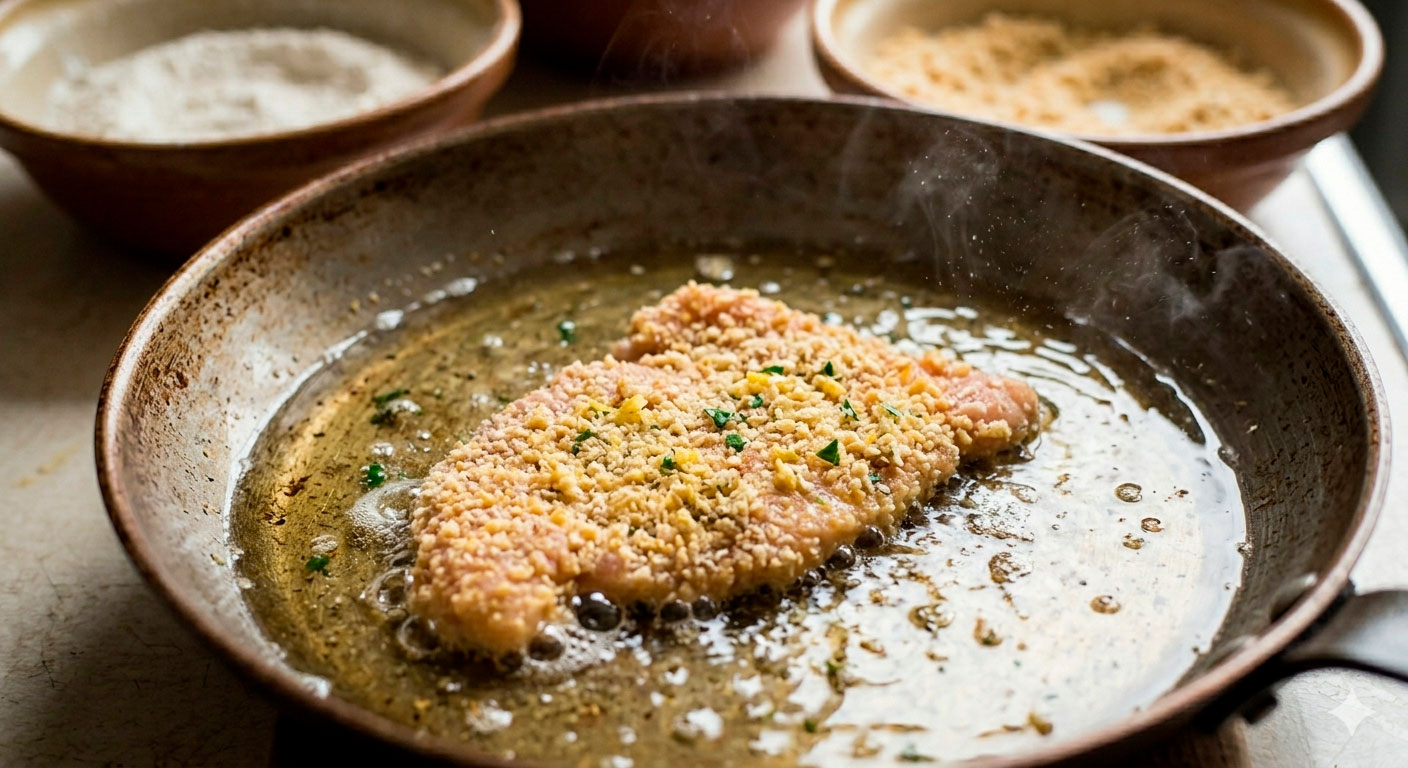
- Fry until golden and rest: Heat plenty of high-oleic sunflower oil in a wide pan over medium-high heat until it reaches approximately 175°C (350°F). Fry the lemon and parsley chicken milanesas for 3 to 4 minutes per side without moving them, until the crust is evenly golden brown. Do not overcrowd the pan: fry 1 or 2 milanesas at a time to maintain a stable oil temperature. Once golden, remove them and place on paper towels. Let rest for 1 minute before serving so the internal juices redistribute and the chicken stays juicy inside.
Nutrition facts for lemon and parsley chicken milanese
Approximate values per serving (4 servings total).
| Nutrient | Per serving | % Daily value* |
|---|---|---|
| Calories | 385 kcal | — |
| Protein | 32 g | 64% |
| Carbohydrates | 28 g | 10% |
| Total fat | 14 g | 18% |
| Dietary fiber | 2 g | 7% |
| Vitamin C | 15% RDI | 15% |
| Sodium | ~420 mg | 18% |
*Percentages based on a 2,000 calorie daily diet.
Irresistible tips for making perfect lemon and parsley chicken milanese
The first great secret to irresistible lemon and parsley chicken milanesa is the thickness of the fillet. Many cooks overlook this detail, but a fillet that is too thick will take longer to cook, and the crust may burn before the inside reaches the proper temperature. The ideal thickness is between 8 mm and 1 cm. To achieve it evenly, pound the fillet with a meat mallet or use the flat bottom of a glass bottle. Do not use knives to flatten; that compresses the muscle fibers and results in a less juicy texture.
The second secret is the oil temperature. Frying at the wrong temperature is the most common and consequential mistake. If the oil is cold, the chicken milanesas absorb too much grease and the crust becomes soggy. If it is too hot, the breading burns on the outside while the chicken remains raw inside. The ideal temperature is between 170°C and 180°C (340-350°F). If you don’t have a kitchen thermometer, drop in a breadcrumb: it should sizzle immediately and brown in about 15 seconds. Maintain this temperature throughout frying by adding the milanesas one or two at a time.
The chilling trick is one of the most valuable tips you can apply. After breading the lemon and parsley chicken milanesas, place them on a tray and refrigerate for 30 minutes before frying. The cold slightly hardens the breadcrumb crust and makes it adhere to the meat much more effectively. The result is a breading that never comes off during cooking and maintains all its crispy texture down to the last bite. If you prepare the milanesas the day before and refrigerate them overnight already breaded, the improvement in texture is truly noticeable.
Variations and substitutions for lemon and parsley chicken milanese
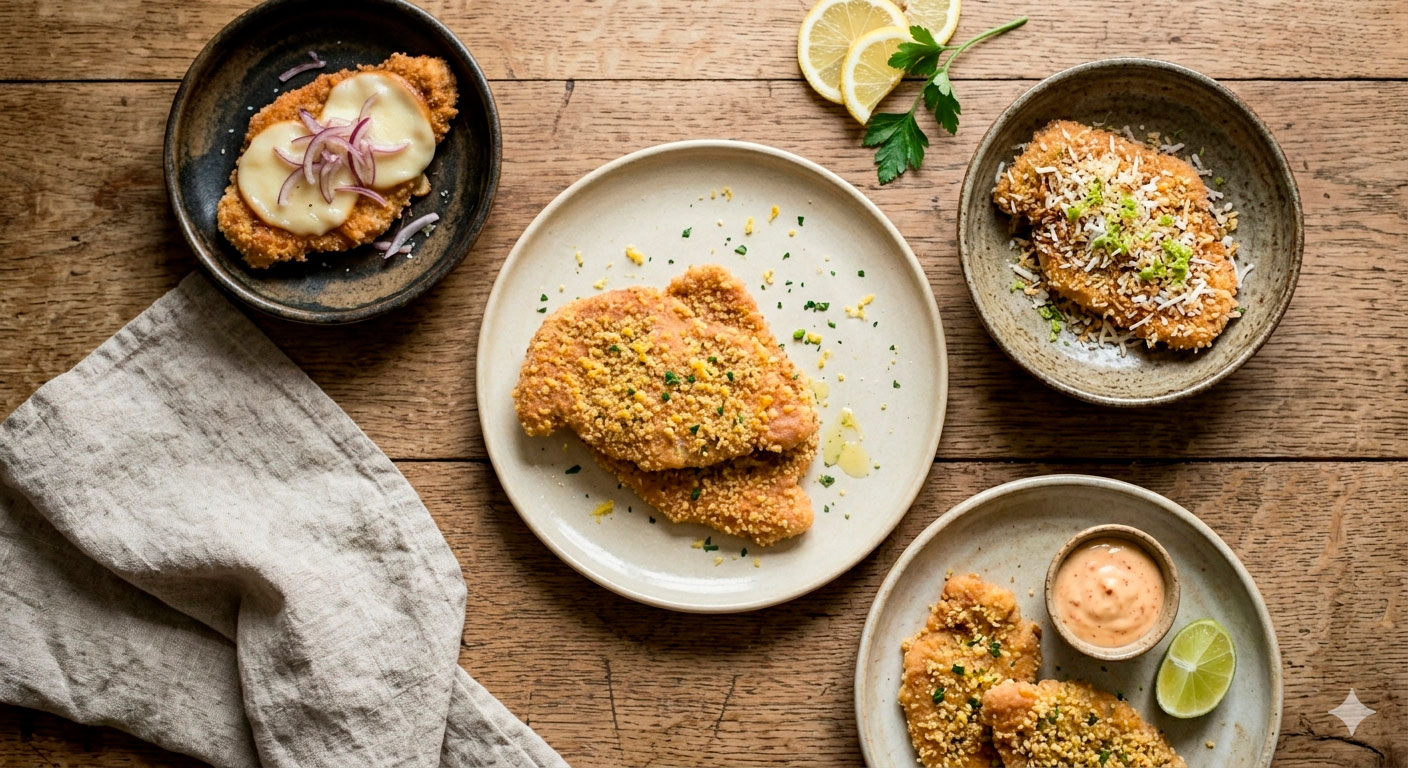
One of the great virtues of lemon and parsley chicken milanese is its enormous versatility to adapt to different diets and preferences. The oven-baked version is ideal for those looking to reduce fat consumption: brush the breaded milanesas with a drizzle of olive oil on both sides and bake at 200°C (400°F) on a wire rack for 20 to 25 minutes, turning halfway through. The result won’t be exactly as crispy as frying, but it will be surprisingly tasty and considerably lighter.
Frequently asked questions about lemon and parsley chicken milanese
Can lemon and parsley chicken milanesas be frozen?
Yes, and freezing them raw and breaded is the best option to have them ready at any time. Separate each milanesa with plastic wrap or plastic dividers to prevent sticking, and store in an airtight freezer bag or container for up to 3 months. When ready to cook, you don’t need to thaw them: fry directly from frozen, adding 2 to 3 minutes of cooking time per side and always checking that the inside is fully cooked.
How long do lemon and parsley chicken milanesas last in the refrigerator?
Already cooked lemon and parsley chicken milanesas keep perfectly in an airtight container at 4°C or below for up to 3 days. To reheat them while maintaining crispiness, the oven is best at 200°C (400°F) on a wire rack for 8 to 10 minutes. If you notice a smell different from lemon and herbs, a slimy texture, or a color change toward grayish tones, it’s safest to discard them without hesitation.
How many calories do lemon and parsley chicken milanesas have?
Each serving of lemon and parsley chicken milanese provides approximately 385 calories, distributed as 32 g of high-quality protein, 28 g of carbohydrates mainly from breadcrumbs, and 14 g of total fat. Considering its high protein content and vitamin C contribution from lemon, it can be considered a balanced dish within a varied diet, especially when accompanied by a fresh salad or steamed vegetables.
Can I make chicken milanesas without eggs?
Absolutely. If you need to avoid eggs due to allergy or preference, you can substitute them with a mixture of plant-based milk (oat, almond, or soy) with one tablespoon of Dijon mustard per 100 ml, which acts as an emulsifier and gives adhesion to the breading. Plain unsweetened yogurt, either dairy or plant-based, also works very well. The final flavor will be slightly different, but the crispy texture and well-adhered crust remain in both cases.
How are lemon and parsley chicken milanesas best served?
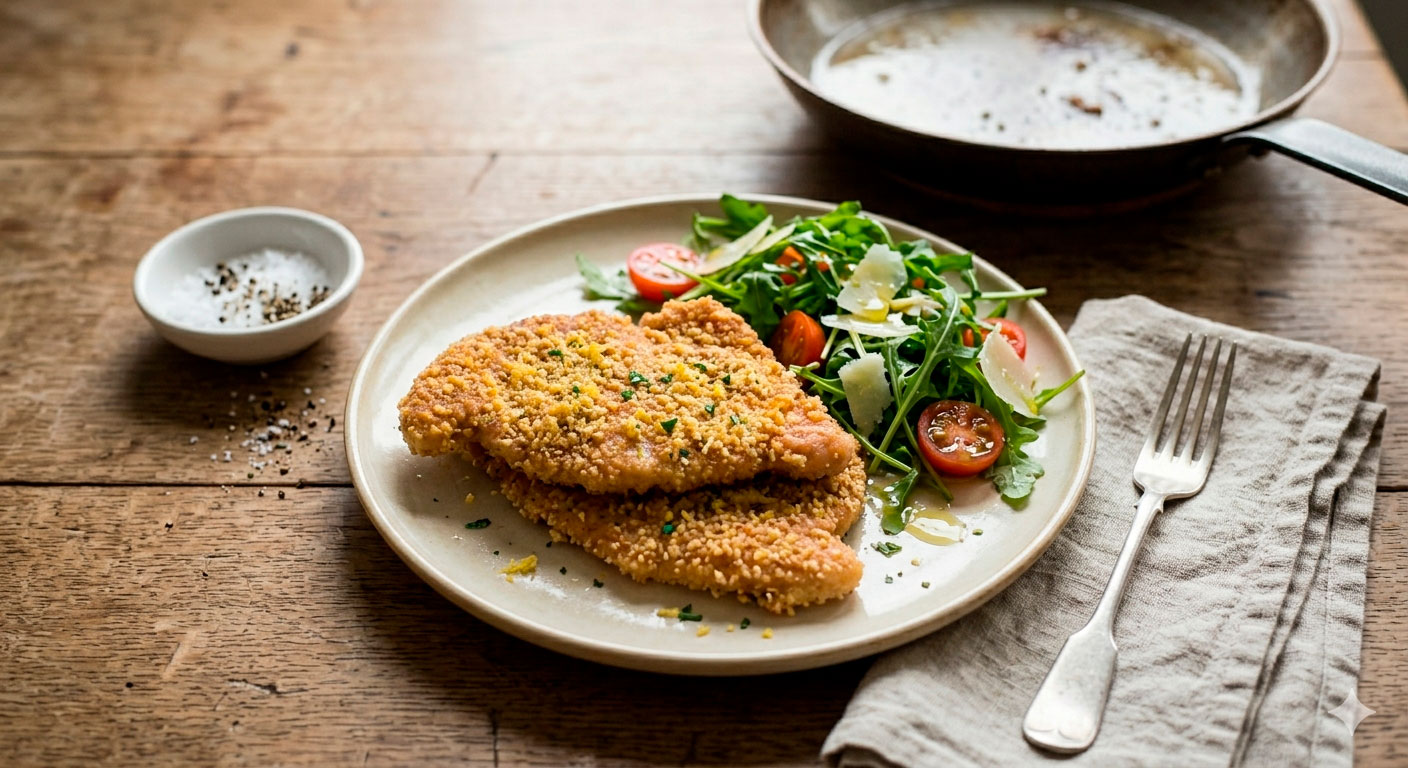
Lemon and parsley chicken milanesas are extraordinarily versatile when it comes to serving. Classic accompaniments include white rice, creamy mashed potatoes, or french fries. For a lighter, fresher presentation, serve them on a bed of arugula dressed with olive oil, parmesan shavings, and a few drops of lemon. They are also perfect as a filling for tortas, sandwiches, or wraps. As for pairing, they go very well with a cold lager beer, a high-acid white wine like Sauvignon Blanc, or simply with a well-chilled hibiscus iced tea.
Reference sources and resources
For more information on food safety and nutrition, consult WHO healthy diet guides.
On the nutritional value of ingredients, you can check The Nutrition Source from Harvard T.H. Chan School of Public Health.
Food composition information available at the database of the Mexican National Institute of Public Health.
You might also like our recipe for lemon chicken breasts and our article on how to bread meat perfectly.
See our disclaimer and legal notice before making dietary decisions based on this content.