Cooking Tasty: Your Guide to Quick, Nutritious, and Budget-Friendly Cooking
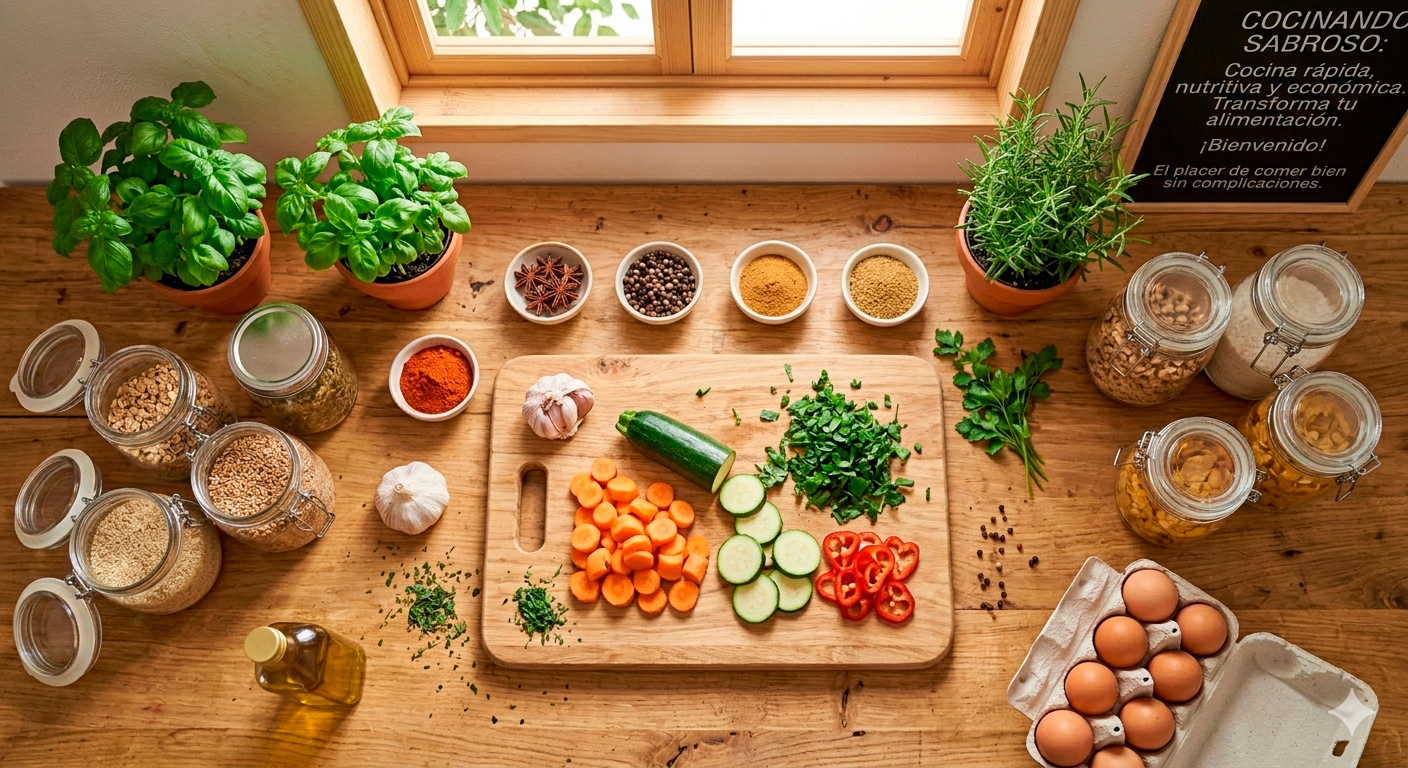
Transform your diet without sacrificing your time or your wallet. Recipes designed for real life.
The Pleasure of Eating Well Without Complications
Welcome to Cooking Tasty, the digital corner designed for those who believe time and money are obstacles to good nutrition. We know that today’s pace of life is frantic and cooking often takes a back seat, often ending up with ultra-processed food.
This project was born from a real need: to demonstrate that quick and nutritious cooking is possible, even on a tight budget. Our mission is to give you back control of your diet with budget-friendly recipes that delight the palate and care for your well-being.
4. Prepare Today: The Approaching Food Crisis and How Your Kitchen Can Save You
The world is going through one of its most tense geopolitical moments in recent decades. The conflict in the Persian Gulf —a region that holds more than 30% of the world’s oil reserves and through which about 20% of the global crude supply transits— has begun to generate silent but sustained pressures on international supply chains. Today, in your supermarket, prices look relatively stable. But that calm has an expiration date.
Economists and commodity analysts agree on one point that is rarely mentioned in evening newscasts: when the price of oil rises sustainably, it’s not just gasoline that goes up. Everything that moves, everything that is refrigerated, everything that is manufactured, and everything that is harvested with machinery goes up. The fertilizer that feeds the fields is derived from natural gas. The trucks that transport tomatoes from the field to your city run on diesel. The plastic that wraps that pre-washed salad is pure petrochemical. In other words: oil is not just energy, it is the invisible skeleton of our entire food system.
What is projected with high probability for the 2027-2030 period is not an apocalypse, but rather a price readjustment that will hit middle and low-income families with disproportionate force. Ultra-processed foods —those that today seem “cheap” because you see them on sale at any store— will be the first to reflect the increase, precisely because their production chain depends on multiple oil-derived inputs: packaging, synthetic preservatives, refrigerated transport, and industrial processing machinery. Paradoxically, what today seems like the economic option will become the luxury that many families cannot afford.
The Deception of “Cheap” That Is About to Break
There is a collective illusion very well constructed by the food industry: the idea that a bag of chips, a package of instant soups, or a box of sugary cereal are economical options accessible to everyone. This illusion works today because industrial production costs are still subsidized, in part, by relatively affordable energy.
When that energy subsidy disappears —or becomes significantly more expensive— the true cost of ultra-processed foods will be exposed. One kilogram of dried black beans, which today costs a fraction of what a bag of potato chips costs, yields between 8 and 10 complete servings rich in plant protein, fiber, iron, and potassium. It requires no special refrigeration, has no immediate expiration date, requires no multi-layer plastic packaging, and can be combined in dozens of different ways. The difference between the two products —in terms of real cost per nutrient— is already abysmal today. In 2027, that difference could be decisive for the monthly family budget.
The same applies to ingredients like rice, lentils, sweet potato, oats, eggs, local seasonal vegetables, and legumes in general. These foods have something in common: their production chain is short, their processing is minimal, and their yield per weight is extraordinary. They don’t need to cross three borders in a refrigerated plane to reach your table. They come from the nearest farm, and that makes them structurally more resistant to global energy crises.
Your Kitchen as an Economic Shield
Talking about crisis may sound alarmist. But there is a fundamental difference between panic and intelligent preparation. Families that develop the habit of cooking with base ingredients today —not out of obligation, but out of conviction— will be the ones that face the 2027-2030 period with greater stability and less financial stress.
Cooking at home with whole ingredients is not a sacrifice. It is an investment in autonomy. When you know how to prepare a sweet potato cream from scratch, when you master the perfect cooking of lentils, when you learn how to stretch half a kilo of chicken into four different preparations throughout the week, you are building a skill that no inflation can take away from you. Recipes don’t increase in price. Culinary knowledge is the most deflationary asset that exists.
Furthermore, there is a benefit that is frequently underestimated in the economic conversation: health as savings. Ultra-processed foods are correlated with an increased risk of chronic diseases such as type 2 diabetes, hypertension, obesity, and cardiovascular problems. In a context where public health systems will also face increasing pressures, preventing is infinitely cheaper than treating. A diet based on natural ingredients and home cooking not only saves money at the supermarket; it saves money at the pharmacy, at the doctor’s office, and in lost workdays due to illness.
The Ingredients That Stretch the Most: Your Resilience Shopping List
At Cooking Tasty, we have long defended a cooking philosophy that, seen today in light of what is approaching, is more relevant than ever. These are the ingredients that yield the most per weight, nourish the most per serving, and have the greatest price stability in the face of energy crises:
🫘 Legumes
Beans, lentils, chickpeas, and fava beans. 1 kg of dried lentils feeds a family of 4 for 4 complete meals. Rich in plant protein, fiber, and minerals. They keep for up to 2 years in a dry place.
🍠 Tubers
Sweet potato, potato, cassava, and beetroot. High caloric yield per weight. Sweet potato is produced locally, keeps for weeks without refrigeration, and accepts hundreds of preparations.
🌾 Whole grains
Brown rice, oats, and corn. One kilo of oats yields more than 15 complete breakfast servings for a fraction of the cost of any industrialized cereal.
🥚 Eggs
Complete protein, economical, versatile, and locally produced. In terms of cost per gram of high-quality protein, eggs have no competitor among accessible foods.
🥦 Seasonal and locally produced vegetables
What grows near you is always cheaper, fresher, and more resistant to price volatility. Knowing the seasonal calendar of your region and shopping at local markets is the most effective strategy to shield your food budget against any fuel crisis.
A Decision You Can Make Today
The good news —and it must be stated clearly— is that the solution does not require extra money, does not require special equipment, and does not require a chef at home. It requires information, practice, and a conscious decision to regain control of what enters your kitchen.
Every recipe you prepare from scratch instead of heating a packaged product is a small act of economic independence. Every base ingredient you learn to cook well is insurance against inflation that no bank can offer you. And every family that develops this smart cooking culture is, together, a more resilient community facing the economic cycles that lie ahead.
At Cooking Tasty, we don’t just teach you to cook. We teach you to eat with strategy, with awareness, and with the certainty that a well-used kitchen is, in difficult times, one of the most powerful assets any family can have.
The crisis may come. But you will already be ready.
Why choose a nutritious and economical diet?
At Cooking Tasty, we debunk the myth that eating healthy is expensive. By focusing on healthy and cheap cooking, you get immediate benefits:
- – **Significant Savings:** Reduction in monthly spending through planning.
- – **Constant Energy:** Natural nutrients that improve your performance.
- – **Time Management:** Fewer hours at the stove, more time for you.
Strategies for Quick and Nutritious Cooking
To achieve success in the kitchen without dying in the attempt, we apply three fundamental pillars:
1. Smart Planning
Dedicate 20 minutes a week to plan your menu and avoid impulse purchases.
2. Seasonal and Local Shopping
Take advantage of what the land offers in each season to reduce costs in your recipes.
3. Batch Cooking
Prepare food bases on the weekend to assemble dinners in less than 15 minutes.
The Most Recent
(no title)
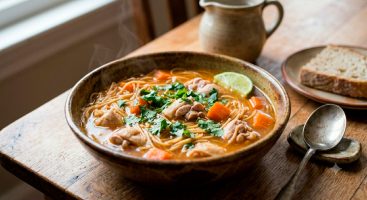
Irresistible Noodle Soup in Chicken Broth: 5 Steps
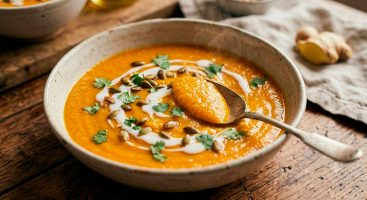
Irresistible Sweet Potato and Ginger Cream: Easy 5-Step Recipe

Irresistible Seafood Soup with Saffron Aroma in 5 Steps

Irresistible Black Bean Cream with Sour Cream Threads in 5 Steps
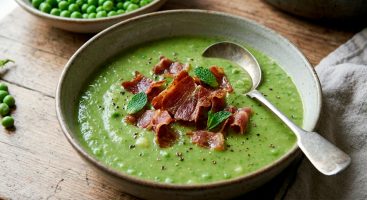
Fresh Pea Soup with Serrano Ham Irresistible: Recipe in 5 Steps

Creamy Artichoke Cream with Ham Shavings: irresistible recipe in 6 steps

Irresistible Fresh Spinach and Ricotta Soup: Easy Recipe in 5 Steps

Irresistible Potato Leek Soup: 5 Secrets in 60 Minutes

Irresistible French Onion Soup: Authentic Recipe in 6 Steps
Tips to Transform Your Pantry
You don’t need a gourmet pantry. With a few basics, you can cook healthy and cheap effortlessly:
- – Whole grains and dried legumes.
- – Eggs and leafy green vegetables.
- – Key spices: cumin, paprika, and turmeric.
💡 Tip: Creativity is the ingredient that costs no money but adds all the value.
Our Commitment to You
We want Cooking Tasty to be your go-to reference when you don’t know what to prepare and only have 20 minutes. We invite you to explore our categories, all designed under the standard of quick and nutritious cooking.
Join Our Efficient Cooking Community
Learning to cook healthy and cheap is one of the most valuable skills for your life. Your body and your wallet will thank you!
- – Sustained energy
- – High in fiber
- – No additives