5 Easy Steps for an Irresistible Seafood Soup with Saffron Aroma
Origin and History of Seafood Soup with Saffron Aroma
To understand the magnitude of this irresistible seafood soup with saffron aroma, we need to travel back in time and place ourselves geographically on the coasts of the Mediterranean Sea, specifically in the cultural triangle formed by southern France, eastern Spain, and the coasts of Italy. Historically, fish and seafood soups were born out of the necessity of local fishermen: upon returning to port after long days at sea, the damaged pieces in the nets, bony rockfish, or small crustaceans that couldn’t be sold were destined for self-consumption.
In large iron cauldrons, by the seashore or on the boats themselves, purified water, vegetables from nearby gardens, and these marine discards were poured, creating highly concentrated broths that relieved fatigue and cold. It was subsistence cooking, functional and direct, without pretensions of elegance, but loaded with a flavor that the sea generously gives to those who work it.
However, what began as a humble preparation evolved radically when merchant peoples — Phoenicians, Greeks, and later the Arabs — introduced exotic spices to the Mediterranean basin. Saffron, originally from Asia Minor, found an ideal ecosystem for its cultivation in the soils of the Iberian Peninsula and certain areas of Italy. The La Mancha region in Spain and the hills of Abruzzo in Italy became the main producers of this coveted spice, popularly known as “the red gold of cooking.”
When medieval court cooks and renowned innkeepers began incorporating these valuable threads into traditional seafood broths, the dish changed its status definitively. Saffron not only refined the flavor with its unmistakable aromatic profile — floral, earthy, slightly metallic, and deeply warm — but also dyed the broth a yellowish, opulent color that emulated gold, associating the soup with wealth and grand table celebrations.
Iconic dishes like Marseille’s bouillabaisse, Adriatic brodetto, and Catalonia’s zarzuela de mariscos are the most illustrious witnesses of this historical lineage. Each one holds in its recipe the trace of that fusion between the brute force of the Atlantic and the Mediterranean, and the delicacy of the world’s most coveted spice. Today, irresistible seafood soup with saffron aroma is the living testimony of that cultural crossbreeding: oceanic aromas united with centuries of spice history from the East.
What is Seafood Soup with Saffron Aroma and Why Should You Make it at Home?
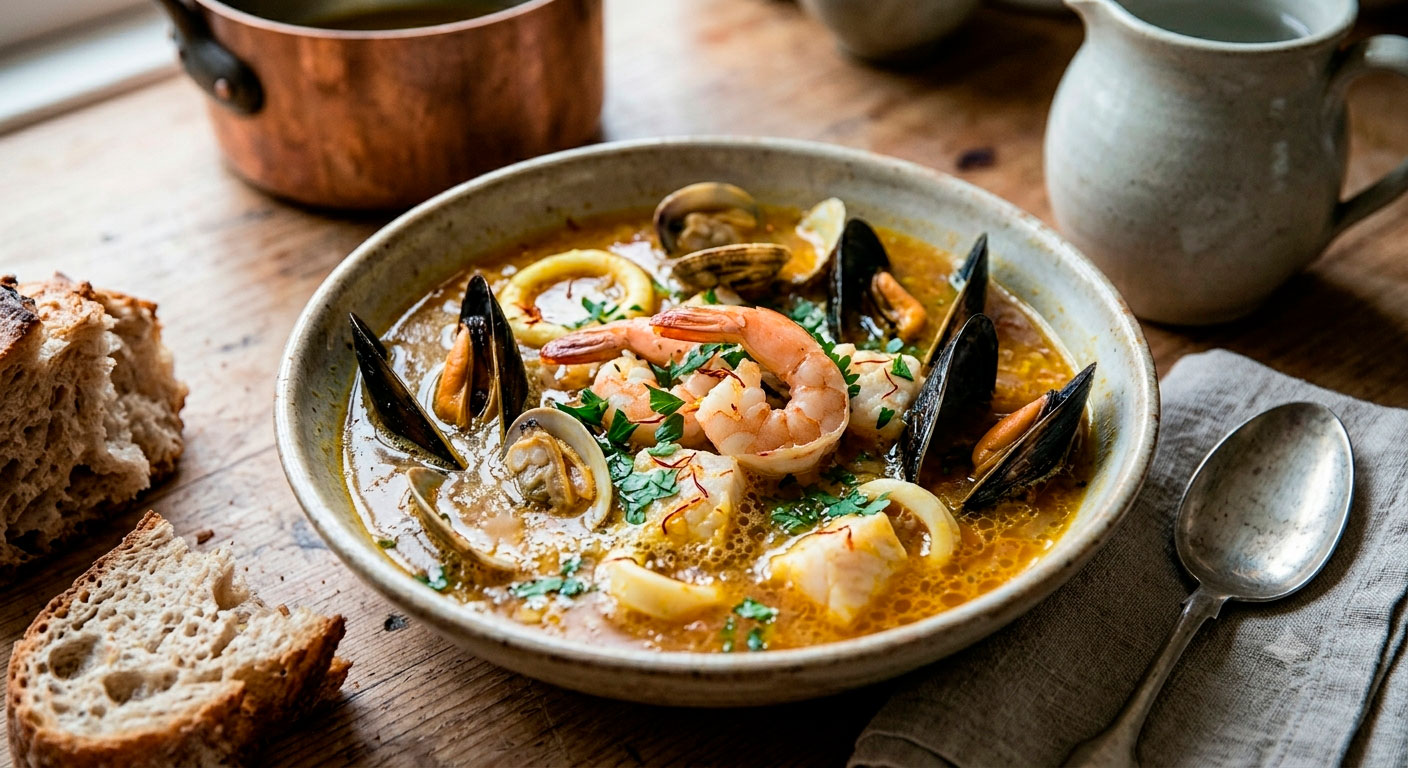
Irresistible seafood soup with saffron aroma is one of the most sophisticated yet most accessible preparations of Mediterranean coastal cuisine. In its most honest version, it is nothing more than a deeply aromatic fish broth in which shrimp, mussels, clams, firm fish fillet, and squid rings coexist in perfect harmony, all infused with the golden, unmistakable perfume of saffron. A dish that unites the sea and spices in every spoonful.
For the author, who has worn out aprons over decades between pans and stoves of all kinds, the true culinary art does not lie in unnecessary complexity, but in the ability to extract the soul of each ingredient and present it honestly on the plate. This seafood soup is not simply a collection of seafood swimming in hot broth; it is a symphony where each note must enter at the exact moment so as not to overshadow the others. That is precisely the magic we want to teach you to master.
Over the years, I have seen many home cooks intimidated by the idea of working with seafood, fearing overcooking or not achieving that deep, comforting depth that characterizes the best coastal broths. The good news is that the right technique, well explained and executed with respect for timing, turns this dish into something fully achievable for any home cook wanting to impress.
Saffron seafood soup also stands out for its extraordinary nutritional profile. With only 340 kcal per serving and 38 grams of high biological value protein, it positions itself as a comforting option that doesn’t sabotage any balanced eating plan. Low in saturated fats, rich in minerals like zinc, iodine, and iron, and loaded with Omega-3 fatty acids from fish and shellfish, this recipe is as much a pleasure for the palate as a gift for the body.
The differentiating element that elevates this irresistible seafood soup above any generic version is, without a doubt, saffron. It’s not merely an aesthetic whim. Saffron’s volatile compounds — safranal and crocin — need a fat base and a hot liquid medium to release their full aromatic potential. When properly integrated into the sofrito base and the boiling broth, these compounds fix themselves onto the tissues of the fish and shellfish, creating a complete experience where the aftertaste lingers elegantly on the palate.
In this comprehensive guide, you will learn how to select the freshest seafood, toast and grind the saffron correctly, build a sofrito that is the backbone of the flavor, and manage the cooking times of each seafood so that none sacrifice its texture. Prepare for a sensory journey that combines technique, respect for the sea, and a good dose of culinary care that your table — and your guests — will not soon forget.
Ingredients for Irresistible Seafood Soup with Saffron Aroma
Quantities for 6 servings.
Main Seafood Ingredients
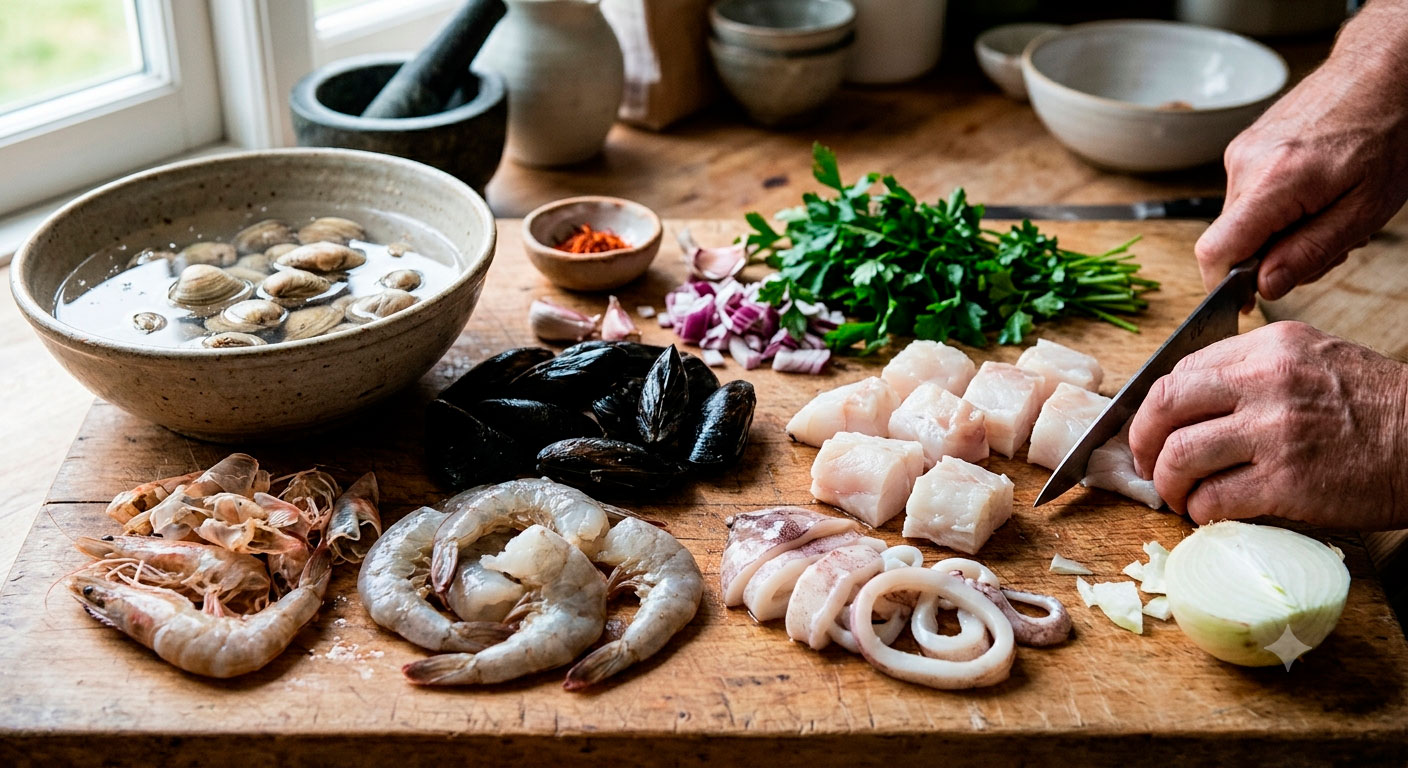
- 500 g medium shrimp (prawns), peeled and deveined
- 500 g fresh mussels, scrubbed and beards removed
- 400 g small clams, purged in salt water
- 600 g firm fish fillet (grouper, sea bass, or monkfish), cut into 1-inch cubes
- 300 g cleaned squid, cut into thin rings
Seasonings, Aromatics, and Options
- 1 teaspoon (approx. 0.5 g) whole saffron threads
- 60 ml extra virgin olive oil
- 4 garlic cloves, finely chopped
- 1 large white onion, finely diced
- 200 g ripe tomato puree
- 150 ml dry white wine (Albariño, Sauvignon Blanc, or Verdejo)
- 1.5 liters concentrated fish stock
- Fresh flat-leaf parsley to taste (for finishing)
- Salt and white pepper to taste
- Toasted breadcrumbs (for serving)
📋 Table of Regional Ingredient Variants
The same seafood receives different names depending on the country or region. Use this guide to find ingredients in your local market.
| Base Ingredient | Spain / Europe Variant | Latin America Variant |
|---|---|---|
| Medium shrimp | Gambas / Langostinos | Langostinos (Southern Cone) |
| Mussels | Mejillones / Mitilos | Choros (Peru/Chile) |
| Small clams | Chirlas | Almejuelas / Conchas (Mexico) |
| Firm fish | Mero / Rape | Corvina / Cherna |
| Cleaned squid | Calamar / Pota (Spain) | Jibia (Chile) / Pota (Peru) |
How to Prepare Irresistible Seafood Soup with Saffron Aroma Step by Step
Order in the kitchen is sacred. Follow this chronological path with precision: each seafood has a delicate cooking point that an extra minute can ruin.
- Thorough cleaning and sorting of the seafood: Wash the clams in cold water with coarse salt for at least two hours so they expel any sand residue. Brush the mussel shells, removing the beards with a firm pull towards the hinge. Peel the shrimp, reserving the heads and shells — which we will use to enhance the liquid base. Remove the intestinal tract of the shrimp with the help of a toothpick. Cut the fish fillets into uniform cubes of about one inch and the squid into thin rings. Keep everything refrigerated separately, as each ingredient will enter the pot at different times.
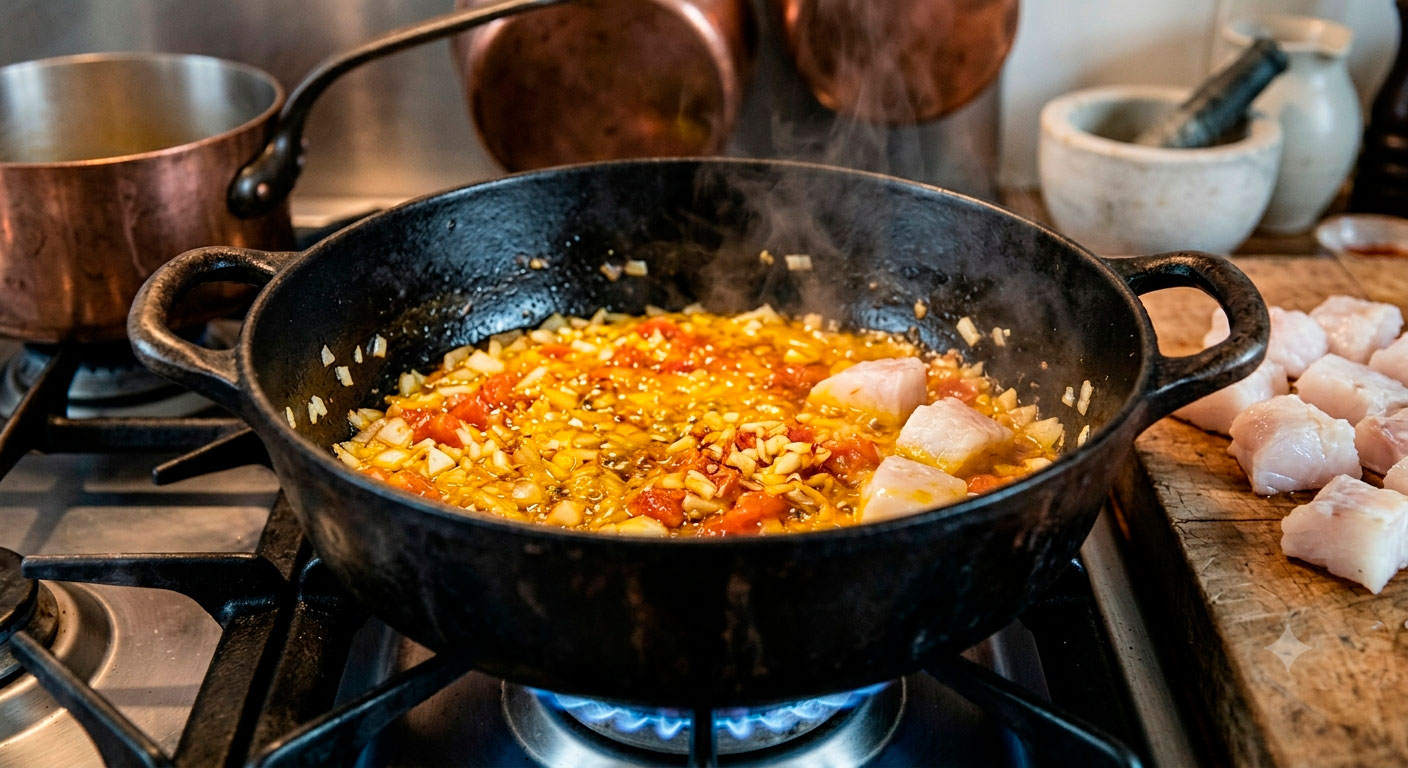
- Awakening the saffron and the base sofrito: Place a wide, deep pot over medium-low heat with the extra virgin olive oil. Before starting the sofrito, take the saffron threads, wrap them in a small piece of aluminum foil, and place them on the hot lid for one minute; this indirect heat dries the spice, allowing you to grind it easily with your fingers. Reserve this aromatic powder. In the hot oil, add the chopped onion and garlic with a pinch of salt. Let them cook slowly until the onion is translucent and starts to take on a lightly golden color, being careful not to burn the garlic to avoid bitter notes.
- Caramelizing the tomato and aromatic deglazing: Add the ripe tomato puree to the onion and garlic sofrito. Cook over low heat for about ten minutes, moving constantly in a circular motion. You’ll know it’s ready when the water from the tomato has evaporated and you notice the oil beginning to separate from the pulp, taking on a deep, intense red color. Increase the heat to medium-high, pour in the dry white wine, and scrape the bottom of the pot well with a wooden spoon to release all the caramelized sugars. Let the alcohol evaporate for three minutes until the wine aroma decreases notably.
- Adding the fish stock and the golden saffron infusion: Pour the 1.5 liters of concentrated fish stock — previously made with the shrimp heads and white fish bones — over the deglazed sofrito. Immediately add the toasted and ground saffron. Increase the heat until it comes to a boil, then reduce it to a simmer, partially cover the pot, and allow all the flavors to meld for fifteen minutes. The broth will take on a bright orange-yellow color and an intoxicating aroma. Taste the liquid and adjust the salt and white pepper according to your preference.
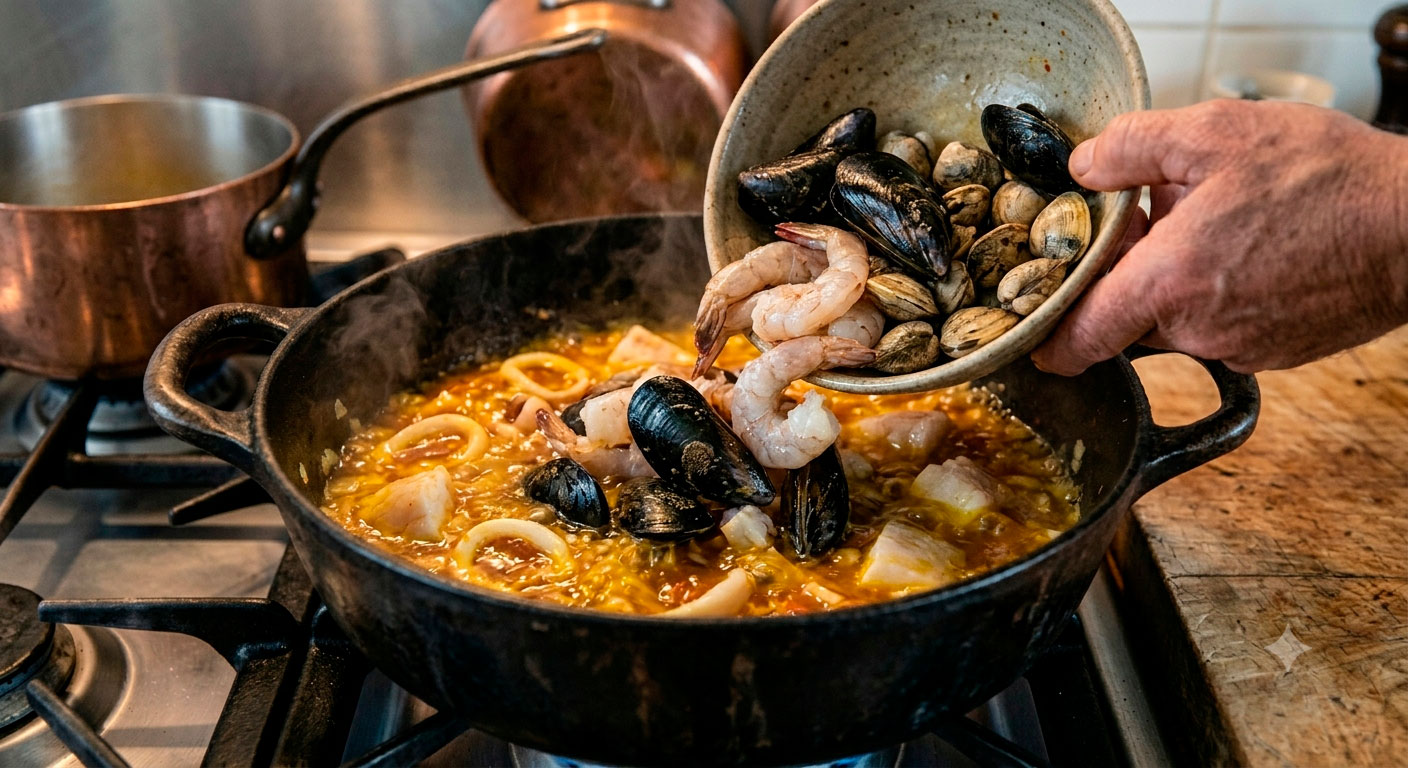
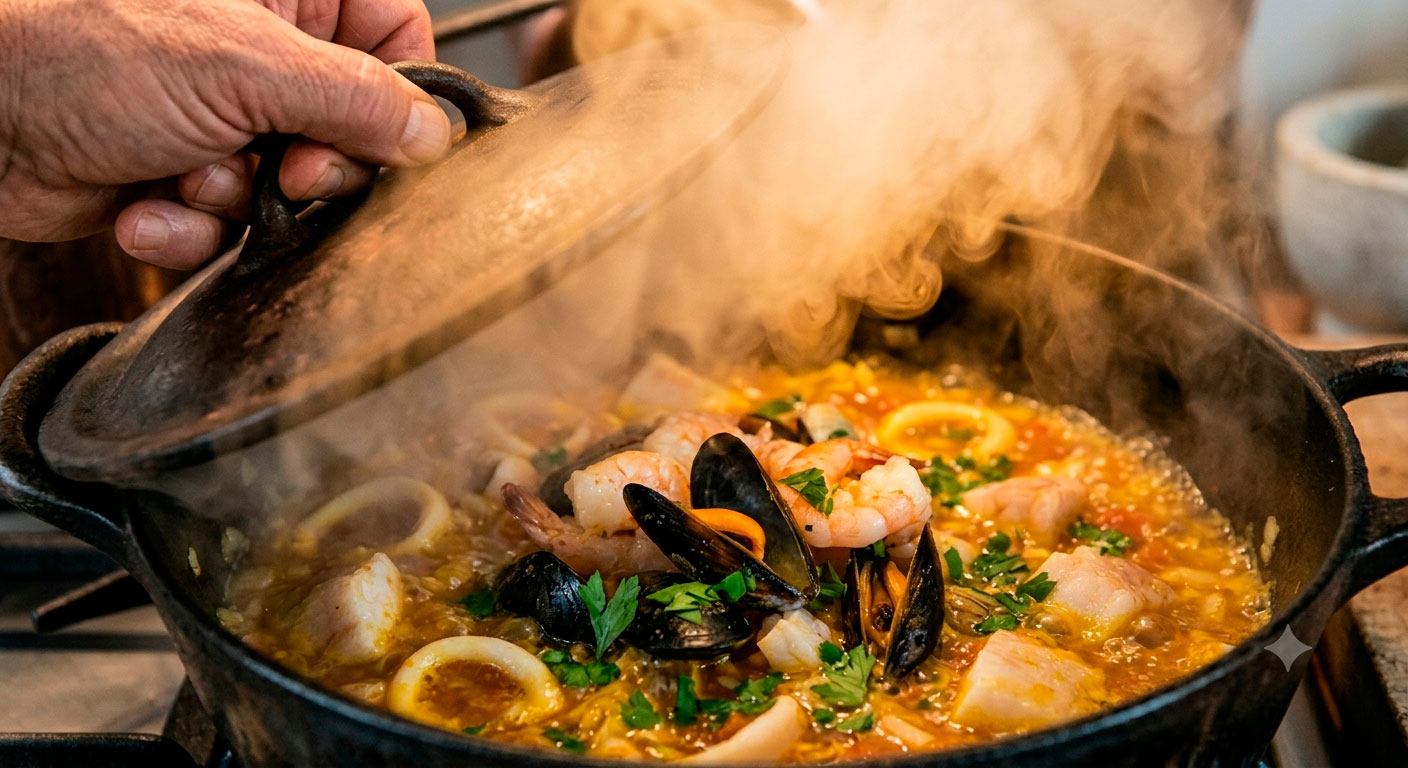
- Managing the seafood cooking times and serving: First add the squid rings and fish pieces, as they require a few extra minutes. After three minutes, add the shrimp, mussels, and clams. Cover the pot tightly and maintain medium heat for four to five minutes. The trapped steam will open the shells and cook the shrimp until they are perfectly pink. Remove the pot from the heat immediately. Discard any mussels or clams that remain closed. Sprinkle with fresh chopped parsley, let it rest covered off the heat for two minutes, and serve immediately in preheated deep bowls, accompanied by crispy breadcrumbs.
Nutritional Information for Irresistible Seafood Soup with Saffron Aroma
Approximate values per serving (6 servings total). Contrary to what many assume due to its sumptuous flavor, this dish is a very balanced option, low in saturated fats and rich in essential minerals.
| Nutrient | Per serving | % Daily Value* |
|---|---|---|
| Calories | 340 kcal | — |
| Protein | 38 g | 76% |
| Carbohydrates | 9 g | 3% |
| Total Fat | 8 g | 11% |
| Saturated Fat | 1.2 g | 6% |
| Cholesterol | 145 mg | 48% |
| Sodium | 680 mg | 28% |
| Iron | 4.2 mg | 23% |
*Percentages based on a 2,000 calorie daily diet.
Benefits of Consuming this Saffron Seafood Soup
- Very high biological value protein density: Seafood provides essential amino acids that the body cannot synthesize, ideal for muscle tissue regeneration.
- Omega-3 fatty acids contribution: Vital for cardiovascular health, helping to control blood cholesterol and reducing inflammatory processes.
- Rich in microminerals: Provides significant doses of zinc, iodine, phosphorus, and iron, fundamental for the endocrine and cellular systems.
- Antioxidant properties of saffron: Contains crocin and crocetin, natural pigments that combat oxidative stress and protect cells from premature aging.
Expert Analysis: The Master Touch for Irresistible Seafood Soup with Saffron Aroma
From my technical perspective behind the kitchen counter, saffron seafood soup represents the absolute balance between volatility and density. The big mistake I see most often with this dish is overcooking. Seafood is pure muscle with a high percentage of water and delicate proteins; if exposed to excessive heat, these proteins contract violently, expelling their natural juices and turning the seafood into small, tasteless rubbery bits. A shrimp cooked perfectly is silky and slightly translucent in the center; one that’s overcooked is chewy and dry. The difference is just ninety seconds of neglect.
The use of saffron is not merely aesthetic, and this is a point that few recipes explain rigorously. Chemically, the volatile compounds of saffron — safranal responsible for the aroma and crocin responsible for the color — need two conditions to be fully released: a fat base (the olive oil in the sofrito) and a hot liquid medium. Therefore, the method of first toasting the threads dry, grinding them, and infusing them at the moment the broth boils guarantees that these aromatic molecules fix onto the fish and shellfish tissues, creating a complete experience where the aftertaste lingers elegantly without saturating the palate.
Regarding pairing, this irresistible seafood soup calls for a white wine with good acidity and mineral notes that dialogue with the sea’s iodine without competing with the saffron. An Albariño from Rías Baixas is the perfect partner: its lively acidity and Atlantic freshness cleanse the palate between spoonfuls, prolonging the experience. If you prefer something more local, a white from the Rueda region based on Verdejo plays the same role with great elegance. Avoid wines aged in oak; the wood flattens the floral aromas of saffron.
Lastly, the most valuable advice I can share with you: always invest in a good homemade fish stock. The liquid base is 60% of the final result of this seafood soup. A stock made with the heads and shells of the shrimp themselves, some white fish bones, a carrot, half an onion, and a parsley sprig, cooked for no more than twenty minutes, provides a depth of flavor that no commercial concentrate can match. It’s the difference between a correct soup and an irresistible one. — El Godínez Hambriento
Tips for Preparing a Perfect Irresistible Seafood Soup
The first secret of great port cooks is one that rarely appears in written recipes: never waste the heads of crustaceans. The heads and shells of shrimp contain an extraordinary concentration of natural glutamates and aromatized fats that, when briefly sautéed in hot olive oil and crushed with a wooden spoon, release a bright orange juice that transforms any ordinary broth into a deep, complex marine-flavored base. Add that concentrate to the base stock, and you will immediately notice the difference in the body and persistence of the broth. In an irresistible seafood soup, that gesture marks the boundary between good and memorable.
The quality of the water also matters more than you think. Tap water with excess chlorine or lime can interfere with the subtle aromatic architecture of saffron and alter the natural flavor of the bivalves. Use mineral or filtered water for preparing the stock; it’s a minimal investment that protects the most delicate aromas of the dish. Similarly, always invest in whole saffron threads of certified origin — Spanish or Iranian. Many commercial powders are adulterated with turmeric or artificial colorants, and although they achieve the yellow color, they lack the authentic aromatic profile of saffron. Without that perfume, the soup loses its identity.
Another critical point that many overlook is the temperature of the bowl in which the soup is served. Seafood cools very quickly upon contact with cold surfaces. Preheat the deep bowls in the oven at a low temperature for five minutes before serving; this gesture ensures that each diner receives the soup at the optimal temperature and that the saffron aromas continue to be released at the table, inviting a complete sensory experience from the first moment.
Regarding storage, seafood is highly susceptible to bacterial growth. Never leave the soup at room temperature for more than one hour after cooking. If there are leftovers, transfer them to shallow, airtight glass containers so they cool quickly. Store in the coldest part of the refrigerator for a maximum of 24 to 48 hours. When reheating, do so exclusively over low heat and only the portion you are going to consume; avoid bringing it to a rolling boil again so the fish doesn’t completely disintegrate. Freezing this soup once finished is not recommended, as the texture of the clams, squid, and mussels deteriorates severely upon thawing.
When is it ideal to prepare this seafood soup?
This dish is the perfect candidate to preside over the table during a Sunday family gathering or a celebratory dinner where you want to treat guests to something sophisticated yet comforting. Its comforting nature makes it ideal for the autumn and winter months, when cold days call for a steaming broth to warm the body. However, due to its light calorie count and marine freshness, it also fits splendidly as a main course for a summer meal by the sea, accompanied by a good glass of well-chilled white wine and crispy artisan breadcrumbs.
Variations and Substitutions for Irresistible Seafood Soup with Saffron Aroma
One of the great virtues of this saffron seafood soup is its adaptability. The architecture of the dish — aromatic sofrito, sea broth, seasonal seafood, and a unifying spice — admits regional variations that are equally irresistible without losing the essence of the original.
Atlantic version with a touch of cider
In the northern regions of Spain or Brittany in France, it is very common to substitute dry white wine with natural apple cider. This provides a completely different fruity acidity that contrasts marvelously with the natural sweetness of the shrimp and mussels, perfectly complementing the earthy touch of saffron. The result is a more vibrant and refreshing seafood soup, with an unmistakably Atlantic character that evokes the fishing ports of the Cantabrian Sea.
Tropicalized version with coconut milk
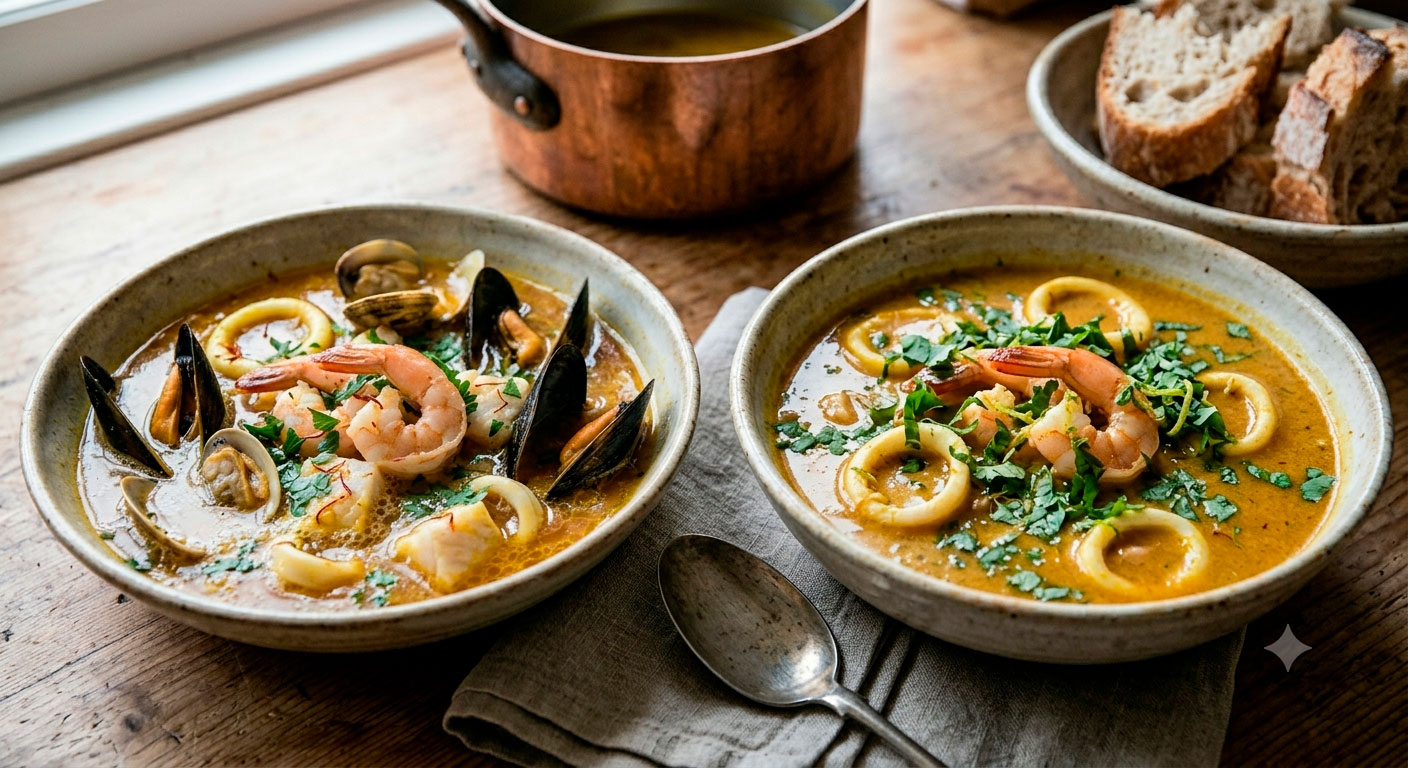
If you want an exotic twist reminiscent of the Caribbean coasts or Southeast Asia, you can replace 400 ml of the fish stock with unsweetened coconut milk in the final stretch of cooking. The saffron interacts with the fat of the coconut milk, creating a creamy broth of a bright yellow color that is wonderfully complemented by a few drops of lime juice when serving. This version is especially popular in contemporary fusion cuisines and is a spectacular option to surprise diners accustomed to the classic Mediterranean version.
Frequently Asked Questions about Irresistible Seafood Soup with Saffron Aroma
Can I use frozen seafood to prepare this seafood soup?
Yes, it’s completely feasible if you don’t have access to fresh seafood. Make sure to thaw them slowly in the refrigerator the day before on a rack so they aren’t submerged in their own thaw water, which would reduce the firmness of the tissues and affect the final texture of the dish. Although the optimal result is always achieved with fresh daily seafood, good quality frozen ones are a worthy alternative.
How long does seafood soup last in the refrigerator?
This irresistible seafood soup keeps properly in airtight glass containers in the coldest part of the refrigerator for a maximum of 24 to 48 hours. After that time, the seafood tissues lose firmness, and the bacterial risk increases considerably. Freezing it once finished is not recommended, as the texture of the clams, squid, and mussels deteriorates severely upon thawing, becoming mealy.
How many calories does saffron seafood soup have?
Each serving of this seafood soup provides approximately 340 kcal, with 38 g of high biological value protein, 9 g of carbohydrates, and only 8 g of total fat — of which only 1.2 g are saturated. It is an extraordinarily balanced dish for being so comforting and flavorful, ideal for those following high-protein diets or simply looking to eat well without caloric excess.
Can this seafood soup be prepared without saffron?
If you can’t find genuine saffron, you can replicate the golden color with a combination of a pinch of pure turmeric along with a fresh bay leaf in the sofrito to mimic the visual tone. However, the aromatic profile of saffron — its characteristic safranal — is truly irreplaceable. The dish will still be an excellent seafood soup, but it will lose that floral, earthy dimension that makes it irresistible and different from any other marine broth.
How is saffron seafood soup best served?
Serve the seafood soup in preheated deep bowls so the heat is maintained from the first to the last spoonful. Accompany it with crispy artisan breadcrumbs or toasted baguette slices rubbed with garlic, ideal for absorbing the golden broth. Regarding pairing, an Albariño from Rías Baixas or a Verdejo from Rueda are perfect companions that enhance the aromas of saffron without competing with the freshness of the seafood. Serve immediately, without letting it rest more than two minutes covered off the heat.
Sources and Reference Resources
For more information on food safety and nutrition, consult WHO healthy diet guides.
Regarding the nutritional value of ingredients, you can consult The Nutrition Source from Harvard T.H. Chan School of Public Health.
Information on food composition available from the Mexican National Institute of Public Health database.
You might also be interested in our recipes for comforting soups and stews and more easy and quick recipes from cocinasabroso.com.
Consult our responsibility policy and legal notice before making decisions about your diet based on this content.