Origin and history of white asparagus cream with truffle
To understand the magnitude of this dish, we must travel back in time and delve into the origins of its two stellar protagonists. White asparagus cream with truffle was not born from sudden inspiration, but from centuries of European culinary refinement that united in a single bowl two treasures that, curiously, share the same secret: both are born and develop hidden from light, in the darkness of the earth.
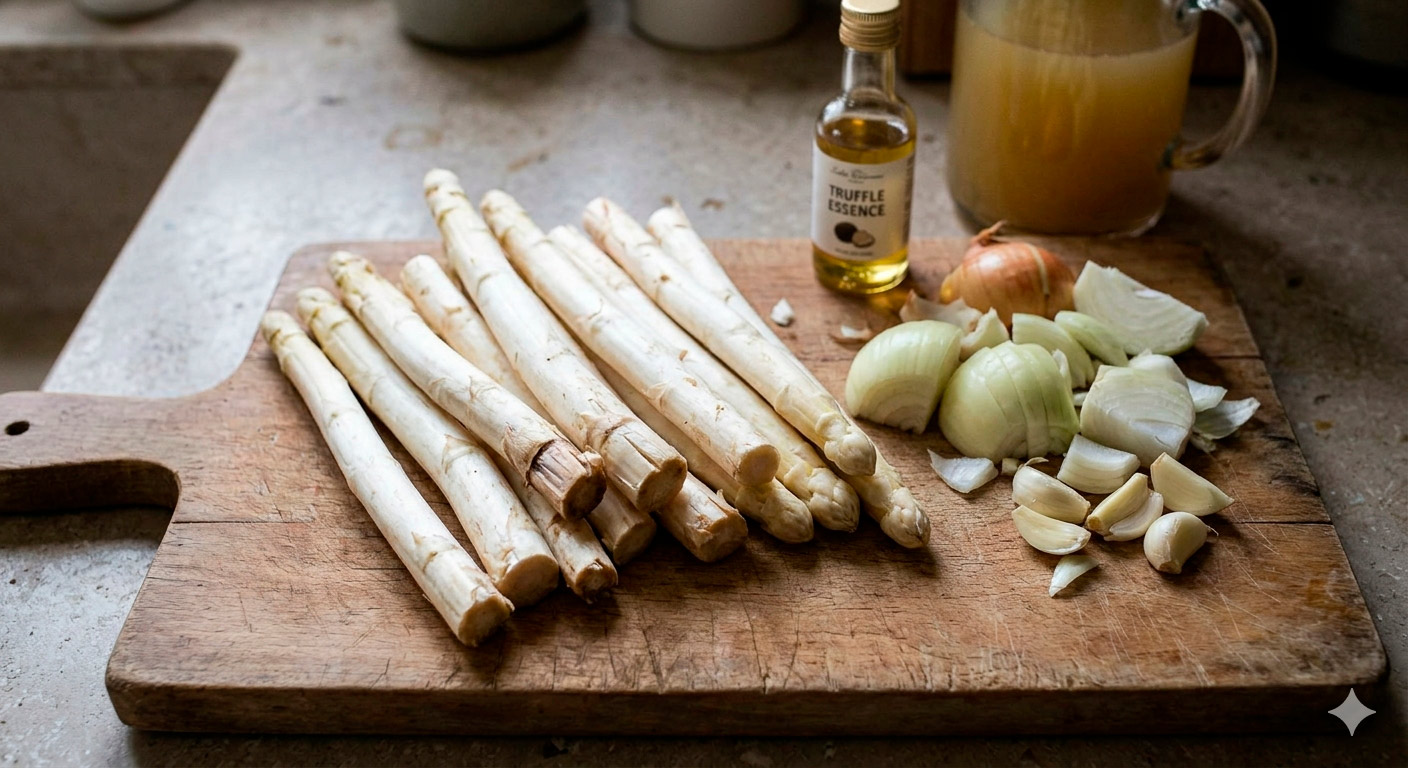
White asparagus did not arise by chance, but thanks to human ingenuity and careful observation of nature. Unlike its green relative, this sprout grows protected from sunlight under meticulous mounds of sand or mulch that farmers raise around it. By not receiving sunlight, the plant does not photosynthesize, preventing the appearance of chlorophyll. The result is that pale, tender stalk with a notably milder, elegant, and less herbaceous flavor that defines white asparagus.
Historically, the Romans were already devotees of asparagus in its various forms, transporting them quickly from growing areas to great imperial banquets. However, the refinement of white asparagus as we know it flourished strongly in 17th century Europe. It was in the courts of France, under the reign of Louis XIV, the famous “Sun King,” where this vegetable achieved its greatest prominence. The monarch demanded them on his table throughout the year, even sponsoring primitive greenhouse methods to ensure his continuous supply.
On the other hand, the truffle, that mysterious underground fungus that the ancients considered “child of thunder and rain,” provides the perfect historical counterpoint to this preparation. Considered the diamond of gastronomy by the famous gastronome Jean Anthelme Brillat-Savarin, the truffle was for centuries a symbol of luxury and opulence on the aristocratic tables of Italy and France. The markets of Périgord in France and Alba in the Italian Piedmont became the epicenters of the most relevant truffle trade in Europe.
The union of both ingredients in cream format is a natural evolution of the tradition of French veloutés and creams from the 19th century, popularized by chef Auguste Escoffier, who codified many of these preparations in his famous “Guide Culinaire.” White asparagus cream with truffle is, in essence, a tribute to that classic European cuisine, refined in French and Italian palaces, but wisely adapted to contemporary sensibility, where the lightness of the product and the balance of textures prevail over the excesses of fat from the past.
Today, this white asparagus cream with truffle has transcended borders and appears in high-end restaurants around the world as a sophisticated starter that celebrates the essence of the seasonal product. In Spain, the regions of Navarra, Tudela, and Huétor Tájar in Granada are recognized as major producers of top-quality white asparagus. In Mexico and Latin America, they are also known as “pale asparagus” or “earth asparagus,” and their consumption has grown notably in the gourmet segment in recent years.
What is white asparagus cream with truffle and why should you make it at home?
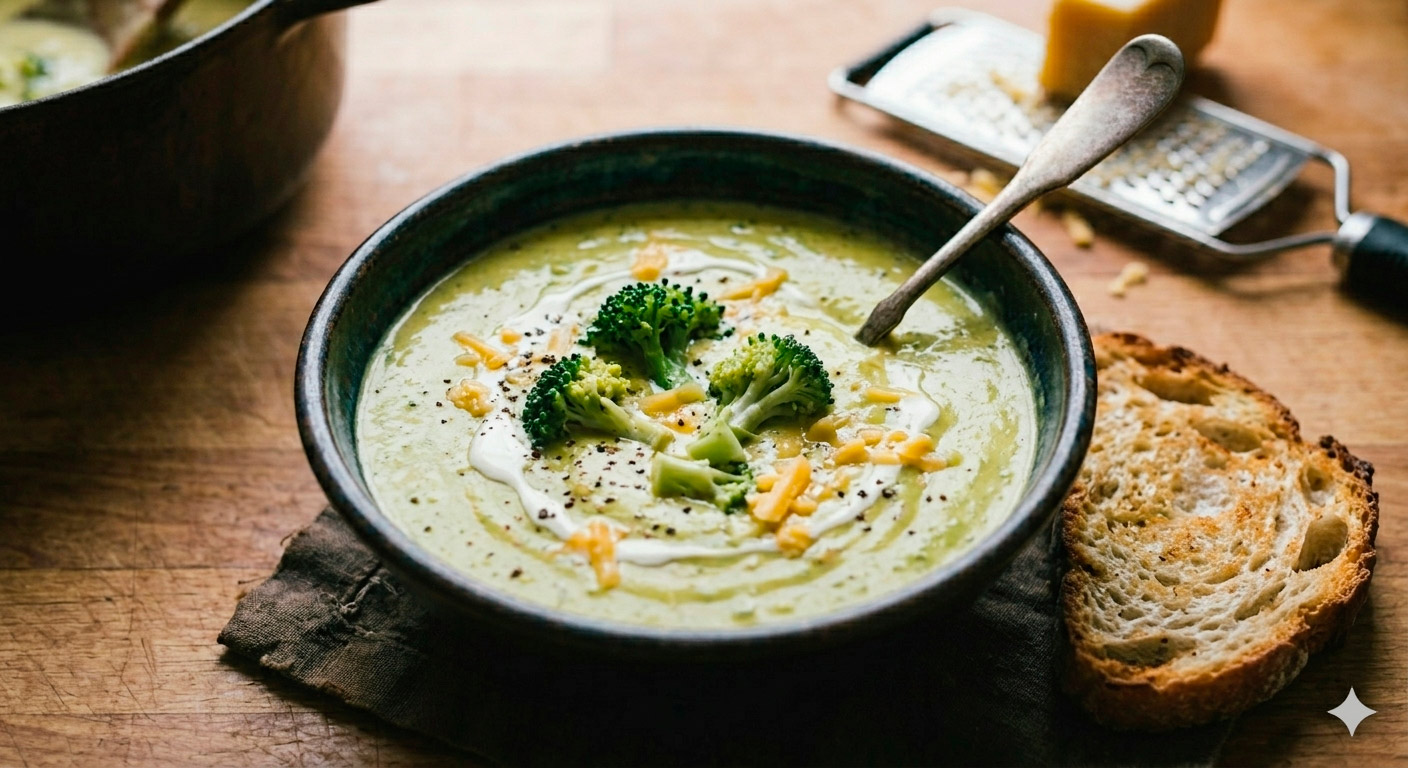
White asparagus cream with truffle is one of the most elegant and comforting preparations of classic European cuisine. It is a velvety soup made from fresh or canned white asparagus, cooked with leek, potato, and vegetable broth, blended until achieving an absolutely velvety texture, and perfumed at the last moment with the unmistakable aroma of white truffle essence. The result is a dish that defies its apparent simplicity: in each spoonful, the vegetal delicacy of asparagus, the creaminess of the cream, and the earthy, mysterious depth of the truffle coexist.
The aroma that floods a kitchen when these ingredients combine is something that, even after years at the stove, remains a unique experience. White asparagus, often overshadowed by its green siblings, possesses an aristocratic elegance and a subtle bitterness that, when united with the depth of truffle, create a perfect harmony on the palate. Cooking this cream is not just following instructions: it’s understanding the soul of each ingredient, listening to the whisper of the simmer, and knowing exactly when to remove the pot from the heat.
Why make it at home? First, because the control you have over the quality of the ingredients makes an abysmal difference compared to any processed or mid-priced restaurant version. A well-peeled fresh white asparagus, quality cream, and authentic truffle essence — even in a very small amount — elevate the result to levels rarely found outside a gourmet table. Second, because this white asparagus cream with truffle is surprisingly accessible in its preparation: you only need 45 minutes and basic cooking techniques to achieve a high-end result.
This recipe shines as a first course in spring celebrations, coinciding with the optimal season for fresh white asparagus between April and June. However, thanks to the foresty, earthy notes of truffle, it is equally comforting on autumn or winter evenings, making it a luxury option for Christmas dinners or intimate weekend gatherings where a slow pace invites you to enjoy the nuances of a good meal.
In nutritional terms, white asparagus cream with truffle stands out for its lightness. With only 195 kcal per serving, it is a starter that does not overload the stomach, thanks to the high water and fiber content of white asparagus. Additionally, it provides vitamin C, B vitamins, potassium, and the amino acid asparagine, responsible for its well-known diuretic properties. In short, a dish that cares for both the palate and the body.
The key that makes this version the irresistible white asparagus cream with truffle you’re looking for lies in three technical details that make the difference: meticulous peeling of the asparagus to remove any bitter strands, straining through a chinois or fine-mesh strainer to achieve an absolutely silky texture, and incorporating the truffle essence away from direct heat to preserve all its volatile aromas. These three steps are the secret that separates a good cream from a perfect cream.
Ingredients for irresistible white asparagus cream with truffle
Quantities for 4 servings.
Main ingredients
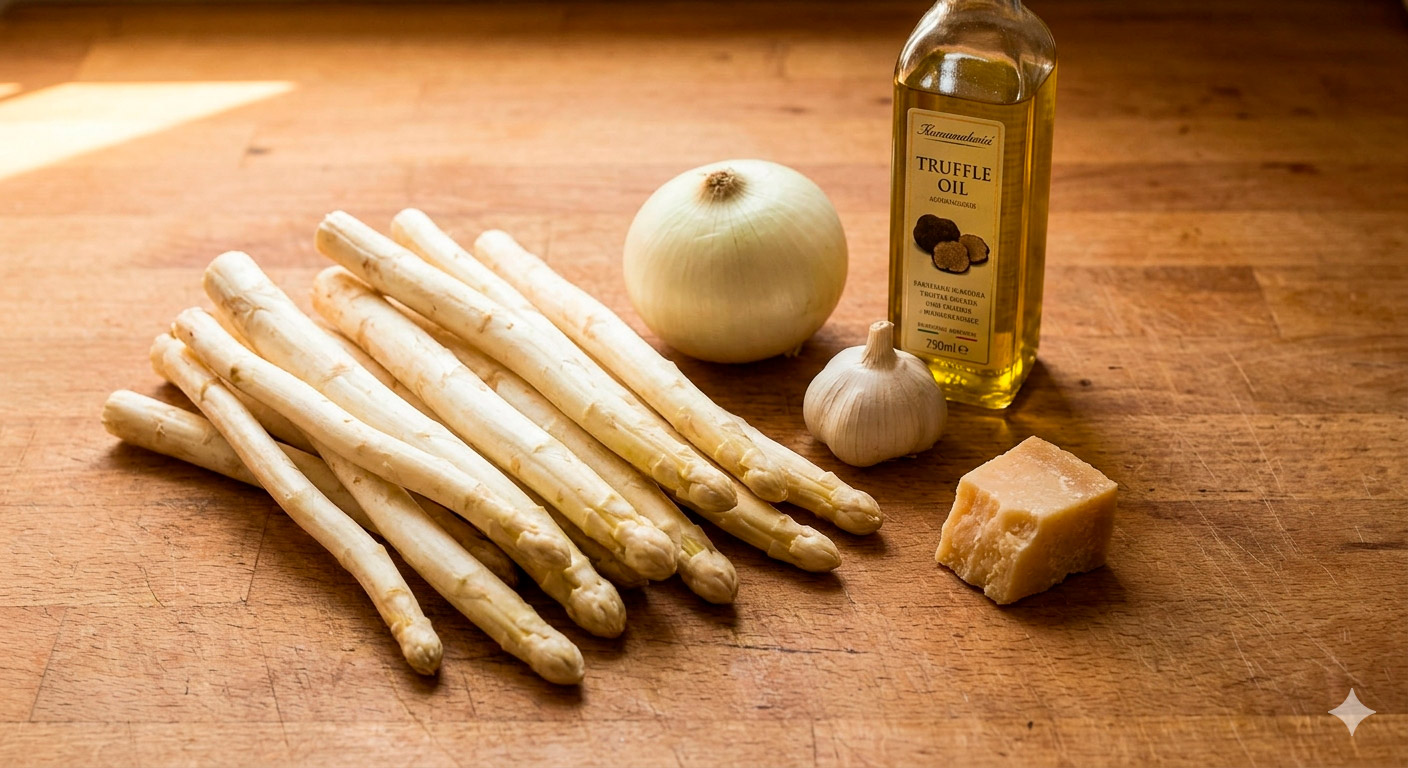
- 800 g fresh white asparagus
- 150 g floury potato (1 medium)
- 150 g leek, white part only
- 750 ml light vegetable broth, hot
- 100 ml cooking cream
Seasonings and optional
- 30 g unsalted butter
- 2 tablespoons extra virgin olive oil (EVOO)
- 1 teaspoon white truffle essence oil
- Fine sea salt to taste
- 1 pinch ground white pepper
- Fresh chives for garnish
How to make white asparagus cream with truffle step by step
- Step 1 — Meticulous preparation of raw materials: Gently wash the white asparagus to remove any soil residue. With a vegetable peeler, remove the outer skin from just below the tip to the base of the stalk, making a double pass on the lower third, where the toughest fibers are concentrated. Cut off the woody base (approximately 2 cm) and discard. Cut the stalks into uniform 1 cm slices and reserve the tips separately, as they require less cooking time and will be used for the final presentation. Peel the potato, cut into chunks. Clean the leek and slice only the white part thinly.
- Step 2 — Sautéing and building the flavor base: In a heavy-bottomed pot, add the butter along with the two tablespoons of extra virgin olive oil: the oil will prevent the butter from burning. Add the chopped leek and a pinch of salt. Cook gently for about 8 minutes, aiming for the leek to become translucent and tender, being very careful that it does not take on a golden color, as this would alter the pristine color of the cream. Add the chopped asparagus stalks and potato chunks and sauté the whole mixture for another 5 minutes, stirring with a wooden spoon.
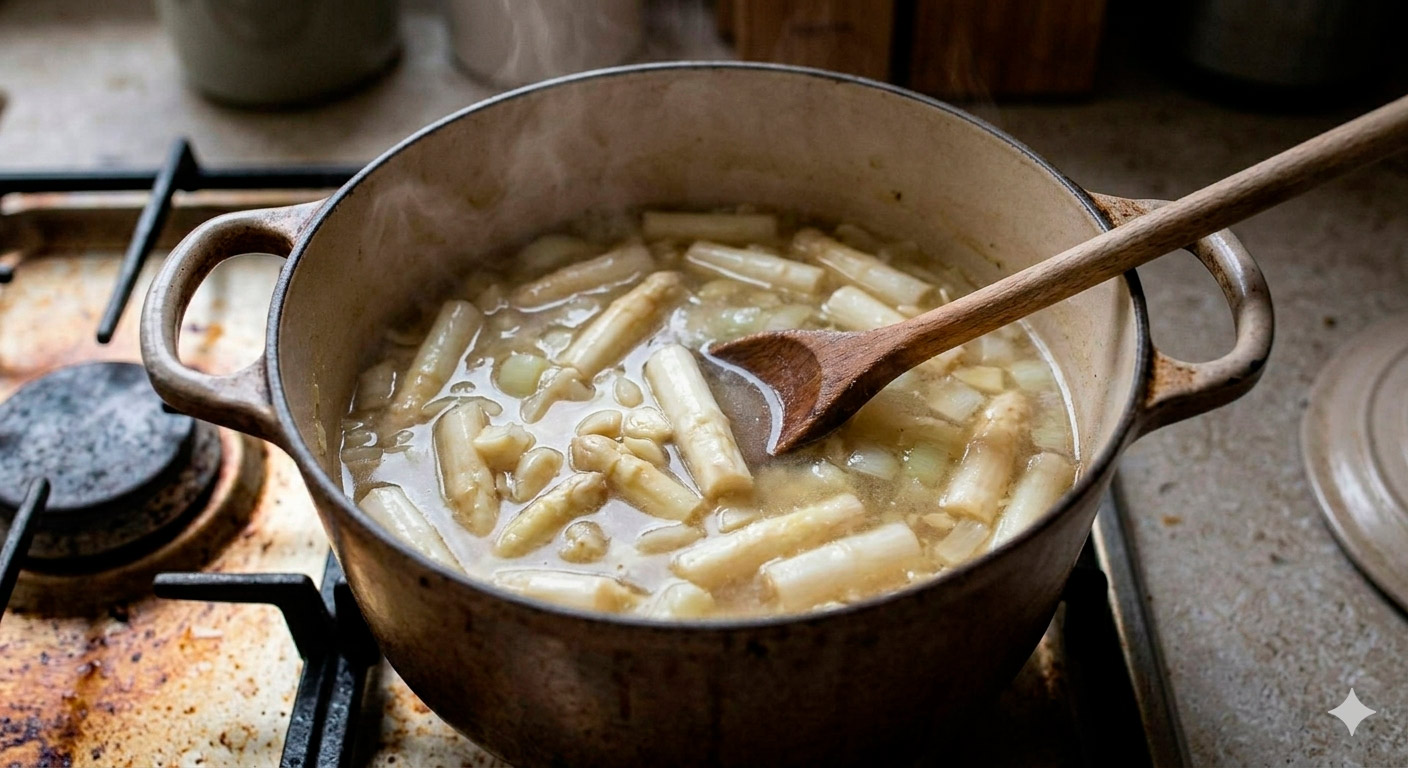
- Step 3 — Slow cooking and broth infusion: Pour the hot vegetable broth over the sautéed base. The liquid should be warm to not interrupt the cooking. It should cover the vegetables just by a finger’s width. Increase the heat until the first boil, reduce to medium-low intensity, cover the pot, and cook slowly for 15 minutes. When exactly 5 minutes remain, add the reserved asparagus tips so they become tender but remain whole.
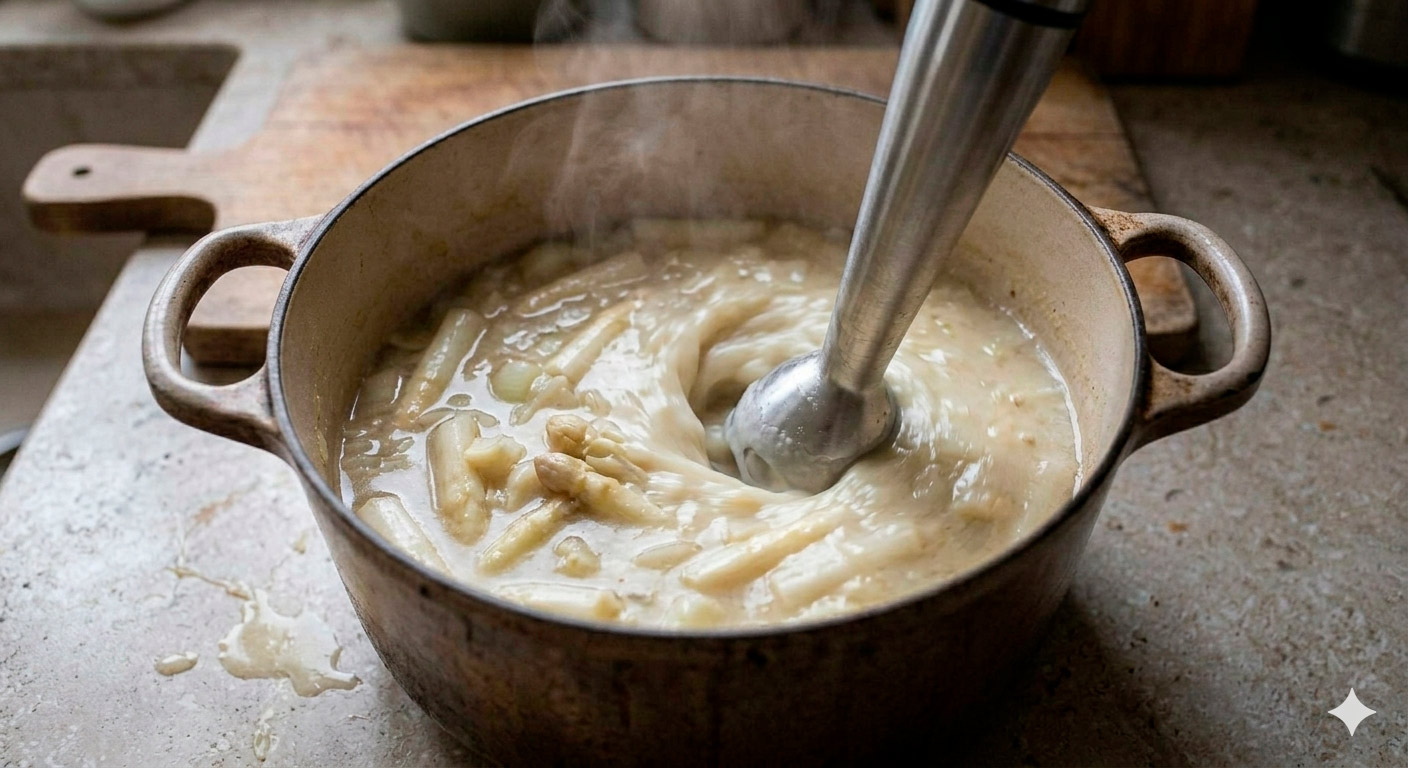
- Step 4 — The secret to silky smooth blending: Remove the tips with a slotted spoon and set them aside on absorbent paper. Remove the pot from the heat. With an immersion blender at maximum power, blend the contents until obtaining a fine puree. Add the cooking cream and continue blending for a full 2 minutes to aerate the mixture and achieve that fluffy, velvety texture. Pass the cream through a fine-mesh strainer or chinois: this step is vital to remove any remaining asparagus strands and ensure absolute mouthfeel fineness.
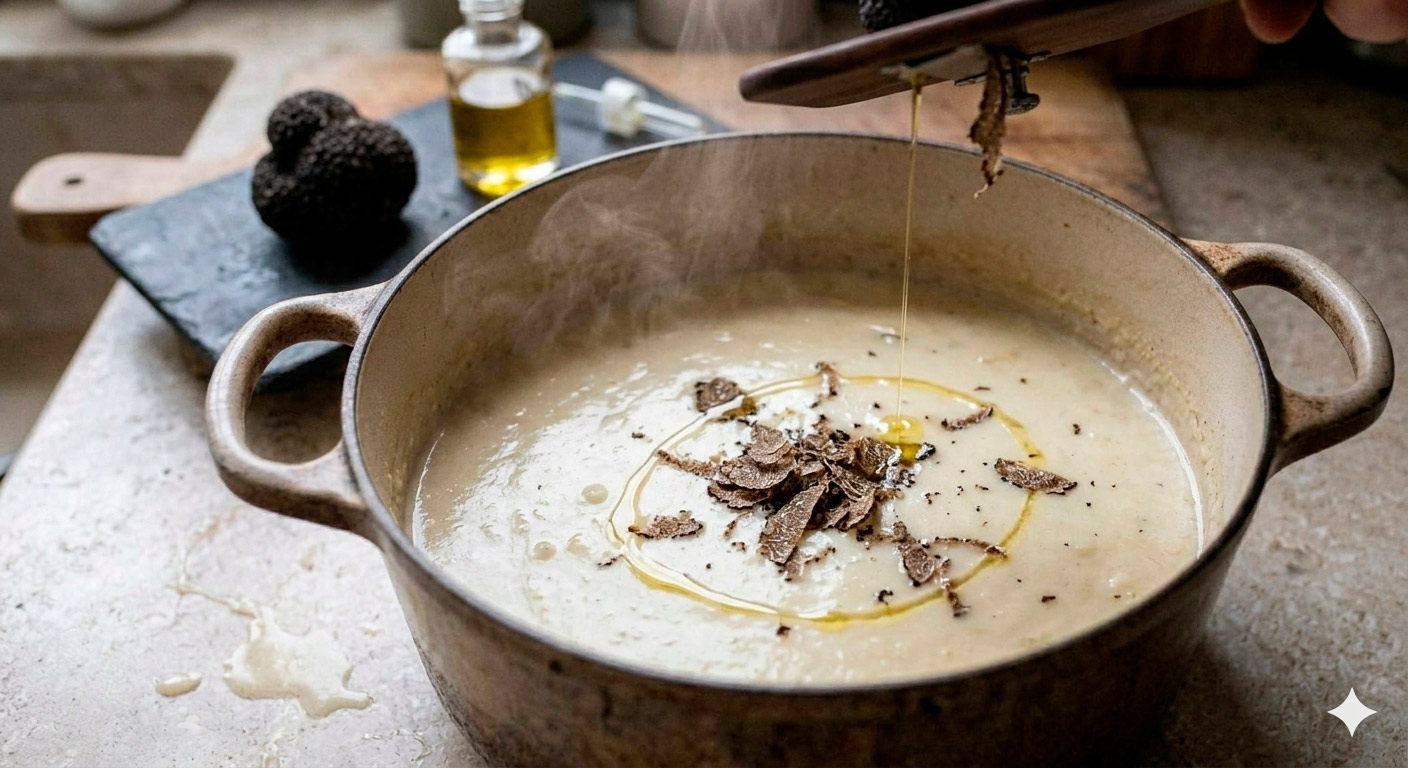
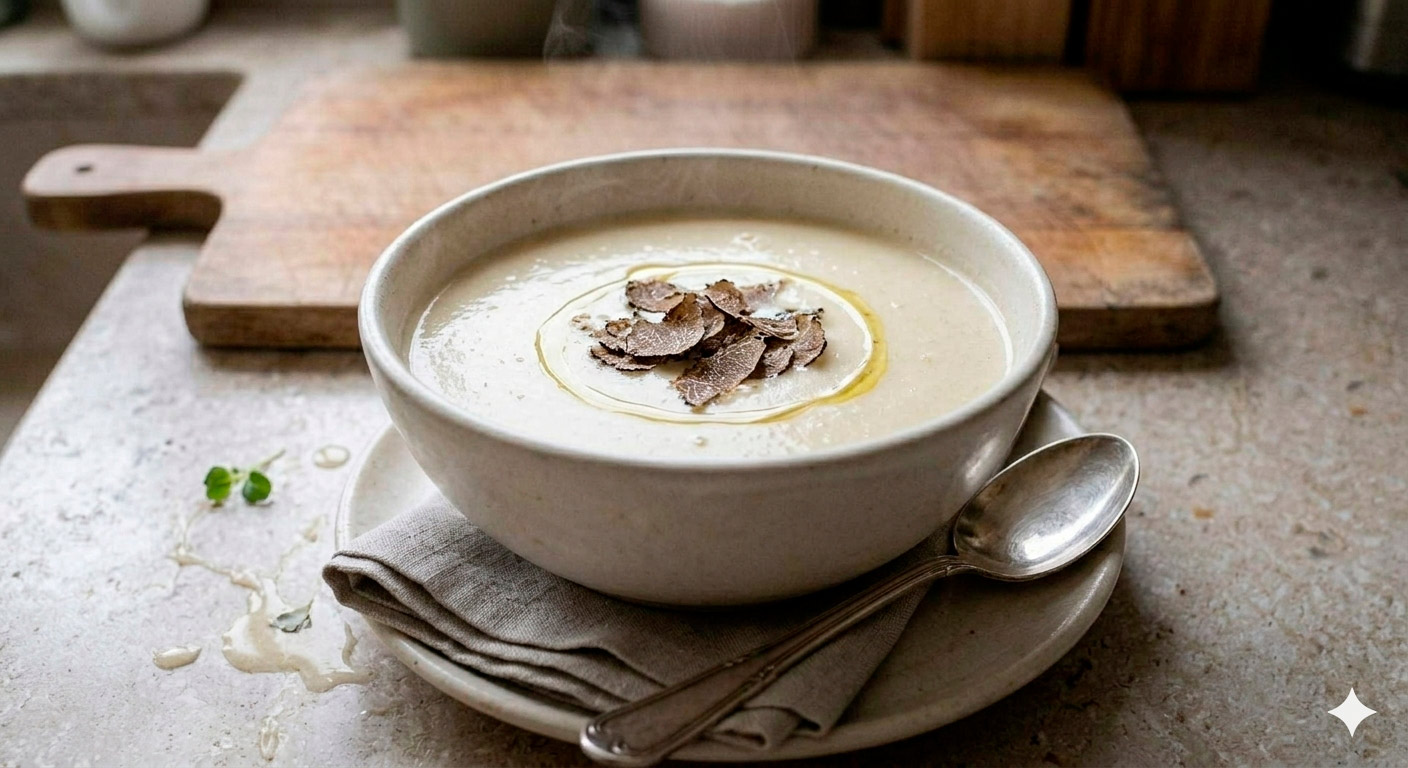
- Step 5 — The final touch and truffle perfume: Return the strained cream to the pot over minimum heat. Adjust the salt and add a pinch of ground white pepper. Just before turning off the heat, incorporate the teaspoon of white truffle essence oil away from direct heat and stir gently so the volatile aromas are trapped in the fat. Serve in warmed deep bowls, placing the asparagus tips in the center, a few additional drops of truffle essence, and finely chopped fresh chives.
Nutritional information for white asparagus cream with truffle
Approximate values per serving (4 servings total). Based on the ingredients described in this recipe.
| Nutrient | Per serving | % Daily Value* |
|---|---|---|
| Calories | 195 kcal | — |
| Protein | 4 g | 8% |
| Total Carbohydrates | 18 g | 6% |
| Total Fat | 11 g | 14% |
| Saturated Fat | 5 g | 25% |
| Cholesterol | 22 mg | 7% |
| Dietary Fiber | 3.5 g | 12% |
| Sugars | 4 g | — |
| Sodium | 380 mg | 16% |
| Vitamin C | — | 20% |
| Calcium | — | 6% |
*Percent based on a 2,000 kcal daily diet.
Expert Analysis: The master touch for perfect white asparagus cream with truffle
As a cook who has spent countless hours perfecting textures and flavor balances, I can assure you that the soul of this white asparagus cream with truffle resides in two irreplaceable technical pillars: thermal control and straining. White asparagus has bitter compounds in its outer skin that can ruin the experience if not thoroughly removed during the initial peeling. By combining it with leek during the sauté, we attenuate that bitter note thanks to the vegetable’s natural sugars, which act as mediators between the asparagus’s bitterness and the desired sweetness in the final result.
The addition of potato is not meant to overshadow the asparagus flavor, but to provide the necessary starch to stabilize the emulsion without needing to resort to excessive amounts of cream or flour. This makes white asparagus cream with truffle notably lighter and more digestible than traditional versions based on roux or bound with egg yolk.
The true technical challenge, however, is the management of the truffle essence. This aroma is highly volatile: if added while the cream is boiling vigorously, the perfume will evaporate up the kitchen hood instead of being trapped in the dish. The essence should always be incorporated away from direct heat, with residual heat as the only catalyst, allowing the earthy notes to emulsify into the fat of the cream and butter.
Regarding pairing, this white asparagus cream with truffle finds its perfect match in a white wine with a mineral and fatty profile, such as a Chablis Premier Cru or an Albariño from Rías Baixas. Both share the same tension between fresh acidity and white fruit notes that complement without competing with the intensity of the truffle. For a non-alcoholic option, medium-mineralization sparkling water serves to cleanse the palate between spoonfuls and clearly appreciate every nuance of this exceptional dish.
— El Godínez Hambriento, cocinasabroso.com
Tips for preparing the perfect white asparagus cream with truffle
The first tip, and perhaps the most important, is not to waste a single gram of flavor. The peels and woody ends of fresh asparagus, which normally go straight into the trash, hide an impressive concentration of flavor. Cook them in water with a pinch of salt and sugar for 20 minutes to obtain a concentrated base broth that you can use instead of the generic vegetable broth. The result is a white asparagus cream with truffle with a depth of flavor that surprises from the first spoonful.
Another critical aspect is balancing the bitterness. If the fresh asparagus is somewhat bitter — common in out-of-season or large specimens — add a tiny pinch of white sugar during the initial sauté with the leek. The sugar will not be detectable in the final flavor, but it will neutralize that excess bitterness without needing to mask it with more cream or butter.
The temperature of the dish is another detail that separates the good from the memorable. Always serve white asparagus cream with truffle in warmed deep bowls — just put them in the oven for two minutes at a low temperature. A cream served in a cold bowl quickly loses temperature, and with it, the ability to project the truffle aroma towards the diner’s nose, which is where eighty percent of any dish’s flavor is truly enjoyed.
Regarding storage, if you have leftover cream or decide to prepare it in advance, place it without the decorative tips in an airtight glass container, once completely cooled. It keeps for up to 3 days in the refrigerator. When reheating, use a saucepan over very low heat and stir constantly with a whisk. If it seems too dense after being cold, add a splash of additional vegetable broth before serving.
Regarding freezing: it’s not ideal. The potato and cream tend to separate or become grainy upon thawing. If you need to freeze it, do so before adding the cream and truffle essence, and re-emulsify with the blender after reheating slowly.
A common mistake to avoid is adding the truffle essence while the cream is at a full boil. As we explained in the expert analysis, the aromatic compounds of truffle are highly volatile and evaporate with strong heat. Always incorporate the essence off the heat or with the pot removed from the burner. This small discipline makes the difference between a cream with a decent truffle aroma and an irresistible white asparagus cream with truffle that leaves a lasting impression.
Finally, for those following a strict vegan diet: substitute the butter for an Arbequina variety extra virgin olive oil — which provides sweet, almond-like notes that harmonize perfectly with the asparagus — and replace the cream with unsweetened almond cream or cooking soy cream. The result is surprisingly similar in texture, and the truffle essence profile continues to shine with the same intensity.
Variations and substitutions for white asparagus cream with truffle
Cooking is a living, flexible canvas. This white asparagus cream with truffle allows creative variations that adapt it to different tastes, occasions, and dietary needs without losing its gourmet essence.
Strict Vegan Version: Substitute the butter with Arbequina variety extra virgin olive oil and the cooking cream with unsweetened almond cream or cooking soy cream. The creamy profile and projection of the truffle essence remain intact.
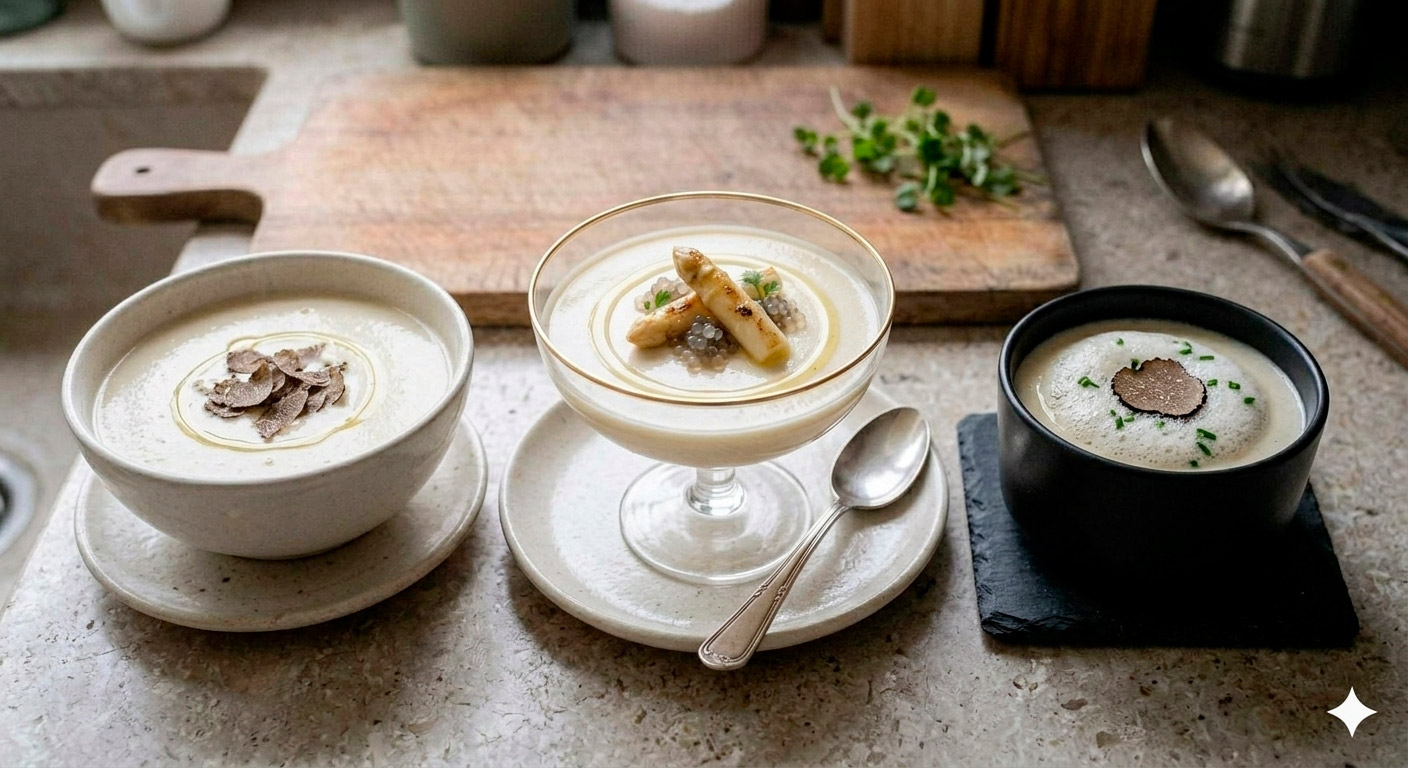
Crunchy seafood touch: Instead of garnishing only with chives, add some seared scallop dice in the center of the plate. The combination of seafood with truffle and asparagus is heavenly and turns the dish into a Michelin-star starter.
Iberian accent: Very thin slices of Iberian ham dehydrated in the oven for a few minutes provide a crunchy texture and a salty point that contrasts divinely with the velvety sweetness of the cream.
Version with canned asparagus: If using jarred white asparagus, omit the long cooking and the potato if looking for a lighter texture. Simply sauté the leek, add the well-drained asparagus, the necessary broth, and blend immediately with the cream. Keep in mind the flavor will be slightly more acidic.
Version with evaporated milk: To reduce fat content, substitute the cream with evaporated milk. It offers a fairly similar texture, although you will lose a small percentage of the creaminess that the cream brings to the final balance of the dish.
Frequently asked questions about white asparagus cream with truffle
Can I use jarred or canned white asparagus?
Yes, it’s completely viable and significantly speeds up the process. In this case, skip the prolonged cooking and the potato if you want a lighter texture. Simply sauté the leek, add the well-drained canned asparagus, the necessary broth, and blend immediately with the cream. Keep in mind the flavor profile will be slightly more acidic due to the usual preservatives in canning.
Can I freeze white asparagus cream with truffle?
It’s not ideal, as the potato and cream tend to separate or become grainy upon thawing. If you need to freeze it, do so before adding the cream and truffle essence. When recovering it, heat slowly and re-emulsify with the blender before adding fresh dairy and the essence.
How long does white asparagus cream with truffle last in the refrigerator?
It keeps in perfect condition for up to 3 days in an airtight glass container in the refrigerator, once it has completely cooled. When reheating, use a saucepan over very low heat and stir constantly to prevent the dairy from separating and losing the silky texture.
How many calories are in white asparagus cream with truffle?
It provides approximately 195 kcal per serving, with 11 g of fat, 18 g of carbohydrates, and 4 g of protein. It is a notably light starter for a creamy dish, making it an elegant and healthy option for any type of menu.
What is the difference between using white and black truffle essence?
White truffle (Tuber magnatum) has a more intense aroma with notes that slightly recall garlic and noble gas, combining extraordinarily with creams and dairy. Black truffle (Tuber melanosporum) is more earthy, sweet, and fruity. Both work in this recipe, but white truffle provides that unique perfumed sophistication that defines this white asparagus cream with truffle as truly irresistible.
Reference sources and resources
For more information on food safety and nutrition, consult WHO healthy diet guides.
Regarding the nutritional value of ingredients, you can consult The Nutrition Source from Harvard T.H. Chan School of Public Health.
Information on food composition available from the National Institute of Public Health of Mexico database.
Check our liability policy and legal notice before making decisions about your diet based on this content.