5 steps to classic irresistible garlic soup: The definitive Castilian recipe
Origin and history of classic garlic soup
Classic garlic soup, also known as Castilian soup, has its roots deep in the heart of Spain centuries ago. It was born specifically in the arid lands of Castile, a region of harsh winters and austere landscapes where shepherds and laborers needed energy to endure endless days under the freezing sky. It was not a banquet dish or palace fare: it was the breakfast of the man who left for work before dawn.
Its original ingredients were exactly what any peasant could gather without spending: hardened bread scraps from previous days, garlic grown in the family garden, available fat (whether oil or lard), and paprika, which in addition to providing color and smoky flavor acted as a natural preservative. Necessity was the mother of this recipe, as it is of so many great dishes of popular cuisine.
Over the centuries, garlic soup with fried bread and egg ceased to be exclusive to the Castilian countryside and conquered city taverns. There it became the preferred food of laborers, artisans, and students seeking to warm their bodies and fill their stomachs with little money. The dish’s fame grew so much that it eventually even found its way into aristocratic halls, proving that good taste knows no hierarchies.
A decisive historical moment for Castilian soup was Lent and Holy Week. During these days of abstinence when the Church prohibited meat consumption, garlic soup became the quintessential menu item throughout Spain. Without meat but with oil, bread, garlic, and egg, it provided enough energy and satisfaction to compensate for fasting. This association with religious tradition reinforced its presence in Spanish homes for generations.
Today, classic irresistible garlic soup with fried bread and egg is considered a Gastronomic Heritage of Castile and León, and appears on the menus of the most respected restaurants in Madrid and Salamanca. Recreating it at home is not just cooking: it’s connecting with centuries of history, ingenuity, and respect for humble ingredients that, when well treated, produce extraordinary results.
What is classic garlic soup and why should you make it at home?
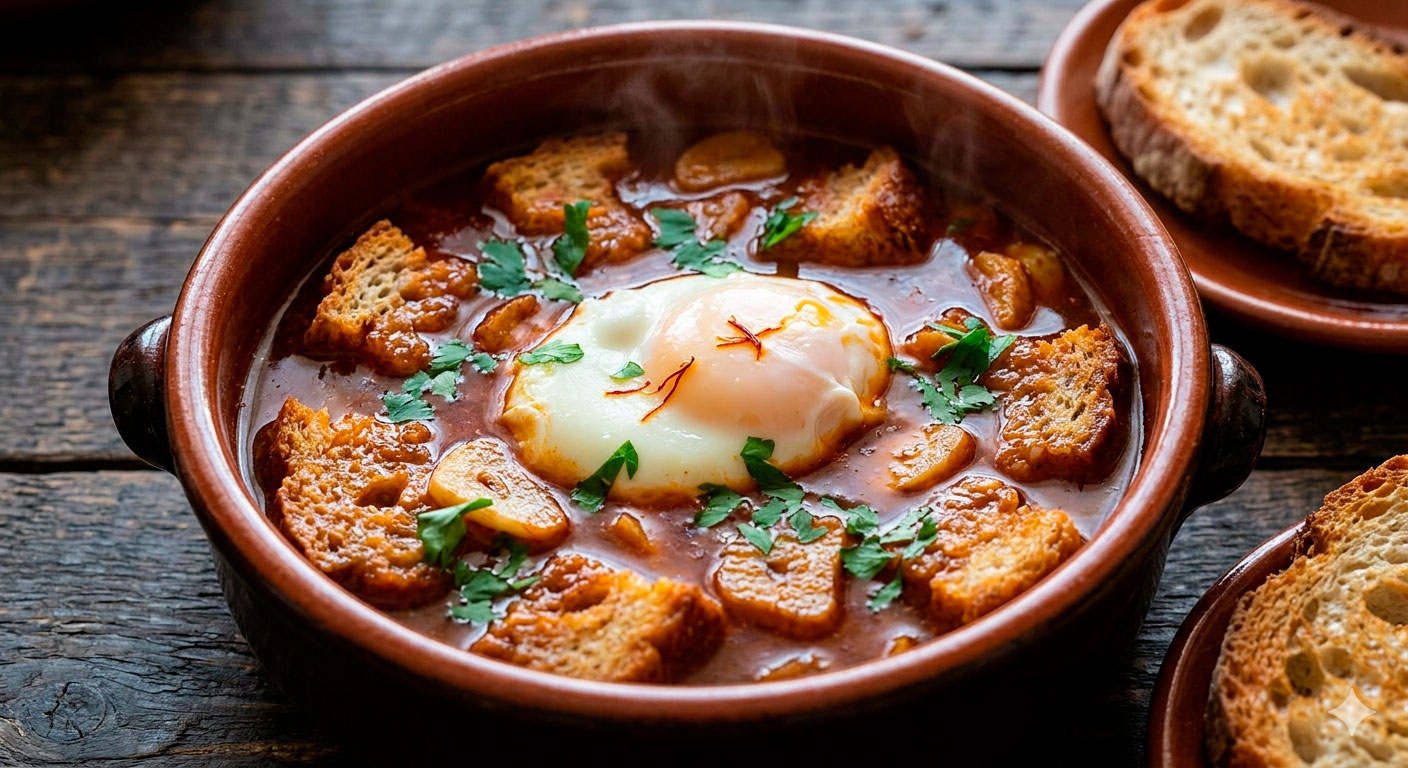
Classic garlic soup with fried bread and egg is one of the most iconic preparations in Spanish gastronomy and one of those dishes that demonstrate, with compelling evidence, that haute cuisine is born not from opulence but from ingenuity. With just a handful of ingredients that anyone has at home —garlic, stale bread, olive oil, paprika, and eggs— you achieve a comforting, nutritious result with a depth of flavor that surprises those who try it for the first time.
The key to this soup lies in the process, not the ingredients. Garlic sliced and slowly browned in extra virgin olive oil gradually releases its essential oils and sulfur compounds, perfuming the fat and providing an irreplaceable aromatic base. The stale country bread, which in any other context would be waste, absorbs that perfumed oil and toasts until crispy, then later yields its starches to the broth, acting as a natural thickener. The result is a thick, unctuous, full-bodied soup.
La Vera paprika is the second great protagonist. Its contribution is not just color: the smoking process the peppers undergo before grinding generates compounds that simulate the aromas of ancient wood fires on the palate. Garlic soup made with quality La Vera paprika tastes different, deeper, more honest, more authentic. There is no valid substitute for this ingredient.
The egg poached directly in the hot broth is the perfect finish to the recipe. When the white sets from the broth’s heat and the yolk remains liquid inside, each spoonful becomes a double experience: first the density of the spiced broth, then the sudden creaminess of the yolk that breaks and emulsifies everything. It’s a dish that changes texture in your mouth as you eat, making it addictive.
In this classic irresistible garlic soup recipe, you will learn not only the steps but also the why behind each one. You will know exactly what temperature the oil should be when you add the paprika, why the bread must be day-old and not fresh, and when is the exact moment to cover the pot for the egg to be perfect. With that knowledge, you will never depend on a restaurant again to enjoy one of the great classics of Spanish cuisine.
This dish is ideal for autumn and winter months, although at El Godínez Hambriento’s home it is prepared all year round. It’s a quick dinner after an exhausting day, a comforting first course for Sunday family meals, and the best known home remedy for colds. Garlic’s allicin has recognized antiviral and antibacterial properties; the hot broth hydrates and warms; the bread provides easily assimilated carbohydrates. It is medicine and pleasure in the same clay bowl.
Ingredients for classic garlic soup with fried bread and egg
Quantities for 4 servings.
Main ingredients
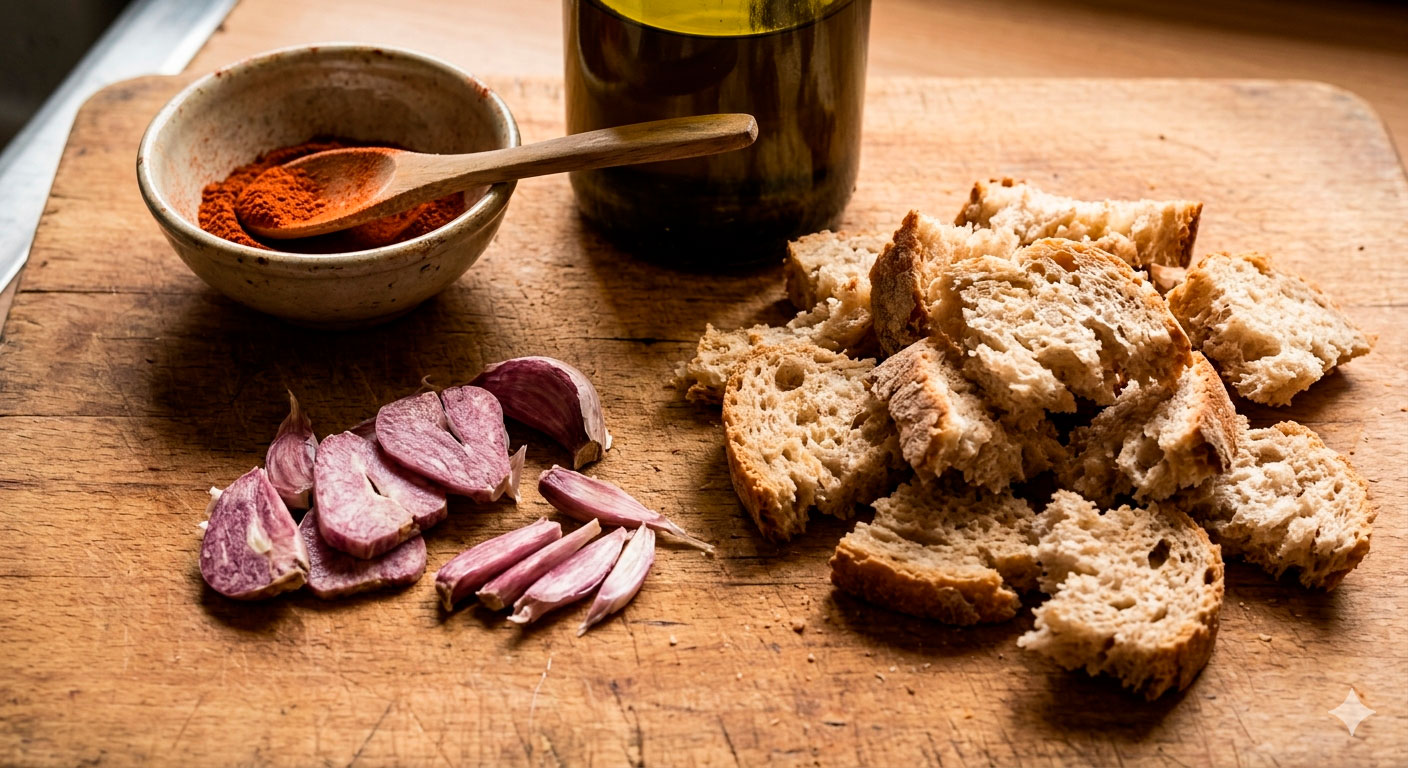
- 200 g stale country loaf bread
- 8 cloves of garlic
- 4 fresh eggs
- 1.2 liters chicken or vegetable broth
- 60 ml extra virgin olive oil
Seasonings and optional
- 1 tablespoon sweet La Vera paprika
- ½ teaspoon hot paprika (optional)
- Fine sea salt to taste
- Diced Serrano ham (optional, for the ‘everything’ version)
How to prepare classic irresistible garlic soup step by step
- The subtle browning of garlic: Place a clay pot or heavy-bottomed pan over medium heat with the extra virgin olive oil. Slice the garlic cloves into medium-thick rounds to prevent them from burning too quickly. Add them to the cold oil so they infuse the fat as the temperature rises. When they reach a light golden color and release their characteristic aroma, push them to the sides where the heat is less aggressive.
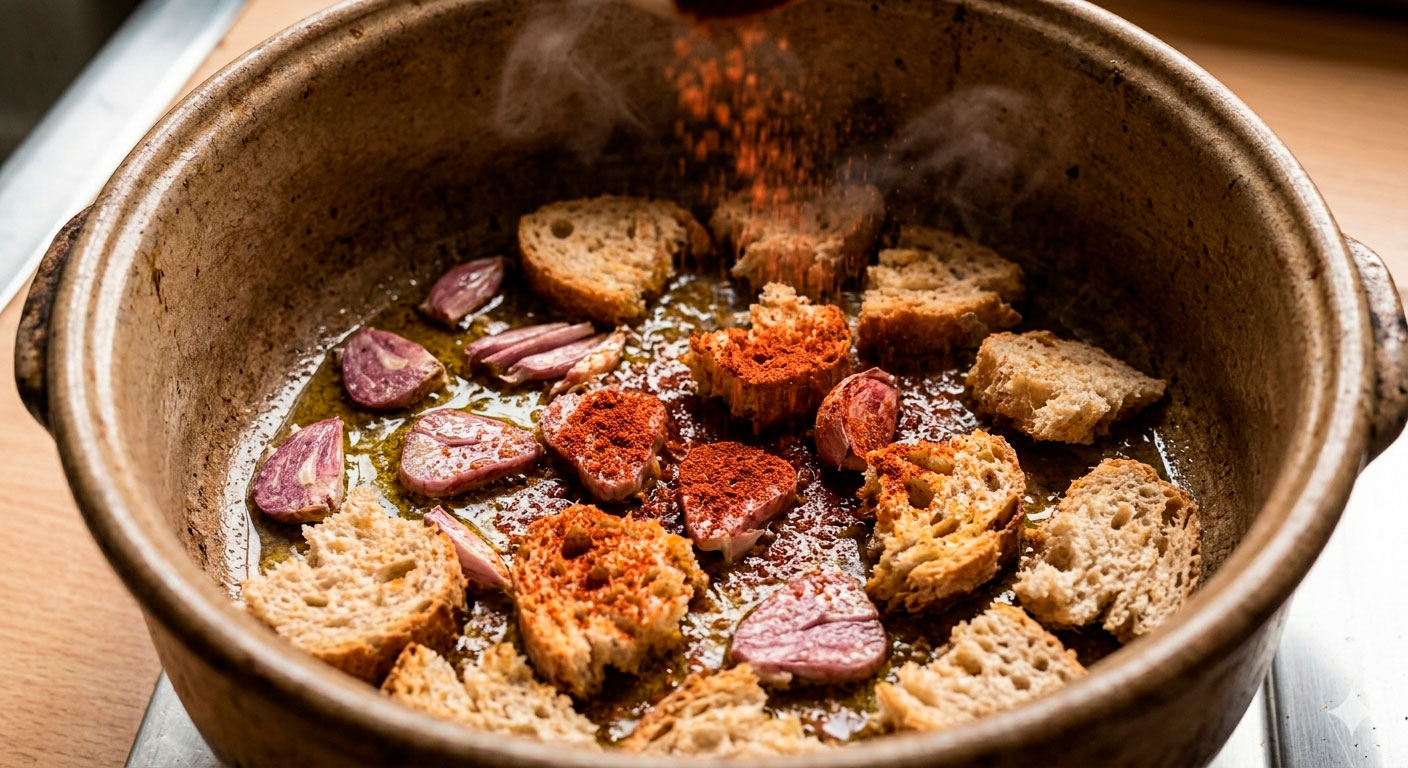
- The transformation and toasting of bread: Cut the stale bread into thin slices or rustic cubes as you prefer. Add them to the garlic-perfumed oil. Allow the bread to absorb the oil and toast evenly, achieving a crispy texture that will be the structural base of the soup. It should be well impregnated and a uniform golden color; do not rush this step.
- The smoky touch of paprika: Remove the pot from direct heat for a few moments. Add the tablespoon of sweet La Vera paprika (and hot paprika if desired). Stir quickly with a wooden spoon so the paprika cooks slightly with the residual heat of the oil without ever burning, as bitterness would ruin the entire preparation.
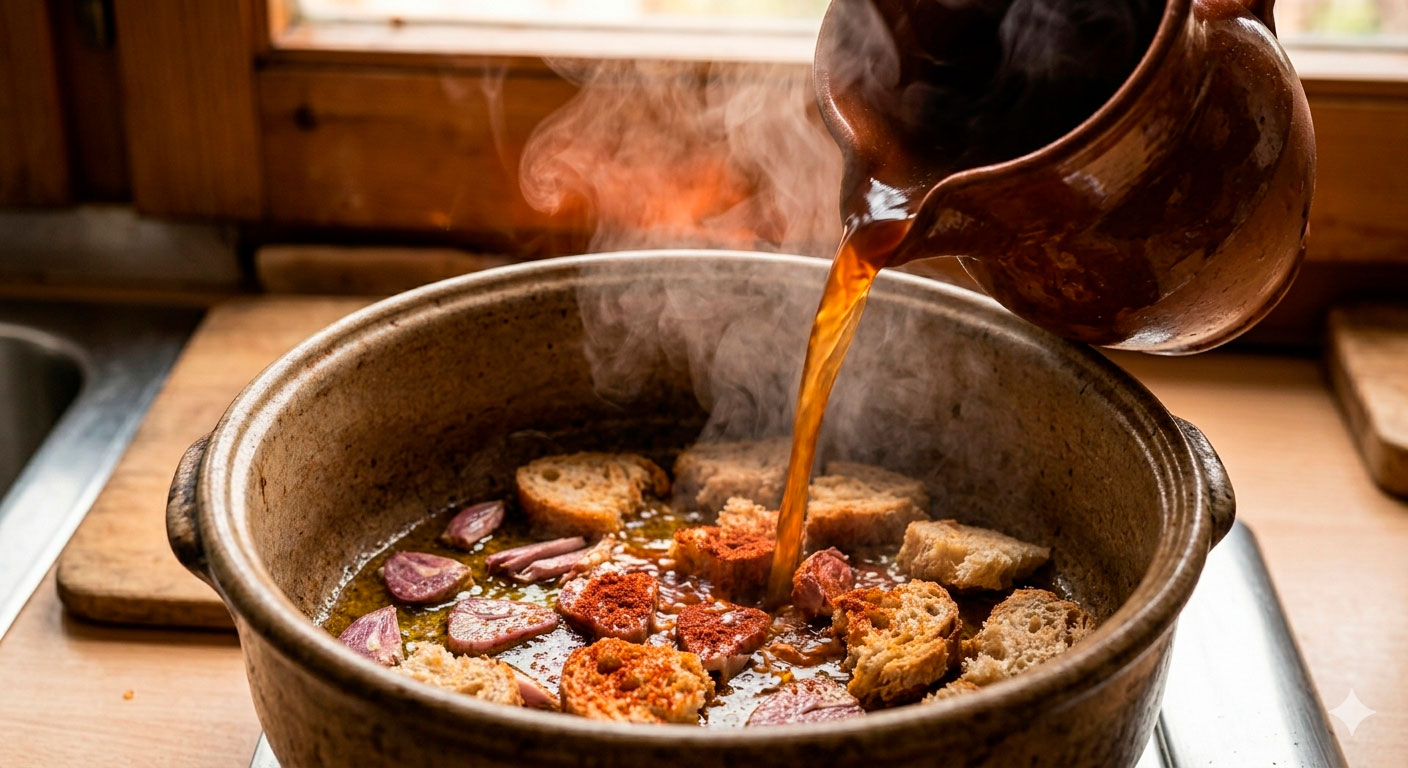
- The fusion of broth and slow cooking: Return the pot to the heat and gradually pour in the hot broth while stirring. Raise the heat until it comes to a boil. At that point, lower to low heat, partially cover, and let the mixture simmer gently for about 15 minutes. The bread will begin to break down, thickening the broth and creating a thick, comforting texture.
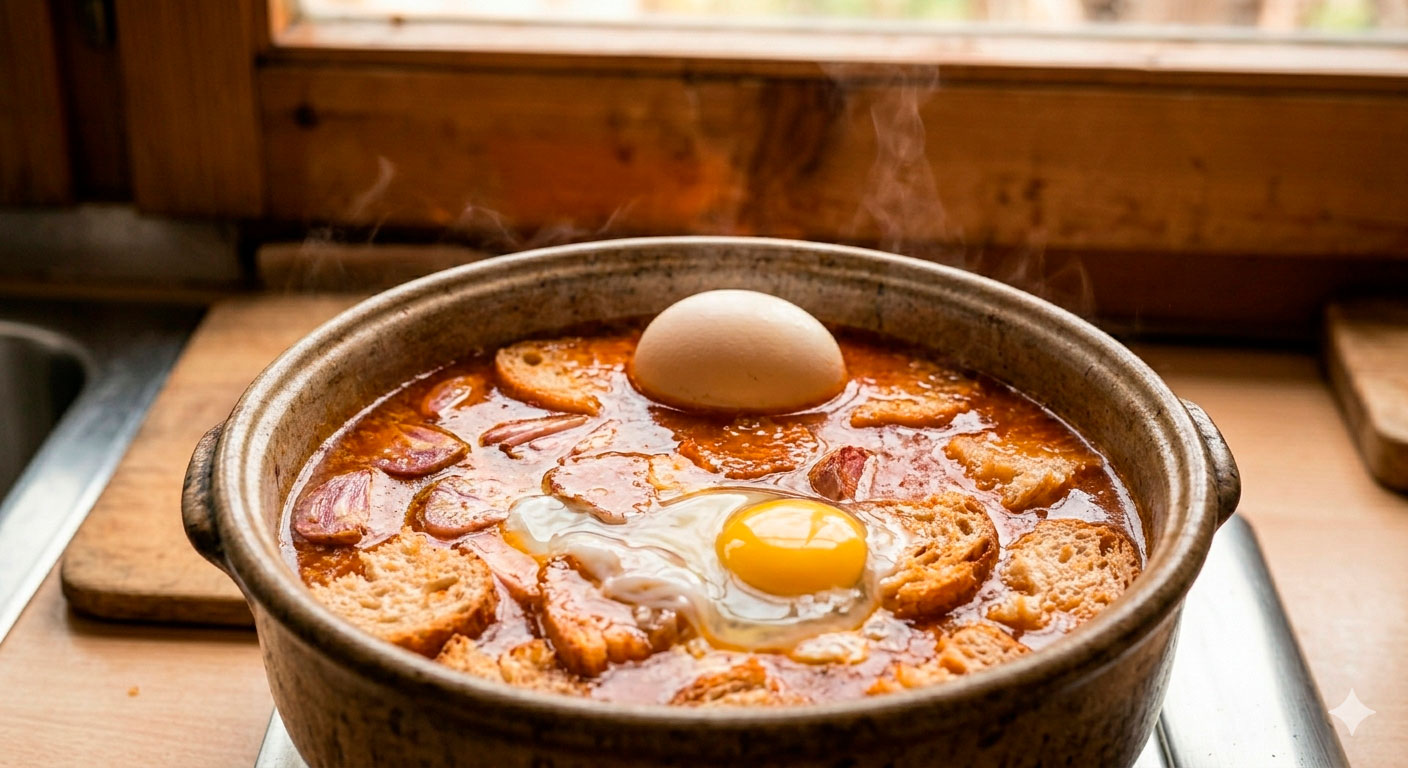
- The perfect poaching of eggs: With the soup already thickened, adjust the salt. Crack the eggs one by one and gently drop them onto the surface of the soup, keeping some distance between them. Cover the pot completely and let the heat of the broth cook the whites until they become white and opaque, keeping the yolks runny and unctuous. Serve immediately in hot clay bowls.
Nutritional information for classic garlic soup with fried bread and egg
Approximate values per serving (4 servings total).
| Nutrient | Per serving | % Daily value* |
|---|---|---|
| Calories | 320 kcal | — |
| Protein | 12 g | 24% |
| Carbohydrates | 32 g | 11% |
| Total fat | 16 g | 21% |
| Saturated fat | 3.5 g | 18% |
| Dietary fiber | 2.5 g | 10% |
| Sodium | 680 mg | 30% |
*Percentage based on a 2,000 kcal daily diet.
Expert Analysis: The master touch for classic irresistible garlic soup
From my perspective after decades at the stoves, classic garlic soup with fried bread and egg is a master lesson in chemical and sensory balance that few dishes in world cuisine can match with so few ingredients. The success of this dish lies above all in the absolute control of temperatures during the frying process. That seemingly minor detail is everything.
Garlic provides sulfur compounds —mainly allicin— that are activated when the clove’s cells are broken by slicing. When these molecules come into contact with moderately hot oil, they transform and soften: they lose the aggressiveness of raw garlic and acquire a toasted sweetness that is the soup’s base perfume. If the oil is too hot, the garlic burns and those compounds become bitter and irritating. Temperature control in the first step is not optional: it is the foundation of everything that follows.
Bread fulfills a dual function that few recognize at first glance. In the frying stage, it acts as a sponge for the healthy fats of olive oil, absorbing the flavor of garlic and oil and creating a structural crispy texture. Then, during cooking in the broth, its starches gelatinize and yield to the liquid, acting as a natural thickener without needing to add flours or artificial thickeners. The maturity of the bread —at least one day of rest— is crucial: fresh bread does not have the porous structure needed for this double transformation.
La Vera paprika adds a smoky aromatic dimension that simulates the wood fires of ancient Castilian kitchens. Its production process —drying with oak smoke for weeks— imprints phenolic compounds and guaiacol on the ground pepper, which in the finished dish evoke nostalgia and rusticity. For pairing, I recommend a young red wine from Ribera del Duero or a Tempranillo from Rioja with good acidity, capable of cutting through the oil’s unctuousness and complementing the paprika’s smokiness. For those who prefer something non-alcoholic, a thyme infusion or water with a slice of lemon cleanses the palate perfectly between spoonfuls.
Signed: El Godínez Hambriento, cocinasabroso.com.
Tips for preparing perfect classic irresistible garlic soup
The first great professional secret for classic irresistible garlic soup with fried bread and egg is the quality of the bread. Run away from industrial sliced bread at all costs. Sliced bread does not have the thick crust or dense crumb that this recipe needs to absorb the oil, toast well, and then yield its starches to the broth. Always use a country loaf with crust, preferably one that has been resting in your kitchen uncovered for two days. If the bread is too fresh, you can cut it into slices and let it air-dry for a few hours before starting.
The second secret is handling the paprika. If the oil is excessively hot when you add it, it will burn in less than two seconds and the entire soup will become bitter, without remedy. The foolproof trick is to remove the pot completely from the heat before adding the paprika. The residual heat of the oil is more than enough to cook it slightly and release its aromas without burning it. Stir quickly with enveloping movements. Once you see the oil take on that bright red color and smell of toasted paprika (not burnt), return the pot to the heat immediately.
For the egg poached inside the broth, the trick is that the soup is very hot but not boiling vigorously when you add it. A gentle, steady simmer is perfect: it cooks the white without dispersing it throughout the pot. If the soup is boiling strongly, the movement of the liquid will disintegrate the egg and you will lose the presentation. Cover the pot immediately after adding the egg and use the lid to control the cooking of the white: the longer you leave it covered, the more set it will be. For a perfectly runny yolk, 3 to 4 minutes is usually sufficient.
The clay pot is not an aesthetic whim: it is a functional ingredient. Clay retains heat in a way that stainless steel or aluminum cannot match, keeping the soup at optimal temperature throughout the meal without needing to reheat it. If you don’t have a clay pot, use the thickest-bottomed one you have. Preheat it by adding hot water a few minutes before starting, so the material is warm before receiving the oil.
A very common mistake when storing leftovers is to keep the soup with the eggs already inside. The whites continue cooking with the residual heat and become rubbery the next day. Always store the soup without the eggs. When reheating, add a splash of broth to lighten the texture —which will have thickened a lot due to bread absorption— and add fresh eggs at the last moment, just before serving. The result will be like freshly made.
Variations and substitutions for classic garlic soup with fried bread and egg
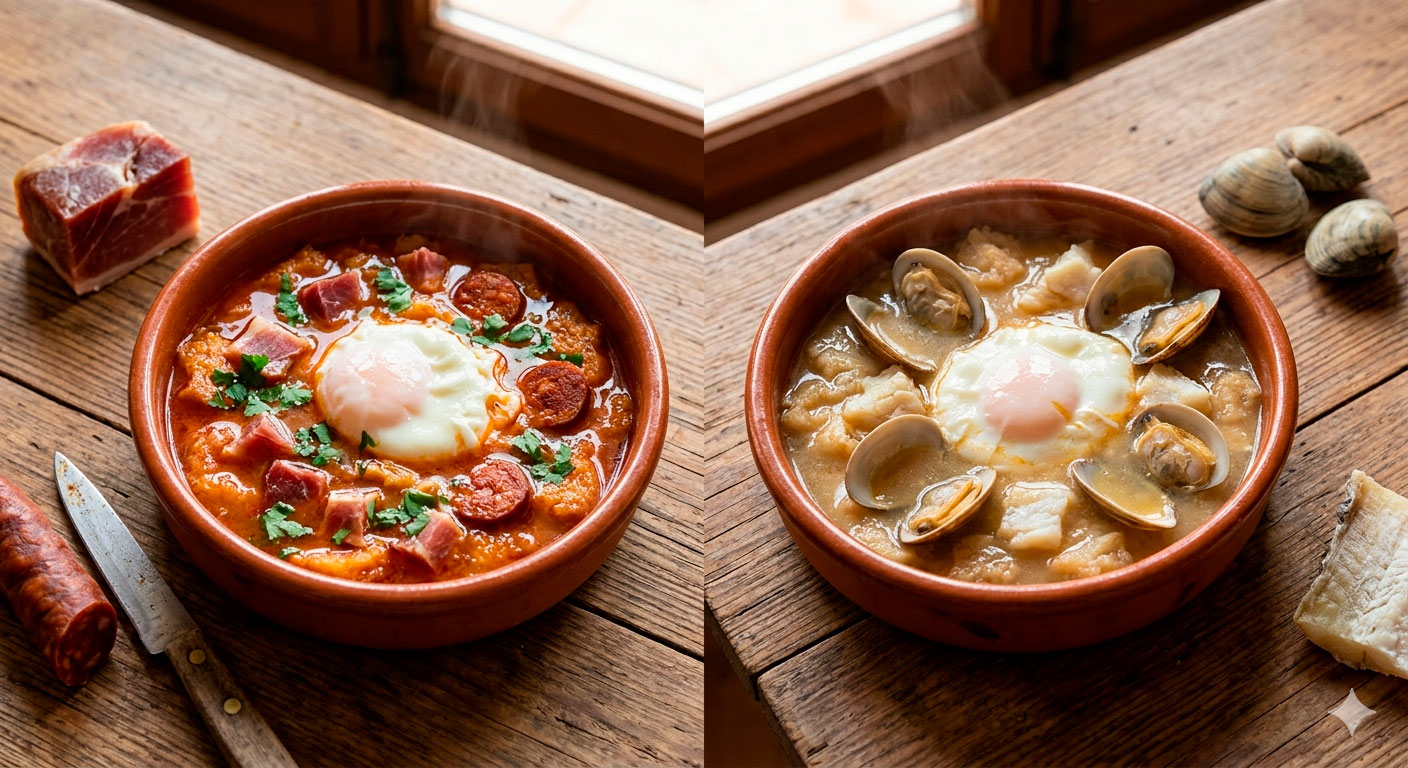
The most popular version after the classic is the “everything” garlic soup, common in many regions of Castile. In this variation, cubes of Serrano ham or slices of artisanal chorizo are added along with the garlic at the beginning of preparation. The fat released by these cured meats integrates with the olive oil and loads the broth with deep umami, notably intensifying the flavor. This is the ideal version for the coldest days of the year.
The seafood version is the coastal reinterpretation of this inland dish. The chicken broth is replaced with a concentrated fish stock, and fresh clams or shredded leftover cod are added when incorporating the broth. The result is a soup that maintains the Castilian soul —garlic, bread, paprika— but with the deep flavor of the sea. It is especially popular in the Cantabrian and Galician areas.
For a gluten-free version, substitute the country loaf with dense-crumb gluten-free bread made from rice or buckwheat flour. The final texture will vary slightly —the thickening is less pronounced— but the flavor of the broth will remain almost identical if you use good paprika and quality oil.
If you prefer a vegan version, the egg can be omitted without issue. Substitute the chicken broth with a robust vegetable broth (with leek, carrot, and celery) and add some cubes of smoked tofu or cooked white beans to compensate for the protein. The result is different in texture but equally comforting and full of flavor.
Frequently asked questions about classic garlic soup with fried bread and egg
Can classic garlic soup with fried bread and egg be frozen?
Freezing this soup is not recommended, as the structure of the soaked bread and egg whites is significantly damaged during thawing, losing texture and flavor. If you have leftovers, store the soup without eggs in the refrigerator and add fresh eggs when reheating for optimal results.
How long does classic garlic soup last in the refrigerator?
Without the eggs, garlic soup can be kept for up to 3 days in an airtight container in the refrigerator at 4°C or below. Over time, the bread absorbs more liquid and the soup becomes denser; add a splash of broth when reheating to restore the ideal consistency.
How many calories does classic garlic soup with egg have?
This recipe provides approximately 320 kcal per serving, with 12 g of protein, 32 g of carbohydrates, and 16 g of fat mainly from extra virgin olive oil. It is a comforting but moderate-calorie dish, perfectly balanced for a light dinner in cold months.
Can garlic soup be made without bread?
Stale country bread is the structural soul of this recipe: it acts as a sponge during frying and as a natural thickener during cooking. You can substitute it with dense-crumb gluten-free bread for a celiac-friendly version, although the result will vary in texture. Soup without bread loses the characteristic consistency and body of the original recipe.
What is the best way to serve Castilian garlic soup?
Classic irresistible garlic soup is best enjoyed in preheated clay bowls, which retain heat throughout the meal. Serve immediately after poaching the eggs so that the yolk is perfectly runny when broken. You can accompany it with an extra piece of toasted country bread and a thin drizzle of raw extra virgin olive oil over the surface.
Sources and reference resources
For more information on food safety and nutrition, consult WHO healthy diet guides.
Regarding the nutritional value of ingredients, you can consult The Nutrition Source from Harvard T.H. Chan School of Public Health.
Food composition information available at the database of the National Institute of Public Health of Mexico.
Check our disclaimer and legal notice policy before making decisions about your diet based on this content.
Related recipes you might be interested in: Soups and Comforting Stews · Easy and Quick Recipes.