6 Easy Steps for an Irresistible Mild Curry Cauliflower Cream
Origin and History of Mild Curry Cauliflower Cream
To understand this irresistible mild curry cauliflower cream, we must take a fascinating journey along two culinary routes that, separated by thousands of kilometers, eventually came together in kitchens around the world. Cauliflower has its roots in the eastern Mediterranean, probably derived from wild cabbage varieties cultivated in the ancient region of Turkey and Greece. The Romans greatly appreciated it, and centuries later it became a symbol of refinement in the kitchens of the French court during the 17th century, where it was associated with culinary elegance and the sophistication of good eating.
On the other hand, the curry we know today in the West is the result of a process of cultural syncretism as rich as its own aromas. In India, the term does not refer to a packaged powder, but to a complex mixture of spices called masala, which varies from region to region and from family to family, passed down from generation to generation like a culinary genetic code. When British merchants from the East India Company returned to Europe in the 18th century, they tried to replicate the flavors of Indian stews by creating a standardized powder that would standardize those ancestral mixtures.
The union of cauliflower with oriental spices flourished in Anglo-Indian cuisine and in the tradition of northern India, where preparations like Gobi Mattar (cauliflower with peas) or Aloo Gobi (cauliflower with potatoes) demonstrated that the slightly sulfury and sweet nuances of this cruciferous vegetable complemented extraordinarily well with turmeric, cumin, and coriander. These dishes established the precedent that cauliflower and curry are not just compatible: they are natural partners.
The mild curry cauliflower cream we present today represents a contemporary evolution of that historical heritage. It takes the philosophy of Indian cuisine of activating spices in hot fat — a technique known as tadka — and merges it with the European tradition of slow-cooked vegetable creams, the kind of dish that smells like home and embraces you from within with every spoonful.
This dish now belongs to the category of smart use recipes: economical, nutritious, and absolutely irresistible. In a context where fuel costs and processed food weigh increasingly on the family budget, cauliflower emerges as a silent hero of the pantry, capable of transforming, with the right spices, into a first course worthy of any table.
What is Mild Curry Cauliflower Cream and Why Should You Make It at Home?
Irresistible mild curry cauliflower cream is much more than a soup: it is a hug for the soul. It is a vegetable preparation with a silky texture and warm golden color, made from cauliflower slowly cooked with an aromatic base of onion, leek, and oriental spices, then blended until completely smooth. The result is a comforting dish that fuses the subtlety of European vegetable cuisine with the aromatic depth of the spices of the Indian subcontinent.
Cauliflower, often misunderstood because of the aroma it generates when boiled excessively, has extraordinary versatility. When combined with the warmth of curry, this cruciferous vegetable reveals a completely new personality: creamy, slightly sweet, and with a balance of nuances that awakens the senses in a way that few soups achieve. The secret is not to boil it excessively, but to sauté it first in spiced fat so that it absorbs the aromas before receiving the broth.
This mild curry cauliflower cream recipe is ideal for those looking for a weekday cooking option that does not require hours in front of the stove. With only 20 minutes of preparation and 25 minutes of cooking, you have on the table a dish that can serve both as an elegant starter for a weekend dinner and as a comforting main course on a winter night.
From a nutritional point of view, it is a smart choice: it provides significant amounts of vitamin C (50% of the recommended daily intake per serving), prebiotic fiber that cares for the intestinal microbiota, and a moderate caloric profile of only 185 kcal per serving. The coconut milk added at the end is not a whim, but a need for balance: its fat softens the astringency of the curry and rounds out the aftertaste of the dish without overloading the palate.
One of the great added values of this mild curry cauliflower cream is its economic accessibility. Cauliflower is one of the most affordable vegetables on the market, and the other ingredients — onion, leek, potato, curry powder — are available in any neighborhood store. That an economical dish has a spectacular taste does not depend on the budget, but on how it is cooked and the methods applied. This recipe is the living proof of that philosophy.
In this complete guide by El Godínez Hambriento for cocinasabroso.com, you will learn not only the 6 steps of preparation, but also the technical secrets behind each stage, the most common mistakes that ruin a cream and how to avoid them, the most creative variations of the dish, and the answers to the most frequent questions that arise in the kitchen. Get ready to become the king or queen of creams in your home.
Ingredients for Mild Curry Cauliflower Cream
Quantities for 4 to 6 servings.
Main ingredients
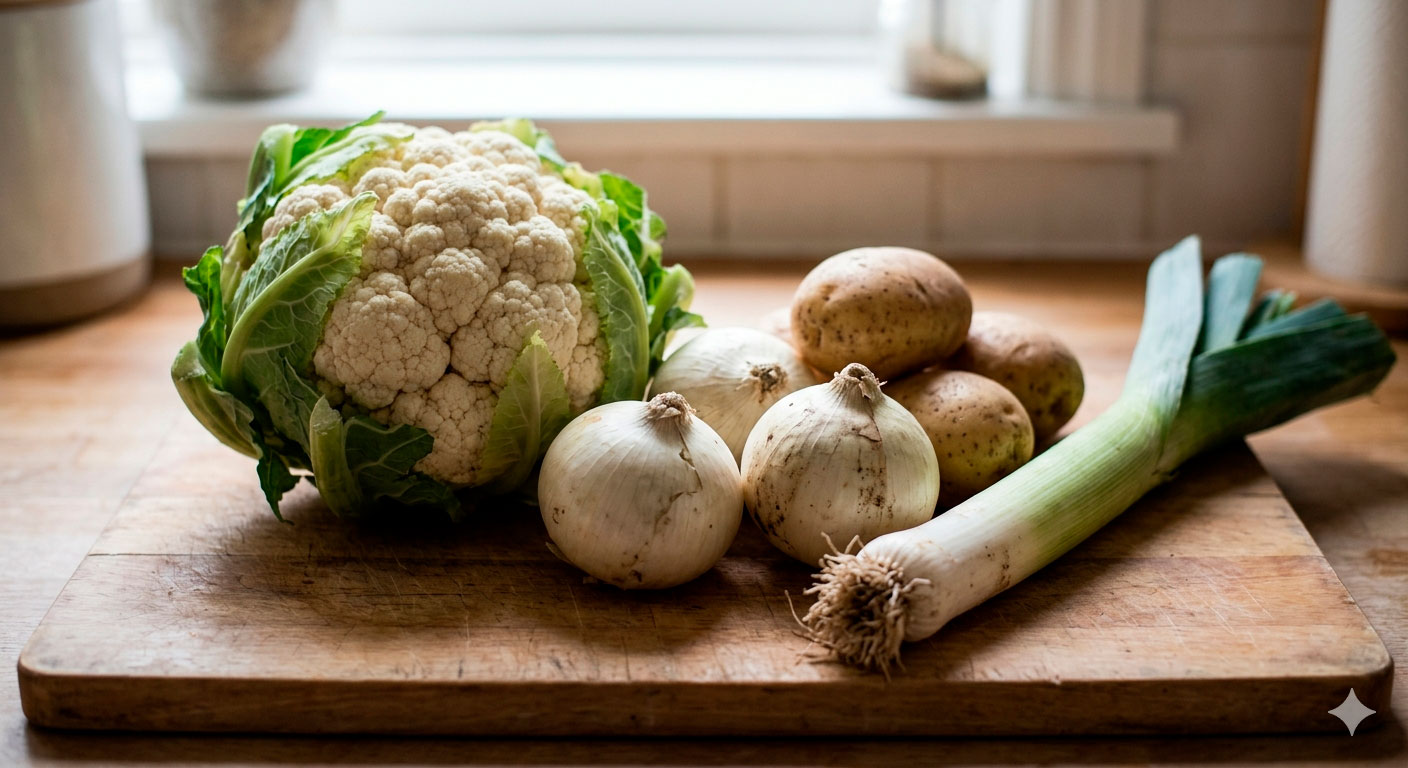
- 1 kg cauliflower, cleaned, in florets
- 1 large white onion
- 1 leek (white part only)
- 1 medium potato
- 1.2 liters homemade vegetable broth
- 200 ml coconut milk or light cream
- 2 tablespoons extra virgin olive oil
Seasonings and optional
- 1 tablespoon mild curry powder
- ½ teaspoon ground turmeric
- 1 teaspoon fresh grated ginger
- Fine sea salt to taste
- ¼ teaspoon ground white pepper
- 30 g sliced toasted almonds (for garnish)
- A few sprigs of fresh cilantro or chives
Ingredient names by region
| Spain | Mexico / Central America | South America |
|---|---|---|
| Patata | Papa | Papa |
| Puerro | Poro | Puerro / Ajoporro |
| Leche de coco | Leche de coco | Leche de coco |
| Almendras fileteadas | Almendras rebanadas | Almendras laminadas |
How to Prepare Mild Curry Cauliflower Cream Step by Step
- Cleaning, cutting and culinary selection: Break the cauliflower into uniform florets to ensure even cooking. Do not discard the central stem: remove only the outermost fibrous layer and chop the inside, which is rich in sugars and starches that will add body to the cream. Wash all vegetables under cold water. Finely chop the onion and leek and cut the potato into medium cubes. Maintaining uniformity in the cut is key so that all ingredients release their juices at the same rate during the sauté.
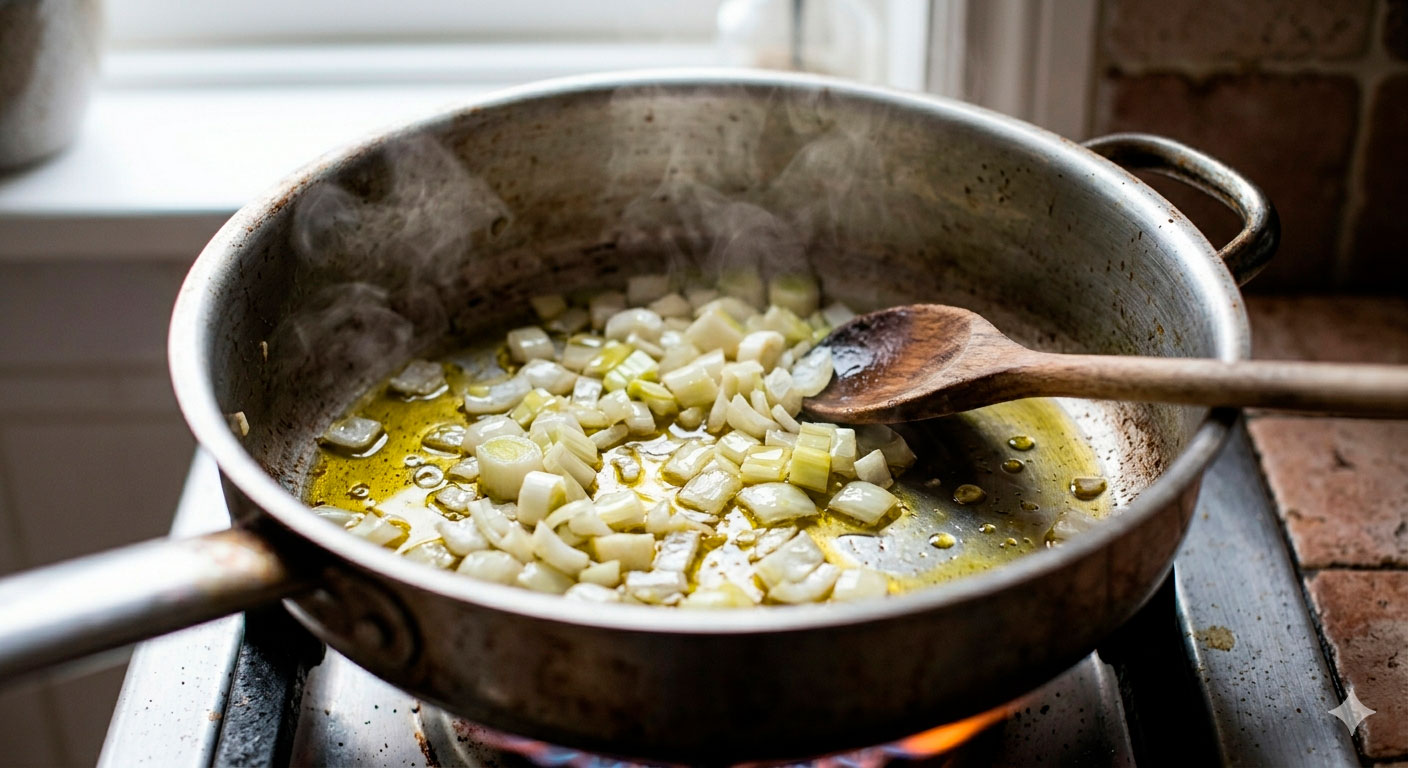
- Sweating the base vegetables: Place a heavy-bottomed pot over medium heat and pour in the extra virgin olive oil. When the fat reaches temperature, add the onion and leek with a pinch of salt. The goal is not to brown or caramelize, but to achieve sweating: the vegetables become translucent, soft, and release their natural sweetness without taking on color. This process takes 8 to 10 minutes over low-medium heat. A good sauté is the invisible foundation of any great mild curry cauliflower cream.
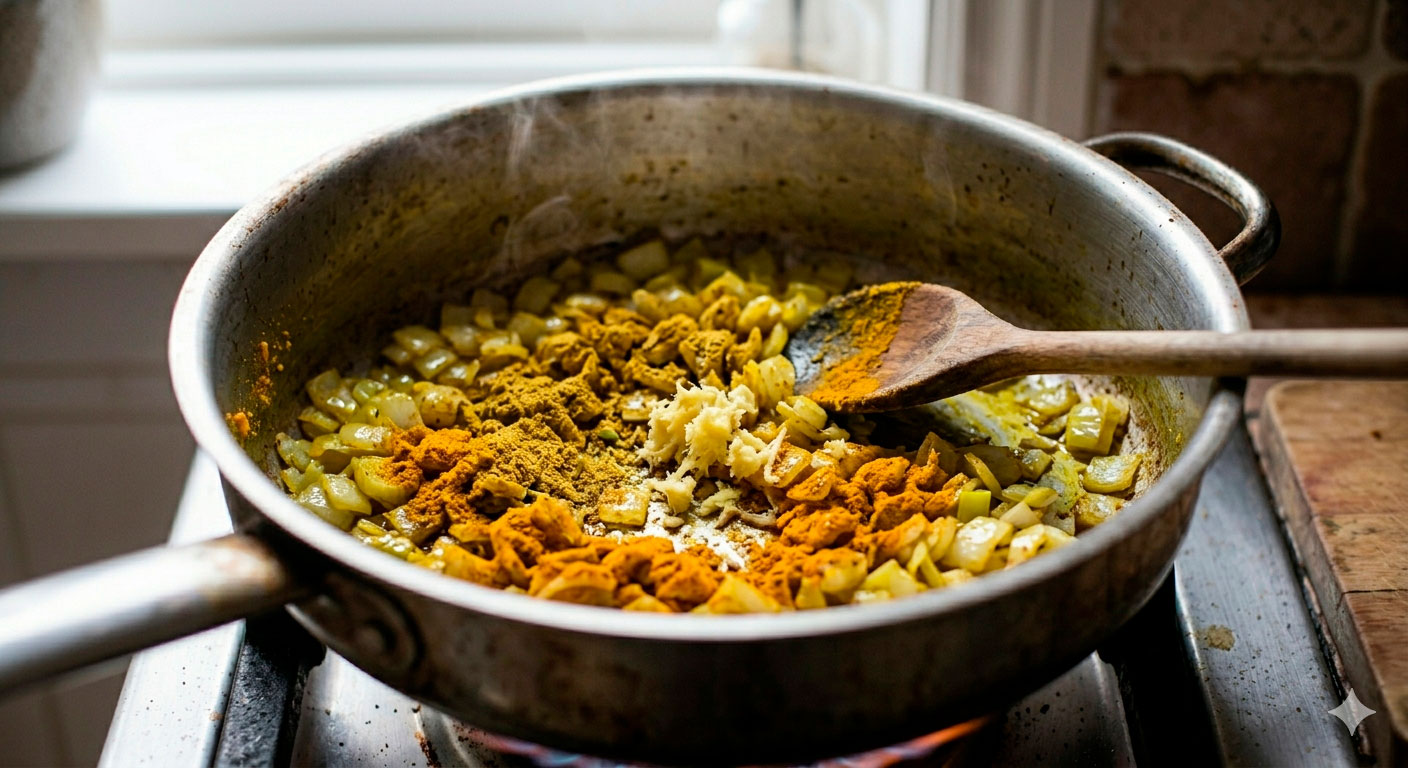
- Activating the spices and aromatics: Once the allium base is tender, add the fresh grated ginger, curry powder, and turmeric. This step is critical: spices contain fat-soluble essential oils that need contact with hot fat to awaken their full aromatic potential. Stir constantly for 60 seconds over low heat. You will notice how the kitchen fills with an intense, warm aroma. Watch that they do not burn, as burnt curry adds an irreversible bitterness that would ruin the cream.
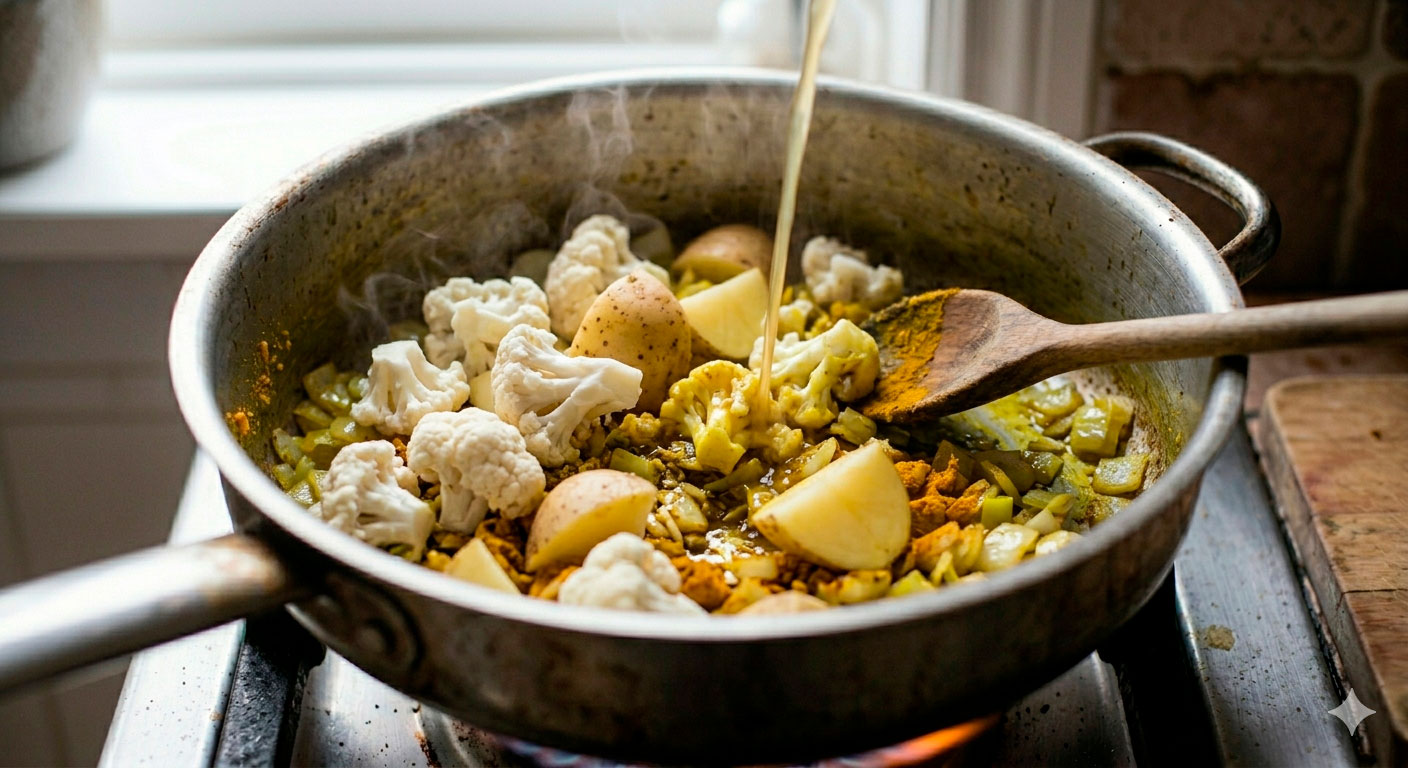
- Adding the vegetables and sautéing: Add the cauliflower florets and potato cubes to the fragrant pot. Stir well for 2 minutes so that all pieces are coated with the spiced fat and acquire a beautiful, even golden tone. This initial sauté allows the surface of the cauliflower to begin to soften and absorb the aromas before adding the broth.
- Slow cooking and flavor concentration: Pour in the hot vegetable broth to cover the vegetables. It is important that the broth is warm so as not to cut the cooking abruptly. Raise the heat until it comes to a boil and, at that moment, lower the flame to minimum, cover the pot, and let cook gently for 15 to 20 minutes. You will know it is ready when the cauliflower and potato feel completely tender when pierced. Five minutes before turning off, add the coconut milk.
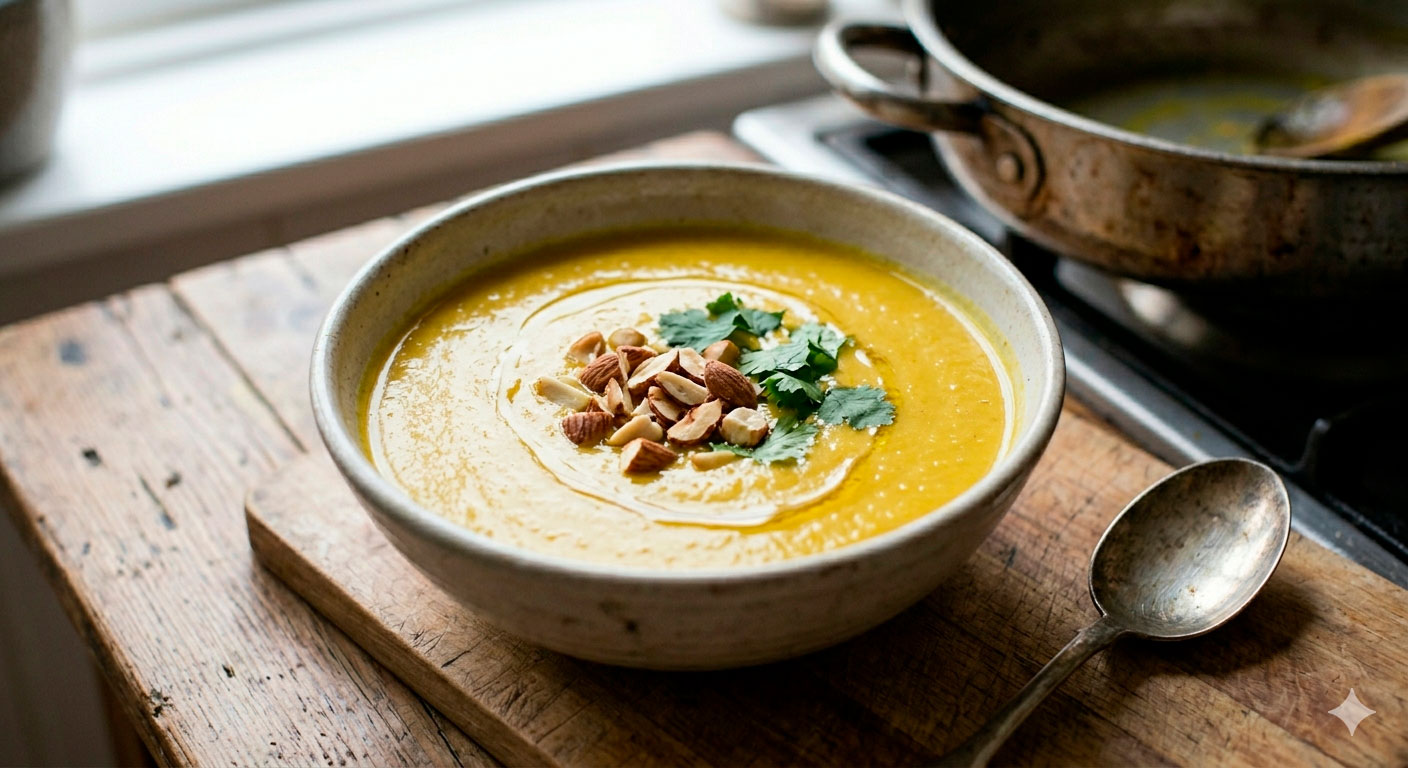
- High-power blending and plating: Remove the pot from the heat. With a powerful immersion blender or in a high-speed blender, process the ingredients at length until obtaining a completely smooth and silky texture. For extreme smoothness, pass the cream through a fine-mesh strainer. Adjust salt and white pepper. Serve the mild curry cauliflower cream hot in deep bowls and garnish with sliced toasted almonds and fresh cilantro leaves.
Nutritional Information of Mild Curry Cauliflower Cream
Approximate values per serving (recipe for 4 to 6 total servings).
| Nutrient | Per serving | % Daily value* |
|---|---|---|
| Calories | 185 kcal | — |
| Protein | 3.5 g | 7% |
| Carbohydrates | 16 g | 6% |
| Total fat | 8.5 g | 12% |
| Saturated fat | 3.1 g | 15% |
| Dietary fiber | 4.2 g | 17% |
| Sodium | 420 mg | 18% |
| Vitamin C | 45 mg | 50% |
*Percentage based on a 2,000 kcal daily diet.
Expert Analysis: The Master Touch for Mild Curry Cauliflower Cream
From a strictly gastronomic perspective, the success of this mild curry cauliflower cream lies in the management of textures and precise control of the sulfury aromatic notes characteristic of cruciferous vegetables. Cauliflower contains compounds called glucosinolates that, when subjected to prolonged cooking or high temperatures without the protection of aromatic fat, release an intense odor that often causes rejection among those not accustomed to this vegetable. By using the initial sauté method with olive oil and spices such as curry and turmeric, these volatile compounds are elegantly masked, transforming them into soft, slightly sweet notes that are irresistible.
The inclusion of potato is a classic technical resource to provide texture stability. Cauliflower, being rich in water, tends to release liquid after being blended if it does not have a binding agent. The starch of the potato acts by trapping free water molecules, preventing the cream from separating or acquiring a watery consistency on the plate. It is the difference between a cream that seduces visually from the first moment and a soup that disappoints in presentation.
The use of coconut milk is not merely a contemporary trend, but a need for chemical balance: coconut fat softens the astringency of the dry curry spices, providing a roundness in the mouth that prolongs the aftertaste of the dish without overloading the palate with heavy animal fats. For those who wish a pairing, this cream works splendidly with a floral and slightly fruity white wine, such as a Gewürztraminer from Alsace or an Argentine Torrontés, whose spicy notes dialogue with the curry without competing against it.
In short, mild curry cauliflower cream is an exercise in honest cooking where every technical decision has a reason behind it. It is not a dish of expensive ingredients or complicated techniques: it is the demonstration that applied knowledge with patience turns the ordinary into the extraordinary. — El Godínez Hambriento, cocinasabroso.com
Tips for Preparing a Perfect Mild Curry Cauliflower Cream
The first secret of this irresistible mild curry cauliflower cream is the broth. Never use plain water if you are looking for a memorable flavor. A homemade vegetable broth made with onion, carrot, celery, a piece of dried mushroom, and a bay leaf will provide the umami base necessary for the cream to have depth and complexity. Umami is the fifth basic taste, the one that generates a feeling of fullness and roundness, and it is what makes a dish stick in your gustatory memory.
The second key point is controlling the heat. If you acquire a curry that turns out spicier than expected, you can balance the dish at the end by adding a few drops of fresh lemon or lime juice just before serving. Acidity cuts the pungent sensation of spice on the tongue and refreshes the palate. You can also slightly increase the amount of coconut milk, whose fat acts as a shield against the heat of the capsaicinoid compounds present in some curry blends.
To achieve that texture that slides perfectly over the palate — the defining characteristic of a great mild curry cauliflower cream — pass the preparation through a fine-mesh strainer using the back of a cooking ladle. You will remove the small fragments of cauliflower fiber that resist the blades. This step, called professional straining, is what marks the difference between a homemade cream and a restaurant-level one.
Regarding the most common mistakes: the most frequent is raising the heat too much during the cooking phase. A mild curry cauliflower cream should never boil vigorously; excessive heat breaks down the aromas of the curry and makes the texture of the cauliflower pasty and irregular. Gentle cooking — just a slight simmer — is what brings out the best in each ingredient without destroying it.
If the cream is too thin, the solution is simple: let it reduce uncovered for 5 minutes or blend an extra cooked potato and incorporate it into the mixture. On the contrary, if it is too thick, add hot vegetable broth tablespoon by tablespoon until adjusting the consistency. Never add cold water directly to the hot cream: the sudden temperature change can curdle it.
For those following a vegan diet, this mild curry cauliflower cream is naturally suitable: all ingredients are plant-based. Just make sure the broth does not contain any animal components. If you need a certified gluten-free version, check the curry powder label, as some brands use flours as anti-caking agents. The version without potato is also perfect for low-carbohydrate diets, although the texture will be slightly less unctuous.
Variations and Substitutions of Mild Curry Cauliflower Cream
Version with a touch of corn and mint (sweet freshness)
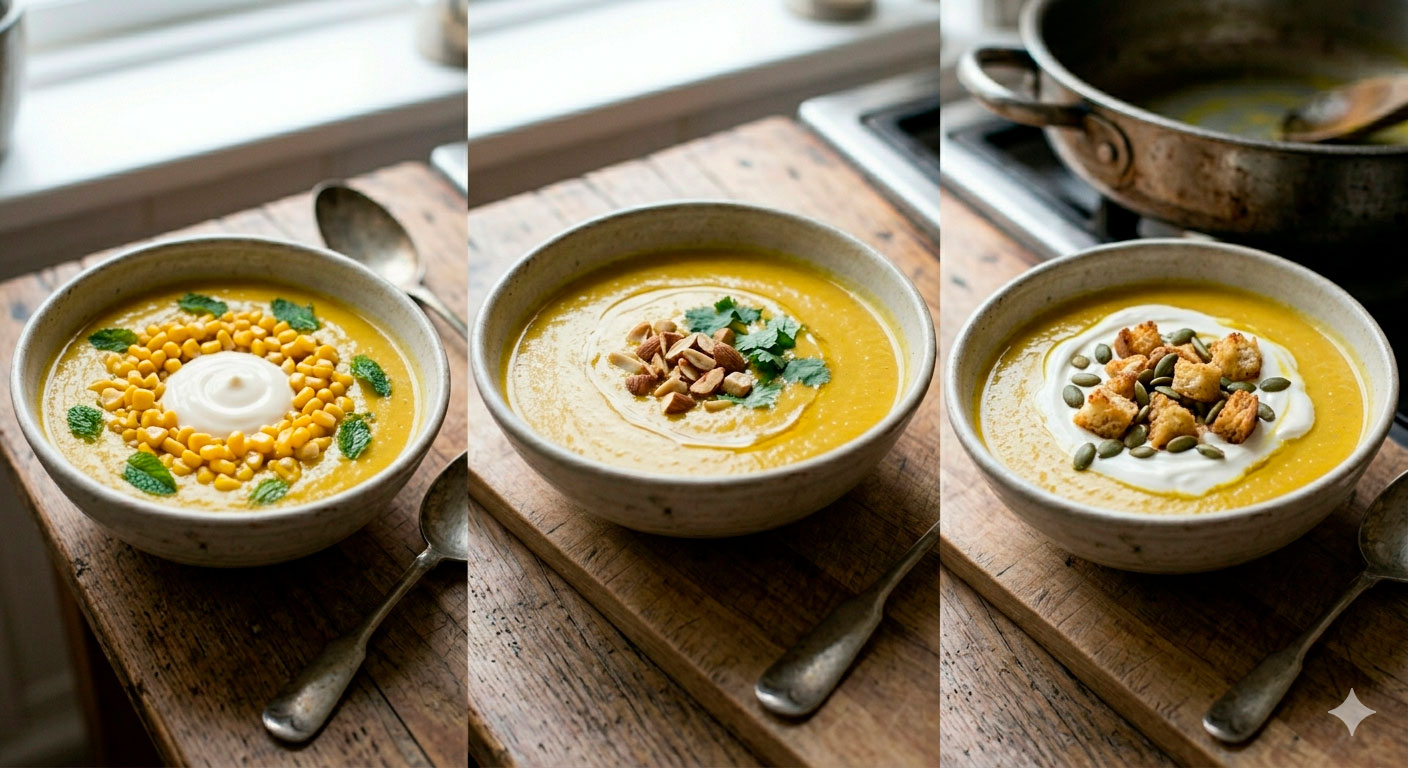
This economical variation completely transforms the profile of the dish by playing with textures and intensities. When serving, place a portion of mayonnaise in the center of the bowl; its acidity contrasts wonderfully with the curry. Distribute tender corn kernels around to add sweetness and a slight crunch when biting. Crown with whole fresh mint leaves, whose herbal aroma breaks the density of the cream spectacularly and refreshingly.
Crispy version with sour cream and pumpkin seeds
For those looking for a rustic texture play, this option uses ingredients of high nutritional value and low cost. Add a swirl of thick sour cream over the cream — its acidic touch balances the warmth of the spices —, irregularly cut croutons of day-old bread, and a handful of toasted pumpkin seeds. The seeds add healthy fats and quality protein to the preparation.
Possible substitutions
If you cannot find coconut milk, you can use oat cream (vegan option) or light cooking cream. Leek can be substituted with more white onion or spring onion. For an even lighter version, omit the potato and use roasted carrot instead, which will provide a different sweetness and a more vibrant color to the irresistible mild curry cauliflower cream.
Frequently Asked Questions about Mild Curry Cauliflower Cream
Can you freeze mild curry cauliflower cream?
It is not recommended to freeze this cream in its complete version because the potato and coconut milk lose their structure during the freezing process and, upon thawing, the texture can become grainy or separated. If you intend to freeze, prepare the base without potato or coconut milk, freeze it, and add both ingredients on the day you plan to consume it.
How long does mild curry cauliflower cream last in the refrigerator?
It keeps perfectly for 3 to 4 days in the refrigerator, stored in an airtight glass container below 4°C (40°F). If you notice the color turning grayish, the texture becoming excessively watery, or the aroma turning sour, it is a sign that it is no longer in good condition and you should discard it.
How many calories does mild curry cauliflower cream have?
Each serving provides approximately 185 kcal, with 3.5 g of protein, 16 g of carbohydrates, and 8.5 g of total fat. It is a light and satiating option thanks to its high fiber content (4.2 g per serving) and its low glycemic index, ideal for comforting dinners without guilt.
Can you make mild curry cauliflower cream without coconut milk?
Yes, absolutely. You can substitute it with light cream, oat cream, or almond cream. The flavor profile changes slightly towards more neutral or dairy notes depending on the substitute chosen, but the silky, irresistible texture of the cream remains intact. You can also use an extra potato blended in to compensate for the unctuousness.
What is the best way to serve mild curry cauliflower cream?
It is best served hot in deep bowls, with sliced toasted almonds and fresh cilantro as garnish. Accompany with toasted artisan bread, homemade croutons, or a light green salad for an irresistible texture contrast. For an elegant presentation, add a drizzle of extra virgin olive oil and a pinch of curry powder sprinkled on the surface.
Does mild curry contain gluten?
Curry powder is naturally a mixture of pure spices without gluten. However, some commercial brands add flours as anti-caking agents. Always check the product label and, if you have sensitivity or celiac disease, opt for a curry certified gluten-free.
Can I use frozen cauliflower for this recipe?
Yes, it is a practical option to save time. You can add the frozen florets directly to the aromatic sauté, taking into account that they will release more water when cooked, so it is advisable to slightly reduce the amount of initial broth to not lose flavor intensity in the final cream.
Reference sources and resources
For more information on food safety and nutrition, consult the WHO healthy diet guidelines.
On the nutritional value of ingredients, you can consult The Nutrition Source from Harvard T.H. Chan School of Public Health.
Food composition information available at the database of the National Institute of Public Health of Mexico.
You may also be interested in our recipe for more rich and easy creams at cocinasabroso.com or explore our quick and easy recipes for the whole week.
Consult our responsibility policy and legal notice before making decisions about your diet based on this content.