Origin and History of Tender Fava Bean Soup with Mint
To understand where tender fava bean soup with mint comes from, we must travel to the heart of the Mediterranean basin, the cradle of civilizations that learned to make the most of every seed that sprouted from the earth. Fava beans (Vicia faba) are one of the oldest legumes cultivated by humanity, with archaeological records dating back over 8,000 years to the Fertile Crescent and well-documented remains from the Neolithic era in sites across Syria, Turkey, and North Africa.
In ancient Egypt, fava beans were a sacred food with a dual role: sustenance for the workers who built the pyramids and a ritual offering in certain funerary rites. The Greeks and Romans massively integrated them into their daily diet, both in thick stews and brothy soups. It was precisely during the Roman Empire that the practice of flavoring legumes with fresh herbs gathered from the edges of fields began to be documented: mint, spearmint, and bay leaves were natural condiments that grew wild alongside irrigation ditches.
The specific combination of tender fava beans with refreshing herbs has deep roots in the traditional cuisine of southern Europe. In Andalusia, Spain, fava beans with spearmint have been part of the popular recipe book since medieval times. In Sicily, Italy, macco di fave is an ancient preparation that mashes fava beans into a cream and serves them with olive oil and aromatic herbs. In Greece and Lebanon, similar versions exist where mint elevates the dense flavor of the legume with a refreshing counterpoint.
In the Mexican and Latin American context, fava beans arrived with Spanish colonizers in the 16th century and naturally integrated into the culinary repertoire. Today, the tender fava bean soup with mint in its creamy, contemporary version is a proposal that rescues this millennial heritage, updates it with modern techniques, and makes it accessible to any kitchen, whether you are in Guadalajara, Mexico City, Madrid, or Buenos Aires.
This marriage of ingredients is a tribute to resourceful cooking and respect for the season: peasants harvested the fava beans in the morning and cooked them the same day, using the mint that grew wild to aid digestion of the legume. A solution that nature itself provided, and which remains as wise and delicious today as it was thousands of years ago.
What is Tender Fava Bean Soup with Mint and Why Should You Make It at Home?
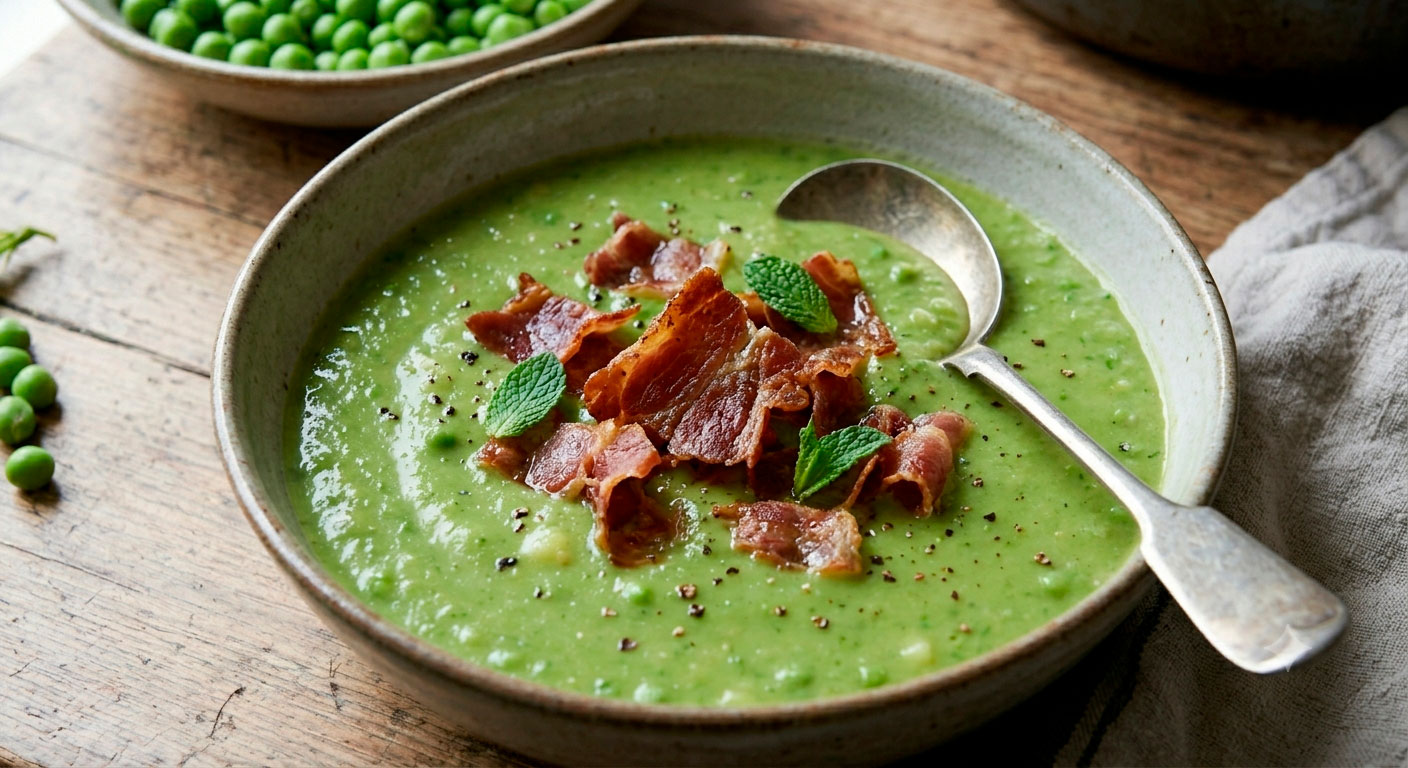
Tender fava bean soup with mint is one of those dishes that defies complexity with a vegetal elegance that is hard to match. It is a velvety cream made from fresh fava beans at their optimal point of ripeness, cooked with an aromatic sauté of onion, leek, and garlic, enriched with homemade vegetable broth, and finished with the addition of fresh mint leaves off the heat. The result is a brilliant emerald green, a silky texture, and a flavor that balances the earthiness of the legume with the herbaceous freshness of mint: an irresistible combination that surprises with every spoonful.
When fava beans are at their peak ripeness, they possess a delicate sweetness and a buttery texture that melts in the mouth. However, their earthy character requires a counterpoint to awaken the taste buds. That is where fresh mint makes its stellar appearance, transforming a comforting potage into a vibrant, light, and highly elegant delicacy. Unlike soups with heavy creams or flours as thickeners, this version uses the potato and the natural starch of the fava beans themselves to achieve creaminess without adding unnecessary calories.
Making this tender fava bean soup with mint at home has advantages that no restaurant can replicate. First, you control the quality of every ingredient: extra virgin olive oil, fava beans from the local market, the broth you made yourself with the week’s vegetables. Second, the aroma emanating from the pot as it cooks is itself a sensory experience that transforms cooking into a wellness ritual. Third, the cost per serving is significantly lower than any premium packaged soup, with a far superior gastronomic result.
This dish shines in spring, the natural season for tender fava beans in the countryside, although with the availability of quality frozen fava beans, it can be prepared all year round. It works perfectly as a first course for a light weeknight dinner, as an elegant starter for a Sunday family meal, or even served cold on hot summer days as a comforting green gazpacho. Its versatility makes it a recipe worth mastering and always keeping in your personal culinary repertoire.
Furthermore, tender fava bean soup with mint is naturally vegetarian, vegan, and gluten-free, making it inclusive for virtually any diner profile. Each spoonful provides 9 grams of plant-based protein, 7.5 grams of dietary fiber, and only 210 kilocalories, all backed by the healthy fats of olive oil and the digestive properties of mint. It is, definitively, one of those dishes where pleasure and nutrition go completely hand in hand.
Ingredients for Tender Fava Bean Soup with Mint
Quantities for 4 servings.
Main Ingredients
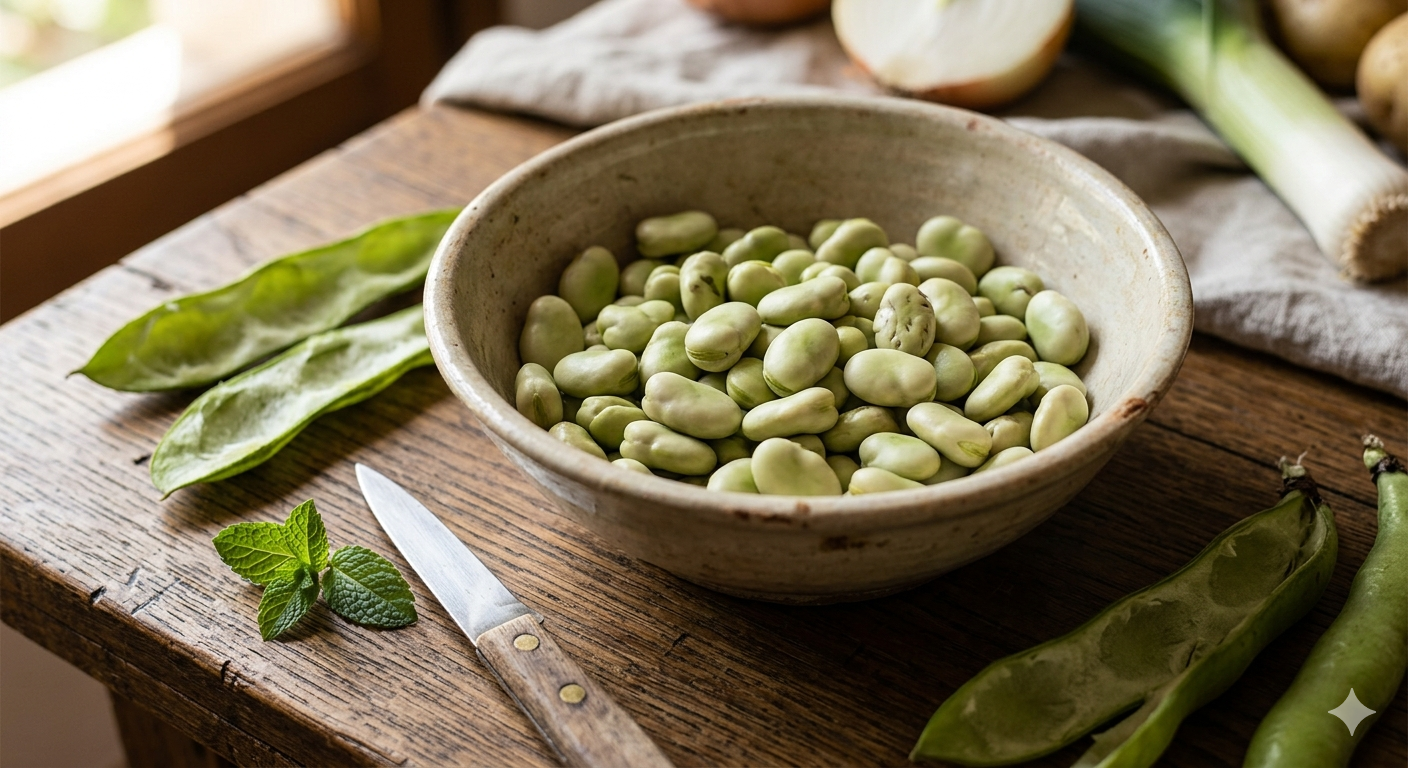
- 800 g fresh tender fava beans (already shelled)
- 1 liter homemade vegetable broth
- 1 medium white onion
- 1 leek (white part only)
- 1 small, good quality potato
- 2 garlic cloves
Seasonings and Optional Items
- 12–15 fresh mint leaves, cleaned
- 3 tablespoons extra virgin olive oil
- Sea salt to taste
- 1 pinch ground white pepper
- 4 tablespoons sour cream or Greek yogurt (optional, for garnish)
How to Make Tender Fava Bean Soup with Mint Step by Step
Before turning on the heat, have all vegetables washed, chopped, and ready. Cooking flows better when order reigns on the countertop.
- Shell and clean the fava beans: Remove the fava beans from their pods by pressing with your fingers along the natural seam. If they are small and tender, you can leave the skin on. If they are larger, blanch them for 30 seconds in boiling water, transfer immediately to a bowl of ice water, and press lightly to remove the outer skin. You will get a bright green color and a very fine texture.
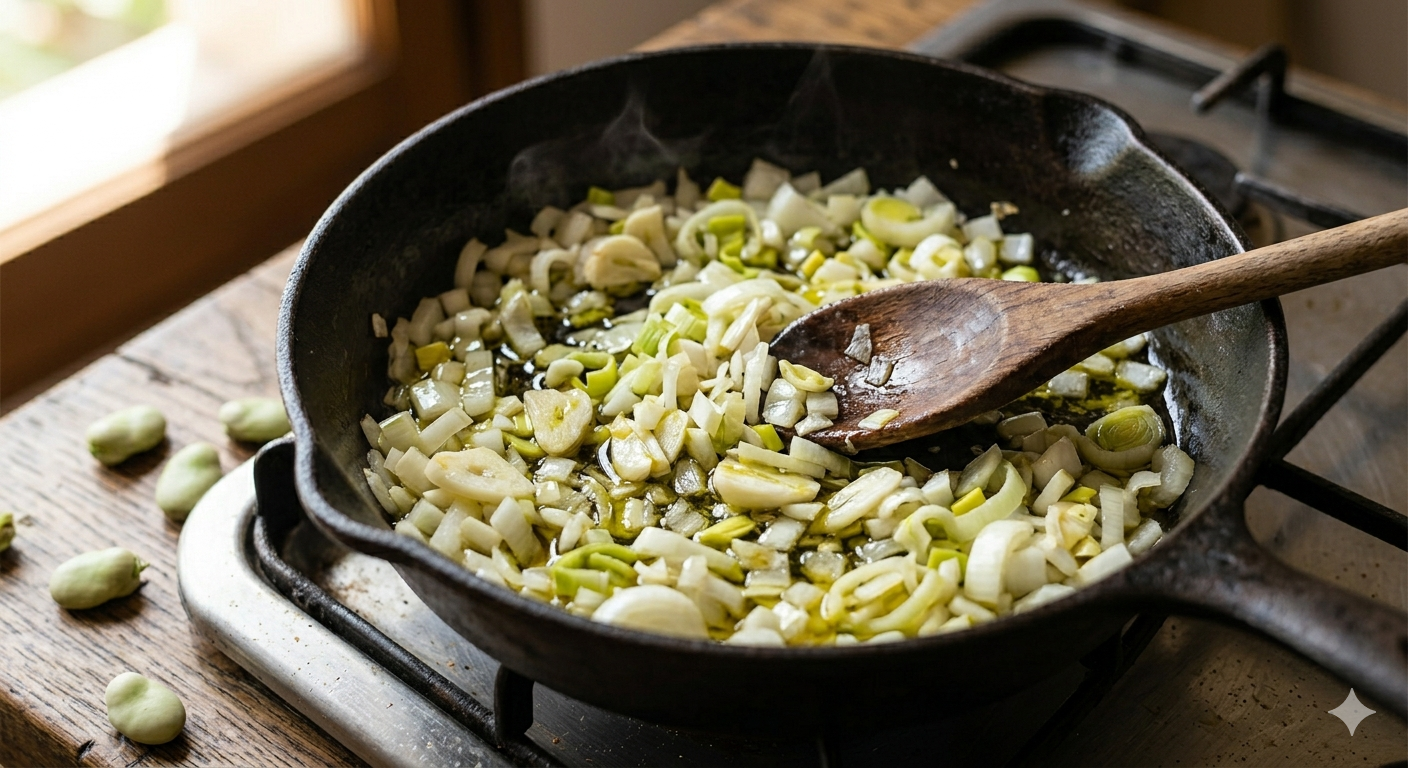
- Sauté the aromatic base: In a heavy-bottomed pot, heat the 3 tablespoons of extra virgin olive oil over medium heat. Add the finely chopped onion and leek along with the sliced garlic cloves. Add a pinch of salt so the vegetables sweat and release their natural sugars. Cook slowly for 8 to 10 minutes, without browning, to maintain the green clarity of the final result.
- Add potato and fava beans: Peel and break the potato into small pieces — breaking rather than cutting allows it to release its starch naturally, giving the soup a silky body. Add it to the sauté and stir with a wooden spoon for a couple of minutes. Gently mix in the shelled fava beans so everything is coated in the sauté.
- Simmer slowly: Pour the hot vegetable broth into the pot to cover the ingredients completely. Raise the heat until it comes to a boil, then reduce to medium-low heat. Cover the pot partially and let it cook for 15 to 18 minutes. You will know it is ready when the fava beans and potato pieces can be pierced with a fork without resistance.
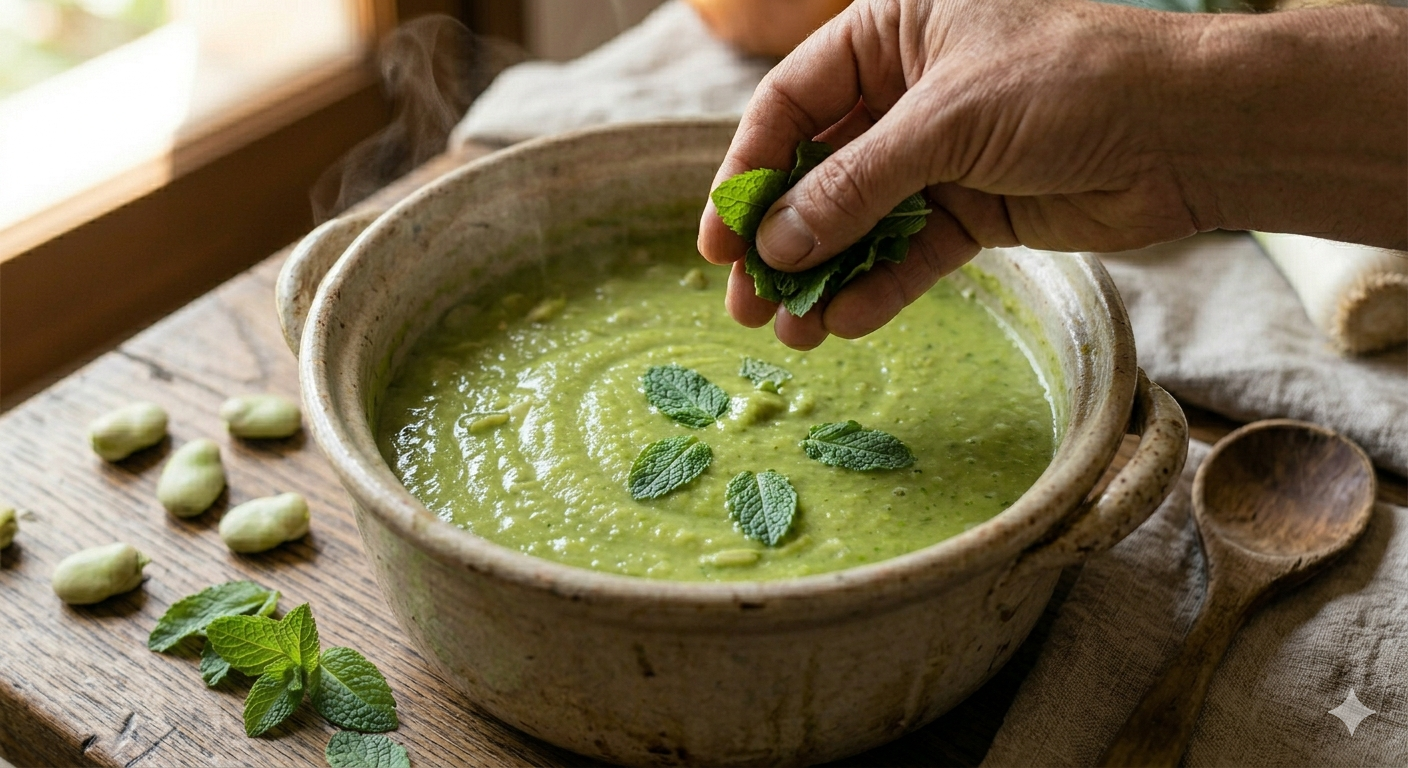
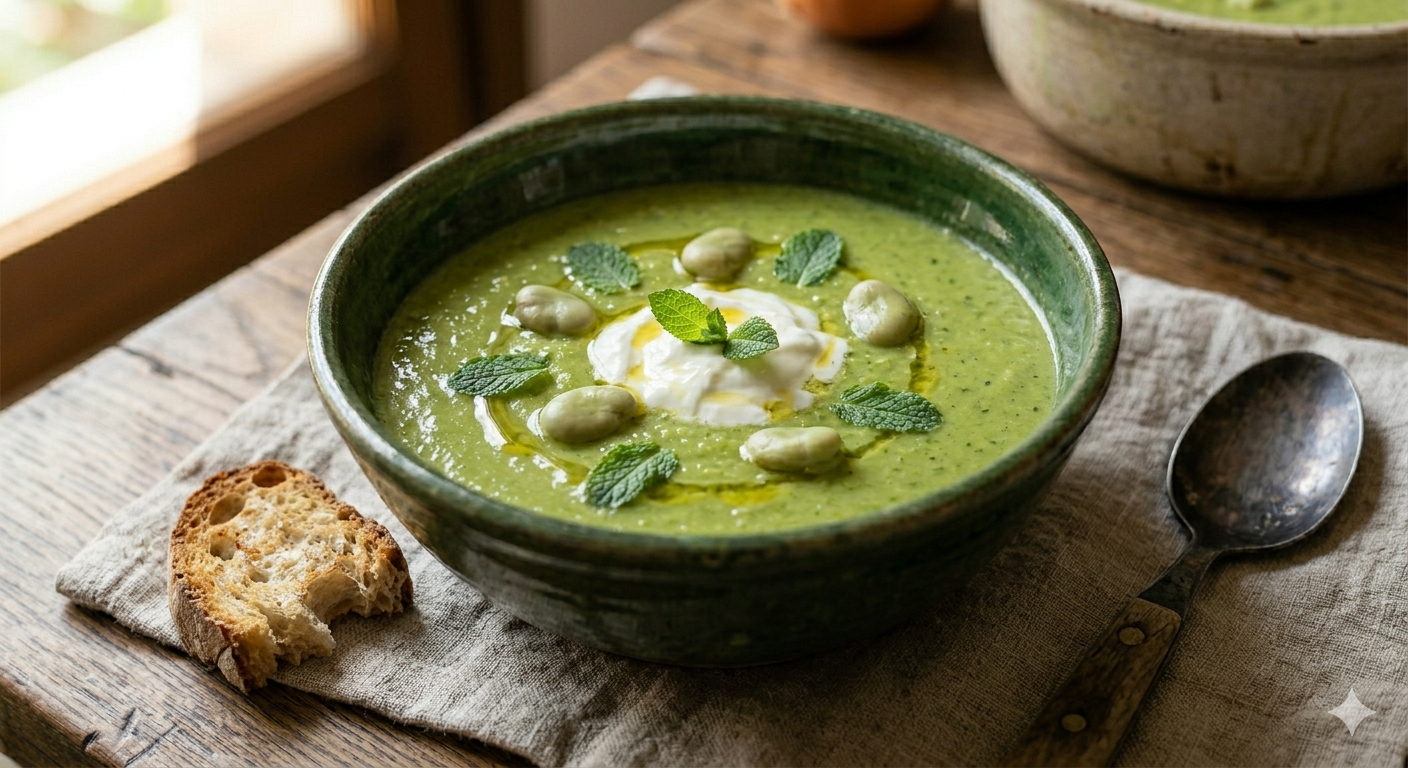
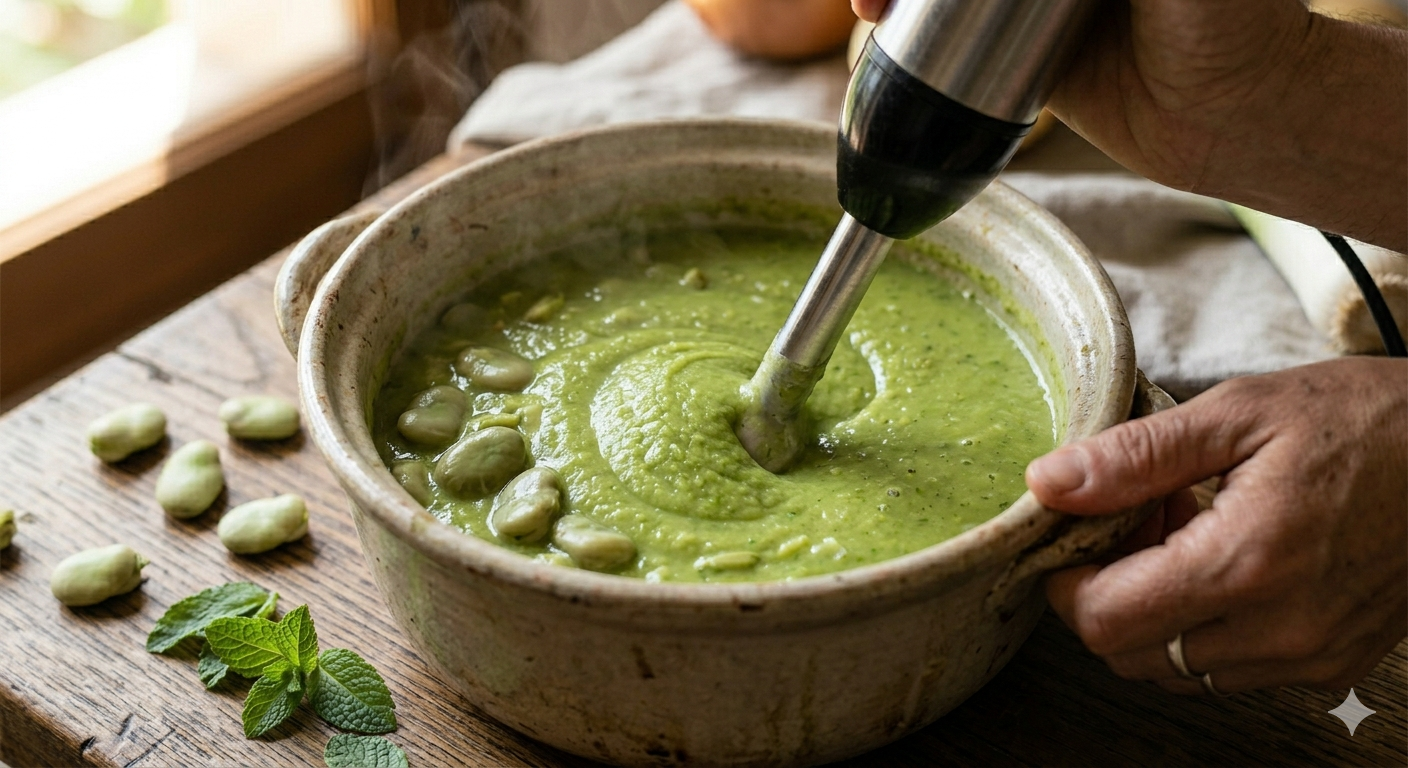
- Infuse the mint and blend: Remove the pot from the heat. Add the fresh mint leaves directly to the hot broth and cover the pot for 2 minutes to allow the essential oils of the mint to infuse evenly without losing color. Blend with an immersion blender or in a countertop blender until you obtain a smooth, homogeneous cream. Adjust salt and add the pinch of white pepper. Serve immediately, garnished with Greek yogurt and a drizzle of raw olive oil.
Nutritional Information for Tender Fava Bean Soup with Mint
Approximate values per serving (4 servings total).
| Nutrient | Per Serving | % Daily Value* |
|---|---|---|
| Calories | 210 kcal | — |
| Protein | 9 g | 18% |
| Carbohydrates | 24 g | 9% |
| Total Fat | 8 g | 10% |
| Dietary Fiber | 7.5 g | 27% |
| Sodium | 320 mg | 14% |
*Percent based on a 2,000 kcal daily diet.
Highlighted Nutritional Benefits
- High fiber content: With 7.5 g per serving, it promotes intestinal transit and provides lasting satiety.
- Rich in iron and folate: Fava beans are natural allies to combat fatigue and improve circulatory well-being.
- Digestive properties: Fresh mint reduces stomach heaviness and gas formation associated with legumes.
- Low caloric impact: No heavy creams or animal fats; suitable for vegetarian and vegan diets.
- Healthy fats: 80% of the fat comes from extra virgin olive oil, predominantly monounsaturated.
Expert Analysis: The Master Touch for Tender Fava Bean Soup with Mint
From my culinary perspective as El Godínez Hambriento, the resounding success of this tender fava bean soup with mint lies in absolute respect for cooking times and temperatures. Fava beans are rich in starches and plant proteins, which gives them a naturally dense texture. When combined with leek and broken-up potato, a natural emulsion is generated that requires no flours or artificial thickeners: the legume itself does the work.
The decision to add the mint off the heat is the most strategic culinary move in the entire recipe. The residual heat of the broth — around 85–90 °C (185–194 °F) just after turning off the heat — is sufficient to extract the menthol and volatile aromatic compounds from the herb without degrading the chlorophyll. If the mint were cooked from the beginning, all the freshness would be lost, and the soup would acquire a dark, bitter tone. Two minutes of resting, covered, make the difference between a bright green soup and a dull cream.
Regarding pairing, this soup pairs wonderfully with a white wine with herbaceous character and medium-high acidity: a Verdejo from Rueda, an Albariño from Galicia, or a fresh Sauvignon Blanc are impeccable choices. If you prefer a non-alcoholic beverage, sparkling water with cucumber and a few mint leaves follows the aromatic thread of the dish with elegance. For cold days, a glass of Manzanilla en rama complements the vegetal nuances with that saline touch that rounds out the palate.
The balance of ingredients in this recipe is no accident: onion and leek provide sweetness; garlic, depth; potato, body; fava beans, the base protein and characteristic flavor. Mint acts as the guiding ingredient that unifies all the elements and gives the dish its own identity. Without it, we would have a correct but predictable fava bean cream. With it, we have the irresistible tender fava bean soup with mint that distinguishes those who cook with intention.
Tips for Making the Perfect Tender Fava Bean Soup with Mint
The first tip is the most important: use homemade vegetable broth. Industrial bouillon cubes are high in sodium and add an artificial flavor that competes with the delicacy of the fava beans and mint. A simple broth with carrot, onion, celery, parsley, and a leek — cooked for 30 minutes over low heat — will make an immense difference in the final result. If you are short on time, the next best option is a good quality boxed broth with low sodium content, always in a version without artificial flavor enhancers.
When making the sauté, patience is key. The 8 to 10 minutes over medium-low heat required for the onion and leek are negotiable only upwards, never downwards. Rushing this step and turning up the heat to go faster ruins the final green color of the soup: browning from the sauté transfers to the broth and turns your emerald into an unappetizing brown. A pinch of salt from the beginning helps the vegetables sweat and soften without the need for extreme heat.
To preserve that photogenic emerald green that characterizes tender fava bean soup with mint, follow this golden rule: blend immediately after adding the mint and serve immediately if having it hot, or cool in a bowl over ice water if serving lukewarm or cold. Chlorophyll degrades with prolonged heat, so every extra minute in the pot after blending is a step towards yellow-brown.
An extra drizzle of raw olive oil swirled onto the plate just before serving works wonders: it enhances the herbaceous aromas of the mint, adds visual shine, and provides a fruity note that elevates the whole. Do not add it during cooking — it is already incorporated in the sauté — but as a final finishing touch.
For storage, keep the soup in an airtight container in the refrigerator once it has reached room temperature. It stays in perfect condition for 3 to 4 days. When reheating, do so over very low heat, stirring constantly. If it has thickened due to the potato starch, add a splash of water or cold vegetable broth to recover the original silky texture. Avoid using the microwave at maximum power: it reheats unevenly and can darken the color.
Variations and Substitutions for Tender Fava Bean Soup with Mint
The base recipe for tender fava bean soup with mint admits many interpretations without losing its essence. Here are the most interesting ones to adapt the dish to different tastes, diets, and occasions:
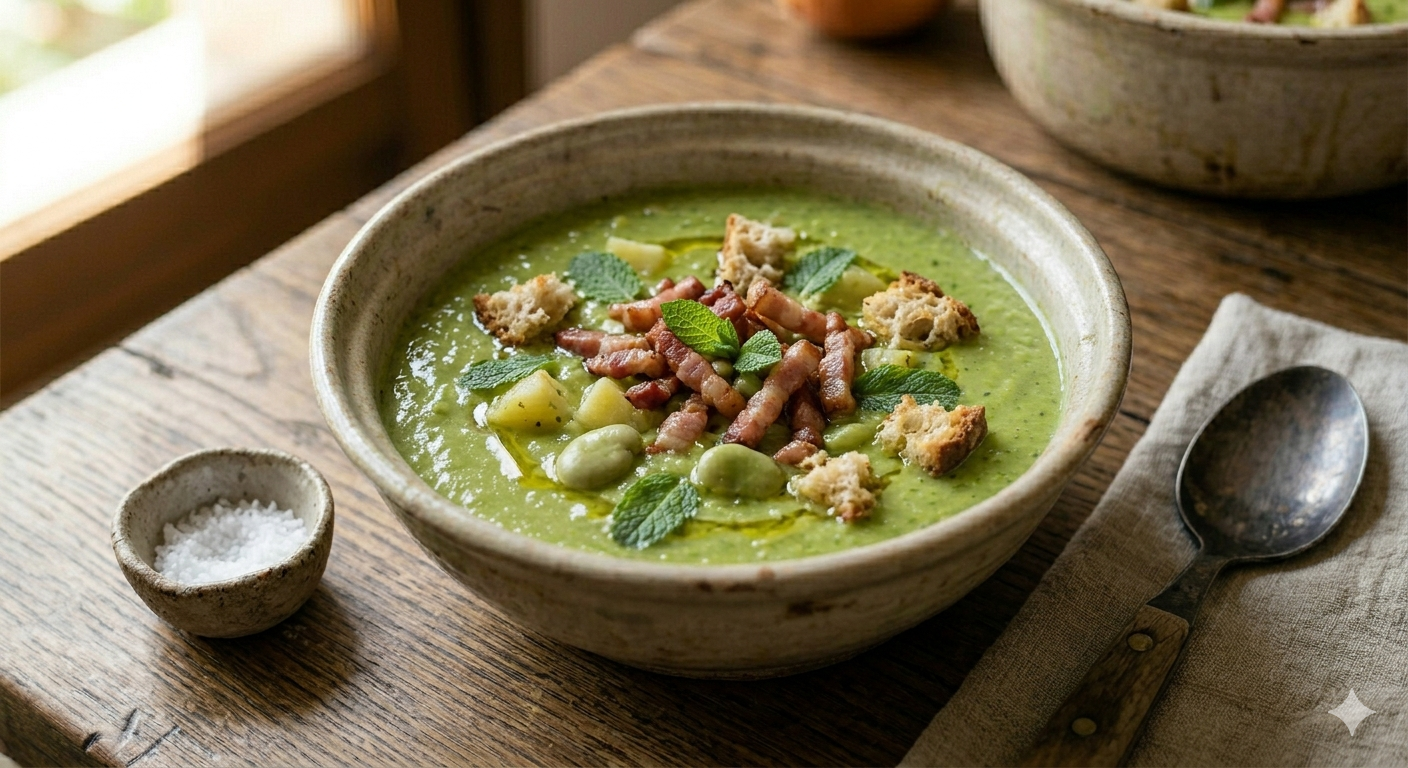
- Crispy version with bacon or ham: If you do not follow a vegan diet, add some small cubes of Serrano ham or bacon sautéed in a dry pan just before serving. The contrast between the velvety cream and the salty crunch is irresistible and turns the soup into a more substantial dish.
- Rustic style with chunks: Before blending, reserve a cup of cooked whole fava beans. Blend the rest until creamy and add the reserved fava beans at the end. Each spoonful will find comforting chunks that break the monotony of the texture.
- Citrus touch with lemon: Add fine lemon zest along with the mint when infusing. The acidity of the citrus elevates the vegetal flavor to a higher level, especially in the cold summer version.
- Extra creamy dairy-free version: Add half a ripe avocado to the blender when blending. It will provide healthy fats, a velvety texture, and a mild flavor without altering the green of the dish.
- Substitute mint with basil: If you cannot find fresh mint, fresh basil is the most harmonious alternative. Avoid dried mint from the spice rack, whose profile is more medicinal and concentrated, lacking the chlorophyll that gives freshness to the soup.
- With fresh or frozen peas: For an even milder and sweeter version, substitute up to half of the fava beans with fresh or frozen peas. The cooking time is reduced by about 5 minutes.
Frequently Asked Questions about Tender Fava Bean Soup with Mint
Can you freeze tender fava bean soup with mint?
It is not recommended to freeze it if it contains potato, as it becomes gritty and grainy upon thawing. If you want to keep it for more than 4 days, prepare the soup without potato, freeze in individual portions for up to 2 months, and add fresh cooked potato when reheating and serving.
How long does tender fava bean soup with mint last in the refrigerator?
Stored in an airtight container and refrigerated below 4 °C (40 °F), it stays in perfect condition for 3 to 4 days. If you notice a sour smell, color change towards yellowish tones, or unusual foam on the surface when opening, discard it immediately without hesitation.
How many calories are in tender fava bean soup with mint?
Each serving provides approximately 210 kcal, with 9 g of plant-based protein, 24 g of carbohydrates, and 8 g of mainly monounsaturated fat. It is considered a light and nutritious dish, ideal for calorie-controlled diets without sacrificing flavor or satiety.
Can you make tender fava bean soup with mint without fresh fava beans?
Perfectly. Good quality frozen fava beans are an excellent alternative: add them directly to the broth without thawing beforehand and reduce the cooking time by 2 or 3 minutes, as they usually come pre-blanched from the factory. Fresh or frozen peas also work, although the flavor ends up sweeter and less earthy.
How is tender fava bean soup with mint best served?
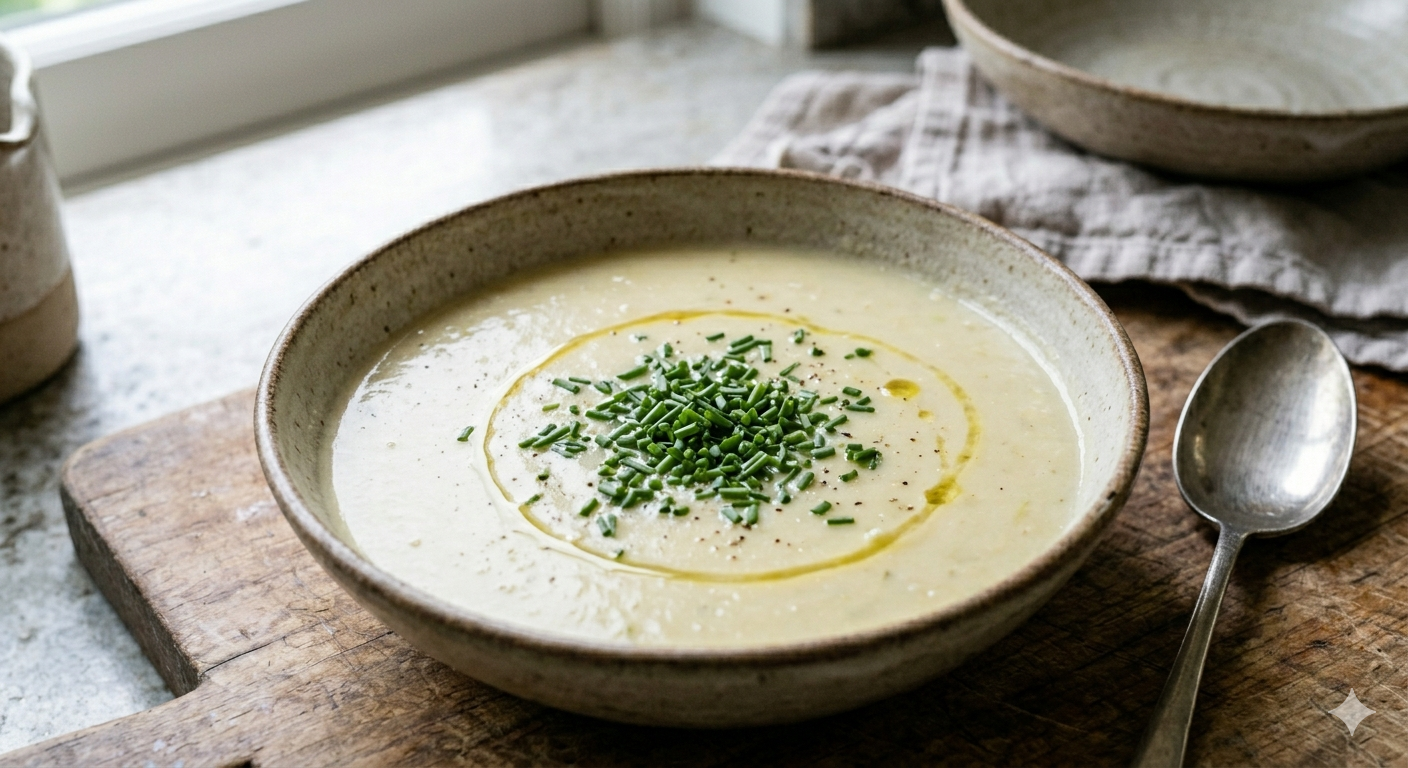
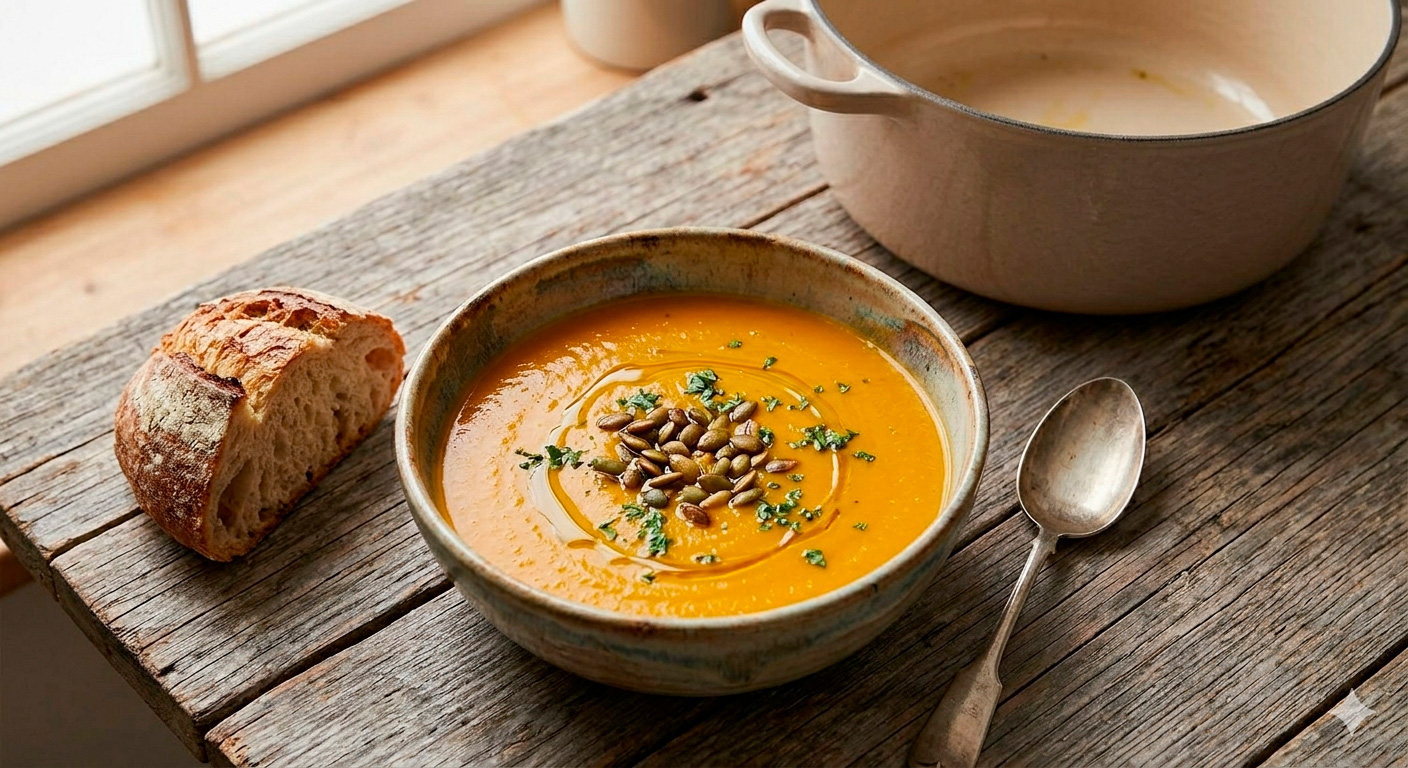
It looks best in a shallow bowl or ceramic bowl, garnished with a spoonful of Greek yogurt in the center, a thin spiral of extra virgin olive oil, and a fresh mint leaf. In warmer months, it can be served lukewarm or cold accompanied by toasted sourdough bread; in winter, hot with garlic and herb croutons.
Reference Sources and Resources
For more information on food safety and nutrition, consult WHO healthy diet guides.
Regarding the nutritional value of legumes, you can consult The Nutrition Source from Harvard T.H. Chan School of Public Health.
Food composition information available from the database of the National Institute of Public Health of Mexico.
Check our disclaimer and legal notice policy before making decisions about your diet based on this content.
You might also be interested in: more rich and easy cream soups and easy and quick recipes on cocinasabroso.com.