5 Steps to an Irresistible Black Bean Cream: The Creamiest and Easiest Recipe
Origin and History of Black Bean Cream with Sour Cream Threads
Black bean cream with sour cream threads is a dish whose roots go back thousands of years of Mesoamerican history. The black bean (Phaseolus vulgaris) was domesticated in what is now Mexico and Central America, constituting one of the pillars of the Maya and Aztec diet. These peoples cultivated it not only as a daily sustenance of high energy value, but also as a central element of their rituals and tributes to the cosmos. The black grain, due to its color and density, held a sacred place in the indigenous worldview.
From the 16th century onwards, with the arrival of European colonizers to the American continent, one of the most fruitful culinary encounters in history took place. The Spanish introduced ingredients previously unknown in these lands: cream, fresh cheese, garlic, and olive oil. The milling and straining techniques they brought, combined with indigenous cooking methods on the comal and in clay pots, gave rise to a new generation of creamy preparations that transformed the humble bean stew into a dish worthy of the finest banquets.
The incorporation of the onion and garlic sofrito, the aromatic herb epazote, and the acidic finish of sour cream —a Creole version of European crème fraîche— was consolidated throughout the 17th and 18th centuries in the convent kitchens and haciendas of the Mexican Bajío. It was in those enormous clay stoves, tended by nuns and mestizo cooks, where the recipe acquired the structure we recognize today: a dense, unctuous base of perfectly cooked black grain, flavored with a golden sofrito, and crowned with threads of acidic dairy that balance the whole.
Today, black bean cream is a transversal dish that spans the entire geography of the Spanish-speaking world. In Mexico it is simply known as bean cream or soup; in Venezuela it is made with black beans and served with slices of ripe plantain; in Cuba it forms part of the legendary Habanero stew; and in the Southern Cone countries, where the grain is called black bean, it appears increasingly on the menus of author cuisine restaurants. The version with sour cream threads represents the perfect synthesis of that shared history: a culinary embrace between the New and Old Worlds that has withstood the passage of centuries thanks to its incomparable flavor.
What is Black Bean Cream with Sour Cream Threads and Why Should You Make It at Home?
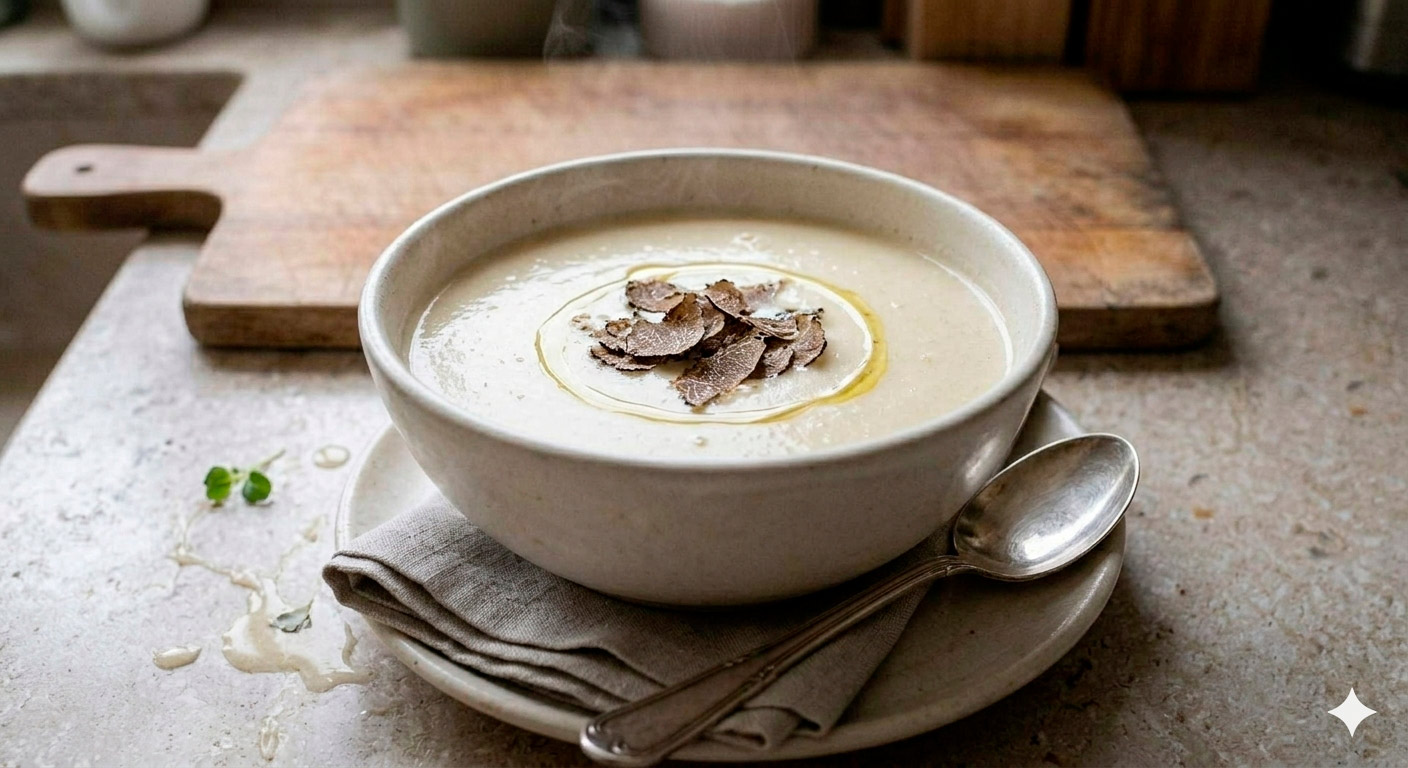
Black bean cream with sour cream threads is one of those preparations that achieves something almost impossible: combining the simplicity of everyday ingredients with a sophistication that leaves diners speechless. Its base is black beans cooked until perfectly tender, blended with an aromatic sofrito of onion, garlic, and cumin, and finished with a garnish of sour cream threads that provide a refreshing acidity. The result is a creamy, dense, and comforting soup, capable of transforming any ordinary dinner into a memorable gastronomic experience.
Unlike many recipes that require complicated techniques or hard-to-find ingredients, this black bean cream relies on the basic Mexican pantry. Fresh epazote, available in practically any local market, gives it a unique aromatic profile that no other herb can fully replicate. Homemade or store-bought vegetable broth provides the flavor base; patience during cooking does the rest. You don’t need to be a chef to get an irresistible result; you just need to follow the steps carefully and trust the process.
One of the great attractions of this recipe is its versatility. It works equally well as an elegant starter at a formal dinner or as a main course at a midweek family meal. With a good basket of freshly made tortillas or some crunchy totopos on the side, it becomes a complete and satisfying meal. Furthermore, being a legume-based recipe, it fits perfectly into vegetarian diets and can be easily adapted to a vegan option by substituting the sour cream with a cashew-based version.
In this black bean cream with sour cream threads recipe, you will learn to master the proper soaking of the grain, the ideal cooking temperature, the trick of the sofrito to enhance aromas, and the secret so that the decorative threads don’t curdle upon contact with the hot soup. Every detail matters, and here we explain everything with the clarity of someone who has burned many pots before arriving at the perfect version.
Furthermore, the black bean is one of the most complete foods in the plant kingdom. With 12 grams of protein per serving, 11 grams of fiber, and a notable amount of iron and potassium, this cream not only satisfies your appetite: it nourishes your body comprehensively. The anthocyanins present in the dark skin of the grain act as powerful antioxidants, helping to combat cellular oxidative stress. Eating delicious and eating healthy rarely go hand in hand as much as they do in this dish.
Make this black bean cream at home and discover why it has been conquering palates across the continent for centuries. It’s a dish that tells the story of Mexico in every spoonful, that honors the legacy of the civilizations that cultivated it, and that proves, once again, that the most powerful cooking comes from the humblest ingredients treated with respect, time, and plenty of seasoning.
Ingredients for Black Bean Cream with Sour Cream Threads
Quantities for 6 servings.
Main Ingredients
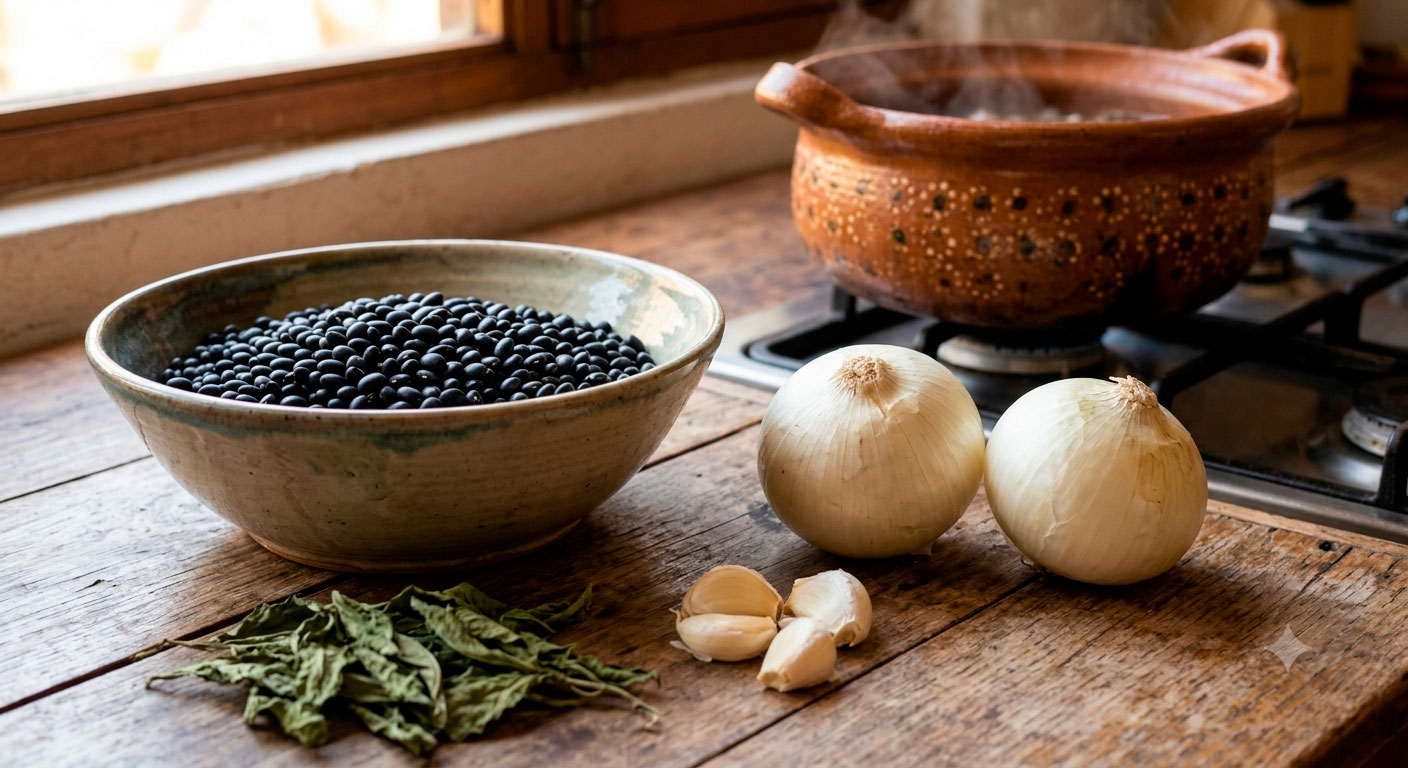
- 500 grams dried black beans
- 1 large white onion
- 4 cloves of garlic
- 1.5 liters vegetable broth
- 1 small branch fresh epazote
Spices and Options
- ½ teaspoon ground cumin
- 150 ml sour cream
- 2 tablespoons olive oil
- Salt and freshly ground black pepper to taste
| Base Ingredient | Regional Variants | Quantity |
|---|---|---|
| Black beans | Black beans (EN/global) | 500 g dried |
| White onion | Yellow onion, brown onion | 1 large piece |
| Garlic | Common garlic | 4 cloves |
| Vegetable broth | Vegetable stock | 1.5 liters |
| Sour cream | Cultured cream, crème fraîche (similar) | 150 ml |
How to Make Black Bean Cream with Sour Cream Threads Step by Step
- Soaking and cleaning the beans: Rinse the dried black beans thoroughly under cold running water to remove any impurities or damaged beans. Place them in a large bowl, cover with plenty of cold water —at least three times the volume of the beans— and let them rest for a minimum of 8 hours, preferably overnight. This step is essential: soaking softens the outer skin and dissolves the oligosaccharides responsible for stomach heaviness. When finished, discard that water and rinse the beans once more.
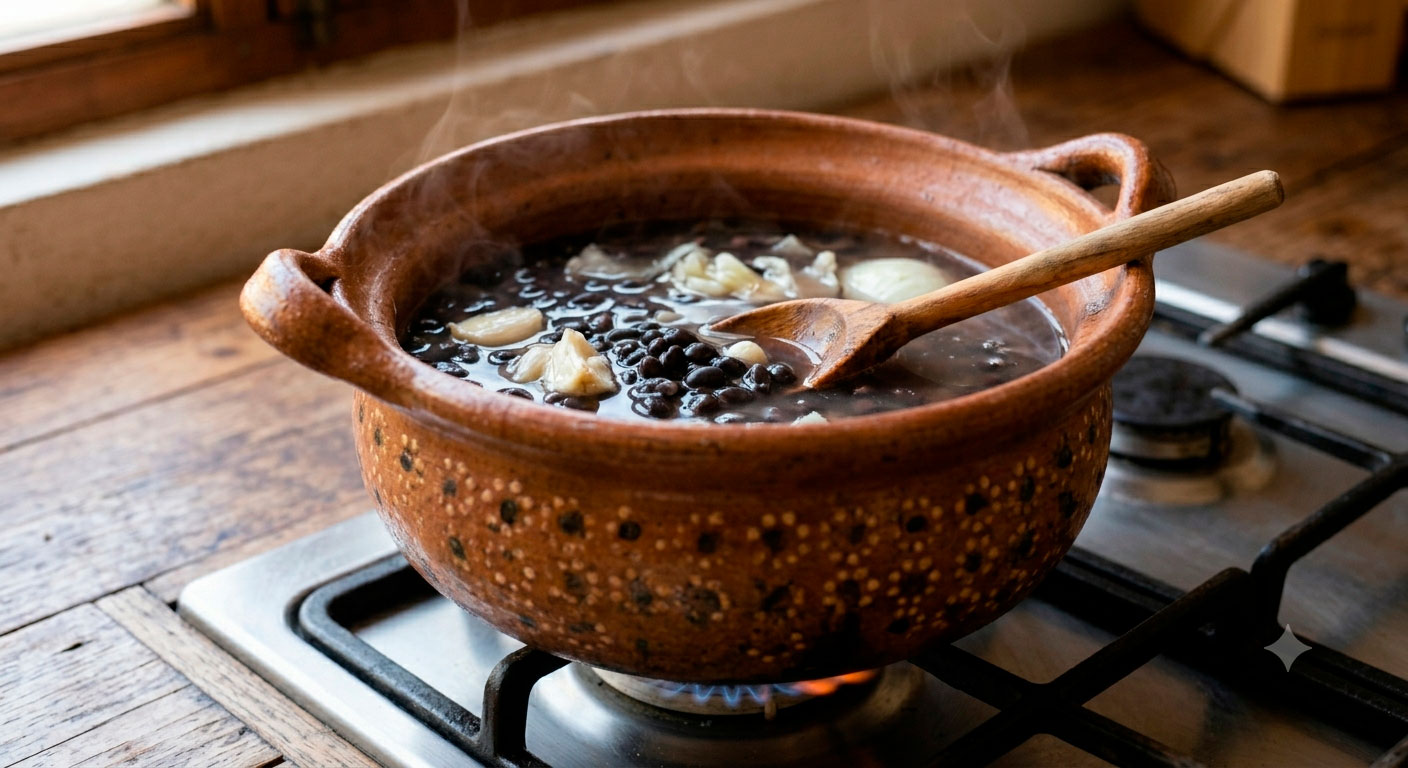
- Slow base cooking: In a deep pot, add the drained beans along with the vegetable broth and the fresh epazote branch. Bring to a boil over high heat. Once it comes to a boil, reduce the heat to medium-low, partially cover the pot, and cook for approximately 60 to 75 minutes, or until the beans are completely tender when pressed between your fingers. Avoid adding salt at this point, as it can harden the skin and unnecessarily prolong cooking.
- Aromatic sofrito with onion, garlic, and cumin: While the beans finish cooking, heat the olive oil in a skillet over medium heat. Add the finely chopped onion and pressed garlic cloves. Cook patiently, stirring occasionally, until the onion becomes completely translucent and begins to take on a light golden color, releasing all its natural sugars. In the last minute, add the ground cumin and stir constantly to toast it without burning, thus enhancing its aromas.
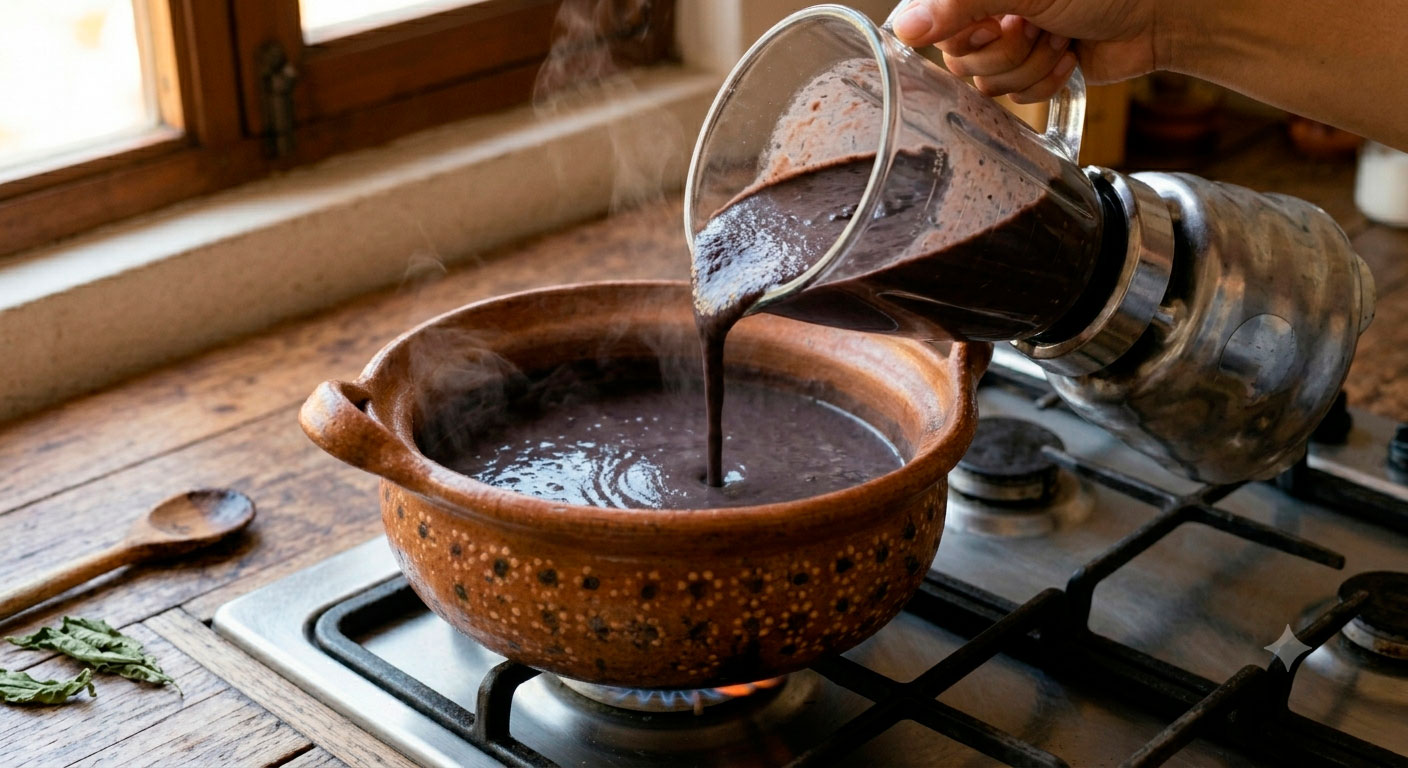
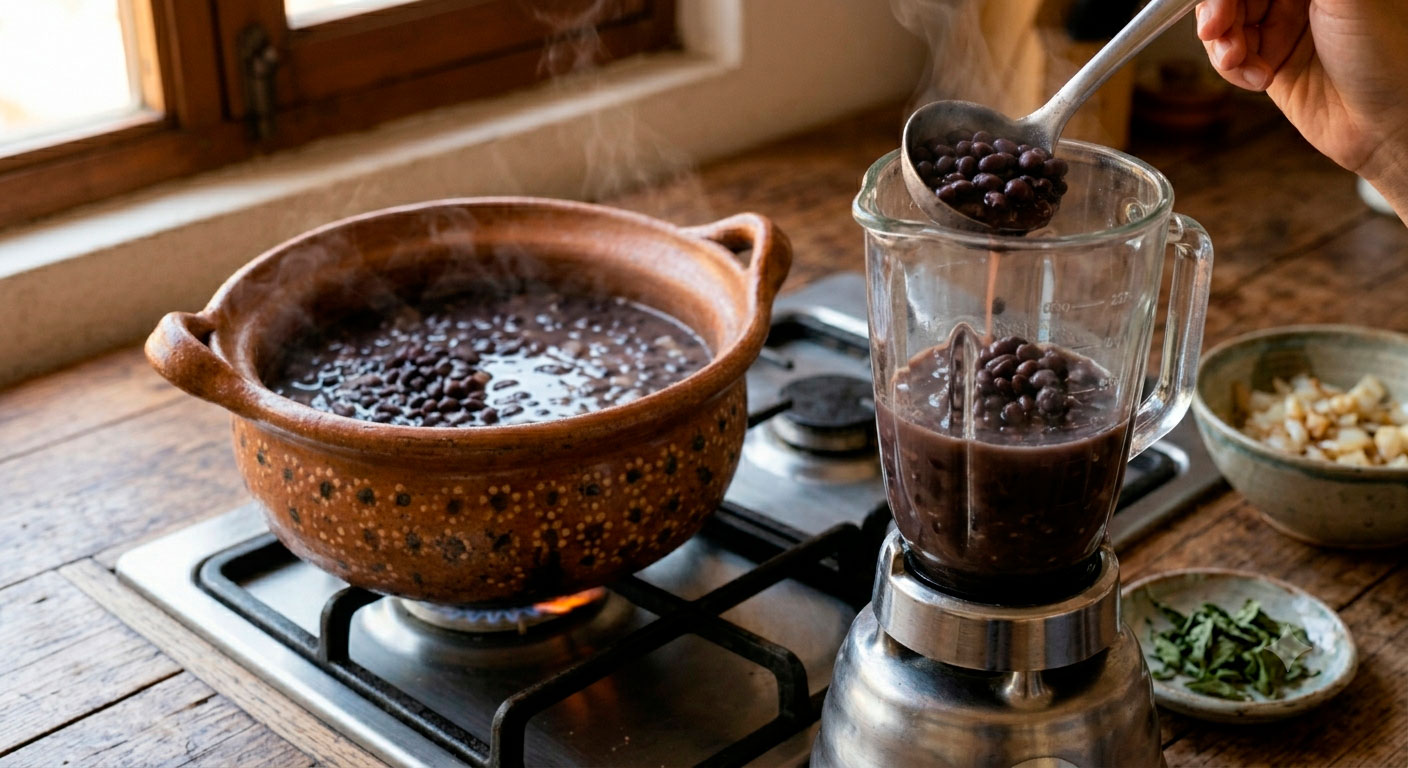
- Blending to a silky texture: Pour the sofrito directly into the pot of cooked beans and remove the epazote branch. Using an immersion blender, process the mixture directly in the pot —being careful of hot splashes— until you obtain a completely smooth and silky puree, without lumps or pieces of skin. If using a conventional blender, do it in batches, filling it no more than halfway to avoid accidents. If the consistency is too thick, add a splash of hot broth until you achieve the desired fluidity: it should be able to flow smoothly from a spoon but not be a light broth.
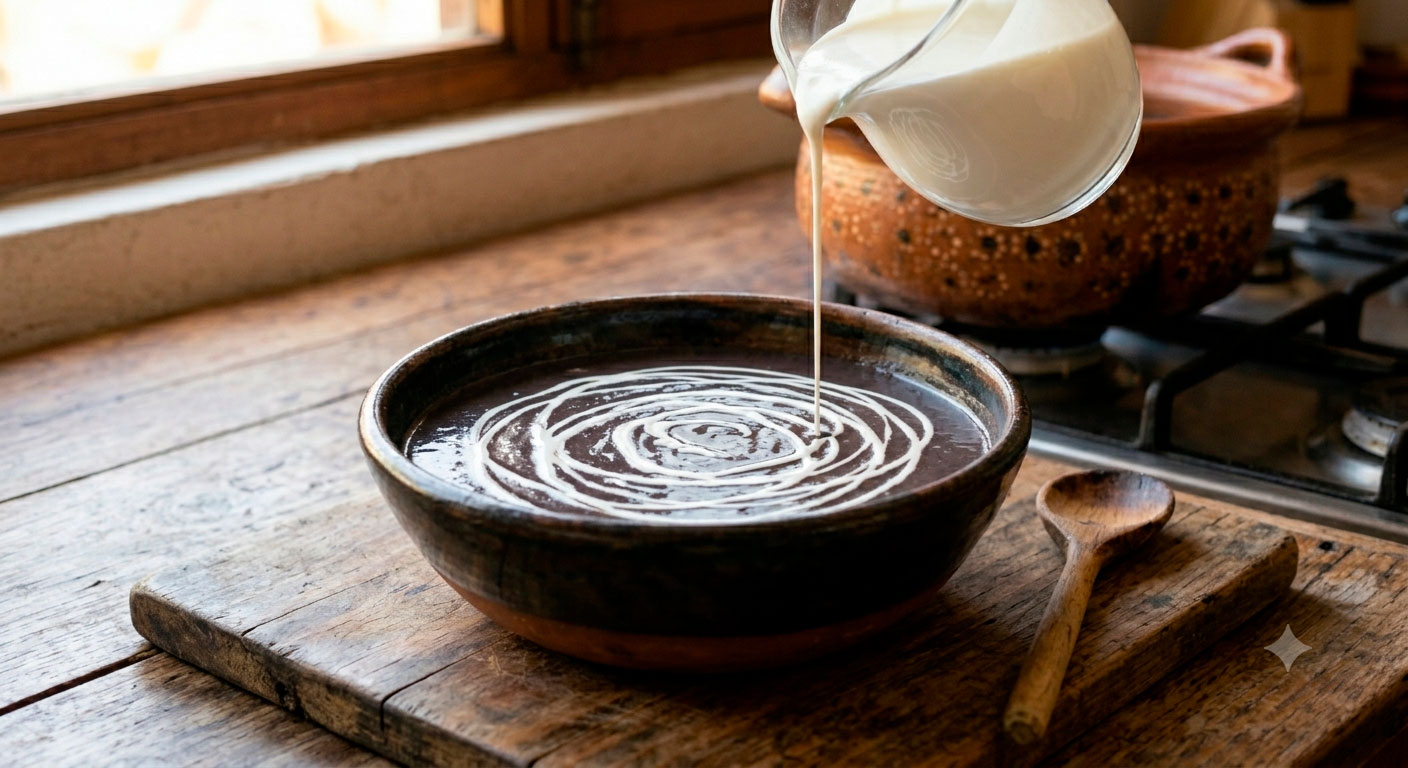
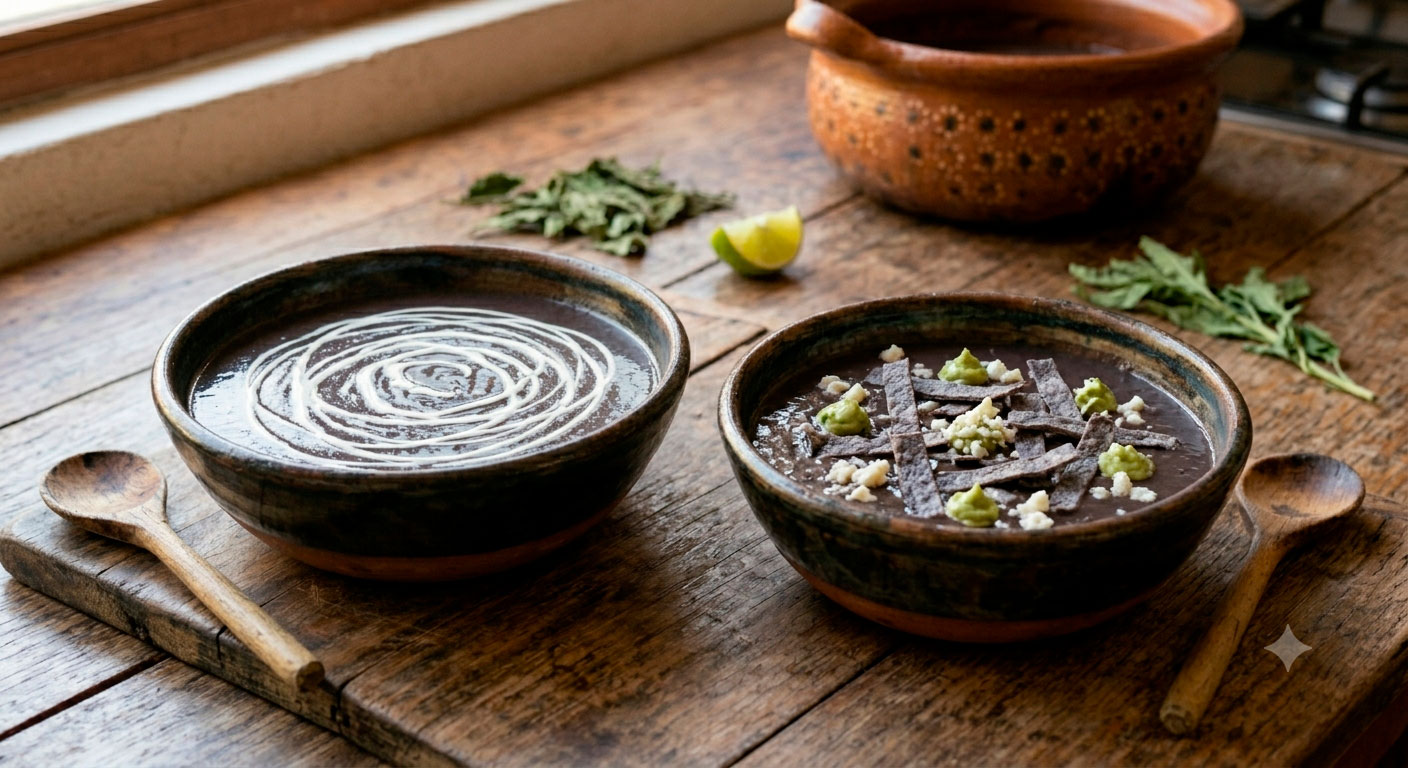
- Final seasoning, optional straining, and plating with sour cream threads: Return the processed cream to the pot over low heat. For a restaurant-quality texture, pass it through a fine-mesh strainer before the final simmer —this step removes any traces of hulls. Season with salt and freshly ground black pepper to taste and let it simmer gently for 5 minutes so the flavors settle and fully integrate. Serve the black bean cream piping hot in preheated deep bowls. Using a kitchen dropper or simply a spoon, drizzle the sour cream in delicate, intertwined threads over the surface just before bringing to the table for the best presentation.
Nutritional Information for Black Bean Cream with Sour Cream Threads
Approximate values per serving (6 servings total).
| Nutrient | Per Serving | % Daily Value* |
|---|---|---|
| Calories | 245 kcal | — |
| Protein | 12 g | 24% |
| Carbohydrates | 34 g | 12% |
| Total Fat | 6 g | 8% |
| Dietary Fiber | 11 g | 39% |
| Iron | 3.5 mg | 19% |
| Potassium | 610 mg | 13% |
| Sodium | Low (depends on broth) | — |
*Percent based on a 2,000 kcal daily diet.
Expert Analysis: The Master Touch for Black Bean Cream with Sour Cream Threads
From the perspective of high-end home cooking, the culinary value of this black bean cream with sour cream threads lies in its masterful balance of contrasts. Black beans have an intrinsically dense nature, with deep earthy notes and a slightly sweet aftertaste that makes them unique among legumes. Served alone without the right counterpoint, the palate can become saturated by the uniformity of its texture. This is exactly where the intervention of the acidic dairy proves brilliant from a technical point of view: the acidity of the sour cream cuts through the density of the bean, cleanses the taste buds between spoonfuls, and invites the diner to keep eating with renewed enthusiasm.
Temperature is another factor that El Godínez Hambriento considers decisive for the success of the dish. The contrast between the comforting soup at about 165-175°F (75-80°C) and the relative freshness of the sour cream applied in the last moments before serving creates a complex sensory experience that the brain interprets as pleasurable and sophisticated. This principle —that of controlled thermal contrast— is the same one used by great chefs when applying ice cream over a chocolate lava cake or serving a cold cream over a hot consommé.
In terms of pairing, this black bean cream admits a wide variety of table companions. For an informal dinner, a dark artisanal stout or porter beer amplifies the toasty notes of the bean and creates an extraordinary harmony. If the context is more formal, a dry white wine with good acidity —a Spanish Verdejo, a Chilean Sauvignon Blanc, or a Galician Albariño— perfectly balances the unctuousness of the dish. For those who prefer non-alcoholic beverages, a tamarind agua fresca with a touch of piquín chili creates an equally fascinating counterpoint.
The balance of ingredients in this recipe directly impacts the final result. The proportion of 500 g of dried beans to 1.5 liters of broth is the key to obtaining that ideal density that supports the decorative threads without feeling heavy. Using less broth gives a puree-like texture; using more produces an interesting dark broth but loses the creamy character. The half teaspoon of cumin, for its part, acts as an amplifier of the earthy flavor of the bean without dominating it, a calculated dose that makes the difference between a correct cream and an irresistible cream.
My most valuable advice: do not skip the straining step. That seemingly minor gesture transforms a homemade soup into a professional-level preparation, with a texture so silky and uniform that it surprises even those who already know the recipe. Excellent gastronomy lives in those details that most people overlook.
Tips for Making the Perfect and Irresistible Black Bean Cream
The first secret to achieving a truly exceptional black bean cream with sour cream threads begins before you turn on the stove: in the selection and soaking of the bean. Always choose the freshest possible dried black beans; old beans —stored for more than a year— have lost moisture and take much longer to soften, compromising the final texture. An easy way to identify them is by their appearance: fresh beans have shiny skin and an intense black color, while older ones tend to become dull and slightly wrinkled.
The minimum 8-hour soak is non-negotiable if you want the best quality cream. However, there is a quick soaking technique for when time is short: boil the beans in clean water for 5 minutes, turn off the heat, cover the pot, and let them rest for 1 hour. Then discard that water and proceed with the normal recipe. The result is not identical to the overnight soak, but it comes close.
During the cooking of the beans, the temptation to turn up the heat to speed up the process is the most common mistake that ruins this recipe. The cooking must be slow and steady, with a gentle, sustained bubbling. High heat breaks the skin of the beans before the inside is fully cooked, creating a floury texture and lumps that are difficult to blend. Patience is the secret ingredient of any good black bean cream.
Another critical point is the moment to add salt. Adding it at the beginning of cooking —as many people habitually do— hardens the cell membrane of the bean and can double the time needed for it to soften. Always season at the end, just before the 5-minute integration simmer. This timing adjustment costs nothing and noticeably improves the result.
To further elevate the aromatic profile of your cream, try lightly dry-toasting an ancho or mulato chili, removing the seeds, and adding it along with the beans during cooking. Remove it before blending or incorporate it into the puree for a deeper, smokier flavor. This trick, used in many kitchens in Oaxaca and Puebla, turns a good cream into an extraordinary experience.
Regarding common storage mistakes, the most frequent is storing the cream with the sour cream threads already incorporated. The acidic dairy alters the texture of the puree during refrigeration and tends to separate when reheated, forming unappetizing lumps. Always store the black bean cream alone and add fresh sour cream at serving time. To reheat, use a pot over low heat and add a couple of tablespoons of broth or water; never use the microwave at full power, as uneven heat can generate lumps and affect the silky texture you worked so hard to achieve.
Variations and Substitutions for Black Bean Cream with Sour Cream Threads
One of the greatest virtues of black bean cream with sour cream threads is that it allows for multiple adaptations without losing its essence. For a smoky and intense version, add a chipotle chili in adobo during the blending process; the subtle heat and complex smoky aroma transform the dish completely. For a completely vegan version, substitute the sour cream with an alternative made from soaked raw cashews, processed with lemon juice, a pinch of salt, and a splash of water; the result is surprisingly similar in texture and perfectly fulfills the acidic role of the dairy. To add textural contrast when plating, incorporate crispy baked corn tortilla strips, garlic-toasted bread cubes, or even toasted pumpkin seeds on the surface.
Frequently Asked Questions about Black Bean Cream with Sour Cream Threads
Can you freeze black bean cream with sour cream threads?
Yes, black bean cream can be frozen perfectly for up to 3 months, as long as you do it before adding the sour cream. Store it in airtight freezer-safe containers and thaw it in the refrigerator overnight; when reheating over low heat, add a splash of broth to restore its original texture and apply fresh sour cream at serving time.
How long does black bean cream last in the refrigerator?
Properly refrigerated in an airtight glass container, black bean cream stays in optimal condition for up to 4 days at a temperature between 35°F and 40°F (2°C to 4°C). If you notice changes in smell, color, or unusual dark liquid layers on the surface, it’s a sign it’s no longer fit to consume.
How many calories are in black bean cream with sour cream threads?
One serving of this black bean cream provides approximately 245 kcal, with 12 g of plant protein, 34 g of carbohydrates, and only 6 g of fat. It’s a moderately caloric dish that, thanks to its high fiber content —11 g per serving— provides lasting satiety and is an excellent nutritious starter in any balanced diet.
Can you make black bean cream without epazote?
Absolutely. If you can’t find epazote in your area, you can substitute it with a bay leaf during cooking —which will give a different herbal touch— and a good handful of fresh cilantro added when blending. The flavor will vary slightly, but the result will still be an irresistible cream with a very pleasant and fully functional aromatic profile.
What is the best way to serve black bean cream with sour cream threads?
The best way to serve it is piping hot in preheated deep bowls, applying the sour cream in threads with a kitchen dropper just before bringing to the table. To enhance the presentation, accompany it with crispy baked tortilla strips, a pinch of ground chipotle chili, and a few fresh cilantro leaves. It pairs wonderfully with a dry white wine with good acidity or a dark artisanal stout beer.
Reference Sources and Resources
For more information on food safety and nutrition, consult WHO guidelines on healthy eating.
Regarding the nutritional value of legumes, you can consult The Nutrition Source from Harvard T.H. Chan School of Public Health.
Food composition information is available at the database of the National Institute of Public Health of Mexico.
Consult our liability policy and legal notice before making decisions about your diet based on this content.