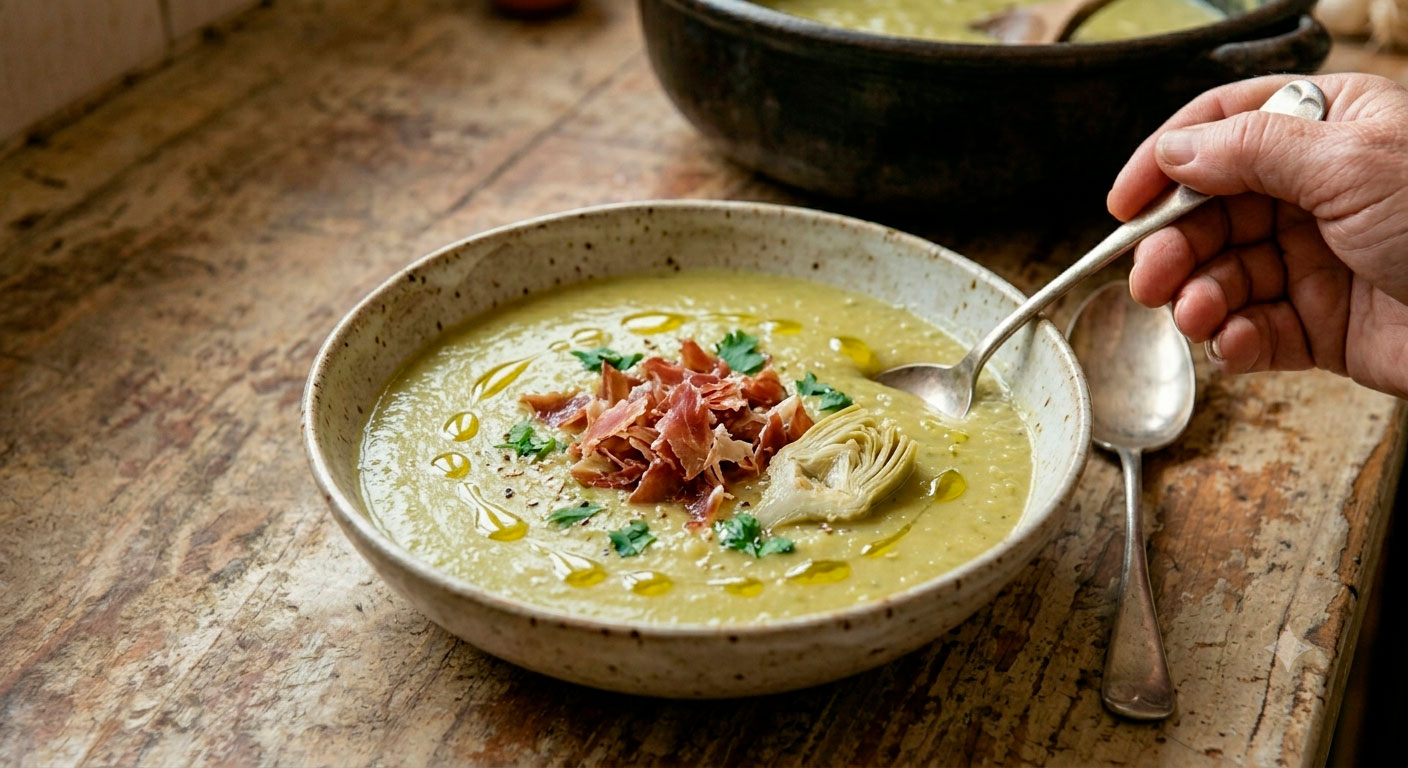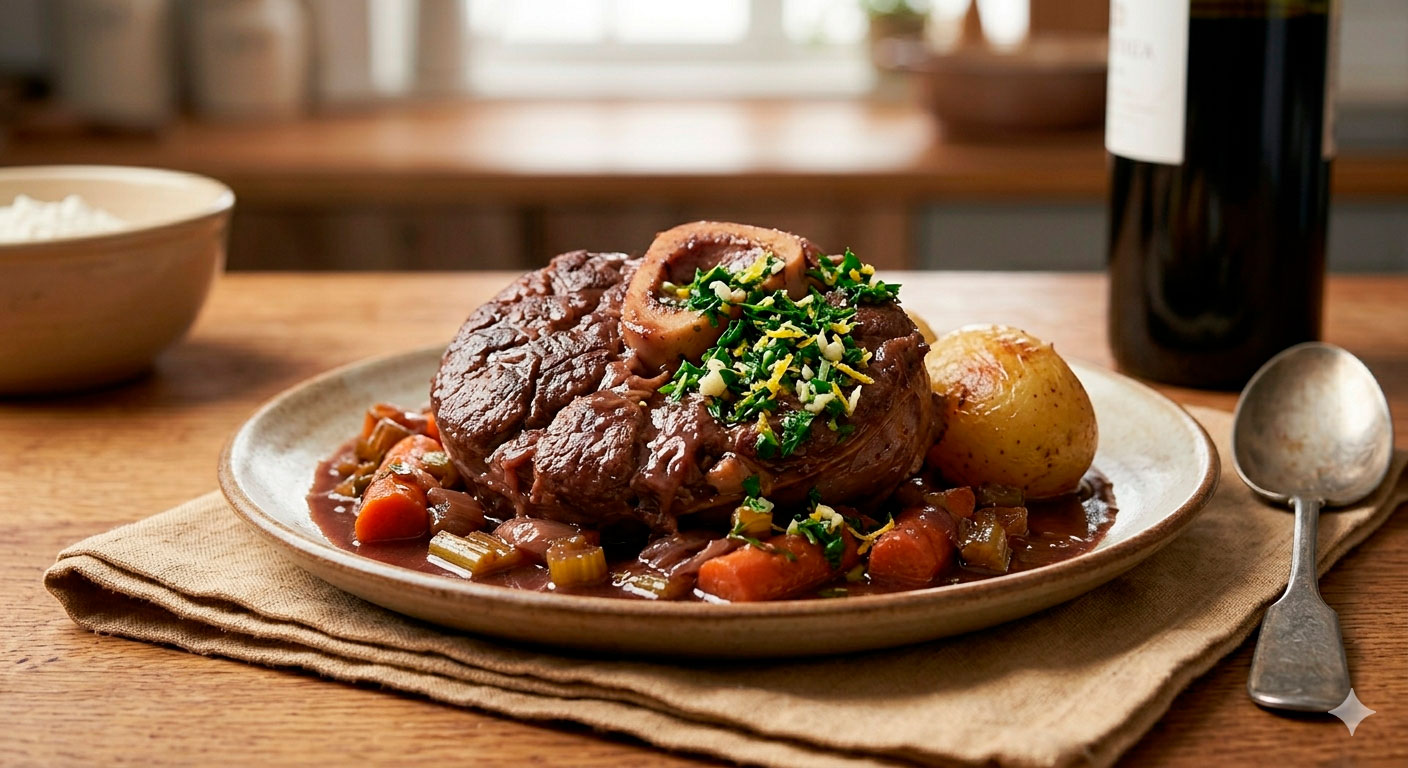
What is lamb stew with prunes and why should you make it at home?
Lamb stew with prunes is much more than a simple meat stew: it is a master class in the power of slow cooking and the balance of flavors. This preparation has deep roots in Mediterranean and Maghrebi cuisine, where the combination of animal protein, earthy spices like cumin, and the concentrated sweetness of dried fruit represents centuries of accumulated culinary wisdom. By making this dish at home, you don’t just get a spectacular result on the plate; you also master a technique that transforms economical cuts of meat into bites that melt upon first contact with the palate.
The secret of this irresistible lamb stew lies in the chemistry that happens inside the pot. Ovine meat contains a significant proportion of collagen, a structural protein that, subjected to moist and sustained heat for two hours or more, hydrolyzes and turns into gelatin. This gelatin is responsible for the silky texture of the sauce, that mouthfeel that no artificial thickener can imitate. That’s why haste is the greatest enemy of a good stew.
Lamb, also known as mutton or borrego in some regions, is a meat with its own character. It has a more pronounced flavor than chicken or pork, with woolly notes and an intramuscular fat that, far from being a defect, is the primary vehicle of flavor. For this stew, the ideal cuts are the shoulder and the leg, pieces with abundant connective tissue that benefit precisely from that prolonged cooking at low temperatures.
Cumin is the second pillar of this recipe. This spice, used in Indian (where it is called jeera), Arabic, and Latin American cuisine since pre-Hispanic times, provides an earthy, warm, and slightly bitter aroma that cuts through the richness of the lamb fat. When cumin seeds come into contact with hot oil, their volatile oils are activated and completely transform the kitchen atmosphere into something evocative and deep.
Prunes, called dried plums or guindones in some countries, complete the flavor architecture of this stew. Their function is not only to add sweetness: the natural pectin they release during cooking acts as an organic thickener, giving body to the sauce without the need to add flour or starches. Furthermore, their residual acidity contrasts with the umami of the beef broth and creates that complexity that distinguishes a memorable stew from an ordinary one.
In this lamb stew with prunes recipe, you will learn to master each phase of the process: the correct searing to develop the Maillard Reaction, the patient building of the sofrito, the deglazing with red wine that recovers all the flavors stuck to the bottom, and the strategic incorporation of the fruit at the precise moment. The result is a dish that can take center stage at any family table or weekend gathering with absolute dignity, and that also improves notably from one day to the next as the flavors meld during rest.
Ingredients for Lamb Stew with Prunes
Quantities for 6 servings.
Main Ingredients
- 1.5 kg lamb (shoulder or leg)
- 250 g pitted prunes
- 3 large onions
- 4 medium carrots
- 1 liter beef broth (consommé or dark stock)
Seasoning and Optionals
- 2 tbsp ground cumin (or toasted seeds)
- 6 garlic cloves
- 200 ml dry red wine (Syrah or Malbec)
- 3 tbsp extra virgin olive oil
- 1 whole cinnamon stick
- Salt and black pepper to taste
How to Prepare Lamb Stew with Prunes Step by Step
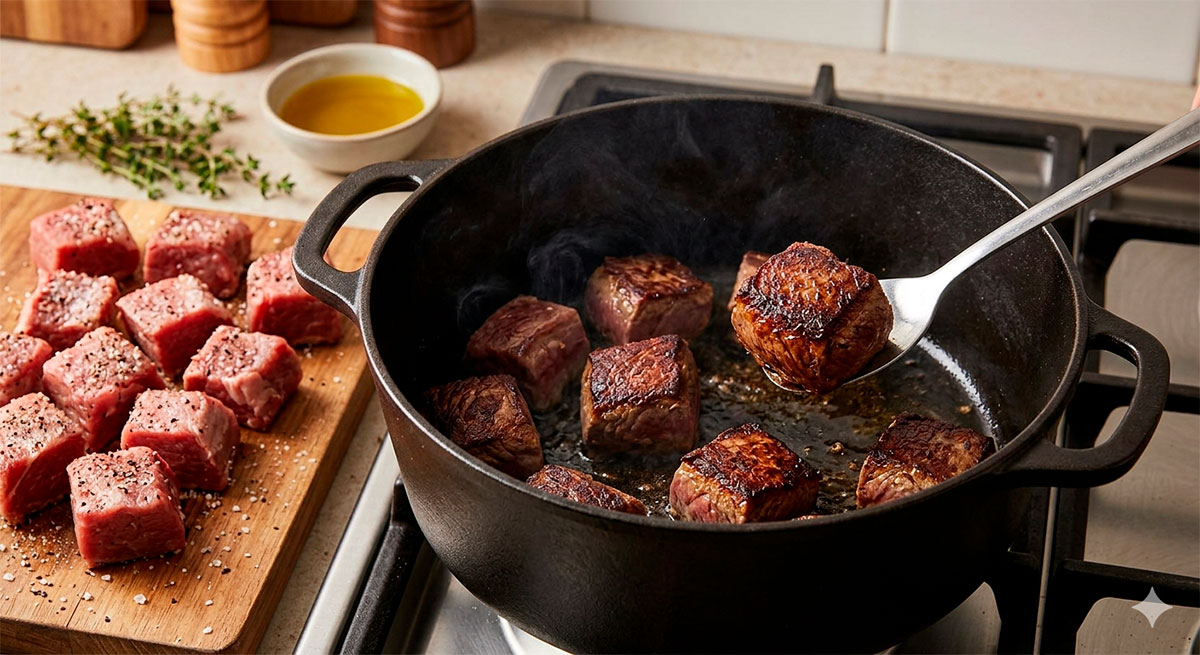
- Sear the lamb (Maillard Reaction): Clean the lamb of excess tallow fat, but keep the intramuscular fat. Cut it into uniform 4×4 cm cubes to ensure even cooking. Season generously with salt and pepper on all sides. Heat the olive oil in a heavy-bottomed pot or cast iron Dutch oven over high heat. Sear the meat in batches without crowding the pieces; direct contact with the hot surface is what generates that dark and aromatic crust. Look for deep browning on all sides: that color is the base of the stew’s flavor. Remove and set aside on a plate.
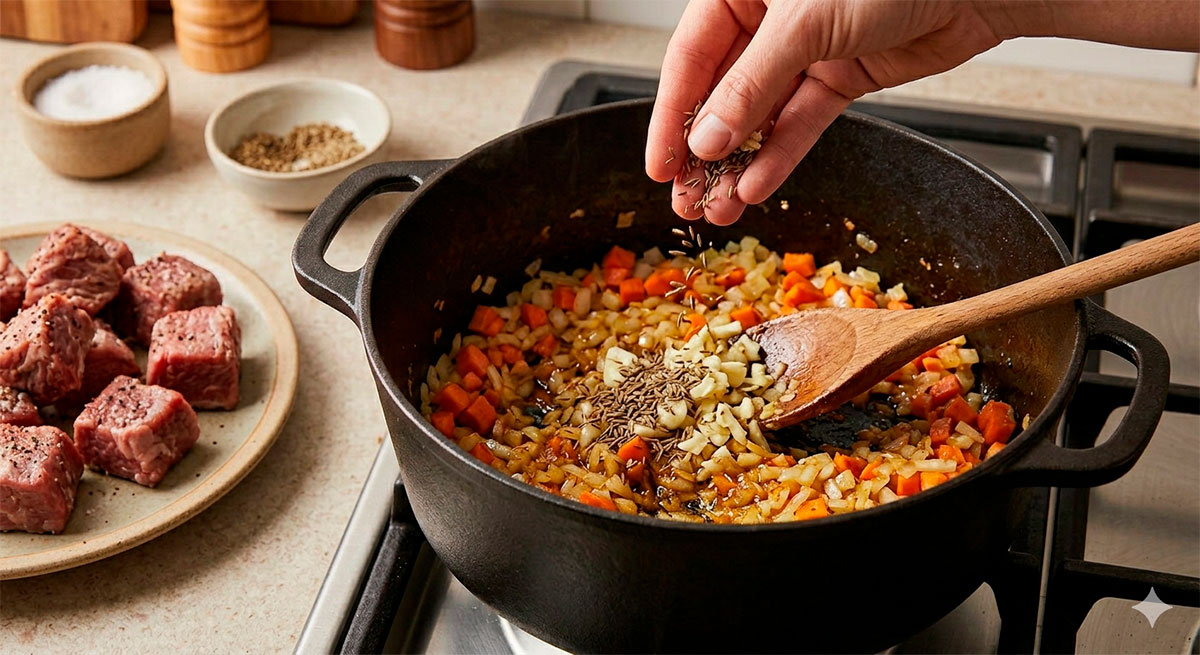
- Build the sofrito: Without cleaning the pot, stir in the finely diced onion and sliced carrots using the juices and oil left by the lamb. Lower the heat to medium-low. Patience is vital in this step: you need the natural sugars in the onion to caramelize slowly, which can take between 15 and 20 minutes. Don’t rush by increasing the heat or the result will be bitter. Halfway through, add the sliced garlic and cumin. Mix well and let the heat activate the volatile oils of the spice for 2 more minutes; the kitchen will fill with an unmistakable earthy aroma.
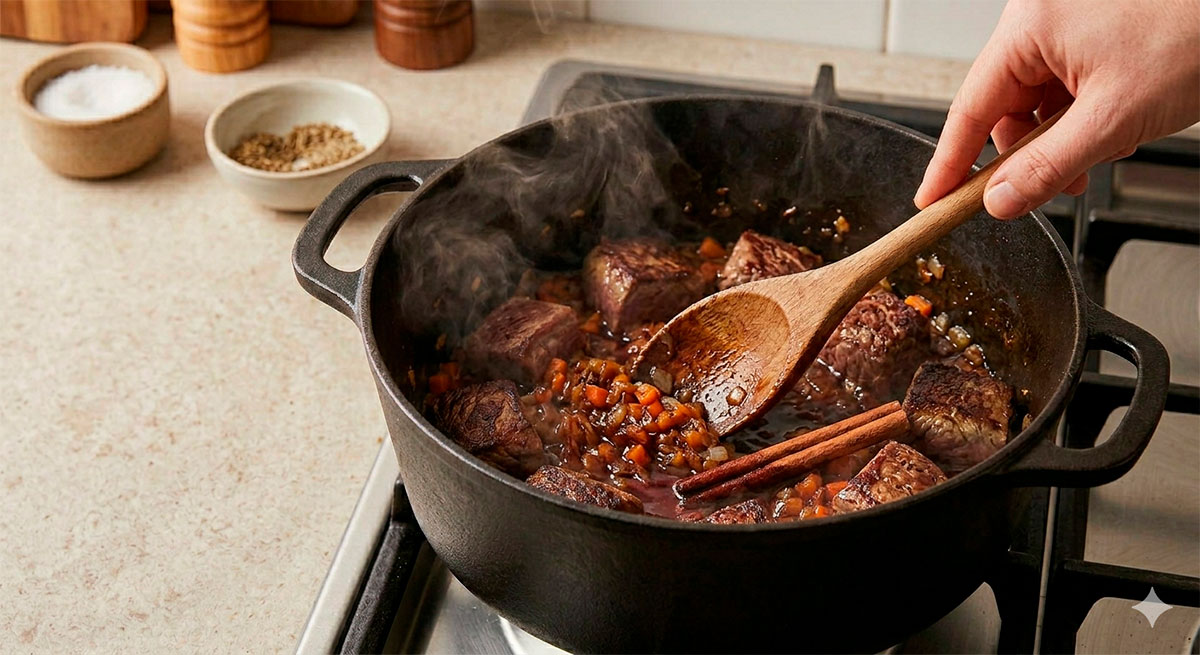
- Deglazing with wine and slow cooking: Increase the heat to maximum and pour in the red wine all at once. Using a wooden spoon, vigorously scrape the bottom of the pot to loosen and dissolve the caramelized sediments (the sucs): that’s where much of the flavor is concentrated. Let the alcohol evaporate for 2 minutes. Return the lamb along with the juices accumulated on the plate. Cover with the liter of beef broth and add the cinnamon stick. Cover the pot tightly and adjust the heat to the minimum necessary to maintain a barely perceptible simmer for 90 to 105 minutes.
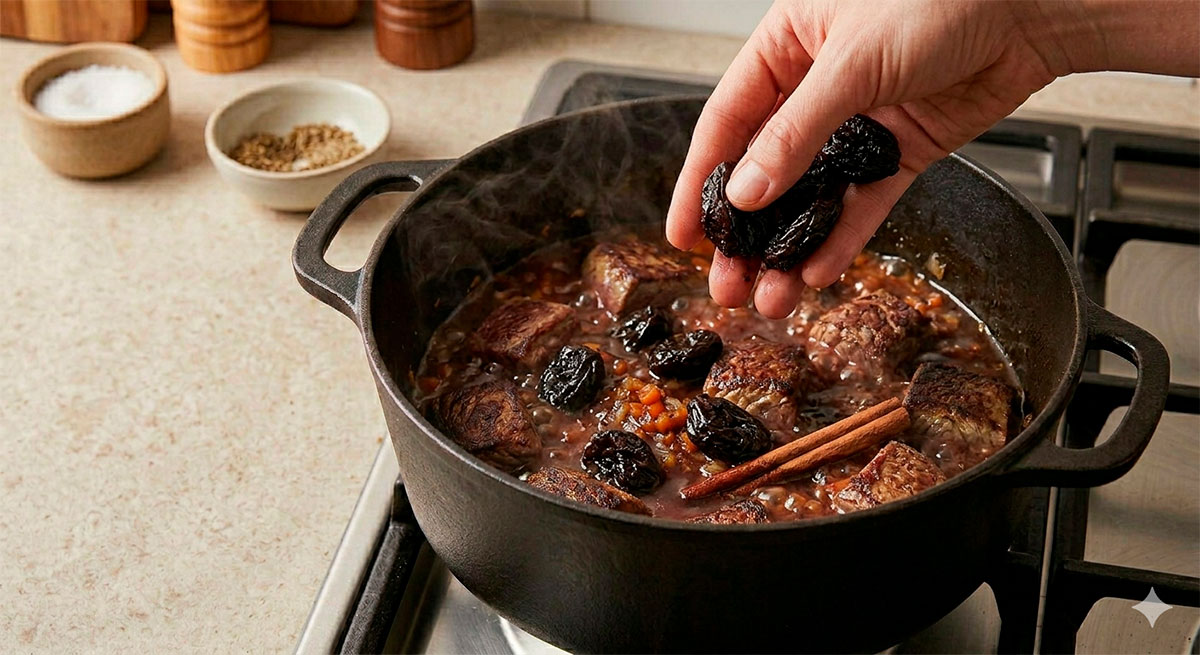
- Incorporate prunes and reduce the sauce: After the initial cooking time, uncover the pot and add the prunes. These will act as sponges, absorbing the flavor-packed broth and releasing their natural pectin, which will thicken the sauce organically and give it a special shine. Cook uncovered for the last 30 minutes over medium heat so the liquid reduces and transforms into a glossy glaze that perfectly coats (naps) every piece of meat.
- Final adjustment and mandatory rest: Remove the cinnamon stick. Taste and adjust the salt. If the sauce is still too thin, take out a couple of carrot pieces, mash them with a fork, and return them to the pot as a natural thickener without adding flour. Turn off the heat and let the lamb stew with prunes rest covered for 20 minutes before serving: this step is mandatory, as it allows the muscle fibers to reabsorb part of the sauce, ensuring extreme juiciness in every bite.
Nutritional Information for Lamb Stew with Prunes
Approximate values per 300g serving (6 servings total).
| Nutrient | Per Serving | % Daily Value* |
|---|---|---|
| Calories | 580 kcal | — |
| Protein | 42 g | 84% |
| Carbohydrates | 35 g | 12% |
| Total Fat | 28 g | 43% |
| Dietary Fiber | 6 g | 24% |
| Sodium | 450 mg | 19% |
*Percentage based on a 2,000 kcal daily diet.
Tips for Preparing an Irresistible Lamb Stew
The first commandment of this stew is heat control. If the broth boils violently, the lamb fibers contract forcefully and the result is fibrous and dry meat, exactly the opposite of what we seek. The bubbling inside the pot during long cooking should be almost invisible: only two or three slow bubbles per second are the sign that you are at the correct temperature. If you see active boiling, lower the heat immediately. An induction cooktop is ideal for this type of precise control.
The initial searing is the step that most home cooks skip or do incorrectly. When meat pieces are crowded in the pot, the temperature drops drastically and the meat ends up steaming in its own vapor instead of searing. The result is a gray surface without flavor. The golden rule is to sear in small batches with enough space between each piece. Don’t touch the meat during the first minute of contact with the pot: only when it releases on its own is it ready to turn.
The quality of the prune makes a notable difference in the final result. Look for pitted prunes that are shiny, flexible, and slightly moist to the touch; very dry and dull ones completely fall apart during cooking without providing texture. If you can only get very dry prunes, hydrate them briefly for 10 minutes in warm water before incorporating them into the stew.
The wine you use for deglazing matters more than you think. The classic cook’s rule says that if you wouldn’t drink it, don’t put it in the pot. A wine with pronounced tannins like a Syrah or a Malbec provides structure and a dark background that perfectly complements the lamb. Avoid “cooking wines” sold in supermarkets; they have high salt content and can ruin the final flavor of the stew.
The 20-minute rest before serving is not optional. During this time, the lamb muscle fibers, which contract from the heat, relax and reabsorb the juices from the sauce. It is the same principle applied to a good cut of grilled meat: if you cut it immediately after taking it off the heat, the juices escape and the dish loses its juiciness. Cover the pot with a kitchen towel over the lid to maintain heat during the rest.
A very common mistake when preparing lamb stew with prunes is adjusting the salt too early, before the sauce has reduced. The reduction process concentrates all flavors, including sodium. Always wait until the sauce is at its final texture point before adjusting salt, otherwise, you risk ending up with an excessively salty dish. If this happens, adding a peeled and whole potato during the last 15 minutes of cooking can absorb some of the excess salt.
For preservation, this stew gains complexity in the refrigerator. The solidified fat on the surface after cooling acts as a natural seal that prolongs the life of the stew for up to 4 days. To reheat, never use the microwave if you want to maintain the mellow texture of the meat and the shiny sauce. Use a saucepan over minimum heat with two tablespoons of water or broth to recover the fluidness of the sauce without drying out the meat.
This lamb stew is naturally gluten-free, provided that the beef broth you use is certified gluten-free. For a lighter calorie version, you can degrease it once cold (the fat rises and solidifies on the surface; remove it with a spoon before reheating). If you prepare it for someone who doesn’t consume alcohol, substitute the wine with 200 ml of natural purple grape juice without added sugar plus a tablespoon of balsamic vinegar: the result is surprisingly similar in depth of flavor.
Variations and Substitutions for Lamb Stew with Prunes
The flavor architecture of this stew is flexible enough to adapt to different needs and tastes. If you want to add a fresh citrus accent, incorporate the zest of half an orange (without the bitter white part) during cooking and remove it along with the cinnamon at the end; it transforms the dish’s profile towards something brighter and more summery. For a crunchy texture that contrasts with the softness of the stew, finish the dish with toasted pine nuts or sliced almonds scattered just before bringing it to the table. Spicy lovers can add a teaspoon of Moroccan harissa or a pinch of cayenne pepper to the sofrito; the heat of the chili creates a vibrant experience that doesn’t overwhelm other flavors but amplifies them. As a different protein version, beef cheek (carrillera) is the ideal substitute: its collagen content is even higher than that of lamb, the sauce will be even more unctuous, and you will only need 45 additional minutes of cooking. For a vegetarian option that respects the stewing technique, you can substitute the lamb with cooked chickpeas and large pieces of portobello mushrooms; reduce the total time to 45 minutes but keep the sofrito, wine deglazing, and prunes to preserve the dish’s complexity.
Frequently Asked Questions about Lamb Stew with Prunes
Can lamb stew with prunes be frozen?
Yes, lamb stew with prunes freezes perfectly for up to 3 months in airtight containers or freezer bags. To thaw, move it to the refrigerator the night before and reheat in a saucepan over low heat with two tablespoons of water or broth; never use the microwave, as the abrupt temperature change dries out the meat and breaks the sauce texture.
How long does lamb stew last in the refrigerator?
Lamb stew with prunes stays fresh for up to 4 days in refrigeration at temperatures below 4 °C in a well-covered container. The layer of solidified fat that forms on the surface upon cooling acts as a natural seal; if you notice a bad smell, grayish color in the meat, or unusual changes in the sauce texture, discard it immediately.
How many calories are in lamb stew with prunes?
A standard 300g serving provides approximately 580 kcal, with 42g of high-biological-value protein, 28g of total fat, and 35g of carbohydrates mainly from the prunes and carrots. It is a calorie-rich but nutritionally dense dish, especially recommended for cold days or people with high physical activity.
Can I substitute lamb for another meat in this stew?
Beef cheek (carrillera) is the best substitute due to its very high collagen content, which produces an even more unctuous and shiny sauce; just increase the cooking time by about 45 additional minutes. You can also use pork ribs cut into pieces, although the flavor profile is milder and you will lose some of the characteristic intensity of the mutton.
How is lamb stew with prunes best served?
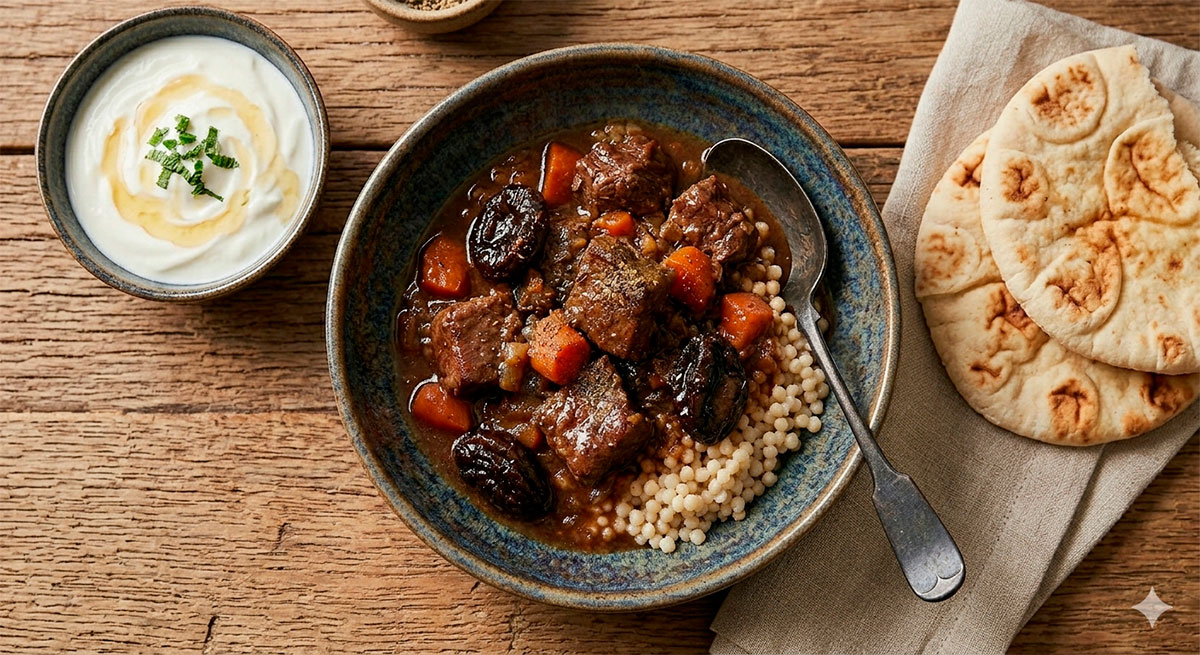
The most recommended bases are medium-grain couscous, long-grain white rice, or a creamy mashed potato, all ideal for absorbing the shiny stew sauce. As a finish, scatter toasted pine nuts or sliced almonds and a pinch of fresh parsley. For wine pairing, the same Syrah or Malbec you used in the recipe is the most coherent and satisfying choice.
Sources and Reference Resources
For more information on food safety and nutrition, consult the WHO healthy diet guidelines.
For ingredient nutritional values, you can check The Nutrition Source from Harvard T.H. Chan School of Public Health.
Food composition information is available in the National Institute of Public Health of Mexico database.
Please review our liability policy and legal notice before making decisions about your diet based on this content.