Authentic Spanish Garlic Chicken: Irresistible Recipe in 4 Steps
What is Spanish Garlic Chicken and why you should make it at home?
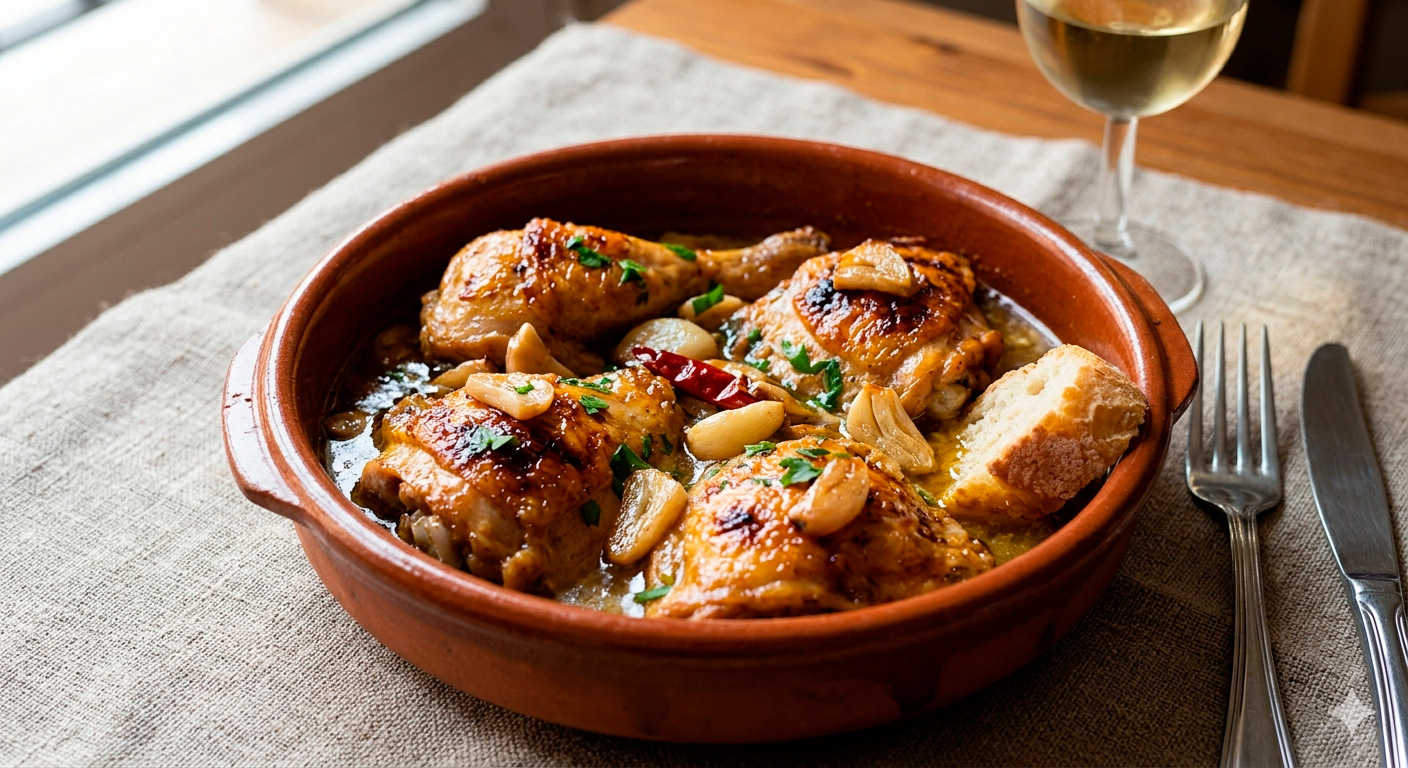
Spanish Garlic Chicken (Pollo al Ajillo) is one of the most emblematic and representative dishes of Spanish Mediterranean cuisine. Its origin dates back to the rural areas of Spain, where humble pantry ingredients—garlic, olive oil, and white wine—were combined to transform a simple protein into an aromatic feast capable of conquering any table. This is not a complicated recipe, but rather a testament to Mediterranean culinary philosophy: few ingredients, maximum quality, and precise technique.
What distinguishes Garlic Chicken from other stews is the alchemy of its ingredients. On one hand, the chicken skin undergoes the Maillard reaction during the initial searing: amino acids and natural sugars caramelize to create a golden, crispy, and deeply flavorful crust. On the other hand, the garlic—the star ingredient—is slowly confited in olive oil, losing its sharp pungency and developing an unmistakable earthy sweetness that perfumes the entire dish.
Dry white wine is the third pillar of this recipe. Unlike a sweet or ordinary table wine, dry wine provides the necessary acidity to cut through the oil’s fat and balance the garlic’s intensity. When poured into the hot pan, it deglazes the toasted sediments from the bottom—those small caramelized fragments of concentrated flavor—incorporating them into the sauce and creating a liquid base of surprising complexity for so few elements.
Preparing Garlic Chicken at home has multiple advantages over ordering it in a restaurant. First, you can control the quality of every ingredient: always fresh garlic, never from a jar; low-acidity olive oil; the kind of white wine you would gladly enjoy in a glass. Second, the recipe is incredibly adaptable: from a mild version with whole, unpeeled garlic cloves to a potent version with thinly sliced garlic and a dried chili for a touch of heat.
From a nutritional standpoint, Garlic Chicken also has much to offer. Chicken is a source of high-quality lean protein, essential for muscle maintenance and repair. Garlic provides allicin, a compound with documented anti-inflammatory and antibacterial properties. Extra virgin olive oil is rich in monounsaturated fatty acids and antioxidant polyphenols, making this dish a healthy choice within a Mediterranean eating pattern.
This dish is ideal for a family Sunday lunch, an informal dinner with friends, or even for surprising unexpected guests, as all its ingredients are basic pantry staples. Once you master the technique of the four critical steps we share in this recipe, Pollo al Ajillo will become one of those dishes you can cook with your eyes closed and that always receives applause. Let’s begin.
Ingredients for Spanish Garlic Chicken
Yields 4 servings.
Main Ingredients
- 1.2 kg bone-in chicken pieces (thighs and drumsticks)
- 10 fresh garlic cloves
- 150 ml dry white wine (Sauvignon Blanc or Albariño)
- 6 tablespoons extra virgin olive oil
- 100 ml chicken broth or water (to adjust the sauce)
Seasoning and Optional Items
- 1 teaspoon sea salt
- ½ teaspoon freshly ground black pepper
- 2 tablespoons all-purpose flour (optional, for searing)
- 1 small dried chili pepper (optional, for heat)
- 1 bunch of chopped fresh parsley
- 1 sprig of rosemary or thyme (optional)
Regional Variations of Ingredients
| Base Ingredient | Other Names / Variants | Function in the Dish |
|---|---|---|
| Chicken | Frango (Portuguese), Poultry, Fowl | Main protein and source of texture |
| Garlic | Aglio (Italian), Alho (Portuguese), Ajo (Spanish) | Aromatic core and predominant flavor |
| Dry White Wine | Sauvignon Blanc, Albariño, Sherry (Fino) | Deglazing agent and acidity balancer |
| Olive Oil | Virgin Oil, Extra Virgin Olive Oil (EVOO) | Cooking medium and sauce base |
| Wheat Flour | All-purpose flour, plain flour | Optional: sears and thickens slightly |
How to Prepare Spanish Garlic Chicken Step-by-Step
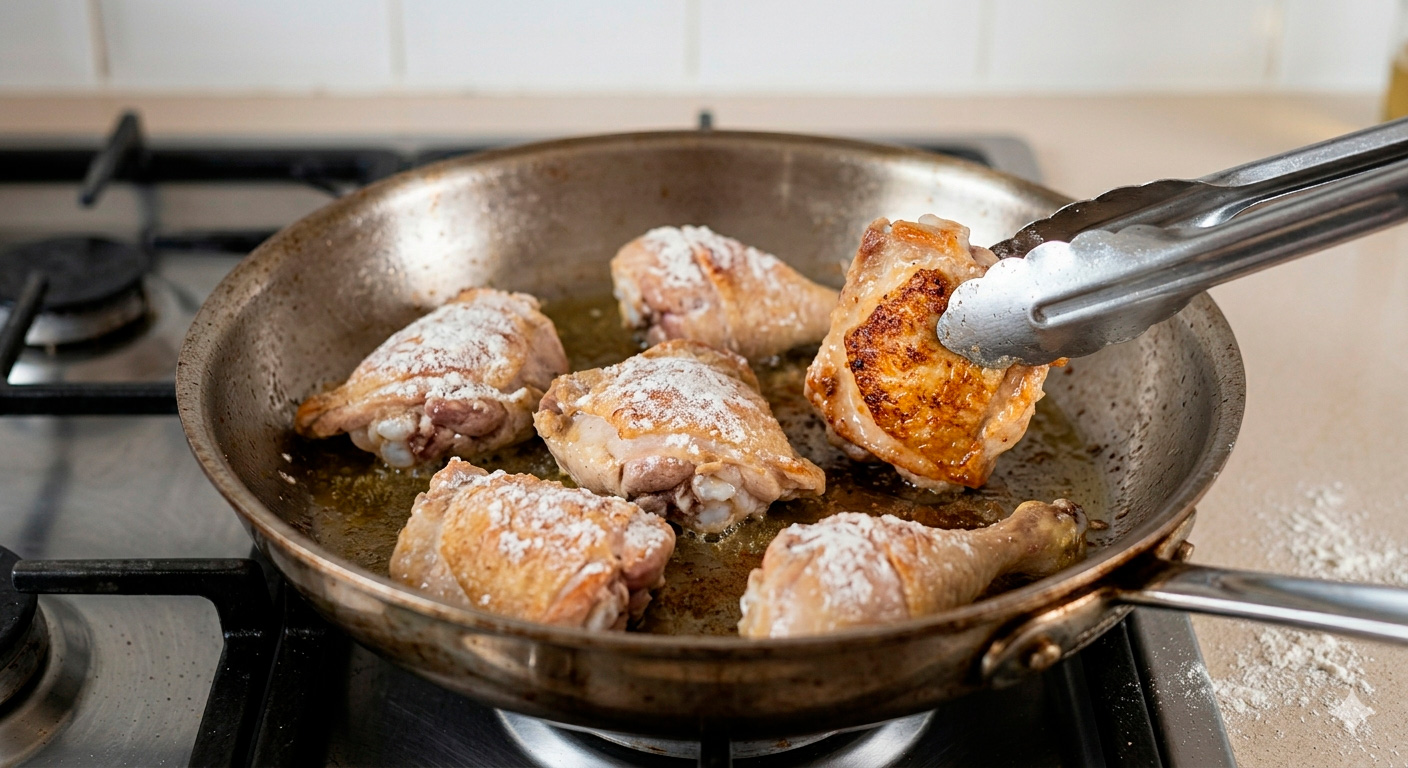
- Golden Searing: Pat the chicken pieces dry with paper towels. This step is crucial: damp chicken won’t brown; it will steam and lose the crust we’re looking for. Season generously with salt and pepper. If you choose to use flour, dust a very thin layer and shake off the excess. Heat the extra virgin olive oil in a large skillet over medium-high heat. When the oil is hot but not smoking, add the chicken pieces skin-side down. Brown them without moving for 4-5 minutes until a firm, golden crust forms. Flip and repeat on the other side. Remove the chicken and set aside on a plate. The goal isn’t to cook it through, but to create that Maillard reaction that concentrates flavor.
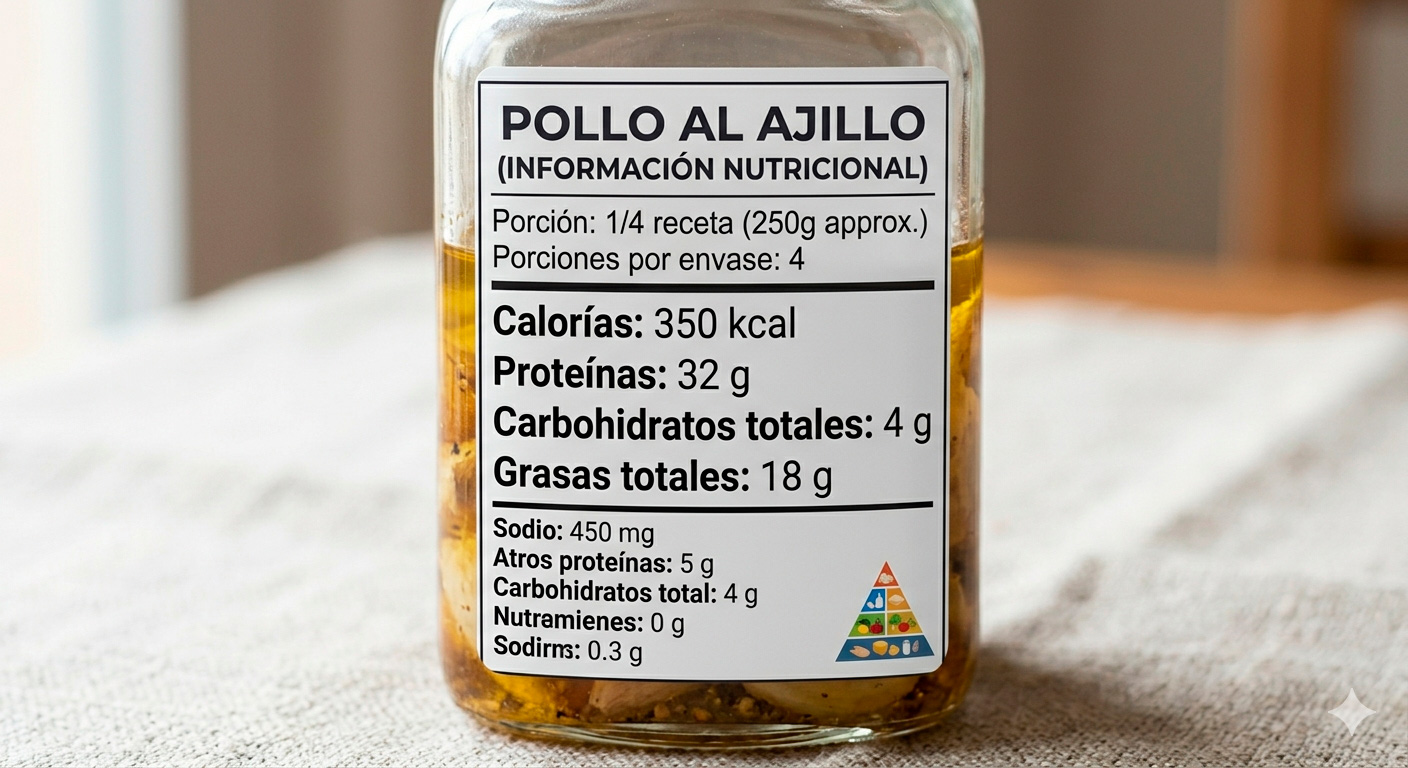
- Garlic Infusion: In the same oil that holds all the chicken juices, reduce the heat to medium-low. Add the garlic. You have two options based on preference: thinly sliced for a powerful and intense flavor, or whole and crushed with their skin (known as “shirted” garlic) for a milder, sweeter result. If using a dried chili, add it now too. Let the garlic dance gently in the oil for 3-4 minutes—don’t rush. The garlic should bubble calmly, not pop. When it is golden—never black—it will have released all its essential oils and the kitchen will smell extraordinary. If the garlic burns, the sauce will turn bitter and you’ll have to start over: there is no fix for burnt garlic.
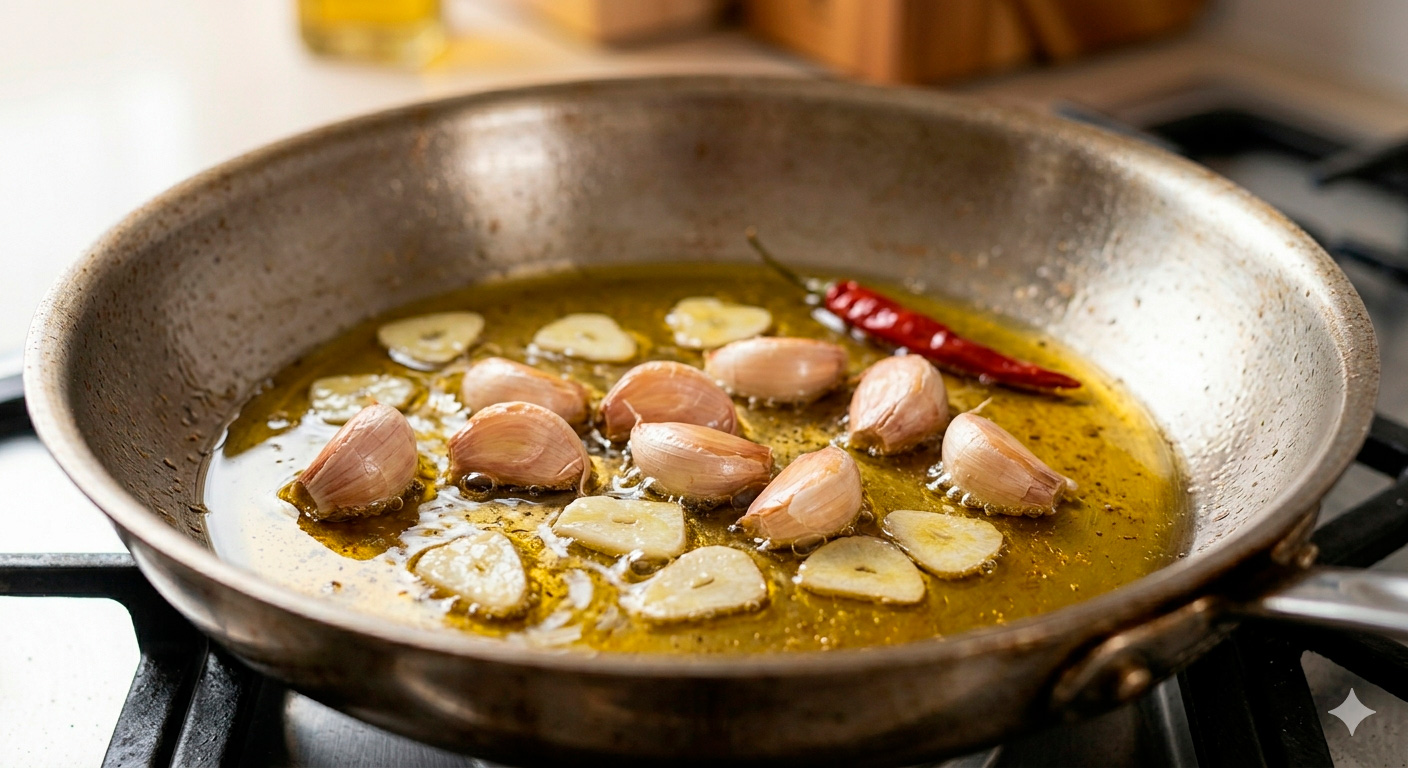
- Deglazing and Reduction: Return the chicken to the skillet along with any juices accumulated on the plate. Increase the heat to medium-high. Pour in the dry white wine all at once; you’ll hear the characteristic sizzle. With a wooden spoon, firmly scrape the bottom of the pan to release the toasted caramelized sediments—pure concentrated flavor. Let the alcohol evaporate for approximately 2 minutes and the liquid reduce by half. You’ll know the alcohol is gone when the sharp raw wine aroma disappears and the scent becomes sweet and deep. Add the sprig of rosemary or thyme at this point if using.
- Herbal Finish and Resting: If you want more sauce—highly recommended for bread dipping—add the 100 ml of chicken broth or water now. Adjust salt if necessary. Cover the skillet with a lid or foil and cook on low heat for another 5-7 minutes, until the chicken is completely cooked inside (internal temperature of 74°C/165°F). Turn off the heat, remove the chili and rosemary if used, and sprinkle generously with chopped fresh parsley. Let it rest for 2 minutes before serving: this final rest allows the juices to redistribute and the flavors to settle. Serve directly from the skillet to keep the heat.
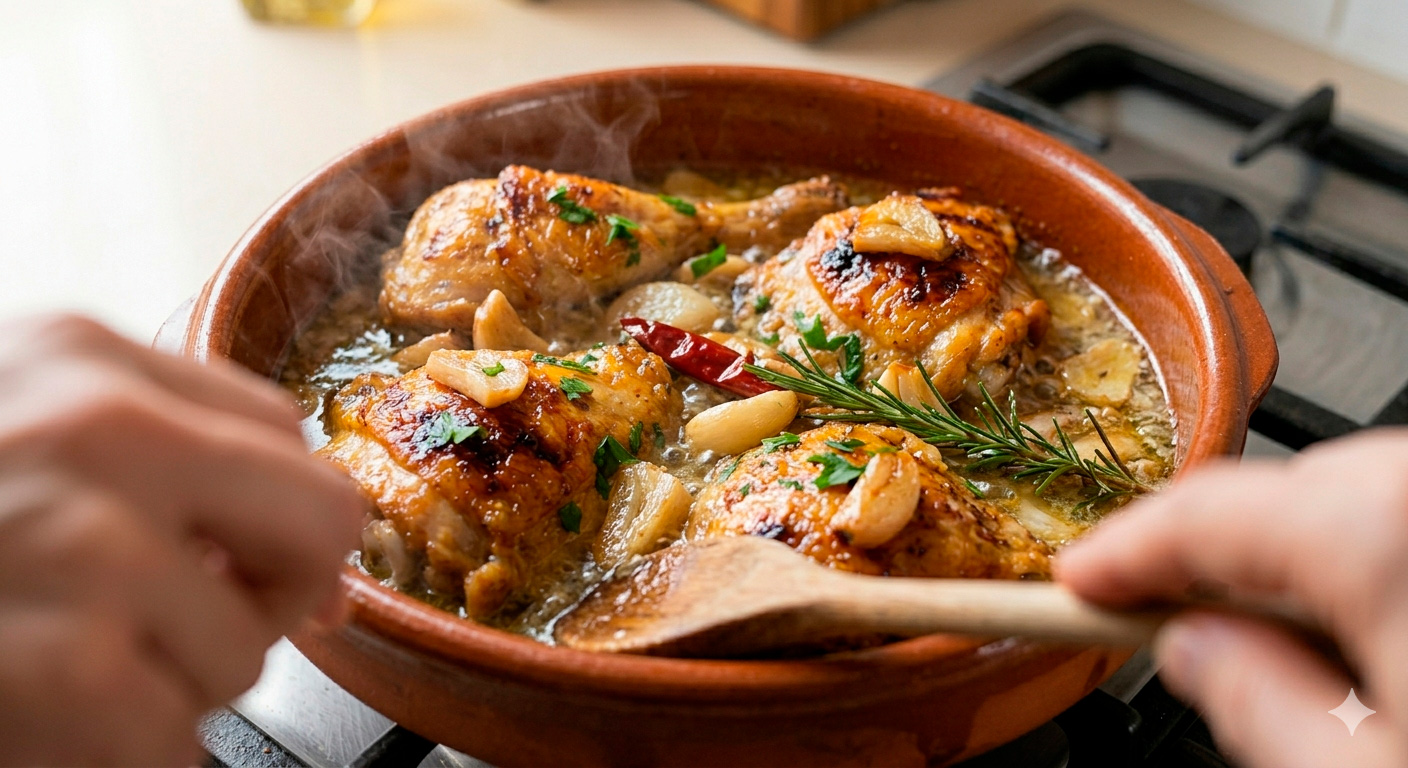
Nutritional Information for Garlic Chicken
Approximate values per serving (4 total servings).
| Nutrient | Per Serving | % Daily Value* |
|---|---|---|
| Calories | 350 kcal | 17.5% |
| Protein | 32 g | 64% |
| Carbohydrates | 4 g | 1.5% |
| Total Fat | 18 g | 23% |
| Dietary Fiber | 0.5 g | 2% |
| Sodium | 450 mg | 20% |
*Percentage based on a 2,000 kcal daily diet.
Nutritional Benefits
Beyond calories, Garlic Chicken is a nutritionally interesting dish. Chicken provides complete protein with all essential amino acids, including cysteine, which nutritional studies associate with mucolytic properties. With 32g of protein per serving, this dish covers nearly two-thirds of an average adult’s daily protein requirement.
Garlic is a source of allicin—a sulfur compound with documented anti-inflammatory and antimicrobial properties—as well as Vitamin B6, Vitamin C, and manganese. Extra virgin olive oil provides monounsaturated fatty acids (oleic acid) and polyphenols with antioxidant effects, placing this dish within the Mediterranean diet patterns, recognized by the WHO as one of the healthiest in the world.
Tips for the Perfect Spanish Garlic Chicken
The biggest secret to Pollo al Ajillo doesn’t lie in exotic ingredients or complicated techniques, but in temperature control and respecting the timing of each phase. The most common mistake beginners make is trying to speed up the process by turning up the heat at the wrong time. Searing requires high heat for the Maillard reaction, but confiting garlic demands patience and low heat. If you mix these up, you’ll get chicken that’s raw inside and garlic that’s burnt outside. Follow the four-step order to the letter for impeccable results.
The first professional trick is to dry the chicken very well before cooking. Use paper towels and pat firmly all over. Excess moisture on the chicken’s surface generates steam upon contact with hot oil, preventing that golden crust from forming. Dry chicken browns in 4-5 minutes; damp chicken boils for 10 minutes without ever browning. This difference is what separates a mediocre dish from an outstanding one.
Ingredient quality also makes a notable difference. Garlic should always be fresh: jarred garlic has lost the allicin and volatile essential oils that are the essence of the dish. Use extra virgin olive oil with acidity below 0.8%, as lower-quality oil will impart a metallic bitterness when reduced. And the white wine should be something you’d enjoy drinking; poor-quality wine becomes harshly acidic when concentrated during reduction.
Another detail is the choice of cut. Bone-in thighs and drumsticks are ideal because the bone acts as an internal heat conductor, and collagen juices maintain moisture. Breast meat is too lean and tends to dry out. If you must use breast, cut the final cooking time in half to prevent it from becoming dry as cardboard.
Variations and Substitutions
Citrus Garlic Chicken
Replace half the white wine with freshly squeezed lemon juice and add lemon zest at the end. This version is more vibrant and fresh, perfect for summer months.
Country Style with Mushrooms
Add 200g of sliced mushrooms during the garlic confit step. They will absorb the garlic-infused oil, adding an earthy, meaty note.
Gluten-Free Version
Simply omit the flour during the searing step. All other ingredients are naturally gluten-free. The sauce will be slightly thinner, but equally delicious.
Frequently Asked Questions
Can Garlic Chicken be frozen?
Yes, it can be frozen in an airtight container for up to 2 months. Thaw overnight in the fridge and reheat over low heat with a splash of broth.
How long does it last in the fridge?
It keeps perfectly for up to 3 days. Many say it tastes even better the next day as the garlic flavors deepen.
Reference Sources
For more on food safety and nutrition, visit WHO Healthy Diet guidelines.