Crispy Parmesan and Oregano Crusted Chicken Breast: Irresistible Recipe in 5 Steps
What is Parmesan and Oregano Crusted Chicken Breast and Why You Should Make It at Home
Parmesan and Oregano Crusted Chicken Breast is one of those dishes that achieves the seemingly impossible: it’s simple to prepare, visually appealing, and surprisingly flavorful all at once. It consists of a boneless chicken breast coated with a mixture of grated Parmesan cheese, breadcrumbs, and dried oregano, which forms a golden, crispy, and flavor-packed crust when cooked. It’s a modern Mediterranean-origin recipe that has gained popularity in kitchens across the Spanish-speaking world, from Mexico to Argentina, thanks to the easy availability of its ingredients and the consistently delicious results it offers.
What sets this Parmesan-breaded chicken apart from other similar recipes is the depth of flavor from the aged cheese. Unlike the classic breading with plain breadcrumbs, here the Parmesan melts slightly during cooking, adhering to the chicken’s surface and creating a compact, aromatic layer. Oregano, on the other hand, is not just a decorative ingredient: it acts as the aromatic bridge connecting the intensity of the cheese with the mildness of the white meat, adding those herbal and slightly bitter notes so characteristic of Mediterranean cuisine.
Preparing this recipe at home has several advantages over industrial or restaurant versions. First, you control the quality of the cheese: freshly grated Parmesan has a texture and melting capacity that pre-grated Parmesan simply cannot match. Second, you adjust the level of salt, pepper, and spices to your personal taste. And third, home cooking—whether in the oven or skillet—ensures the inside of the chicken remains juicy, something industrial breaded products rarely achieve.
This recipe is perfect for those with an active lifestyle who need quick cooking options without sacrificing nutrition or flavor. With just 15 minutes of prep and 20 minutes of cooking, you have a complete dinner ready in 35 minutes. The chicken provides high biological value protein, essential for muscle recovery and tissue maintenance. Parmesan contributes a good dose of calcium, and oregano—often underestimated as a simple condiment—contains natural antioxidant and antimicrobial compounds that benefit the immune system.
In this Parmesan Crusted Chicken Breast recipe, you will learn step by step how to achieve that perfect crust that sticks without falling off, how to choose the exact cooking point so the white meat doesn’t dry out, and what are the most common mistakes beginner cooks make when breading chicken. You will also find variations adapted to special diets—keto, gluten-free, high-protein—and storage tips so you can prepare extra portions and have them ready during the week.
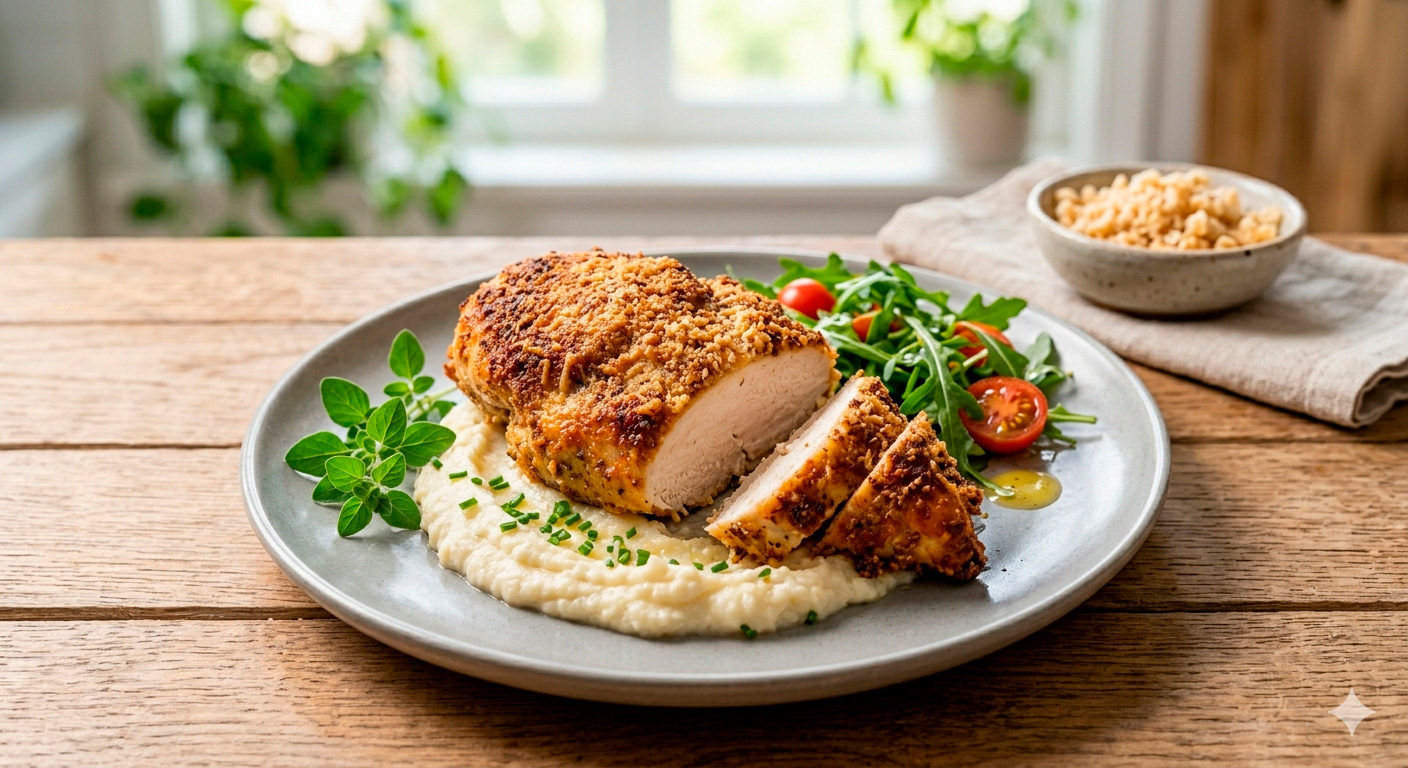
It doesn’t matter if you are an experienced cook or just starting out in the kitchen: this dish is accessible, versatile, and guarantees impressive results. Serve it with a fresh green salad, some sautéed asparagus, or a rustic mashed potato, and you’ll have a dinner worthy of any special occasion, prepared with supermarket ingredients in the time it takes to preheat the oven.
Ingredients for Parmesan and Oregano Crusted Chicken Breast
Quantities for 4 servings.
Main Ingredients
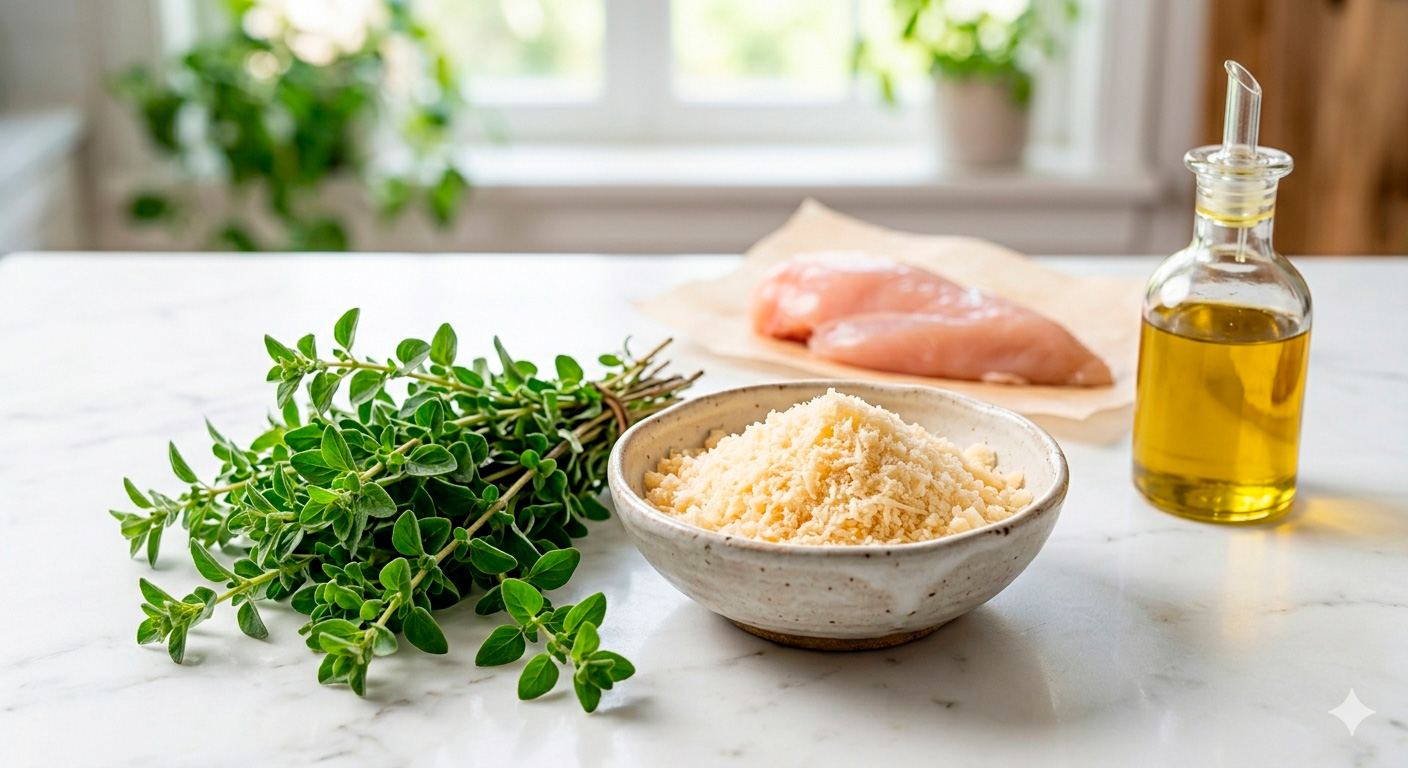
- 4 boneless chicken breasts (approx. 180-200 g each)
- 150 g finely grated Parmesan cheese (Parmigiano or Reggianito)
- 100 g breadcrumbs (or cracker crumbs)
- 2 large eggs
- 50 g wheat flour (all-purpose or refined flour)
Seasonings and Optional
- 2 tablespoons dried oregano
- 1 teaspoon garlic powder
- Refined salt to taste
- Ground black pepper to taste
- 3 tablespoons olive oil
- 1 tablespoon butter (optional, for a glossy finish)
- Zest of 1 lemon (optional, for a Mediterranean touch)
How to Prepare Parmesan and Oregano Crusted Chicken Breast Step by Step
- Prepare the chicken: Clean the breasts by removing excess fat and any tendons. If they are very thick (more than 2 cm), cut them lengthwise (butterfly) to ensure even cooking. Dry them thoroughly with paper towels—this step is critical for the breading to adhere correctly—and lightly season with salt and pepper on both sides. Let rest at room temperature for 10 minutes before breading.
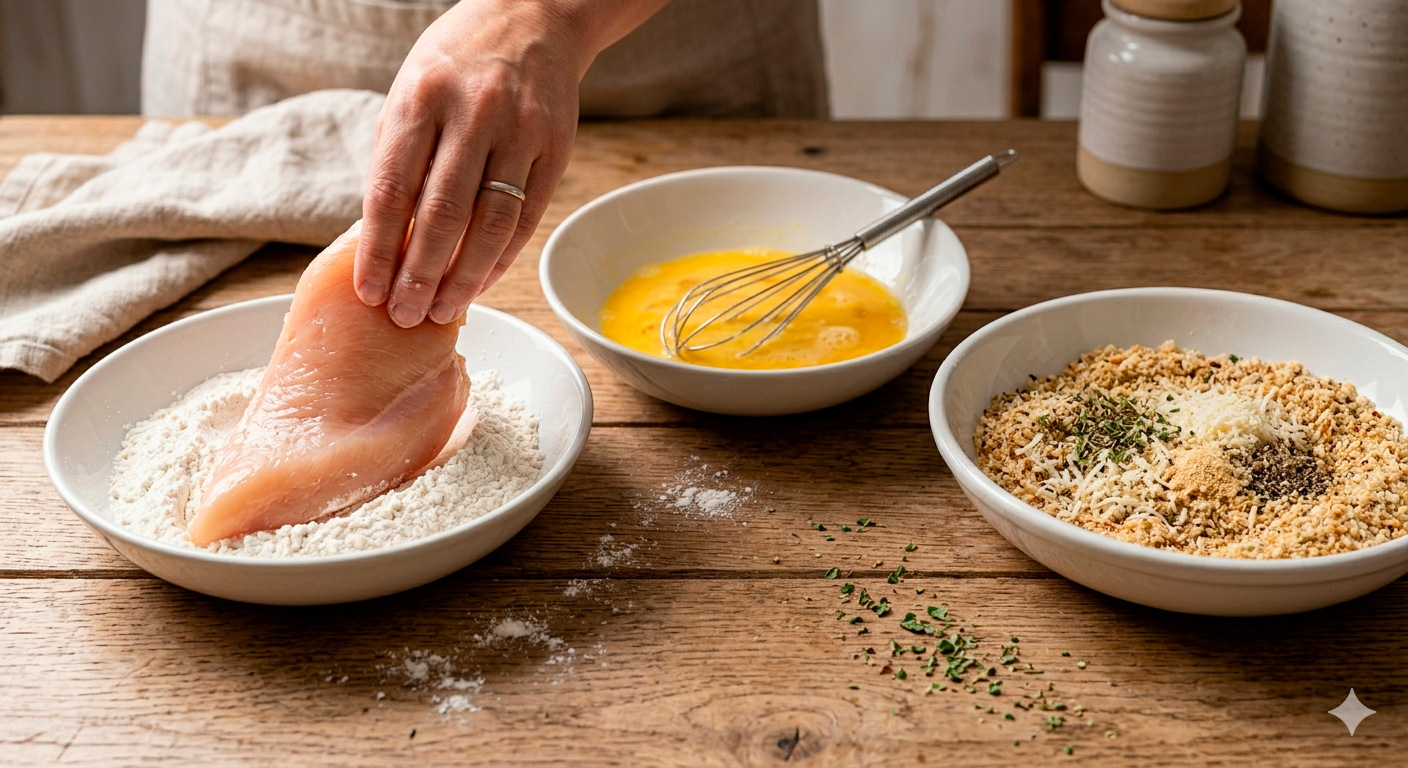
- Set up the breading station: Prepare three flat, wide containers in a line. The first contains the wheat flour. The second, the two eggs beaten until completely homogeneous and slightly foamy. The third holds the mixture of breadcrumbs, finely grated Parmesan cheese, dried oregano, and garlic powder; mix well with a fork until all ingredients are perfectly integrated and the cheese is evenly distributed.
- Bread each breast: Using one dry hand and one wet hand (the two-hand technique), pass each breast first through the flour, shaking off the excess gently. Then dip it completely in the beaten egg. Finally, press it firmly into the Parmesan and oregano mixture, covering both sides and the edges. Press with the palm of your hand to compact the crust and ensure it is thick and even.
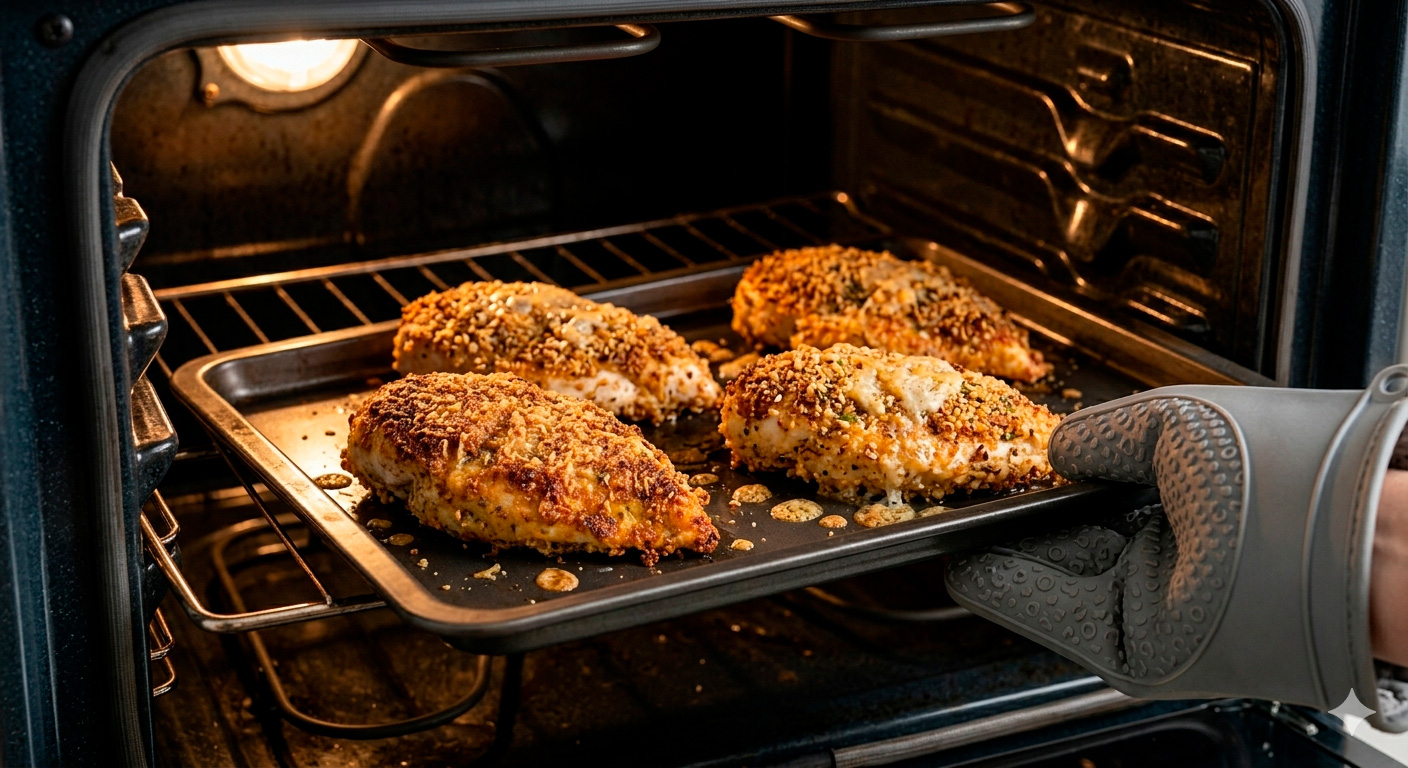
- Cook (oven or skillet): Oven method: Preheat the oven to 200 °C (400 °F) with top and bottom heat. Place the breasts on a greased baking sheet, without them touching each other. Bake for 20 minutes, flipping halfway through (minute 10) so the crust browns evenly on both sides. Skillet method: Heat 3 tablespoons of olive oil over medium-high heat in a wide skillet. Add the breast and cook without moving it for 6-8 minutes per side. Optionally, add a tablespoon of butter at the end for a glossy and more flavorful finish.
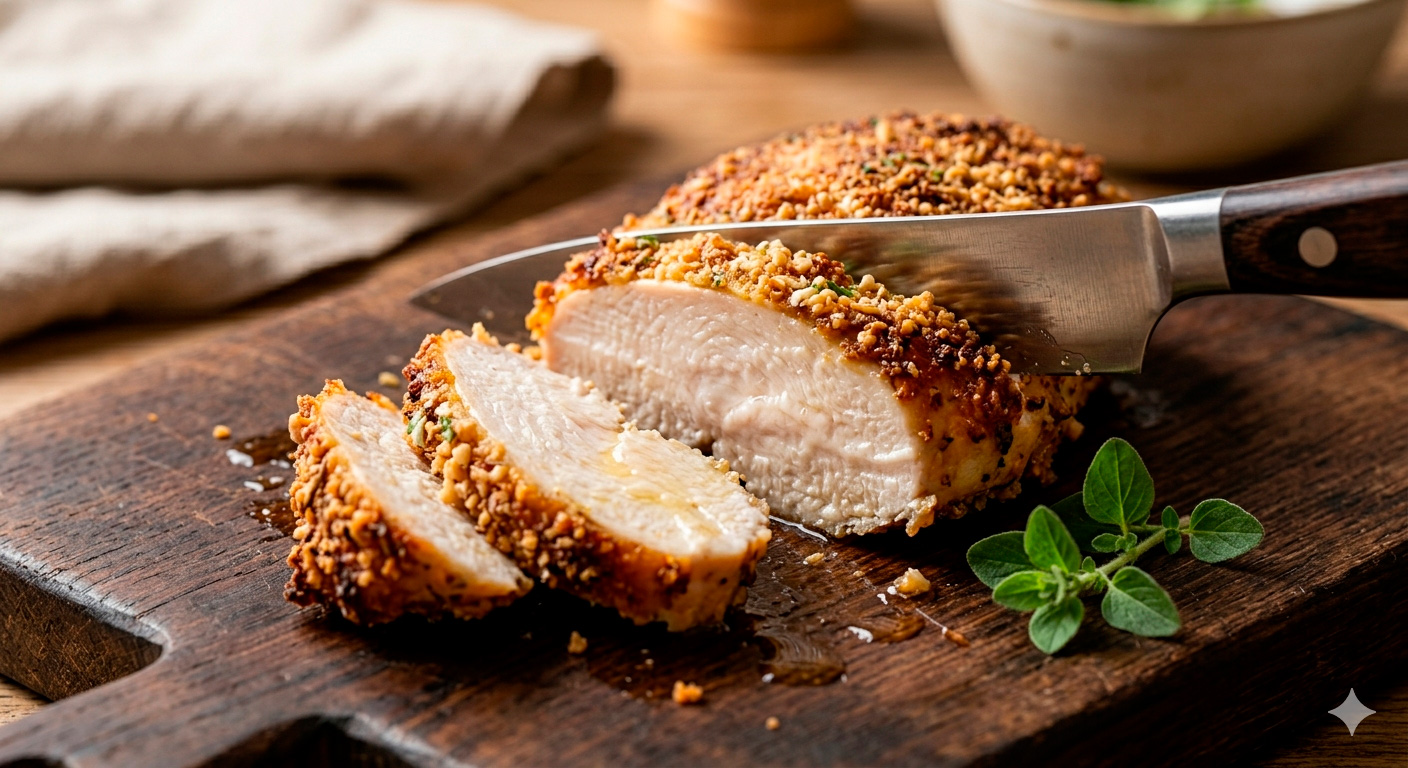
- Rest and serve: Once cooked, remove the breasts from the heat and transfer them to a rack or wooden board. Let them rest for 3 to 5 minutes before cutting. During this rest, the internal juices that concentrated with the heat redistribute towards the center and edges of the meat, guaranteeing every bite is juicy. Cut diagonally for a more elegant presentation and serve immediately.
Nutritional Information for Parmesan and Oregano Crusted Chicken Breast
Approximate values per serving (4 total servings).
| Nutrient | Per Serving | % Daily Value* |
|---|---|---|
| Calories | 380 kcal | — |
| Protein | 35 g | 70% |
| Carbohydrates | 22 g | 8% |
| Total Fat | 18 g | 23% |
| Dietary Fiber | 1 g | 4% |
| Sodium | 580 mg | 24% |
| Calcium | 250 mg | 25% |
*Percentage based on a 2,000 kcal daily diet.
Tips for Making Perfect Parmesan Crusted Chicken Breast
The main secret behind a Parmesan Crusted Chicken Breast that truly impresses is the cheese you choose. Freshly grated Parmesan has minimal moisture and a crystalline structure that, when it comes into contact with heat, partially melts and creates microscopic bridges between the breadcrumb grains, forming a compact, crispy crust that doesn’t fall off. Pre-grated or packaged Parmesan, while convenient, contains anti-caking agents that prevent that natural fusion and result in a drier, more fragile crust. If you can’t find good quality Parmesan, a good Argentine Reggianito or finely grated Pecorino Romano are valid alternatives that offer similar results.
Another critical point is the temperature of the chicken before cooking. Taking the breast directly from the refrigerator and putting it in the oven causes a thermal shock that hardens the superficial muscle fibers before the heat reaches the center, resulting in dry meat inside even if the crust is perfectly golden outside. The solution is simple: take the breasts out of the refrigerator at least 10 minutes before breading and cooking. Those minutes make the difference between juicy chicken and one that tastes like cardboard.
The “two hands” technique when breading is another professional trick worth adopting. Designate one hand for dry ingredients (flour and Parmesan mixture) and the other for wet ingredients (egg). This prevents your fingers from becoming coated in a pasty mixture that later dirties the breading and creates uneven clumps. A uniform crust translates directly into even cooking and a crispy texture on every inch of the surface.
If you choose the skillet method, the oil temperature is crucial. Oil that is too cold will make the breading absorb excess fat and become oily. Oil that is too hot will burn the crust before the inside cooks. The ideal temperature is around 170-180 °C (340-355 °F). A simple trick to check without a thermometer: drop a pinch of breadcrumbs into the oil; if it bubbles immediately and rises to the surface, the oil is ready.
For those who prefer the oven method, a dark or non-stick metal baking sheet transmits heat better than a glass or ceramic one, which favors the browning of the bottom of the crust. If you don’t have an oven rack, you can improvise with crumpled aluminum foil under the breasts to slightly elevate them and allow hot air to circulate on all sides.
A very common mistake when making this recipe is skipping the final rest. When the breast comes off the heat, the juices are concentrated towards the center of the meat due to the contraction of the muscle fibers. If you cut it immediately, those juices escape onto the plate and the meat becomes dry. By waiting 3 to 5 minutes, the fibers relax and the juices redistribute evenly, guaranteeing every bite is succulent.
Regarding storage, the biggest enemy of the crispy crust is moisture. If you store the cooked chicken in a closed container, the internal steam will soften the breading in a few hours. To reheat and regain the crispy texture, never use the microwave. Instead, place the breasts in an air fryer at 180 °C (350 °F) for 5 minutes, or in the electric oven at the same temperature. The result will be almost identical to freshly made.
If you plan to prepare this recipe for a large group or in advance, you can bread the raw chicken and freeze it in a single layer on wax paper. Once solid, transfer the pieces to an airtight bag and freeze for up to 2 months. To cook them, there’s no need to thaw: put them directly in the oven at 200 °C (400 °F) for 25-30 minutes (5-10 minutes additional compared to the fresh version) and you’ll have the same crispy and juicy result.
Variations and Substitutions for Parmesan and Oregano Crusted Chicken Breast
One of the great virtues of this recipe is its adaptability. The Keto or ketogenic version substitutes breadcrumbs with almond flour in the same proportion (100 g), eliminating almost all carbohydrates without sacrificing the crispy texture. The result is a slightly denser but equally tasty crust. Another very popular low-carb alternative is finely crushed pork rinds, which also add a smoky and salty flavor that complements the Parmesan very well.
For a Mediterranean citrus touch, add the zest of one yellow lemon to the breadcrumb and Parmesan mixture. The essential oils in the lemon peel are activated by the heat and add an aromatic freshness that balances the intensity of the aged cheese. This variation is especially popular in southern Italy and pairs perfectly with green leaf salads dressed with extra virgin olive oil.
The spicy version incorporates a teaspoon of crushed peperoncino or smoked spicy paprika into the breading mixture. For those who enjoy more intense flavors, adding half a teaspoon of ground cumin and a pinch of turmeric transforms the flavor profile towards warmer, spicier notes, without losing the Mediterranean essence of the original recipe.
Finally, for a gluten-free version, substitute the wheat flour for cornstarch and the breadcrumbs for certified gluten-free breadcrumbs or crushed rice flakes. All other steps in the process remain exactly the same.
Frequently Asked Questions about Parmesan and Oregano Crusted Chicken Breast
Can you freeze Parmesan Crusted Chicken Breast?
Yes, you can freeze it raw and already breaded for up to 2 months, separating each piece with wax paper to prevent them from sticking together. To thaw correctly, move it to the refrigerator the night before; never thaw it at room temperature, as that promotes bacterial growth and compromises food safety. You can also cook it directly from frozen by increasing the oven time by 5-10 additional minutes.
How long does Parmesan Crusted Chicken Breast last in the refrigerator?
Once cooked, it can be kept for up to 3 days in an airtight container in the refrigerator at a temperature of 4 °C (39 °F) or less. You’ll know it’s no longer in optimal condition if it shows color changes towards grayish tones, a sour smell, or a slimy texture to the touch. To reheat and regain the crispy texture, use an air fryer or oven, never the microwave.
How many calories are in Parmesan and Oregano Crusted Chicken Breast?
Each serving provides approximately 380 kcal, with 35 g of high biological value protein, 22 g of carbohydrates, and 18 g of fat, mostly from the cheese and olive oil. It is a moderately caloric but very nutritionally complete dish, ideal for maintenance diets, muscle gain, or simply for eating well without excess.
Can you make the Parmesan crusted chicken without breadcrumbs?
Yes, there are excellent alternatives. Almond flour (100 g as a direct substitute) is the most popular option for keto diets, as it provides an equally crispy crust with practically zero carbs. Finely crushed pork rinds is another tasty alternative that adds a more intense and salty flavor profile. Both options work well in the oven or skillet without modifying the rest of the process.
How is Parmesan Crusted Chicken Breast best served?
It is ideal to serve it immediately after the 3-5 minute rest, when the crust is still crispy and the meat is at its optimal temperature. Classic side dishes are asparagus sautéed with butter and garlic, rustic mashed potatoes with skin, or a fresh green salad with lemon and caper vinaigrette. For pairing, a dry light-bodied white wine like a Sauvignon Blanc, Pinot Grigio, or a Spanish Albariño work wonderfully.
Reference Sources and Resources
For more information on food safety and nutrition, consult the WHO’s healthy eating guides.
For information on the nutritional value of ingredients, you can consult The Nutrition Source from Harvard T.H. Chan School of Public Health.
Food composition information available in the database of Mexico’s National Institute of Public Health.
You might also be interested in other recipes from our collection: Lemon Herb Mediterranean Chicken and Spinach and Cream Cheese Stuffed Chicken Breast.
Check out our disclaimer and legal notice before making decisions about your diet based on this content.