Sesame Ginger Teriyaki Chicken: Easy Recipe in 4 Irresistible Steps
What is sesame and ginger teriyaki chicken and why should you make it at home?
The sesame and ginger teriyaki chicken is one of the most iconic dishes of Japanese cuisine: a perfect balance between sweet, savory, and aromatic flavors that has conquered tables around the world. The word teriyaki comes from the Japanese words teri (shine) and yaki (grilled or pan-seared), which accurately describes the technique: cooking food with a glaze that gives it that lacquered, glossy, and deeply flavorful finish that we all recognize.
The origin of this preparation dates back to 17th-century Japan, when cooks began marinating fish and chicken in mixtures based on soy sauce and mirin before grilling them over charcoal grills. Over time, the technique traveled to the West through the Japanese diaspora, especially to the west coast of the United States during the 20th century, where it became popular in restaurants and home kitchens. Today, teriyaki chicken is one of the most widely prepared Asian dishes in the Spanish-speaking world thanks to its ease of preparation and the increasing availability of its ingredients in any supermarket.
What distinguishes this homemade version from commercial options is the incorporation of fresh ginger. Ginger not only adds a subtle and warm spiciness that balances the sweetness of soy sauce and brown sugar, but also provides anti-inflammatory and digestive benefits highly valued in traditional Asian medicine.
Preparing teriyaki chicken at home also has very clear nutritional advantages: you can control the amount of sodium, avoid artificial preservatives, and adjust the level of sweetness to your liking. Bottled versions sold in supermarkets often triple the sugar and salt content compared to a sauce made from scratch.
In this sesame and ginger teriyaki chicken recipe, you will learn techniques used by professional chefs: mise en place to organize ingredients before turning on the heat, the importance of high temperature to sear the protein and preserve its juices, and the cornstarch slurry trick to achieve that thick, glossy syrup consistency that separates mediocre teriyaki from one that makes you close your eyes.
Sesame seeds —also called sesame— are much more than just a garnish. Lightly toasted before adding them to the dish, they develop a deep, intense nutty flavor that becomes the perfect aromatic complement to the sauce. Along with sesame oil added at the end (off the heat, to preserve its volatile aroma), they transform a good teriyaki chicken into a complete sensory experience.
Finally, diagonally chopped chives are not just aesthetic: their vegetal freshness cuts through the richness of the sauce and adds a touch of green color that makes the dish visually more appealing.
This dish is ideal for a weeknight dinner that impresses without requiring hours of work, but it is also perfect for meal prep: you prepare four portions on Sunday and have lunch for the entire week without sacrificing quality or flavor.
Ingredients for sesame and ginger teriyaki chicken
Quantities for 4 servings.
Main ingredients
- 800 g chicken breast or thigh
- 150 ml soy sauce
- 1 piece of 4 cm fresh ginger
- 3 garlic cloves
- 3 tablespoons brown sugar
Seasonings and optional
- 1 tablespoon rice vinegar (or apple cider vinegar)
- 1 teaspoon cornstarch
- 2 tablespoons sesame seeds
- 1 teaspoon sesame oil
- 2 stalks chives
- Neutral oil for searing (as needed)
How to prepare sesame and ginger teriyaki chicken step by step
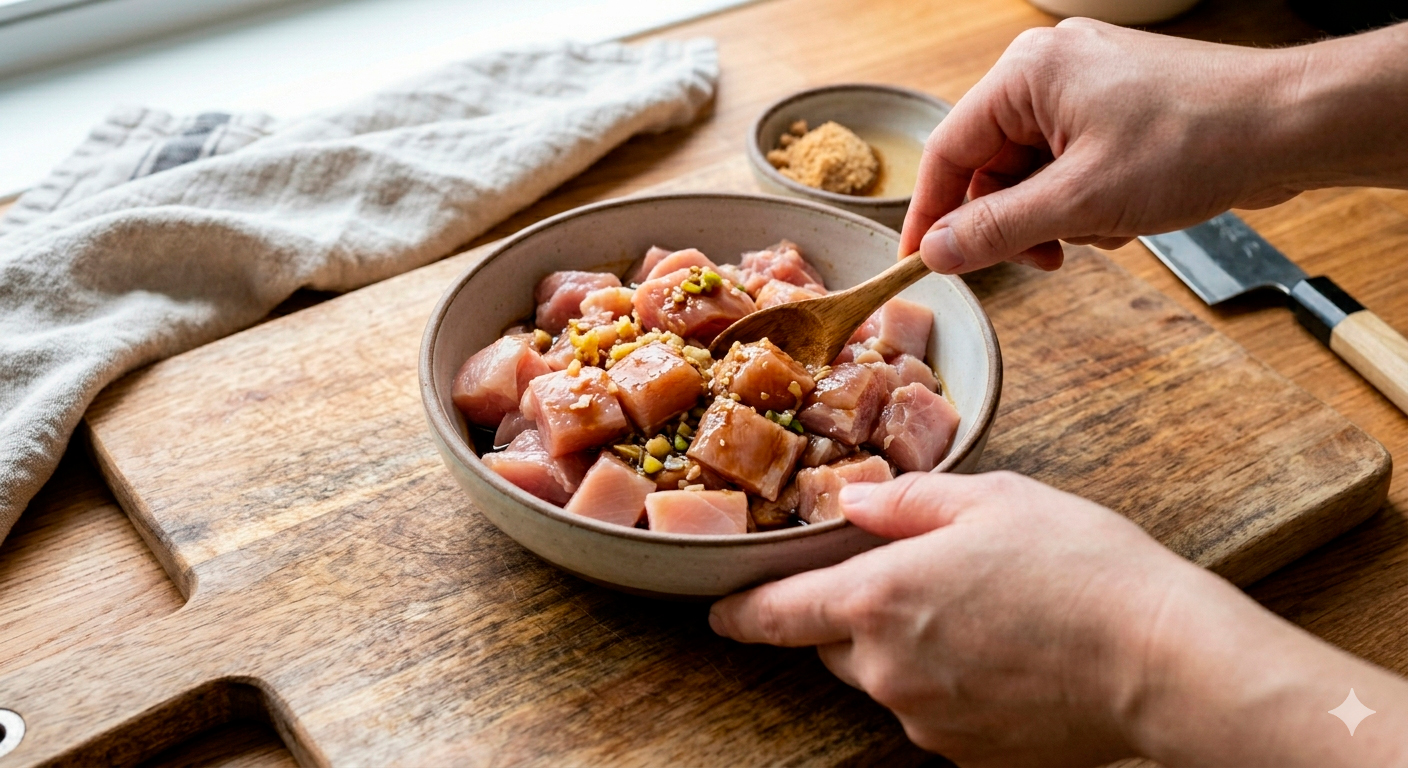
- Cut and marinate the chicken: Cut the chicken into uniform cubes of approximately 2 cm. Uniformity is key so that all pieces cook at the same time and none remain raw or dry. In a separate bowl, finely grate the fresh ginger and crush the garlic. Mix the soy sauce, brown sugar, and rice vinegar until the sugar dissolves. Add the grated ginger and garlic. Add the chicken cubes to this mixture and let them marinate for at least 15 minutes, or up to 30 minutes if you have time: every additional minute of marinating translates into more flavor in every fiber of the meat.
- Sear the chicken at high temperature: Heat a wok or large heavy-bottomed pan over high heat and add a bit of neutral oil (corn, sunflower, or canola). Wait until the oil begins to lightly smoke: that is the sign that the temperature is correct for searing. Drain the chicken from the marinade (reserve the liquid, you will use it later) and cook it in batches without overcrowding. If you add too much chicken at once, the temperature drops and the chicken steams instead of searing, losing that flavorful and slightly caramelized crust that is the soul of teriyaki. Sear each batch for 2 to 3 minutes per side.
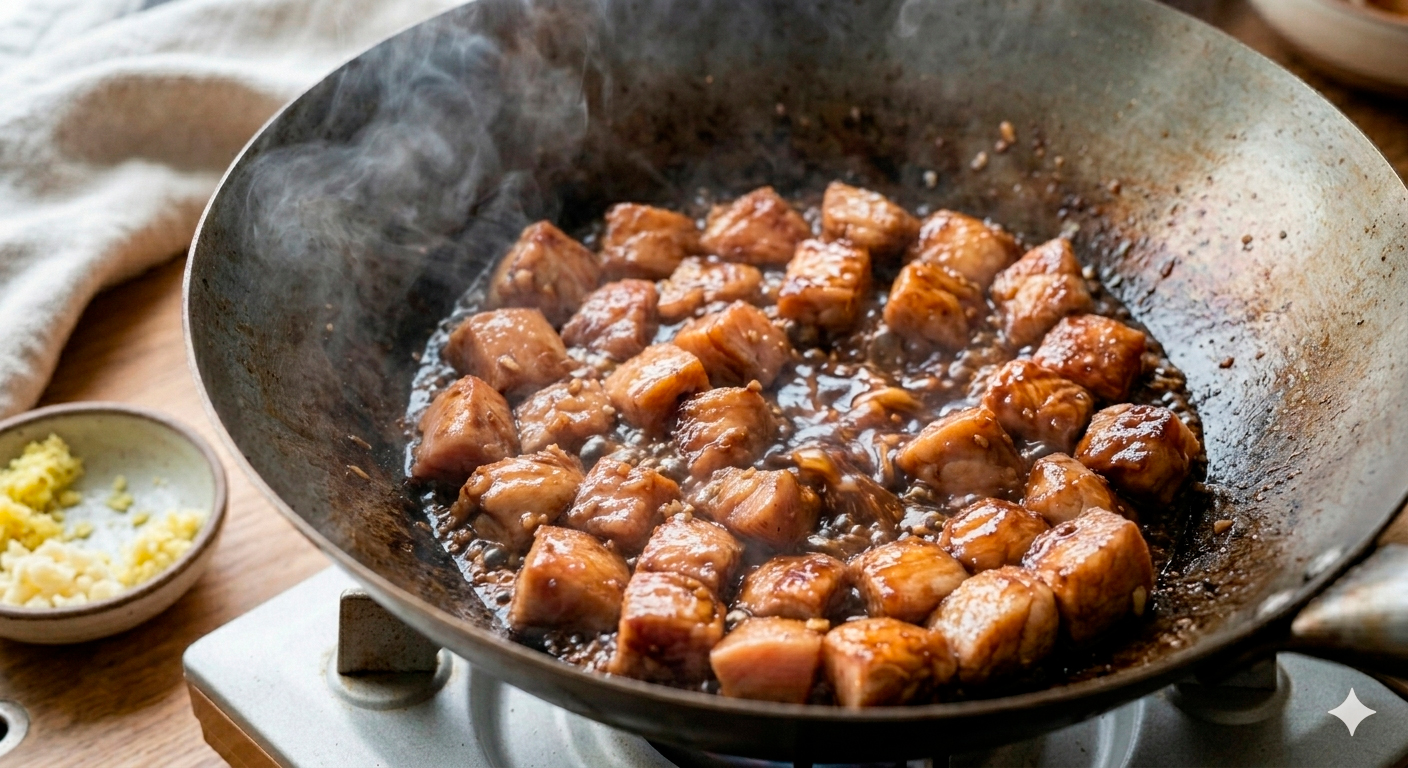
- Reduce the teriyaki sauce: Once all the chicken is browned, gather all the pieces in the wok and pour the reserved marinade over them. Dissolve the cornstarch in one tablespoon of cold water (this step is important: adding it without dissolving would cause lumps) and add it to the pan. Lower the heat to medium-low. You will see how in 2 to 3 minutes the sauce goes from liquid to thick and glossy, coating each piece of chicken with a dark and aromatic glaze. If the sauce thickens too quickly, add a splash of water. If it is too thin, let it reduce for a couple more minutes over medium heat.
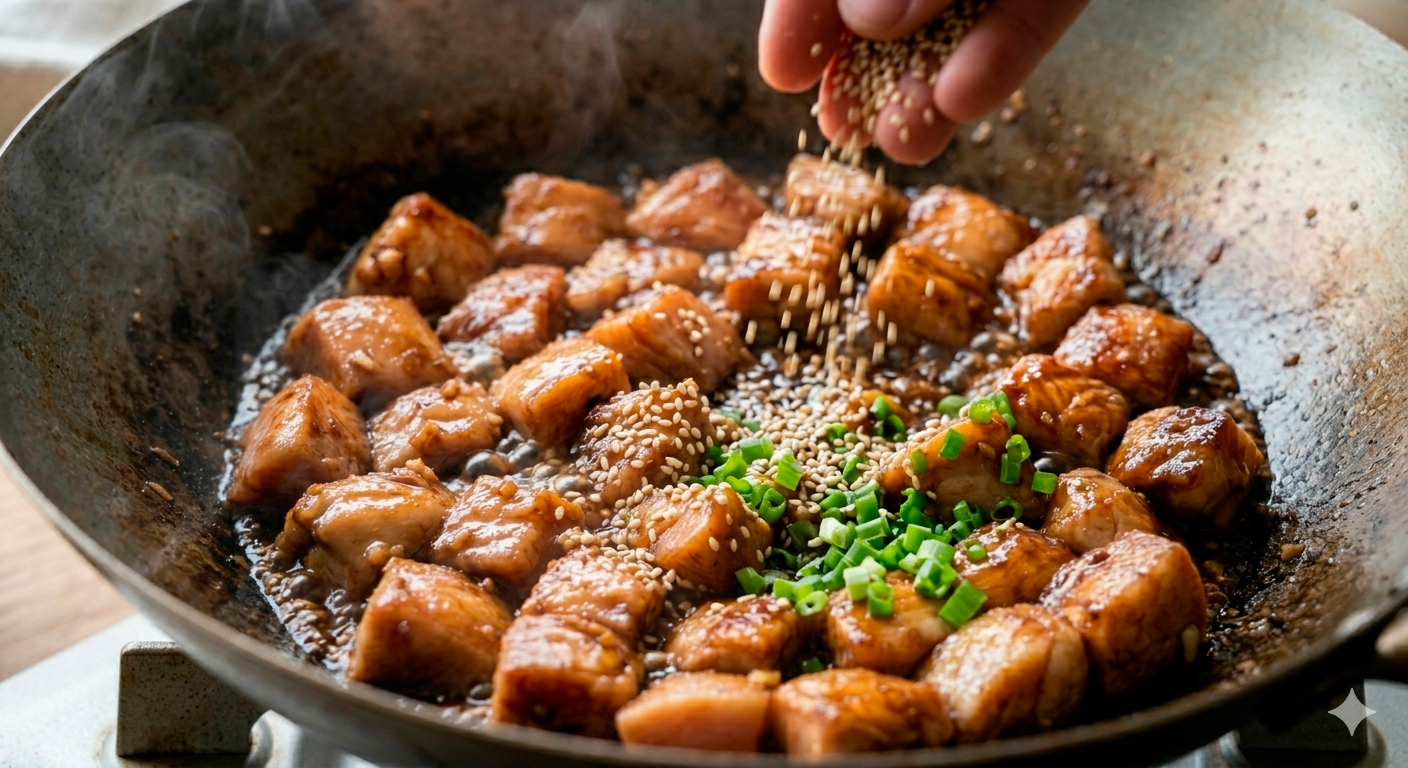
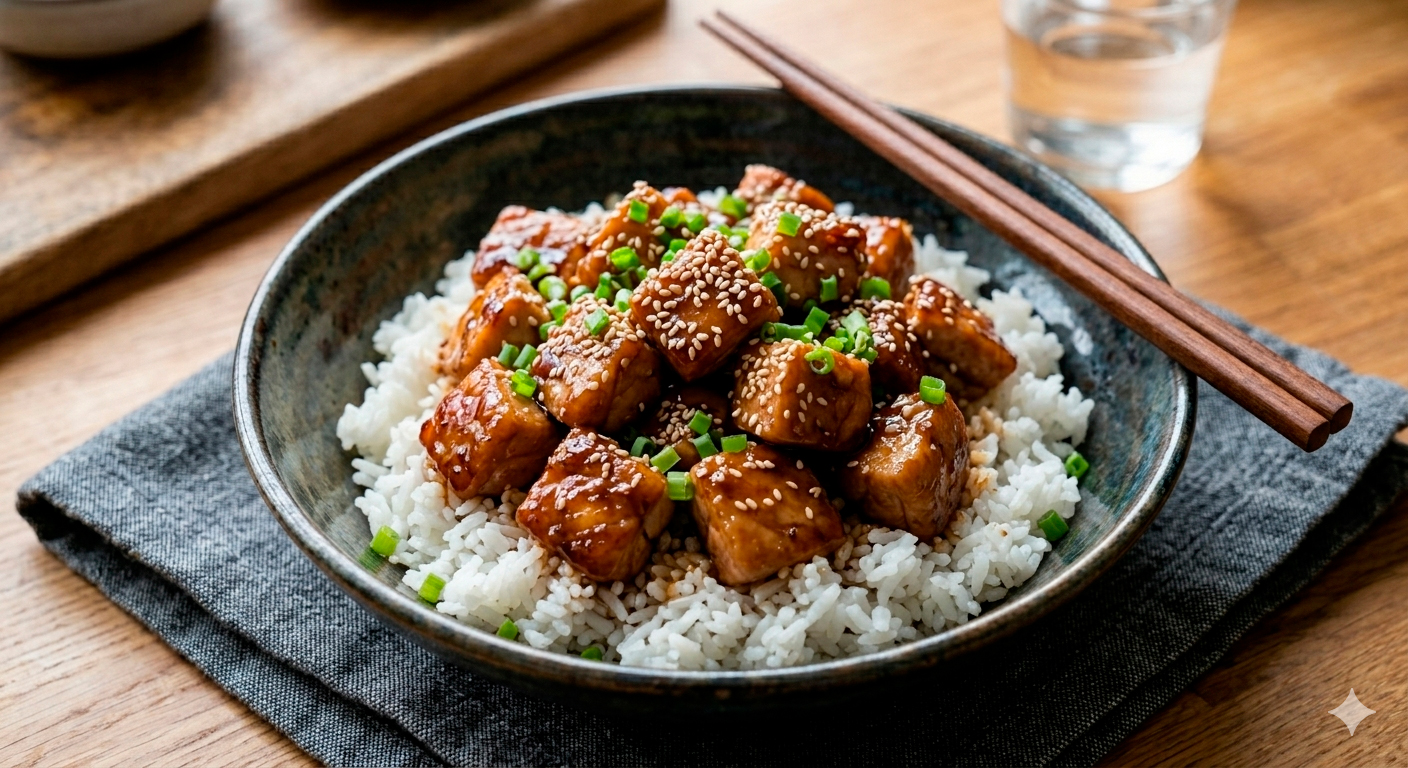
- The final touch and serving: Turn off the heat completely before adding the sesame oil: the residual heat is enough for it to integrate, but you will prevent its most delicate aromatic compounds from evaporating. Generously sprinkle toasted sesame seeds and diagonally chopped chives (the diagonal cut is not just aesthetic, it also releases the aromas better). Stir one last time and serve immediately over a bed of steamed jasmine or basmati rice. The contrast between the white fluffy rice and the dark glossy sauce of the chicken is as satisfying visually as it is in flavor.
Nutritional information of sesame and ginger teriyaki chicken
Approximate values per serving (4 total servings).
| Nutrient | Per serving | % Daily Value* |
|---|---|---|
| Calories | 385 kcal | — |
| Protein | 32 g | 64% |
| Carbohydrates | 18 g | 7% |
| Total Fat | 12 g | 15% |
| Dietary Fiber | 1.5 g | 5% |
| Sodium | 950 mg | 41% |
*Percentage based on a 2,000 kcal daily diet.
From a nutritional standpoint, this dish stands out for its high content of complete, high-quality protein: 32 grams per serving make it an excellent ally for those seeking muscle recovery, maintenance of lean mass, or simply a meal that provides lasting satiety.
Ginger, the aromatic star of this recipe, is a powerful natural anti-inflammatory whose active compound, gingerol, has been studied for its effects on reducing joint pain and improving digestion. Sesame seeds, on the other hand, provide bioavailable calcium, magnesium, and Omega-6 fatty acids that support cardiovascular health.
The main point to monitor is sodium: at 950 mg per serving (primarily from soy sauce), it represents 41% of the recommended daily value. If you have sodium restrictions, you can reduce it by using low-sodium soy sauce or decreasing the amount of soy sauce by 30% and compensating the flavor with a bit more ginger and vinegar.
Tips to prepare perfect sesame and ginger teriyaki chicken
The first secret that separates a homemade teriyaki chicken from a restaurant-quality one is the temperature of the wok. Many people make the mistake of adding the chicken to a lukewarm or cold pan. When the oil is not hot enough, the protein releases its internal moisture instead of searing, resulting in chicken boiled in its own juices rather than browned with a crust. The correct signal is when the oil lightly smokes: at that moment, the heat is sufficient to immediately seal the outer surface of the chicken, keeping the juices locked inside and achieving that juicy texture we seek.
The second technical tip is the ratio between soy sauce and sugar in the marinade. Soy sauce provides salt and umami; sugar provides sweetness and, crucially, the caramelization effect that gives teriyaki sauce its characteristic shine. A ratio of 3 parts soy sauce to 1 part brown sugar is the classic balance point. If you prefer a sweeter and shinier sauce, add a teaspoon of honey or mirin along with the sugar: mirin, a sweet Japanese rice wine, is the secret ingredient used by most restaurants to achieve that mirror-like finish.
Regarding ginger: always use fresh ginger, not powdered. Fresh grated ginger has a brightness and active spiciness (gingerol) that powdered ginger simply cannot replicate. The most efficient way to grate it is with a fine-tooth grater or a Japanese ceramic grater. If you have leftover ginger, you can freeze the piece unpeeled and grate it directly frozen when needed: it is a very practical trick.
A classic mistake to avoid at all costs is washing the chicken before cooking it. Although it may seem hygienic, it actually only spreads bacteria like Salmonella across the countertop and sink without eliminating them. The heat of cooking, when the chicken reaches 74°C internally, is all you need to make it completely safe. Do not wash the chicken; trust the heat.
For the sesame: if you buy it raw (untoasted), spend two minutes toasting it in a dry pan over medium heat before using it. You will see how the grains go from a pale ivory color to a warm golden tone and release a nutty aroma completely different from raw sesame. This small step has a huge impact on the final result.
As for storage, sesame and ginger teriyaki chicken keeps up to 3 days in the refrigerator in an airtight container. An interesting fact: the ginger flavor intensifies the next day, so many claim it tastes even better reheated. To freeze it, store it in individual portions and when reheating add a few drops of water or chicken broth so the sauce regains its original texture.
If you want to prepare it in advance (ideal for meal prep), you can leave the chicken marinating in the refrigerator for up to 8 hours before cooking, well covered with plastic wrap. A long marinade not only deepens the flavor but also helps slightly tenderize the fibers of the thigh, making it even juicier.
Variations and substitutions of sesame and ginger teriyaki chicken
One of the greatest strengths of this recipe is its versatility. The most popular vegan version consists of replacing the chicken with cubes of firm tofu or tempeh. The trick is to press the tofu for at least 20 minutes before marinating it, placing weight on top to extract as much moisture as possible: well-pressed tofu absorbs the sauce much better and develops an outer crust similar to chicken when seared. Tempeh, with its denser texture and slightly earthier flavor, also works very well with teriyaki sauce.
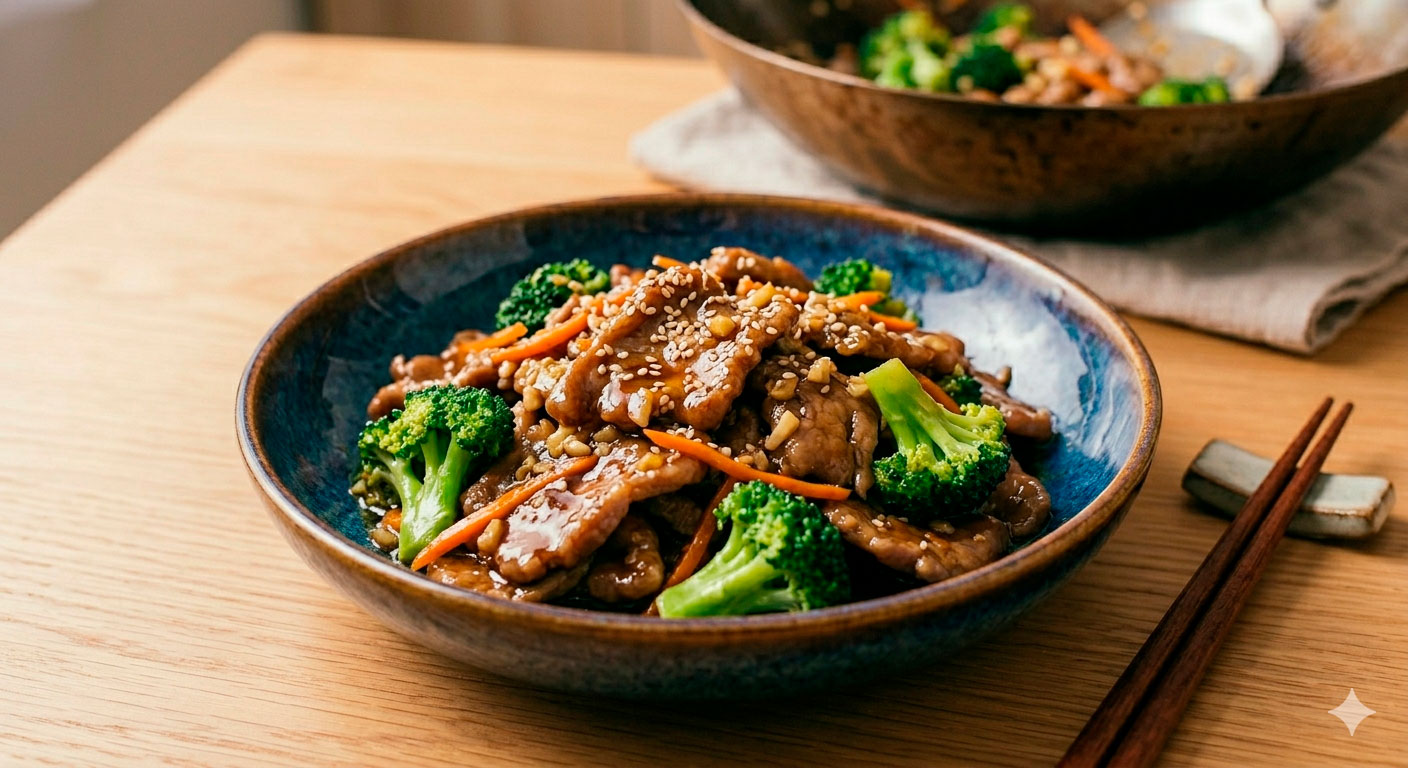
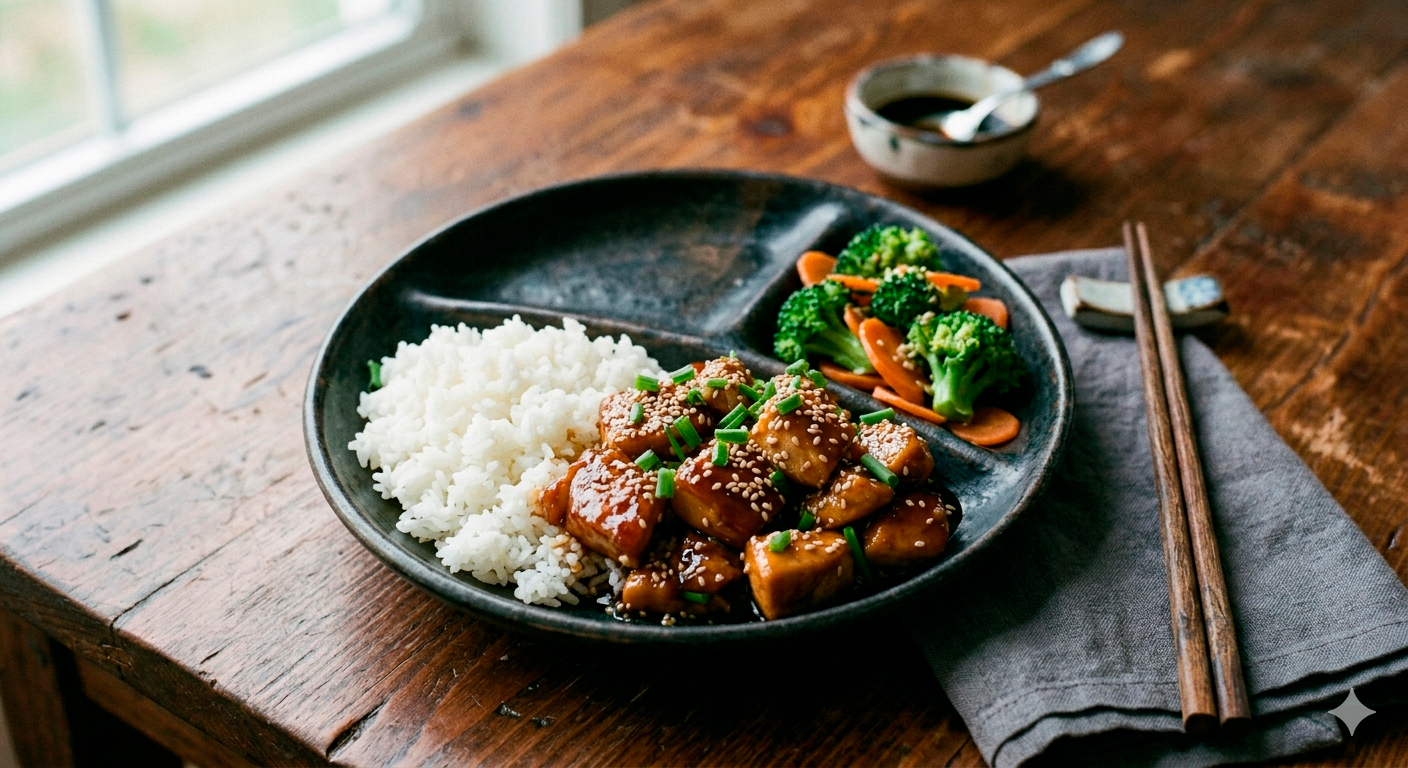
If you are looking for a version with more vegetables, the searing step is the ideal moment to add broccoli florets, red bell pepper strips, julienned carrots, or shiitake mushrooms. Add them before pouring in the marinade and stir-fry over high heat for 2 minutes so they remain tender but with a slight bite. This turns the dish into a complete stir-fry that does not need an additional side.
For spice lovers, slices of fresh red chili or a teaspoon of Sriracha sauce added to the marinade completely change the flavor profile of the dish, giving it a heat that contrasts beautifully with the sweetness of the soy sauce. You can also use Korean gochujang paste for a more complex and deeper variation.
If you need a gluten-free version, simply replace regular soy sauce with tamari, which is made without wheat and has a virtually identical flavor. Also verify that your cornstarch is certified gluten-free, as some brands may have cross-contamination.
Frequently asked questions about sesame and ginger teriyaki chicken
Can sesame and ginger teriyaki chicken be frozen?
Yes, teriyaki chicken freezes perfectly in an airtight container for up to 2 months without losing its main properties. When thawing, do it gradually in the refrigerator overnight and when reheating add a few drops of water or chicken broth so the sauce regains its glossy texture, as it tends to thicken slightly during freezing.
How long does teriyaki chicken last in the refrigerator?
Stored in an airtight container at 4°C or below, sesame and ginger teriyaki chicken stays in perfect condition for up to 3 days. Interestingly, the ginger flavor intensifies on the second day, so many prefer it reheated. A sign that it is no longer good is if the sauce smells sour or the chicken has taken on a grayish, dull color.
How many calories does sesame and ginger teriyaki chicken have?
This recipe provides approximately 385 kcal per serving, with a very balanced nutritional profile: 32 g of protein, 18 g of carbohydrates, and 12 g of fat. It is a fairly moderate-calorie dish considering its high protein density, making it an ideal option both for muscle definition diets and for those who simply want to eat well without overindulging.
Can I use chicken breast instead of thigh?
Yes, you can use chicken breast, although it requires a bit more care. Chicken breast has less intramuscular fat than thigh, so it dries out more quickly if overcooked. The key is not to overdo the searing time: as soon as it loses its pink color in the center (around 2 minutes per side for 2 cm cubes), it is ready. If you opt for breast, the 30-minute marinade is especially recommended to keep it juicier.
What is the best way to serve teriyaki chicken with ginger?
The classic presentation is over a generous bed of steamed jasmine or basmati rice, garnished with toasted sesame seeds and diagonally chopped chives. For a more complete Japanese-style experience, you can serve it with cold soba noodles, a cucumber salad with ginger-sesame dressing, or simply with steamed broccoli. If you serve it in a takeout bowl, the visual contrast between the white rice and the glossy dark sauce is also part of the appeal.
Sources and reference resources
For more information on food safety and nutrition, consult WHO healthy diet guidelines.
About the nutritional value of ingredients, you can consult The Nutrition Source from Harvard T.H. Chan School of Public Health.
Information on food composition available in the Mexican National Institute of Public Health database.
Check our liability policy and legal disclaimer before making decisions about your diet based on this content.