Quick Homemade Corn Tortillas: 5 Secrets for Irresistible Results
What Are Quick Corn Tortillas and Why Make Them at Home?
Quick corn tortillas are much more than a simple side dish: they are the heart of Mexican and Mesoamerican cuisine, a gastronomic heritage of over 10,000 years that remains a daily staple on millions of tables. Making them at home connects you with this ancient tradition in the simplest way possible, using just three ingredients and no special equipment. The result is a soft, flexible, aromatic tortilla free of artificial preservatives, far superior to the mass-produced versions found in supermarkets.
The secret to homemade corn tortillas lies in nixtamalization, an ancestral process that transforms dried corn by cooking it in water with lime. This treatment releases the corn’s niacin, improves its nutritional value, softens the grain, and gives the dough that unmistakable aroma characteristic of authentic tortillas. When you use pre-cooked corn flour—like Maseca or its equivalents—you are using corn that has already been nixtamalized and dehydrated, reducing a process of hours to just minutes without sacrificing the essential flavor.
In regions like Jalisco, Oaxaca, Yucatan, or the Mexican Bajío, quick corn tortillas form the base of practically every meal: from breakfast with pot-cooked beans to dinner with a seasonal stew. Each region has its peculiarities: in Oaxaca they are thicker and toastier; in the center of the country they are thin and very flexible; in the south, some are made with blue, red, or yellow corn, each with its own flavor profile.
Making your own tortillas at home has concrete and measurable advantages. First, you control exactly what goes into the dough: no preservatives, no artificial flavorings, and exactly the amount of salt you choose. Second, the cost per homemade tortilla is significantly lower than any commercial option. Third—and anyone who makes them for the first time discovers this—the flavor and texture of a tortilla fresh off the comal cannot be compared to any industrial version.
Additionally, corn tortillas are naturally gluten-free, making them an ideal alternative for people with celiac disease, gluten sensitivity, or simply those looking to reduce wheat consumption in their diet. Unlike wheat flour tortillas—popular in northern Mexico—corn tortillas have a more moderate glycemic profile thanks to their fiber and resistant starch content, especially when reheated after being refrigerated.
This recipe is designed so that anyone, regardless of their cooking experience, can prepare perfect quick corn tortillas on their first attempt. The process takes only 25 minutes total, yields 8 standard-sized tortillas, and requires only 3 basic ingredients. If you follow the 5 secrets we share later, you will achieve tortillas that puff up, stay flexible, and have that toasted corn flavor everyone remembers from home cooking.
Ingredients for Quick Corn Tortillas
Amounts for 8 tortillas (standard servings of about 15 cm / 6 inches in diameter).
Main Ingredients
- 1 cup (120 g) fine pre-cooked corn flour
- ¾ cup (180 ml) warm water
- ½ teaspoon sea salt
Optional Ingredients
- 1 teaspoon vegetable or coconut oil (for extra softness)
- Additional water (1-2 tablespoons, if the dough is too dry)
Which Corn Flour to Use?
Pre-cooked corn flour (also known as masa harina) is the fundamental ingredient. The most common brands are Maseca, Minsa, and Corina. Always choose the fine-grain version for tortillas, not the one for polenta or tamales, which has a coarser texture. If you live outside of Mexico, this ingredient is easily found in Latin American grocery stores or the international food section of large supermarkets.
How to Prepare Quick Corn Tortillas Step-by-Step
-
Mix and Hydrate the Dough:
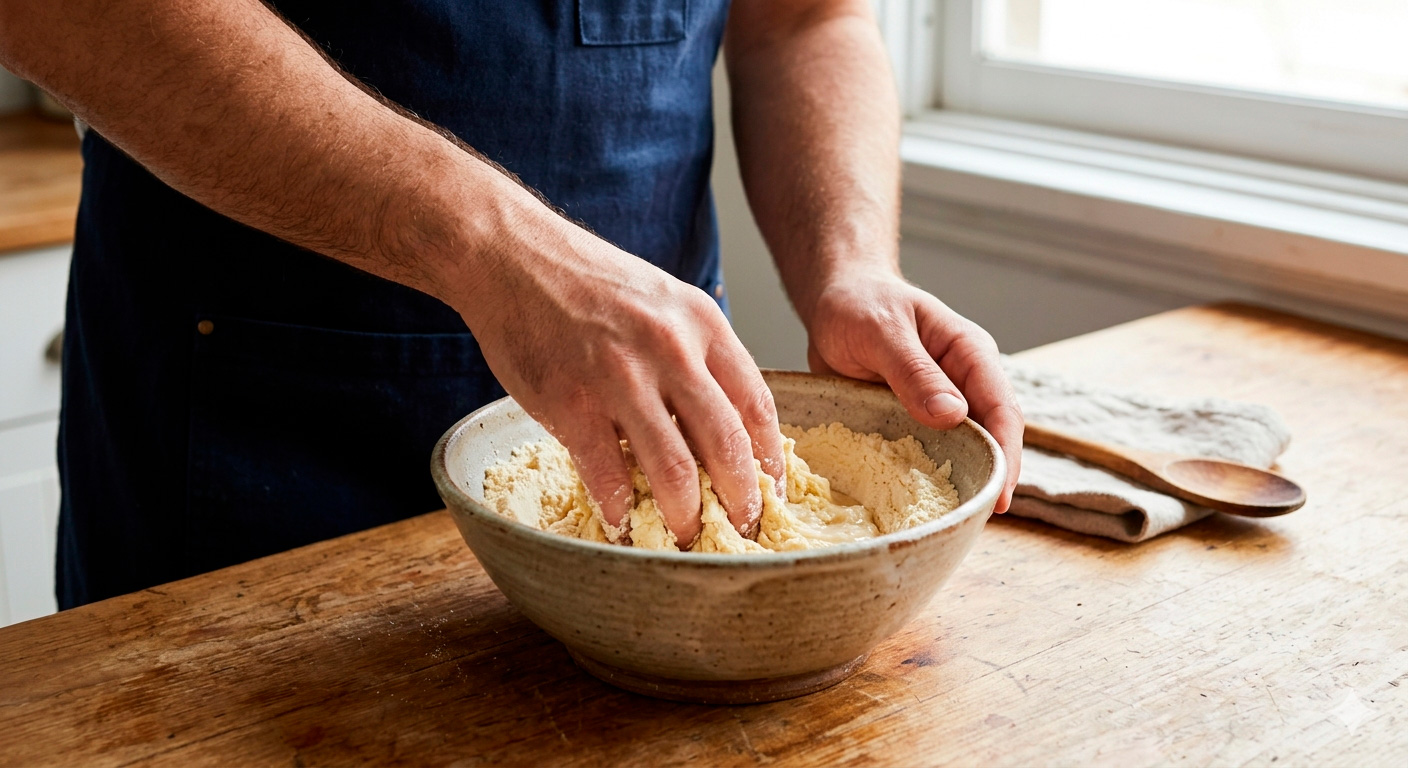 In a large bowl, combine the corn flour with the salt. Add the warm water gradually—not all at once—while integrating it with your hand in circular motions. Work the mixture for 2-3 minutes until you get a uniform, soft dough that is moist to the touch. The dough is ready when it doesn’t stick to your fingers but doesn’t crumble when pressed. If it feels dry and cracks, add water one tablespoon at a time.
- Rest the Dough: Cover the bowl with a damp kitchen towel or plastic wrap and let the dough rest for 5 minutes at room temperature. This step—which many people skip—allows the corn starch to hydrate completely, resulting in a more elastic and workable dough that won’t tear when flattened.
-
Form the Dough Balls (Testales):
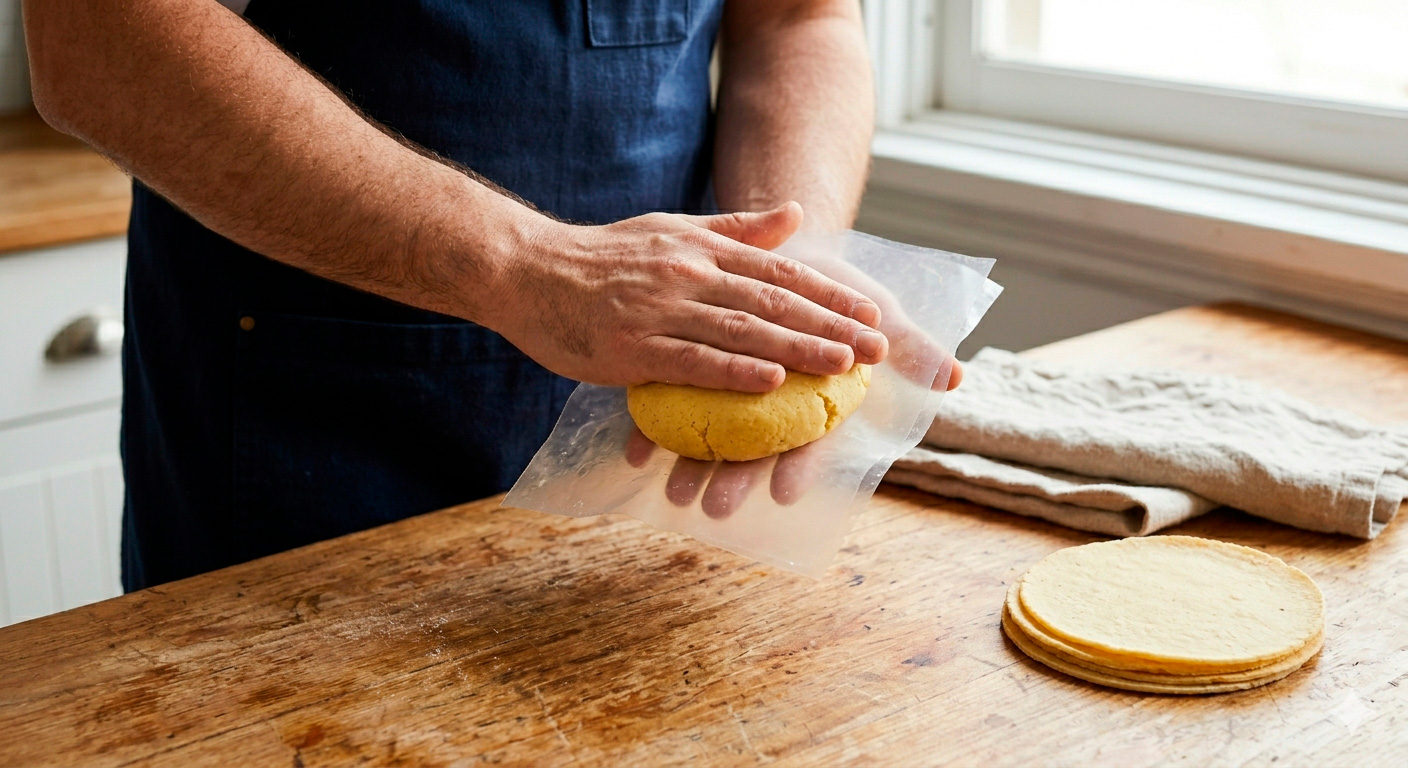 Divide the dough into 8 equal portions (approximately 37 g each) and roll them into smooth balls with your palms. These balls are called “testales” in the tortilla tradition. It is essential to keep the testales you aren’t using covered with the damp towel; corn dries out very quickly in contact with air, and dry dough will produce tortillas that break during cooking.
- Flatten the Tortillas: Place each testal between two sheets of plastic (you can cut a clean plastic bag), wax paper, or parchment paper. Flatten them with a wooden or metal tortilla press, rotating to get a uniform disk about 15 cm (6 inches) in diameter. If you don’t have a tortilla press, the flat bottom of a plate or a pot works perfectly. The ideal thickness is about 2-3 mm: thin enough to cook quickly, but with enough body not to break.
-
Cook on the Comal:
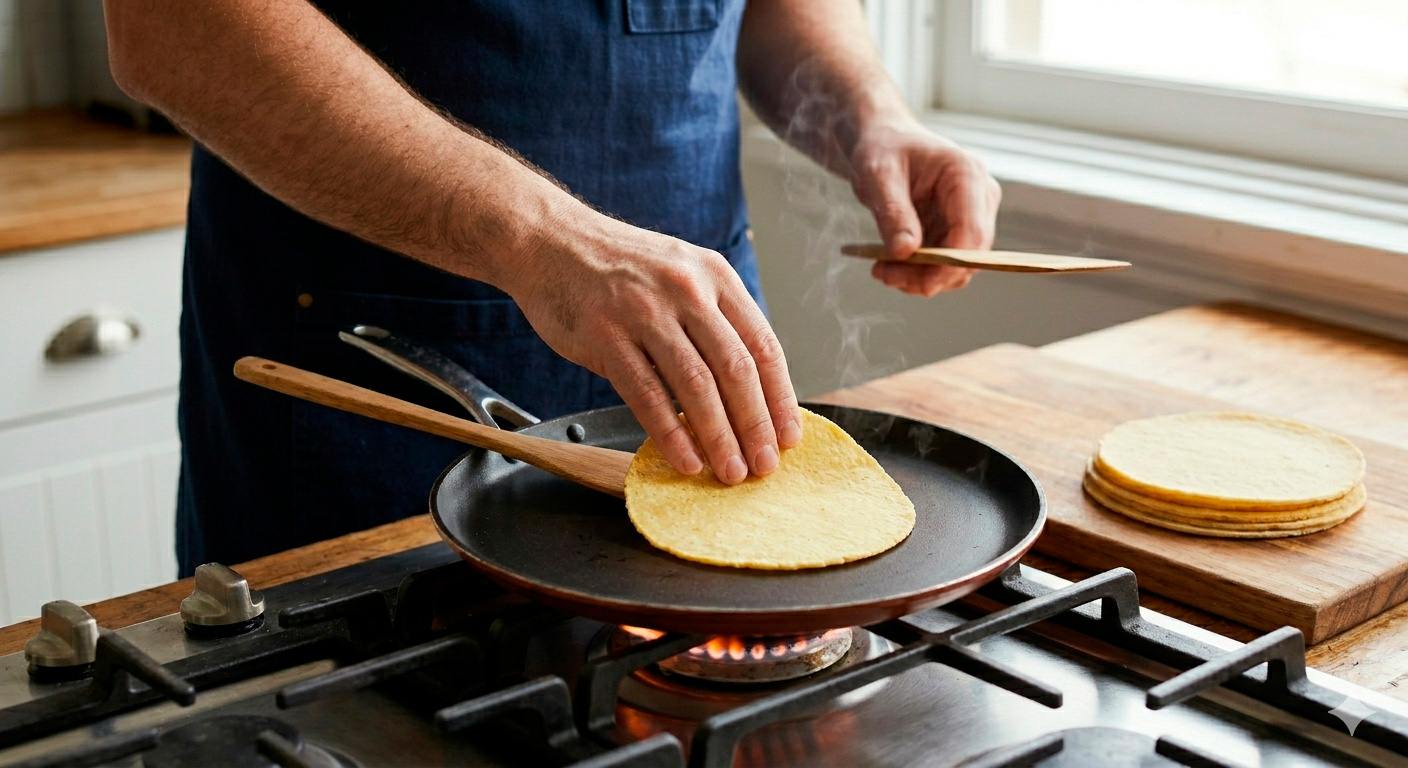 Heat a comal, cast-iron skillet, or non-stick pan over medium-high heat for 2 minutes before placing the first tortilla. You don’t need oil. Cook each tortilla by giving it exactly three turns: first turn at 40-45 seconds (when the edges look slightly dry), second turn at 40 seconds, and on the third turn, gently press the center with a spatula or your fingers to cause the internal steam to expand and the tortilla to puff up. A puffing tortilla is a sign that the dough was well-hydrated and the comal was at the right temperature.
Nutritional Information for Quick Corn Tortillas
Approximate values per tortilla (8 total tortillas, ~30 g each).
| Nutrient | Per Tortilla | % Daily Value* |
|---|---|---|
| Calories | 60 kcal | — |
| Protein | 1.5 g | 3% |
| Carbohydrates | 12 g | 4% |
| Total Fat | 0.8 g | 1% |
| Dietary Fiber | 1.2 g | 4% |
| Sodium | 75 mg | 3% |
| Iron | 0.4 mg | 2% |
*Percentage based on a 2,000 kcal daily diet. Values are estimates and may vary by flour brand and tortilla size.
Nutritional Benefits of Nixtamalized Corn
The nixtamalization process that transforms corn into tortilla flour isn’t just tradition: it has a direct and proven nutritional impact. During this process, the niacin (vitamin B3) in corn becomes bioavailable to the human body, which doesn’t happen with raw or simply ground corn. This was historically crucial in Mesoamerican civilizations that consumed corn as a staple food without developing pellagra (niacin deficiency).
Quick corn tortillas also provide calcium (from the lime used in nixtamalization), a modest amount of iron, and dietary fiber that promotes intestinal transit. Being naturally gluten-free, they are ideal for people with celiac disease or wheat sensitivity. With only 60 kcal per piece, they are one of the lightest side dishes available, especially compared to sliced bread (70-90 kcal per slice) or wheat flour tortillas (120-140 kcal per piece).
Tips for Preparing Perfect Quick Corn Tortillas
The first secret—and the most important—is the correct temperature of the comal. If the comal is too cold, the tortillas will stick, take longer to cook, and won’t puff up. If it’s too hot, they will burn on the outside before cooking through. The ideal temperature is medium-high; you can check it by placing your palm 10 cm (4 inches) above the comal: you should feel intense heat without burning yourself. Another classic test is to drop a few drops of water: if they bubble and evaporate in 2-3 seconds, the comal is ready.
The second secret is the correct consistency of the dough. A dough that is too dry will produce tortillas that crack at the edges when flattened and break when folded. A dough that is too wet will stick to the plastic and be impossible to handle. The ideal consistency is similar to soft modeling clay: it molds easily, doesn’t stick, doesn’t crack, and returns to its shape when lightly compressed. If your dough is dry, add water one tablespoon at a time and knead well between each addition. If it’s too sticky, add flour one teaspoon at a time.
The third secret—responsible for those tortillas that puff up like balloons—is the three-turn system. The first turn seals the bottom surface and creates a layer that retains steam. The second turn does the same for the other side. On the third turn, by gently pressing the center with a spatula, the accumulated steam inside has no escape and pushes the two layers outward, puffing the tortilla. A tortilla that puffs on the third turn is a sign that the dough was well-hydrated, the comal was at the right temperature, and the disk’s thickness was uniform. If your tortillas don’t puff, check the comal temperature first and then the dough hydration.
The fourth secret involves resting the dough. Many people mix the ingredients and go directly to forming the tortillas. The problem is that corn starch needs a few minutes to hydrate completely. If you skip the 5-minute rest, the dough may seem fine but will behave as if it were dry during cooking: the edges will crack and the texture will be floury. Those 5 minutes of patience make a noticeable difference in the final result.
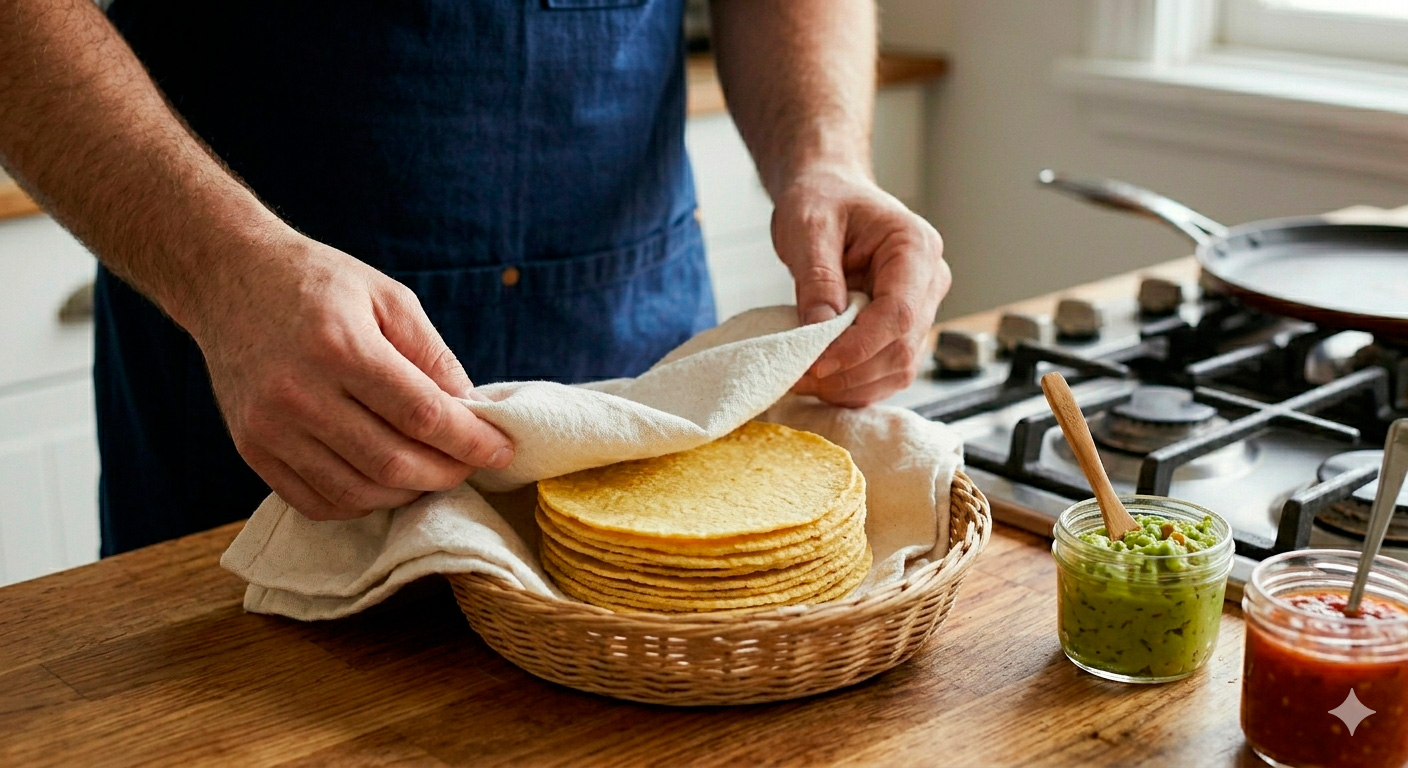
The fifth secret is immediate storage after cooking. Corn tortillas lose flexibility very quickly upon contact with air. The traditional method consists of immediately wrapping them in a thick cloth napkin (cotton, not synthetic), stacked on top of each other. The steam they release while hot stays trapped between them, keeping them soft and flexible for 30-40 minutes. For large tables or gatherings, a clay or ceramic tortilla warmer with a lid serves this function perfectly. Never let them cool uncovered on the table; in a matter of minutes, they will become rigid and brittle.

A common beginner mistake is pressing too hard when flattening the testales, creating disks that are too thin and break when lifted from the plastic or burn in seconds on the comal. The ideal thickness of 2-3 mm might seem arbitrary, but it has a practical reason: it allows the interior to cook well in 40 seconds per side without the exterior burning. If you notice your tortillas burning on the outside before puffing, they are likely too thin or the comal is too hot.
Another detail that makes a big difference is water quality. If your tap water has a high chlorine concentration (a swimming pool smell), that flavor can interfere with the delicate taste of the corn. Using filtered or bottled water ensures that the only flavor present is that of the nixtamalized corn. It’s not a strict requirement, but if you want an artisanal tortilla shop result, the palate will notice this small change.
Variations and Substitutions for Quick Corn Tortillas
The base recipe is extraordinarily versatile and allows for multiple adaptations without losing its essence. One of the most popular is using blue corn flour (nixtamalized purple corn), which produces deep violet-colored tortillas with a slightly more earthy and sweet flavor than yellow corn. They are especially attractive for special presentations or dishes where color plays an important role.
Corn Tortillas with Chili or Herbs
You can incorporate a teaspoon of chili powder, ground ancho chili, or finely chopped fresh epazote into the dough for tortillas with their own personality. These flavored versions are excellent as a base for tostadas, tlayudas, or to accompany ceviche and seafood.
Salt-Free Version
For sodium-restricted diets, simply omit the salt from the recipe. The natural flavor of nixtamalized corn is pleasant enough on its own, especially if the tortilla is accompanied by seasoned stews.
Larger Tortillas (for Burritos or Quesadillas)
Increase the size of the testales to about 60 g each and flatten them into 20-22 cm (8-9 inch) disks. These larger disks are ideal for quesadillas, sincronizadas, or for rolling burrito-style stews. The cooking time increases slightly: about 50-60 seconds per side.
Dough with Chicken or Vegetable Broth
Substitute the warm water with warm chicken or vegetable broth to incorporate an extra layer of flavor into the dough. This is a common technique in some regions of central Mexico for making tortillas that accompany broths and soups. The result is a tortilla with more body and a more umami flavor than with plain water.
Frequently Asked Questions about Quick Corn Tortillas
Can quick corn tortillas be frozen?
Yes, quick corn tortillas freeze perfectly for up to 2 months. The trick is to let them cool completely and separate each tortilla with a piece of wax paper so they don’t stick together before placing them in an airtight freezer bag. To use them, you don’t need to thaw them beforehand: heat them directly on the comal over medium heat for 1 to 2 minutes per side, and they will be just as soft and flexible as when freshly made.
How long do quick corn tortillas last in the refrigerator?
Stored in a well-sealed plastic bag or airtight container at 4 °C (40 °F) or less, quick corn tortillas last up to 7 days in the refrigerator. To reheat them, do so directly on the comal without oil so they regain their texture. Discard them if you notice a sour smell, a change in color towards greenish or gray tones, or if mold appears on any of them.
How many calories are in quick corn tortillas?
A homemade corn tortilla of approximately 30 g provides about 60 kcal, with 12 g of carbohydrates, 1.5 g of protein, and less than 1 g of total fat. They are one of the lightest side dishes in Mexican cuisine: well below wheat flour tortillas (120-140 kcal per piece) and sliced bread. Their fiber and resistant starch content also makes them more satiating than their size suggests.
Can corn tortillas be made without pre-cooked flour?
Yes, the most authentic alternative is fresh nixtamalized corn masa, sold in tortilla shops and many popular markets in Mexico. With fresh masa, the recipe is identical: you just add salt and water if the masa needs it, as it is already hydrated. You can also nixtamalize dry corn at home with lime (a multi-hour process), although for daily use, pre-cooked flour offers the best balance between authenticity and practicality.
How are quick corn tortillas best served?
Quick corn tortillas are infinitely versatile. Fresh off the comal, they are perfect for tacos, quesadillas, beans with cheese, or simply with butter and salt. They are also the base for tlayudas, memelas, tostadas, and enfrijoladas. For a perfect presentation, always serve them wrapped in a cloth napkin inside a tortilla warmer; this way they reach the table hot and flexible, and everyone can take theirs at the moment of eating.
Sources and Reference Resources
For more information on food safety and nutrition, see the WHO healthy diet guidelines.
Regarding the nutritional value of ingredients, you can consult The Nutrition Source from Harvard T.H. Chan School of Public Health.
Food composition information available from the National Institute of Public Health of Mexico database.
Please review our Disclaimer and Legal Notice before making dietary decisions based on this content.