5 Irresistible Steps for the Perfect Pumpkin Seed and Chipotle Crusted Chicken
Origin and history of pumpkin seed and chipotle crusted chicken
Pumpkin seed and chipotle crusted chicken is much more than a modern recipe: it’s the synthesis of centuries of Mexican food culture expressed in one crunchy bite. To understand why this dish is so special, we must trace each of its ingredients back to its deepest roots, which sink into the land of Mesoamerica long before any European influence arrived.
The pumpkin seed, popularly known as pepita, has a history dating back over 7,500 years in what is now Mexico. Pre-Hispanic cultures — Zapotec, Mixtec, Maya, and Mexica — cultivated it not only as a daily food but also as a ceremonial ingredient of the highest order. The green pepita (without the white outer shell) was the base of the famous pipianes: thick, nutritious, and deeply aromatic sauces prepared in elite kitchens and popular markets alike. The Florentine Codex, compiled by Friar Bernardino de Sahagún in the 16th century, already described the variety of pumpkin seeds traded in the great Tianquiztli of Tlatelolco.
The regions that have contributed most to this culinary tradition are Puebla and Oaxaca, two states in central and southern Mexico where green pipián remains an emblematic dish for festivities and family gatherings. In Oaxaca, the pepita is part of the region’s seven traditional moles, while in Puebla its use in coatings and sauces has evolved with greater Creole influence, creating dishes like this crusted chicken that fuses modern technique with ancestral flavor.
Chipotle, the other undisputed protagonist of this recipe, also has an exciting history. Its name comes from the Nahuatl chīlpōctli, which literally means “smoked chili.” Mesoamerican peoples discovered that smoking the ripe jalapeño — the one that had already turned reddish — was the perfect way to preserve it for months without losing its aromatic potency. The result is a chili of complex flavor: it not only provides heat but also contributes notes of wood, soft leather, and earth that no other chili in the world can replicate.
The technique of creating a “crust” or breading on the protein has roots both in the pre-Hispanic tradition of covering food with seed paste for roasting and in the Spanish influence of battering. With the arrival of New Spanish cuisine in the 16th century, the egg began to be integrated as a binding agent in these preparations, creating the flour-egg-seed system we recognize today in this recipe. It is, in short, a culinary miscegenation in its most delicious expression.
Today, pumpkin seed and chipotle crusted chicken represents the line where pre-Hispanic and contemporary cuisine meet naturally. It is not an invented dish: it is a logical and inevitable evolution of ingredients that were always destined to coexist on the same plate. Every time you prepare this recipe, you continue a culinary chain that has thousands of years of history and is still being written in every kitchen in Mexico.
What is pumpkin seed and chipotle crusted chicken and why should you make it at home?
Pumpkin seed and chipotle crusted chicken is, without a doubt, one of the dishes that best represents the genius of Mexican cuisine in its everyday version. It is a chicken breast that goes through a three-layer system — flour, chipotle egg binder, and toasted crushed pepitas — before being cooked in a skillet until achieving that golden, rough, aromatic exterior that literally crunches when you bite into it. The contrast between the internal juiciness of the meat and the aromatic push of the smoked chili is, simply, irresistible.
What distinguishes this recipe from any conventional breading is the quality of its base ingredients. Pumpkin seeds are not a cheap substitute for breadcrumbs: they are a starring ingredient with its own identity. They have a toasted, slightly sweet and herbaceous flavor that, in contact with heat, releases its natural oils, creating a crust that adheres to the meat with surprising firmness. It doesn’t fall off. It doesn’t peel away. It settles and crunches with every bite.
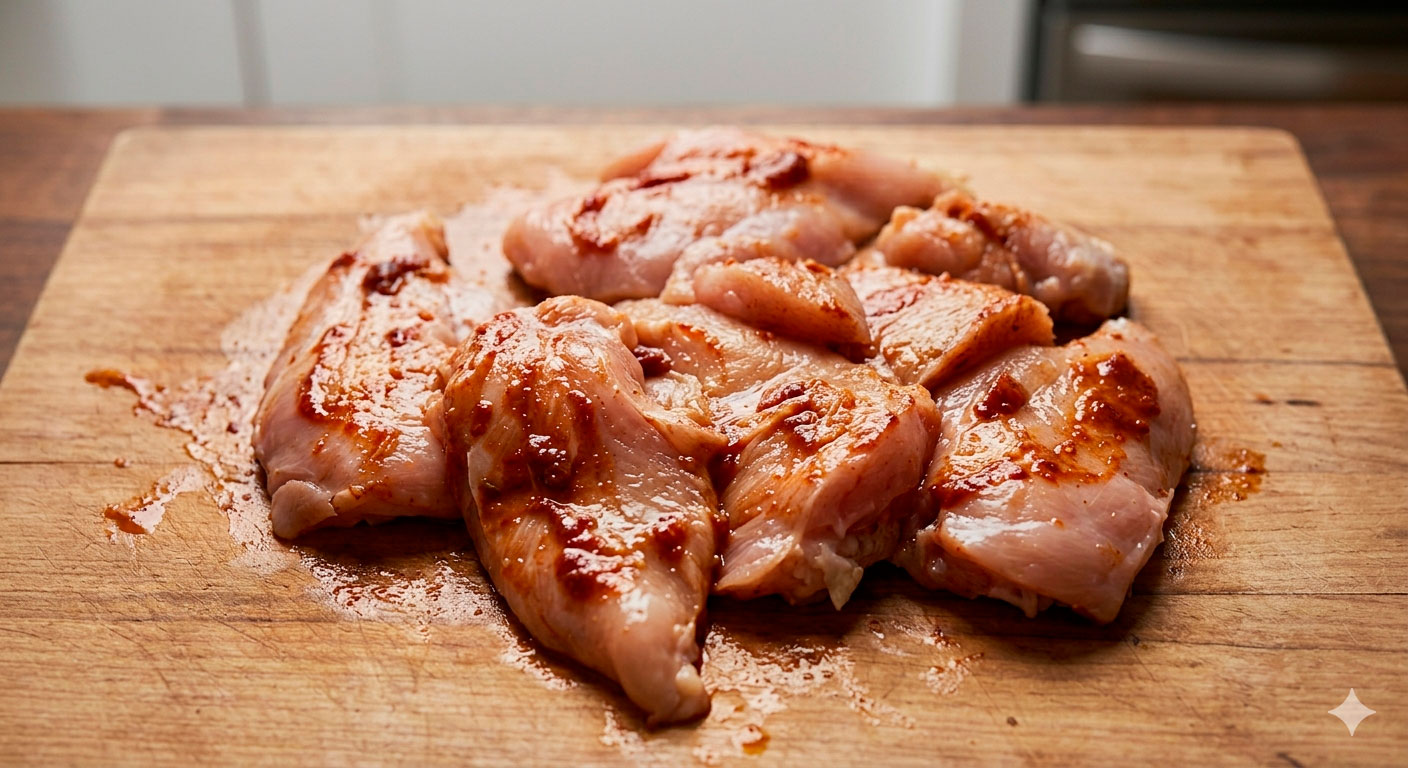
Chipotle, for its part, does a silent but essential job. By incorporating it directly into the egg binder — the middle layer that acts as glue between the meat and the crust — its smoky aromas penetrate inward during cooking instead of staying only on the surface. The result is a chicken breast that tastes like chipotle from the first bite, not just on the outer crust.
From a nutritional point of view, pumpkin seed and chipotle crusted chicken also has a lot going for it. Pepitas are one of the most concentrated plant sources of zinc and magnesium, two essential minerals for the immune system and muscle function. Chicken breast provides high biological value protein with little saturated fat, while chipotle contains capsaicin, the compound responsible for heat that has documented anti-inflammatory and thermogenic effects. Together, each serving delivers 38 g of protein and 420 kcal, making it an ideal dish for those who watch their diet without wanting to give up flavor.
This pumpkin seed and chipotle crusted chicken recipe especially shines on weekend dinners when you want to impress without complications. The entire process — from toasting the pepitas to the final rest — does not exceed 45 minutes, and requires no specialized technique or expensive utensils. A cast-iron skillet or a thick non-stick pan is all you need to achieve restaurant-quality results in your kitchen.
Another point in its favor is its versatility in presentation. The same chicken fits into a casual plate next to white rice, in a formal dinner sliced over a bed of sweet potato puree, or even in a wrap with lettuce and avocado for next day’s lunch. The pepita and chipotle crust pairs well with fresh, creamy, and acidic side dishes alike. Few recipes offer that freedom of adaptation without losing flavor coherence.
At cocinasabroso.com we believe that the best recipes are those that explain themselves: that have such a clear logic that the cook understands the why of each step, not just the how. This pumpkin seed and chipotle crusted chicken is exactly that: a recipe that teaches you something every time you prepare it, that connects you with the history of an ingredient and, above all, turns an ordinary chicken breast into something truly irresistible.
Ingredients for pumpkin seed and chipotle crusted chicken
Quantities for 4 servings.
Main ingredients
- 4 chicken breasts (supremes or breast fillets)
- 150 g pumpkin seeds (green pepitas, shelled)
- 2 chipotle peppers in adobo + 1 tablespoon of their sauce
- 2 eggs
- 100 g all-purpose flour (or almond flour for low-carb version)
Seasonings and optional
- 1 teaspoon garlic powder
- 1 pinch ground cumin
- Sea salt to taste
- Freshly ground black pepper to taste
- 3 tablespoons neutral vegetable oil (sunflower or safflower)
- Juice of 1 lime (optional, for serving)
How to prepare pumpkin seed and chipotle crusted chicken step by step
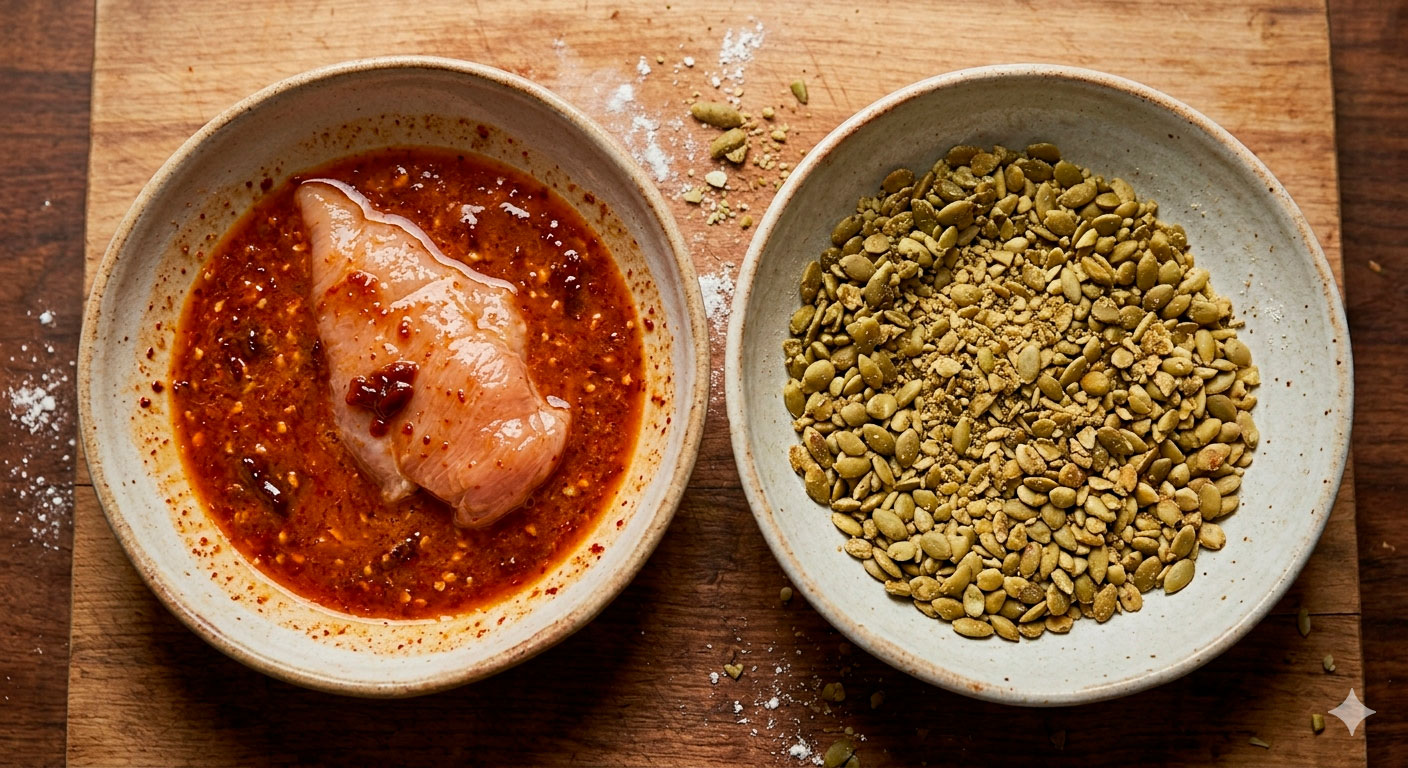
- Toast and crush the pepitas: Place the pumpkin seeds in a dry skillet over medium heat. Stir constantly for 3-4 minutes until they brown evenly and start to pop slightly. Remove from heat, let cool completely, and crush in a molcajete or briefly pulse in a food processor to obtain an irregular granulate with pieces of different sizes — this is key for a crust with varied texture. Mix the crushed pepitas with the garlic powder, cumin, salt, and pepper in a wide, shallow dish.
- Prepare the chipotle binder: In a deep bowl, beat the two eggs until the yolks are broken. Finely chop the chipotle peppers, removing the seeds for moderate heat, and incorporate them into the egg along with the tablespoon of adobo sauce. Mix until the orange-red color of the chipotle is evenly distributed. This step is strategic: the flavored binder transfers the heat and smokiness directly to the surface of the meat before the crust forms.
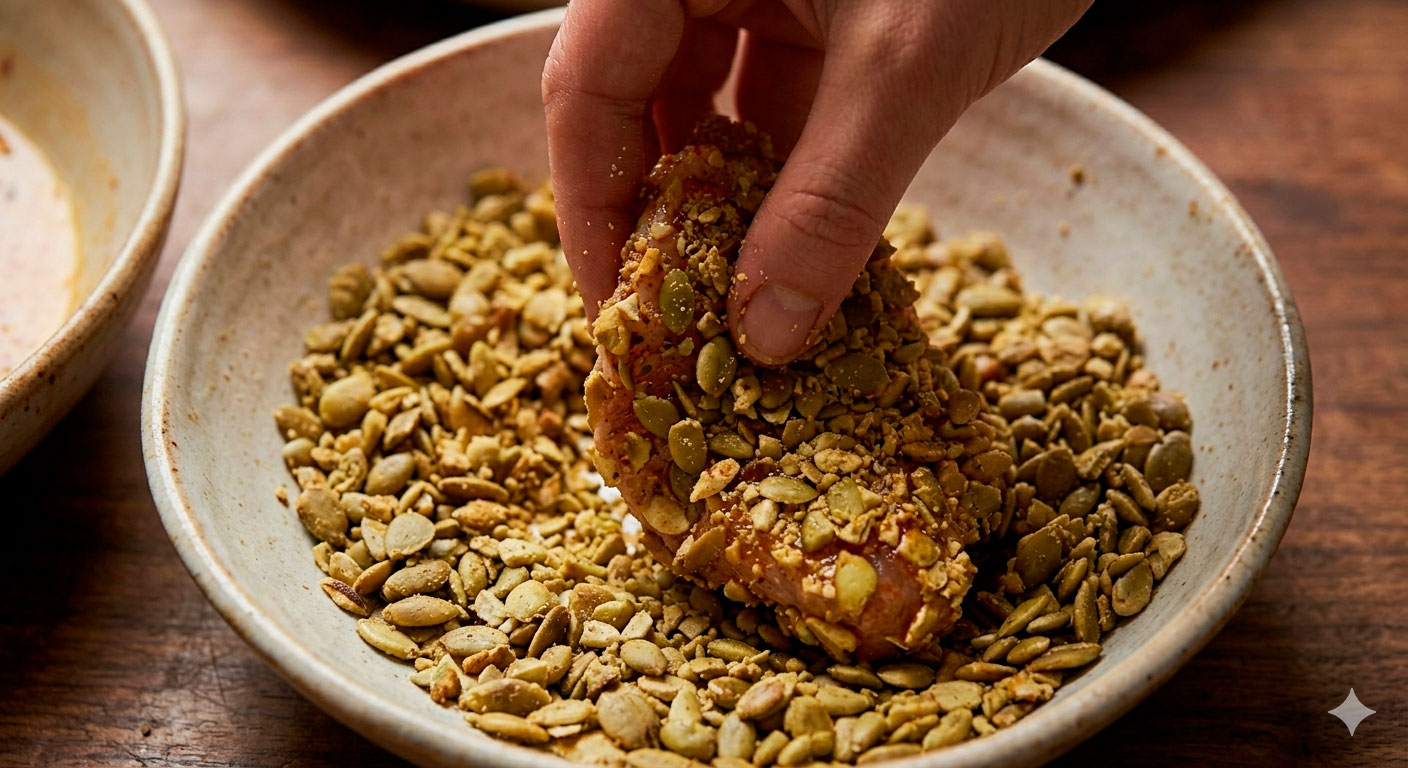
- Bread the chicken breasts in three stages: Arrange three containers in a line: seasoned flour, the chipotle binder, and the crushed pepitas. Pass each breast first through the flour, shaking off excess, then dip it in the chipotle binder covering it completely, and finally place it over the pepitas pressing firmly with both hands so the crust adheres over the entire surface, including the side edges. Reserve the breaded breasts on a plate and do not stack them so the crust doesn’t come off.
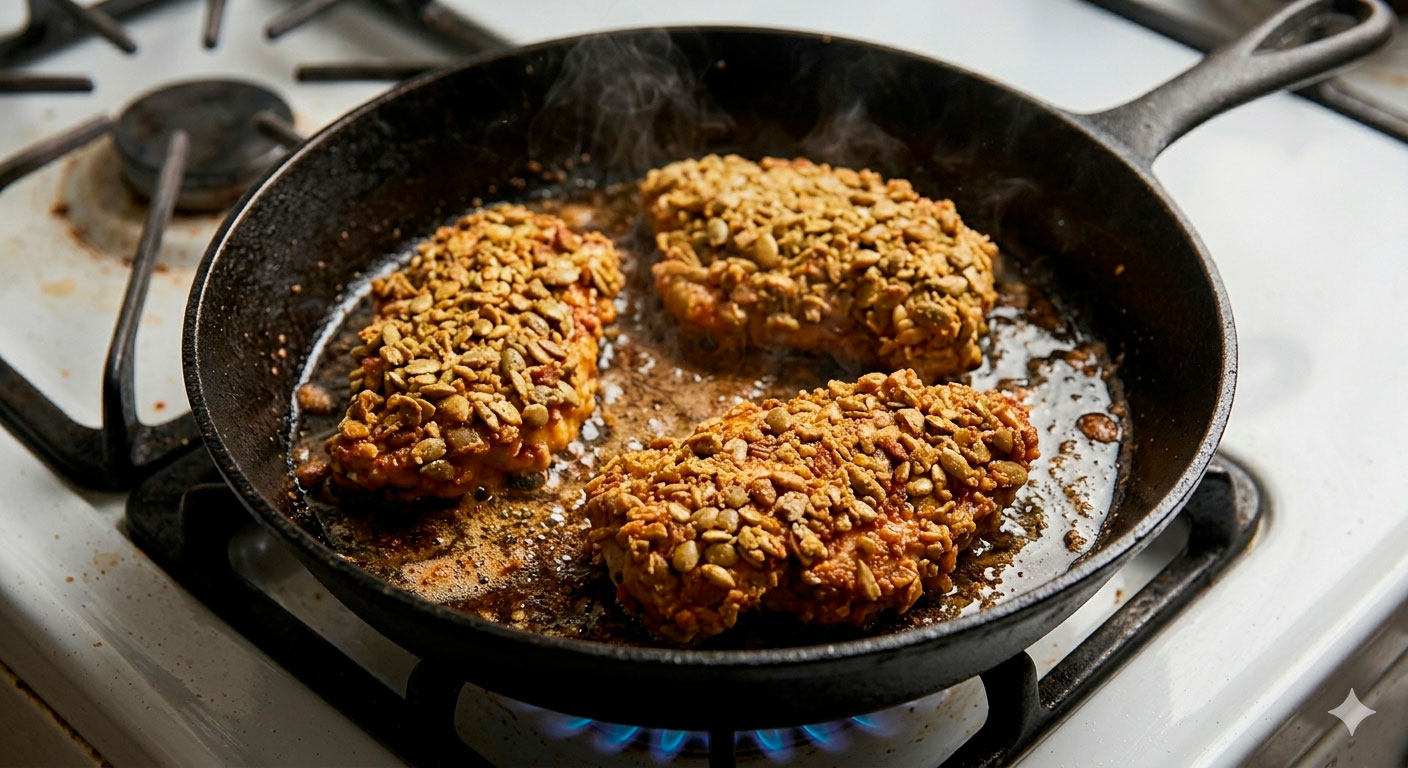
- Sear and cook over controlled heat: Heat the oil in a cast-iron skillet or thick non-stick pan over medium heat — not high; excessive temperature would burn the pepitas before the chicken cooks inside. Carefully place the breasts and sear for 5-6 minutes per side without moving them so the crust forms correctly. If the pieces are thicker than 2 cm (0.8 inch), finish cooking in a preheated oven at 180°C (350°F) for an additional 8-10 minutes to ensure the center reaches an internal temperature of 74°C (165°F) without burning the outer crust.
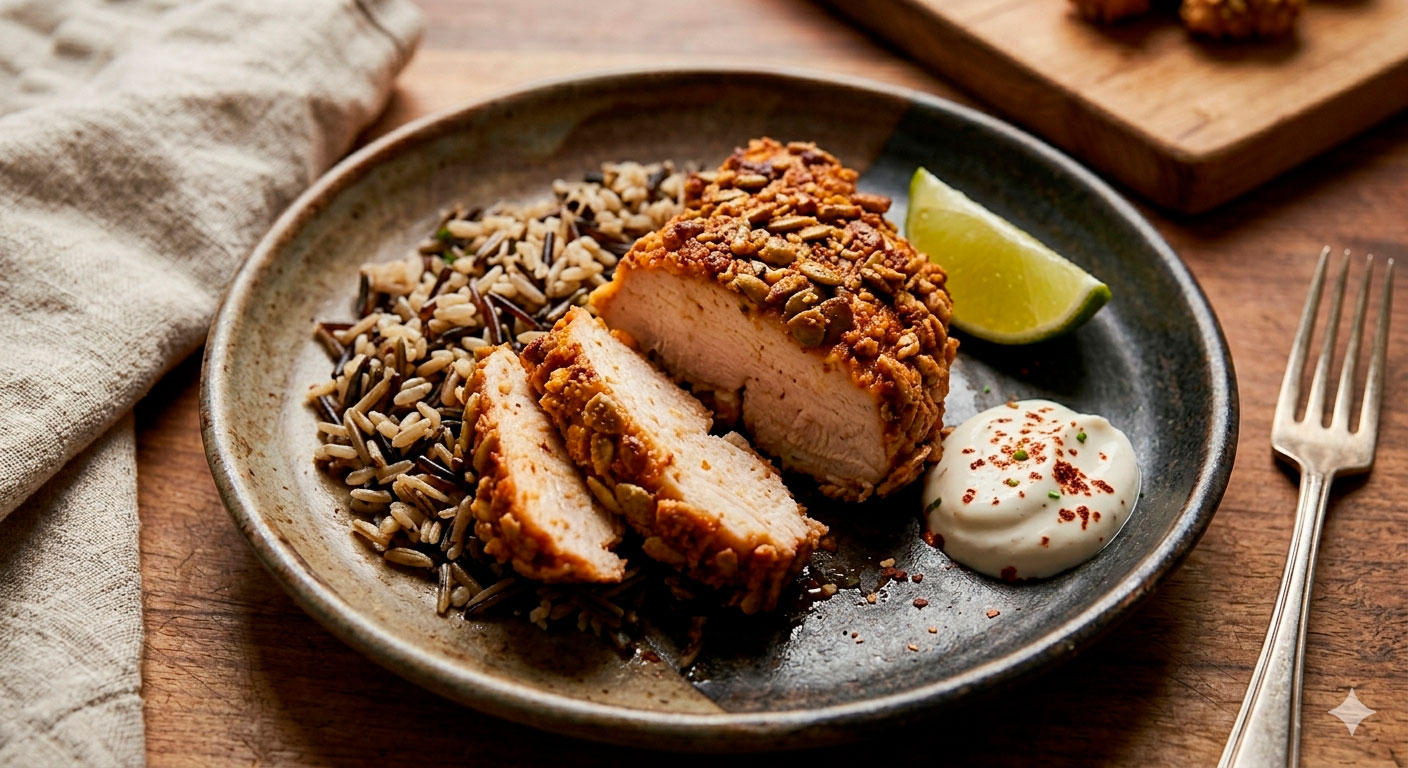
- Rest and serve: Remove the chicken from the heat and let it rest on a rack or cutting board for 3 minutes before cutting. This step allows the internal juices to redistribute towards the center and the crust to finish settling without excess moisture. Serve immediately with a squeeze of fresh lime and accompany with your favorite side dish: cilantro lime rice, fresh green salad, or sweet potato puree.
Nutritional information for pumpkin seed and chipotle crusted chicken
Approximate values per serving (4 servings total).
| Nutrient | Per serving | % Daily Value* |
|---|---|---|
| Calories | 420 kcal | — |
| Protein | 38 g | 76% |
| Carbohydrates | 18 g | 7% |
| Total fat | 22 g | 28% |
| Dietary fiber | 4 g | 14% |
| Iron | ~3.5 mg | 15% DV |
*Percent based on a 2,000 kcal daily diet.
Expert Analysis: The Master Touch for Pumpkin Seed and Chipotle Crusted Chicken
From my perspective as a cook with years in the kitchen, pumpkin seed and chipotle crusted chicken is a dish that seems simple but hides several technical points that make the difference between a mediocre result and an irresistible one. The first and most critical is the temperature of the oil during cooking. Pumpkin seeds have a natural oil content of about 50% of their weight; if the heat is too high, those oils degrade quickly and go from “golden toasted and aromatic” to “bitter and burnt” in a matter of seconds. Constant medium heat, without rushing, is the golden rule of this dish.
The decision to incorporate the chipotle directly into the egg binder — instead of mixing it with the pepitas or using it as a final sauce — is a strategic move that many similar recipes overlook. By being in the binder, the chipotle is trapped between the flour and the seed crust, creating a protective layer that keeps the meat’s moisture during cooking. In technical terms, it acts similarly to a quick marinade applied during the breading phase, something that conventional marinating would take hours to achieve.
For pairing, I recommend accompanying this dish with a craft amber ale or Vienna lager, whose caramelized malt complements the toastiness of the pepitas without competing with the chipotle. If you prefer a non-alcoholic option, tamarind or hibiscus water works perfectly: their natural acidity cuts through the fat of the seeds and cleanses the palate between bites, preparing it to continue enjoying. Avoid red wines with very marked tannins because they clash frontally with the smokiness of the chipotle.
Finally, a detail that makes the difference in presentation: cut the breasts diagonally, at a 45-degree angle, to expose the cross-section and show the visual difference between the crunchy outer crust and the white, juicy meat inside. That visual contrast is the best advertisement this dish can have: it enters through the eyes before entering through the palate. — El Godínez Hambriento, cocinasabroso.com
Tips for preparing perfect pumpkin seed and chipotle crusted chicken
The first and most important technical tip to achieve a perfect crust in this pumpkin seed and chipotle crusted chicken is not to pulverize the pepitas completely. The texture of the crust depends on there being pieces of different sizes: the finer ones merge with the binder and create the adhesive base, while the larger ones form the rough outer relief that crunches when bitten. A molcajete or a food processor with short 2-3 second pulses is the best ally to achieve that ideal irregular grind.
Another trick that makes a difference is prior brining. If you have an additional 30 minutes before starting the breading process, submerge the breasts in cold salted water (10 g of salt per liter of water) during that time. The brine penetrates the muscle fibers and hydrates them from within, so that when the heat contracts the protein during cooking, there is enough internal moisture to compensate for that loss. The result is a breast that remains juicy even after searing over direct heat for more than 10 minutes.
For those looking to intensify the chipotle profile without increasing the heat, the secret lies in the adobo sauce from the jar, not in adding more chiles. The sauce has a high concentration of smoke and spices with less capsaicin than the chile itself. Use a generous tablespoon of adobo in the binder and just one of the chiles, without seeds. You’ll get a more pronounced smoky flavor with controlled heat.
Regarding common mistakes, the most frequent is skipping the final resting step. Many cooks cut the chicken directly upon removing it from the heat and find that the juices spill onto the board, leaving the meat dry and the crust soft from the released moisture. Three minutes of patience on a rack — not on a flat plate where steam accumulates — makes all the difference between a crust that crunches and one that softens.
For storage, place the already cooled pieces in an airtight container with absorbent paper at the base to remove residual moisture. In the refrigerator, they maintain acceptable quality for up to 3 days. To reheat and recover crispiness, an air fryer at 175°C (350°F) for 4-5 minutes is the most effective method. A conventional oven at 200°C (400°F) also works, but place the chicken on a rack inside the tray, not directly on the bottom, so that heat circulates all around and no steam is generated underneath.
Variations and substitutions for pumpkin seed and chipotle crusted chicken
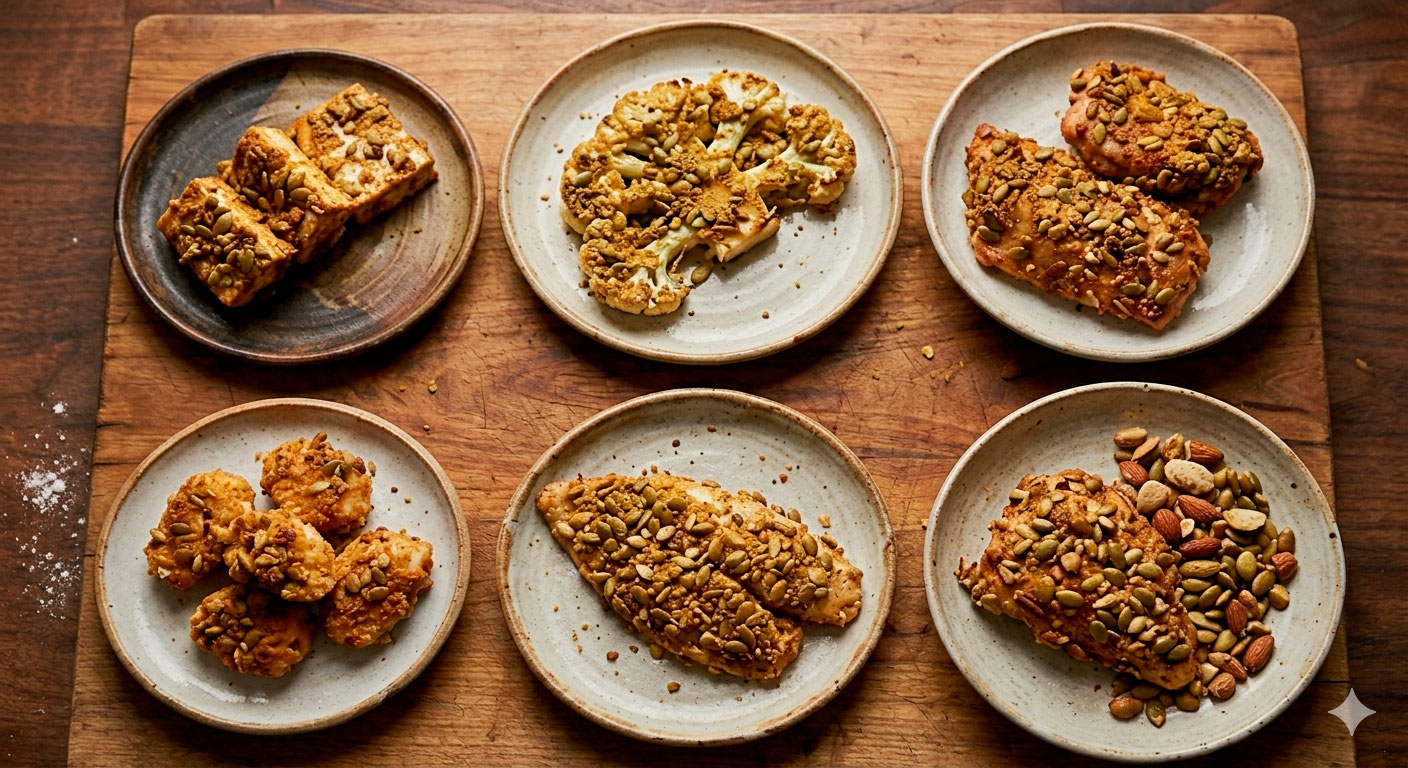
The structure of this recipe — protein + flavored binder + seed crust — is so versatile that it allows multiple adaptations without losing flavor coherence.
Vegan version: Substitute the chicken for 2 cm (0.8 inch) thick slices of cauliflower or firm tofu blocks previously drained and pressed. For the binder, prepare a mixture of ground flaxseed with water (1 tablespoon flaxseed + 3 water, rest 5 minutes) that acts as a binder just like the egg. The flavor profile with chipotle and pepitas remains intact.
Version with nuts: Mix the crushed pepitas with chopped pecans in a 70-30 ratio. The pecan adds a sweeter, fattier nuance that rounds out the smokiness of the chipotle in a surprising way.
Extra spicy version: Add half a teaspoon of ground árbol chili powder directly to the flour of the first layer, and use two whole chipotle peppers with their seeds in the binder. Not suitable for sensitive palates, but absolutely irresistible for those who enjoy heat.
Gluten-free version: Replace the wheat flour with almond flour or rice flour. Both adhere well to the binder and do not significantly alter the final flavor. Adherence may be slightly lower, so it is recommended to press the crust more firmly during breading.
Frequently asked questions about pumpkin seed and chipotle crusted chicken
Can you use pumpkin seeds with the shell for this recipe?
It is recommended to use the green pepita without the white outer shell. The shell has a fibrous and hard texture that, when crushed, generates unpleasant fragments on the palate in the final crust. The shelled green pepita, on the other hand, crushes more evenly and its natural oils release more easily during toasting, generating a more pronounced aroma and a more compact crust on the pumpkin seed and chipotle crusted chicken.
Does the chipotle make the dish very spicy?
Not necessarily. When incorporated into the egg binder and covered by the pepita crust, the heat of the chipotle is distributed evenly and softens with cooking heat. You can control the intensity by using only the adobo sauce without the whole chili for a mild level, one chili without seeds for a medium level, or two chiles with seeds for those who enjoy intense heat. The fat from the pepitas also acts as a natural moderator of spiciness on the palate.
Can this crusted chicken be prepared in an air fryer?
Absolutely. The air fryer is an excellent alternative to the skillet for this recipe, especially if you are looking to reduce oil. Spray the pepita crust with cooking spray before cooking and set the fryer to 190°C (375°F) for 15-18 minutes, turning halfway through. The result is an equally crunchy crust with less added fat, although the initial sear in a cast-iron skillet provides a deeper browning that the air fryer does not replicate with the same intensity.
Can you freeze pumpkin seed and chipotle crusted chicken?
It is not recommended to freeze the chicken once cooked, as the moisture from the thawing process softens the crust irreversibly. The alternative is to freeze the raw breaded breasts, separated with wax paper so they don’t stick together, and cook them directly from frozen, adding an extra 5 to 7 minutes of cooking in an oven at 180°C (350°F) to ensure the center reaches a safe temperature.
What side dishes pair best with this dish?
Pumpkin seed and chipotle crusted chicken pairs irresistibly with side dishes that contrast its intense and crunchy character. Cilantro lime white rice adds freshness, sweet potato puree offers creaminess and a sweet touch that balances the smokiness of the chipotle, and a simple green salad with honey mustard dressing adds acidity without competing with the main dish. For a more festive version, serve with creamy poblano pepper strips (rajas con crema).
Sources and reference resources
For more information on food safety and nutrition, consult WHO healthy diet guides.
Regarding the nutritional value of ingredients, you can consult The Nutrition Source from Harvard T.H. Chan School of Public Health.
Information on food composition available from the database of the National Institute of Public Health of Mexico (INSP).
Consult our liability policy and legal notice before making decisions about your diet based on this content.