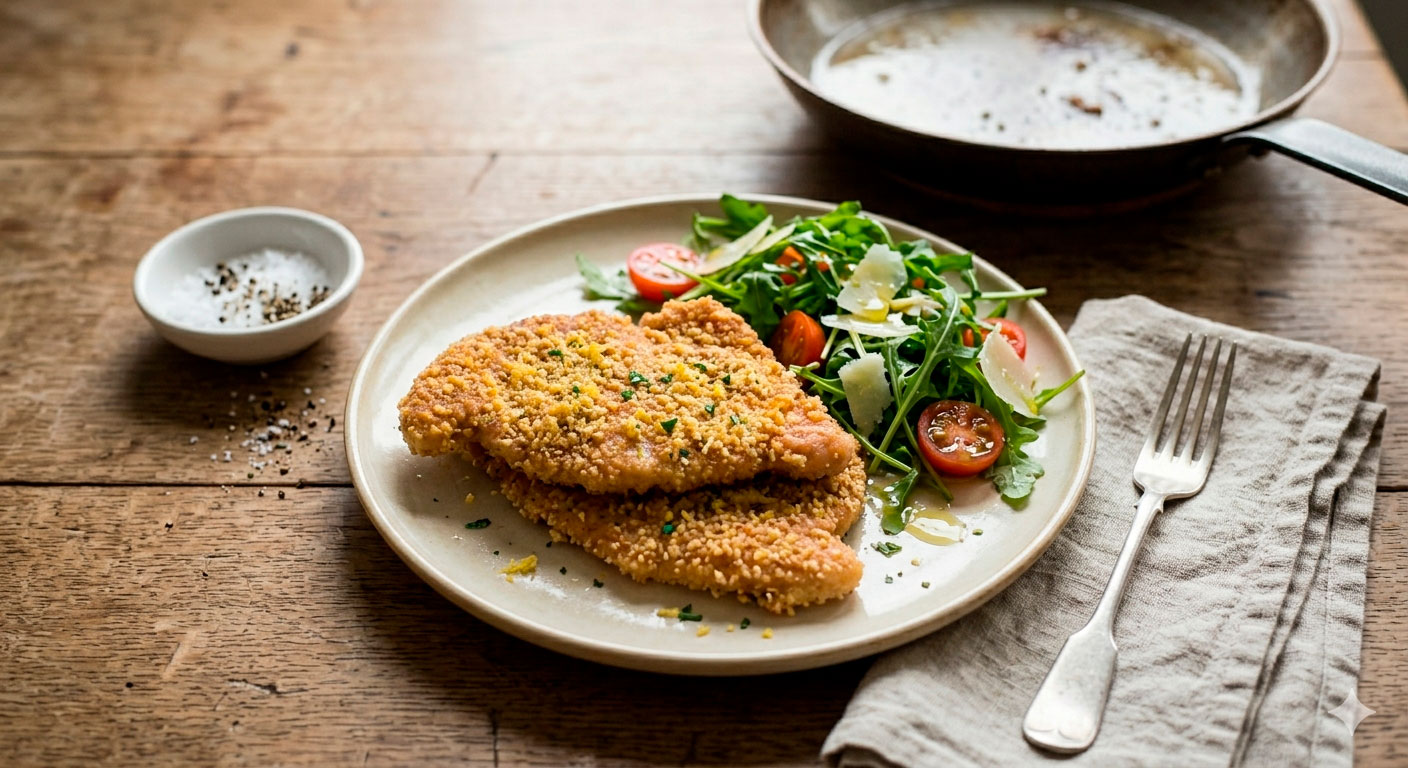
5 Steps to an Irresistible Lemon Caper Chicken Piccata Ready in Just 30 Minutes
Origin and History of Lemon Caper Chicken Piccata
The word piccata comes from Italian and describes, in essence, a cooking method: meat cut into thin slices, lightly floured, sautéed over high heat, and bathed in a shiny sauce based on lemon, butter, and capers. Its cultural roots lie in northern Italy, where the technique of cooking thin cuts of veal—the famous Piccata di Vitello—was perfected over centuries in the kitchens of Lombardy and Piedmont.
In those regions, the culinary philosophy always prioritized ingredient quality over preparation complexity. Sicilian lemon, internationally recognized as one of the best in the world for its balanced acidity and intense fragrance, became the undisputed star of this sauce. Capers, small flower buds preserved in salt or vinegar, provided that briny, deep note that adds depth to the dish without requiring elaborate preparations.
The story takes a fascinating turn in the mid-20th century. With the great Italian migration waves to the United States, cooks from the old country faced a new world of ingredients and customs. Veal, expensive and hard to find in some American states, was naturally replaced by chicken breast—cheaper, more versatile, and hugely popular in Anglo-American cuisine.
That’s how Chicken Piccata was born, an adaptation that quickly took over the menus of Italian restaurants in New York, Chicago, and San Francisco. What started as a practical solution became an icon of Italian-American cooking: a dish that maintains the technical elegance of its European roots but speaks with the warm accessibility of New World family cooking.
Today, Lemon Caper Chicken Piccata transcends borders. It’s served in Parisian bistros with touches of high-end butter, in Mexican homes where green lime replaces yellow lemon with brilliant results, and in college cafeterias where the recipe has been simplified without losing its essence. It’s a dish that speaks of adaptation, culture, and the universality of good taste.
Preparing this recipe at home is connecting with that living history. Every time you emulsify cold butter in a hot pan, you’re repeating the same gesture that Lombard cooks made in the 19th century. And every time the aroma of lemon rises to your palate, you understand why this dish has survived centuries of gastronomic trends. Irresistible chicken piccata isn’t a fad; it’s tradition with a life of its own.
What is Lemon Caper Chicken Piccata and Why You Should Make It at Home
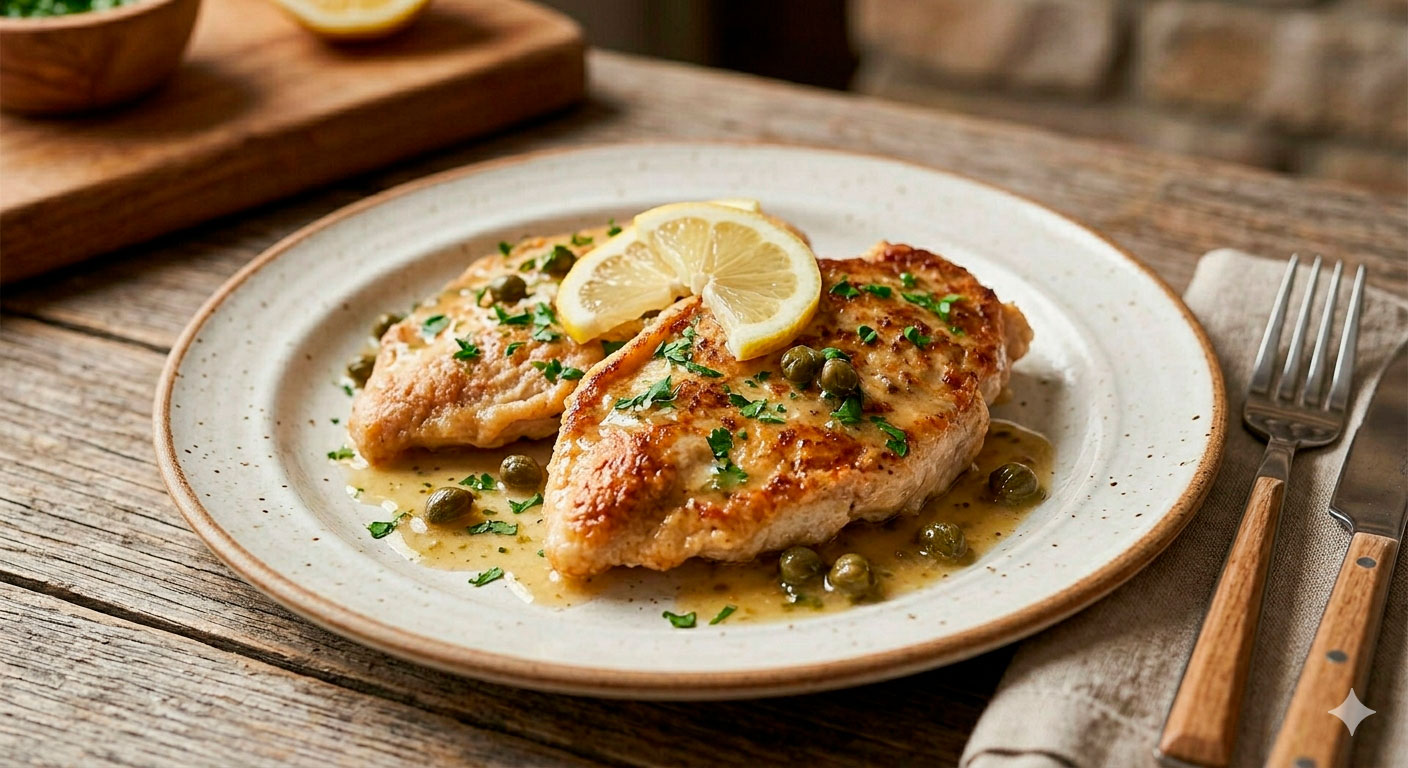
Lemon Caper Chicken Piccata is one of those recipes that challenges the idea that elegant has to be complicated. It consists of pounded chicken breasts, dredged in flour and seared over high heat until achieving a crispy golden crust on the outside, followed by a citrusy sauce combining white wine, broth, lemon juice, and capers, finished with cold butter for that silky, shiny characteristic texture. It’s a dish that wins you over with the first bite and that you’ll master with practice from the first time.
What makes chicken piccata irresistible isn’t a secret ingredient or a magical technique reserved for professional chefs. It’s balance. The fresh acidity of lemon contrasts with the richness of butter. The mineral saltiness of capers enhances the flavor of the chicken without needing to over-season. White wine adds an aromatic layer that turns a domestic skillet into something that smells like an Italian neighborhood restaurant. That precise balance is what you bring to your table when you learn this recipe.
From a nutritional standpoint, this chicken piccata is an excellent option for those seeking quality protein without sacrificing the pleasure of eating well. With 35 grams of protein per serving and only 320 calories, it stands out as a satisfying dish that doesn’t upset any moderate diet. Chicken breast is one of the lean protein sources most recommended by nutritionists, and here we prepare it without heavy creams or excess fat, making it a smart choice for both workout days and family dinners.
Another great reason to make this recipe at home is speed. In a world where weekday time is a scarce commodity, having a recipe ready in 30 minutes that looks and tastes like it took hours is a culinary superpower. The ingredients are accessible at any supermarket, the needed equipment is limited to a large skillet and a meat mallet, and the result is so attractive that it works equally well for an intimate dinner for two or for impressing last-minute guests.
In this complete guide to Irresistible Lemon Caper Chicken Piccata, you’ll find everything you need: from selecting the right ingredients to the technical secrets that make the difference between a mediocre sauce and a perfect emulsion. If you’ve ever ordered chicken piccata at a restaurant and wondered how they achieved such a silky, shiny sauce, the answer lies in the steps that follow. Get ready for this dish to become one of your all-time favorites.
Ingredients for Lemon Caper Chicken Piccata
Quantities for 4 servings.
Main Ingredients
- 2 large chicken breasts (butterflied and pounded thin)
- ½ cup all-purpose flour
- 4 tablespoons unsalted butter (divided 2+2)
- 2 tablespoons extra virgin olive oil
- 3 tablespoons capers
Seasonings & Extras
- 2 lemons (juice and slices for garnish)
- ½ cup chicken broth
- ¼ cup dry white wine (Pinot Grigio or Sauvignon Blanc)
- ¼ cup fresh parsley, chopped
- Salt and freshly ground black pepper to taste
How to Make Lemon Caper Chicken Piccata Step by Step
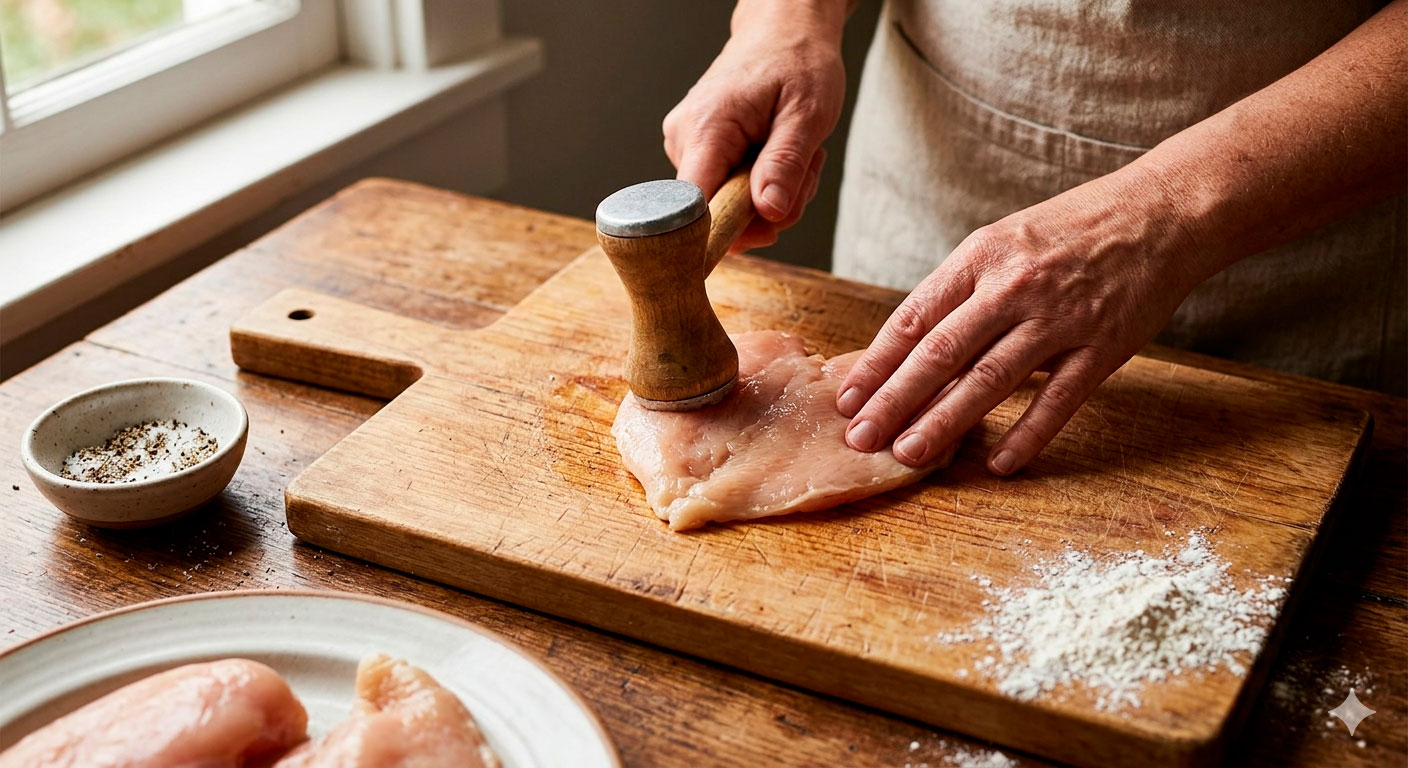
- Prepare the chicken breasts: Butterfly the chicken breasts lengthwise to get 4 fillets. Cover with plastic wrap and gently pound with a meat mallet to an even ½ cm thickness. Even thickness ensures quick cooking, with juicy inside and perfectly golden outside. Season generously with salt and pepper on both sides and let rest for 5 minutes for the seasoning to penetrate.
- Sear the chicken to golden brown: Place the flour in a shallow dish. Dredge each fillet in flour, coating completely and shaking off excess; only a thin, even layer should remain. In a large skillet (ideally stainless steel or cast iron), heat the olive oil with 2 tablespoons of butter over medium-high heat until the mixture sizzles. Cook the chicken without moving it for 3 minutes per side until you achieve a deep golden sear. Remove to a plate and set aside.
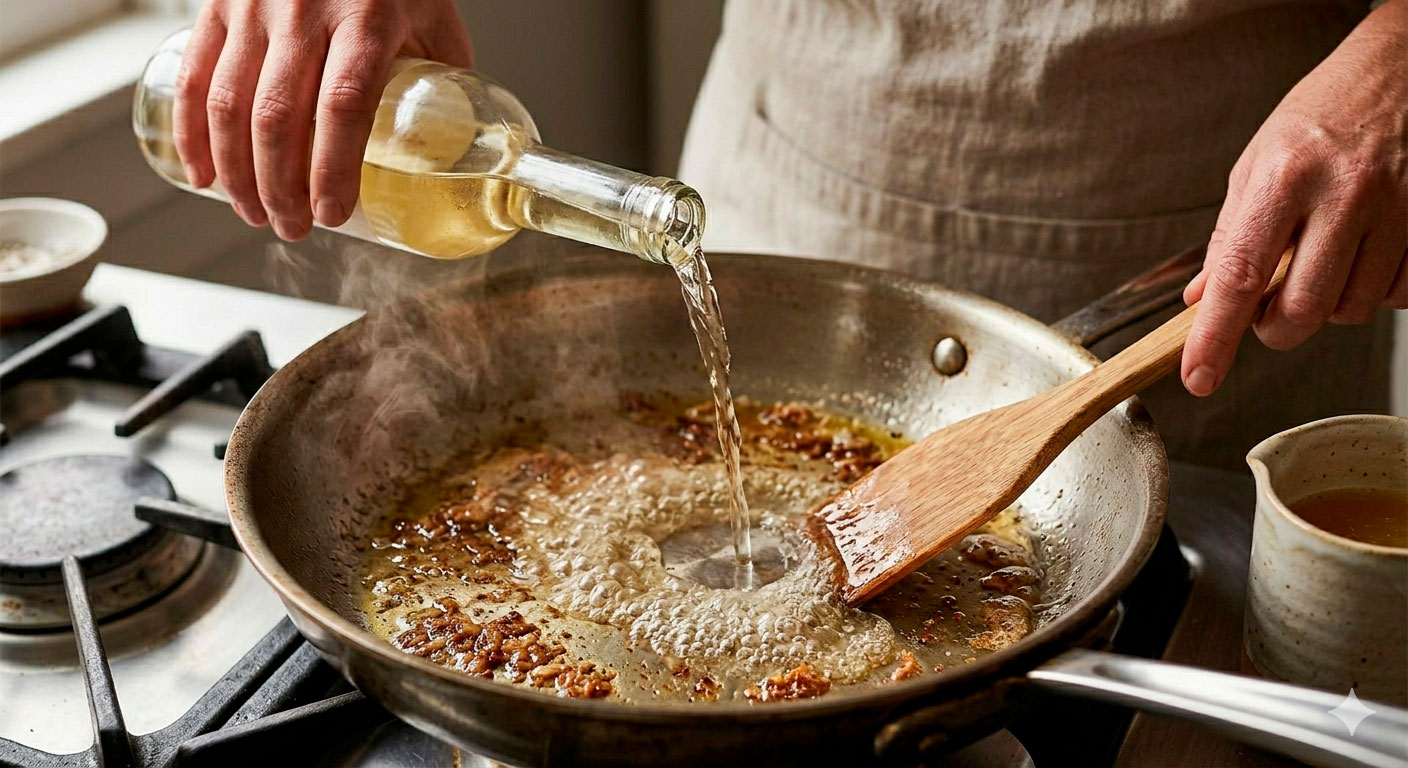
- Deglaze and build the sauce: With the skillet still hot, pour in the white wine and chicken broth. Use a wooden spatula to firmly scrape the bottom of the pan, releasing all caramelized residue—in classic cooking, this is called fond—which concentrates the flavor. Add the juice of both lemons and the capers. Increase heat to medium-high and let the sauce reduce until it has decreased by half in volume, about 4 to 5 minutes.
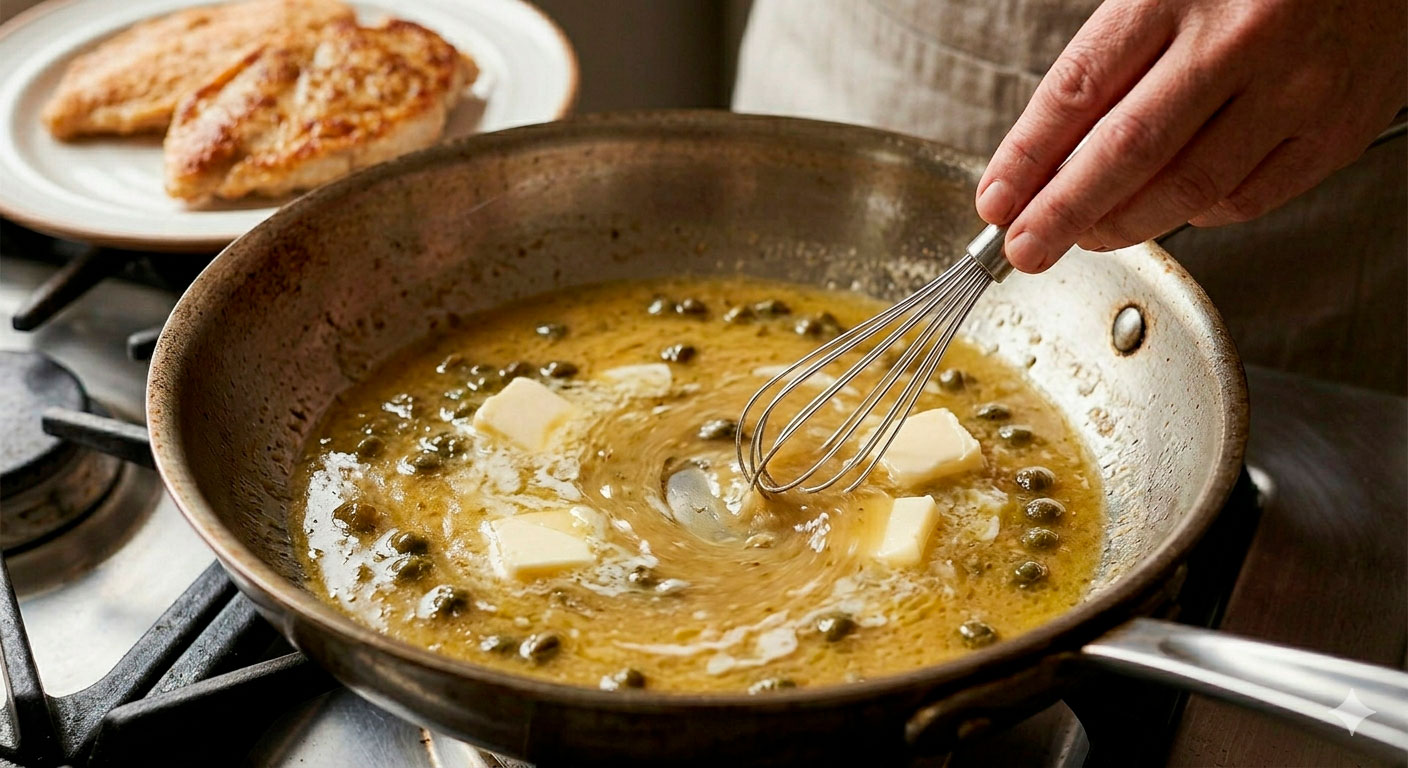
- Emulsify the sauce with cold butter: Reduce the heat to the absolute minimum. Add the remaining 2 tablespoons of cold butter, cut into pieces. Gently swirl the pan or stir with a wooden spoon until the butter melts completely and the sauce becomes silky, unified, and slightly thickened. This step—montée au beurre—is the secret to irresistible chicken piccata. If the heat is too high, the sauce will break and lose its characteristic creaminess.
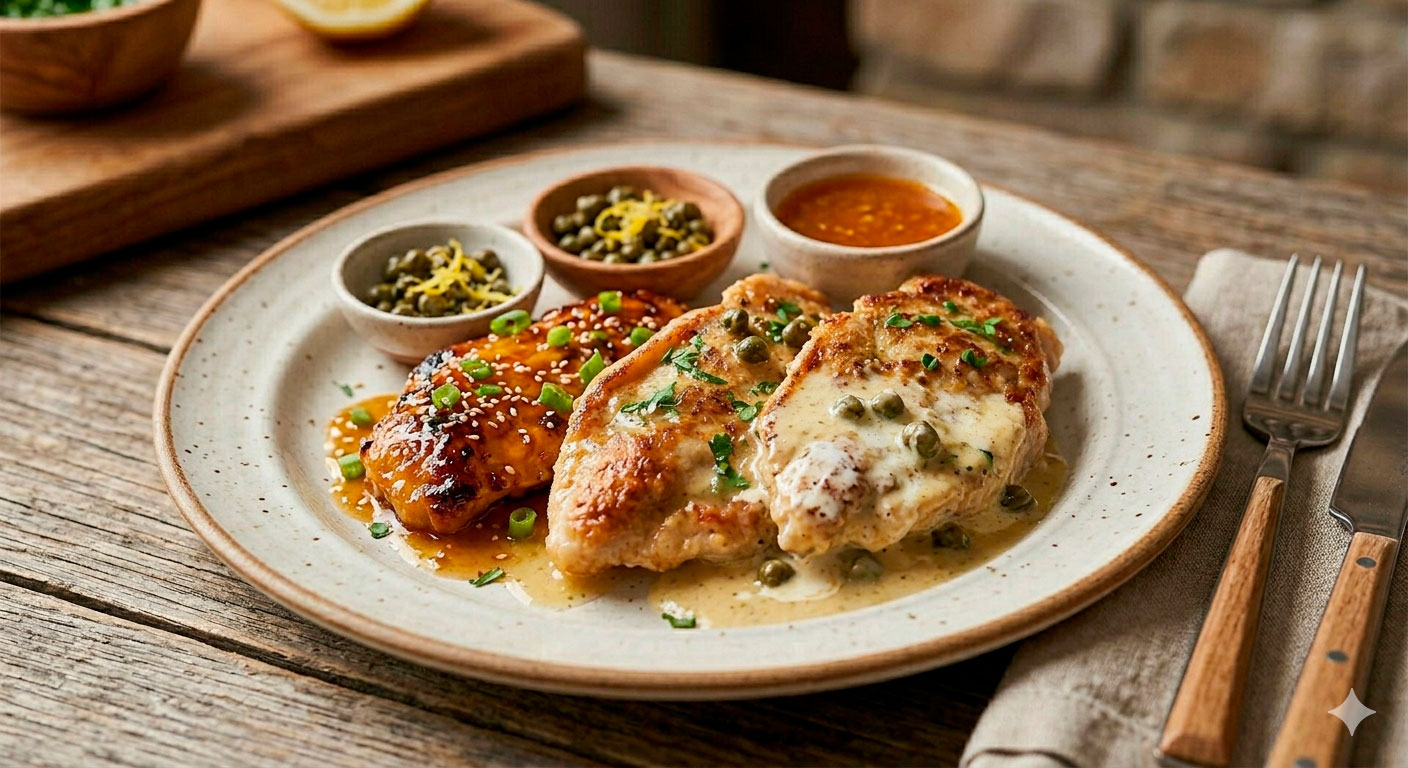
- Final touch and serving: Return the chicken to the skillet along with any juices released on the resting plate. Heat for 1 to 2 minutes over low heat, basting the fillets with the sauce. Sprinkle generously with fresh parsley and garnish with thin lemon slices. Serve immediately over al dente pasta, white rice, or mashed potatoes to make the most of that spectacular sauce.
Nutritional Information for Lemon Caper Chicken Piccata
Approximate values per serving (4 total servings).
| Nutrient | Per Serving | % Daily Value* |
|---|---|---|
| Calories | 320 kcal | — |
| Protein | 35 g | 70% |
| Carbohydrates | 12 g | 4% |
| Total Fat | 14 g | 18% |
| Dietary Fiber | 1 g | 4% |
| Sodium | 480 mg | 21% |
*Percent based on a 2,000 kcal daily diet.
Expert Analysis: The Master Touch for an Irresistible Chicken Piccata
By El Godínez Hambriento — From the perspective of someone who has spent years between pans and stoves, Lemon Caper Chicken Piccata is, technically, a masterclass in classic cooking compressed into 30 minutes.
The first critical point is searing temperature. Many home cooks make the mistake of placing the chicken in a cold or barely warm pan. The result is meat that steams instead of searing, with a soft texture and without the caramelized browning that adds flavor. The pan must be hot enough that the butter sizzles actively as soon as the oil hits it. That sizzle when you put the fillet in is the sign that things are going well.
The second secret—and the one that separates mediocre chicken piccata from truly irresistible—is the temperature of the butter at the end. The most frequent mistake is adding it with the heat too high. The milk fat and solids separate, the sauce loses its cohesion, and the result is oily rather than silky. The butter should go in cold, the heat at the absolute minimum, and the incorporation should be gentle and gradual. This process, called montée au beurre in classic French cooking, is what gives the sauce its unmistakable glossy sheen.
Regarding pairing, this chicken piccata cries out for a white wine with good acidity and citrus notes: an Italian Pinot Grigio is the orthodox and perfect choice, although a Spanish Albariño or Verdejo works just as well and adds a very pleasant local touch. Avoid wines with pronounced oak or high alcohol, as they compete with the lemon instead of complementing it.
Finally, don’t underestimate the role of capers. Their savory profile—salty, slightly acidic, with intense vegetal notes—acts as a natural amplifier of the lemon and chicken flavor. A piccata without capers is still good, but it loses that background complexity that makes it memorable. If you opt for salt-packed capers, prior rinsing is essential to not unbalance the total salt of the dish.
Tips for Making a Perfect and Irresistible Chicken Piccata
The biggest trick for your Lemon Caper Chicken Piccata to turn out professional from the first time is the thickness of the fillet. If the chicken breast doesn’t have a uniform thickness of half a centimeter, the thick parts will stay raw while the thin parts dry out. Invest two minutes in that initial step with the meat mallet; it’s the decision that has the most impact on the final result. If you don’t have a mallet, a wine bottle wrapped in plastic wrap works perfectly.
Another vital technical point is the type of skillet. A stainless steel or cast iron skillet will generate a fond—that layer of caramelized residue on the bottom—much richer than a non-stick one. In a non-stick skillet, the chicken doesn’t stick, but it also doesn’t leave that sediment that, when deglazed with wine, becomes the flavor base of the entire sauce. If you only have non-stick, add half an extra teaspoon of butter to the broth to compensate for the depth of flavor.
If you want to reduce the final acidity, rinse the capers under running water for 30 seconds before using them. You can also regulate the amount of lemon juice by adding half first and adjusting to taste before emulsifying the butter. Yellow lemon (European lemon or Sicilian lemon) is more aromatic and less acidic than Mexican green lime; if you use green lime, start with just one to not exceed the pleasant acidity threshold.
For storage, if you anticipate leftovers, store the chicken and sauce separately in airtight containers in the refrigerator. The emulsified sauce tends to separate when cooled; when reheating, do so over very low heat and add a splash of broth, stirring gently to re-emulsify. The microwave is not recommended: the intense, uneven heat hardens the chicken and destroys the silky texture of the sauce.
A mistake many beginners make is adding the chicken back to the sauce with the heat high and overcooking it. The breast is already cooked when you return it; it only needs to heat for a maximum of one minute. Overcooking at that point is what causes that dry, fibrous texture that ruins the dish. Low heat, short time, lots of flavor.
Variations and Substitutions for Lemon Caper Chicken Piccata
One of the great virtues of this recipe is its versatility. If you want a fish version, substitute the chicken with fillets of sole, hake, or tilapia. The cooking time is reduced to 1-2 minutes per side, and the result is equally irresistible with a marine profile that further complements the citrus notes of lemon and the salty flavor of capers.
For a vegetarian option, thick slices of cauliflower or Portobello mushrooms work very well. They should be at least 2 cm thick to withstand searing without falling apart. The process is identical to that of chicken, and the piccata sauce enhances the earthy flavor of these fungi surprisingly.
If you need a gluten-free version, replace the wheat flour with rice flour or cornstarch. Both create a lighter, crispier crust than conventional flour, and cornstarch in particular gives a brighter sear. The preparation technique does not change at all.
Frequently Asked Questions about Lemon Caper Chicken Piccata
Can I freeze Lemon Caper Chicken Piccata?
Yes, though the sauce may lose some texture when thawed. It’s best to freeze the chicken and sauce separately in airtight containers for up to 2 months. Thaw overnight in the refrigerator and reheat over very low heat, adding a splash of broth to restore the characteristic silky consistency.
How long does Chicken Piccata last in the refrigerator?
Stored in an airtight container at 35°F to 40°F (2°C to 4°C), chicken piccata keeps well for up to 2 days. If the chicken smells sour or the sauce separates and becomes grainy with no possibility of recovery upon reheating, it should not be consumed.
How many calories are in Lemon Caper Chicken Piccata?
This recipe provides approximately 320 kcal per serving, with 35g protein, 14g fat, and 12g carbohydrates. It’s a balanced, moderately caloric dish, ideal for those seeking an irresistible dinner without sacrificing nutrition.
Can I make Chicken Piccata without white wine?
Absolutely. Substitute the white wine with the same amount of chicken broth and a few extra drops of lemon juice. The result will be slightly less aromatic but equally delicious and suitable for the whole family, including children. You can also use vegetable broth if you have guests with dietary restrictions.
What is the best way to serve Lemon Caper Chicken Piccata?
The most irresistible way is to serve it immediately over al dente pasta (linguine or spaghetti), white rice, or mashed potatoes, to soak up the citrusy sauce. For pairing, a glass of dry white wine like Pinot Grigio or Sauvignon Blanc notably elevates the gastronomic experience.
Reference Sources and Resources
For more information on food safety and nutrition, consult WHO healthy diet guides.
Regarding the nutritional value of ingredients, you can consult The Nutrition Source from Harvard T.H. Chan School of Public Health.
Food composition information available at the database of the National Institute of Public Health of Mexico.
See our liability policy and legal notice before making dietary decisions based on this content.