Irresistible Orange Chicken: homemade recipe in 3 steps
What is Orange Chicken with Soy Sauce and why should you make it at home?
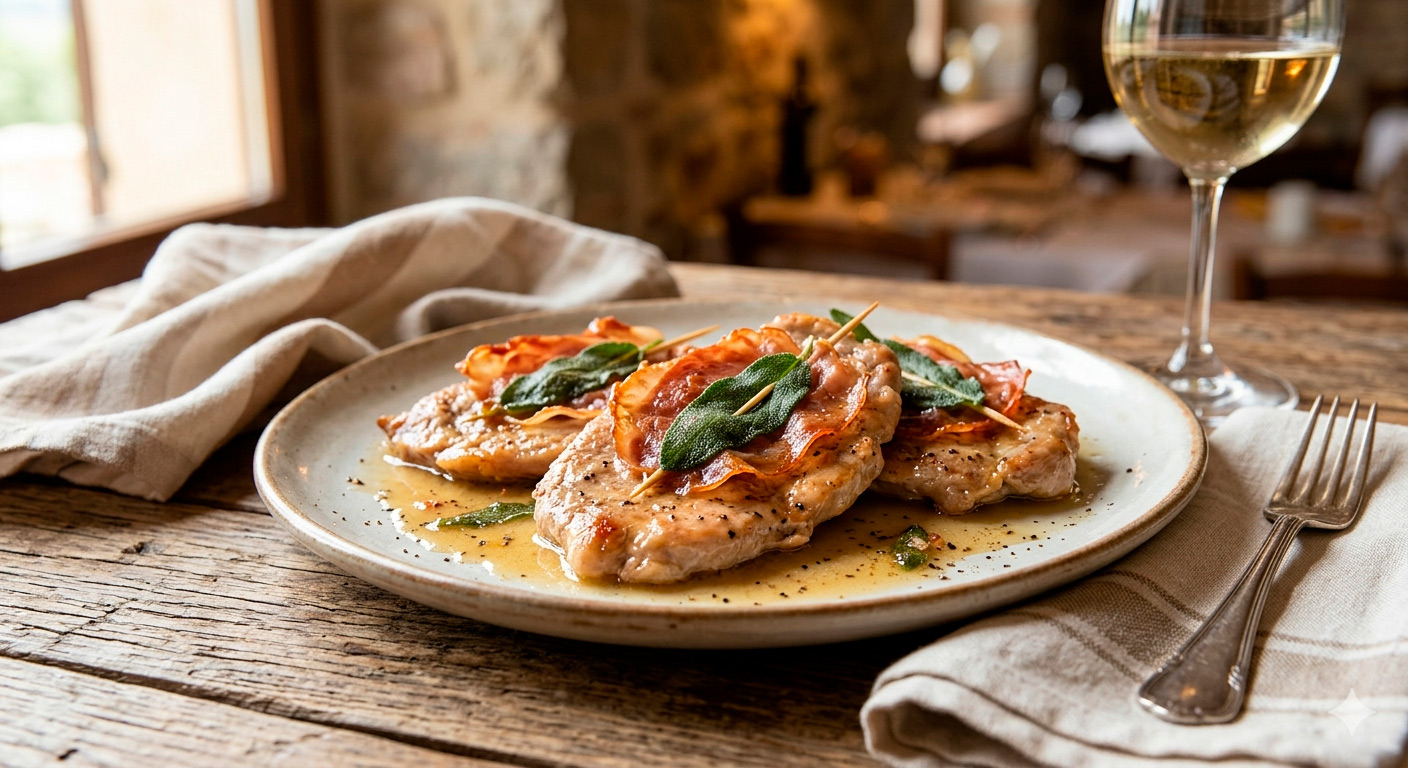
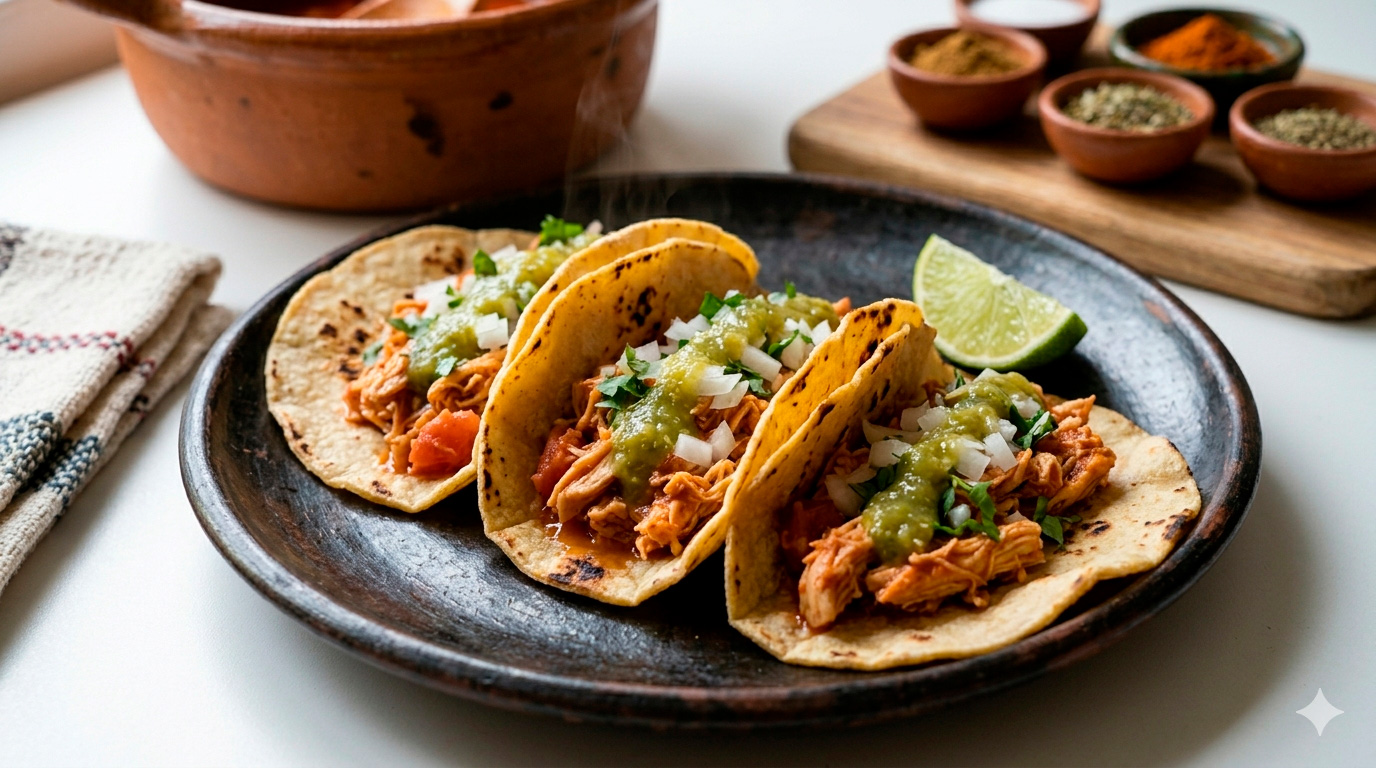
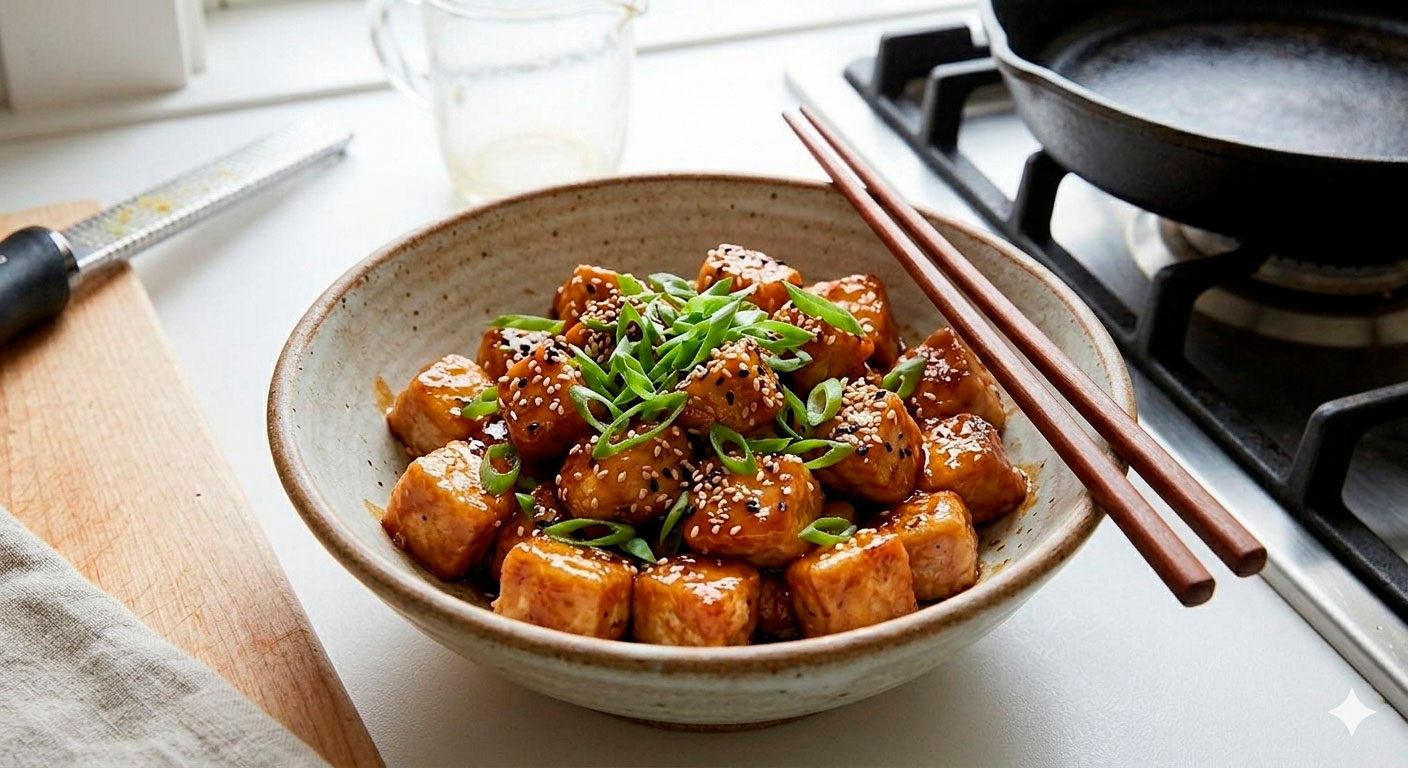
Orange Chicken with Soy Sauce is one of those dishes that achieves the hardest thing in cooking: balance without apparent effort. The vibrant acidity of citrus meets the saline depth of fermented soy to create a glaze that shines like amber under light and coats every piece of chicken with an irresistible layer of flavor. This is not simply “sweet and sour chicken”; it is an exploration of textures and contrasts that defines Asian fusion cuisine at its very best.
Although many associate this dish with fast-food restaurants, its roots run deep in the gastronomy of China’s Hunan province. Originally, cooks in the region used dried orange peels — known as Chenpi — to flavor meat stews, harnessing the essential oils in the citrus skin to balance the intensity of animal fats. This ancestral technique had a clear functional purpose: the orange not only added aroma, but also acted as a natural digestive agent.
Over time, and thanks to the waves of migration that brought Chinese cuisine to the United States and Latin America throughout the 20th century, the recipe evolved. Fresh fruit juice was incorporated, honey was added to enhance caramelization, and soy sauce became the umami backbone of the dish. The result was a brighter, fresher plate with a more pronounced contrast between sweet and salty — perfectly adapted to Western palates without sacrificing the complexity of the original.
Making this dish at home has advantages no restaurant can match. First, ingredient control: when you squeeze the oranges yourself, you get the essential oil from the peel, the natural sugars at their exact peak of ripeness, and an acidity that bottled juice can never replicate. Second, control over the reduction: at home you have the time and patience to bring the sauce to the nappe point — that moment when it coats the back of a spoon with a bright, silky film.
This version of Orange Chicken with Soy Sauce is designed for anyone who wants restaurant-quality results without unnecessary complications. The three main steps — sear, build the base, and glaze — are simple techniques that, when executed well, produce a spectacular dish. The key lies in respecting the ingredients and having patience during the reduction. The chicken needs that initial golden crust to keep the interior juicy; the sauce needs time to concentrate and develop its character.
From a nutritional standpoint, this recipe is an intelligent choice for a weeknight dinner or a family celebration. With 32 grams of protein per serving and a moderate fat profile — thanks to quick-searing rather than deep-frying — it provides sustained energy without excess. The vitamin C from fresh orange, combined with ginger’s anti-inflammatory properties, makes this a dish that is genuinely good for both your palate and your body.
Ultimately, Orange Chicken and Soy Sauce is a travelling dish: born in China, reinvented in the Americas, and today it holds a well-earned place on tables around the world. This recipe is yours to master at home, with supermarket ingredients and no specialized equipment. All you need is a wide pan — ideally a wok — fresh oranges, a good soy sauce, and the desire to cook something truly irresistible.
Ingredients for Orange Chicken and Soy Sauce
Quantities for 4 servings.
Main ingredients
- 800 g (1¾ lb) chicken breast or thighs (thighs provide more juiciness)
- 4 fresh oranges (juice) + zest of 1
- 80 ml (⅓ cup) traditional soy sauce or tamari
- 2 tablespoons cornstarch
- 2 tablespoons honey
Seasonings and optional
- 1 piece of fresh ginger (about 1 inch / 3 cm), grated
- 3 garlic cloves, finely minced
- 1 teaspoon sesame oil
- Toasted sesame seeds to taste
- Fresh chives to taste for garnish
- Salt, black pepper and vegetable oil
Ingredient names around the world
Some ingredients are known by different names depending on the region. Here is a quick reference:
| Ingredient | Other names |
|---|---|
| Soy sauce | Sillao (Peru), Shoyu (Japan), Salsa de soya (Mexico/Colombia) |
| Cornstarch | Maicena, corn flour, corn thickener |
| Ginger | Kion (Peru), Jengibre (Spanish), Fresh ginger root |
| Orange | China (Dominican Rep./Puerto Rico), Juicing orange, Navel orange |
| Chives | Green onion tops, Spring onion greens, Scallion greens |
How to make Orange Chicken and Soy Sauce step by step
-
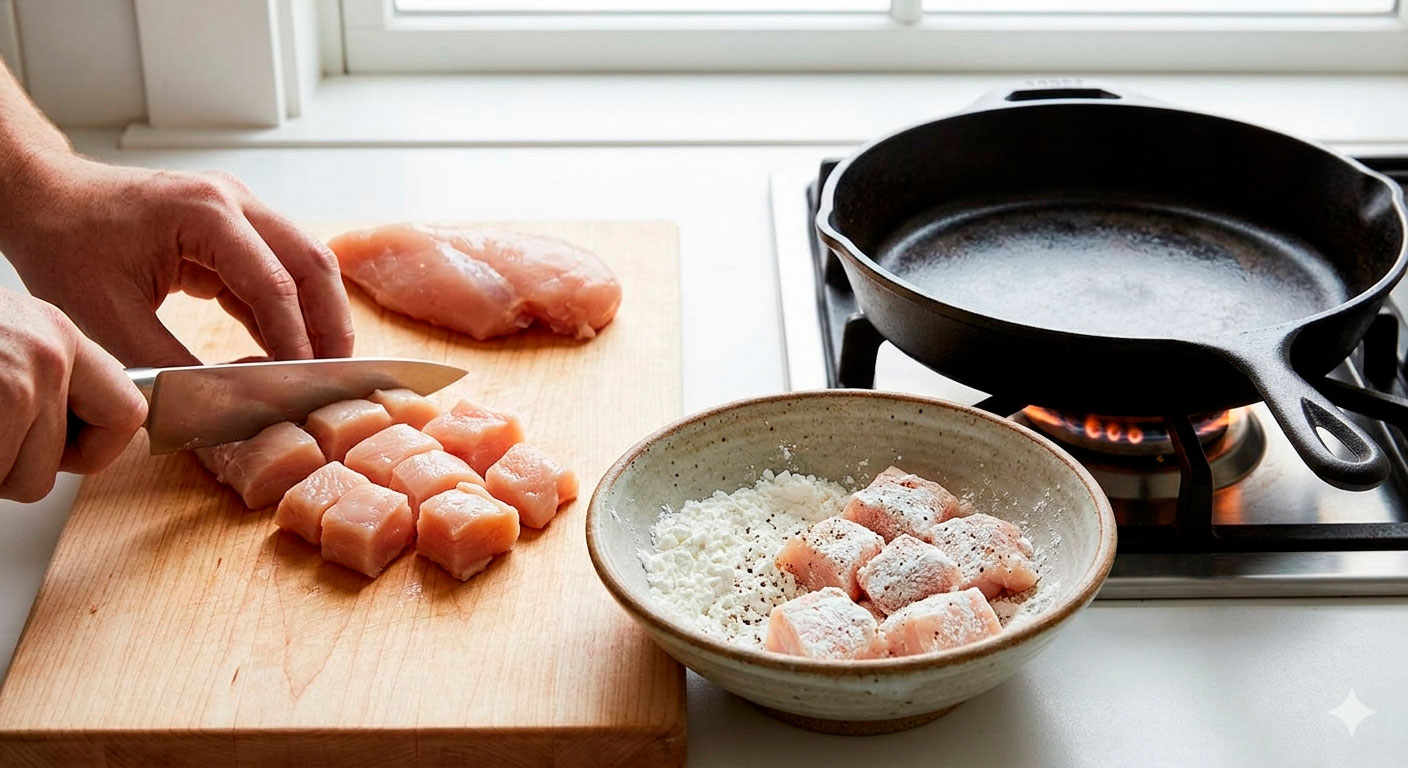 Coat the chicken with cornstarch: Cut the chicken into uniform cubes of approximately 1¼ inches (3 cm) per side. It is essential that all pieces are the same size so they cook evenly and no piece stays raw inside. In a bowl, mix the cornstarch with a pinch of salt and freshly ground black pepper. Add the chicken cubes and toss with your hands until each piece is fully covered with a thin, even coating. This light breading is responsible for the golden crust and for naturally thickening the final sauce.
-
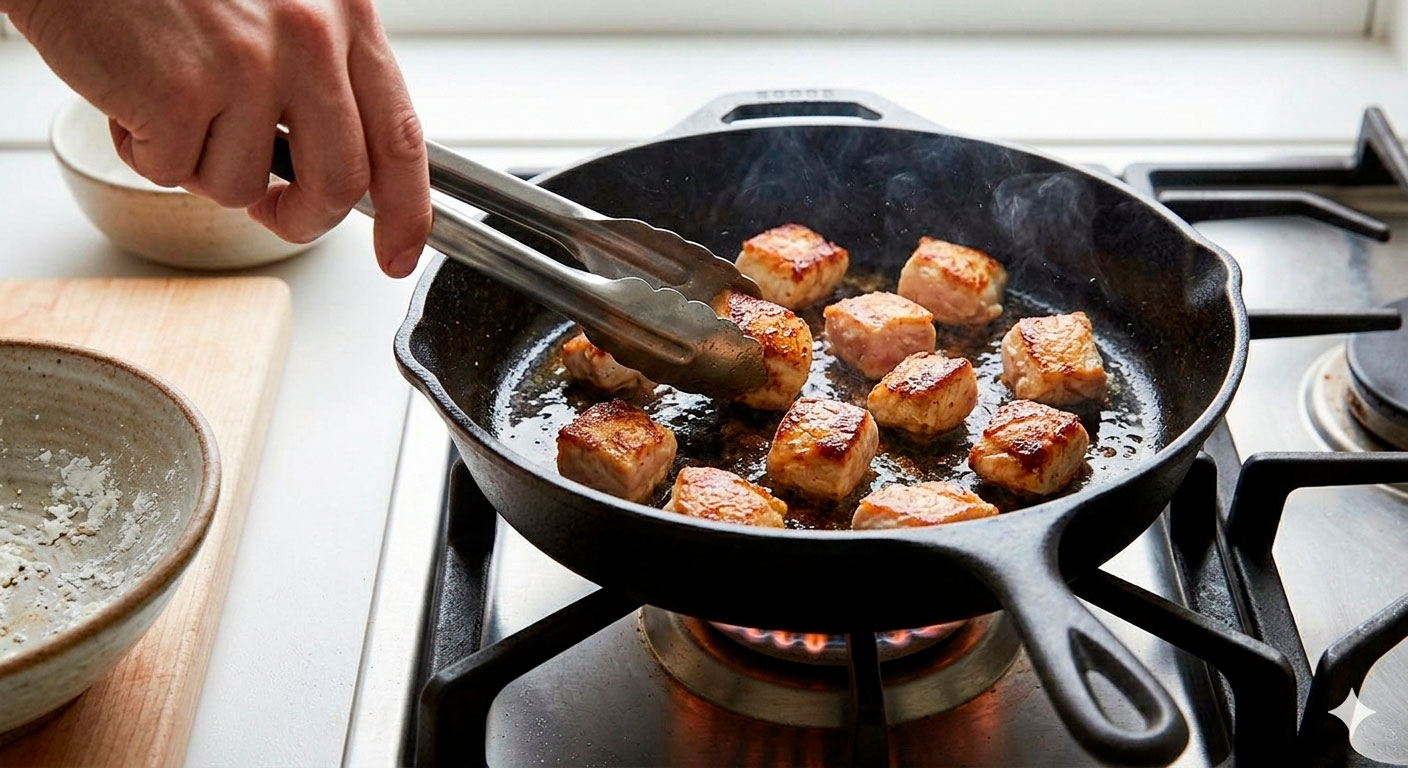 Sear the chicken over high heat: Heat a wok or wide skillet over high heat with enough vegetable oil. The pan must be very hot before adding the chicken — you can check by holding your palm about 4 inches (10 cm) from the surface and feeling intense, immediate heat. Add the cubes in a single layer without crowding. Leave them undisturbed for 2–3 minutes to let the crust form. Flip and repeat on the other side. Work in batches if needed to avoid cooling the pan. Remove the browned chicken and set aside. At this point the inside is not fully cooked — that is correct and intentional.
-
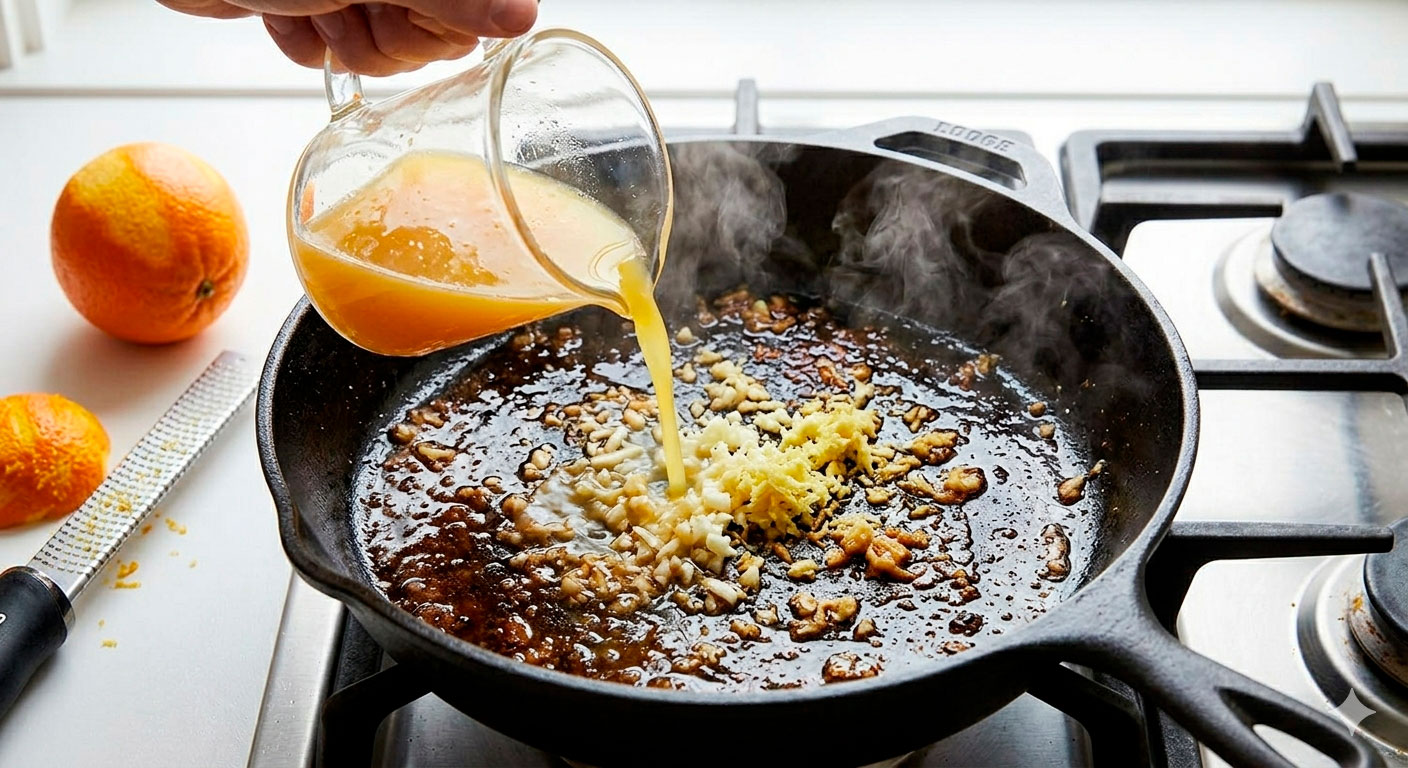 Build the aromatic base: Reduce the heat to medium and, in the same pan using the caramelized drippings left by the chicken, add the minced garlic and grated ginger. Sauté for 60 seconds, stirring constantly. The garlic must not burn — if it darkens too much, it will make the entire dish bitter. Immediately pour in the juice of all four oranges and the zest of one. Scrape the bottom of the pan with a wooden spoon to release and dissolve all those caramelized juices the chicken left behind: that is where a significant part of the final flavor lives.
-
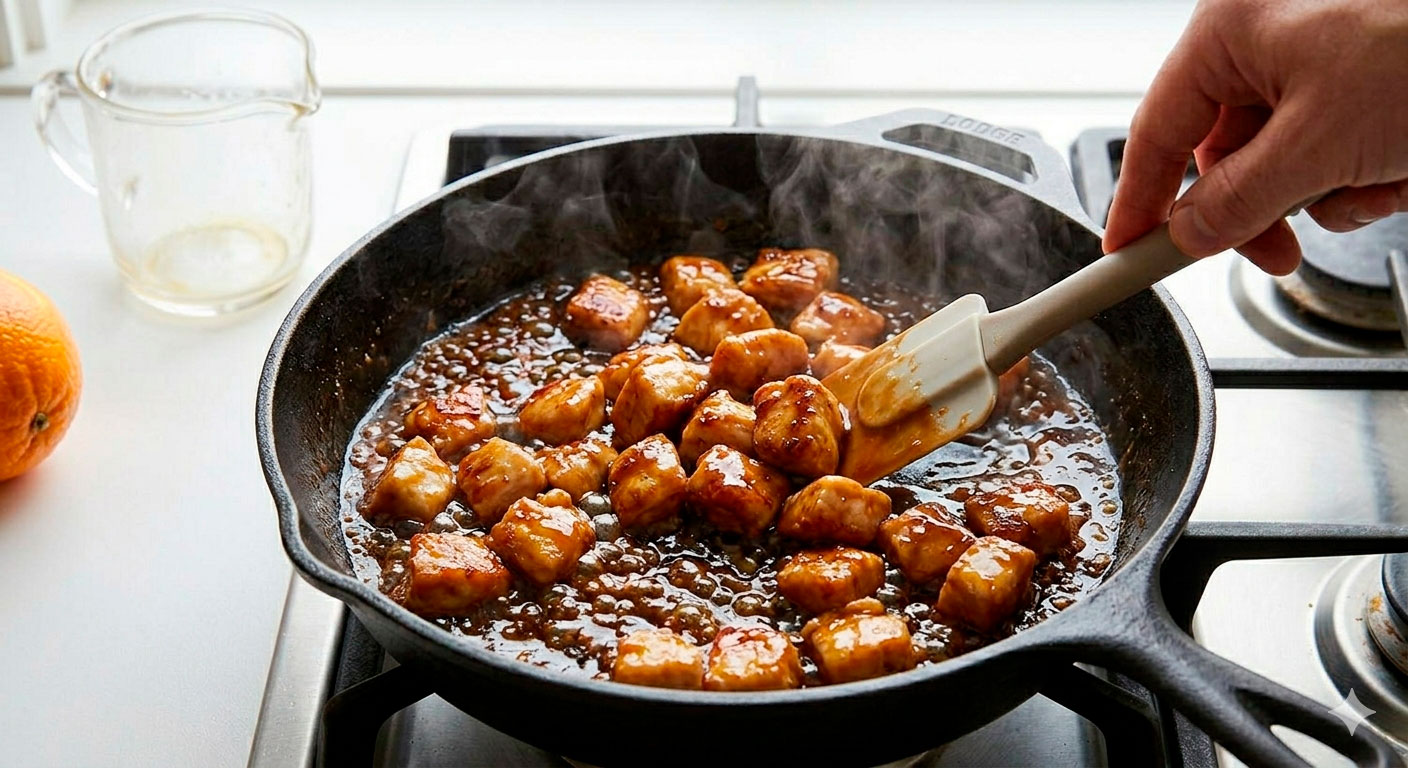 Reduce the glaze: Add the soy sauce and honey to the already-deglazed orange mixture. Raise the heat to medium-high and let the sauce simmer gently. Watch the texture of the bubbles: at first they will be large and fast; when the bubbles become small, dense, and slow, and the sauce has reduced to approximately half its original volume, it is time to continue. This reduction can take between 8 and 12 minutes depending on the size of your pan.
-
Glaze the chicken and serve: Return the seared chicken to the pan with the reduced glaze. Stir vigorously for 3–4 minutes until every piece is perfectly coated. The cornstarch that clung to the chicken will finish giving body and shine to the sauce. Turn off the heat and add the sesame oil — its toasted aroma integrates best away from direct heat. Serve immediately over white rice. Garnish with toasted sesame seeds and freshly chopped chives.
Nutritional information for Orange Chicken and Soy Sauce
Approximate values per serving (4 total servings).
| Nutrient | Per serving | % Daily Value* |
|---|---|---|
| Calories | 420 kcal | — |
| Protein | 32 g | 64% |
| Carbohydrates | 28 g | 10% |
| Total fat | 12 g | 18% |
| Dietary fiber | 1.5 g | 6% |
| Vitamin C | 45 mg | 75% |
| Sodium | 850 mg | 35% |
*Percentage based on a 2,000 kcal daily diet.
Key nutritional benefits
Fresh orange provides an important dose of vitamin C — 75% of the daily value per serving — which strengthens the immune system and acts as an antioxidant. Chicken, in turn, is a high-quality protein source containing all the essential amino acids needed for muscle tissue repair and synthesis.
The fresh ginger in this recipe has well-documented anti-inflammatory and digestive properties, supported by phytotherapy research. By using quick-searing rather than deep-frying, the saturated fat profile remains low, making this dish considerably healthier than its fast-food restaurant equivalents.
Tips for making the perfect Orange Chicken
The first secret of this dish is pan temperature. The chicken must come into contact with the oil when it is fully hot: if you add it too soon, it will steam instead of sear, and you will lose the crispy crust that locks in the internal juices. To know when it is ready, hold the palm of your hand about 4 inches (10 cm) from the surface — you should feel intense, immediate heat. A more precise test is to drop a single drop of water into the pan: if it sizzles and evaporates instantly, you are at the right temperature.
The quality of your soy sauce makes a noticeable difference in the final result. Naturally fermented versions — whether Japanese dark soy, tamari, or Peruvian sillao — have a flavor complexity that industrially produced sauces simply cannot replicate. Fast-production sauces tend to taste flat with excessive artificial coloring. If you can, invest in a good soy sauce: it is an ingredient you will use across many recipes and that will make a difference in every single one of them.
Do not underestimate the orange zest. The juice contributes acidity and sugar, but the essential oils living in the skin are responsible for the intense citrus aroma that makes this dish truly memorable. Zest only the orange part of the peel — the white layer underneath, called the albedo, is bitter and would throw off the balance of the glaze. A microplane zester is the ideal tool for this task.
Work the chicken in batches during searing. This is the most common mistake: loading the pan all at once causes the oil temperature to drop sharply and the chicken ends up steaming in its own juices. Result: pale, crust-free pieces. By working with batches of 6–8 cubes at a time, you maintain high heat and achieve that uniform golden color that will also add flavor when deglazing with the orange juice.
The reduction point is critical. The professional technique is called nappe: the sauce must be thick enough to coat the back of a spoon without sliding off immediately. If the sauce is too thin when you return the chicken, the glaze will not adhere well and the dish will look watery. If it reduces too much, it will become sticky and bitter. Watch the bubbles: large and fast at first, small and slow when it is ready.
On the most common mistakes: the first is washing the chicken before cooking. As a chef, I say this without ambiguity — do not do it. Washing chicken only spreads potential bacteria all over your kitchen. Heat from cooking is the only safe and effective method for eliminating any microorganism. The second mistake is burning the garlic during the aromatic base. Once garlic darkens too much, it generates bitter compounds that do not disappear with the reduction. Keep the heat at medium and never leave it alone for more than 60 seconds.
For storage, keep leftovers in an airtight container in the refrigerator for up to 3 days. When reheating, add a splash of orange juice or water to rehydrate the sauce, as the cold thickens the cornstarch considerably. In the microwave, heat at medium power in 45-second intervals to avoid drying out the chicken. In a skillet over low heat with a lid for 5 minutes is the best option to preserve texture.
If you need a gluten-free version, simply replace conventional soy sauce with tamari — the wheat-free fermented soy version — and verify that your cornstarch is certified gluten-free. The flavor is practically identical; some tasters even prefer tamari for its deeper, less salty profile. To reduce sodium, you can use low-sodium soy sauce or coconut aminos.
Variations and substitutions for Orange Chicken and Soy Sauce
One of the great strengths of this dish is its versatility. The recipe structure — seared protein, citrus aromatic base, soy reduction — accepts multiple adaptations without losing its identity. Here are the main variations tested in the kitchen:
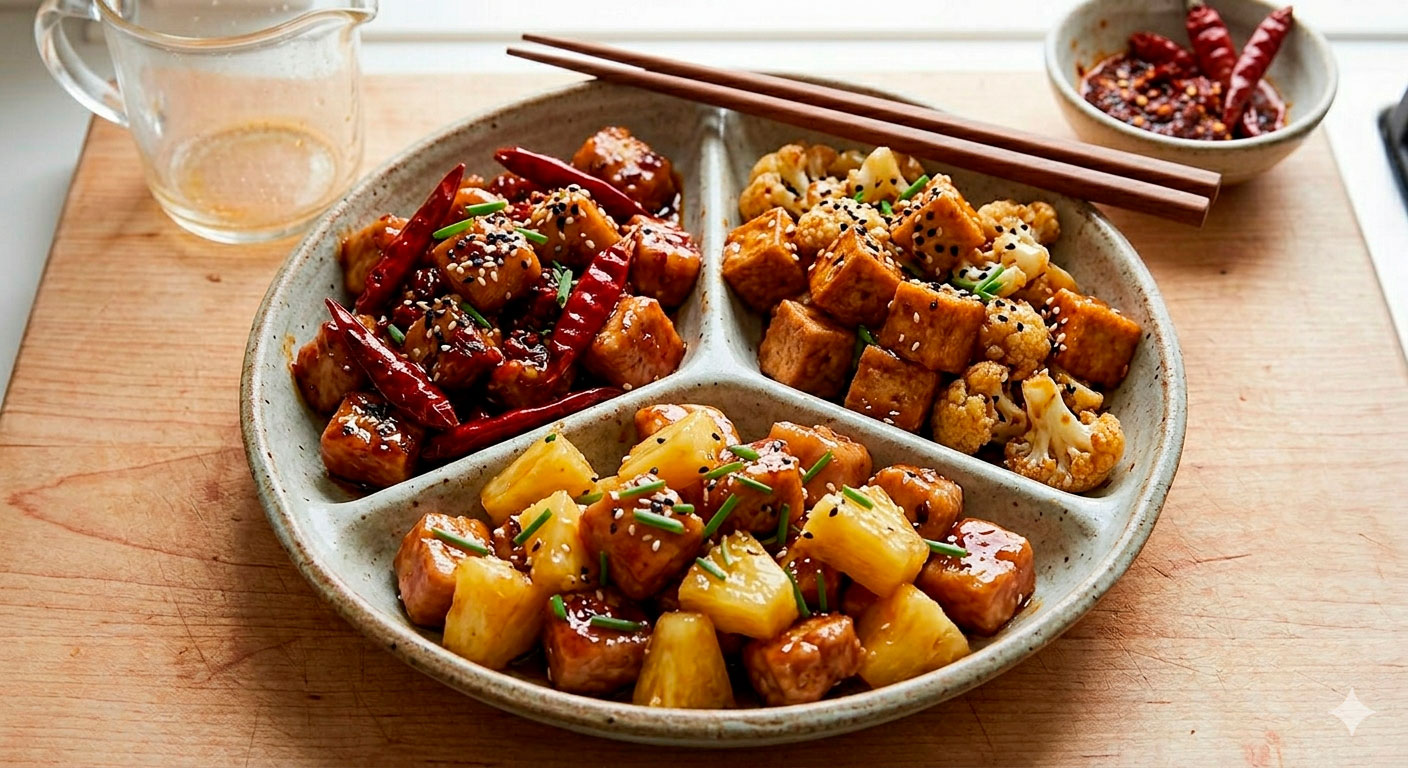
Spicy Szechuan-Style Version
During the aromatic base step, add 2–3 dried chilies or a generous tablespoon of doubanjiang chili paste along with the garlic and ginger. The contrast between the heat of the chili and the citrus freshness of the orange is electrifying and gets much closer to the original spirit of Hunan cuisine. You can adjust the spice level to your tolerance by starting with just half a teaspoon of chili paste.
Vegetarian or Vegan Version
Replace the chicken with cubes of well-pressed firm tofu (pressed for at least 30 minutes to remove excess water) or with cauliflower florets pre-roasted in the oven at 400°F (200°C) for 20 minutes. The sauce procedure remains exactly the same. Tofu absorbs the glaze spectacularly, especially when coated with cornstarch and seared over high heat before being incorporated into the reduction.
Tropical Pineapple Version
In the final step, just before turning off the heat, fold in 3.5 oz (100 g) of fresh pineapple cut into small pieces. The pineapple adds a tropical acidity that amplifies the orange’s citrus note and brings an unexpected, juicy twist to the glaze. This version is especially popular with children and works beautifully as a summer dish.
Can I use another protein?
Yes. The same orange-soy glaze works very well with large shrimp (much shorter cooking time: 2 minutes per side), pork tenderloin medallions, or salmon portions. In all cases the principle is the same: sear first, glaze at the end.
Frequently asked questions about Orange Chicken and Soy Sauce
Can you freeze Orange Chicken and Soy Sauce?
It is not recommended to freeze the finished dish with the glaze, as the sauce loses its shine and the chicken texture becomes stringy once thawed. The best approach is to freeze the marinated (uncooked) chicken for up to 2 months in an airtight bag, and prepare the orange-soy sauce fresh when ready to serve.
How long does Orange Chicken last in the refrigerator?
Orange Chicken with Soy Sauce keeps well in an airtight container in the refrigerator for up to 3 days, ideally at 40°F (4°C) or below. When reheating, add a splash of fresh orange juice or water to loosen the glaze, as the cold temperature tends to thicken the cornstarch considerably.
How many calories does Orange Chicken and Soy Sauce have?
This recipe has approximately 420 kcal per serving, with 32 g of protein, 28 g of carbohydrates and 12 g of total fat. It is a moderate-calorie dish for a complete main course, especially compared to deep-fried restaurant versions that can exceed 600 kcal per serving.
Can you make Orange Chicken without soy sauce?
Yes. You can substitute soy sauce with tamari (gluten-free) keeping the same amount and achieving a very similar flavor, or use coconut aminos for a lower-sodium option. Keep in mind that without this ingredient the characteristic umami depth of the dish is lost, so compensate with an extra pinch of salt and perhaps a teaspoon of white miso paste.
What is the best way to serve Orange Chicken and Soy Sauce?
It is best served immediately after finishing the glaze, over jasmine white rice or brown rice to soak up the sauce. It also pairs beautifully over soba noodles or alongside garlic-sautéed steamed broccoli. For an elegant presentation, add toasted sesame seeds and freshly chopped chives right before bringing it to the table.
Sources and reference resources
For more information on food safety and nutrition, see the WHO healthy eating guidelines.
For nutritional values of individual ingredients, you can consult The Nutrition Source at Harvard T.H. Chan School of Public Health.
Food composition data is also available at the National Institute of Public Health of Mexico database.
Please review our disclaimer and legal notice before making dietary decisions based on content from this site.
You might also enjoy: Homemade Teriyaki Chicken | Chinese-style Fried Rice in 20 minutes