5 steps for an irresistible chicken tajine: authentic, homemade and full of flavor
Origin and history of chicken tajine with olives and preserved lemon
Chicken tajine with olives and preserved lemon is one of the most emblematic dishes of Moroccan cuisine. Its name comes from the earthenware pot in which it is cooked: a piece of rustic engineering with a conical lid that Berber tribes of North Africa designed centuries ago to cook with minimal water in arid desert areas.
The chimney-shaped lid is not an aesthetic whim: it fulfills a brilliant technical function. The steam rising from the stew condenses on the inner walls of the lid and falls back onto the food, creating a continuous cycle of moisture that keeps the meat juicy and the flavors concentrated. No conventional pot can exactly replicate this effect.
The specific dish we now know as Djaj Mqualli (yellow chicken with preserved lemons and olives) is the star dish of family celebrations in Morocco, especially in cities like Fez, Marrakech, and Rabat. Historically, it was prepared for weddings, religious holidays, and important receptions, where its spiced aroma was a sign of abundance and hospitality.
Preserved lemons deserve a special mention. This ancient conservation technique consists of macerating fresh lemons in coarse salt for weeks, transforming the bitter citrus into a gastronomic gem with a silky texture and a floral, salty, and deep flavor. Its use dates back to when refrigeration did not exist and commercial caravans needed to preserve food during long journeys through the Maghreb.
The spices that characterize this stew — saffron, turmeric, ginger, and cinnamon — reflect centuries of influence from Arab trade in the region. Morocco was for centuries a crossroads of civilizations: Berbers, Arabs, Andalusians, and Sub-Saharan Africans left their mark on a cuisine that UNESCO today recognizes as part of the intangible cultural heritage of humanity.
Today, chicken tajine with olives and preserved lemon is enjoyed in homes and restaurants around the world, adapted for modern kitchens using cast-iron pots as a substitute for the traditional vessel, without losing an iota of its essence.
What is chicken tajine with olives and preserved lemon and why should you make it at home?
Chicken tajine with olives and preserved lemon is much more than a recipe: it is a ritual of patience where steam, spices, and time become the cook’s best allies. Unlike quick stews, this dish requires slow cooking over minimum heat, allowing the chicken’s collagen to dissolve slowly, forming a velvety sauce that embraces each piece of meat.
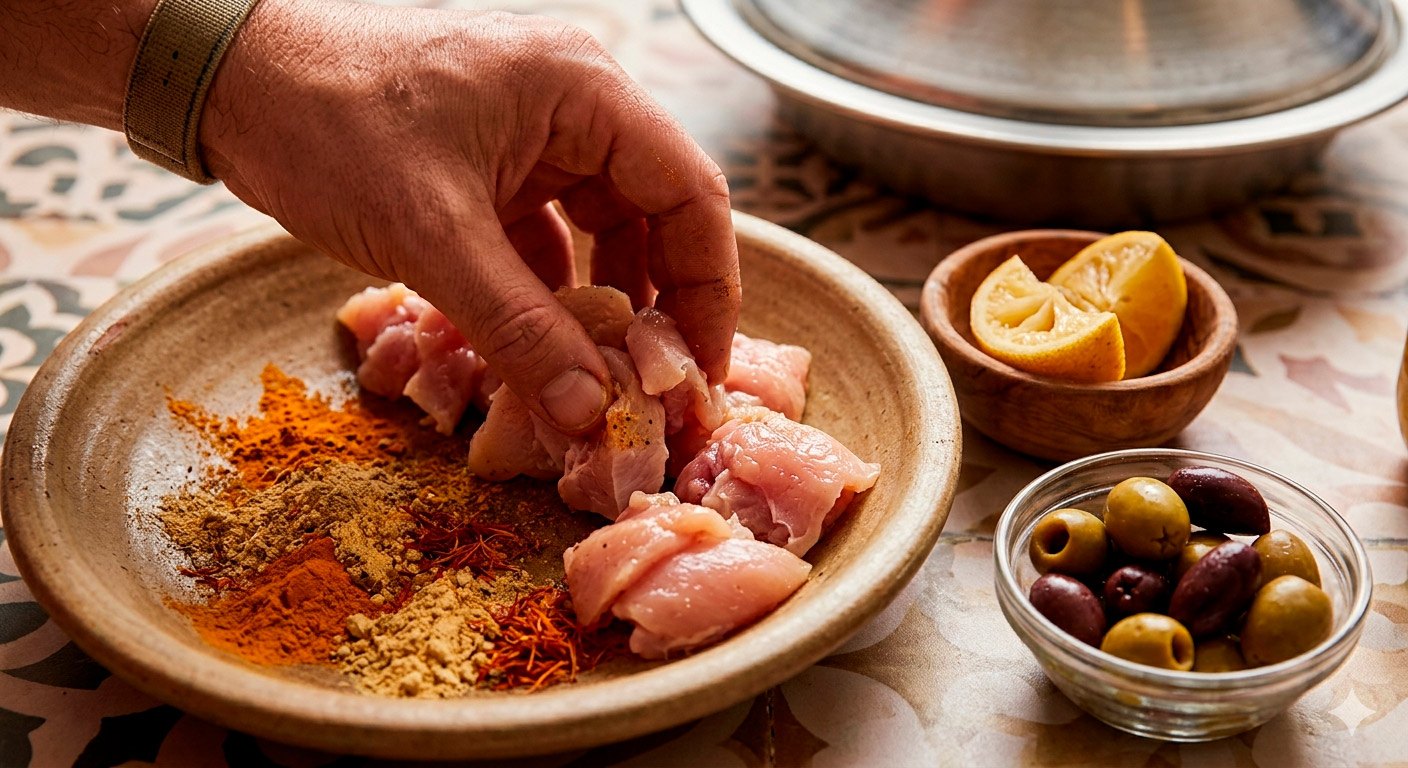
What makes this chicken tajine unique is the combination of seemingly simple ingredients that interact masterfully: turmeric turns the stew golden, saffron gives it an elegant floral note that has no substitute, and the preserved lemon transforms the entire flavor profile with a salty and citrusy note that no fresh lemon can replicate.
Making this dish at home has clear advantages over ordering it in a restaurant. First, you can control the amount of salt — a crucial factor considering that olives and preserved lemon already contribute a considerable salty load. Second, the aroma that fills the kitchen during cooking is, in itself, an experience worth the wait.
This Moroccan chicken stew also stands out for its nutritional profile: each serving provides 38 grams of high-quality protein from free-range chicken, accompanied by healthy fats from extra virgin olive oil and antioxidants from spices like turmeric, ginger, and saffron. It is a complete, satiating dish with no processed ingredients.
Furthermore, Djaj Mqualli is a dish that improves with time. If you make it a day ahead, the flavors integrate even more deeply. This makes it the perfect option for entertaining guests without having to be tied to the kitchen at the last moment: cook on Sunday, serve on Monday, and surprise everyone.
The key to success is respecting the times and never raising the heat excessively. A barely perceptible simmer is what transforms everyday ingredients into an extraordinary result. Below we show you exactly how to achieve it.
Ingredients for chicken tajine with olives and preserved lemon
Quantities for 4 servings.
Main Ingredients
- 1.2 kg (2.6 lbs) chicken, cut into pieces (preferably thighs and drumsticks)
- 3 large red onions, very finely chopped
- 150 g (5.3 oz) green Manzanilla olives (or purple Kalamata)
- 2 Moroccan preserved lemons (skin and pulp used separately)
- 250 ml (1 cup) chicken broth (light stock or natural consomme)
- 60 ml (1/4 cup) extra virgin olive oil
Seasonings and Spices
- 1 teaspoon ground ginger
- 1 teaspoon ground turmeric
- 1 generous pinch of saffron threads (hydrated in 2 tbsp warm water)
- 1 Ceylon cinnamon stick
- A bunch of fresh cilantro, chopped
- Coarse salt and freshly ground black pepper to taste
How to prepare chicken tajine with olives and preserved lemon step by step
- Prepare and sear the chicken: Generously season all the chicken pieces with salt and pepper. In the base of a tajine or a cast-iron pot, heat the olive oil over medium-high heat. Brown the chicken on all sides until golden and crispy, about 3-4 minutes per side. This crust seals in the internal juices and adds flavor and color to the stew. Remove the pieces and reserve them on a plate.
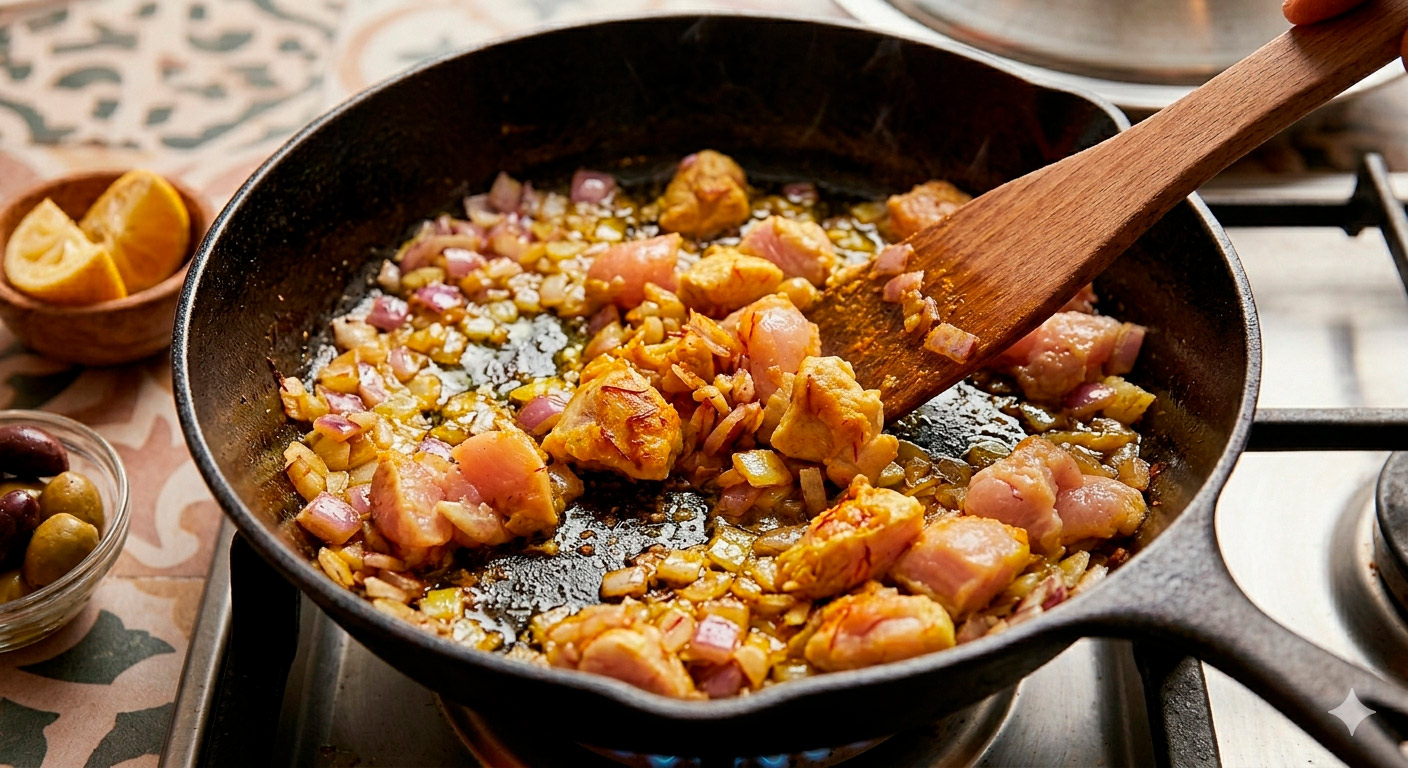
- Cook the aromatic onion and spice base: In the same oil where you seared the chicken (with all its juices), add the very finely chopped onion with a pinch of salt. Cook over medium heat for 10-12 minutes, stirring occasionally, until the onion is almost translucent and begins to caramelize gently. Add the ground ginger, turmeric, and the pre-hydrated saffron threads. Stir constantly for 2 minutes to awaken the essential oils of the spices without burning them.
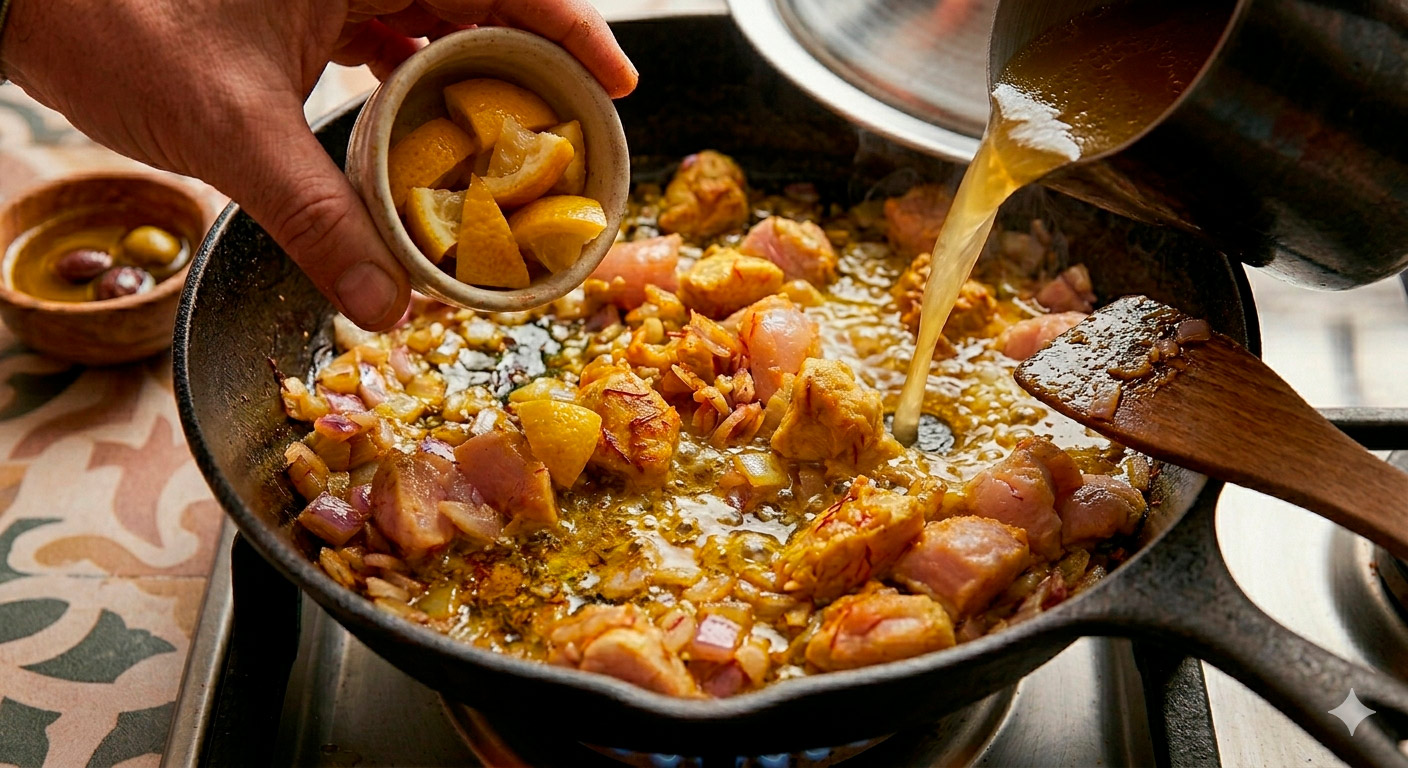
- Reunite the stew and add broth and lemon: Return the chicken pieces to the pot over the spiced onion base. Place the cinnamon stick among the pieces. Pour in the chicken broth until it covers approximately half the height of the pieces. Finely chop the pulp of the preserved lemon and add it to the pot (reserve the skin for later). Cover the pot tightly and reduce the heat to the lowest possible setting.
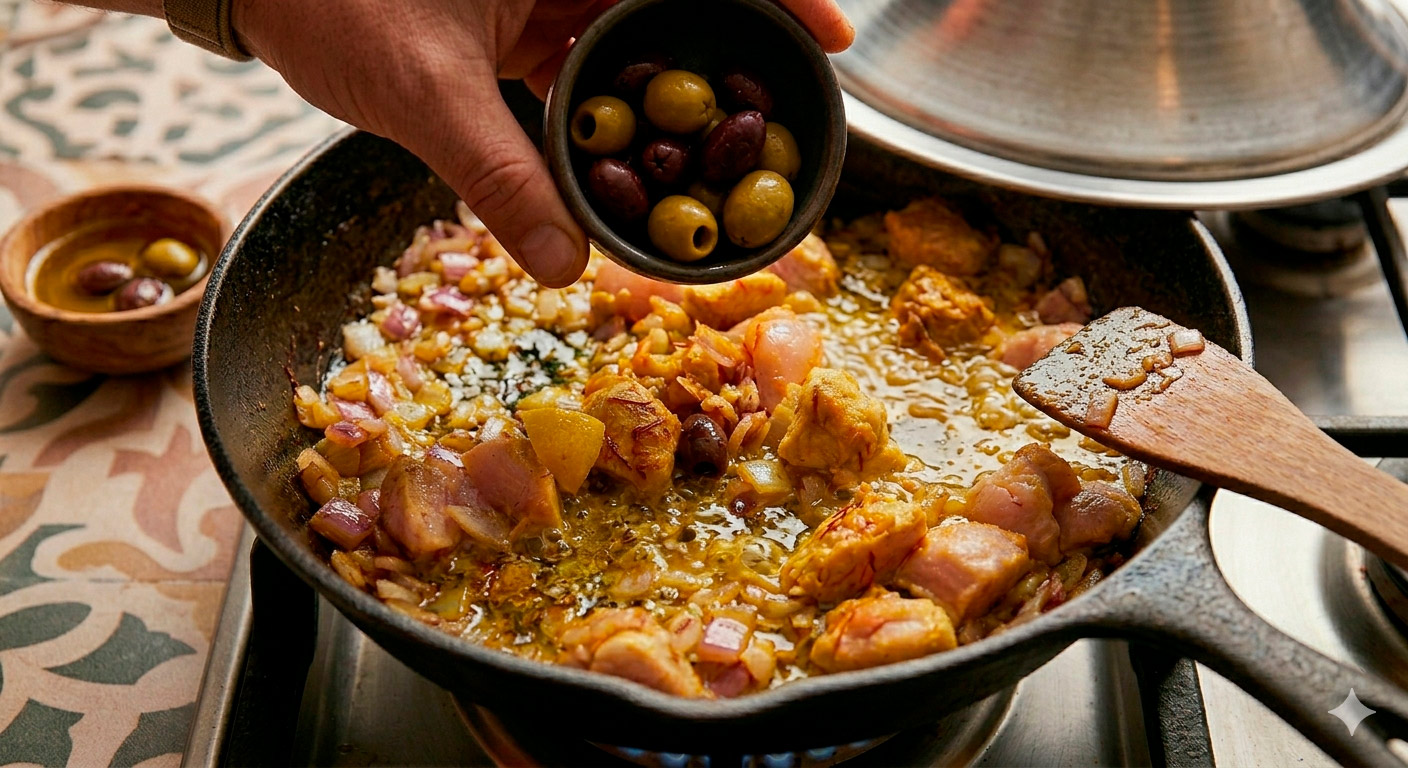
- Slow cooking and adding olives: Keep the chicken tajine at a very gentle heat for 45 minutes. The ideal cooking is a barely perceptible simmer: you should see just a few bubbles at the edges, not aggressive boiling. After that time, add the green olives (blanch them for 2 minutes in boiling water if you find them very salty) and the finely cut strips of preserved lemon peel. If the sauce is very liquid, uncover the pot and slightly raise the heat for 5-10 minutes to reduce until you obtain a bound and shiny sauce.
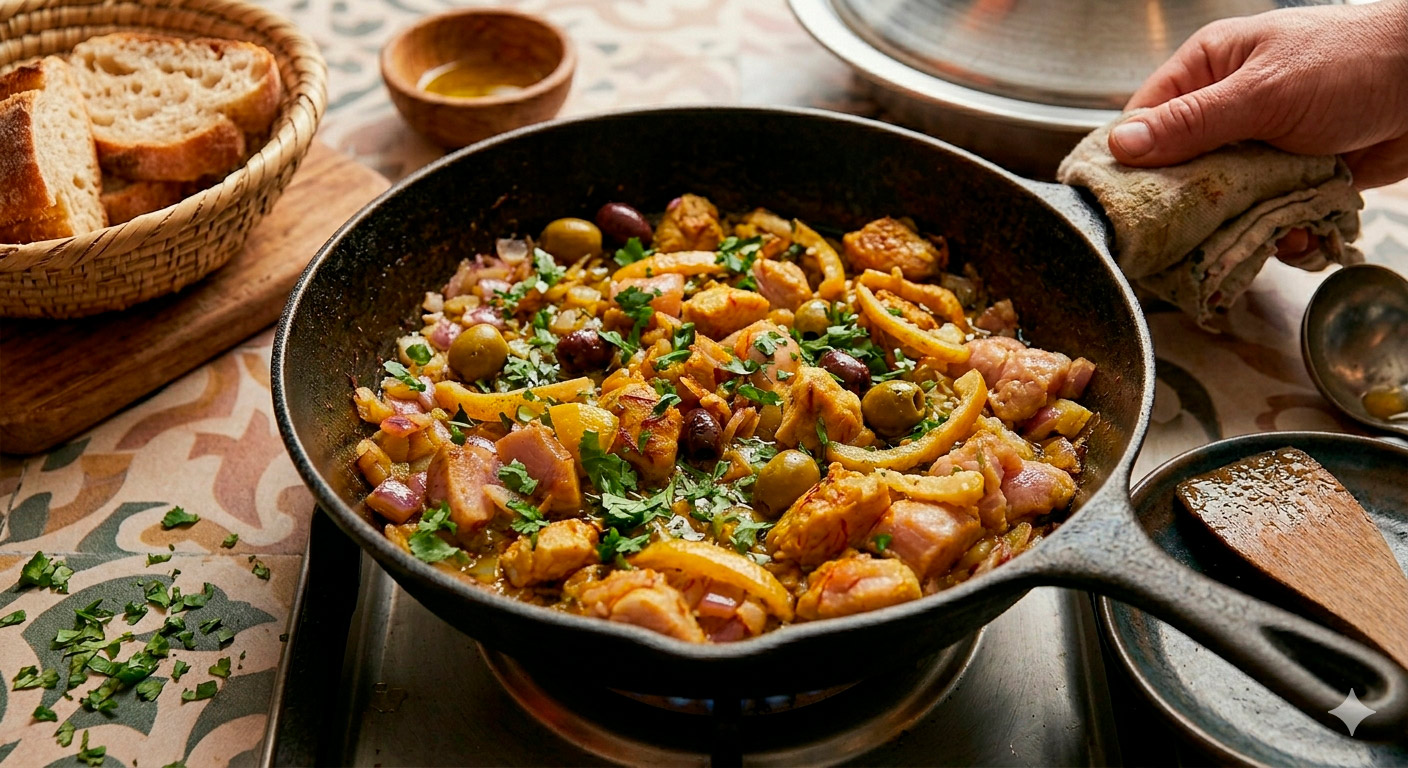
- Rest, plate, and serve: Turn off the heat and generously sprinkle fresh chopped cilantro over the stew. Cover again and let it rest for 10 minutes before bringing it to the table: resting allows the meat fibers to relax and the final nuances of the cilantro to integrate. Serve directly from the tajine or pot, very hot, accompanied by couscous or good crusty bread.
Nutritional information for chicken tajine with olives and preserved lemon
Approximate values per serving (4 servings total).
| Nutrient | Per serving | % Daily Value* |
|---|---|---|
| Calories | 480 kcal | — |
| Protein | 38 g | 76% |
| Carbohydrates | 12 g | 4% |
| Total Fat | 22 g | 28% |
| Dietary Fiber | 4 g | 14% |
| Sodium | 850 mg | 37% |
*Percent based on a 2,000 kcal daily diet.
Expert Analysis: The master touch for an irresistible chicken tajine
From a technical culinary perspective, the success of chicken tajine with olives and preserved lemon lies in the natural emulsion generated during slow cooking. The collagen present in the chicken thighs and drumsticks gradually dissolves, providing body and viscosity to the sauce. The sugars from the caramelized onion contribute sweetness and depth, while the pectin from the preserved lemons acts as a natural binding agent. The result is a sauce that needs no artificial thickeners: it builds itself.
It is essential to choose the right chicken pieces. The thigh and drumstick perfectly withstand a 60-minute cooking without drying out, thanks to their higher intramuscular fat content. The breast, on the other hand, would become fibrous and dry. If you only have breast, reduce the cooking time to 30 minutes and add more broth.
Saffron deserves a special mention. Do not add it dry directly: hydrating it in warm water for at least 10 minutes before use releases its pigments and aromas much more effectively. Good Spanish or Iranian saffron can make the difference between a notable tajine and a memorable one.
Regarding pairings, this spiced stew pairs brilliantly with full-bodied, aromatic white wines: a Viognier from the Rhône Valley, an Argentine Torrontes, or even an Alsatian Gewürztraminer. If you prefer non-alcoholic drinks, a natural lemonade with mint or a Moroccan mint tea are the most authentic accompaniments.
Finally, a note on salt: never add too much at the beginning, as both the olives and the preserved lemon concentrate salt during cooking. Always taste before serving and correct at that final moment. — El Godínez Hambriento, cocinasabroso.com
Tips for preparing a perfectly irresistible chicken tajine
The biggest secret to a memorable chicken tajine with olives and preserved lemon lies in the cooking temperature. Many cooks make the mistake of turning up the heat to speed up the process, resulting in a dry stew with dispersed flavors. Cooking at truly low heat — almost without the liquid bubbling — is what allows the chicken proteins to cook gradually and the starches and sugars of the onion to caramelize slowly, forming that golden, complex base that is the soul of the sauce.
Another critical point is hydrating the saffron. Saffron threads contain safranal and crocin, the compounds responsible for its aroma and color. These are optimally released in warm water (not boiling) for at least 10 minutes of rest before adding them to the stew. If you use the threads directly in hot oil, you will get a fraction of their aromatic potential.
For the olives, taste one: if they are extremely salty, blanch them in boiling water for 2 minutes and drain them before adding them to the tajine. This will balance the final saltiness of the dish without sacrificing their oily and fruity character.
If you don’t have an earthenware tajine, a cast-iron cocotte with a lid is the best substitute. Cast iron retains heat exceptionally well and distributes temperature evenly, closely replicating the effect of baked clay. Avoid using thin aluminum pots, which create hot spots and can burn the onion base.
A common mistake is not letting the stew rest before serving. The 10-minute rest with the lid on is not a whim: the chicken muscle fibers, contracted during cooking, need that time to relax and redistribute their internal juices. If you skip the rest, the chicken will lose those juices on the plate, leaving the meat drier than it actually is.
Regarding storage, transfer leftovers to an airtight glass container and refrigerate. When reheating, do so over very low heat, adding a splash of water or broth to restore the sauce’s fluidity. Chicken tajine with olives gains flavor the next day, once the aromas have fully integrated.
Variations and substitutions for chicken tajine with olives and preserved lemon
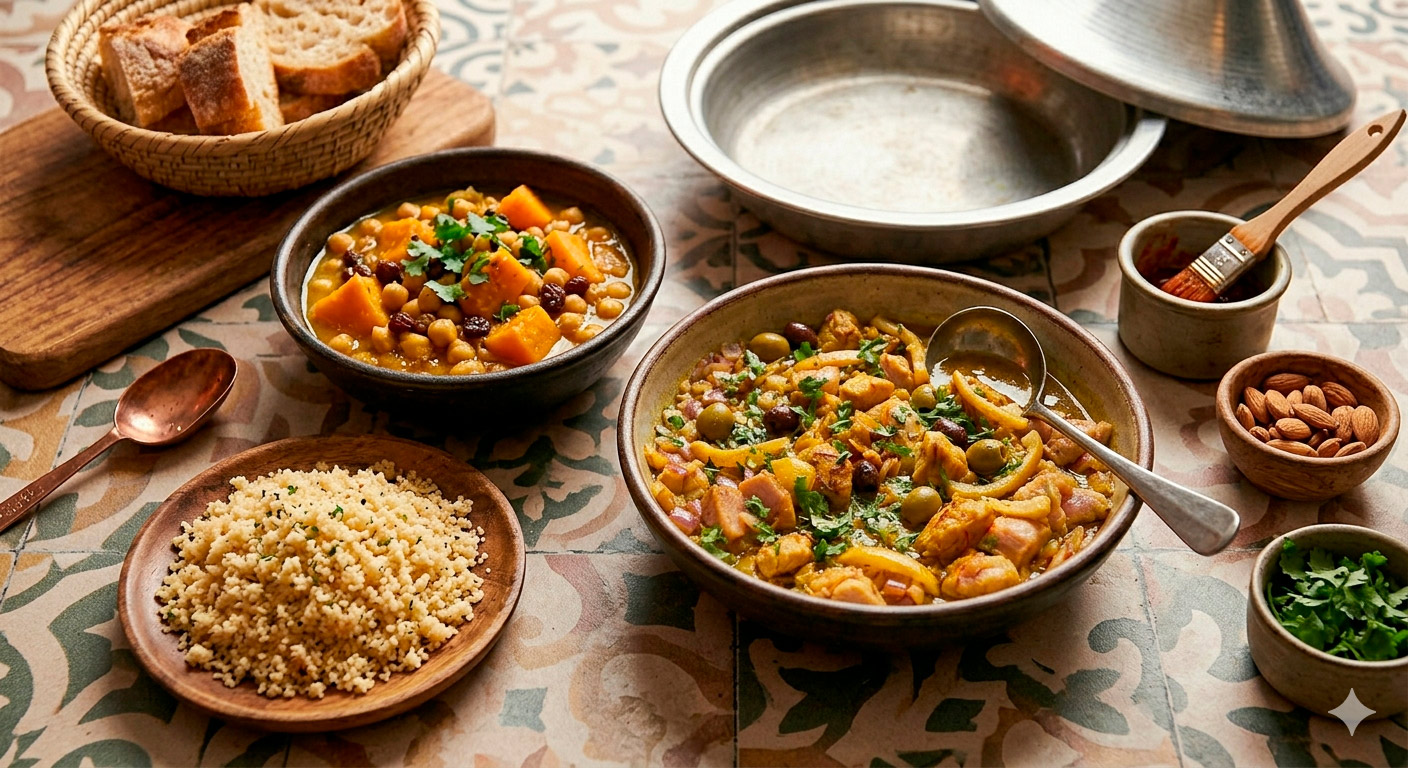
The versatility of chicken tajine makes it a perfect base to adapt according to preferences or ingredient availability. The version with dried fruits is perhaps the most popular in Morocco: add 50 g (1.8 oz) of toasted sliced almonds and 30 g (1 oz) of golden raisins just before the final rest. The almonds add a crunchy contrast and the raisins balance the acidity of the preserved lemon with a very pleasant sweet note.
For a completely vegetarian version, substitute the chicken with 400 g (14 oz) of cooked chickpeas and 300 g (10.5 oz) of cubed butternut squash. Reduce the cooking time to 30 minutes and use vegetable broth instead of chicken broth. The result is equally tasty and becomes an ideal option for vegetarian or vegan diners.
If you’re looking for a sweeter, more spiced profile, add 1 teaspoon of ras el hanout (the Moroccan spice blend that can contain up to 30 ingredients) and substitute part of the broth with natural orange juice. This variation is especially popular in northern Morocco and has a more festive character.
A variant for those who don’t tolerate olives well is to use salted, rinsed capers as a partial substitute. They provide a similar saltiness and acidity, although the flavor profile is more Mediterranean than Maghrebi.
Frequently asked questions about chicken tajine with olives and preserved lemon
Can chicken tajine with olives and preserved lemon be frozen?
It is not recommended to freeze this stew, as the texture of both the olives and the preserved lemon tends to deteriorate during the freezing and thawing process. The sauce can also lose its velvety consistency. If you need to prepare it more than 3 days in advance, cook the spiced chicken base without the olives and lemon, freeze that base, and add those fresh ingredients when reheating for the best possible result.
How long does chicken tajine last in the refrigerator?
Chicken tajine with olives and preserved lemon keeps perfectly for up to 3 days in the refrigerator in an airtight container, at a temperature between 2°C and 4°C (35°F – 39°F). It is one of the few stews that improves the next day, when the flavors finish integrating. Signs of spoilage: unusual acidic smell, grayish color change in the meat, or bubbles appearing when shaking the cold container.
How many calories does chicken tajine with olives and preserved lemon have?
Each serving provides approximately 480 kcal, distributed in 38 g of protein, 22 g of fat (mostly healthy from olive oil and olives) and 12 g of carbohydrates. It is a moderately calorie-dense dish that is very satiating thanks to its high protein content, making it an excellent option for those seeking quality nutrition without sacrificing flavor.
Can chicken tajine be made without preserved lemon?
Preserved lemon is practically irreplaceable in this recipe if you want the authentic flavor. However, as an emergency alternative you can combine the zest of 2 fresh lemons with a teaspoon of salt and let it macerate for 30 minutes before use. You can also add a teaspoon of apple cider vinegar to approximate that pickled character. The result will not be identical, but it will be close to the original.
How is chicken tajine with olives best served?
The most authentic and recommended accompaniment is couscous, which perfectly absorbs the spiced sauce. It also pairs very well with crusty bread for dipping directly into the sauce. For presentation, bring the covered pot to the table and uncover it in front of the diners so that the aroma is part of the serving ritual. A drizzle of raw olive oil and fresh cilantro leaves finish the plating. In terms of pairing, a full-bodied Viognier or Chardonnay are the best wine options.
Reference sources and resources
For more information on food safety and nutrition, consult WHO guidelines on healthy eating.
Regarding the nutritional value of ingredients, you can consult The Nutrition Source from Harvard T.H. Chan School of Public Health.
Information on food composition available from the database of the Mexican National Institute of Public Health.
Learn more about Moroccan culinary cultural heritage on the UNESCO intangible heritage portal.
Consult our liability policy and legal notice before making decisions about your diet based on this content.
You might also be interested in our recipe for other poultry and meat recipes to continue exploring global flavors.