Baked Chicken Thighs with Rosemary and Lemon: Perfect Recipe in 4 Steps
What are baked chicken thighs with rosemary and lemon and why prepare them at home?
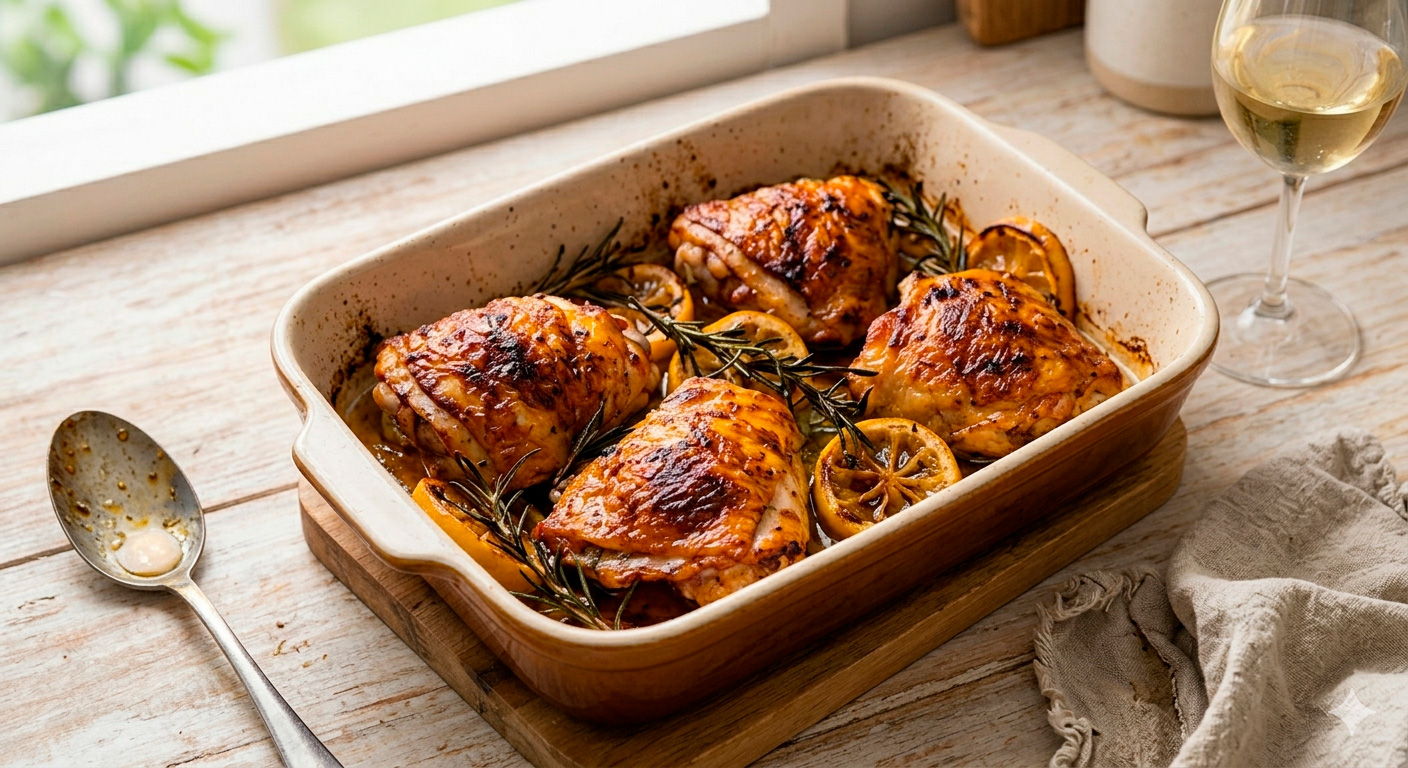
Baked chicken thighs with rosemary and lemon represent one of the most elegant and accessible pillars of Mediterranean cuisine. This classic combination—born in the rustic kitchens of Italy, Spain, and Greece—starts from a simple but powerful principle: fresh, quality ingredients, correct technique, and respect for the product. The result is a dish where the chicken skin becomes crispy and golden like ceramic, while the thigh meat remains extraordinarily juicy and fragrant.
The secret of this recipe lies in the choice of cut. Chicken thighs are the most flavorful part of the bird, not the breast. Their higher intramuscular fat content means they withstand longer cooking times without drying out, absorb herb aromas more deeply, and produce cooking juices with a concentrated flavor that could become a sauce on its own. Working with skin-on, bone-in thighs—not boneless or skinless—is the technical decision that has the most impact on the final result.
Fresh rosemary (Salvia rosmarinus) adds earthy, slightly camphorous, and resinous notes that penetrate the meat during baking. Its volatile essential oils—which evaporate almost completely in dried rosemary—are responsible for that aroma that fills the entire kitchen and anticipates the flavor. Lemon plays a dual role: its citrus acids slightly soften the surface proteins before going into the oven, and the essential oils from its peel caramelize during cooking, providing an unmistakable floral and citrus perfume.
Preparing baked chicken thighs with rosemary and lemon at home has concrete advantages over any restaurant or deli version. You control the quality of the olive oil, the freshness of the rosemary, and the amount of salt. You can adjust the browning level to your preference, add side dishes that cook in the same chicken juices, and, above all, enjoy the process: the aroma that fills the home during the 45 minutes of baking is, in itself, a comforting experience that no delivery dish can replicate.
This recipe is designed for 4 to 6 servings, with a total time of 60 minutes including preparation. It is perfect for a Sunday family lunch where the oven does most of the work, for an elegant weekday dinner, or for cold autumn days when the body craves something hot, aromatic, and substantial. Following the 4 steps described below—and the chef’s tips we share later—you will achieve a result that will surprise any diner.
A final note on the versatility of this recipe: the leftover bones and trimmings can be used to prepare a homemade chicken broth rich in collagen, minerals, and cysteine, an amino acid with anti-inflammatory properties especially valued during flu processes. Mediterranean cuisine wastes nothing, and this dish exemplifies it perfectly.
Ingredients for baked chicken thighs with rosemary and lemon
Quantities for 4 to 6 servings (1 thigh per person).
Main Ingredients
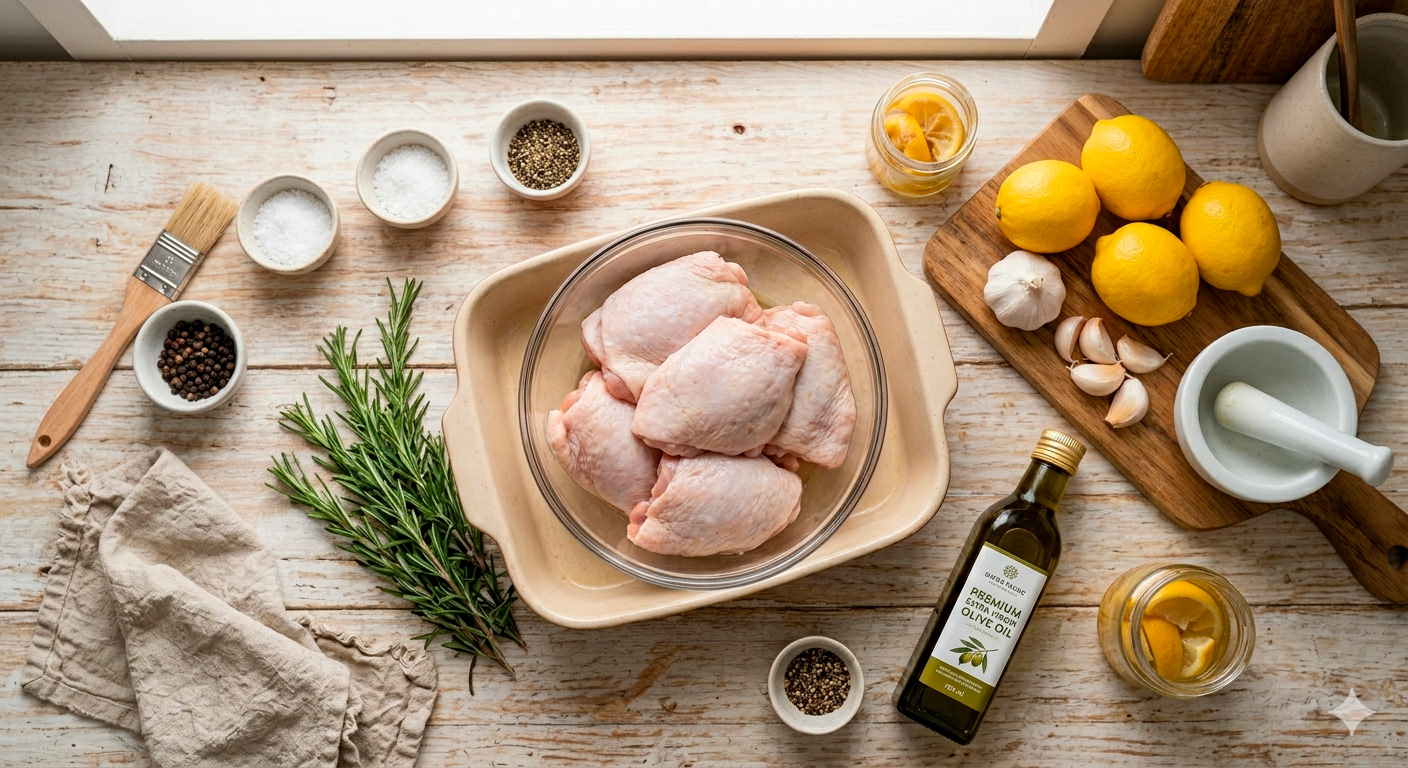
- 4 to 6 bone-in, skin-on chicken thighs
- 2 large yellow lemons (Eureka or Messina type)
- 4 sprigs of fresh rosemary
- 60 ml extra virgin olive oil
- 6 cloves fresh garlic
- Sea salt to taste
- 1 teaspoon freshly ground black pepper
Seasonings and Optional
- 100 ml dry white wine (for deglazing)
- 500 g potatoes in medium pieces (side dish)
- 20 g butter (for glossy finish)
- A pinch of baking soda (secret for crispy skin)
Regional Ingredient Names
| Base Ingredient | Name Variants / Regionalisms |
|---|---|
| Chicken thighs | Encuentros (Colombia/Venezuela), Cuartos traseros, Perniles (Southern Cone) |
| Yellow lemon | Lima (Central America), Real lemon, Eureka lemon |
| Rosemary | Romero (border areas), Alecrim (Portuguese influence) |
| Olive oil | Aceite de olivo, Óleo de oliva |
| Sea salt | Coarse salt, Grill salt, Grain salt |
How to prepare baked chicken thighs with rosemary and lemon step by step
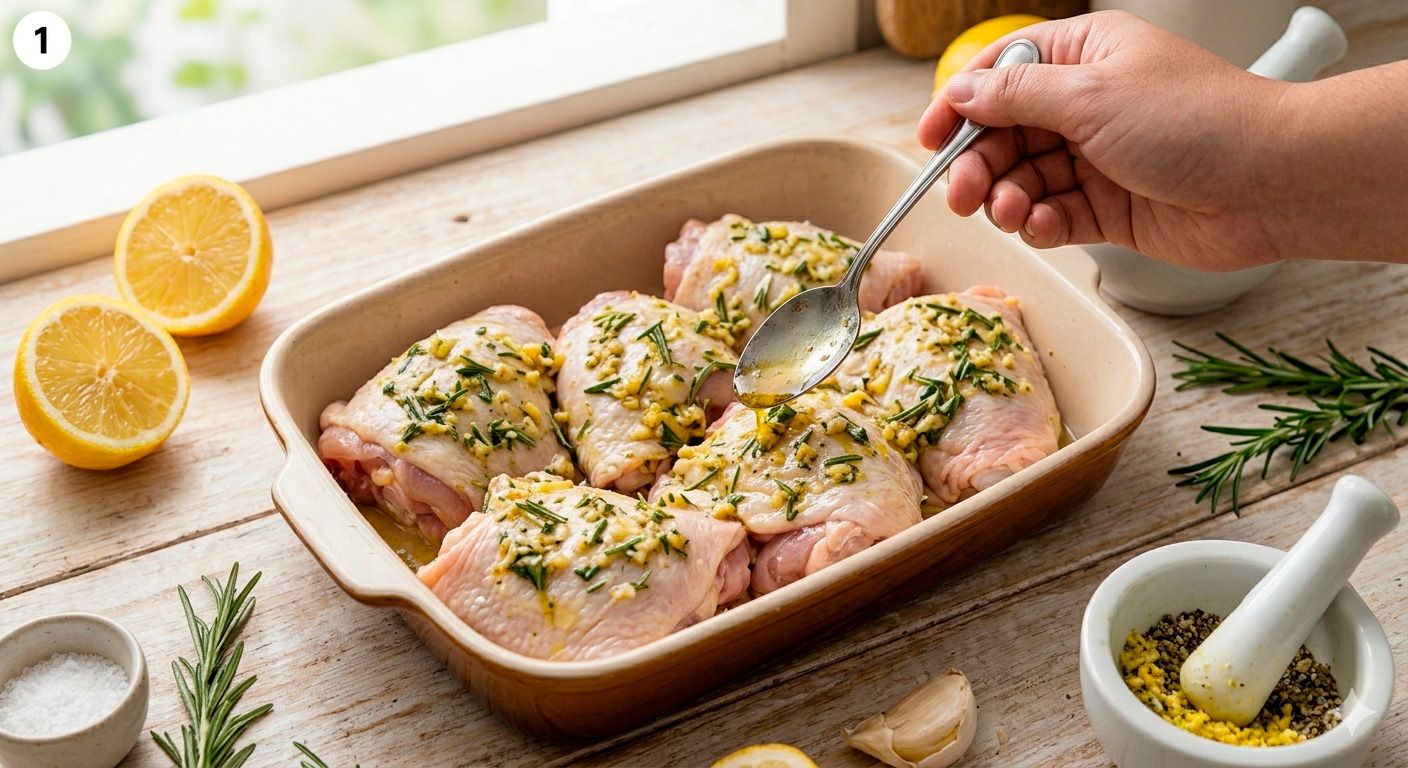
- Cleaning and aromatization: Preheat the oven to 200 °C (390 °F) with top and bottom heat. Dry the thighs very well with paper towels on all sides, including under the skin; this is secret number one for getting crispy skin, as surface moisture produces steam that softens it. In a mortar, crush the garlic cloves together with the sea salt, black pepper, and the leaves stripped from two rosemary sprigs. Add the extra virgin olive oil and the juice of half a lemon. Mix until you get a homogeneous aromatic paste.
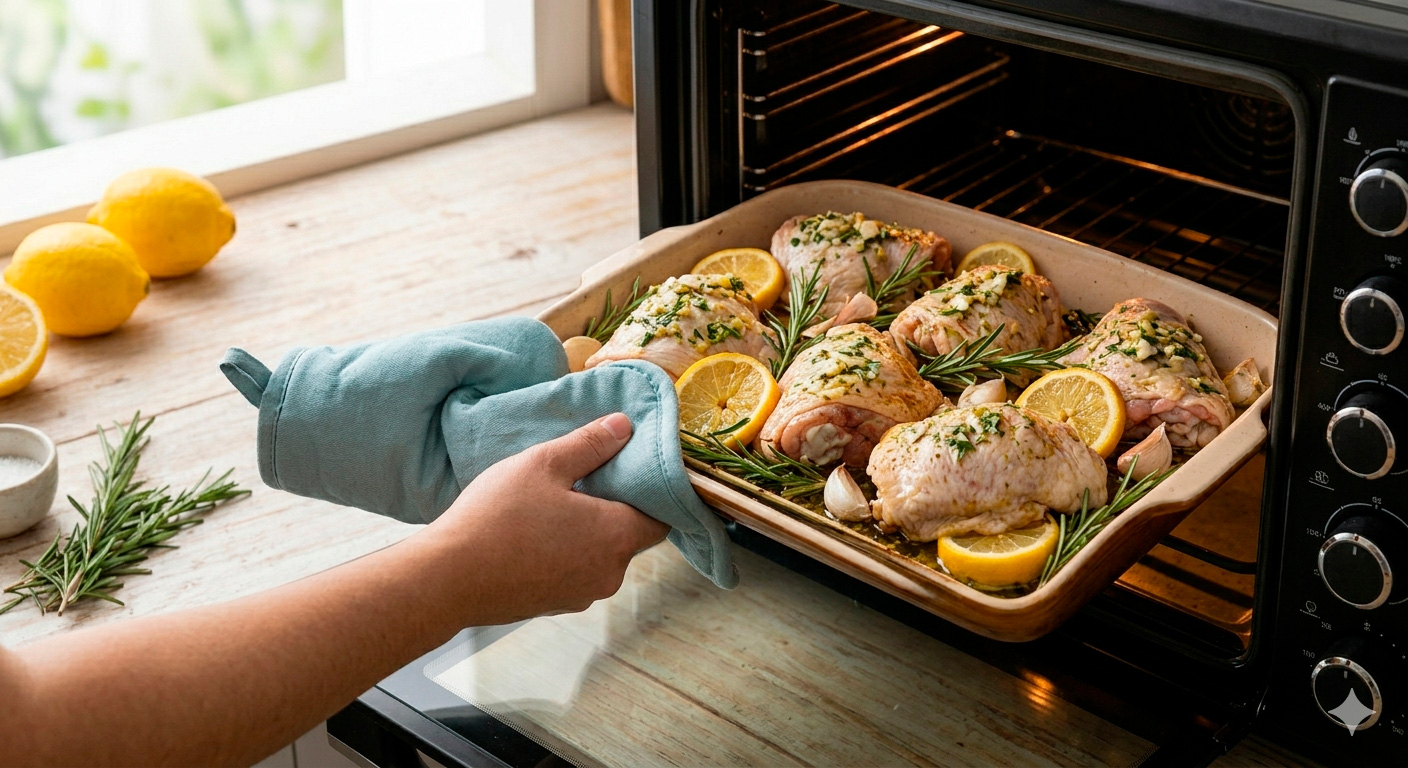
- Express marination: Rub each thigh generously with the aromatic paste, making sure to insert some directly under the skin with your fingers without completely detaching it. This step ensures the flavor penetrates to the meat and not just stays on the surface. Place the thighs on a wide baking tray without crowding them (space between pieces is key: if they are too close, the chicken steams instead of roasting). Cut the remaining lemon into slices and distribute them among the pieces along with the two whole rosemary sprigs. If you are adding potatoes, cut them into medium pieces, season them lightly with salt, oil, and a touch of rosemary, and place them around the chicken at this point.
- Technical cooking: Place the tray in the oven on the middle rack. Bake for 35 to 45 minutes. After 20 minutes, open the oven and baste each piece with the juices that have accumulated at the bottom of the tray using a spoon or a kitchen brush. This “basting” is what ensures evenly golden and shiny skin. If using white wine, pour it into the bottom of the tray (not over the chicken) at this same moment so the alcohol evaporates during the remaining minutes and leaves only its aromatic essence in the juices.
- Browning and resting: Check the skin browning at 40 minutes. If you want a more intense “glazed” finish, activate the grill or broiler for the last 4-5 minutes, watching constantly to avoid burning. The safe internal temperature for chicken is 74 °C (165 °F); if you have a kitchen thermometer, use it. If not, prick the thickest part of the thigh: the juices should come out clear, never pink. Remove the tray from the oven and let the chicken rest for 8 minutes covered without pressing. This resting allows the muscle fibers to relax and the internal juices to redistribute, preventing them from being lost at the first cut.
Nutritional information for baked chicken thighs with rosemary and lemon
Approximate values per serving (1 medium thigh, without side dish).
| Nutrient | Per Serving | % Daily Value* |
|---|---|---|
| Calories | 280 kcal | 14% |
| Protein | 24 g | 48% |
| Total Fat | 18 g | 28% |
| Saturated Fat | 4.5 g | 22% |
| Carbohydrates | 2 g | 1% |
| Cholesterol | 95 mg | 32% |
| Vitamin C | 12 mg | 15% |
| Sodium | 450 mg | 19% |
*Percentage based on a 2,000 kcal daily diet. Values are estimates and may vary depending on thigh size and amount of skin consumed.
Nutritional benefits of this recipe
Baked chicken thighs are a source of complete protein with all essential amino acids. Their high protein content (24 g per serving) supports muscle recovery, tissue synthesis, and lasting satiety. Unlike breast, thighs contain more iron, zinc, and B vitamins like niacin and B12, fundamental nutrients for the nervous system and energy metabolism.
Extra virgin olive oil provides monounsaturated fatty acids (oleic) associated with reducing LDL cholesterol and cardiovascular protection. Garlic, crushed in the aromatic paste, releases allicin, an organosulfur compound with antibacterial and immunomodulatory properties demonstrated in clinical studies. And lemon not only adds vitamin C but also flavonoids and limonenes that act as antioxidants in the body.
The bones and cartilage of the thigh are especially rich in type II collagen. If you use the leftovers to prepare a homemade broth over low heat for 3-4 hours with celery, onion, and carrot, you get a comforting drink rich in glycine, proline, and minerals like calcium, magnesium, and phosphorus, beneficial for joint, intestinal, and skin health.
Tips for making perfect baked chicken thighs with rosemary and lemon
The first and most decisive tip for achieving the crispy skin that characterizes this recipe is moisture. Any drop of water on the skin’s surface turns into steam inside the oven, and that steam is the number one enemy of browning. Dry the thighs thoroughly with paper towels: on top, underneath, between the skin folds and the sides. If you have time, leave them uncovered in the refrigerator for 2-4 hours before cooking: the dry cold of the fridge dehydrates the surface and enhances the crispy effect. This method, popular in professional cooking, is called “air drying” and makes a visible difference.
The second tip has to do with the temperature of the meat before going into the oven. A cold thigh from the refrigerator, when placed in a 200 °C oven, takes longer to reach the correct internal temperature, which means the exterior—especially the skin—is exposed to heat for longer and can burn before the inside is cooked. Taking the chicken out of the refrigerator 20 minutes before baking allows the temperature to partially balance, achieving more even cooking from the outside in.
The third tip is space on the tray. The chicken pieces should have at least 2-3 cm of space between them. When they are too close, the steam that each piece releases during cooking cannot escape and gets trapped between them, cooking the chicken by moist convection instead of dry heat. The result is soft skin, without the browning we seek. If you don’t have a large enough tray, use two pans or cook in two batches.
The fourth tip is the most unexpected secret of this recipe: a pinch of baking soda mixed with the sea salt before rubbing the chicken. Baking soda slightly raises the pH of the skin’s surface, which accelerates Maillard reactions (responsible for browning and toasted flavor) at lower temperatures and in less time. The effect is darker, crispier skin with a more complex flavor without needing more time in the oven or higher temperature. Use only a small pinch: in excess it can give an unpleasant metallic taste.
The fifth tip involves resting after cooking. Many people take the chicken out of the oven and serve it immediately, but this mistake has a direct cost in juiciness. During cooking, heat contracts the muscle fibers and pushes the internal juices toward the center of the piece. If cut at that moment, those juices escape onto the plate and the meat becomes dry. The 8 minutes of resting allow the fibers to gradually relax and the juices to redistribute toward the periphery, resulting in evenly juicy meat in every bite.
A common mistake is confusing dried rosemary with fresh. Dried rosemary can be used as an emergency substitute, but it has two disadvantages: the volatile essential oils that give the deep aroma have evaporated during drying, and the woody stems that remain are hard and difficult to chew if not completely crushed in the mortar. If you use dried rosemary, reduce the amount by half and always incorporate it into the mortar with the garlic and salt so it is perfectly integrated into the paste, never whole.
Finally, take advantage of the tray juices. After removing the chicken, place the tray on the stovetop over medium heat and add a splash of white wine or chicken broth. Scrape the bottom with a wooden spoon to incorporate all the caramelized residue: in 2-3 minutes you will have a concentrated, shiny sauce that greatly enhances the dish without any additional effort.
Variations and substitutions for baked chicken thighs with rosemary and lemon
The structure of this recipe is so solid that it admits multiple adaptations without losing its character. The base trio—fatty bird + aromatic herb + citrus—can be modulated in very different ways depending on available ingredients, personal preferences, or the occasion.
Spicy version
Incorporate a teaspoon of dried chili flakes, peperoncino, or árbol chili into the mortar paste. The spiciness contrasts perfectly with the lemon and olive oil without overshadowing the rosemary. You can also add smoked paprika for a version with deeper and more complex notes.
Provencal style
Substitute the rosemary for a mixture of Provencal herbs: thyme, marjoram, lavender, and oregano in equal proportions. This profile is more floral and delicate than rosemary alone, ideal to accompany with roasted vegetables like cherry tomatoes, eggplants, and zucchinis.
With mixed citrus
Use a combination of orange, lemon, and grapefruit instead of just lemon for a more complex, sweet, and fruity flavor profile. Orange juice caramelizes more easily in the oven and gives the skin a particularly attractive amber color.
Version with seasonal vegetables
Add quartered potatoes, carrots, purple onions cut into wedges, red bell peppers, and mushrooms around the thighs on the tray. Everything will cook in the chicken juices, becoming a side dish with extraordinary flavor that requires no additional preparation.
Using leftovers
The leftover shredded chicken is extraordinarily versatile: use it to fill tacos, enrich salads with citrus vinaigrette, prepare sandwiches with pesto, or as protein in a grain bowl with quinoa and avocado. The bones, boiled over low heat for 3-4 hours with celery, onion, and carrot, produce a deep and nutritious homemade broth.
Frequently asked questions about baked chicken thighs with rosemary and lemon
Can I use baked chicken thighs with rosemary and lemon without skin?
Yes, but you will lose much of the juiciness and flavor that the skin fat provides during baking. If you prepare them without skin, cover the tray with aluminum foil during the first half of cooking to prevent the meat from drying out, and remove it for the last 10 minutes to lightly brown. You can also slightly increase the amount of oil in the aromatic paste to compensate.
How long do baked chicken thighs with rosemary and lemon last in the refrigerator?
Stored in an airtight container at 4 °C or less, baked chicken thighs with rosemary and lemon keep perfectly for 3 to 4 days. To reheat them while maintaining the crispy skin, do it in the oven at 180 °C for 10-12 minutes instead of the microwave, which softens the skin with steam. You can also freeze them for up to 3 months; to reheat from frozen, use the oven at 160 °C for 25-30 minutes.
How many calories are in baked chicken thighs with rosemary and lemon?
A baked chicken thigh with rosemary and lemon provides approximately 280 kcal per serving, with 24 g of complete protein and 18 g of total fat, most of which comes from the olive oil and chicken skin. It is a very complete protein option and moderate in carbohydrates (only 2 g per serving), compatible with low-carb and ketogenic diets.
Does dried rosemary work the same as fresh in this recipe?
It’s not the same, although it can be used as a substitute. Fresh rosemary contains volatile essential oils that are lost during drying, so the aroma of the final dish will be significantly less intense. If you only have dried rosemary, use half the indicated amount, crush it very well in the mortar with the garlic and salt, and add a teaspoon of lemon zest to the paste to compensate for some of the lost aromatic oils.
How are baked chicken thighs with rosemary and lemon best served?
They are perfect on a bed of potatoes roasted in their own cooking juices, accompanied by a fresh green salad with lemon vinaigrette or steamed vegetables. For an authentic Mediterranean presentation, serve with rustic bread to absorb the caramelized juices from the tray and a dry white wine like Albariño, Pinot Grigio, or an Italian Vermentino.
Reference sources and resources
For more information on food safety and nutrition, consult the WHO’s healthy eating guides.
For information on the nutritional value of ingredients, you can consult The Nutrition Source from Harvard T.H. Chan School of Public Health.
Food composition information available in the database of Mexico’s National Institute of Public Health.
Check out our disclaimer and legal notice before making decisions about your diet based on this content.