5 Easy Steps to Achieve the Perfect Fresh Spinach and Ricotta Soup
Origin and History of Fresh Spinach and Ricotta Soup
To understand the soul of fresh spinach and ricotta soup, we must travel ideally to the central and northern regions of Italy, specifically Tuscany and Emilia-Romagna. Historically, these areas have excelled in a culinary philosophy called cucina povera (humble or peasant cooking), which demonstrates that scarcity sharpens culinary ingenuity in an extraordinary way.
Ricotta, whose name comes from the Latin recocta (cooked twice), is not technically a cheese but a dairy product obtained from the whey leftover from making other firmer cheeses, such as pecorino or Parmesan. Italian shepherds and peasants could not afford to waste this protein-rich whey, so they reheated it to recover the floating curds. This ingredient, soft and slightly sweet, became the daily sustenance for thousands of families.
On the other hand, spinach was introduced to Europe by the Arabs through the Iberian Peninsula around the 11th century and found a perfect home in the Mediterranean soil. The combination of green leaves with ricotta initially became popular as the quintessential filling for fresh pasta like ravioli and cannelloni, or in the famous Ligurian torta pasqualina.
The natural evolution of these two culinary allies made the leap from dry fillings to spoon preparations. During the transition months between winter and spring, when spinach is at its most tender and sweet, and herds offer the highest quality milk, rural kitchens would fuse both elements into clear vegetable broths.
Over time, the use of mortars first and then modern blenders transformed this rustic stew into a smooth, elegant, velvety soup that today is served both in family taverns and in high-end international restaurants. Fresh spinach and ricotta soup is, ultimately, the most honest demonstration that humble ingredients, treated with technique and respect, can generate memorable culinary emotions.
What is Fresh Spinach and Ricotta Soup and Why Should You Make It at Home?
Fresh spinach and ricotta soup is one of the most elegant and comforting preparations that can come out of a home kitchen in just 35 minutes of work. It represents the very essence of resourceful cooking and transforming humble elements into a dish worthy of any noble table. The power of a green soup is often underestimated, mistakenly associating it with strict diets or bland flavors; however, when you understand chlorophyll behavior and the delicacy of whey cheese, the result is a vibrant, unctuous, deeply comforting elixir.
The secret of this preparation lies in the perfect balance between two ingredients that seem simple but hide technical complexity. Fresh spinach provides an electric green color, earthy notes, and a density of micronutrients difficult to match in any other leafy green. Ricotta, for its part, acts as the dairy counterpart: soft, slightly sweet, with a colloidal texture that when blended creates that silky sensation that distinguishes this soup from any other green cream in the Mediterranean recipe book.
Preparing fresh spinach and ricotta soup at home has advantages that no commercial or powdered version could ever replicate. First, absolute control over ingredient quality: you can choose freshly cut small-leaf spinach, fresh ricotta from the local market without preservatives, and a vegetable broth made from aromatic leftovers from your refrigerator. Second, the homemade preparation process allows you to fully preserve the intense green color of chlorophyll, that electric green so rarely achieved in industrial versions.
In this fresh spinach and ricotta soup recipe, you will learn the five fundamental phases designed by our specialist The Hungry Godinez to respect the organoleptic properties of each ingredient. From proper vegetable cleaning to the commandments of perfect blending, each step has a technical and gastronomic reason behind it. It’s not just cooking for the sake of cooking: it’s understanding why each action matters and how a temperature or time error can transform a sublime dish into a mediocre one.
The versatility of this soup is also noteworthy. It can be served as an elegant starter at a gala dinner, as a light weekday dinner after a strenuous day at the office, or as a comforting option during cold autumn and spring days. Its nutritional profile is outstanding: just 185 kilocalories per serving, 9 grams of high-quality protein from whey, and a contribution of bioavailable calcium that represents 24% of the recommended daily value. All this in a dish that, visually, makes an impact before the first spoonful reaches the palate.
Ingredients for Fresh Spinach and Ricotta Soup
Quantities for 4 servings.
Main Ingredients
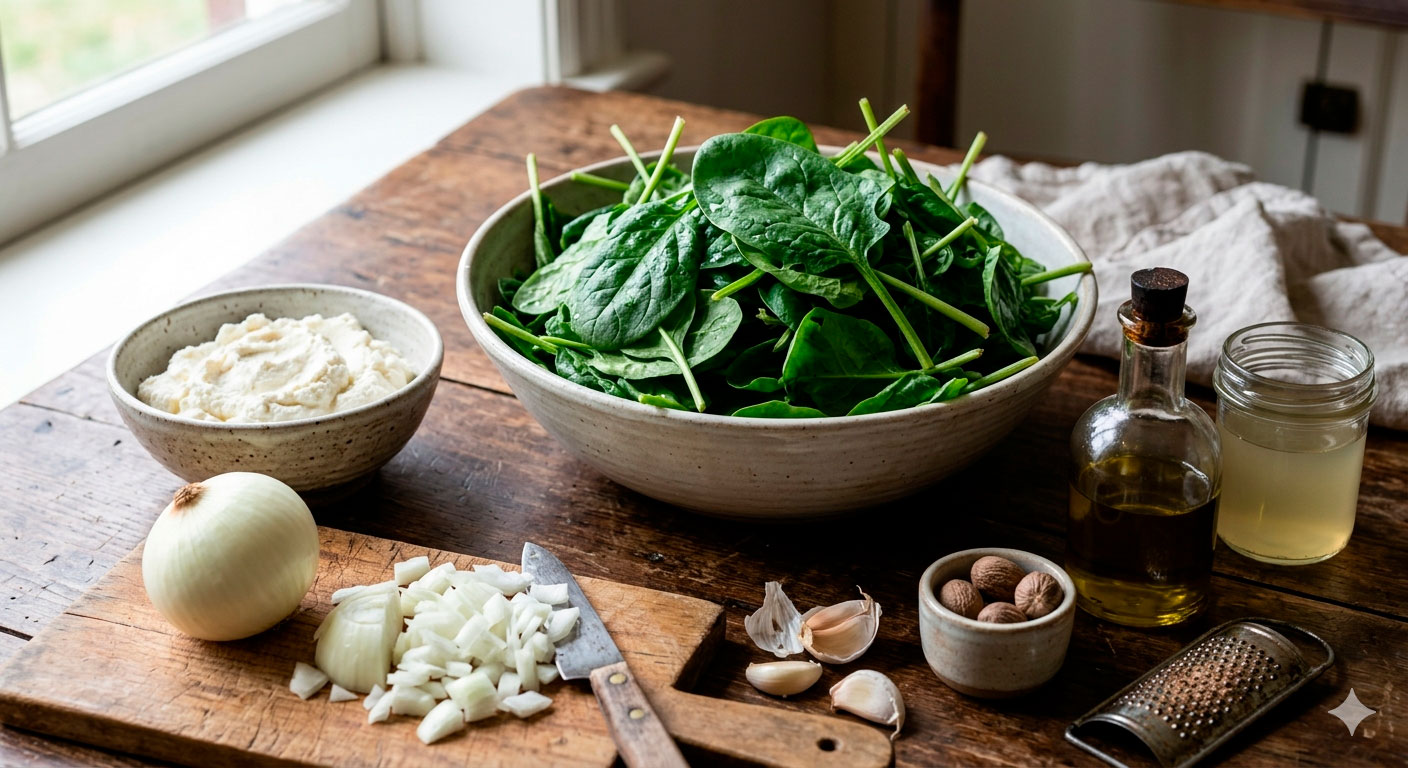
- 500 g fresh spinach (clean leaves)
- 250 g fresh ricotta cheese
- 800 ml mild vegetable broth
- 120 g white onion or shallot
- 40 ml extra virgin olive oil
Seasonings and Optional
- 1/4 teaspoon whole nutmeg (freshly grated)
- 2 cloves tender garlic (without central germ)
- Fine sea salt to taste
- A pinch of ground white pepper
- 40 g aged Parmesan cheese (for sprinkling at serving)
Regional Variations of Ingredients
| Base Ingredient | Spain | Mexico / Central America | Southern Cone (Arg/Uru/Chi) |
|---|---|---|---|
| Spinach | Espinaca | Espinaca | Espinaca |
| Ricotta | Requesón / Ricotta | Requesón | Ricota |
| White onion | Cebolla común | Cebolla blanca | Cebolla de verdeo (if tender) |
| Vegetable broth | Caldo de verduras | Caldo de verduras | Caldo de verduras |
| Garlic | Ajo | Ajo | Ajo |
How to Prepare Fresh Spinach and Ricotta Soup Step by Step
- Step 1 — Cleaning and preparing the vegetable: Submerge fresh spinach in cold water with a pinch of salt to remove any dirt residue. Remove thick, fibrous stems, keeping only leaves and tender stems. Centrifuge or drain perfectly; excess external water would alter broth proportions. Set aside dry leaves at room temperature.
- Step 2 — The initial aromatic base: Place a heavy-bottomed pot over medium heat and add extra virgin olive oil. Add finely chopped white onion (brunoise technique) together with pressed or finely minced garlic cloves. Add a pinch of salt at this point so the onion sweats and releases its natural sugars without browning. Aim for a translucent, soft texture after 6 to 8 minutes of cooking over low heat.
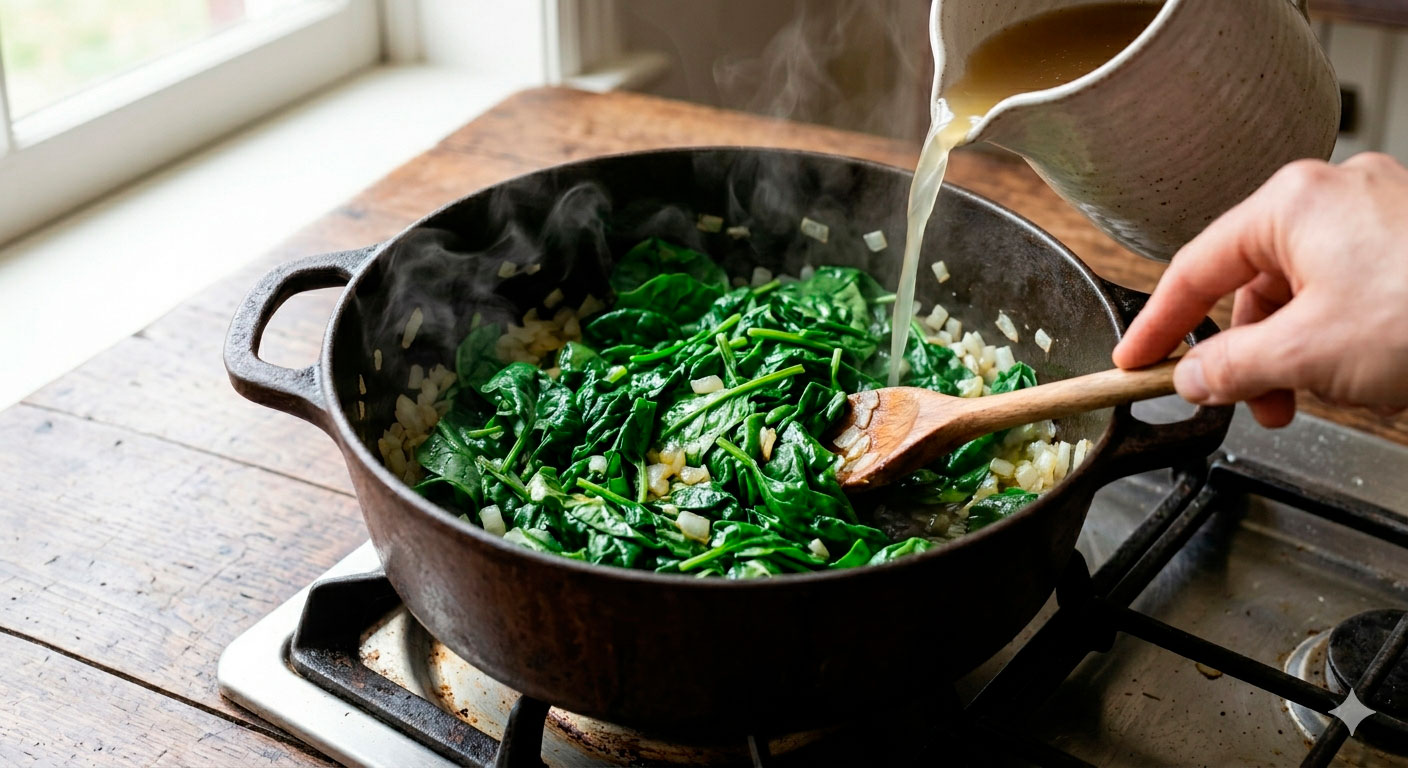
- Step 3 — Ultra-short spinach cooking: Slightly increase heat and gradually add spinach. At first it will seem to overflow the pot, but it will lose volume in seconds. Stir continuously with a wooden spoon to incorporate with the aromatic base. Cook for no more than 2 or 3 minutes, just until leaves have wilted while maintaining an impeccable electric green color. Remove from heat immediately to stop chlorophyll degradation.
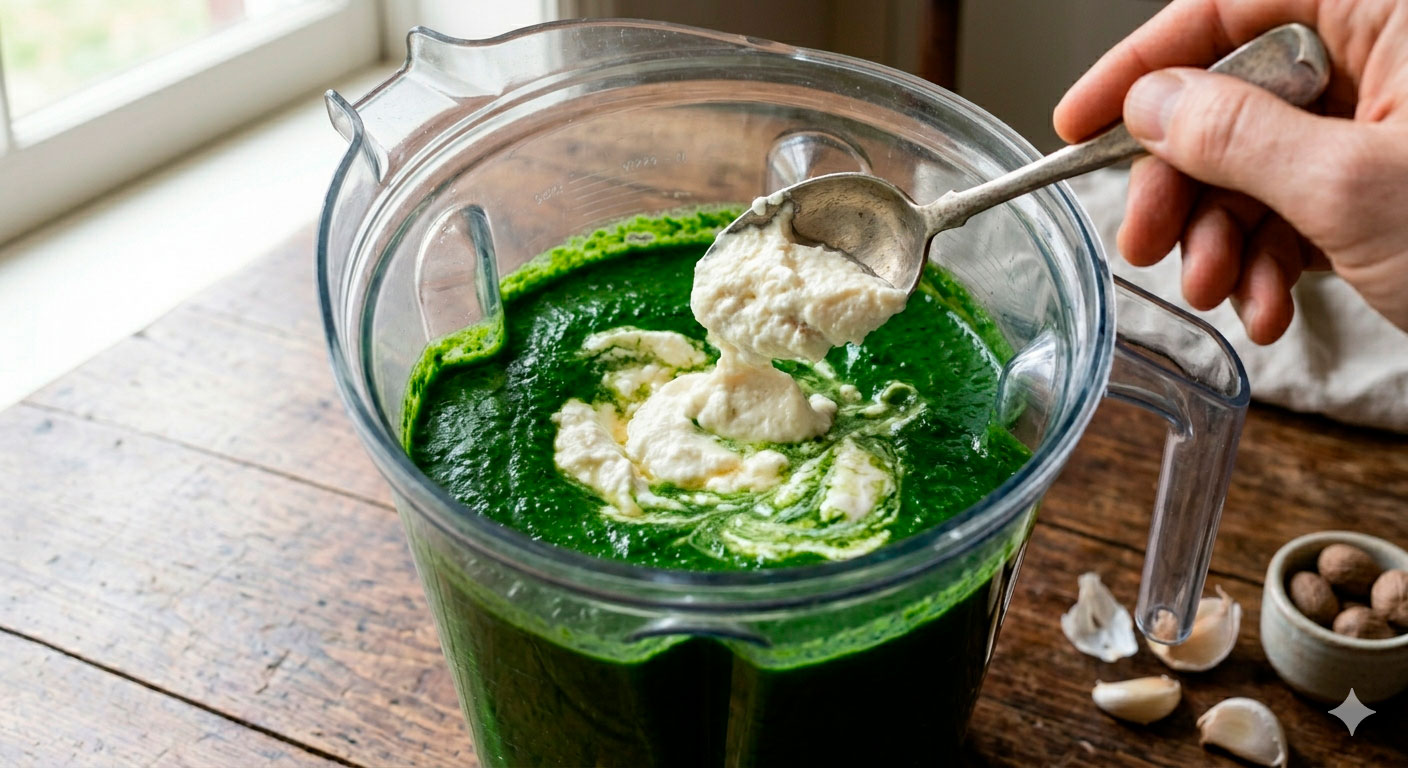
- Step 4 — Blending and dairy fusion: Pour sautéed spinach along with pot contents into a high-powered blender or use an immersion blender directly in the pot. Add hot vegetable broth (not boiling) and three-quarters of the fresh ricotta. Process at maximum power until obtaining a completely smooth, homogeneous emulsion free of visible fibers. The texture should resemble light silk.
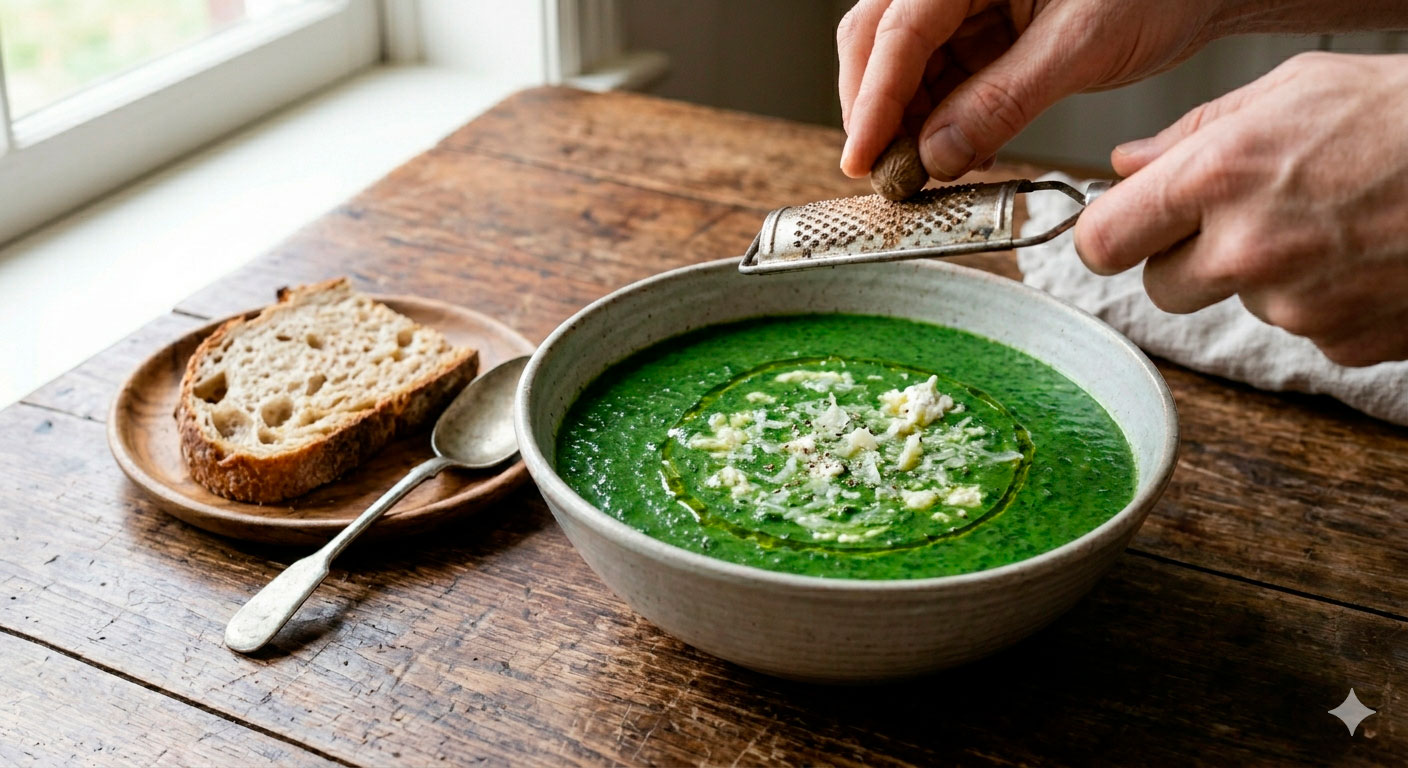
- Step 5 — Final seasoning and serving: Return emulsified soup to pot over minimum heat. Add freshly grated nutmeg and white pepper. Adjust salt. Heat with extreme gentleness for 2 minutes, ensuring it never comes to a rolling boil to avoid breaking the cheese emulsion. Serve immediately in preheated shallow bowls, garnishing with small threads of remaining ricotta, a few drops of olive oil, and grated Parmesan.
Nutritional Information for Fresh Spinach and Ricotta Soup
Approximate values per serving (4 total servings).
| Nutrient | Per serving | % Daily Value* |
|---|---|---|
| Calories | 185 kcal | — |
| Protein | 9 g | 18% |
| Total Carbohydrates | 6 g | 2% |
| Total Fat | 13 g | 20% |
| Dietary Fiber | 2.5 g | 10% |
| Calcium | 240 mg | 24% |
| Iron | 2.1 mg | 12% |
*Percentage based on a 2,000 kcal daily diet.
Expert Analysis: The Master Touch for Fresh Spinach and Ricotta Soup
From a purely culinary and technical perspective, fresh spinach and ricotta soup is a masterful exercise in chemical and sensory balance. The biggest challenge a cook faces in this dish is thermal control. Spinach contains a high percentage of oxalic acid and chlorophyll. If leaves are exposed to prolonged heat in an acidic medium, chlorophyll loses its central magnesium atom and transforms into pheophytin, which visually translates into an unpleasant brownish or olive green color. Short cooking and immediate blending are unbreakable commandments in this preparation.
On the other hand, ricotta contributes an interesting colloidal structure. Not being an aged cheese, its proteins — mainly lactoglobulins and lactoalbumins — are sensitive to direct and prolonged heat. If the soup boils excessively, these proteins tend to denature and clump together, breaking the emulsion and causing a grainy texture that ruins the mouthfeel. The olive oil fat acts here as an intermediate stabilizing agent, enveloping the vegetable and dairy particles to generate a sensation of unctuousness without needing heavier fats like heavy cream.
Regarding pairing, this fresh spinach and ricotta soup harmonizes outstandingly with white wines of moderate acidity and herbaceous notes. A Sardinian Vermentino, a Trentino-Alto Adige Pinot Grigio, or a Galician Albariño can be perfect companions. If you prefer non-alcoholic options, slightly cold sparkling mineral water or a warm fennel infusion enhances the vegetable’s essential oils without interfering with the dairy nuances. The ideal serving temperature of the soup ranges between 68 and 72 °C, where the emulsion remains stable and volatile aromas reach their maximum expression.
⚠️ Medical and Nutritional Consideration: Consumption Restrictions
Clinical Guidance Note: Although this preparation stands out for its high density of micronutrients, its consumption is not suitable for all metabolic profiles. It is essential to consult your doctor or nutrition specialist before incorporating it regularly into your diet, mainly due to the concentration of specific compounds in leafy green vegetables and their combination with dairy lipids.
The Risk of Oxalates
Fresh spinach has a high concentration of oxalic acid. Regular or excessive consumption of this compound can promote the crystallization of calcium oxalate in the urinary system. For this reason, this dish should be strictly moderated or avoided by people with a history of nephrolithiasis (kidney stones) or renal failure. If you have a history of kidney stones, consult your nephrologist before including this soup regularly in your diet.
Dairy Fats and Digestibility
Although ricotta is a lighter dairy product than other aged cheeses, it provides saturated fatty acids of animal origin. For patients with lipid restriction guidelines, hypercholesterolemia, or gastrointestinal sensitivity, the combination of soluble fiber with animal fats can slow gastric emptying and may not be the most harmonious alternative for their cardiovascular or digestive health. In these cases, the vegan version with silken tofu described in the variations may be a more suitable alternative.
Recipe Specifications
Below are the time and yield parameters to coordinate your cooking session with total precision.
| Parameter | Detail |
|---|---|
| Ingredient preparation time | 20 minutes |
| Cooking time | 15 minutes |
| Total time | 35 minutes |
| Servings | 4 diners |
| Calories | 185 kcal per serving |
Tips for Preparing the Perfect Fresh Spinach and Ricotta Soup
The first technical refinement that makes the difference between an ordinary soup and an irresistible one is the optional pre-blanching of the spinach. If you have a few extra minutes, dip the clean leaves in boiling salted water for exactly 30 seconds and immediately plunge them into an ice water bath. This thermal shock fixes chlorophyll almost permanently, guaranteeing that bright, electric green that is so visually impactful, even after subsequent aromatic sautéing and final blending.
Another critical aspect is the choice of pepper. Never use black pepper in this preparation: the tiny dark spots break the visual homogeneity of a green cream soup and distract from the dish’s aesthetic purity. White pepper ground instantly from your own mill offers exactly the same warm, spicy aromatic profile without altering the chromatic purity of the soup. If you don’t have white pepper, a minimal pinch of ground allspice can work as a substitute without compromising the color.
The temperature of the plates is another secret few home cooks consider. Creamy soups quickly lose texture and charm as soon as the cold container hits them. Warm the shallow bowls or cups in the oven at 60 °C for at least five minutes before pouring the preparation. This simple detail guarantees a perfect experience from the first to the last spoonful, without the soup losing consistency or shine at the table.
Regarding storage, fresh spinach and ricotta soup prefers immediate freshness. If you need to store it, do so in an airtight glass container once it has reached room temperature, in the coldest part of the refrigerator for a maximum of 48 hours. To reheat, use a saucepan over very low heat, stirring constantly with a whisk to restore the emulsion; remove from heat as soon as you perceive the first vapors, before boiling.
Freezing is not recommended once the ricotta has been incorporated. The process breaks the water and milk protein bonds, causing the soup to separate irreversibly when thawed and completely lose its characteristic silkiness. If you need to prepare it in advance, you can freeze only the sautéed spinach base (without broth or ricotta) and add the dairy elements and broth at serving time.
Variations and Substitutions for Fresh Spinach and Ricotta Soup
The Winter Garden Version
You can substitute half the spinach with tender chard leaves or kale. If choosing kale, completely remove the woody central stem and extend the initial sauté by a couple of additional minutes, as its fiber is considerably more resistant. The result is a soup with a more pronounced bitter profile that pairs very well with the sweetness of the ricotta.
The Vegan and Dairy-Free Alternative
For those who do not consume animal products, traditional ricotta can be replaced by a silky puree of silken tofu processed with a few drops of yellow lemon juice and a tablespoon of nutritional yeast. The result perfectly emulates the creaminess and slight acidity of the original dairy without compromising the soup’s irresistible texture.
The Mediterranean Crunchy Touch
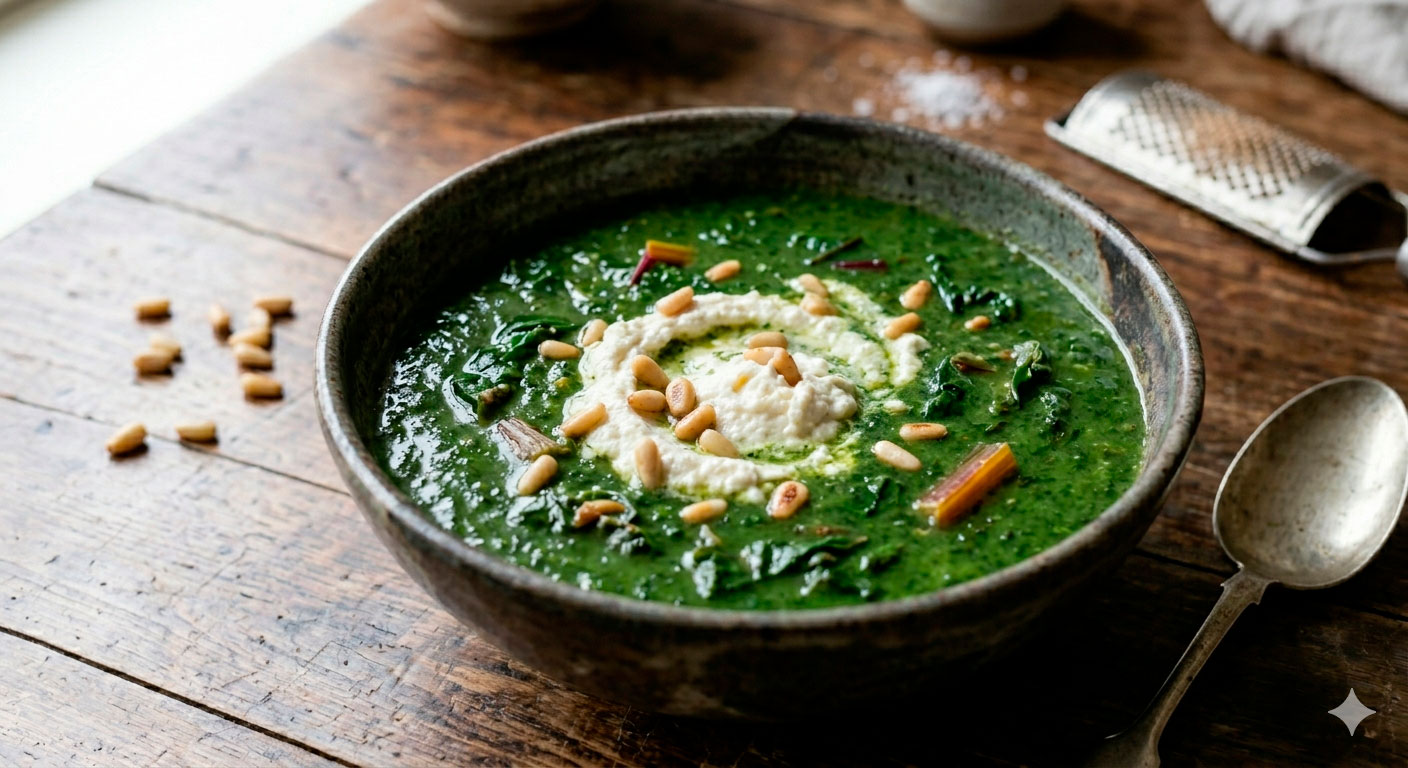
Incorporate a handful of European pine nuts lightly toasted in a dry pan just at serving time. The combination of the toasted nut with the soup’s creaminess is a classic delight of the Roman recipe book that elevates this dish to a notable level of sophistication with minimal effort.
Frequently Asked Questions about Fresh Spinach and Ricotta Soup
Can fresh spinach and ricotta soup be frozen?
It is not recommended to freeze this soup once the ricotta has been incorporated. The freezing process breaks the bonds between water and milk proteins, causing the preparation to separate irreversibly when thawed and acquire a broken appearance with grainy texture. If you need to prepare it in advance, freeze only the sautéed spinach base without the cheese or broth, and add the fresh dairy elements at serving time to guarantee the original silky texture.
How long does fresh spinach and ricotta soup last in the refrigerator?
Stored in an airtight glass container in the coldest part of the refrigerator, this soup remains in optimal condition for a maximum period of 48 hours. After that time, the emulsion between the oil fat and milk proteins begins to degrade and the green color may become slightly dull. A sign that it is no longer in good condition is the appearance of separated liquid on the surface or a pronounced acidic smell.
How many calories does fresh spinach and ricotta soup have?
This soup provides approximately 185 kilocalories per serving, considering a recipe for 4 diners. It is a moderately caloric and very balanced dish: 9 g of protein, 6 g of carbohydrates, and 13 g of primarily unsaturated fat from olive oil. Its low glycemic index makes it an ideal option for both light dinners and for those who control their caloric intake without sacrificing flavor.
Can spinach and ricotta soup be made without ricotta?
Yes. The closest and most direct substitute in Latin America is good quality artisanal requesón, which shares the same dairy origin and protein profile. Failing that, you can use cottage cheese previously drained of its whey and processed to remove its lumps before incorporating it into the blender. For a completely dairy-free version, silken tofu processed with lemon juice and nutritional yeast is the most effective vegan option.
How is fresh spinach and ricotta soup best served?
The best presentation consists of serving the soup in shallow bowls preheated to 60 °C, decorating the surface with small threads of reserved fresh ricotta, a few drops of high-quality extra virgin olive oil, and a generous shower of freshly grated aged Parmesan cheese. Accompany with lightly toasted sourdough bread slices to enhance the experience and allow you to enjoy every last drop of this irresistible green broth. As a pairing, a Sardinian Vermentino or a Galician Albariño perfectly complements its herbaceous notes.
Reference Sources and Resources
For more information on food safety and nutrition, consult WHO healthy diet guidelines.
For nutritional values of ingredients, you can consult The Nutrition Source from Harvard T.H. Chan School of Public Health.
Food composition information available from the Mexican National Institute of Public Health database.
See our responsibility policy and legal notice before making decisions about your diet based on this content.