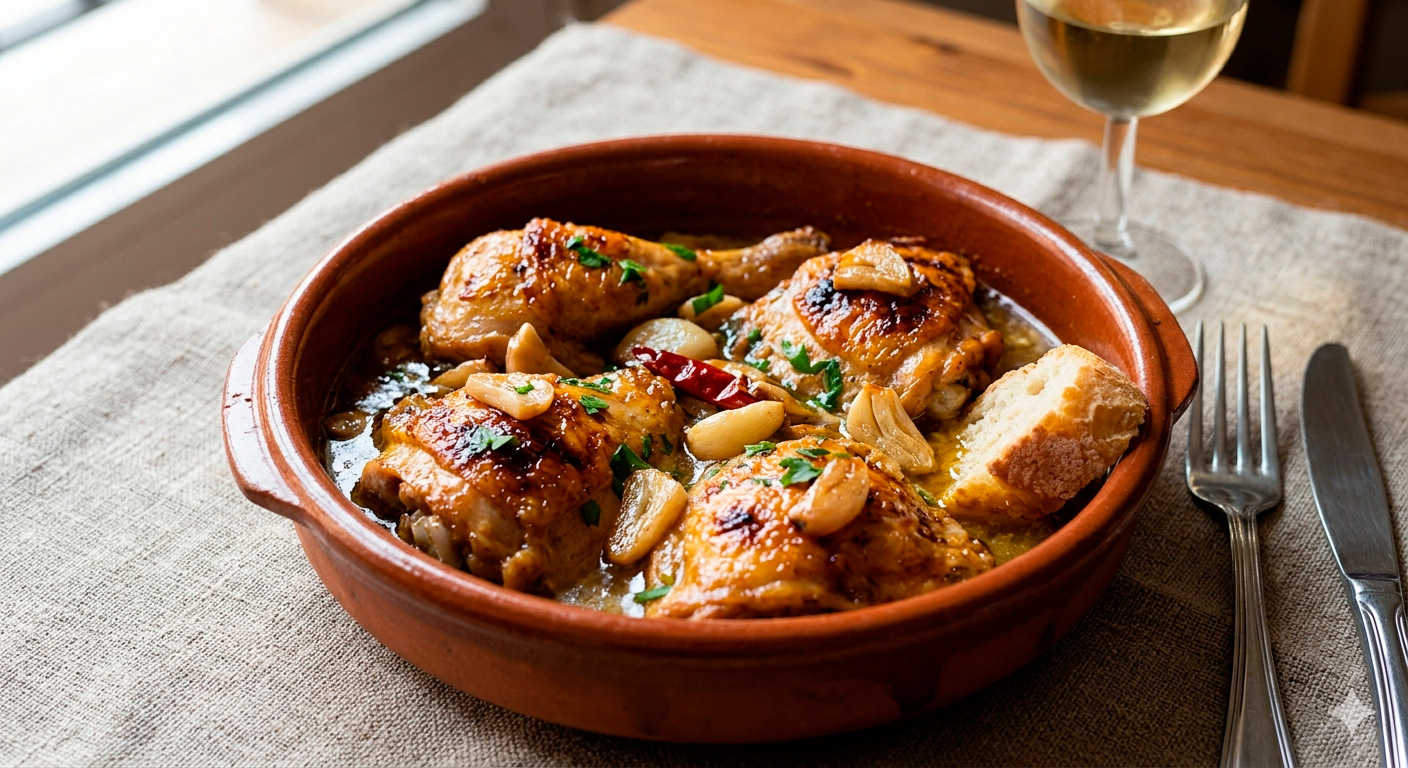
7 Steps to an Irresistible Pork and Broccoli Stir-Fry at Home
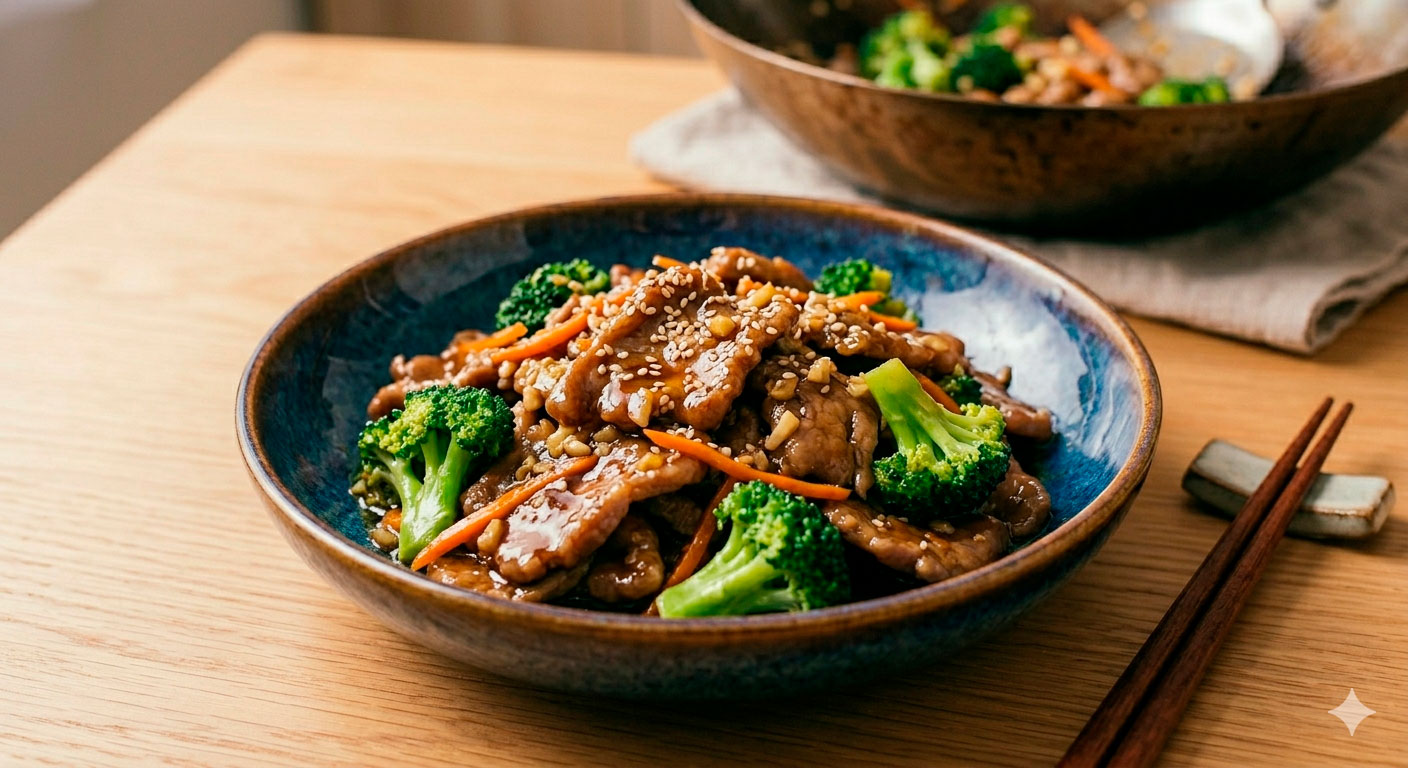
Origin and history of pork and broccoli stir-fry with oyster sauce
To truly understand the pork and broccoli stir-fry with oyster sauce, you have to travel mentally to the province of Guangdong, in southern China, cradle of Cantonese cuisine. This culinary tradition is distinguished by a fundamental principle: maximum respect for the natural flavor of each ingredient. Unlike other Chinese regions where spiciness and strong spices dominate, in Canton, harmony and freshness are sought. Stir-frying, or stir-fry, is the reigning technique of this philosophy.
The history of pork and broccoli stir-fry is intrinsically linked to the birth of oyster sauce. According to gastronomic legend, in 1888, a cook named Lee Kum Sheung forgot a pot of oyster soup on the fire in his village in Zhuhai. Upon returning, he found not a watery broth, but a thick, dark liquid with a profoundly complex aroma. By pure accident, the condiment that would transform Asian cuisine forever was born. Today, the company he founded — Lee Kum Kee — is recognized worldwide.
With the large waves of Chinese migration to America and Europe during the 19th and 20th centuries, cooks brought their ancestral techniques with them. The original broccoli in this recipe from China was gailan (Chinese broccoli), with long stems and broad leaves. Not easily found in their new lands, cooks adopted Western head broccoli, which we all know today. This substitution, far from impoverishing the dish, enriched it with a new texture that fit perfectly with the power of oyster sauce.
The pork and broccoli stir-fry with oyster sauce thus became a symbol of the adaptability of Cantonese cuisine: a recipe that traveled thousands of miles, absorbed local ingredients, and ended up conquering palates on five continents. Today it is one of the most requested dishes in Asian cuisine restaurants around the world, and with this guide, you will be able to recreate it with authentic professional kitchen results in your own home.
What is pork and broccoli stir-fry with oyster sauce and why should you make it at home?
The pork and broccoli stir-fry with oyster sauce is one of the most representative preparations of Cantonese cuisine and one of the most requested in restaurants worldwide. It is a dish that combines lean protein, a highly nutritious vegetable, and a fermented condiment with deep, complex flavor in less than 35 minutes of work. It’s not about throwing ingredients into a pan; it’s a precise choreography of heat, movement, and timing that, once mastered, will make you never want to order takeout again.
What distinguishes pork and broccoli stir-fry from other wok dishes is the velveting or starch marinating technique. This practice, used in professional kitchens throughout Asia, consists of coating the thin pork slices with a mixture of cornstarch and soy sauce before cooking. The result is meat that feels incredibly soft on the palate, almost silky, with a lightly golden outer crust that seals in all the juices. It’s the secret that explains why pork in restaurants always has that irresistible texture that is rarely achieved at home without this technique.
Broccoli, for its part, contributes much more than green color to the dish. Properly blanched in boiling water and cooled in ice water, it maintains that characteristic crunch that balances the softness of the meat. Its florets act as small sponges that absorb the oyster sauce with astonishing efficiency, ensuring that each bite is intensely flavorful. It also adds a generous dose of Vitamin C — 100% of the recommended daily value per serving — and dietary fiber, making this dish a balanced option for both athletes and those looking to eat well without sacrificing pleasure.
In this pork and broccoli stir-fry with oyster sauce recipe, you will learn the 7 secrets that make the difference between a mediocre result and a truly irresistible one. We will talk about the quality of the ingredients — not all oyster sauces are equal — the critical temperature of the wok, the exact order in which elements are incorporated, and how to balance sodium without losing depth of flavor. If you are looking for a recipe that impresses at a weekday family dinner or a night with guests, you have just found it. With ingredients available at any supermarket and a single large pan or wok, you can put on the table a dish that tastes like authentic professional cuisine without having spent decades in the kitchen.
Ingredients for pork and broccoli stir-fry with oyster sauce
Quantities for 4 servings.
Main ingredients
- 500 g pork tenderloin, thinly sliced
- 1 large head of fresh broccoli (approx. 400 g)
- 1 medium carrot, thinly sliced
- 3 garlic cloves, finely chopped
- 2 cm fresh ginger, grated
Condiments and optional
- 3 tablespoons oyster sauce
- 1 tablespoon soy sauce
- 1 tablespoon cornstarch
- 1 teaspoon sesame oil
- 2 tablespoons vegetable oil (sunflower or canola)
- White pepper to taste
- Water chestnuts or roasted cashews (optional)
How to prepare pork and broccoli stir-fry with oyster sauce step by step
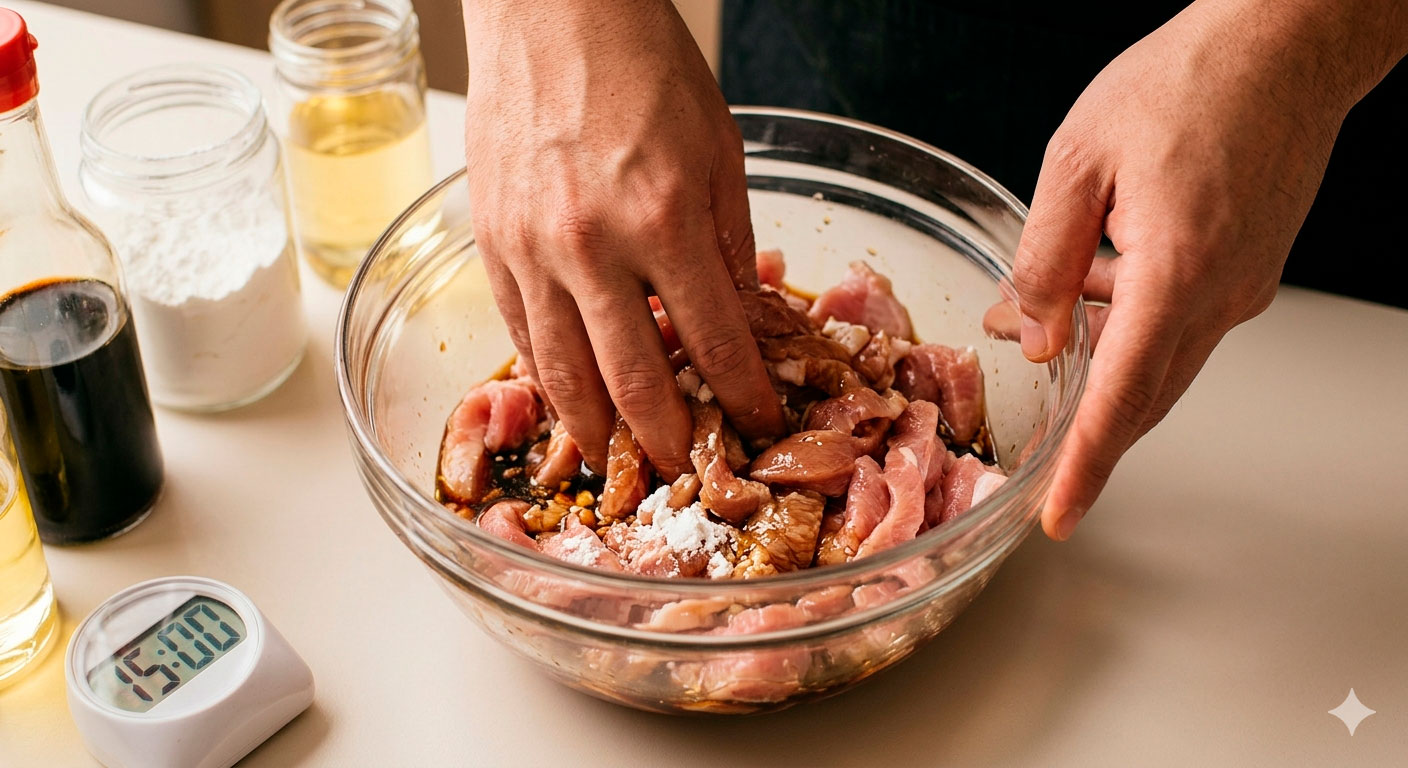
- Velveting: marinate the pork (15 min rest): Freeze the pork tenderloin for 20 minutes to make slicing easier. Then cut it into very thin slices, always against the grain, to ensure maximum tenderness. In a bowl, mix the meat with 1 tablespoon of soy sauce, 1 tablespoon of cornstarch, and a drizzle of vegetable oil. Stir until each piece is well coated and let rest for 15 minutes at room temperature. This technique creates a protective layer that seals in the juices and gives that silky texture characteristic of professional cooking.
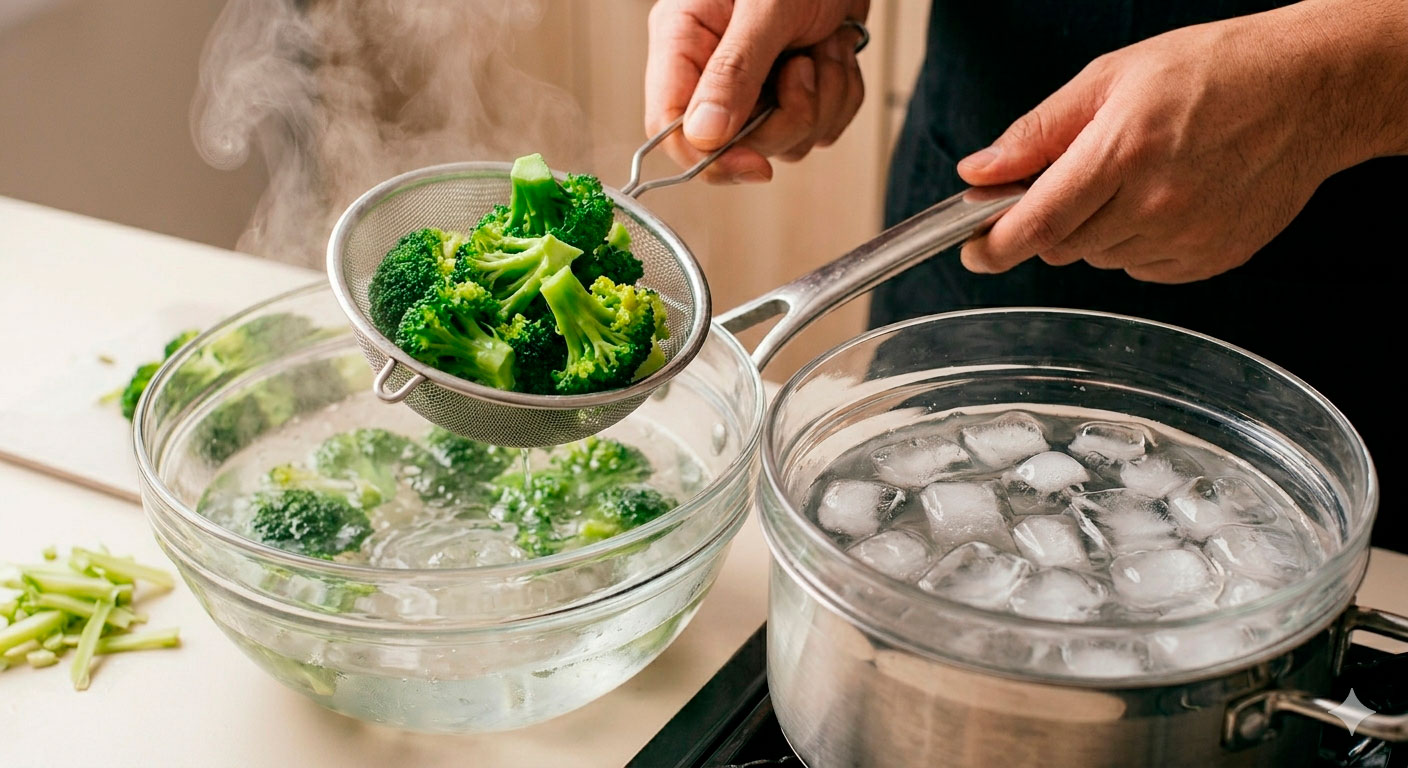
- Blanch the broccoli with thermal shock: Divide the broccoli into small, uniform florets to ensure even cooking. Peel the central stem and cut it into thin slices — don’t waste it, it’s delicious. Bring a pot of abundant salted water to a boil. Add the broccoli and blanch for exactly 60 seconds; not a second more. Immediately transfer to a bowl of very cold water with ice cubes to stop the cooking. This thermal shock fixes the chlorophyll, maintaining that bright, irresistible green, and guarantees that the broccoli remains firm and crunchy when serving.
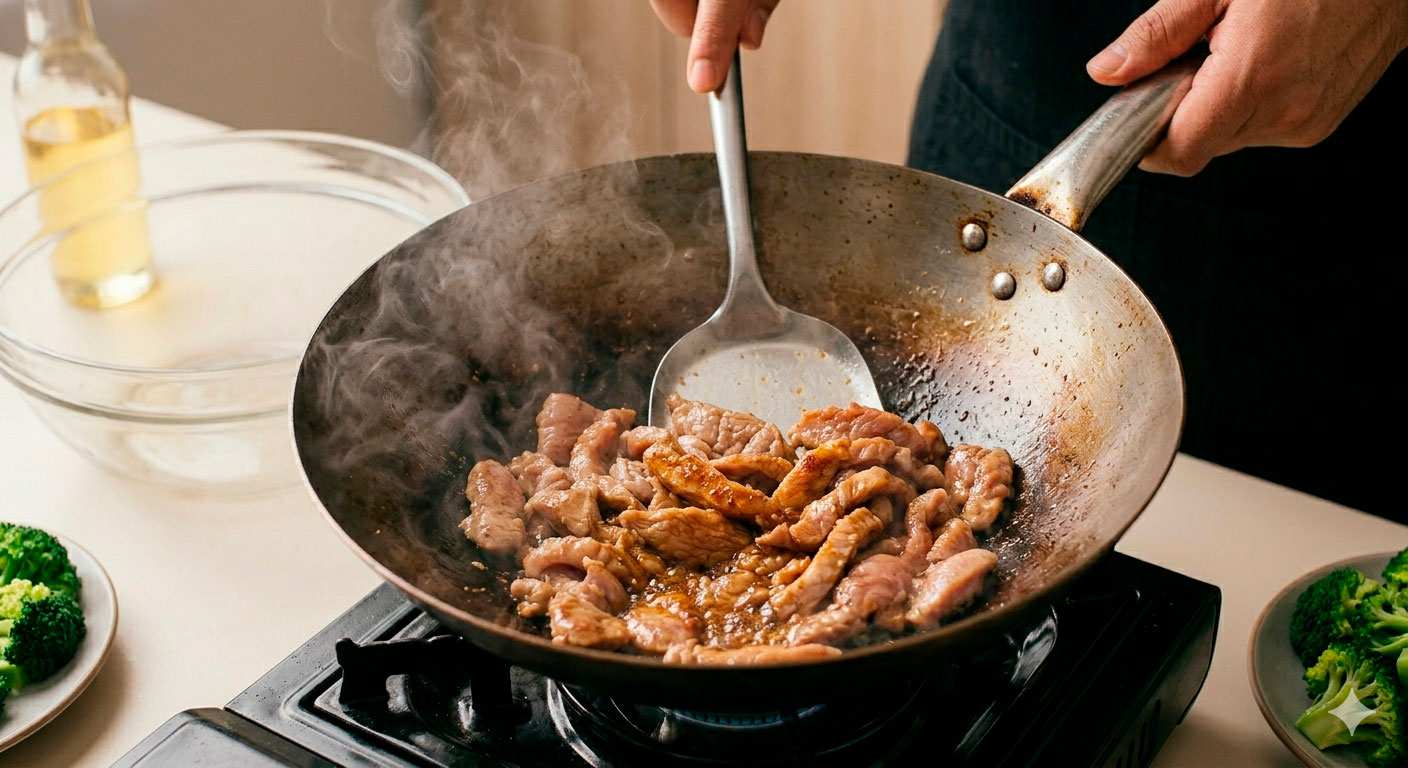
- Sear the pork in a wok over high heat: Heat your wok or large skillet over maximum heat until it starts to smoke slightly — this temperature point is critical. Add 2 tablespoons of vegetable oil. Add the marinated pork, spreading it in a single layer and without moving it for a full 30 seconds: this forms the golden crust that concentrates the flavor. Then stir-fry in constant motion until the meat is almost cooked but still slightly pink in the center. Remove to a clean plate. If your pan is small, work in two batches to avoid lowering the temperature and stewing the meat.
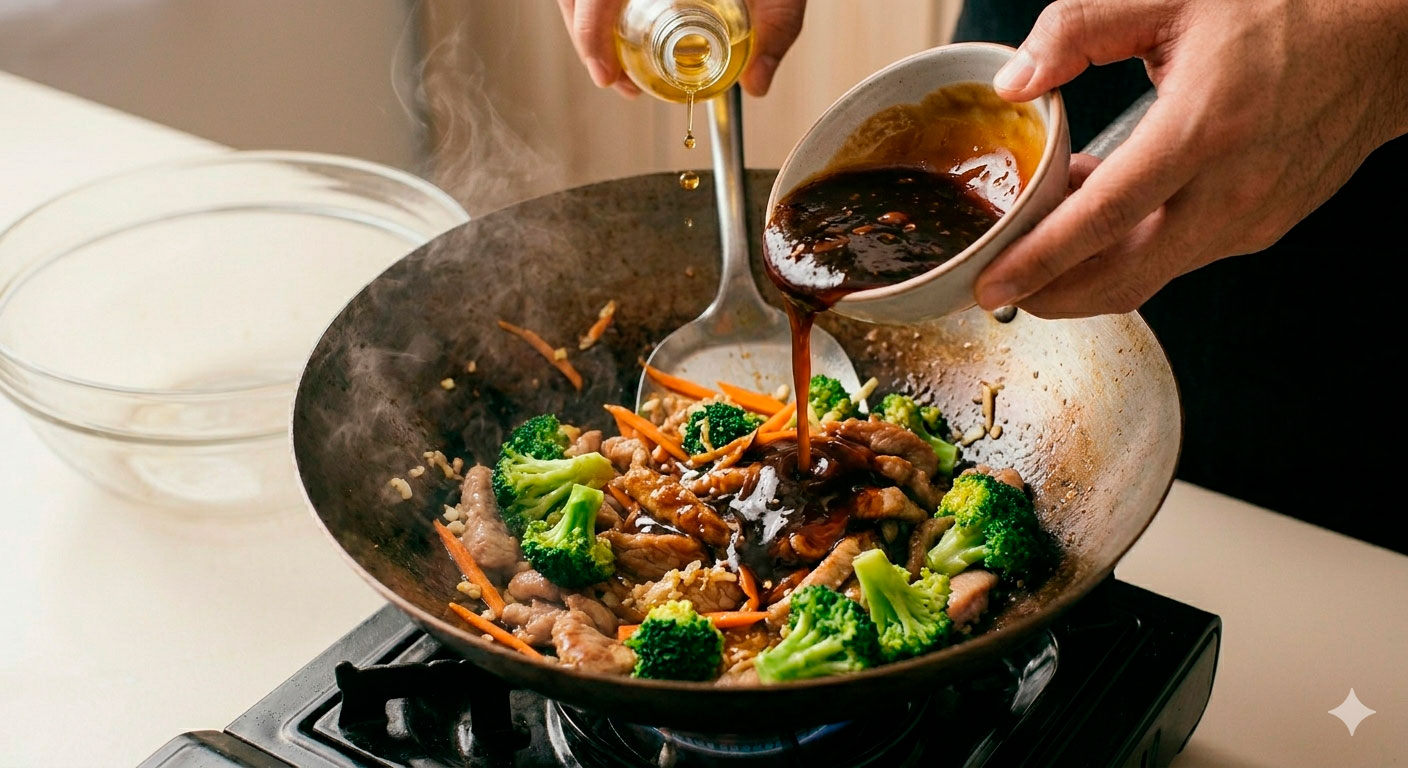
- Add aromatics and combine all flavors: In the same pan, add a little more oil if needed and sauté the chopped garlic, grated ginger, and carrot slices for 30 seconds, until the aroma fills your kitchen. Return the pork and blanched broccoli to the heat. In a small bowl, previously mix the 3 tablespoons of oyster sauce with 2 tablespoons of water or chicken broth. Pour this mixture over the ingredients and stir vigorously as the sauce thickens, shines, and coats each piece of pork and each broccoli floret. This process takes between 60 and 90 seconds.
- Finish with sesame oil and serve: Remove the wok from the heat. Add a few drops of sesame oil — never cook it directly, as heat destroys its aroma. Stir one last time. Serve immediately over freshly cooked jasmine rice. If desired, garnish with toasted sesame seeds or finely chopped scallions. Speed here is essential: this dish is best enjoyed immediately.
Nutritional information for pork and broccoli stir-fry with oyster sauce
Approximate values per serving (4 total servings).
| Nutrient | Per serving | % Daily value* |
|---|---|---|
| Calories | 340 kcal | — |
| Protein | 28 g | 56% |
| Carbohydrates | 14 g | 5% |
| Total fat | 12 g | 15% |
| Dietary fiber | 4 g | 16% |
| Sodium | 850 mg | 37% |
| Vitamin C | 90 mg | 100% |
*Percent based on a 2,000 kcal daily diet. Sodium content can be reduced by using low-sodium versions of soy sauce and oyster sauce.
Tips for preparing the perfect irresistible pork and broccoli stir-fry
The first great secret of an irresistible pork and broccoli stir-fry with oyster sauce is temperature. The wok must be hot enough that the oil lightly smokes before adding the pork. If the temperature is low, the meat releases water instead of browning, and you end up with a steamed texture rather than that crispy sear we are looking for. If your kitchen doesn’t have much power, work in small batches: it’s better to do two quick rounds than to overcrowd the pan and ruin the result.
The second secret is the cutting of the meat. To facilitate ultra-thin slicing of the tenderloin, freeze the piece for 20 minutes before working with it. The cold slightly hardens the fibers and allows you to get almost transparent slices with a well-sharpened knife. Always cut against the muscle grain: if you cut in the same direction as the fibers, the meat will be fibrous and difficult to chew. The cross cut shortens those fibers and the result is a tender piece from the first bite.
The third key point is the quality of the oyster sauce. Not all are equal: look for one where oyster extract appears as the first or second ingredient on the label, not sugar or caramel color. A good oyster sauce has a natural umami depth that needs no additional reinforcement. Medium-high quality brands are available in Asian stores or in the international section of large supermarkets in Mexico.
Fourth, never add sesame oil during cooking. Its aromatic richness is destroyed by direct heat. It is a finishing oil: it is added off the heat, in the last second before serving, so that its toasted nut perfume permeates the dish without being cooked. Just three or four drops are enough to completely transform the sensory experience of the dish.
Fifth secret: mise en place or advance preparation of all ingredients is absolutely mandatory. Once the wok is hot and the process begins, times are measured in seconds. There will be no time to chop garlic or measure sauce when the pork is already in the fire. Organize everything in small bowls before turning on the stove: the marinated pork in one bowl, the blanched and drained broccoli in another, the garlic and ginger ready, and the sauce already mixed with the water or broth. This way, the cooking process will flow with the same elegance as in a professional kitchen.
Regarding the most common mistakes, the most frequent is that the sauce ends up too thick or lumpy. This happens when too much cornstarch is added or when the heat is excessively high when pouring the liquids. The solution is simple: add a splash of water or broth and stir quickly to dissolve the lumps. It is also common to overcook the broccoli, losing that bright, irresistible green. The previous 60-second blanching plus the ice water shock is the only guarantee of maintaining that perfect texture and color.
For storage, keep leftovers in an airtight container in the refrigerator for up to 3 days. When reheating, avoid the microwave if possible: the ideal is to give it a quick heat in a pan with a tablespoon of water to restore moisture to the sauce and recover some of the aroma. The broccoli will lose its bright color over time, but the overall flavor intensifies with rest, so next-day leftovers are usually equally delicious over freshly made rice.
Variations and substitutions for pork and broccoli stir-fry with oyster sauce
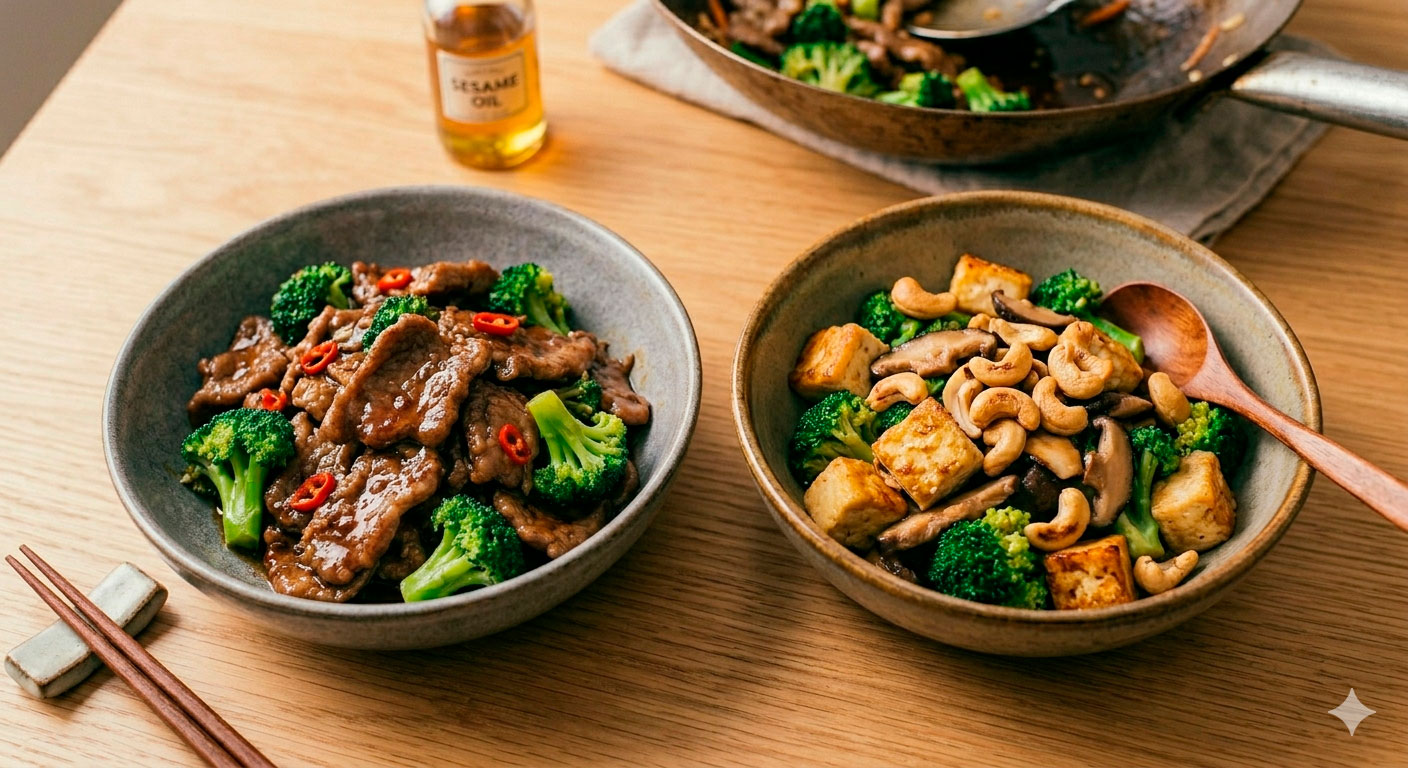
Cooking is freedom, and this pork and broccoli stir-fry is an extraordinarily versatile base. If you prefer another protein, substitute the pork for thinly sliced sirloin steak — the result is equally irresistible and the process is identical. For a vegan or vegetarian version, use firm, well-pressed, dry tofu instead of pork, and replace the conventional oyster sauce with vegetarian oyster sauce made from shiitake mushrooms, which provides a deep umami without animal-derived ingredients.
If you like it spicy, add sliced bird’s eye chili or a teaspoon of Sambal Oelek chili paste in the garlic and ginger step. For a more complex and crunchy texture, add sliced water chestnuts or roasted cashews at the end of cooking. You can also infuse the oil with a strip of orange zest before sautéing the pork for a surprising citrus touch. Finally, if you are looking to reduce sodium, use low-salt versions of soy sauce and oyster sauce without the result losing its character.
Frequently asked questions about pork and broccoli stir-fry with oyster sauce
Can you freeze the pork and broccoli stir-fry with oyster sauce?
It is not recommended to freeze this finished dish, as the broccoli completely loses its crunchy texture upon thawing and becomes soft and watery. If you want to prepare ahead, you can freeze only the raw marinated pork for up to 30 days; on the day of consumption, thaw it in the refrigerator and stir-fry with fresh broccoli for optimal results.
How long does pork and broccoli stir-fry last in the refrigerator?
Stored in an airtight container at a maximum of 4°C (40°F), the pork and broccoli stir-fry keeps in good condition for up to 3 days. You will know it is no longer suitable for consumption if the sauce develops a sour or rancid smell, if the broccoli has a slimy texture, or if the meat loses its natural color and takes on grayish tones.
How many calories are in pork and broccoli stir-fry with oyster sauce?
Each serving provides approximately 340 kcal, with 28 g of protein, 12 g of total fat, and 14 g of carbohydrates. It is a moderate-calorie, very high-lean-protein dish, making it a balanced and satiating option for lunch or dinner, especially if accompanied by brown rice instead of white rice.
Can you make pork and broccoli stir-fry without oyster sauce?
Yes, you can substitute it by mixing soy sauce with a little brown sugar and a pinch of concentrated fish broth to mimic that sweet-salty-umami profile. Another excellent alternative is vegetarian oyster sauce made from shiitake mushrooms, which works very well in both flavor and texture and is available in Asian product stores.
How is pork and broccoli stir-fry with oyster sauce best served?
It is best served immediately after cooking, piping hot over jasmine white rice or brown rice. It also pairs wonderfully with rice noodles or cooked egg noodles. For more attractive presentations, garnish with toasted sesame seeds and chopped scallions just before bringing it to the table.
Sources and reference resources
For more information on food safety and nutrition, consult WHO healthy diet guides.
Regarding the nutritional value of ingredients, you can consult The Nutrition Source from Harvard T.H. Chan School of Public Health.
Information on food composition available from the database of the Mexican National Institute of Public Health.
See our liability policy and legal notice before making decisions about your diet based on this content.