6 Steps to Perfect, Juicy Beef Fajitas with Worcestershire Sauce
Origin and History of Beef Fajitas with Worcestershire Sauce
Beef fajitas with Worcestershire sauce are the result of a culinary history that blends the ingenuity of the Mexican cowboy with the sophistication of Anglo-Saxon condiments. To understand this dish, we must travel to the plains of southern Texas and northern Mexico, specifically the Rio Grande Valley region, during the early decades of the 20th century.
At that time, ranch workers known as “vaqueros” or “charros” received as part of their payment the cuts of meat considered less noble: offal, the head, and especially the animal’s diaphragm, known in Mexico as entraña or falda. In English, this cut is called skirt steak, and the word “fajita” derives directly from “faja” (belt or sash), due to the belt-like shape of this muscle in the animal.
The vaqueros, far from wasting this fibrous piece, developed a direct cooking technique over open fires that transformed the skirt steak into something extraordinarily tasty. The secret was to cut the meat into thin strips against the muscle grain and expose it to very intense, quick heat. Over time, this preparation crossed borders and became popular in the urban kitchens of both countries.
The incorporation of bell peppers came later, influenced by the abundant agricultural production of the region and the Tex-Mex cuisine that began to consolidate during the 1970s. It was during this period that Texan restaurants started serving fajitas “sizzling platter” style, turning the dish into a visual and olfactory spectacle.
Worcestershire sauce is the ingredient that elevates this recipe to a superior level. Its origin is radically different: it was created in 1837 by English pharmacists John Wheeley Lea and William Henry Perrins in the city of Worcester, based on a recipe from India that a British lord wanted to reproduce in England. This fermented sauce, based on tamarind, anchovies, vinegar, and spices, brought an umami flavor profile that Mexican and Texan chefs brilliantly harnessed by incorporating it into the fajita marinade.
Today, beef fajitas with Worcestershire sauce represent one of the most beloved dishes of border cuisine. They are a symbol of the cultural fusion that defines the gastronomy of northern Mexico and the southern United States: a humble dish in its origin, but irresistible in its result.
What are Beef Fajitas with Worcestershire Sauce and Why Should You Make Them at Home?
Beef fajitas with Worcestershire sauce are one of those recipes that achieve the perfect balance between simplicity and depth of flavor. Essentially, they are strips of beef marinated in Worcestershire sauce, garlic, cumin, and lime juice, sautéed over very high heat with colorful bell peppers and onion. The result is a vibrant, juicy dish with crispy edges and that smoky aroma that invites you to put on an apron before the skillet stops sizzling.
What distinguishes this version from any other is the central role of Worcestershire sauce. Far from being a secondary seasoning, Worcestershire acts as the savory core of the marinade: its natural sugars accelerate the caramelization of the meat during searing, its ferments provide umami complexity, and its acidity helps soften the muscle fibers before they hit the heat. In other words, it works from the inside out so that every bite is juicy and irresistible.
Making these fajitas at home has advantages that no restaurant can replicate. First, you control the quality of the cut: a good flank or skirt steak, well selected from your trusted butcher, makes a brutal difference compared to industrialized meat. Second, you can adjust the seasoning level to your taste: more garlic if you’re one of those who think garlic is never enough, more lime if you prefer a tangier touch, more cumin if you want to accentuate the earthy profile. The recipe is yours to customize.
From a nutritional standpoint, beef fajitas with Worcestershire sauce are a balanced dish with high protein value. Each serving provides approximately 38 grams of protein from the beef, making them an excellent option for those seeking muscle recovery after exercise. The colorful bell peppers, for their part, are a surprisingly potent source of vitamin C: the red bell pepper contains almost twice the vitamin C of an orange of the same weight.
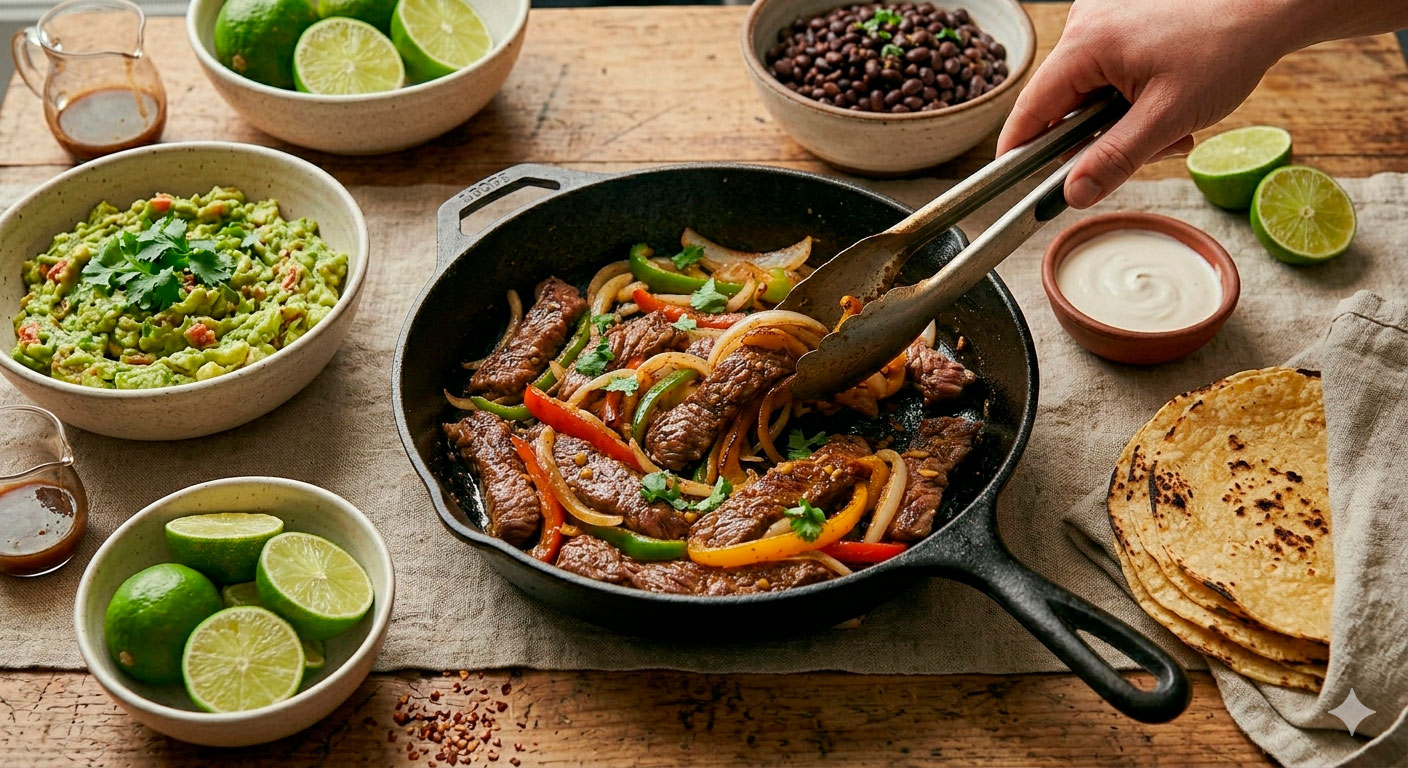
This recipe also stands out for its versatility. You can serve it in corn tortillas for classic tacos, in flour tortillas Tex-Mex style, or simply over a bed of rice or green leaf salad if you prefer a lighter or low-carbohydrate option. Its “build-your-own-taco” nature makes it the undisputed star of informal family dinners, gatherings with friends, or any occasion where the goal is to enjoy food without unnecessary protocol.
Finally, there is something that no description can fully capture: the sound. The sizzle of marinated meat hitting a boiling hot cast iron skillet is, without exaggeration, one of the most satisfying sounds in the kitchen. It is the signal that something extraordinary is about to happen. Keep reading and get ready to create that magic in your own kitchen.
Ingredients for Beef Fajitas with Worcestershire Sauce
Quantities for 4 servings.
Main ingredients
- 800 g beef (skirt or flank steak), cut into thin strips
- 1 large red bell pepper, julienned
- 1 large green bell pepper, julienned
- 1 large yellow bell pepper, julienned
- 1 large white or red onion, cut into thick strips
- 3 tablespoons olive or sunflower oil
Seasonings and optional
- 4 tablespoons Worcestershire sauce
- 3 fresh garlic cloves, finely minced
- Juice of 1 lime (approx. 30 ml)
- 1 teaspoon ground cumin
- Freshly ground black pepper, to taste
- Sea salt, to taste
- Corn or flour tortillas (for serving)
- Guacamole, sour cream, and pico de gallo (accompaniments)
| Ingredient | Mexico Name | Argentina / Chile | Spain | USA |
|---|---|---|---|---|
| Beef (cut) | Falda / Entraña | Vacío / Matambre | Falda / Aleta | Skirt Steak |
| Bell Pepper | Chile morrón | Morrón | Pimiento | Bell Pepper |
| Worcestershire Sauce | Salsa tipo inglesa | Salsa Worcestershire | Salsa Perrins | Worcestershire Sauce |
| Garlic | Ajo | Ajo | Ajo | Garlic |
How to Prepare Beef Fajitas with Worcestershire Sauce Step by Step
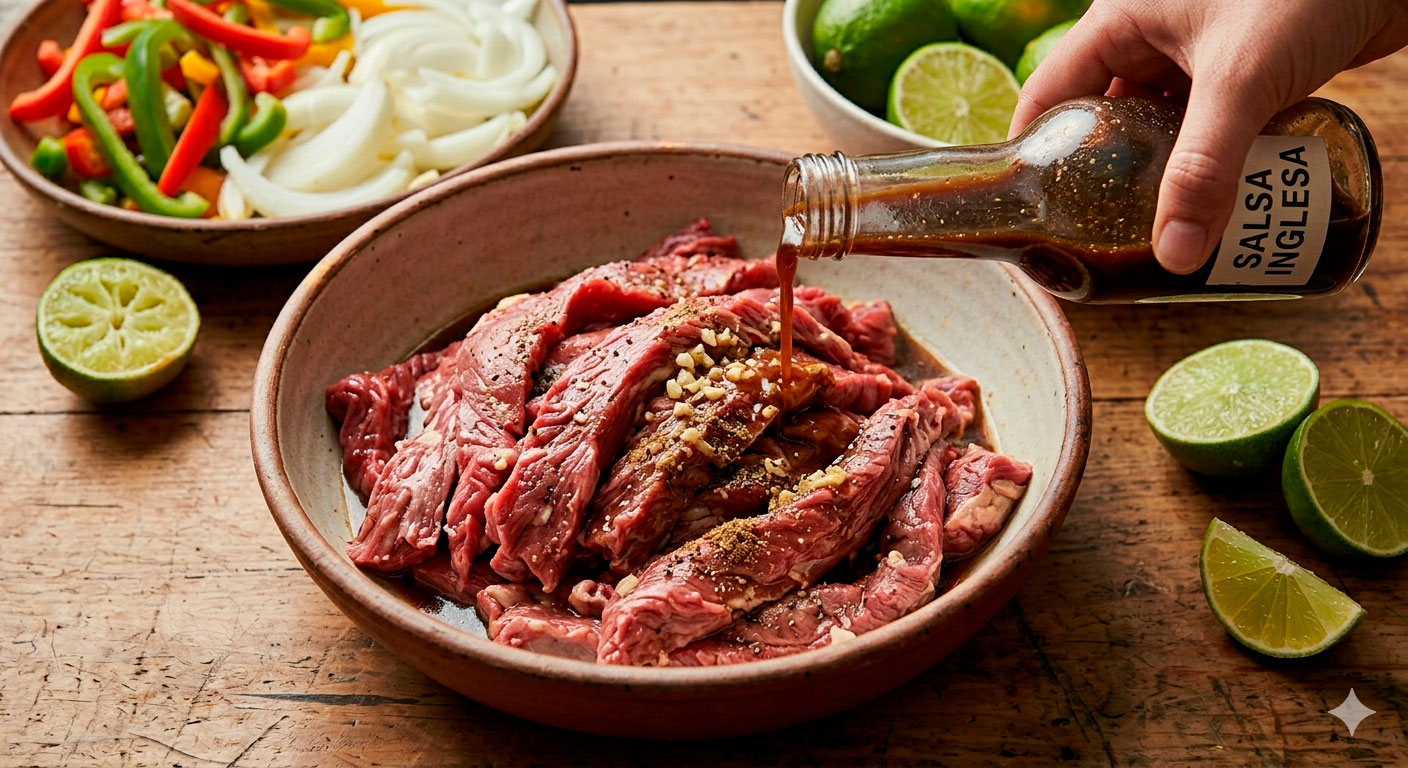
- The Master Marinade: Cut the beef into thin strips against the muscle grain (never with it). In a large bowl, mix the strips with the 4 tablespoons of Worcestershire sauce, minced garlic, ground cumin, and lime juice. Cover with plastic wrap and let rest for at least 15 minutes at room temperature. This step is vital: the acidity of the lime breaks down surface proteins and the sauce penetrates the muscle tissue, guaranteeing that each strip is flavorful from the inside out.
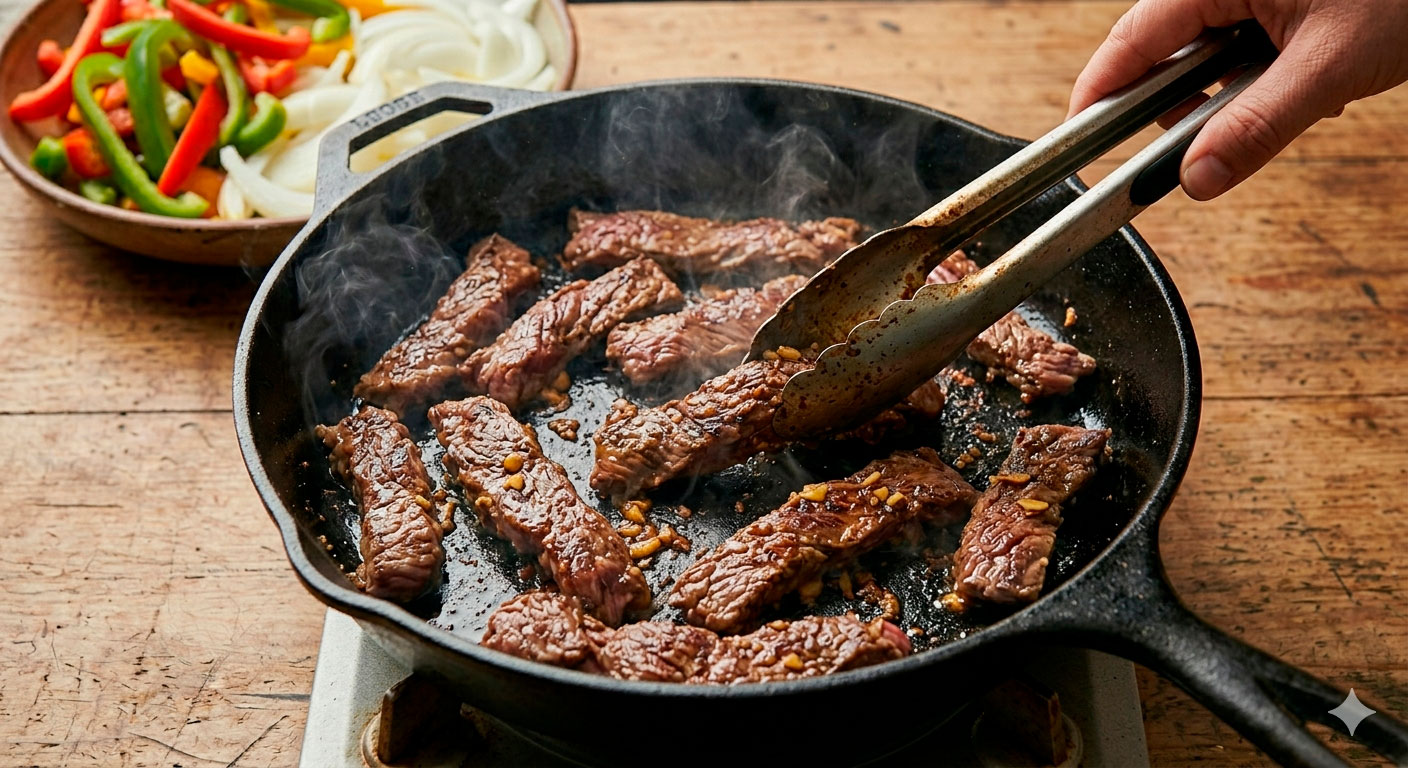
- Heat is Key: Heat a cast iron skillet or wok over very high heat with 1 tablespoon of oil. Wait until the oil just starts to smoke before adding the meat. This extreme temperature is the secret to searing: it seals the meat’s pores in seconds, trapping the juices inside and generating that golden, crispy crust characteristic of the best fajitas.
- Sear the Beef in Batches: Add the marinated beef in small batches, without overcrowding. If you fill the skillet all at once, the temperature drops, the meat releases liquid, and ends up steaming instead of searing. Sauté each batch for 3 to 4 minutes until the edges are golden and crispy. Remove and reserve on a plate covered with aluminum foil to keep warm.
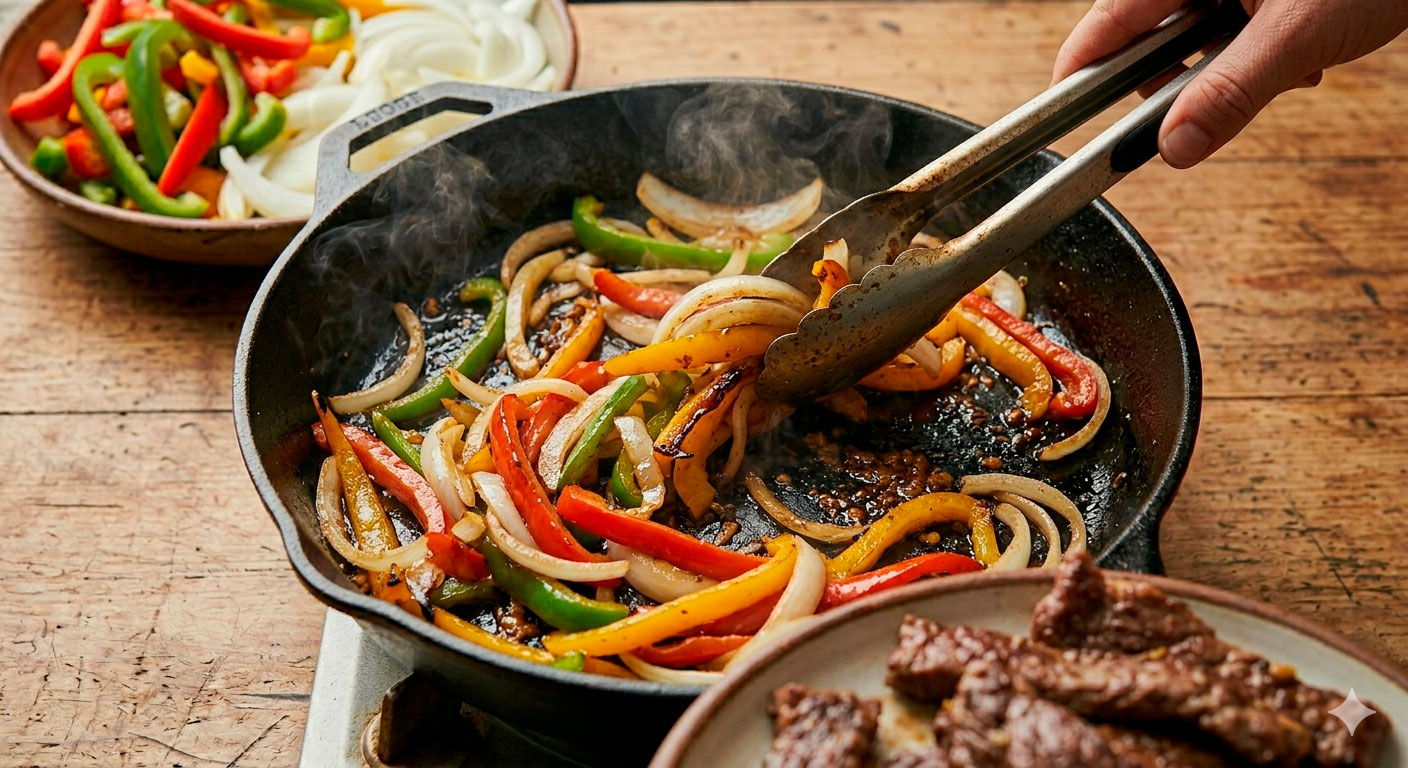
- Sauté Vegetables Al Dente: In the same skillet, without washing to take advantage of the caramelized meat juices, add another tablespoon of oil and add the bell peppers and onion. Sauté over high heat for 4 to 5 minutes, moving constantly. The goal is for the vegetables to be “al dente”: golden brown on the outside but with a firm crunch when bitten. Never overcook them or they will lose their texture and vibrant color.
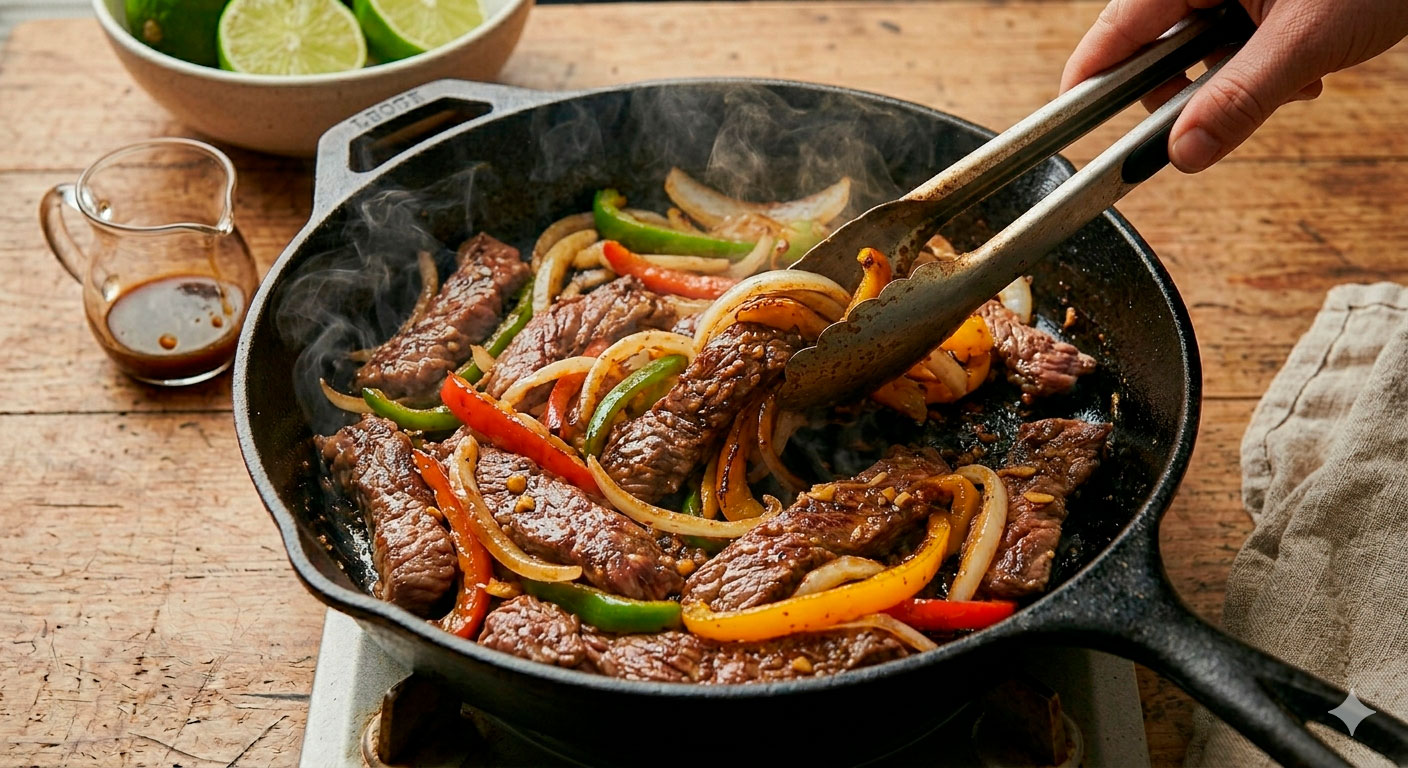
- The Final Combination: Return all the meat to the skillet with the vegetables. Add an extra splash of Worcestershire sauce (1 additional tablespoon) and adjust salt and freshly ground black pepper to taste. Sauté everything together for 1 more minute, moving constantly so the flavors fully meld and the sauce lightly glazes each strip.
- Rest and Serve: Turn off the heat and let the mixture rest for 2 minutes before serving. This short rest allows the juices to redistribute within the fibers. Serve immediately on warm tortillas and accompany with fresh guacamole, sour cream, and refried beans.
Nutritional Information for Beef Fajitas with Worcestershire Sauce
Approximate values per serving (4 servings total).
| Nutrient | Per serving | % Daily Value* |
|---|---|---|
| Calories | 450 kcal | — |
| Protein | 38 g | 76% |
| Carbohydrates | 12 g | 4% |
| Total Fat | 22 g | 28% |
| Dietary Fiber | 4 g | 14% |
| Iron | 25% DV | 25% |
| Sodium | ~620 mg | 27% |
*Based on a 2,000 kcal daily diet.
Highlighted nutritional benefits
Beef fajitas with Worcestershire sauce are an outstanding source of complete, highly bioavailable protein, meaning the body absorbs and uses it efficiently for muscle repair and building. With 38 g of protein per serving, this dish covers more than two-thirds of the recommended daily intake for an average adult.
The contribution of heme iron, exclusive to red meats, favors oxygen transport in the blood and is especially valuable for people prone to iron deficiency anemia. The tri-color bell peppers, for their part, are among the vegetables with the highest vitamin C content per gram: the red bell pepper can contain up to 190 mg of vitamin C per 100 g, far exceeding most citrus fruits.
If consumed without tortillas or with lettuce wraps, beef fajitas with Worcestershire sauce adapt perfectly to ketogenic or low-carbohydrate diets, maintaining all their protein and micronutrient benefits.
Expert Analysis: The Master Touch for Beef Fajitas with Worcestershire Sauce
From my perspective after decades of work between cast iron skillets and well-sharpened knives, the magic of beef fajitas with Worcestershire sauce lies in a concrete scientific principle: the Maillard reaction. This chemical reaction occurs when amino acids and reducing sugars in the meat are exposed to temperatures above 140 °C, generating hundreds of new aromatic compounds responsible for the bronze color, complex flavor, and irresistible aroma that characterizes a good fajita.
Worcestershire sauce brilliantly enhances this process. By containing fermented sugars and molasses, it introduces additional carbohydrates to the meat’s surface that accelerate and deepen caramelization during searing. The result is a darker, more flavorful crust with a satiny sheen that no other seasoning replicates in the same way.
The most frequent mistake when preparing fajitas is overcrowding the skillet. When this happens, the oil temperature drops below 100 °C and the meat begins to cook in its own steam: it loses juiciness, turns gray, and acquires an unappetizing, rubbery texture. The key is space and intense heat. Work in small batches even if it means more time at the stove.
In terms of pairing, beef fajitas with Worcestershire sauce call for a beverage that balances their savory intensity without overwhelming it. A dark beer like Vienna lager or even a Munich Dunkel works extraordinarily well: their malty, slightly toasted character dialogues with the smoky flavors of the seared meat. For wine lovers, a young Argentine Malbec or a Tempranillo with brief oak aging are options the palate will appreciate. If you’re looking for the most Mexican and authentic option, well-chilled hibiscus water (agua de jamaica) or a quality michelada provide the acidic contrast the palate craves after each bite.
My final recommendation: invest in a good cast iron skillet. The heat retention of this material is unparalleled and guarantees that the temperature doesn’t fluctuate when you add the marinated meat. It is the only utensil that faithfully replicates the conditions of an open fire, which is where these fajitas were born and where they find their greatest expression.
Tips for Preparing Perfect Beef Fajitas with Worcestershire Sauce
The first tip that no cookbook tells you with enough emphasis is about the cut: always, without exception, cut the beef against the muscle grain. Skirt or flank steak has very visible fiber lines; locate them and cut perpendicular to them. This simple gesture dramatically reduces the length of the fibers in each strip, making the meat much more tender when bitten, even without marinating for many hours.
A professional trick that few know: freeze the meat for 20 to 30 minutes before cutting it. The temporary firmness of the tissue allows for much thinner, more uniform cuts with a regular knife. Thin strips sear faster, marinate better, and result in a more consistent texture throughout the dish.
Regarding the marinade, although 15 minutes is the functional minimum, if you have time available, marinate the meat for 2 to 4 hours in the refrigerator. Do not exceed 6 hours: the acidity of the lime can begin to “cook” the protein similarly to ceviche, changing the texture of the meat undesirably before it reaches the heat.
For the vegetable sauté, consider adding the onion to the skillet 2 to 3 minutes before the bell peppers. Onions need more time to caramelize properly. If you add them all at the same time, the peppers will be overcooked and soft when the onion is just beginning to take on color.
The service moment is as important as the cooking moment. Have the warm tortillas ready before starting the final sauté. Corn tortillas are perfectly heated on a dry comal over medium heat, 30 seconds per side, and stored in a clean kitchen towel to retain steam. A cold tortilla ruins even the best beef fajitas with Worcestershire sauce.
One of the most costly mistakes when preparing these beef fajitas with Worcestershire sauce is using a non-stick skillet. The Teflon coating limits the maximum temperature of the pan and does not distribute heat evenly like cast iron or thick-bottomed stainless steel. If you don’t have cast iron, a carbon steel wok is the second-best option and is often more economical.
Another common mistake is adding salt before the marinade. Salt extracts moisture from the meat by osmosis, which can dry out the surface before it hits the heat. Always salt just before adding the meat to the skillet, or during the final sauté.
If you have leftover fajitas, resist the temptation of the microwave. This appliance reheats unevenly and generates steam that destroys the crispy texture of the meat. Instead, heat a skillet over medium-high heat with a small amount of oil or beef broth, add the cold fajitas, and sauté for 2 to 3 minutes. They will regain their texture and temperature much more satisfactorily.
For special occasions, consider adding a tablespoon of butter in the last 30 seconds of cooking before serving. The butter melts and glazes all the strips and vegetables with a shiny layer that visually elevates the dish and adds a dairy flavor that complements the intensity of the Worcestershire sauce. It is the final touch that differentiates a good fajita from an extraordinary one.
Variations and Substitutions for Beef Fajitas with Worcestershire Sauce
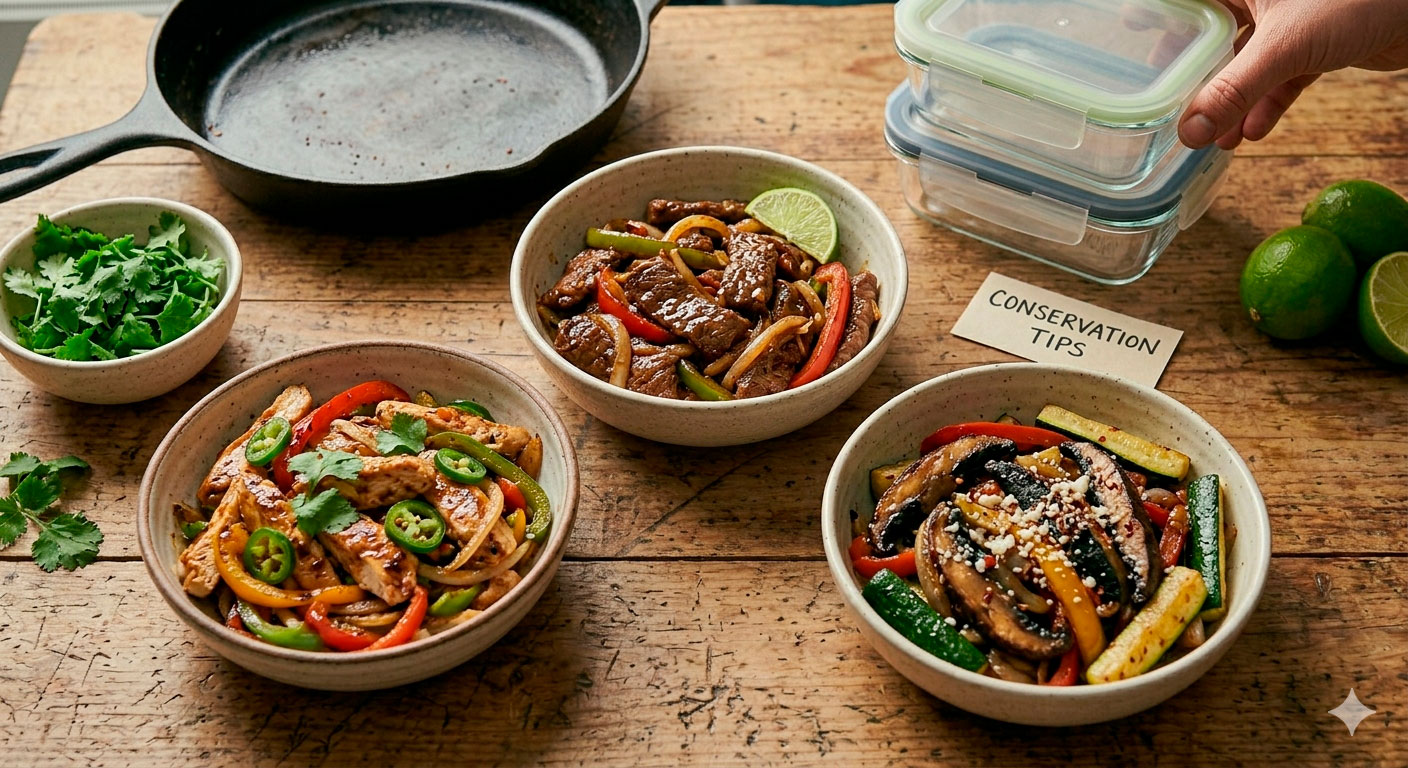
The beef fajitas with Worcestershire sauce recipe is an extraordinarily versatile base that admits multiple adaptations without losing its essence. The Surf and Turf version is perhaps the most popular: add peeled and deveined shrimp in the last 2 minutes of cooking for a combination of textures and flavors that pleasantly surprises. The shrimp absorb the meat juices and remaining Worcestershire sauce in the skillet, creating a completely new experience.
For spice lovers, the Spicy Fajitas version incorporates slices of jalapeño or serrano chili along with the bell peppers during the vegetable sauté. You can also substitute cumin for smoked paprika if you’re looking for a more intense, smoky profile without needing to light a grill.
The vegetarian option is more delicious than many expect: substitute the beef strips for thick strips of Portobello mushroom, previously marinated in the same mixture of Worcestershire sauce, garlic, and lime. The meaty texture of Portobello is surprisingly similar to that of meat when sautéed at high temperature, and it absorbs the marinade with remarkable efficiency. For a complete vegan version, verify that the Worcestershire sauce you use does not contain anchovies, or use a vegan version of Worcestershire which is easily found in natural food stores.
For a gluten-free adaptation, make sure the Worcestershire sauce you use is certified gluten-free (some brands use barley malt as a fermenting agent). All other ingredients in this recipe are naturally gluten-free. Serve with corn tortillas instead of flour to keep the dish completely wheat-free.
Frequently Asked Questions about Beef Fajitas with Worcestershire Sauce
Can beef fajitas with Worcestershire sauce be frozen?
Yes, you can freeze beef fajitas with Worcestershire sauce for up to 2 months in airtight bags or freezer-safe containers, removing as much air as possible to avoid freezer burn. To thaw correctly, transfer them to the refrigerator the night before and when reheating, use a hot skillet with a few drops of beef broth or water to regain moisture without drying out the meat.
How long do beef fajitas with Worcestershire sauce last in the refrigerator?
Beef fajitas with Worcestershire sauce keep perfectly for 3 to 4 days in the refrigerator, stored in an airtight container at a temperature of 4 °C or below. If upon opening the container you notice an unusually sour or acidic smell, or if the meat has an unusual grayish color or a sticky texture, it is best to discard them without hesitation.
How many calories are in beef fajitas with Worcestershire sauce?
This beef fajitas with Worcestershire sauce recipe provides approximately 450 kcal per serving, with 38 g of protein, 22 g of total fat, and 12 g of carbohydrates. It is a nutritionally complete dish that can be integrated into low-carbohydrate diets if consumed without tortillas, significantly reducing the total calorie and carbohydrate count.
Can beef fajitas be made without Worcestershire sauce?
Yes, it is possible to make them without Worcestershire sauce, although you will lose the aromatic complexity and umami profile that characterizes this version. The best substitute is a mixture of soy sauce with a few drops of balsamic vinegar, a pinch of brown sugar, and a pinch of ground ginger, which reasonably imitates the profile of Worcestershire. The final result will be different but equally tasty in its own way.
How are beef fajitas with Worcestershire sauce best served?
Beef fajitas with Worcestershire sauce are best enjoyed freshly made, straight from the sizzling skillet into warm corn or flour tortillas. Classic accompaniments include fresh guacamole, sour cream, pico de gallo, Mexican rice, and refried beans. For an ideal pairing, a Vienna lager or Vienna Dunkel beer is perfect; if you prefer wine, a young Malbec or a medium-bodied Tempranillo complete the experience extraordinarily well.
Reference sources and resources
For more information on food safety and nutrition, consult the WHO healthy diet guidelines.
For nutritional value of ingredients, you can consult The Nutrition Source from Harvard T.H. Chan School of Public Health.
Food composition information available from the database of the National Institute of Public Health of Mexico.
See our disclaimer and legal notice policy before making decisions about your diet based on this content.
Find more related recipes at: Charcoal Grilled Skirt Steak Tacos and Sonoran Style Grilled Beef.