Origin and history of wild mushroom and thyme cream soup
To understand the essence of wild mushroom and thyme cream soup, you need to travel mentally to the dense, humid forests of Central Europe, particularly the rural regions of France and Italy during the Middle Ages. For centuries, gathering wild mushrooms was a subsistence activity for peasants living near wooded areas in the autumn months. While the nobility enjoyed large game pieces, rural tables were sustained by what the earth spontaneously and generously provided.
The combination of mushrooms with aromatic herbs like thyme was born out of pure necessity and the geographical environment. Thyme, a wild plant growing in dry, sunny lands bordering forests, was the perfect ally to enhance the earthy profile of mushrooms and act as a primitive natural preservative thanks to its essential oils. This alliance between mushroom and herb became one of the most coherent duos of European rustic cuisine even before gastronomy existed as a formal discipline.
With the arrival of classical French gastronomy in the 17th century, royal court chefs refined these humble preparations. They introduced the use of clarified butter, highly concentrated poultry stocks, and fresh cream, elevating a simple gatherer’s soup to the category of royal delicacy. Chefs like François Menon and later Auguste Escoffier codified the techniques of velouté and bisque that today form the basis of every velvety wild mushroom soup in haute cuisine.
In Latin America, this preparation arrived with European immigrant waves of the 19th and 20th centuries, finding fertile ground especially in Mexican and Argentine markets where wild mountain mushrooms have their own culinary tradition. In Mexico, seasonal mushrooms like huitlacoche, pine mushrooms, and forest fungi have been consumed since pre-Hispanic times, which facilitated the adoption and adaptation of the European recipe with local ingredients. The result was a fusion between European forest rusticity and the aromatic intensity of mestizo cuisine.
Today, wild mushroom and thyme cream soup pays homage to that wonderful fusion between the rusticity of the forest and the elegance of traditional cooking. It is a dish that honors the silent work of the gatherer, the wisdom of the peasant who knew how to combine what the land gave him, and the ingenuity of the cook who turned necessity into art. Each spoonful is, in that sense, a historical journey through centuries of gastronomic culture.
What is wild mushroom and thyme cream soup and why should you make it at home?
Wild mushroom and thyme cream soup is one of the most evocative and comforting preparations in pot cooking. Unlike a watery soup served as a mere formality before the main course, this cream is a transformative experience for the palate: velvety texture, deep notes of damp forest, just the right acidity from white wine, and the herbal freshness of fresh thyme balancing every spoonful. It is, in short, elegance in a bowl.
What makes this wild mushroom and thyme cream soup recipe irresistible is the quality of its ingredients and the respect shown to them. Wild mushrooms —Porcini, Portobello, and Oyster mushrooms— hold in their porous flesh the moisture of the forest, the mysticism of nature, and a depth of umami flavor that no mass-produced ingredient can replicate. When combined with thyme, garlic, and wine in a heavy-bottomed pot, something close to culinary magic happens: the aromas merge and build a flavor foundation that no artificial bouillon cube will ever be able to imitate.
Making this cream at home also has concrete nutritional advantages. Wild mushrooms are rich in natural monosodium glutamate —the famous “umami”— which fully satisfies appetite without additives. They contain ergothioneine and selenium, antioxidants that fight cellular stress, and dietary fiber that promotes intestinal transit. Thyme, for its part, provides thymol, an essential oil with antimicrobial properties that facilitates digestion and reduces gastric inflammation. With only 280 kcal per serving and a low glycemic index, this dish is a smart choice for any type of diet.
This is not the wild mushroom and thyme cream soup that comes from a can or packet. Here we are talking about a preparation where every step has a reason: the initial high heat to caramelize the mushroom’s natural sugars, the wine to deglaze and add acidity, the homemade stock for body without excess sodium, and the heavy cream incorporated off the boil to guarantee that silky emulsion that distinguishes high-end cream soup from improvised soup.
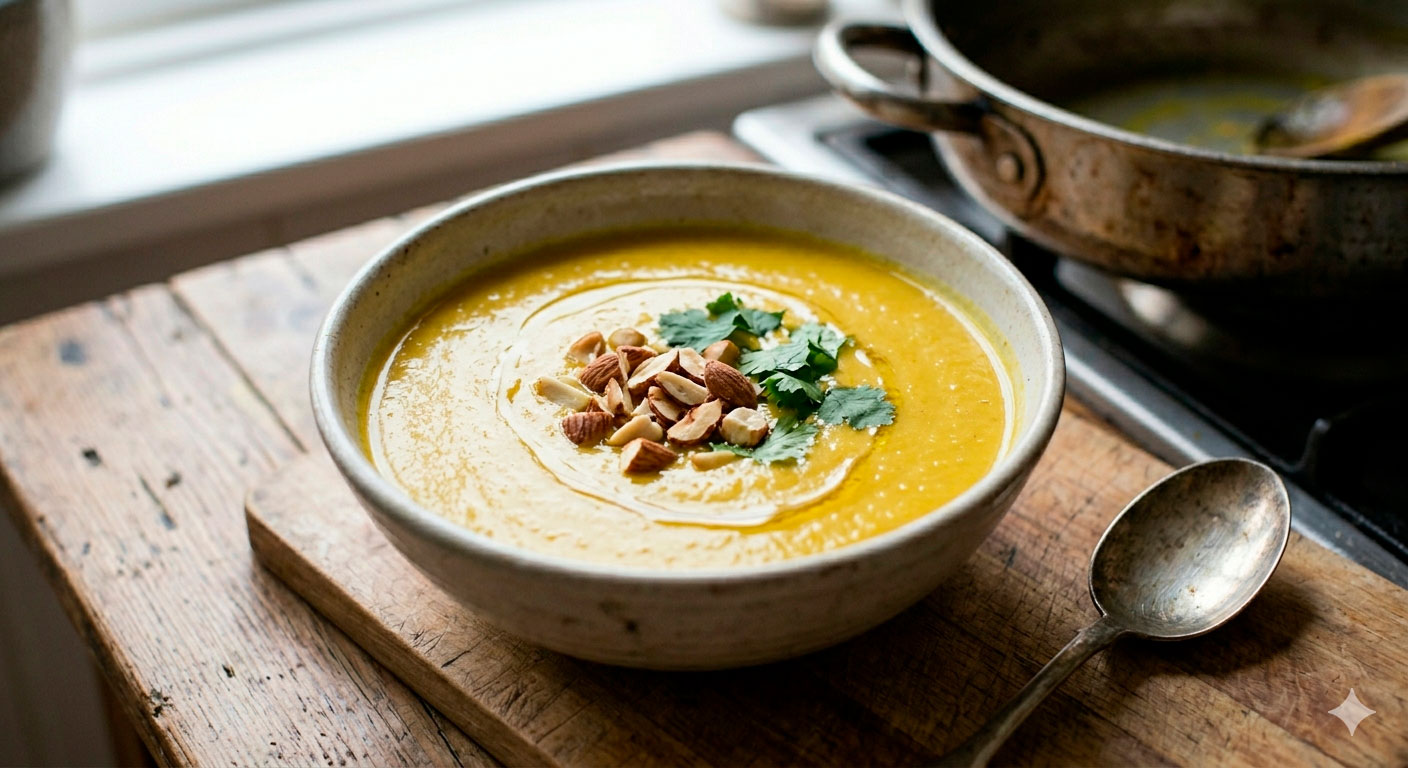
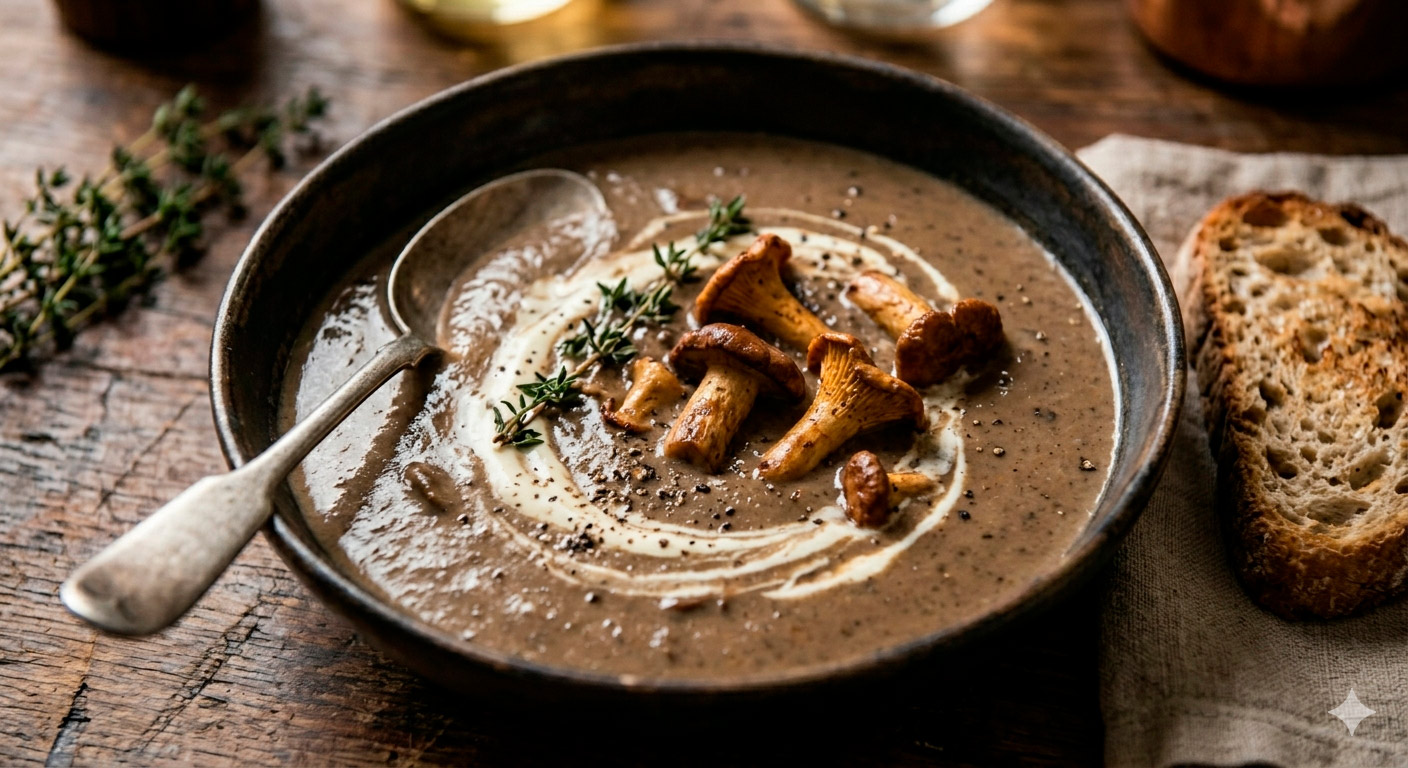
In terms of versatility, this recipe adapts elegantly to multiple contexts: it is the perfect first course for a family celebration dinner, the ideal lunch for a rainy autumn Sunday, or the starter that effortlessly surprises at a gathering with demanding guests. Its presentation —a deep ceramic bowl, the reserved mushrooms floating on the cream, a few fresh thyme leaves and a golden drizzle of olive oil— makes it a photogenic dish that needs no cheap ornaments to impress.
After more than twenty years cooking between stoves and local markets, we have learned that the most memorable dishes are not the most complicated, but the most honest. Wild mushroom and thyme cream soup is the living example of this: few ingredients, precise techniques, and a result that always draws sighs. Follow the five steps detailed in this recipe and you will discover that the “something” you look for in high-end restaurants was always within reach of your own kitchen.
Ingredients for wild mushroom and thyme cream soup
Quantities for 4 generous appetizer servings.
Main ingredients
- 600 g mixed wild mushrooms (Porcini, Portobello, Oyster mushrooms)
- 50 g unsalted butter (preferably grass-fed)
- 2 medium shallots, finely chopped
- 3 cloves fresh garlic
- 750 ml concentrated poultry or vegetable stock
- 200 ml heavy cream (high fat content)
Seasonings and extras
- 6 to 8 sprigs fresh thyme
- 120 ml dry white wine (Chardonnay or Sauvignon Blanc)
- 2 tablespoons extra virgin olive oil
- Fine sea salt to taste
- Freshly ground black pepper to taste
- 4 slices rustic country bread (for croutons)
Regional name variations
US/Canada: Wild mushrooms, cream of mushroom soup, heavy cream, fresh thyme.
UK/Ireland: Wild mushrooms, double cream, fresh thyme, shallots.
Australia/NZ: Wild mushrooms, pouring cream, fresh thyme, French shallots.
How to make wild mushroom and thyme cream soup step by step
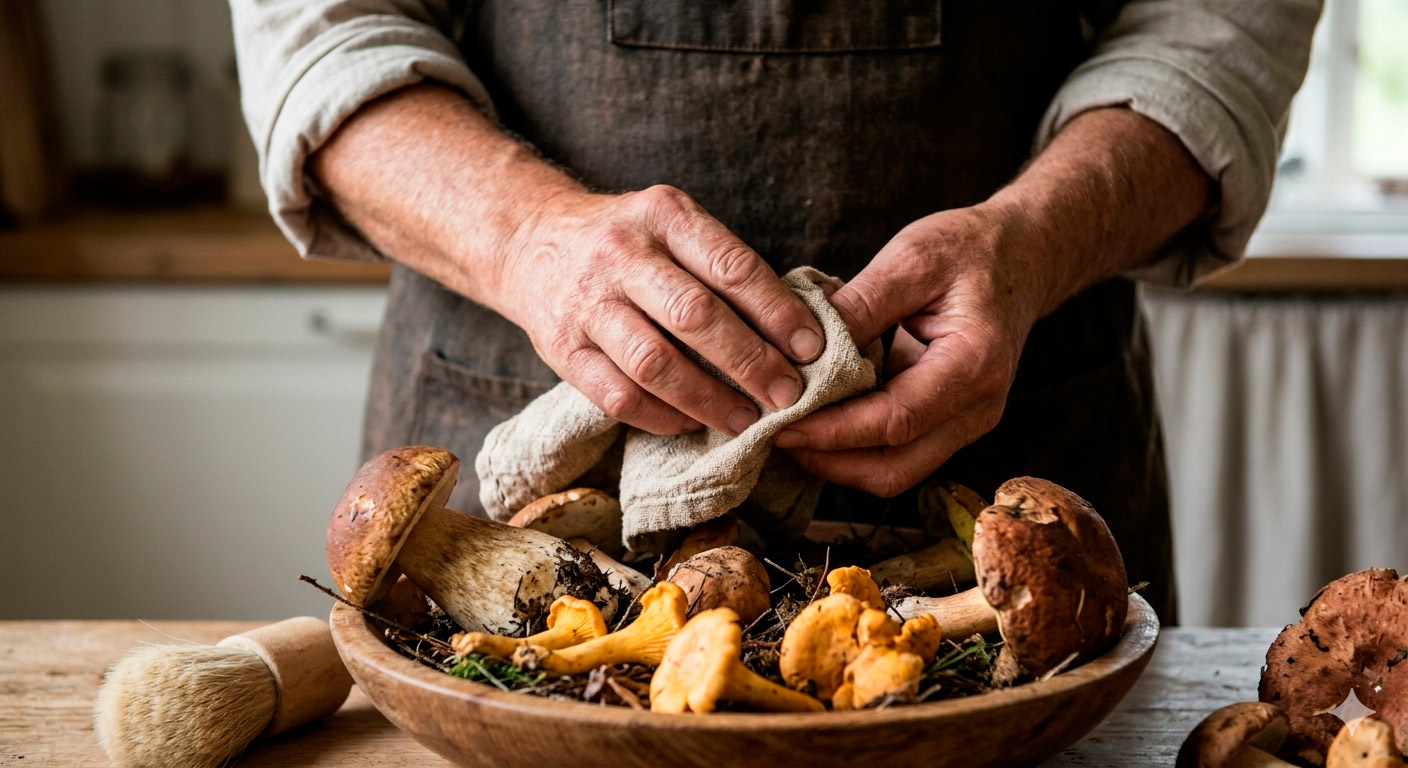
- Dry cleaning and definitive chopping: The worst enemy of a wild mushroom is running water: its porous flesh absorbs liquid like a sponge, ruining the texture and diluting its natural potency. Take a slightly damp kitchen cloth or a soft-bristled brush and patiently remove dirt from each piece. Cut them into irregular thickness slices. Reserve the most attractive pieces in a separate bowl: you will use them for plating.
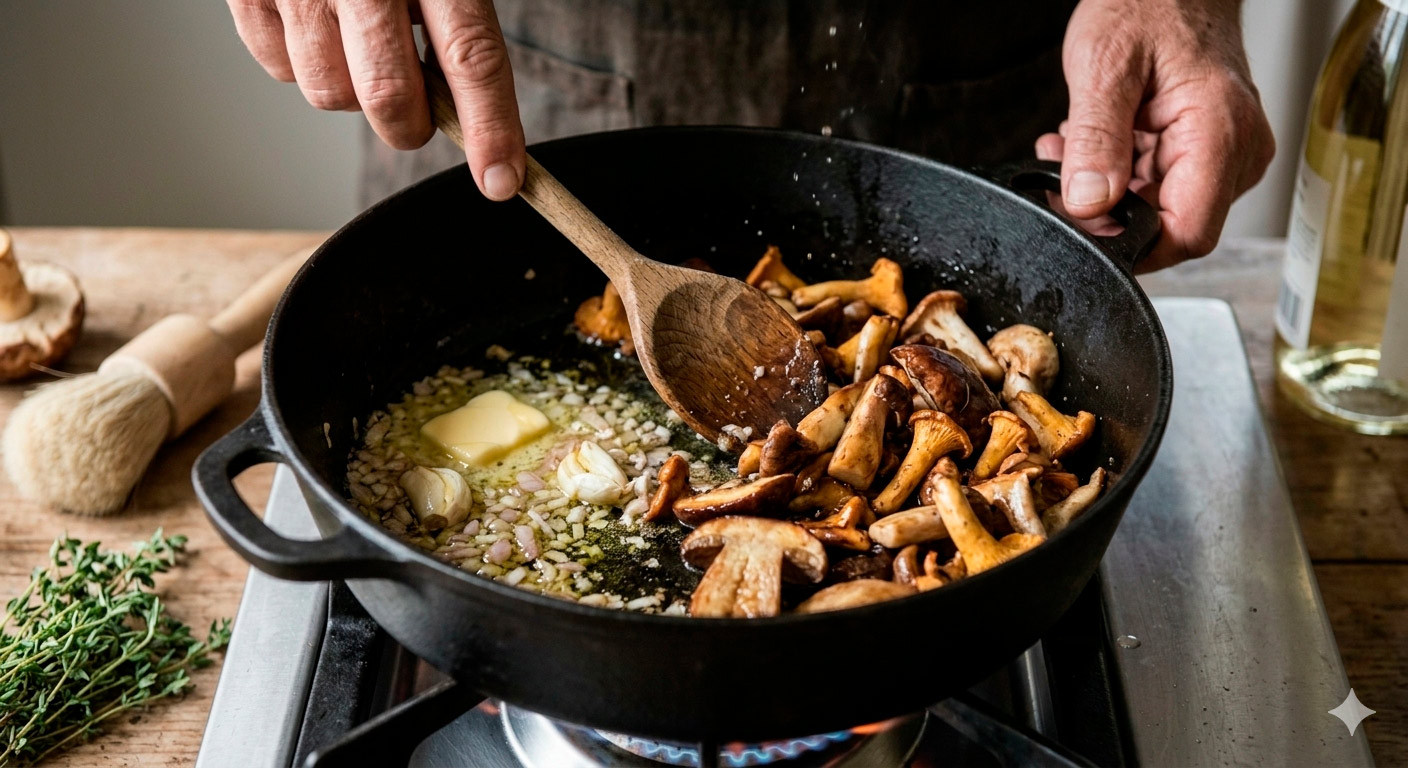
- Intense browning and awakening aromas: Place a heavy-bottomed pot over medium-high heat. Add the two tablespoons of extra virgin olive oil and immediately after, incorporate the unsalted butter. This combination raises the smoke point, preventing the butter from becoming bitter and giving a burnt flavor to the sauté. Add the finely chopped shallots and crushed garlic cloves. Cook until they become translucent and release a sweet smell. At that moment, turn the heat to high and add the mixed wild mushrooms. Do not move them immediately: allow the heat to sear their faces for two full minutes to achieve the deep caramelization that enhances the mushroom’s natural sugars.
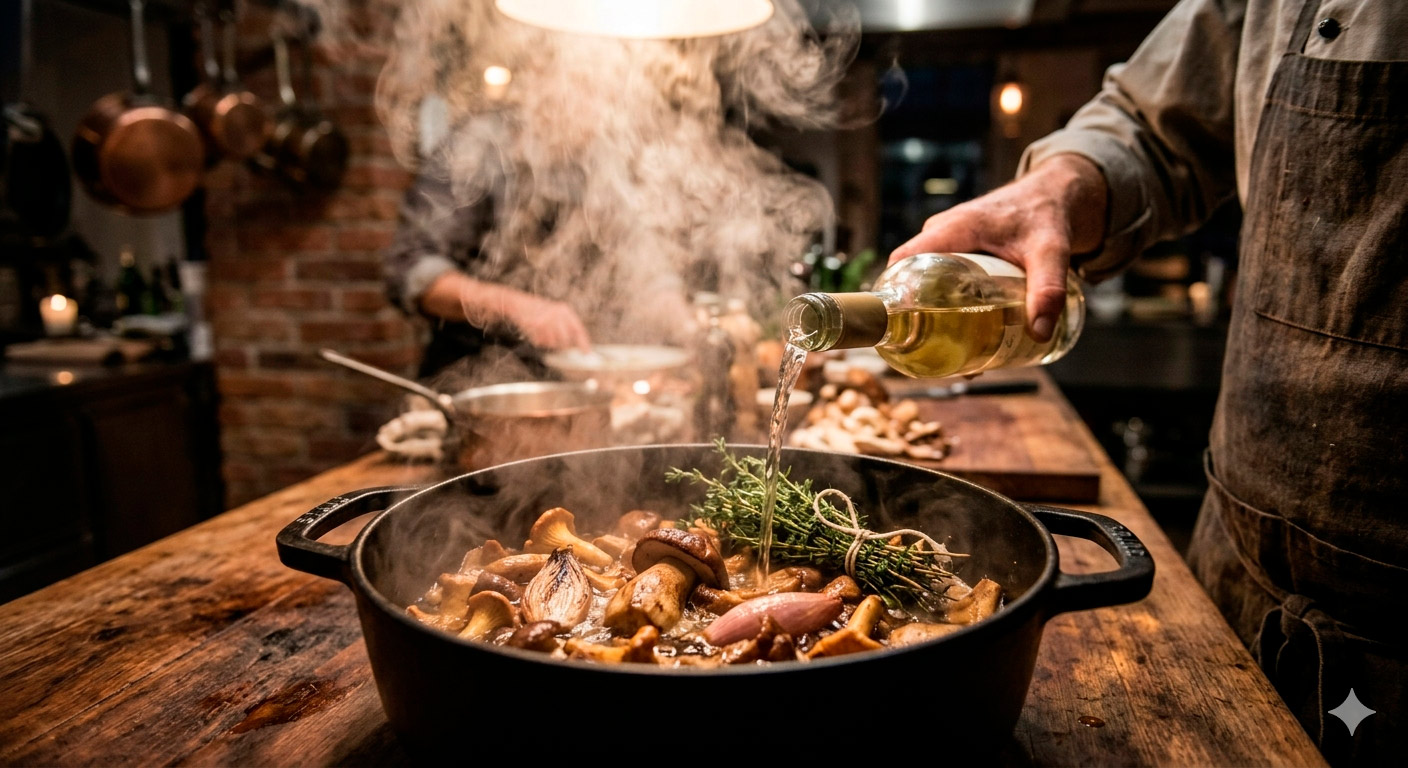
- Deglazing with white wine and thyme infusion: When the mushrooms are dark brown and shiny, pour the 120 ml of dry white wine over the bottom of the pot. You will hear an intense sizzle. Use a wooden spoon to gently scrape all the caramelized sediments stuck to the bottom: that is the concentrated flavor that will give incomparable complexity to the broth. Reduce the liquid by half and add the fresh thyme sprigs tied with kitchen twine for easy removal.
- Slow cooking with poultry stock: Pour in the hot concentrated poultry or vegetable stock so as not to interrupt the thermal process. Reduce the heat to minimum, seeking a barely perceptible bubbling. Partially cover the pot and let the flavors coexist and concentrate for 20 minutes. The thyme will gradually release its essential oils, balancing the heavy earthy notes with its herbal freshness. After the time, remove the thyme bundle.
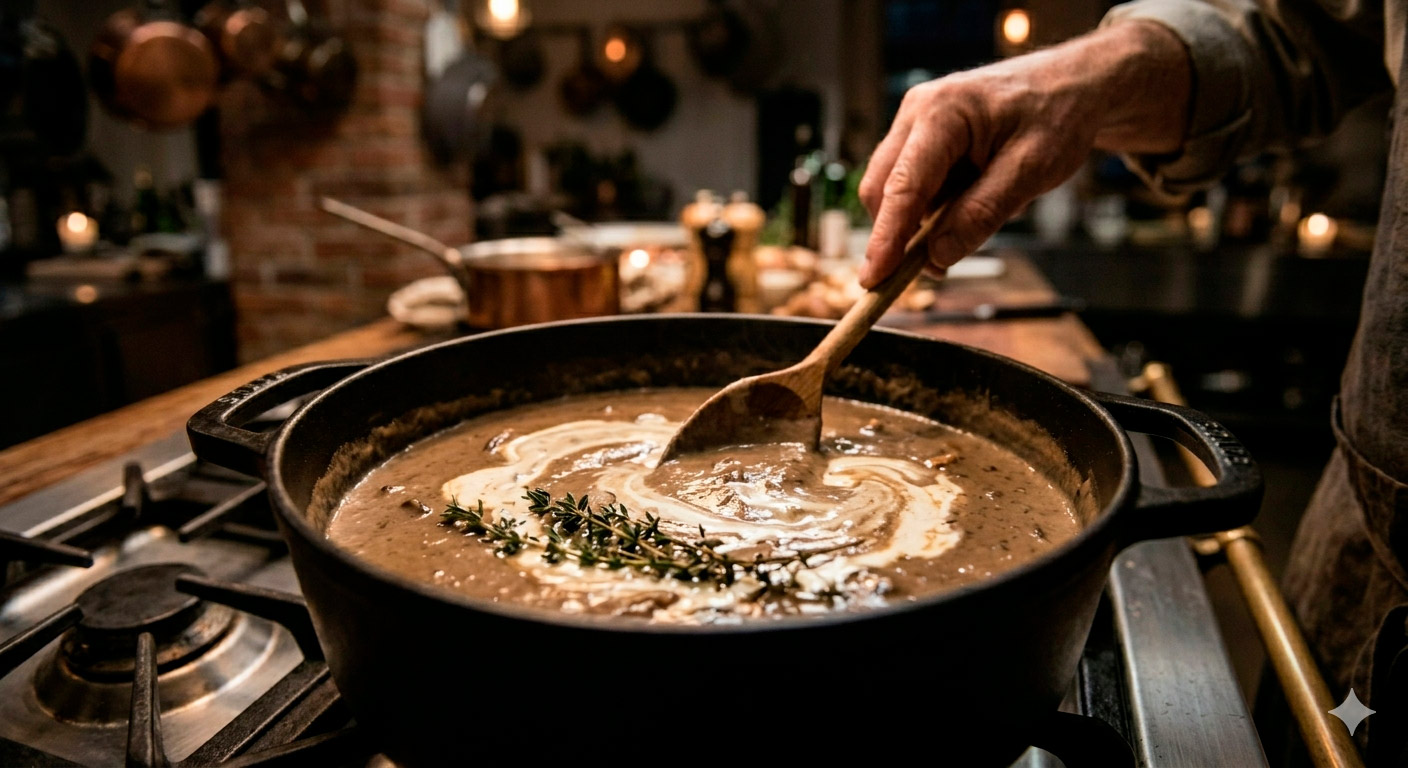
- Velvety transformation and the cream touch: Remove the pot from the heat. Use an immersion blender to blend until you obtain a fine, homogeneous, lump-free consistency. For a haute cuisine texture, pass the mixture through a fine-mesh strainer. Return to minimum heat and incorporate the heavy cream with stirring motions. Season with sea salt and abundant freshly ground black pepper. Cook for 5 more minutes without letting it boil again. Serve in a deep bowl decorated with the reserved mushrooms, fresh thyme leaves, and a drizzle of olive oil.
Nutritional information for wild mushroom and thyme cream soup
Approximate values per serving (recipe for 4 total servings).
| Nutrient | Per serving | % Daily Value* |
|---|---|---|
| Calories | 280 kcal | — |
| Protein | 6 g | 12% |
| Total carbohydrates | 12 g | 4% |
| Total fat | 18 g | 23% |
| Saturated fat | 11 g | 55% |
| Dietary fiber | 3 g | 11% |
| Sodium | 420 mg | 18% |
| Potassium | 380 mg | 10% |
*Percent based on a 2,000 kcal daily diet.
Expert Analysis: The master touch for wild mushroom and thyme cream soup
“The real culinary secret behind an unforgettable wild mushroom and thyme cream soup lies in the management of water and temperature. Mushrooms are composed of almost ninety percent water. If you cook them over low heat from the beginning, you will end up boiling them in their own juices, resulting in a rubbery texture and a bland taste that no amount of seasoning can correct.”
“By using high heat at the start, you evaporate that surface moisture instantly, allowing the Maillard reaction to occur: the chemical transformation that turns the mushroom’s amino acids and sugars into an explosion of deep, complex umami flavor. This step, misunderstood by most home cooks, is the real difference between a mediocre cream and an exceptional one.”
“Likewise, adding dairy fat at the end —off the boil and with stirring motions— acts as a conductive vehicle that traps the volatile compounds of the thyme, expanding the sensory experience with each spoonful. For pairing, an unoaked Chardonnay or an Italian Pinot Grigio are impeccable choices: their acidity cleanses the palate after each fatty bite without competing with the earthy notes of the mushroom.”
Tips for preparing the perfect wild mushroom and thyme cream soup
The first and most important tip is to respect the porous nature of the wild mushroom: never wash it under running water. A damp cloth or a soft-bristled brush are your only tools for cleaning. A water-saturated mushroom is a ruined mushroom before it even reaches the pot, because when cooked it will release all that absorbed moisture and end up steamed instead of browned. This seemingly minor mistake destroys the flavor base of the entire recipe.
The second critical point is the temperature of the pot at the time of browning. The pot must be genuinely hot before adding the mushrooms. To check without a thermometer, bring the palm of your hand about two inches from the surface: if you feel the heat immediately, the temperature is correct. Add the oil and butter only when the pot is at that temperature, and the mushrooms when the fat mixture is completely hot and slightly foaming. Remember: do not move them for the first two minutes. Patience in this step is the difference between caramelization and steaming.
For the cooking stock, avoid industrial bouillon cubes at all costs. Their high sodium content and artificial aromas overwhelm the delicate nuances of wild mushrooms. If you don’t have time to make a complete homemade stock with poultry carcasses, carrot, onion and celery, at least use a good quality no-salt-added stock from specialty supermarkets. The difference in the final result is immediate and significant.
Another trick that makes a difference in presentation is to reserve a cup of the most attractive sautéed mushrooms before blending. When you serve the cream on the plate, place these reserved pieces in the center, add a few fresh thyme leaves, a thin stream of extra virgin olive oil and a generous pinch of freshly ground black pepper. This simple maneuver visually elevates the dish from a homemade soup to a restaurant-quality first course.
If you notice the cream feels a bit heavy or greasy from the dairy, the final acidic touch trick is your best ally: a few drops of fresh yellow lemon juice or a splash of sherry vinegar added just before serving cuts the fat and instantly brightens all muted flavors. Don’t overdo it: the acid should be a whisper, not a scream.
Regarding the most common mistakes, the most frequent is adding the heavy cream while the preparation is still actively boiling. Dairy proteins coagulate with excessive heat and the emulsion breaks, resulting in an unappealing grainy texture. Always remove the pot from the heat or lower the flame to the absolute minimum before incorporating the cream, stirring constantly and gently until fully integrated before returning to heat. Five minutes over very low heat is enough to finish cooking without risk.
For storage, allow the cream to reach room temperature before refrigerating. Store it in an airtight glass container for a maximum of 3 days. When reheating, always do so over very low heat adding a splash of milk or broth to recover the fluidity and silkiness lost when cold.
Variations and substitutions for wild mushroom and thyme cream soup
This wild mushroom and thyme cream soup recipe is an extraordinarily flexible base that allows adjustments for different diets and palates without losing its essential character.
Fully vegan version: Substitute the butter with neutral coconut oil or cocoa butter and replace the heavy cream with a thick cashew-based cream (pre-hydrated cashews blended with vegetable broth). The result is equally silky, with a slightly sweet note that complements the earthy notes of the mushroom well.
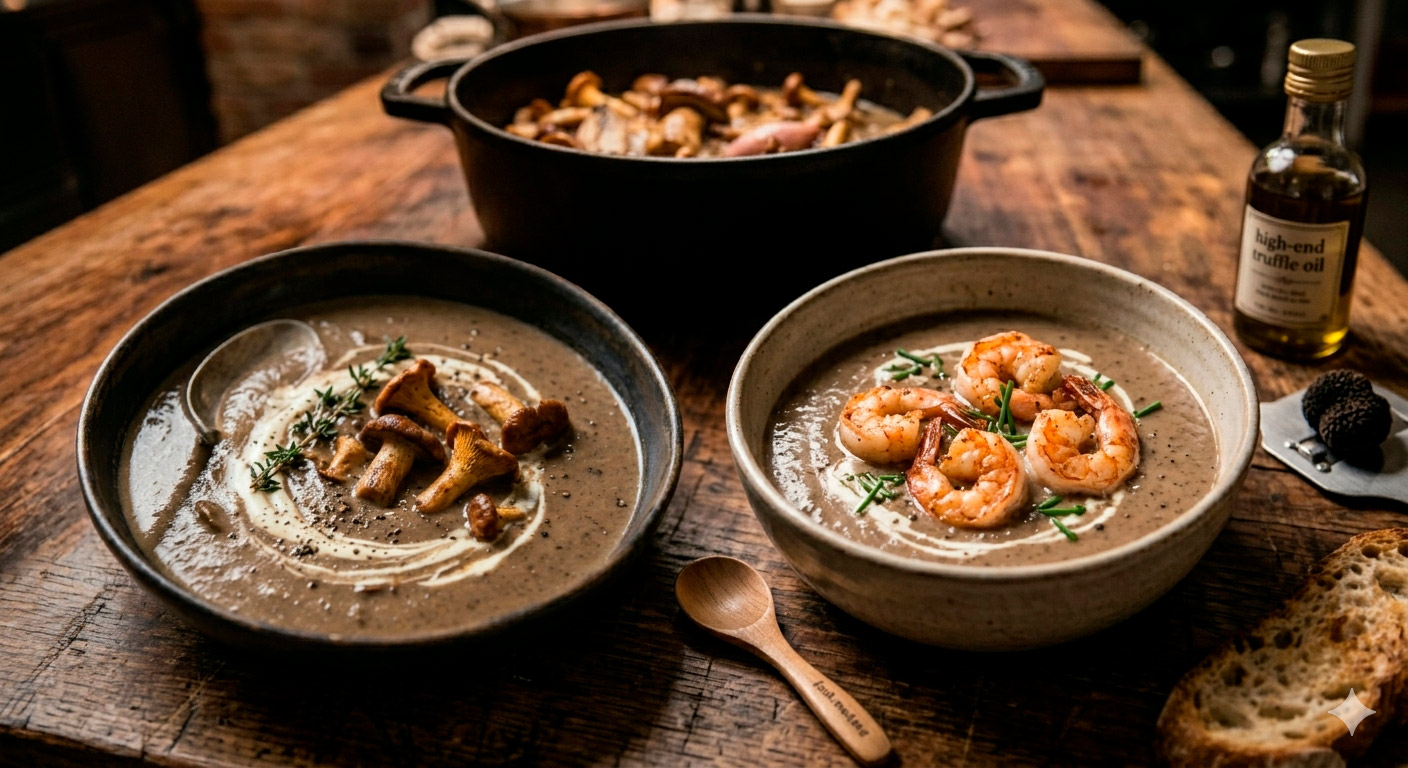
Luxurious high-end truffle touch: Just before serving, add a few drops of good quality white truffle oil and decorate with thin slices of raw Portobello mushroom for a surprising crunchy texture contrast in every bite.
Contrasting seafood option: Add garlic-sautéed prawns in the center of the plate when serving. The combination of seafood with earthy forest flavors creates an unexpected and memorable gastronomic harmony.
Version with common mushrooms: If you can’t get wild varieties, use common button mushrooms and add dried porcini mushrooms rehydrated in warm water for 15 minutes. Use that filtered liquid as part of the cooking stock to recover aromatic depth.
Frequently Asked Questions about wild mushroom and thyme cream soup
Can the wild mushroom and thyme cream soup be frozen?
Yes, you can freeze it for up to 2 months in a freezer-safe airtight container. Keep in mind that the cream fats tend to separate during thawing. To fix this, thaw in the refrigerator overnight and blend the cream again at high speed before heating to homogenize the emulsion. The result will be almost identical to the original.
How long does the wild mushroom and thyme cream soup last in the refrigerator?
Properly stored in an airtight glass container at a temperature below 4°C (40°F), it lasts up to 3 days in perfect condition. When reheating, do it over very low heat adding a splash of milk or broth to restore lost silkiness. If you notice a sour smell or grainy texture when opening the container, it is a sign it should no longer be consumed.
How many calories are in the wild mushroom and thyme cream soup?
This cream soup provides approximately 280 kcal per generous appetizer serving, with 6 g of protein, 12 g of carbohydrates and 18 g of total fat. It is a comforting dish with low glycemic impact, ideal for those watching their blood glucose levels thanks to its minimal simple carbohydrate content.
Can I make the wild mushroom and thyme cream soup without wild mushrooms?
Yes. Use common button mushrooms as a base and add a small amount of dried porcini mushrooms to recover the depth of wild flavor. Soak them in warm water for 15 minutes and use that same filtered liquid as part of the cooking stock. The result comes quite close to the original without sacrificing the aromatic profile that makes this recipe irresistible.
What is the best white wine for deglazing the wild mushroom and thyme cream soup?
Always lean towards dry wines with good natural acidity: Sauvignon Blanc, Pinot Grigio or unoaked Chardonnay are the ideal options. Completely avoid sweet or fruity wines, as they would alter the savory and earthy profile we seek to highlight in wild mushrooms. A simple rule: if you wouldn’t drink it with pleasure, don’t put it in the pot.
What is the best way to serve the wild mushroom and thyme cream soup?
In a deep dark ceramic bowl, decorated with the reserved sautéed mushrooms, fresh thyme leaves, a drizzle of extra virgin olive oil and freshly ground black pepper. The perfect accompaniment is crispy artisanal sourdough bread croutons rubbed with garlic and toasted in the oven. For beverage pairing, an unoaked Chardonnay or a dry Sauvignon Blanc enhances its earthy notes without overpowering them.
Reference sources and resources
For more information on food safety and nutrition, consult WHO healthy diet guidelines.
For nutritional value of wild mushrooms, you can consult The Nutrition Source from Harvard T.H. Chan School of Public Health.
Food composition information available from the Mexican National Institute of Public Health database.
We also recommend our other recipes from the same category: Rich and Easy Creams and Easy and Quick Recipes.
Check our liability policy and legal notice before making dietary decisions based on this content.