3 Secrets for Spectacular Irresistible Sweet and Sour Chicken with Pineapple and Bell Peppers
Origin and history of sweet and sour chicken with pineapple and bell peppers
To understand the essence of this dish, we must travel to the rich culinary heritage of the Canton province in southern China. Originally, the mix of sweet and sour flavors —known as Goo Lou Jook— was mainly applied to pork. Cantonese cooks discovered that the natural acidity of local fruits combined with rice vinegar and sugar not only helped preserve the meats but also created an exciting flavor profile that whetted the appetite and aided digestion in hot, humid climates.
Pineapple was not part of the oldest ancestral recipes, but it was enthusiastically incorporated when 20th-century trade routes facilitated access to this tropical fruit with its firm flesh and vibrant acidity. From that moment on, the ingredient became a key piece in the balance between sweet and sour that characterizes the irresistible sweet and sour chicken with pineapple and bell peppers we know today.
With the great wave of Chinese migrant workers heading West, especially to the United States during the 19th and early 20th centuries, the recipe underwent a fascinating evolution. When they lacked traditional ingredients and faced Western palates accustomed to sweeter flavors, cooks adapted their methods. Chicken began to gain ground over pork due to its versatility and quick cooking time, and the sauce acquired its characteristic bright color thanks to the introduction of tomato concentrate.
What was born as a regional balance technique in Canton became the global ambassador of fusion cuisine. Irresistible sweet and sour chicken with pineapple and bell peppers demonstrates that food is a living entity: it travels, changes, and adapts to each culture that receives it, enriching itself with every border it crosses without ever losing its original essence of perfect contrast between sweet, sour, and salty.
What is irresistible sweet and sour chicken with pineapple and bell peppers and why should you make it at home?
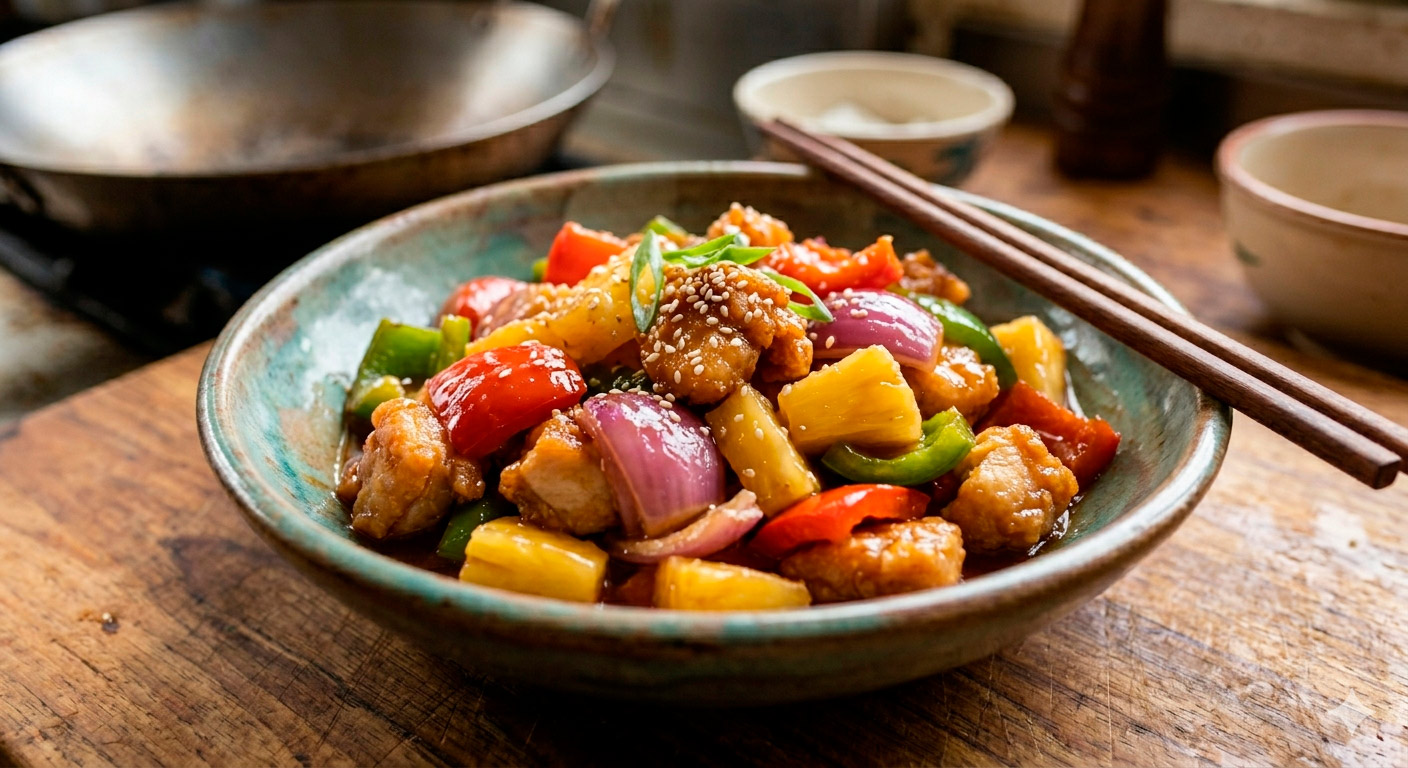
Irresistible sweet and sour chicken with pineapple and bell peppers is one of the most popular preparations of Asian fusion cuisine in the Spanish-speaking world. It consists of chicken breast cubes coated in cornstarch, golden-fried until achieving a crispy crust, and napped with a shiny sauce that perfectly balances the sweetness of brown sugar, the acidity of rice vinegar, the saltiness of soy sauce, and the unmistakable fruity touch of fresh pineapple. The red and green bell peppers and red onion provide vibrant color and vegetable crunch, turning this dish into a visual experience as irresistible as it is tasty.
The aroma that wafts from the wok when the sugar begins to caramelize with the vinegar and the fruity touch of the pineapple is, simply put, a heavenly experience. Throughout over twenty years in the kitchen, the author has seen hundreds of culinary trends and passing fads come and go. However, certain combinations transcend time because they directly appeal to the palate’s memory. The balance between sweet, sour, salty, and the crunch of fresh vegetables is a perfect dance of textures that, when executed with care, transforms a simple dinner into an unforgettable feast.
Cooking sweet and sour chicken at home is not just about following mechanical instructions; it’s about understanding how elements interact over the fire. The real secret of this dish lies not in the complexity of its components, but in respect for times and temperatures. Many people get frustrated because their chicken turns out soggy or the sauce too runny. With this recipe, you will learn to master the technique of sealing and sauce emulsification so that each bite remains crispy on the outside, juicy on the inside, and perfectly napped by that shiny glaze.
One of the great advantages of irresistible sweet and sour chicken with pineapple and bell peppers is its speed of execution: once the cutting and mise en place are completed, cooking takes no more than 15 minutes. This makes it an ideal option both for a weekend dinner when you want to treat your loved ones, as well as for those weekdays when you have little time but refuse to resort to ultra-processed fast food. By preparing it yourself, you control the quality of the oil, the amount of sugar, and the freshness of the vegetables, transforming a recipe commonly labeled as “restaurant food” into a nutritious and deeply comforting meal.
Nutritionally, this dish offers an excellent balance: 32 grams of high biological quality lean protein per serving, abundant vitamin C from bell peppers and pineapple —which also contains bromelain, an enzyme that facilitates protein digestion— and total moderate fats of only 12 grams. Fresh pineapple provides genuine citrus acidity that cleanses the palate with each bite and counteracts the heaviness of the frying. It is, in short, a dish that cares for both pleasure and well-being.
Ingredients for irresistible sweet and sour chicken with pineapple and bell peppers
Quantities for 4 servings.
Main ingredients
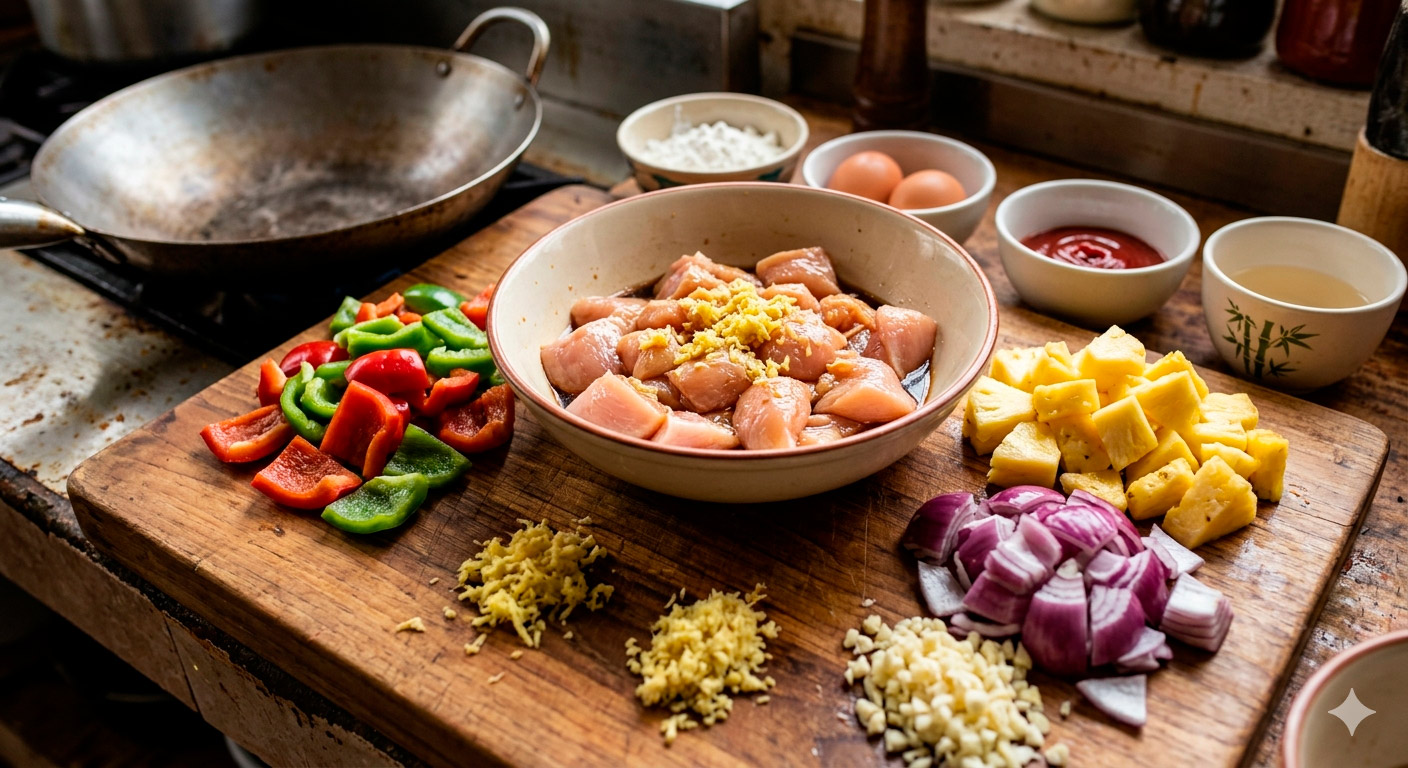
- 600 g chicken breast (cut into cubes)
- 1 cup fresh pineapple, cut into cubes
- 1 red bell pepper, cut into squares
- 1 green bell pepper, cut into squares
- 1 red onion, cut into squares
- 4 tablespoons cornstarch
- 1 egg, beaten
Seasonings and sweet and sour sauce
- 4 tablespoons soy sauce
- 3 tablespoons rice or apple cider vinegar
- 3 tablespoons brown sugar
- 4 tablespoons ketchup or tomato concentrate
- 2 cloves garlic, finely chopped
- 1 teaspoon fresh grated ginger
- Sunflower or sesame oil for frying and sautéing
How to prepare irresistible sweet and sour chicken with pineapple and bell peppers step by step
- Cut and marinate the chicken: Take the clean chicken breasts and cut them into medium cubes, approximately 2 cm per side. Place them in a spacious bowl and add 2 tablespoons of soy sauce along with the fresh grated ginger. Mix well with clean hands and let rest at room temperature for 10 minutes. This brief rest allows the salt from the soy sauce to penetrate the muscle fibers, ensuring the chicken doesn’t end up bland inside after the thermal process.
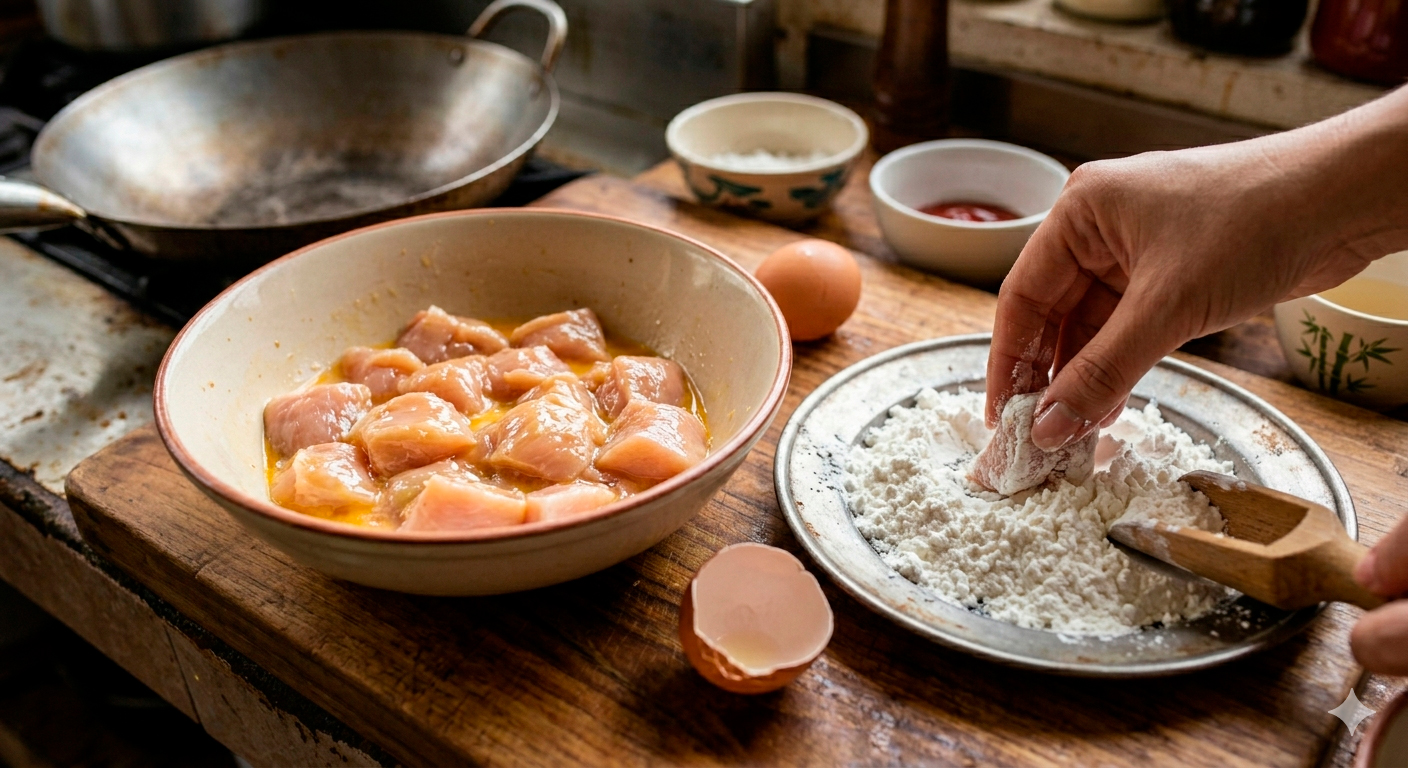
- Coat with cornstarch for lasting crunch: Add the beaten egg to the bowl of marinated chicken and mix until each piece is covered. In a separate shallow dish, spread the cornstarch. Pass the cubes through the cornstarch, making sure to shake off the excess. The secret to preventing the coating from softening upon contact with the sweet and sour sauce is to achieve a thin, dry, compact layer. Leave the coated pieces on a rack for 3 minutes before introducing them to the oil.
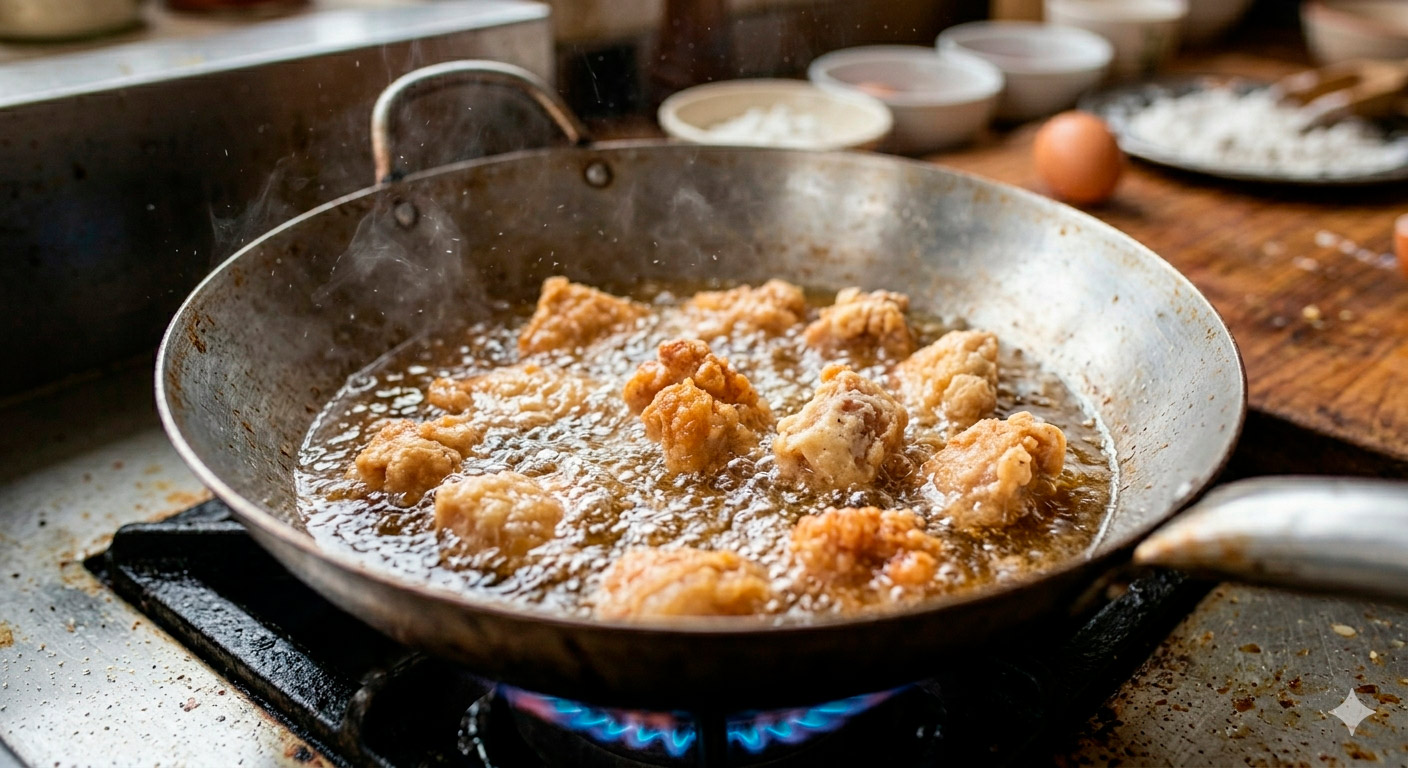
- Seal and brown the chicken in the wok: Heat a generous amount of vegetable oil in a wok or deep skillet over medium-high heat. When the oil begins to shimmer, introduce the chicken pieces in small batches so as not to cool the vessel. Fry for 4-5 minutes, turning occasionally, until they achieve a bright golden color and a firm texture to the touch. Remove with a slotted spoon and place on paper towels to absorb excess grease.
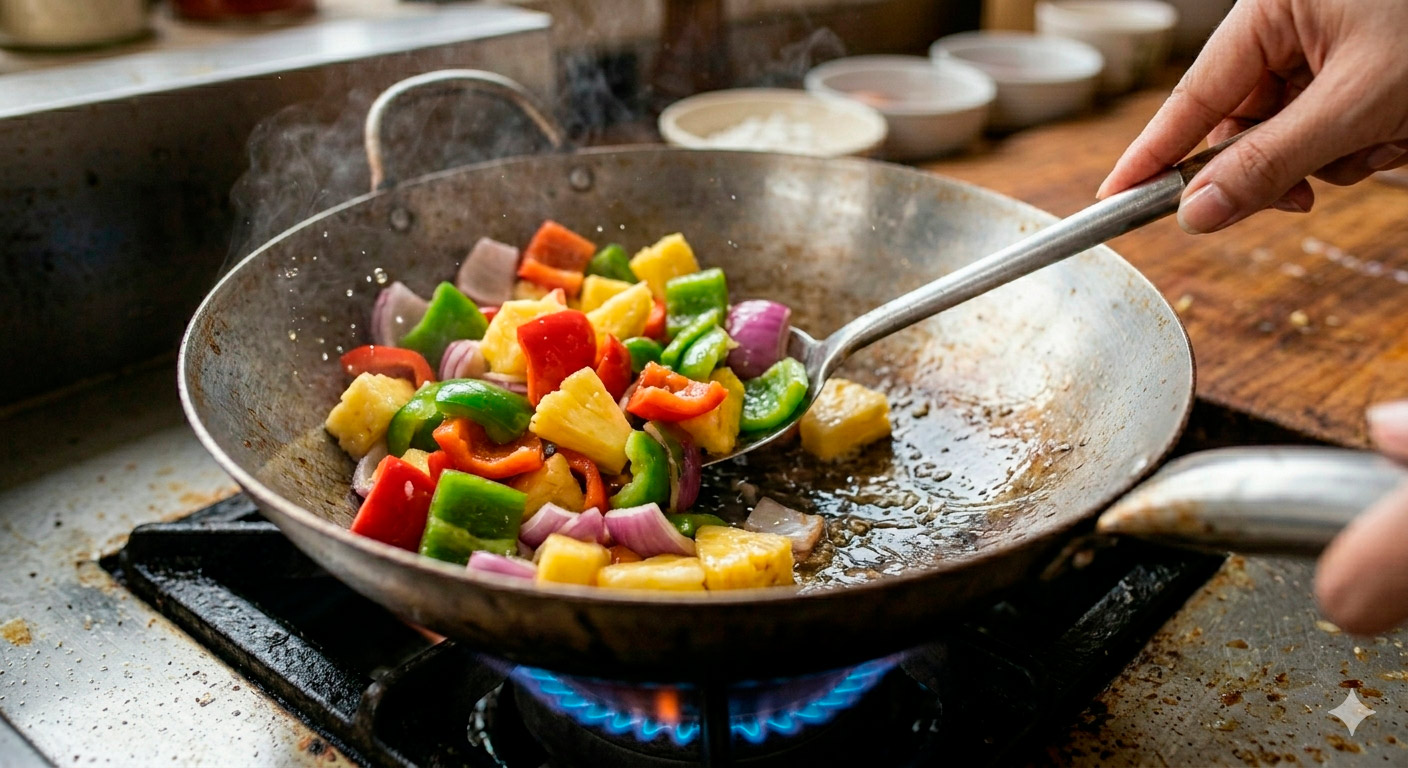
- Vigorously sauté the vegetables and pineapple: Remove almost all the oil from the wok, leaving only one tablespoon. Turn the heat to maximum. Add the chopped garlic and immediately incorporate the red and green bell peppers along with the onion, all cut to the same size as the chicken. Sauté vigorously for 2 minutes; the vegetables should lose their raw rigidity but retain their vibrant color and crunchy texture. In the last minute, add the pineapple cubes so they begin to release their sugars and lightly brown.
- Incorporate the sweet and sour sauce and serve immediately: In a separate glass, mix the ketchup, vinegar, the remaining soy sauce, sugar, and 1 teaspoon of cornstarch dissolved in 3 tablespoons of cold water. Pour this mixture directly over the vegetables and pineapple in the hot wok. Stir constantly; in 30 seconds the sauce will go from opaque to a translucent, thick, shiny glaze. At that precise moment, return the golden chicken to the wok. Sauté everything together for 60 seconds so the sauce embraces every ingredient and serve immediately.
Nutritional information for irresistible sweet and sour chicken with pineapple and bell peppers
Approximate values per serving (4 total servings).
| Nutrient | Per serving | % Daily Value* |
|---|---|---|
| Calories | 420 kcal | — |
| Protein | 32 g | 64% |
| Carbohydrates | 45 g | 15% |
| Total fat | 12 g | 18% |
| Saturated fat | 2 g | 10% |
| Dietary fiber | 3.5 g | 14% |
| Sodium | 780 mg | 32% |
| Vitamin C | 85 mg | 110% |
*Percentage based on a 2,000 kcal daily diet.
Expert Analysis: The master touch for irresistible sweet and sour chicken
From my perspective in the professional kitchen, the technical value of irresistible sweet and sour chicken with pineapple and bell peppers lies in its ability to teach the home cook absolute control over textures. It’s a wonderful exercise in contrasts. The great mistake beginners make is overcooking the bell peppers and onion, turning them into a limp, colorless paste. In classic Asian cooking, the vegetable must retain its living cellular structure; it must “sing” when bitten into.
Using cornstarch instead of wheat flour for the coating is an unmatched technical success. Starch does not develop gluten, resulting in a much lighter, crispier crust that is less prone to absorbing excess oil. The addition of vinegar balances the heaviness of the frying, cleansing the palate with each bite and transforming a preparation that could be heavy into an extremely fresh and agile experience for the digestive system.
In terms of pairing, this recipe stands out accompanied by a craft wheat beer with citrus notes or a semi-dry white wine like a young German Riesling, whose fruity acidity dialogues perfectly with the sweet and sour sauce. For those who prefer non-alcoholic beverages, lightly sweetened hibiscus water or cold green tea are equally elegant complements. The balance of the sauce —where ketchup provides body without dominating, vinegar lifts the palate, and brown sugar adds character— is the quality signature that distinguishes this version from any mediocre takeout preparation. — El Godínez Hambriento, cocinasabroso.com
Tips for preparing the perfect irresistible sweet and sour chicken
The first secret that distinguishes irresistible sweet and sour chicken from a mediocre version is the temperature of the wok. Before adding any vegetables, the vessel should be smoking hot. Asian stir-frying is based on applying explosive heat for a few seconds to caramelize the outer sugars of the vegetable without cooking its center. A lukewarm wok will only boil the ingredients in their own juices, ruining both color and texture. If you don’t have a wok, use the widest, thickest-bottomed skillet you have, and work in small batches.
The second great tip is the temperature of the water to dissolve the starch for the sauce: it must be completely cold. Hot water forms lumps upon contact with cornstarch before it reaches the wok, creating an irregular, unpleasant sauce. Ice-cold water, on the other hand, keeps the starch perfectly suspended and allows it to activate only when it contacts the heat of the wok, creating that translucent, shiny, lump-free glaze.
Always use fresh pineapple instead of canned pineapple. Canned pineapple contains processed sugars that alter the acidic balance of the sauce, making it cloying and artificial. Fresh pineapple provides genuine citrus acidity and a firm texture that perfectly withstands the heat of the wok without falling apart. Cut the pineapple cubes the same size as the chicken and bell peppers; uniformity ensures everything stir-fries evenly.
Do not crowd the chicken when frying. This is the most frequent and also the most devastating mistake. If you introduce all the cubes at the same time into a small skillet, the oil temperature will drop drastically, and the chicken will begin to cook in its own juices instead of frying, completely ruining the desired crispy crust. Work in two or three batches, removing each batch onto paper towels before proceeding with the next.
Regarding storage, if you have a leftover portion of irresistible sweet and sour chicken, store it in an airtight glass container in the refrigerator for a maximum of 3 days. Let the dish cool to room temperature before covering to prevent condensation from diluting the sauce. To reheat it, avoid the microwave at all costs: it will moisten the vegetables and soften the chicken irremediably. Instead, heat a clean skillet over medium heat with a few drops of water or chicken broth, add the stored contents, and sauté quickly for 3 minutes. The sauce will regain its shine, and the vegetables will retain some of their characteristic firmness.
Variations and substitutions for irresistible sweet and sour chicken with pineapple and bell peppers
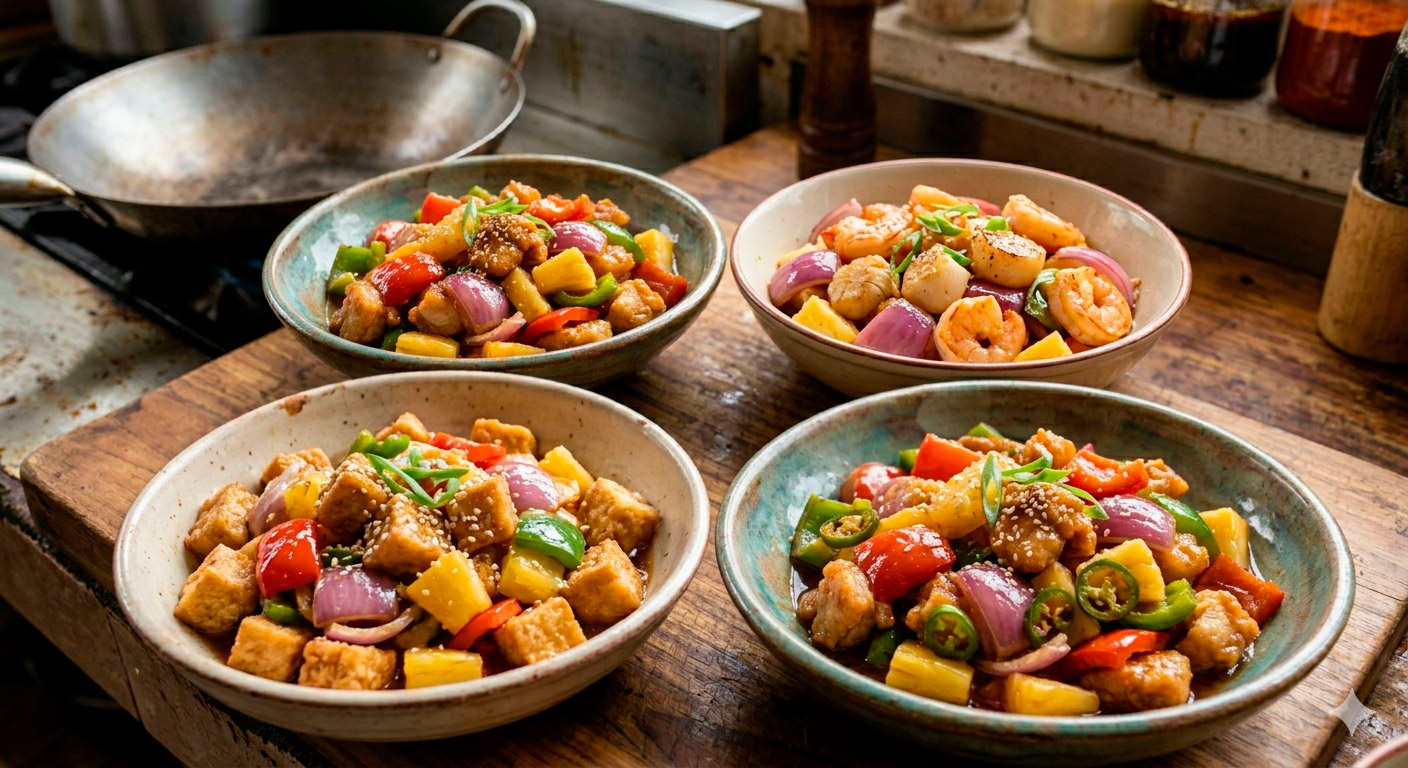
Cooking is a space for freedom and constant experimentation. For those who want a version closer to the classic Cantonese recipe, pork tenderloin cubes are the original protein and provide fantastic juiciness thanks to their fat infiltration. For a seafood alternative, large shrimp or firm salmon cubes work wonderfully, requiring significantly less cooking time in the oil to avoid drying out.
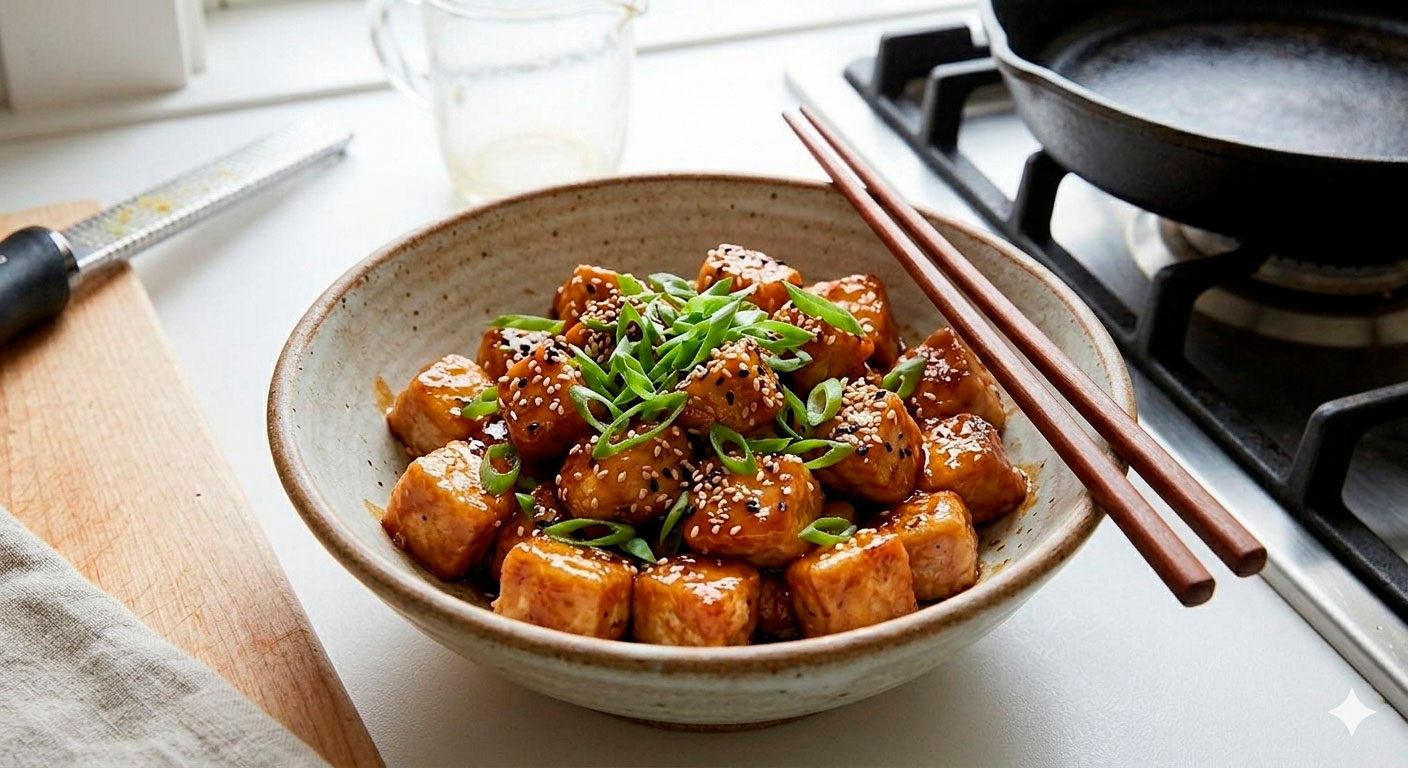
If you lead a plant-based lifestyle, you can substitute the chicken with firm tofu cubes. Press the tofu for 30 minutes with a weight on top to remove excess water, coat it in cornstarch, and fry it until quite rigid. For spice lovers, adding a few slices of fresh jalapeño pepper or a teaspoon of sesame-chili paste to the sweet and sour sauce creates a completely addictive dimension of flavor. To adapt this recipe to a gluten-free diet, simply replace the conventional soy sauce with certified gluten-free tamari sauce; the coating is naturally gluten-free as it exclusively uses cornstarch.
Frequently asked questions about irresistible sweet and sour chicken with pineapple and bell peppers
Can irresistible sweet and sour chicken with pineapple and bell peppers be frozen?
Freezing this dish is not recommended. When thawed, the cell walls of the bell peppers and onion break down completely, releasing all their internal water. This makes the sauce excessively runny and gives the vegetables an unpleasant, soft texture, losing all the charm of the fresh dish. It is much better to consume it freshly prepared or refrigerate it for a maximum of 3 days.
How long does sweet and sour chicken last in the refrigerator?
Stored in a well-sealed airtight glass container at refrigeration temperature (maximum 4°C / 40°F), the dish stays in good condition for up to 3 days. It is essential to let it cool completely to room temperature before covering and refrigerating to prevent condensation from diluting the sauce. If upon taking it out you notice an unusual sour smell or a notable change in the color of the vegetables, discard it without hesitation.
How many calories are in irresistible sweet and sour chicken with pineapple and bell peppers?
This recipe provides approximately 420 kcal per serving, with 32 g of high-quality protein, 45 g of carbohydrates, and 12 g of total fat. Thanks to the quick stir-frying method and the use of lean chicken breast, it is a balanced dish that is not heavy on the digestive system, ideal within a varied and mindful diet.
Can sweet and sour chicken be made without cornstarch?
Yes, it is possible, although the result will vary noticeably. Wheat flour absorbs more oil and tends to soften quickly upon contact with the sweet and sour sauce. To maintain the characteristic crispy texture, cornstarch is irreplaceable in this recipe. As a gluten-free alternative with a similar result, you can use potato starch or arrowroot in the same proportion.
How is irresistible sweet and sour chicken with pineapple and bell peppers best served?
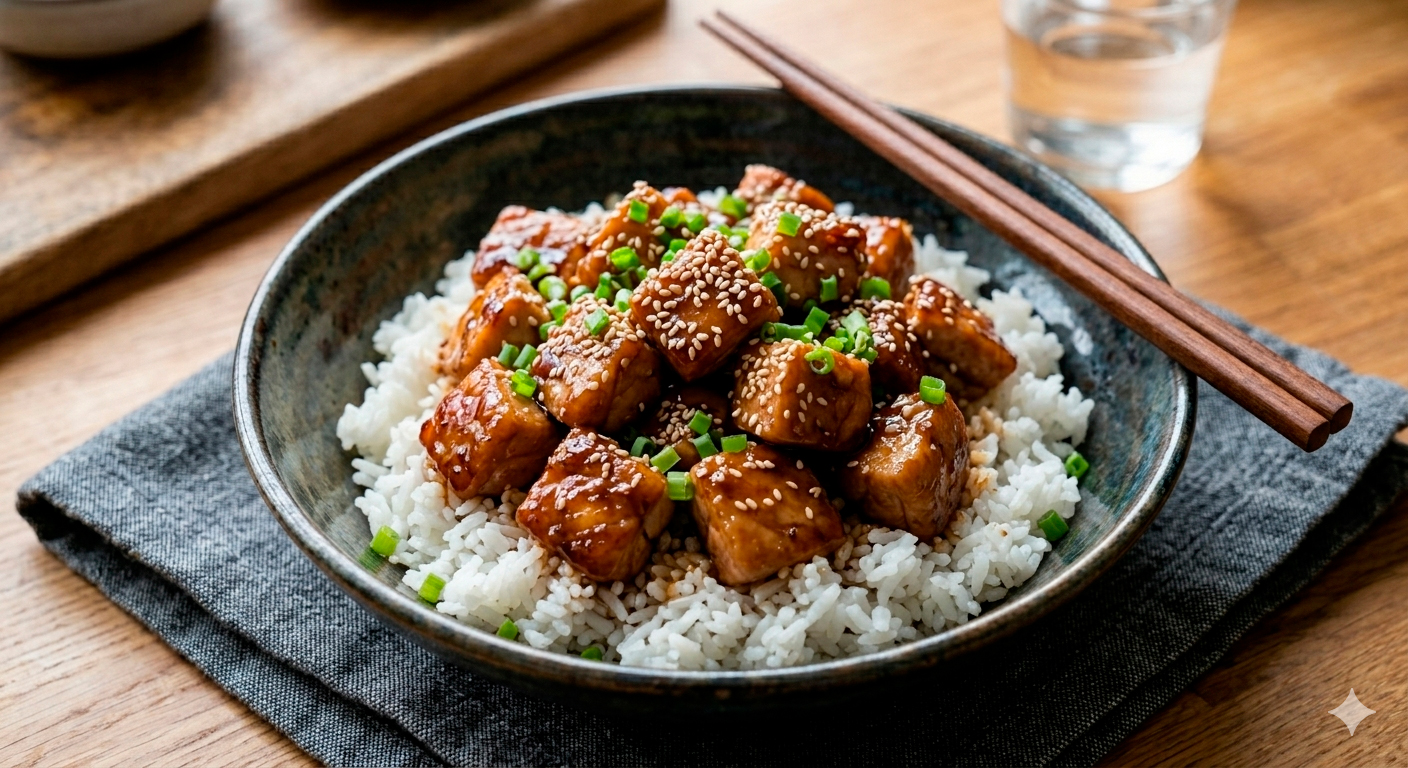
Serve immediately over steamed white rice or jasmine rice, which wonderfully absorbs the sweet and sour glaze. It also pairs excellently with rice noodles or wheat noodles. For a festive presentation, garnish with toasted sesame seeds and chopped green onions on the diagonal. At the table, place it in the center family-style for each diner to serve themselves as they wish.
Reference sources and resources
For more information on food safety and nutrition, consult WHO healthy diet guidelines.
Regarding the nutritional value of ingredients, you can consult The Nutrition Source from Harvard T.H. Chan School of Public Health.
Information on food composition available from the National Institute of Public Health of Mexico database.
Consult our liability policy and legal notice before making decisions about your diet based on this content.