5 Steps to a Truly Comforting Homemade Irresistible Minestrone Soup
By El Godínez Hambriento — Published on May 27, 2026 | Soups and Comforting Stews | Easy and Quick Recipes
Origin and history of minestrone soup with seasonal vegetables
To deeply understand the essence of minestrone soup with seasonal vegetables, we must travel back in time to the fertile lands of the Italian peninsula. Its origin dates back to the times of the Roman Empire, long before the tomato made its appearance in European cuisine after the discovery of America at the end of the 15th century. In those days, humble families depended entirely on what they grew in their small gardens or what was left after harvesting in the landowners’ fields.
The word minestrone comes from the Italian minestra, meaning soup, combined with the augmentative suffix -one, which literally translates as “the big soup” or colloquially “the big souper.” This name honors the enormous quantity and variety of elements that went into the communal pot. It was the ultimate expression of cucina povera — the cooking of the poor — a philosophy where absolutely nothing was wasted: if there were leftover beans from the day before, a piece of stale bread, or the outer leaves of a cabbage, everything went straight into the pot with water and a splash of oil.
With the expansion of trade routes and the introduction of new crops to Europe during the 16th and 17th centuries, the recipe was notably enriched. The arrival of tomatoes and potatoes from the American continent completely revolutionized the structure of minestrone soup, providing the acidity, vibrant color, and consistency that we now consider an indispensable part of the dish.
Each region of Italy began to claim its own identity within this preparation: in Liguria it is crowned with a touch of fresh green pesto; in Lombardy it is preferred with rice instead of pasta; and in Tuscany it is generously thickened with local cannellini beans. This regional diversity is precisely what makes homemade minestrone soup a living culinary heritage in constant evolution.
Today, this classic has transcended the borders of its native Italy to become a universal dish that adapts to the products of each local market. Its only unwavering rule is to respect the freshness and natural cycle of seasonal vegetables, which guarantees authentic flavors and maximum nutritional value. It is a historical reminder of how scarcity sharpens ingenuity and gives rise to the greatest works of art in world gastronomy.
What is irresistible minestrone soup with seasonal vegetables and why should you make it at home?
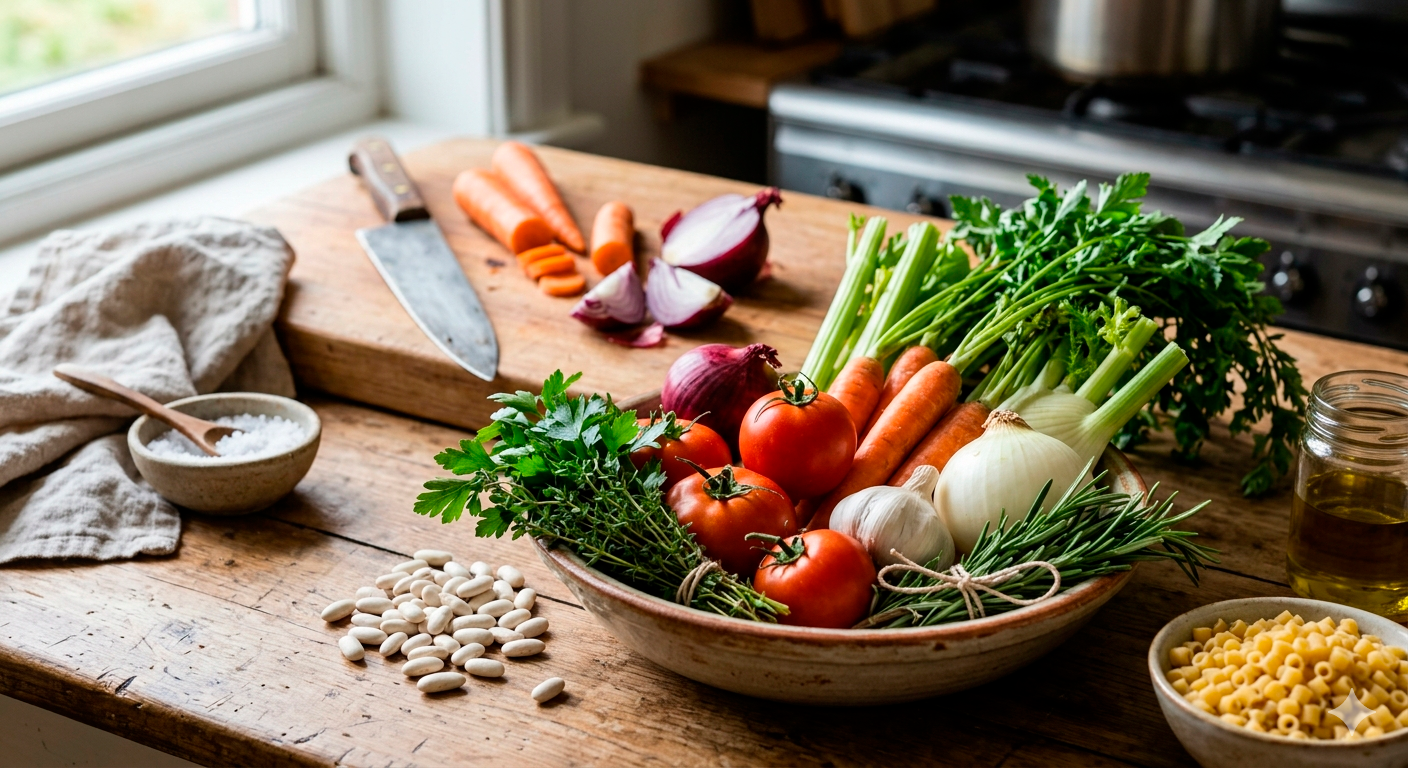
Irresistible minestrone soup with seasonal vegetables is one of the oldest, most nutritious, and versatile preparations in all of Italian culinary tradition. It is an abundant broth made with a generous variety of fresh vegetables, legumes, and short pasta, all sautéed in extra virgin olive oil and perfumed with aromatic herbs. Unlike other soups that follow strict formulas, minestrone celebrates freedom and creativity: it changes with each season, with each local market, and with the hand of the cook.
When you prepare homemade minestrone soup in your own kitchen, you control every ingredient, avoid preservatives and excess sodium from industrial products, and obtain a nutritionally much richer and more complete dish. Furthermore, taking advantage of seasonal vegetables is not only more economical; it guarantees that the vegetables reach your pot at their peak of freshness, flavor, and nutrient concentration.
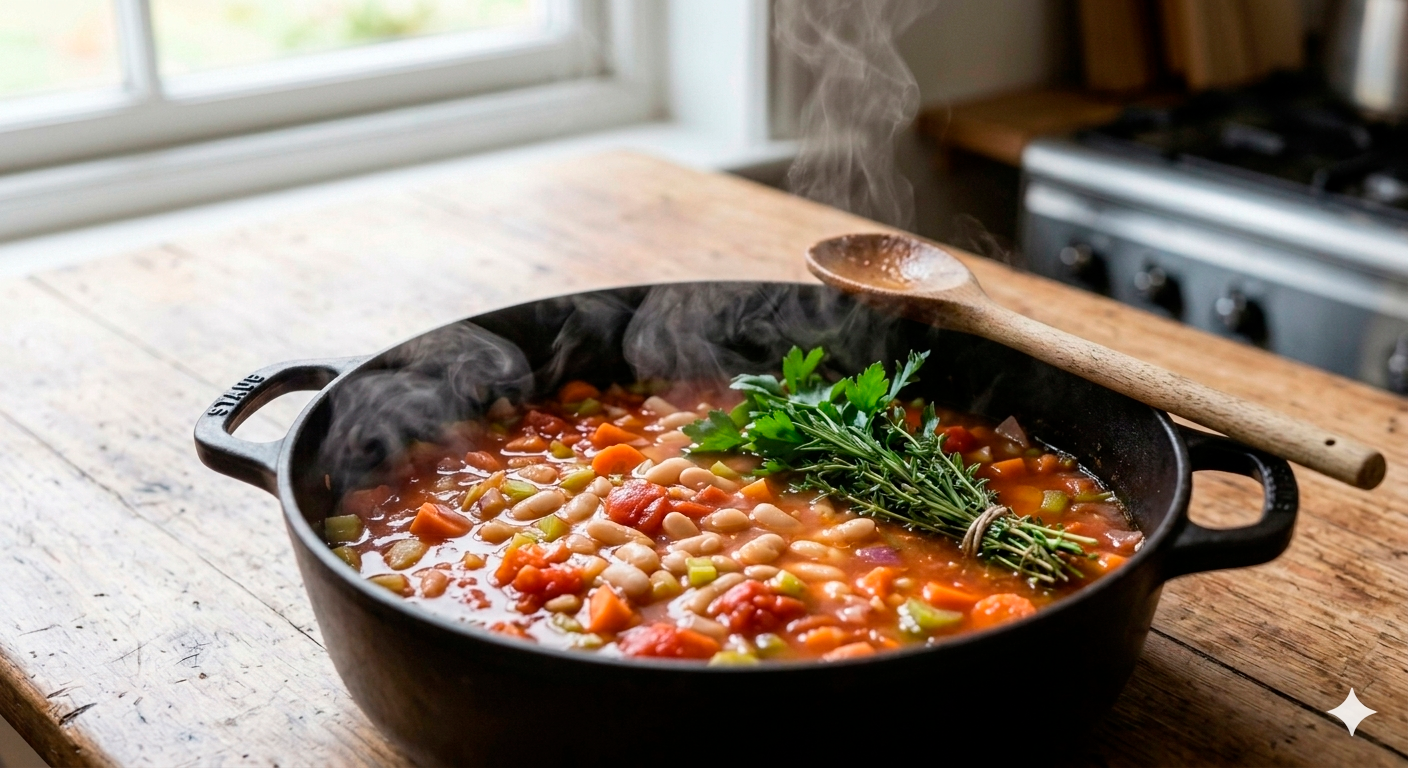
The murmur of a pot simmering over low heat, the aroma of olive oil embracing the sauté of onion, carrot, and celery, and the golden sheen of the broth that forms little by little are experiences that no canned version can replicate. Preparing this soup is an act of conscious, slow, and satisfying cooking that comforts the soul even before taking the first spoonful to your mouth.
It is often mistakenly assumed that a vegetable soup is a light or bland dish, a mere transition before the main course. Those who think so have never tried a well-executed irresistible minestrone soup, where the natural juices of each vegetable concentrate, the legumes provide their silky texture, and the pasta amalgamates everything into a symphony of textures and flavors that satisfies for hours.
Another aspect that makes this recipe irresistible is its outstanding nutritional profile. With just 245 kilocalories per serving, minestrone soup provides 9 grams of vegetable protein, 8 grams of dietary fiber, vitamins A, C, and K, and essential minerals such as potassium and magnesium. It is, definitively, one of those rare dishes that allow you to eat abundantly without guilt.
In this recipe for irresistible minestrone soup with seasonal vegetables, you will learn to build flavor from the correct base, manage cooking times so that each vegetable retains its ideal texture, and incorporate that great secret of traditional Italian cooking: the Parmesan rind submerged in the broth. This ingredient naturally releases glutamate, elevating the vegetable base to a deep and comforting umami dimension that no industrial bouillon cube can match.
Get ready to transform your kitchen into an authentic corner of the Italian countryside. With the right ingredients, a good heavy-bottomed pot, and the patience this dish deserves, you will make one of the most irresistible soups you have ever tasted.
Ingredients for irresistible minestrone soup with seasonal vegetables
Quantities for 6 servings.
Main vegetables and legumes
- 2 medium zucchinis
- 250 g cooked white beans (cannellini or navy beans)
- 1 large potato
- 100 g fresh peas
- 2 medium carrots
- 150 g green beans
- 3 large ripe tomatoes
- 100 g short pasta Ditalini or Tubetti
Seasonings and aromatics
- 4 tablespoons extra virgin olive oil (EVOO)
- 3 cloves of garlic
- 1 large onion
- 2 clean celery stalks
- 1 clean Parmesan rind (the great umami secret)
- 1 small bunch fresh basil
- Freshly ground black pepper to taste
- Salt to taste
How to prepare irresistible minestrone soup with seasonal vegetables step by step
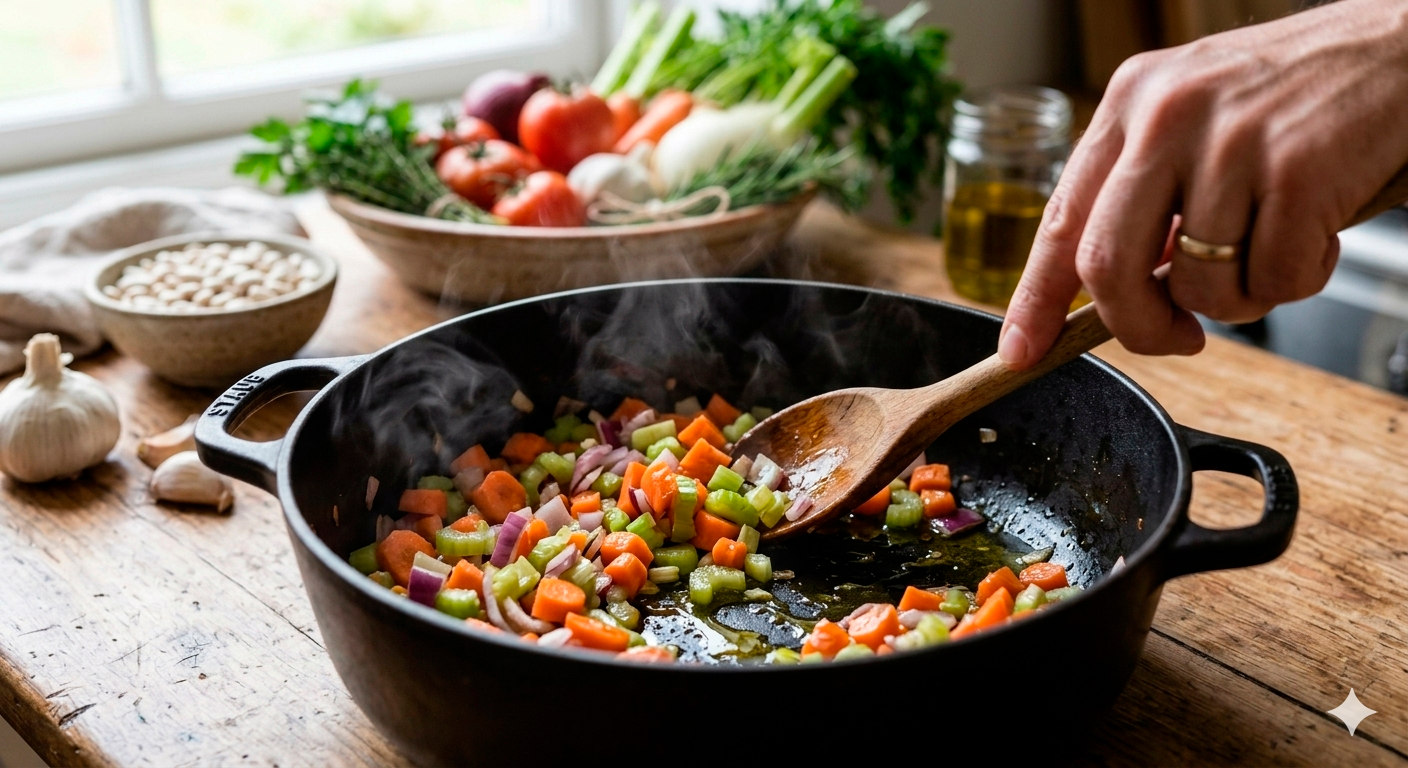
- Mise en place and uniform cutting: Wash all seasonal vegetables thoroughly. Peel the carrots, potato, and onion. Finely dice the onion, celery, and carrot into approximately half-centimeter pieces — what in professional cooking is known as brunoise or sauté cut. The potatoes and zucchinis should be cut into one-centimeter cubes so they don’t disintegrate during cooking. Trim the ends of the green beans and cut them into two-centimeter pieces. Finely chop the garlic cloves and reserve each element separately in clean bowls. Uniformity of cuts is not a mere aesthetic whim: it guarantees that each bite contains all the flavors of the dish and that the cooking is perfectly homogeneous.
- The soffritto, the foundation of flavor: Place a large, heavy-bottomed pot over medium-low heat. Pour in the four tablespoons of extra virgin olive oil and wait for it to warm up. Add the onion, celery, and carrot along with a generous pinch of salt. Cook, stirring frequently, for 10 minutes, until the onion becomes completely translucent and the vegetables begin to release their natural sugars without browning excessively. Add the chopped garlic and cook for two more minutes until its aroma fills the entire kitchen. This soffritto is the invisible pillar upon which the entire aromatic structure of the soup is built.
- Adding tomato and firm vegetables: Grate the ripe tomatoes directly over the soffritto, discarding the skin. Increase the heat slightly and allow the tomato to reduce and lose its excess water for 5 to 7 minutes, concentrating its flavor and intense red color. Next, add the potatoes and green beans. Stir well to coat them in the soffritto, then pour in hot mineral water or a mild vegetable broth until the vegetables are covered by at least four fingers. At this point, introduce the well-cleaned Parmesan rind: this component will progressively release natural glutamate, providing an unmatched salinity density and complexity.
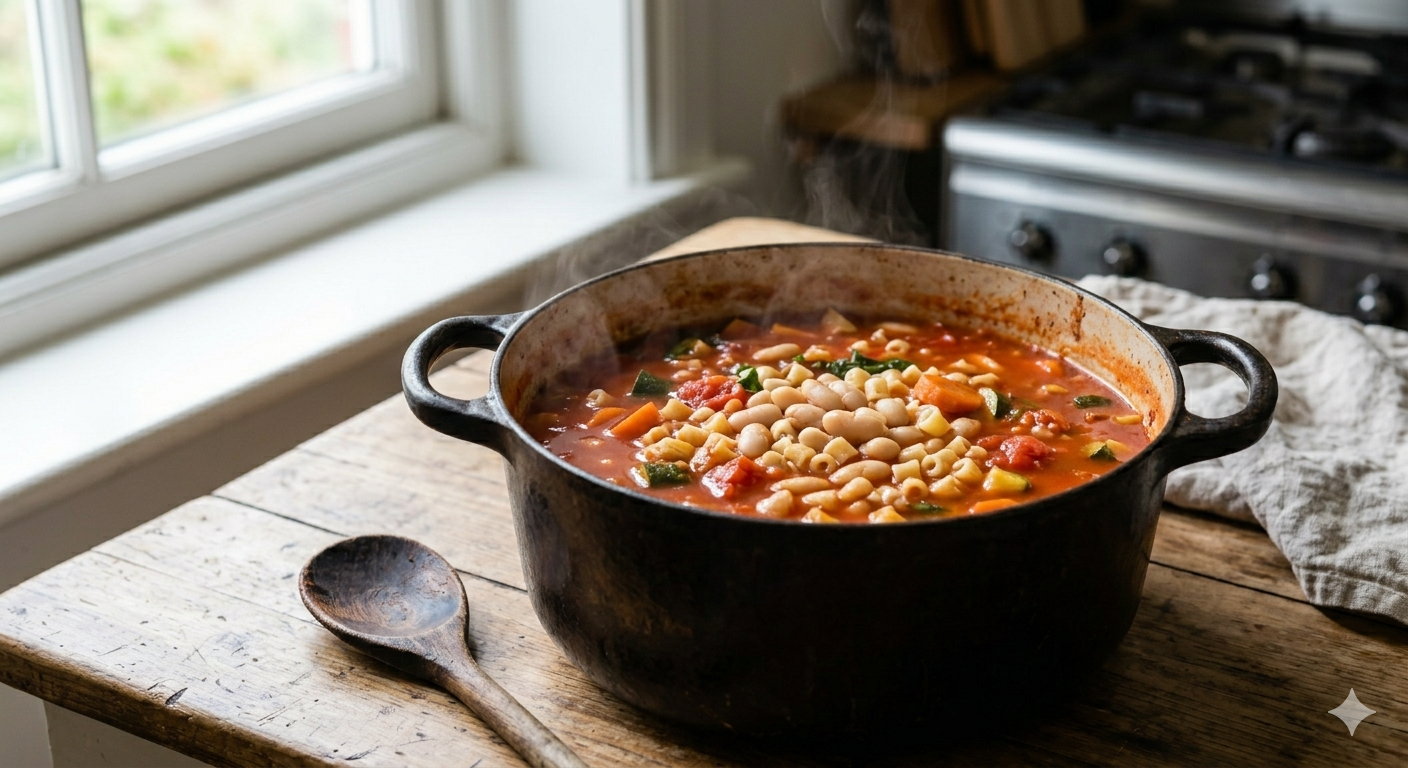
- Slow cooking and adding legumes: Bring the soup to a boil, then reduce the heat to the minimum, partially cover the pot, and let it simmer gently for 20 minutes. After this time, check that the potato is beginning to soften by inserting a knife. Add the zucchinis, the pre-cooked and drained white beans (rinsed under cold water), and the fresh peas. The legumes will provide that unctuous touch so characteristic of minestrone. Let everything cook together for an additional 10 minutes so that the flavors finish intermingling in perfect harmony.
- Final touch with pasta and aromatics: Add the short pasta directly to the pot. If you notice the soup is too thick, incorporate a ladle of hot water. Cook for the time indicated by the manufacturer — normally between 8 and 10 minutes — stirring occasionally to prevent sticking to the bottom. Two minutes before turning off the heat, remove the Parmesan rind, adjust the salt, and add the freshly ground black pepper along with fresh basil leaves torn by hand. Turn off the heat, cover the pot, and let the soup rest for five minutes before serving to let the mixture settle. Serve with a drizzle of raw olive oil and grated Parmesan cheese to taste.
Nutritional information of irresistible minestrone soup with seasonal vegetables
Approximate values per serving (recipe total: 6 servings).
| Nutrient | Per serving | % Daily value* |
|---|---|---|
| Calories | 245 kcal | 12% |
| Protein | 9 g | 18% |
| Carbohydrates | 38 g | 14% |
| Total fat | 6 g | 8% |
| Saturated fat | 1.2 g | 6% |
| Dietary fiber | 8 g | 32% |
| Sodium | 420 mg | 18% |
| Potassium | 650 mg | 19% |
*Percentage based on a 2,000 kcal daily diet. Values may vary depending on the seasonal vegetables chosen.
Expert Analysis: the master touch for irresistible minestrone soup
From my perspective behind the stove, irresistible minestrone soup with seasonal vegetables is not a simple recipe; it is a living testimony of peasant culinary wisdom. The secret to the success of this dish does not lie in adding expensive ingredients, but in mastering time and textures. The initial sauté — known in Italian gastronomy as soffritto — is the invisible pillar upon which the entire aromatic structure rests. Cutting the ingredients into uniform sizes is not an aesthetic whim: it responds to the need for each bite to contain an equitable sample of all the elements and for the cooking to be perfectly uniform.
A common mistake I observe in novice cooks is the incorrect handling of pasta and legumes. Overcooking the pasta turns a glorious broth into a thick, unappealing paste. The pasta should remain al dente, as it will continue to absorb liquid even after turning off the heat. If you plan to reheat the soup the next day, add fresh water or broth at that time.
The use of Parmesan rind is a traditional high-cooking resource that makes a huge difference in the final result. This ingredient naturally releases monosodium glutamate — the so-called umami — elevating the vegetable base to a deep and comforting flavor dimension without needing to resort to industrial broths loaded with additives. For pairing, I recommend a dry white wine with good acidity like Verdicchio dei Castelli di Jesi or a classic Soave, which balances the vegetable richness of the soup without overpowering it.
Finally, the gesture of raw extra virgin olive oil at the time of serving is not just aesthetic. When added over the hot plate, the volatile compounds of the oil are immediately activated and enhance the aromas of fresh basil and vegetables, creating a complete sensory experience in every spoonful. — El Godínez Hambriento, cocinasabroso.com
Tips for preparing a perfect irresistible minestrone soup
The first great tip for achieving an irresistible minestrone soup is to respect the cooking sequence of the vegetables according to their density and softening time. Hard roots like carrots and potatoes always go first; zucchinis, beans, and peas are incorporated in the second half of cooking to preserve their soft but firm texture. Breaking this order results in overly soft vegetables that disintegrate and cloud the broth. Also, do not underestimate the power of resting: five minutes with the pot covered after turning off the heat allows the flavors to settle and meld into an extraordinarily harmonious whole.
Another fundamental technical secret is to allow the soffritto to take on a slightly golden color — without burning — before adding the tomato. This Maillard reaction generates aromatic compounds that give the broth a deep amber color and a very appealing toasted flavor. Likewise, do not discard the green leaves of the celery: they contain an enormous amount of aromatic matter. Finely chop them and add them to the pot along with the rest of the soffritto; they will provide a fresh and slightly bitter touch that balances the natural sweetness of the carrot.
Regarding the most common mistakes when preparing homemade minestrone soup: the first is not rinsing canned beans before adding them to the broth. The covering liquid in the jars is thick, salty, and can alter both the flavor and clarity of the broth. The second frequent mistake is adding the pasta too soon: if you add it before the last 10 minutes, it will be overcooked and disintegrated, turning the broth into a pasty mixture. If you plan to keep the soup for the next day, cook the pasta separately and add it directly to the plate at serving time.
For storage, keep the soup in airtight glass containers once completely cold. In the refrigerator, it keeps in perfect condition for up to 4 days and, as Italians well know, it is often noticeably more flavorful the next day. To freeze, prepare the vegetable base without pasta and freeze in individual portions for up to 3 months. On the day you consume it, thaw over low heat, add water if necessary, and add fresh pasta at that time. If you follow a special diet, this recipe is easily adaptable: the vegan version simply eliminates the Parmesan rind — or substitutes it with nutritional yeast — and the final cheese; the gluten-free version uses certified rice or corn pasta. In both cases, the result remains equally irresistible.
Variations and substitutions for irresistible minestrone soup with seasonal vegetables
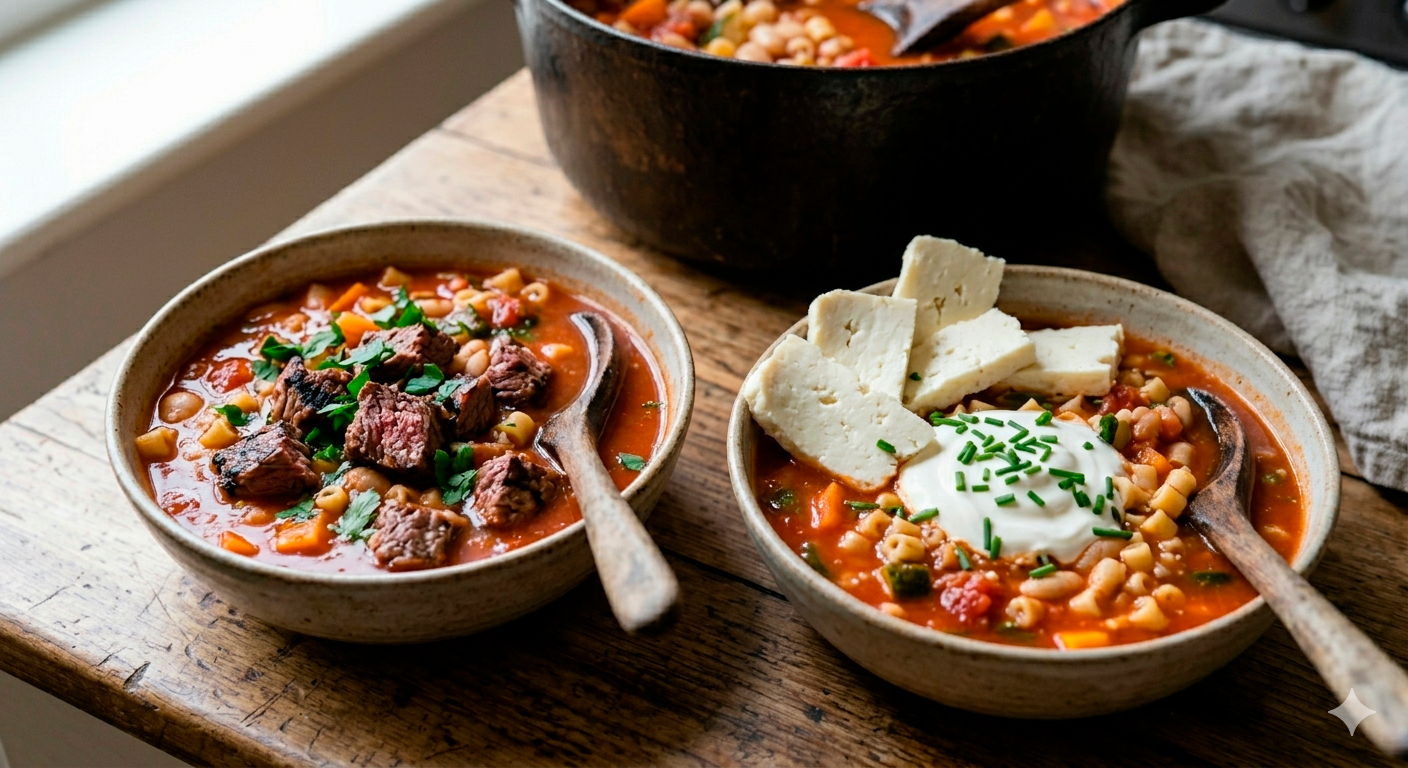
Versatility is the second name of minestrone soup with seasonal vegetables. In its spring-summer version, substitute heavy vegetables with lighter options: green asparagus cut into rounds, snow peas, and baby spinach leaves added at the end of cooking. Crown the dish with a generous spoonful of fresh green pesto for an unparalleled flavor explosion.
For the autumn-winter version, incorporate pumpkin cubes, kale or cavolo nero leaves, and substitute the pasta with pearl barley or spelt grains. The touch of roots like turnip or parsnip in the initial soffritto will provide a perfect warmth for the coldest days. For a protein version with meat, add cubes of cured pancetta to the soffritto or incorporate shredded cooked chicken at the end; these regional variants enrich the broth with a smoky touch that is truly irresistible.
Frequently asked questions about irresistible minestrone soup with seasonal vegetables
Can you freeze irresistible minestrone soup with seasonal vegetables?
Yes, minestrone soup with vegetables freezes perfectly, although it is recommended to do so without the pasta to preserve the best texture. Prepare the vegetable base with the legumes and freeze it in airtight containers for up to 3 months. On the day you consume it, bring it to a boil and add fresh pasta at that time so it stays al dente.
How long does homemade minestrone soup last in the refrigerator?
Stored in an airtight glass container and completely cold, homemade minestrone soup keeps in perfect condition for 3 to 4 days in the refrigerator. You will know it is no longer good if the broth has a sour smell, a slimy texture, or if the pasta has completely disintegrated. When reheating, add a splash of water or fresh broth and heat over low heat.
How many calories does irresistible minestrone soup with seasonal vegetables have?
Each serving of irresistible minestrone soup with seasonal vegetables provides approximately 245 kilocalories, which represents only 12% of the recommended daily value in a standard 2,000 kcal diet. It also provides 9 g of vegetable protein and 8 g of dietary fiber per serving, making it an extraordinarily complete and satiating dish for any balanced eating plan.
Can you make minestrone soup with vegetables without pasta?
Absolutely. Pasta is the traditional satiety element, but you can substitute it with the same amount of round-grain rice, cooked quinoa, pearl barley, or spelt. You can also add extra potato cubes to obtain a thicker broth. In all these versions, homemade minestrone soup remains equally irresistible; only the texture and final caloric contribution change slightly.
How is irresistible minestrone soup with seasonal vegetables best served?
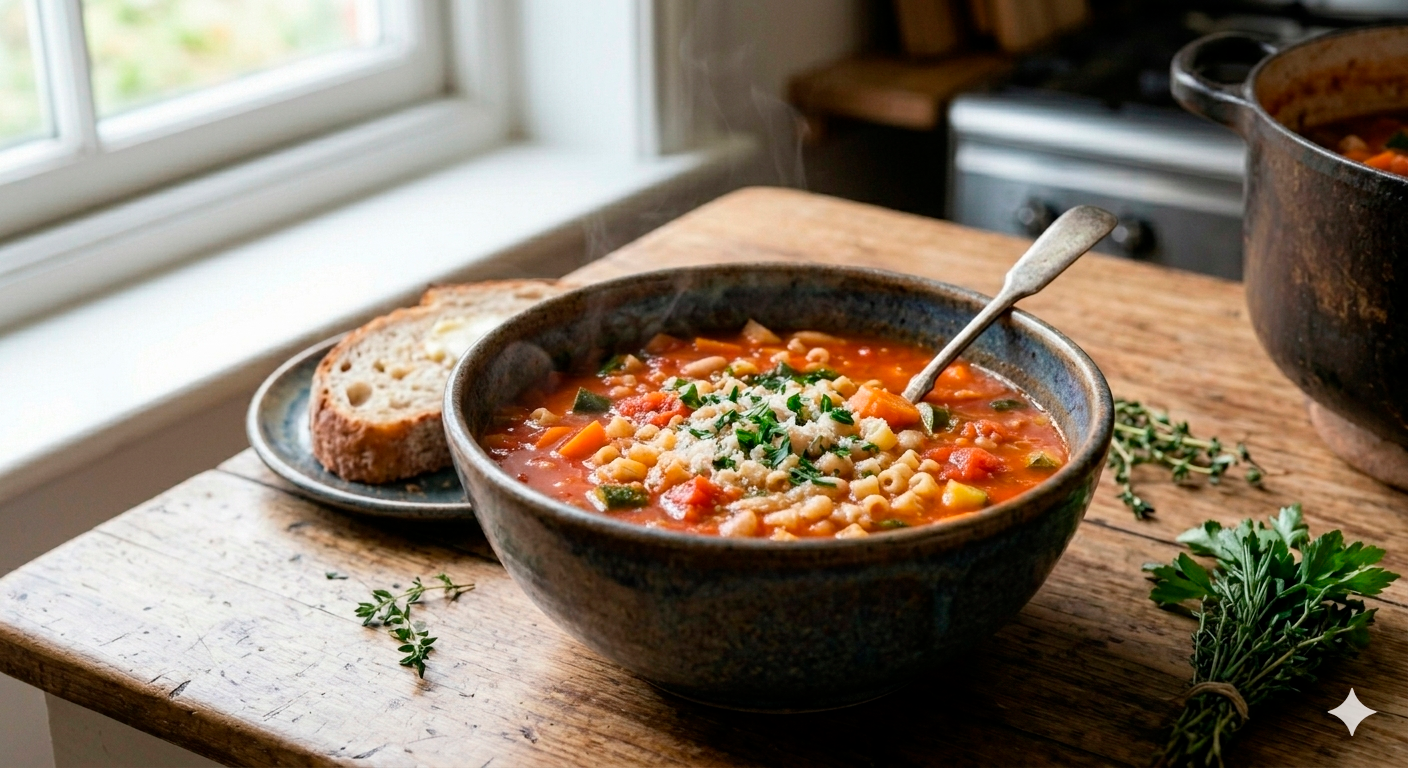
Minestrone soup with seasonal vegetables is served hot, with a generous drizzle of raw extra virgin olive oil over the steaming plate, fresh basil leaves, and freshly grated Parmesan cheese to taste. Accompany it with slices of crunchy sourdough bread to soak up the broth. As for pairing, a dry white wine like Pinot Grigio, a Soave, or even a young Chianti are options that perfectly complement the vegetable flavors of the dish.
Sources and reference resources
For more information on food safety and nutrition, consult WHO healthy diet guides.
On the nutritional value of seasonal ingredients, you can consult The Nutrition Source from Harvard T.H. Chan School of Public Health.
Food composition information available at the Mexican National Institute of Public Health database.
Consult our disclaimer and legal notice policy before making decisions about your diet based on this content.