Swedish Meatballs: Authentic Recipe in 5 Irresistible Steps
What are Swedish Meatballs and why should you make them at home?
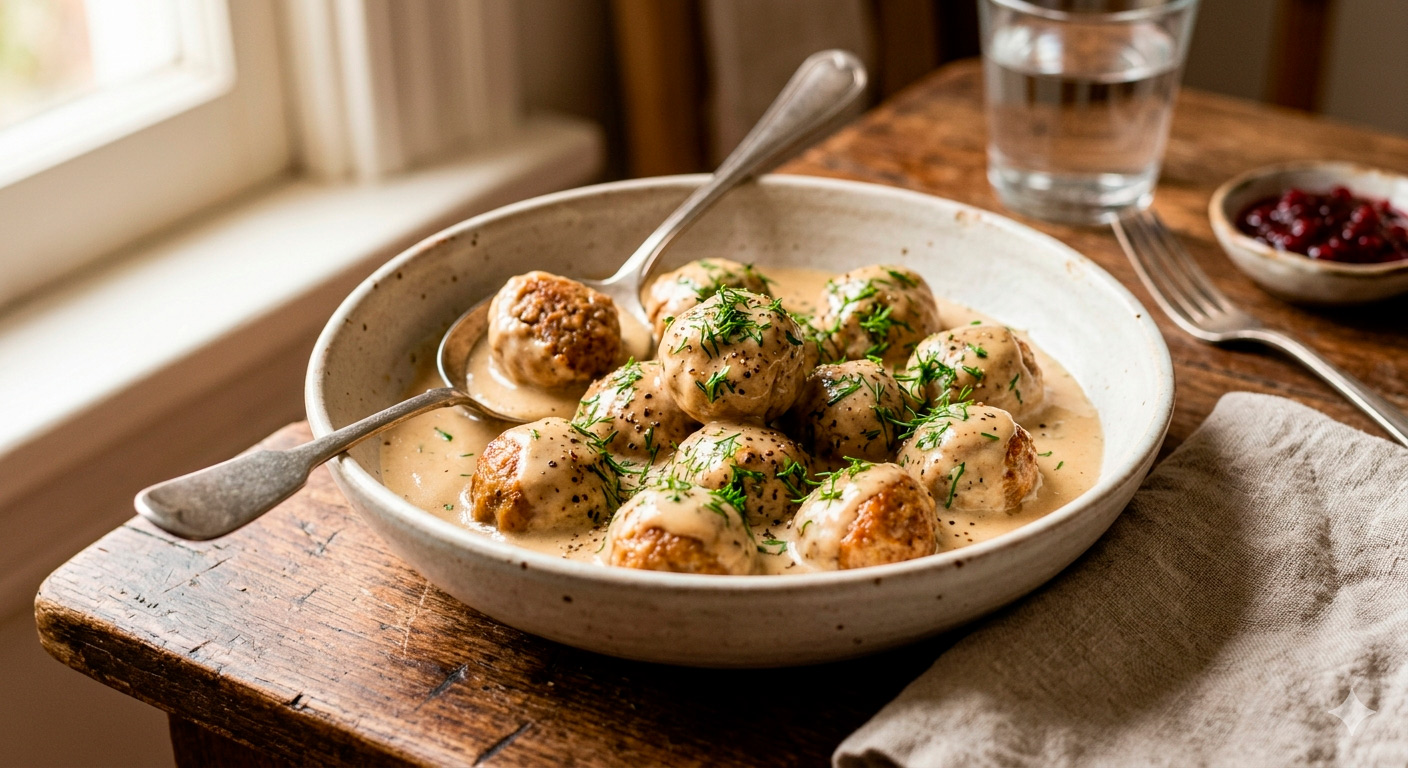
Swedish Meatballs, known as Köttbullar in Swedish, are one of the most iconic dishes of Nordic cuisine. This traditional recipe has crossed borders to become a worldwide favorite thanks to its unique combination of comforting flavors and exquisite textures. Unlike the simplified versions found in some cafeterias, authentic Swedish meatballs are little culinary jewels that perfectly balance the tenderness of the meat with the creaminess of their characteristic sauce.
Originating from Sweden, these meatballs have a history dating back to the 18th century when King Charles XII introduced the recipe from Turkey. Over time, Swedes adapted the concept adding their local ingredients, creating what we know today as a national dish par excellence. Currently, they are a fundamental element of the famous Swedish smörgåsbord (Nordic buffet) and are traditionally consumed during holidays, although their popularity has made them an everyday dish.
The magic of authentic Swedish Meatballs lies in their meat blend, preparation technique, and especially in the cream sauce with dill that accompanies them. This balance between the earthiness of the spices, the richness of the cream, and the herbal touch of dill creates a gastronomic experience that comforts the soul and satisfies the most demanding palates. It’s not just food; it’s a culinary hug that transports you directly to cozy Scandinavian homes.
In this Swedish Meatballs recipe, you’ll learn the secrets I’ve accumulated over years in professional kitchens and home cooking. I’ll guide you step by step so you get restaurant-quality results with accessible ingredients and techniques anyone can master. The version I present today respects Swedish tradition while incorporating small tips that perfect the final result without complicating the process.
Nutritionally, Swedish Meatballs offer an excellent protein profile thanks to their combination of meats, providing all the essential amino acids our body needs. Although they are a substantial dish, with proper portions and balanced side dishes, they can be part of a balanced diet. Plus, by preparing them at home we control the quality of ingredients and can adjust salt and fat levels according to our dietary preferences.
Ingredients for Swedish Meatballs
Quantities for 4-6 servings.
Main ingredients
- 500g Ground beef
- 250g Ground pork
- 1/2 cup Breadcrumbs
- 1/4 cup Whole milk
- 1 unit Egg
- 1 unit Small white onion
- 200ml Heavy cream
Seasonings and extras
- 2 tablespoons Fresh dill, chopped
- 1/2 teaspoon Nutmeg
- 1/4 teaspoon Allspice
- 1 cup Beef broth
- 2 tablespoons Butter
- 1 tablespoon Soy sauce
- 1 tablespoon Wheat flour
- Salt to taste
How to make Swedish Meatballs step by step
-
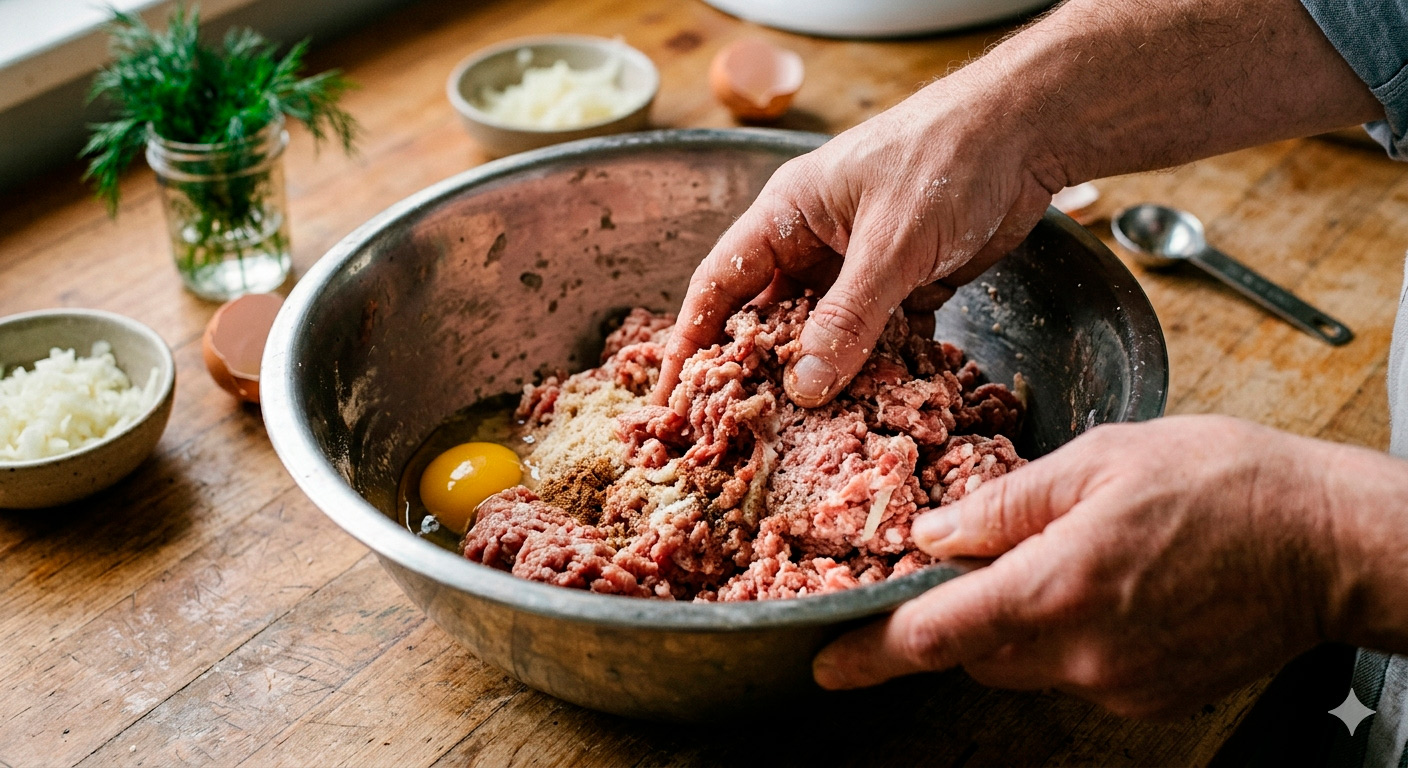
- Prepare the meatball mixture: In a large bowl, hydrate the breadcrumbs with milk and let rest for 5 minutes. This creates a paste called panade that prevents the meat protein from tightening too much. Add the egg, grated onion (not chopped, so it melts into the meat), salt, allspice and nutmeg. Mix well before adding the meat.
- Form and rest the meatballs: Incorporate the beef and pork. Don’t overwork the mixture; if you warm it with your hands or overmix it, the meatballs will become tough. Form walnut-sized balls (about 3cm). Let them rest in the refrigerator for 15 minutes before cooking; this helps them maintain their spherical shape.
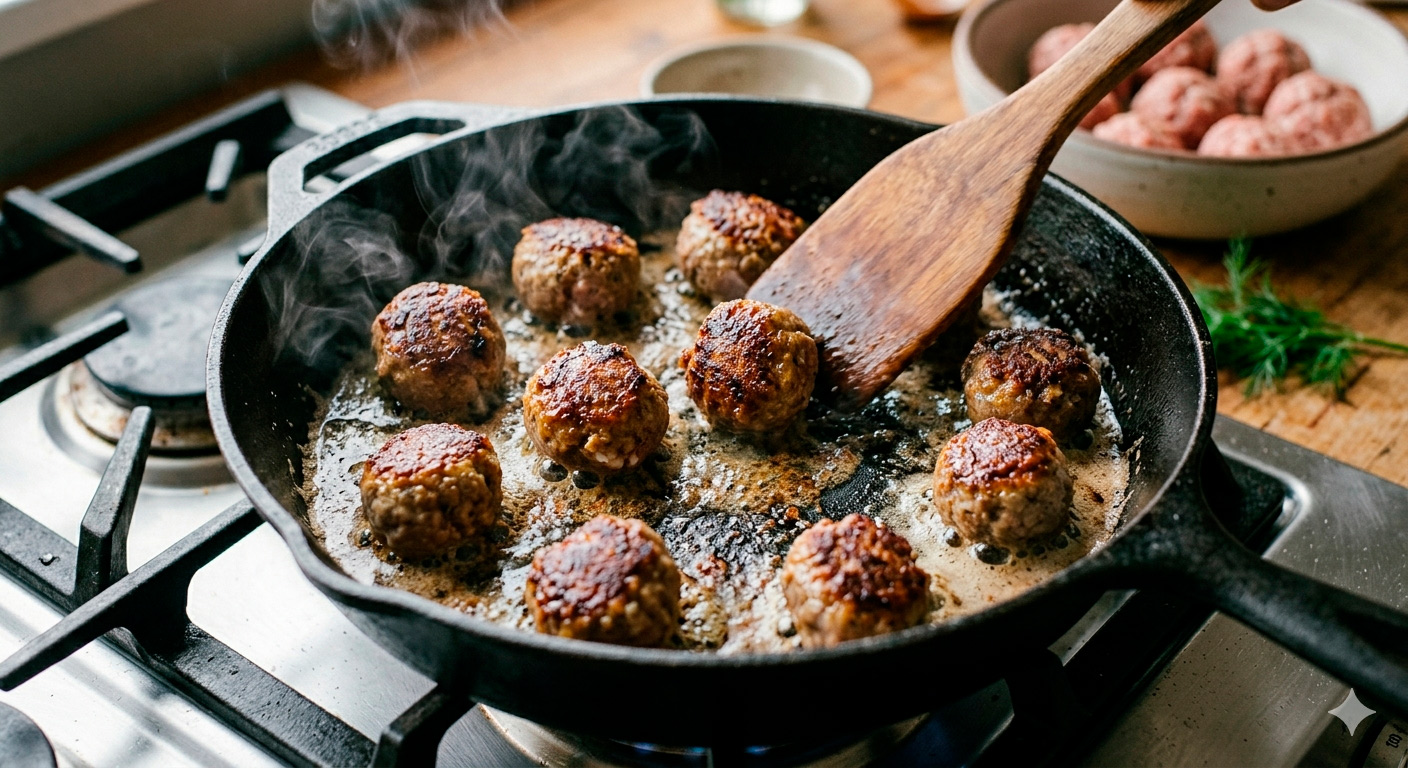
- Sear the meatballs: Heat a wide skillet with a knob of butter and a drizzle of oil (to prevent the butter from burning). Cook the meatballs in batches, turning them to brown evenly. Don’t overcrowd the skillet or they will steam instead of searing. Remove and set aside; it’s okay if they’re not fully cooked inside yet.
-
- Prepare the cream sauce: In the same skillet, take advantage of the meat juices. Add a little more butter and a tablespoon of flour to make a roux. Cook for one minute and gradually pour in the beef broth, whisking constantly. When thickened, add the heavy cream and soy sauce. Adjust salt.
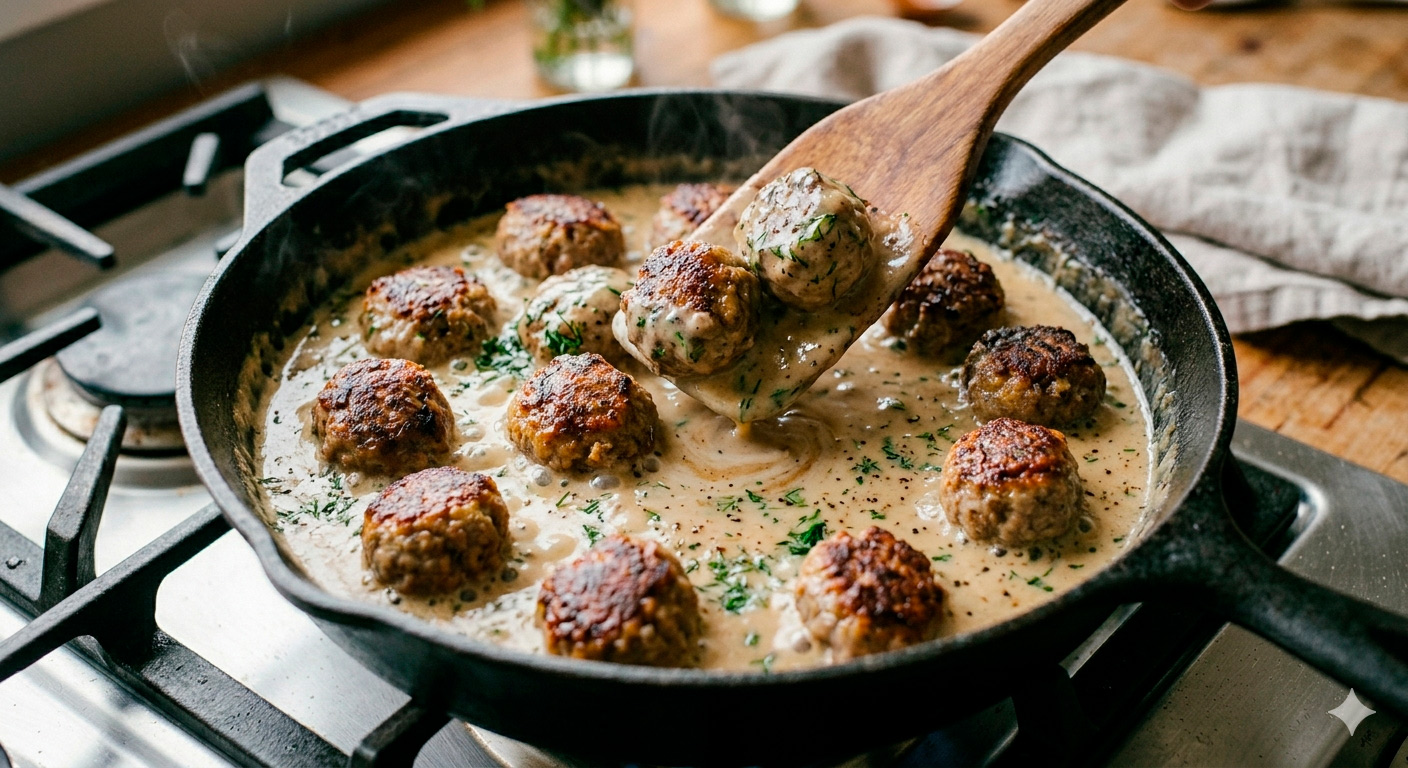
- Cook meatballs in the sauce: Return the meatballs to the skillet with the sauce. Simmer over low heat for 8-10 minutes until the sauce shines and the meatballs are tender. Just before turning off the heat, add the fresh chopped dill. The residual heat will awaken its aroma without bittering the sauce.

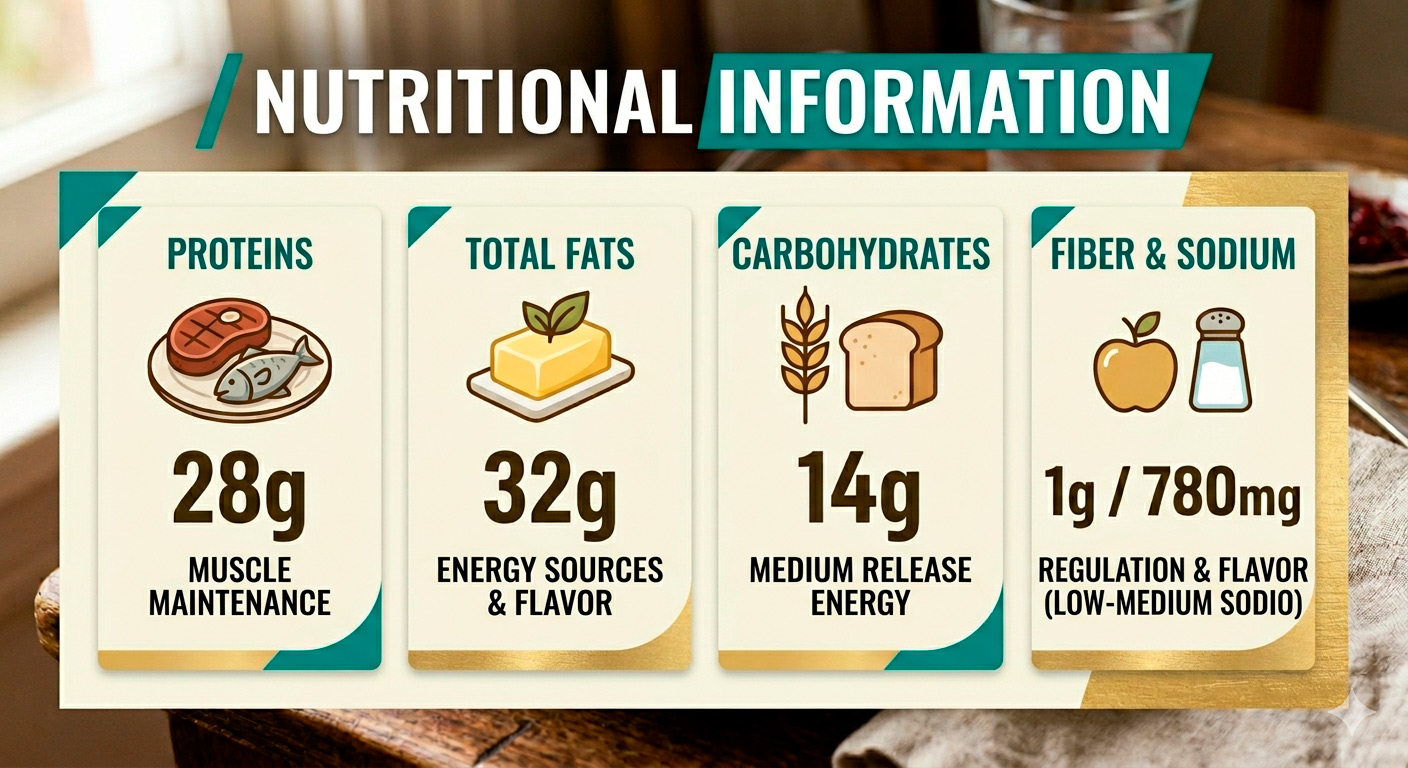
Nutritional information of Swedish Meatballs
Approximate values per serving (6 total servings).
| Nutrient | Per serving | % Daily Value* |
|---|---|---|
| Calories | 420 kcal | 21% |
| Protein | 28 g | 56% |
| Carbohydrates | 14 g | 5% |
| Total Fat | 32 g | 41% |
| Dietary Fiber | 1 g | 4% |
| Sodium | 780 mg | 34% |
*Percentage based on a 2,000 calorie daily diet.
Tips for making perfect Swedish Meatballs
After years perfecting this recipe in different kitchens, I’ve discovered that small details make a monumental difference in the final result. The first fundamental tip is to keep all ingredients cold until mixing time. The fat in the meat should remain solid until it reaches the hot skillet; if it melts before, the meatballs will lose juiciness and become dry. Work quickly and with cold hands—you can even chill the bowl in the refrigerator for a few minutes before starting.
The “panade” technique (the bread and milk mixture) is probably the most important secret to achieving the perfect texture. This natural emulsifier prevents the meat proteins from contracting too much during cooking, resulting in noticeably tender meatballs. Don’t skip the 5-minute rest for the bread to fully absorb the milk, creating a homogeneous paste that will integrate perfectly with the meat. If you don’t have breadcrumbs, you can use crushed saltine crackers or even sandwich bread without crust.
The initial searing is another critical stage that many underestimate. Make sure the skillet is hot enough before adding the meatballs—you should see a slight smoke when adding the butter. Don’t move them immediately; let them form a golden crust for at least 1-2 minutes before turning. This crust not only adds flavor but also seals the internal juices and prevents the meatballs from falling apart when added to the sauce later.
Regarding common mistakes, the most frequent is cooking meatballs in an overloaded skillet. When placing too many meatballs at once, the oil temperature drops dramatically and instead of browning, they steam, resulting in a rubbery, pale texture. Work in batches, leaving enough space between each meatball for proper heat circulation. Another common mistake is fully cooking the meatballs during searing; remember they will finish cooking in the sauce.
For storage, Swedish meatballs keep excellently. Refrigerated, they last up to 3 days in an airtight container. To freeze, place them on a tray separated and once frozen, transfer to a freezer bag. This will prevent them from sticking together and you can take only the amount needed. You can freeze the sauce separately. When reheating, do it over very low heat adding a splash of milk or broth to restore the creaminess of the sauce.
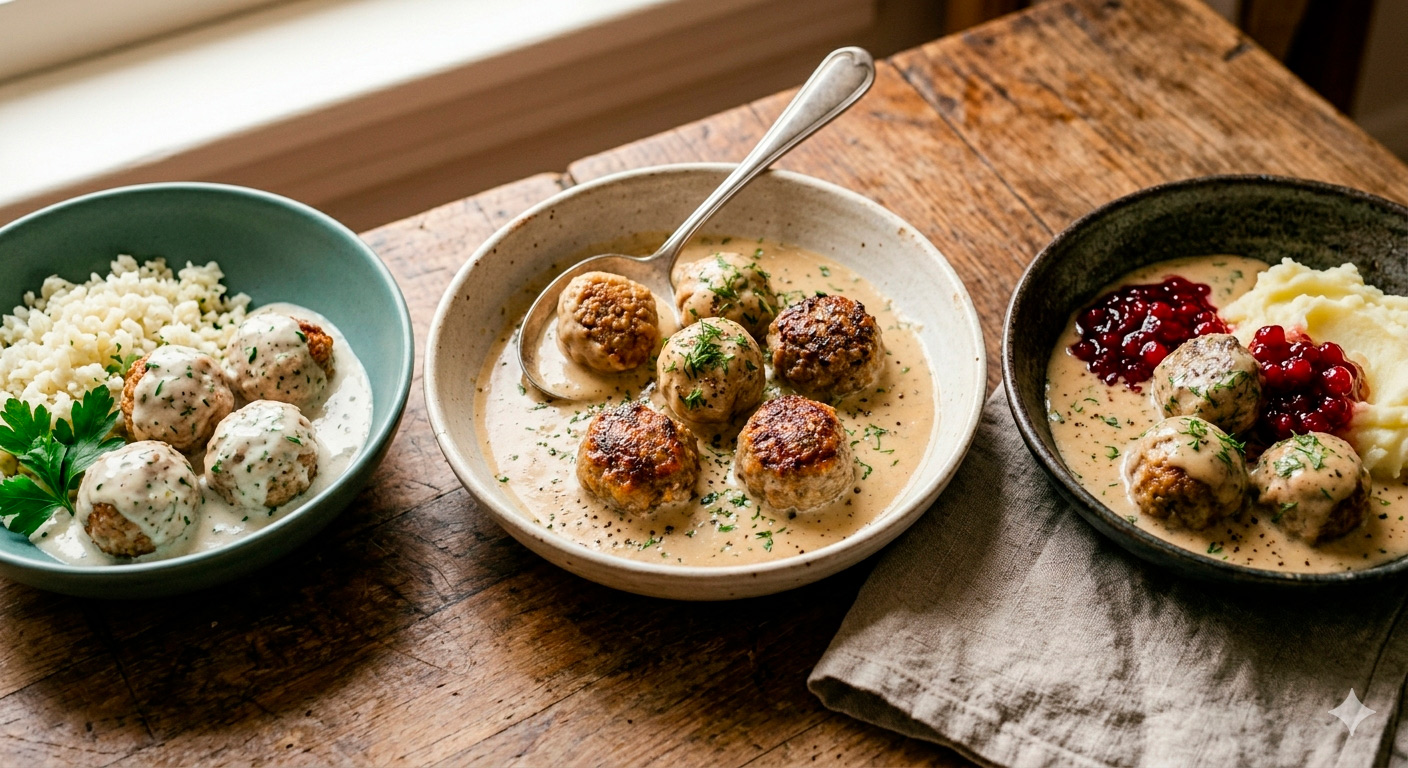
As for pairing, Swedish meatballs are traditionally served with creamy mashed potatoes and lingonberry jam. The contrast between the salty sauce, the creamy mashed potatoes and the sweet-tart jam is simply heavenly. If you can’t find lingonberries, you can use red currant jam or even dried cranberries rehydrated with a little sugar. For drinks, a cold lager beer or a light red wine like Pinot Noir complement perfectly.
Variations and substitutions for Swedish Meatballs
Swedish Meatballs are surprisingly versatile and adapt to different dietary preferences and food restrictions. For a lighter version, you can substitute the pork and beef with a mixture of ground turkey and chicken, although the flavor will be less intense. If you choose this variant, add a teaspoon of olive oil to the mixture to compensate for the lower fat content of these meats.
For a gluten-free option, use gluten-free breadcrumbs or almond flour in the meatball mixture. To thicken the sauce, instead of wheat flour you can use cornstarch dissolved in cold water (added at the end of cooking) or rice flour. Make sure your beef broth and soy sauce are also gluten-free, as some commercial products may contain traces.
Vegetarians can prepare a version with lentil and mushroom base. Cook brown lentils until tender but firm, and finely chop sautéed portobello mushrooms with onion. Mix these ingredients with breadcrumbs, egg (or egg substitute for vegans) and spices. For the sauce, you can prepare it with soaked cashews blended with vegetable broth and a touch of nutritional yeast for umami flavor.
Frequently asked questions about Swedish Meatballs
Can you freeze Swedish Meatballs?
Yes, Swedish Meatballs freeze excellently. Once cooked and cooled, place them on a wax paper-lined tray without touching and freeze for 2 hours. Then transfer to a freezer bag, removing as much air as possible. They keep for up to 3 months. The sauce should be frozen separately in airtight containers.
How long do Swedish Meatballs last in the refrigerator?
Well-refrigerated Swedish Meatballs in an airtight container last up to 3 days. Make sure they have cooled completely before refrigerating to avoid condensation that affects texture. If the sauce develops a layer of solidified fat, simply remove it before reheating.
How many calories do Swedish Meatballs have?
A serving of Swedish Meatballs (approximately 4-5 meatballs with sauce) contains about 420 calories. This value may vary depending on portion sizes and specific ingredients used. It’s a moderately caloric dish but very nutritious due to its high protein content.
Can you make Swedish Meatballs without heavy cream?
Yes, you can substitute the heavy cream with plain Greek yogurt added at the end of cooking (off the heat) to prevent curdling. Another option is to use evaporated milk or a mixture of milk with a tablespoon of cornstarch to thicken. The flavor will be less creamy but still delicious.
How are Swedish Meatballs best served?
Traditionally, Swedish Meatballs are served over creamy mashed potatoes with a spoonful of lingonberry jam on the side. You can also accompany them with fresh pasta, rice, or even coleslaw for a texture contrast. Garnish with fresh chopped dill just before serving.