Authentic Chicken Cacciatore: Irresistible recipe in 5 steps
What is Chicken Cacciatore and why should you make it at home?
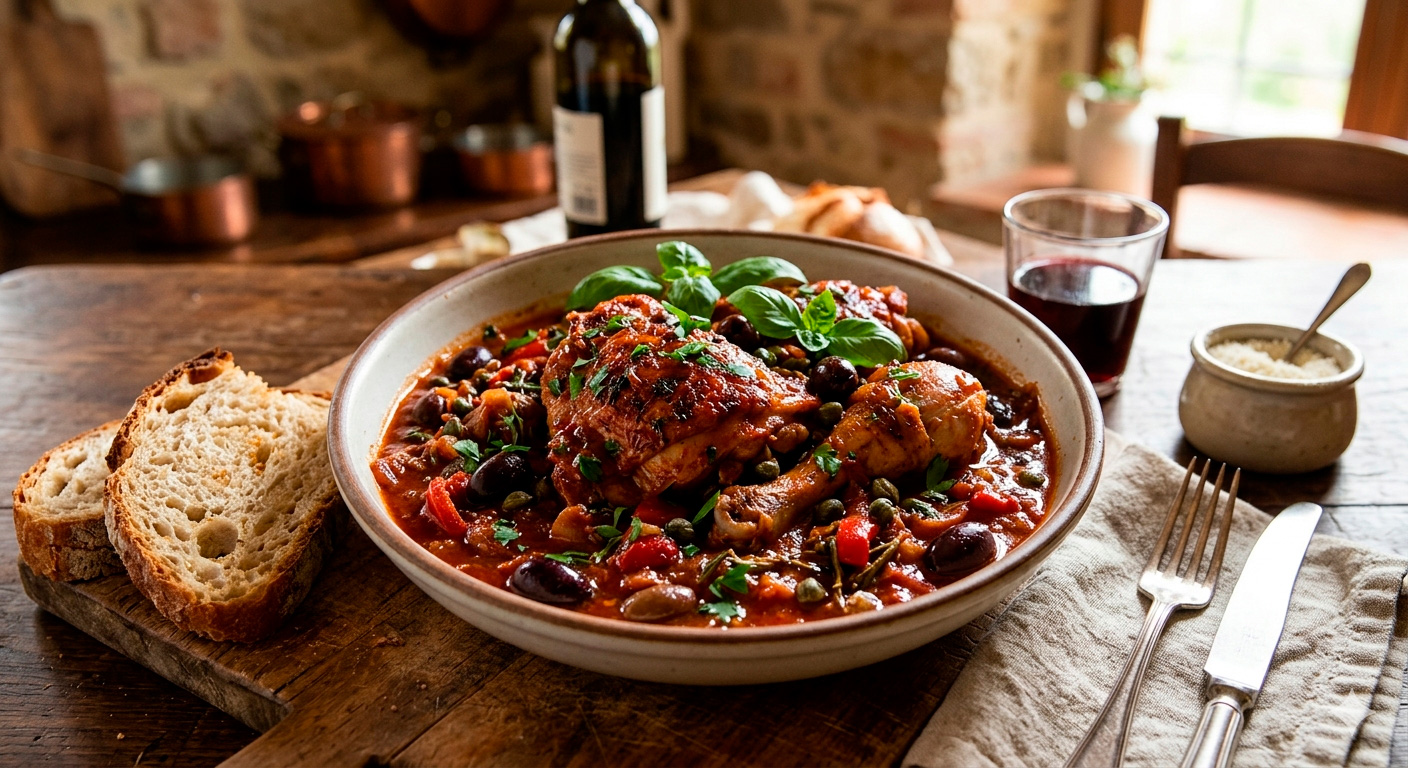
Chicken Cacciatore —or Pollo alla Cacciatora in Italian— is much more than a recipe: it is a living testament to Italy’s rural history. Its name literally means “hunter’s chicken,” and it evokes the landscapes of Tuscany and Umbria where medieval peasants cooked with what they had on hand: the day’s hunted game, herbs from the garden, and vegetables from the plot.
Unlike many preparations that have lost their essence through modernization, authentic Chicken Cacciatore maintains its rustic character intact. The combination of ripe tomato, bell pepper, onion, and carrot forms the base of the classic Italian soffritto, while the incorporation of capers and black olives in this specific version elevates the flavor profile to a gourmet dimension that few chicken recipes achieve.
What differentiates this recipe from the simplified versions circulating online is the respect for cooking times and technique. Cacciatore is not boiled; it is stewed. The difference is fundamental: stewing involves slow, moist cooking that allows the collagen from the chicken joints to turn into natural gelatin, thickening the sauce without the need for flour or artificial thickeners.
In Mexico, where jitomate (plum tomato) abounds with extraordinary quality, this stew takes on an additional dimension. The acidity of fresh Mexican tomato contrasts masterfully with the salty bitterness of the olives and the acidic-floral touch of the capers. The result is a deep, balanced sauce that literally stains the bread irresistibly.
The history of this dish dates back at least to the 18th century in Italian rural cookbooks, although similar versions appear throughout the Mediterranean basin under different names. In southern France it is known as “poulet chasseur,” and in Spain there are chicken stews with olives and capers that share the same culinary DNA. This universality speaks to the intuitive intelligence of folk cuisines: the same seasonal ingredients, the same slow-cooking techniques, the same comforting result.
Making it at home has advantages that no restaurant can match. First, control over the quality of the chicken: a free-range or pasture-raised chicken has a firmer muscle structure and a more intense flavor than industrial chicken. Second, you can adjust the amount of capers and olives to your taste. Third, the aroma that fills your kitchen during the 75 minutes of slow cooking is priceless.
In this recipe, you will learn the technique of searing in batches, fundamental for achieving that golden crust which is the base of flavor; the art of the correct soffritto; and the precise moment to incorporate the capers and olives so their flavor integrates without becoming bitter. With 5 clear and detailed steps, this authentic Chicken Cacciatore will be ready to conquer your family table or surprise at a special occasion dinner.
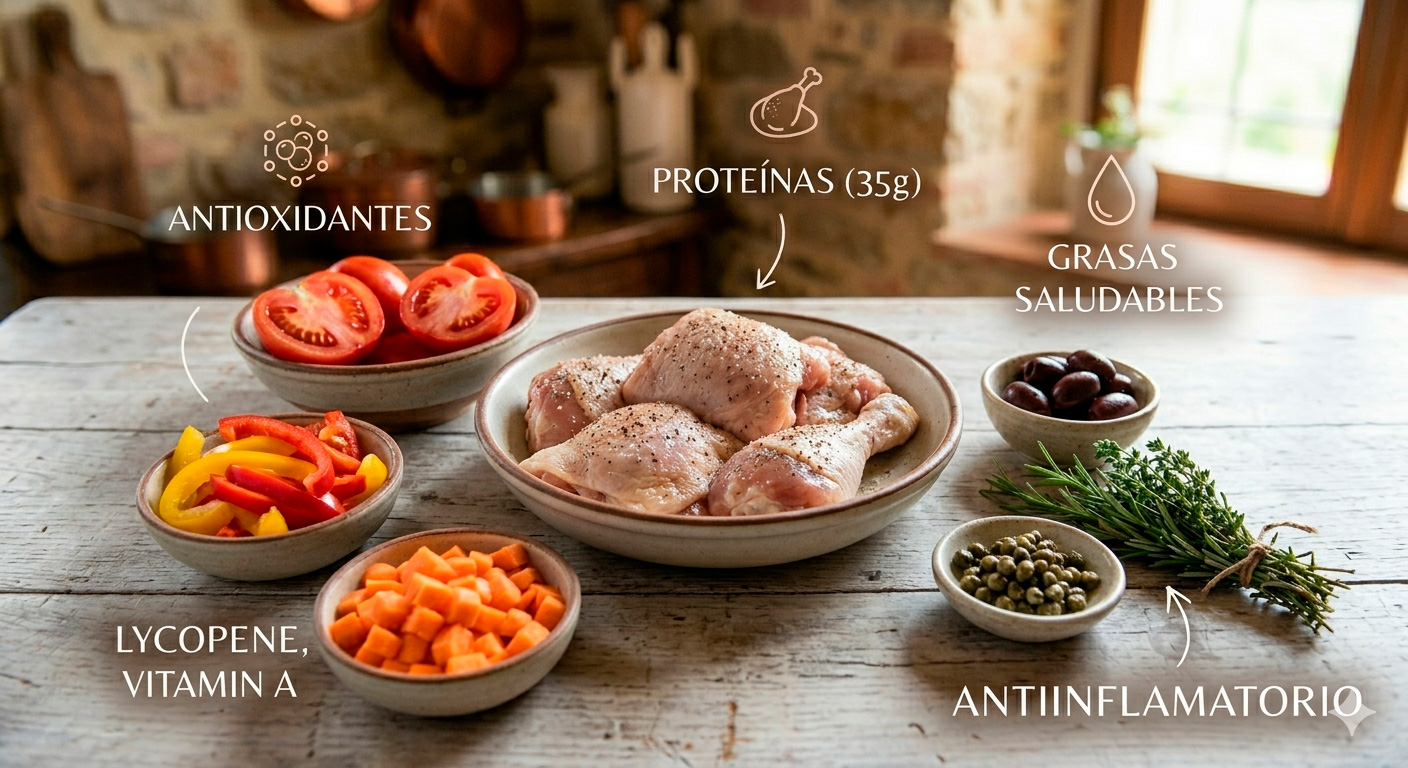
From a nutritional standpoint, this stew is a standout exponent of the Mediterranean diet, recognized by UNESCO as an Intangible Cultural Heritage of Humanity. The monounsaturated fats from extra virgin olive oil and olives protect the heart; the quercetin in capers acts as a powerful antioxidant; the lycopene from cooked tomato has greater bioavailability than when raw. Eating well, in this case, is also eating healthily.
Ingredients for authentic Chicken Cacciatore
Quantities for 8 servings.
Main Ingredients
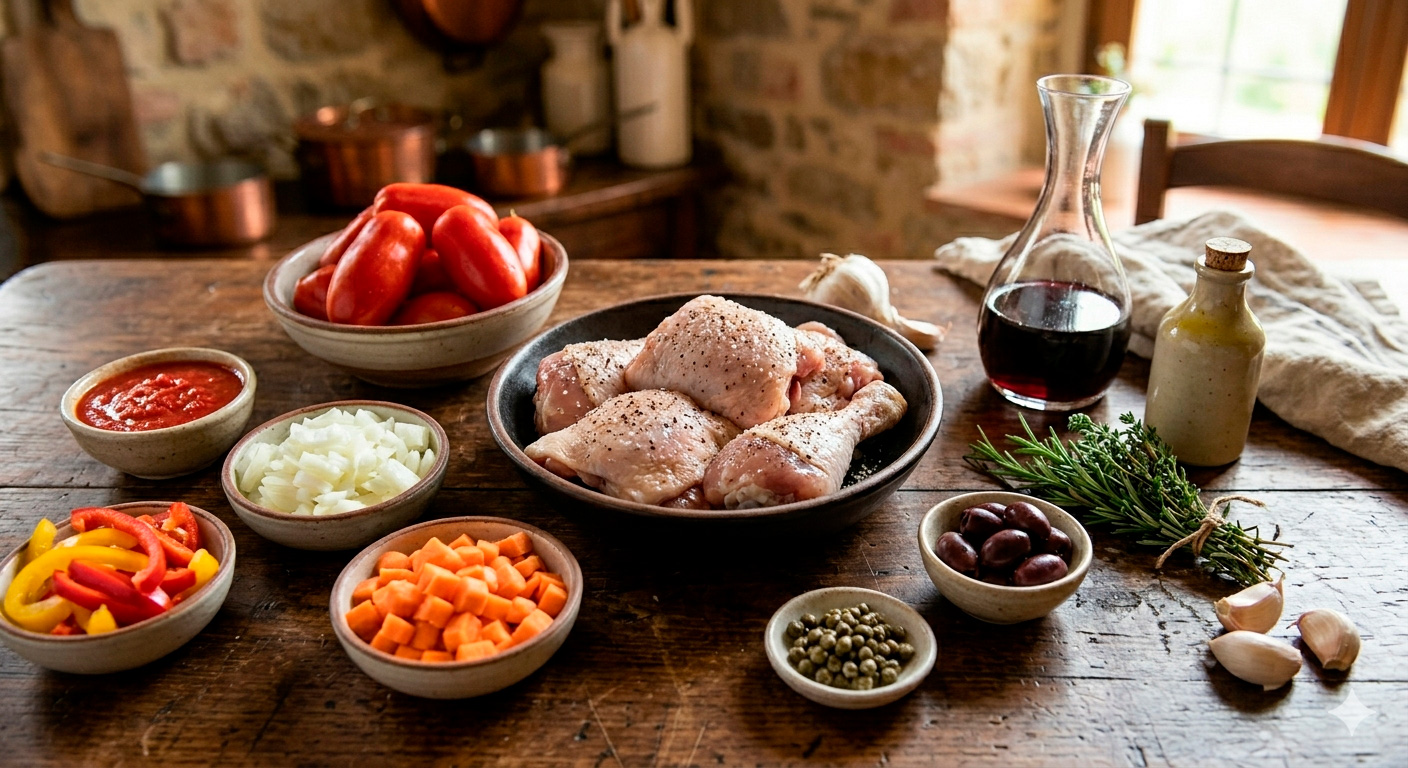
- 2 kg free-range chicken, cut into pieces (bone-in, preferably thighs and drumsticks)
- 1.2 kg ripe plum tomatoes (jitomate in Mexico)
- 3 medium bell peppers of various colors (red, yellow, green)
- 3 medium white onions
- 3 fresh carrots, peeled
- 6 cloves white garlic
Seasonings and Optional
- 150 g black olives with pits (botija or kalamata type)
- 4 tablespoons capers in brine, drained
- 250 ml dry red wine (Chianti, Merlot or table wine)
- 100 ml extra virgin olive oil
- Fresh rosemary, 2 sprigs
- Fresh thyme, 4 sprigs
- Salt and black pepper to taste
- 1 bay leaf (optional)
How to prepare authentic Chicken Cacciatore step by step
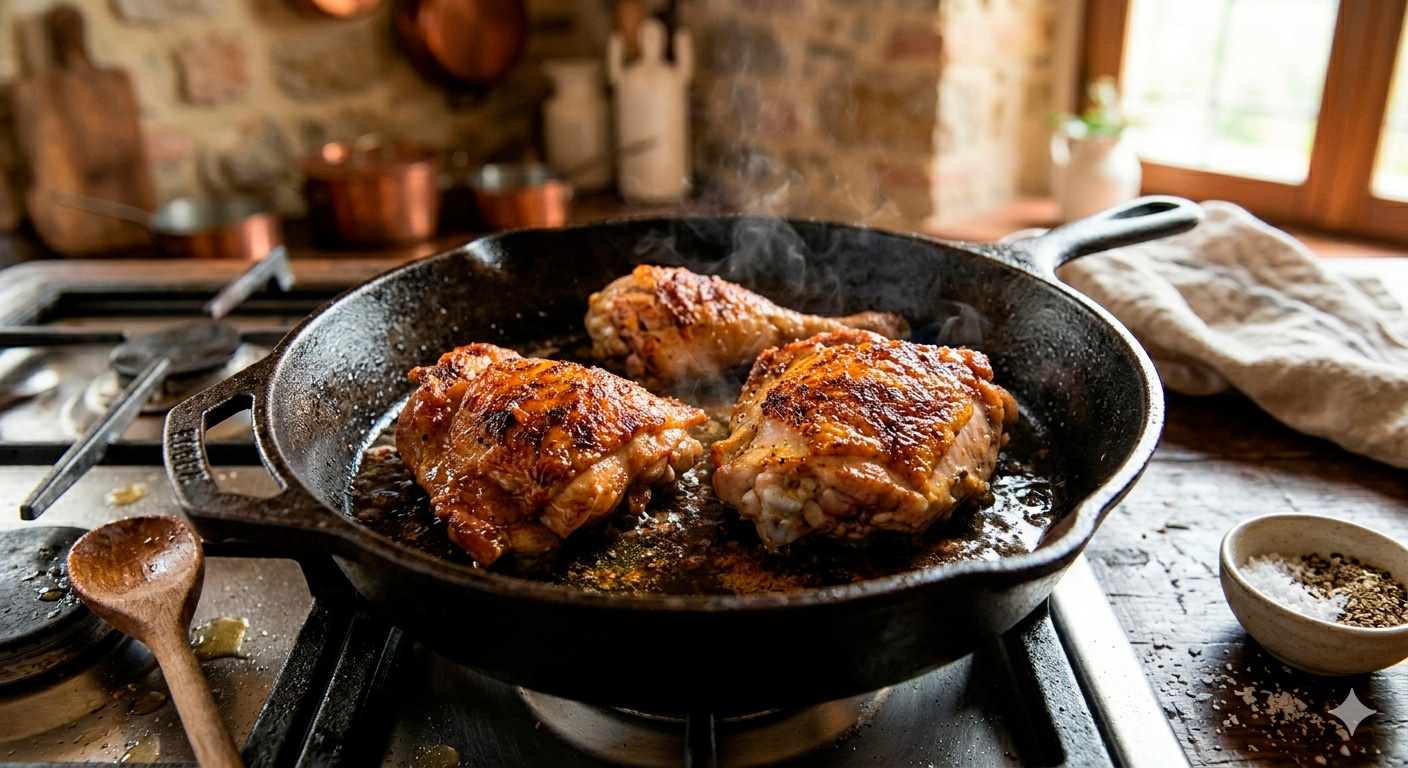
- Mise en place and critical searing of the chicken: Dry all chicken pieces with paper towels; moisture is the enemy of browning. Season generously with salt and pepper on both sides. Heat olive oil in a large heavy-bottomed pot (or a Dutch oven) over medium-high heat until the oil shimmers. Sear the chicken pieces in batches —do not overcrowd— for 4 to 5 minutes per side, until a deep golden crust is achieved. This process activates the Maillard Reaction, which transforms amino acids and sugars into hundreds of aromatic compounds. Remove the chicken and set aside on a plate.
- Prepare the soffritto base with the vegetables: In the same pot, without cleaning it (that flavored fat is liquid gold), add the onion, bell pepper, and carrot cut into medium pieces. Cook over medium heat for 8 minutes, stirring occasionally, until the vegetables are soft and slightly caramelized at the edges. Add the sliced or finely chopped garlic only in the last 2 minutes of this stage: garlic has volatile compounds that evaporate quickly with heat, and it turns bitter if burned.
- Deglazing with wine and addition of capers and olives: Increase the heat to medium-high and pour in the dry red wine all at once. The steam produced at this moment lifts all the caramelized residue from the bottom of the pot —those fragments are pure concentrated flavor. Scrape the bottom with a wooden spoon. Let the alcohol evaporate for 3 minutes. Add the drained capers and black olives. Add the crushed tomato or passata and the bay leaf if using. Mix everything gently.
- Slow stewing: the cooking that transforms everything: Return the chicken pieces to the pot, nestling them into the sauce so they are partially submerged. The liquid should cover about two-thirds of the chicken. Reduce the heat to the absolute lowest, cover the pot, and cook for 60 to 75 minutes. The sauce should bubble barely visibly, with small slow bubbles —never an aggressive boil. If the sauce is too liquid, uncover the pot for the last 15 minutes and let it reduce and concentrate naturally.
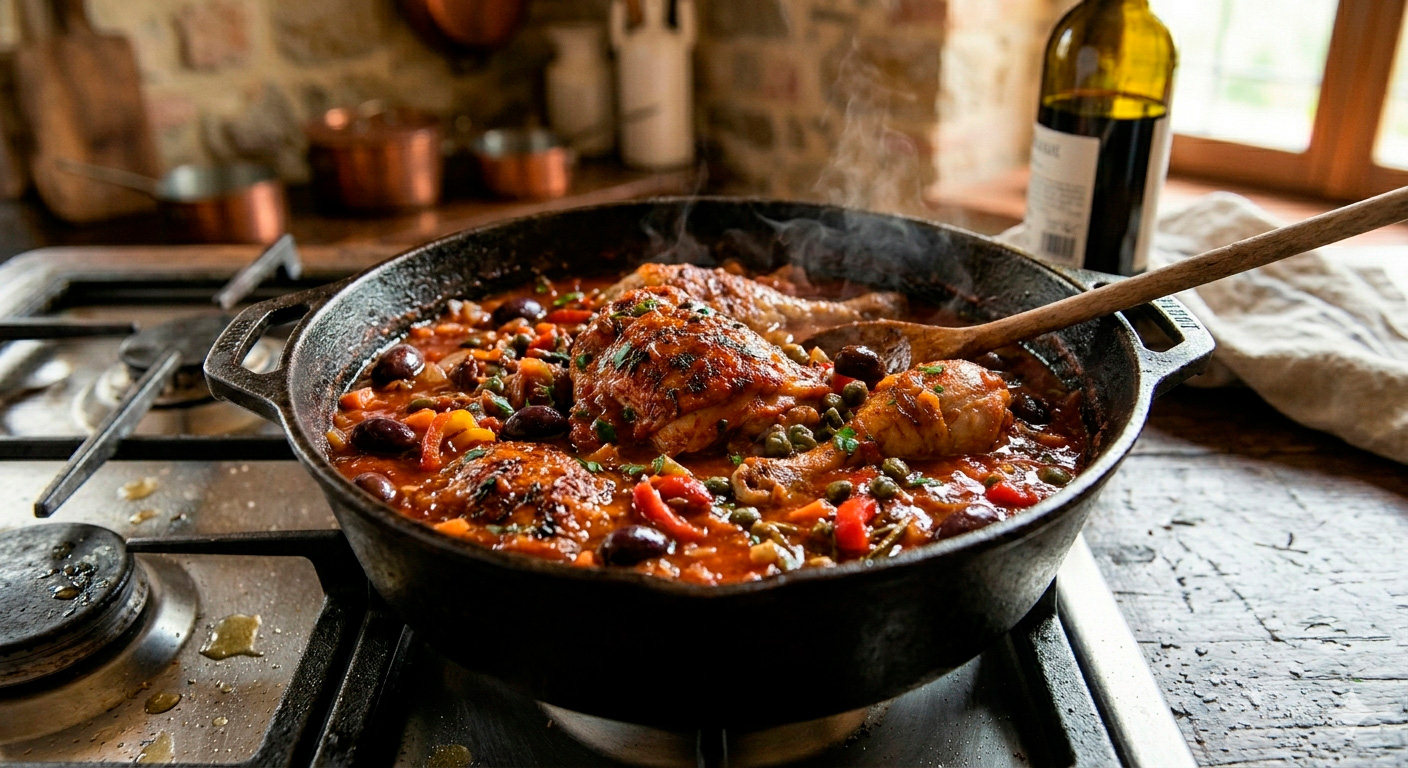
- Resting with fresh herbs and final serving: Turn off the heat. Add the fresh rosemary and thyme sprigs directly onto the stew, gently pushing them between the chicken pieces. Cover the pot and let rest for 8 to 10 minutes. During this time, the essential oils from the herbs infuse into the warm sauce without losing their bright green color or developing the bitterness produced by excessive heat. Remove the herb sprigs before serving. Chicken Cacciatore is served directly from the pot to the table.
Nutritional Information for Chicken Cacciatore
Approximate values per serving (8 total servings).
| Nutrient | Per Serving | % Daily Value* |
|---|---|---|
| Calories | 420 kcal | — |
| Protein | 18.5 g | 37% |
| Total Carbohydrates | 5.1 g | 2% |
| Total Fat | 12.0 g | 15% |
| Saturated Fat | 4.2 g | 21% |
| Dietary Fiber | 2.4 g | 9% |
| Sodium | 520 mg | 23% |
| Vitamins A, C, K | High content (carrot, bell pepper, tomato) | |
*Percentage based on a 2,000 calorie daily diet.
Health Benefits
- Cardiovascular protection: The monounsaturated fats from extra virgin olive oil and the polyphenols from black olives help maintain healthy cholesterol levels.
- Anti-inflammatory effect: Capers contain quercetin, one of the most studied flavonoid antioxidants with the greatest natural anti-inflammatory power.
- Eye health: The high vitamin A content from carrots and the lycopene from cooked tomato (whose bioavailability increases with heat) protect the retina and reduce the risk of macular degeneration.
- Quality protein: Free-range chicken provides complete animal protein with all essential amino acids, fundamental for muscle maintenance.
Tips for making perfect Chicken Cacciatore
The first tip, and probably the most ignored, is drying the chicken. Before placing it in the hot oil, dry it with paper towels. Water on the surface of the chicken causes the oil temperature to drop and the chicken steams instead of browning. A dry surface ensures the temperature doesn’t drop and the Maillard Reaction occurs correctly, generating that golden crust which is the aromatic base of the entire stew.
The second critical point is searing in batches. Many novice cooks make the mistake of putting all the chicken pieces in the pot at the same time. When the pan is overcrowded, the oil temperature drops drastically and the chicken releases its juices instead of searing. The result is parboiled meat that is gray in color, without a crust and without flavor. Work in two or three batches, removing each piece when well browned before adding the next.
Olives with pits are significantly superior to pitted ones for this recipe. The pit maintains the structure of the olive during prolonged cooking and imparts a more authentic, mineral, and deep flavor to the sauce. If at the time of serving someone does not want to encounter the pits, you can easily remove them at that moment. Greek kalamata olives or Peruvian botija olives are excellent options accessible in Mexico.
Handling garlic in the soffritto deserves special attention. Garlic contains allicin and other aromatic sulfur compounds that degrade rapidly with heat. Adding it too early means it will burn, becoming bitter and negatively dominating the sauce’s profile. Adding it in the last 2 minutes of the sofrito, when the onion and bell pepper are already tender, allows its fragrance to be released without burning.
For deglazing with wine, always use a wine you would drink. The principle of “using cheap wine for cooking” is a harmful culinary myth: heat concentrates all the flavors of the wine, including its defects. A young, moderately priced Chianti or a table Merlot are perfect choices. If you are making the recipe for children or prefer to omit alcohol, substitute it with homemade chicken broth mixed with a tablespoon of balsamic vinegar.
The final resting time with herbs is a step that most recipes omit and that makes a huge difference. Adding rosemary and thyme when the heat is already off and the sauce is at a temperature between 70 and 80 °C allows the terpenes and essential oils from the herbs to dissolve into the fat of the sauce without volatilizing from excessive heat. The result is a fresh, persistent herbal aroma in the final dish.
For the most common errors to avoid: never cover the pot if the sauce is too liquid (uncover it for the last 15 minutes to let it evaporate); do not omit the carrot even if it seems like a minor ingredient, as its natural sugars neutralize the acidity of the tomato without adding refined sugar; and do not serve the stew immediately after cooking: the 10-minute rest with the herbs is fundamental for the final integration of flavors.
Regarding preservation and storage, Chicken Cacciatore is one of those dishes that improves the next day. The flavors settle overnight in refrigeration and the meat absorbs the sauce more deeply. Store it in an airtight glass container (avoid plastic with tomato sauce, which stains) at a maximum of 4 °C. To freeze it, wait until it cools completely, use vacuum bags or freezer-safe containers, and consume it within a maximum of 3 months to preserve optimal quality.
Variations and substitutions for Chicken Cacciatore
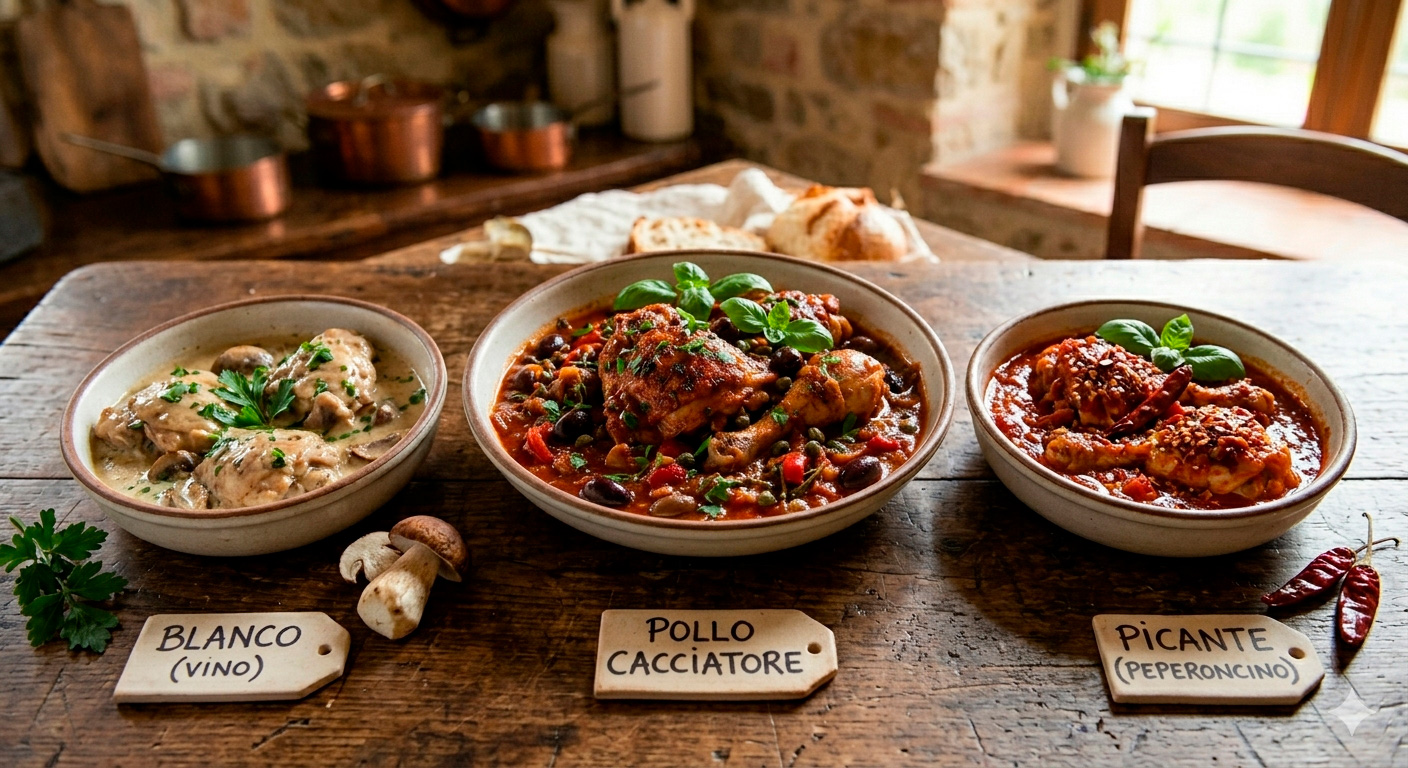
Chicken Cacciatore has as many versions as there are regions of Italy, and its base structure admits variations without losing its essence.
Tuscan Style with Mushrooms
The most classic version from the north includes rehydrated porcini mushrooms or fresh mushrooms incorporated along with the bell peppers in the soffritto. Mushrooms add a woodsy, umami touch that perfectly complements the olives. If using dried porcini, save the rehydration water (strained) and add it to the sauce for extra depth of flavor.
Southern Style with Peperoncino
In Calabria and Sicily, Cacciatore incorporates dried or fresh peperoncino chili. Add 1 or 2 chilies to the soffritto along with the garlic for a heat profile that balances the acidity of the tomato and the saltiness of the capers. This spicy version pairs especially well with toasted sourdough bread.
Version with Rabbit or Alternative Protein
The same base sauce works exceptionally well with cut-up rabbit, which historically was the original hunted protein from which the recipe was born. You can also prepare a seafood version by substituting the chicken with seared fresh tuna medallions, incorporating them only in the last 10 minutes to avoid overcooking. For a vegetarian option, use eggplant and pressed firm tofu, reducing the cooking time to 35 minutes.
Gluten-Free and for Special Diets
Chicken Cacciatore is naturally gluten-free as long as the broth and wine used contain no traces. For a low-sodium version, rinse the capers and olives well before using, and omit additional salt. To reduce calories, remove the chicken skin before cooking and reduce the olive oil to 50 ml.
Frequently Asked Questions about Chicken Cacciatore
Can Chicken Cacciatore be frozen?
Yes, Chicken Cacciatore freezes excellently thanks to its acidic tomato base, which acts as a natural preservative. Store it in airtight containers or vacuum-sealed bags for up to 3 months. To thaw, transfer it to the refrigerator the night before and reheat slowly over low heat, adding a splash of chicken broth if the sauce has thickened too much during freezing.
How long does Chicken Cacciatore last in the refrigerator?
Chicken Cacciatore keeps perfectly in the fridge for 3 to 4 days when stored in an airtight container at a maximum temperature of 4°C. In fact, many chefs believe the flavor improves on the second day, as the meat absorbs all the depth of the sauce overnight. If you notice the sauce smells sour or the meat has a slimy and sticky texture, discard it immediately.
How many calories does Chicken Cacciatore contain?
A serving prepared with this recipe provides approximately 420 kcal, with 18.5 g of protein, 12 g of fat (predominantly monounsaturated from olive oil and olives), and 5.1 g of carbohydrates. It’s a balanced dish within the Mediterranean diet, especially nutritious if served with a green salad instead of pasta.
Can Chicken Cacciatore be made without red wine?
Yes. If you prefer not to use wine, you can substitute it with 250 ml of concentrated chicken broth mixed with a tablespoon of balsamic vinegar, which adds the necessary acidity and depth for deglazing. Unfermented red grape juice also works well. The final flavor will be slightly milder but equally delicious and suitable for the whole family.
How is Chicken Cacciatore best served?
Chicken Cacciatore is best served over a bed of creamy polenta, fresh pasta such as pappardelle or fettuccine, or accompanied by rustic artisan bread to soak up every drop of sauce. For an elegant presentation, place the pieces on a shallow bowl, generously drizzle with sauce, and garnish with a sprig of fresh rosemary. As for pairing, it combines irresistibly with a Chianti Classico, a Barbera d’Asti, or even a red wine from Mexico’s Valle de Guadalupe.
Reference Sources and Resources
For more information on food safety and nutrition, consult the WHO healthy diet guidelines.
On the nutritional value of ingredients, see The Nutrition Source from Harvard T.H. Chan School of Public Health.
Food composition data available at the National Institute of Public Health of Mexico database.
We also recommend our related recipes: Classic Italian Osso Buco and Chicken in White Wine with Mushrooms.
Please review our responsibility and legal disclaimer policy before making dietary decisions based on this content.