Authentic Saltimbocca alla Romana: Irresistible Italian Recipe in 4 Steps
What is Saltimbocca alla Romana and Why You Should Make It at Home?
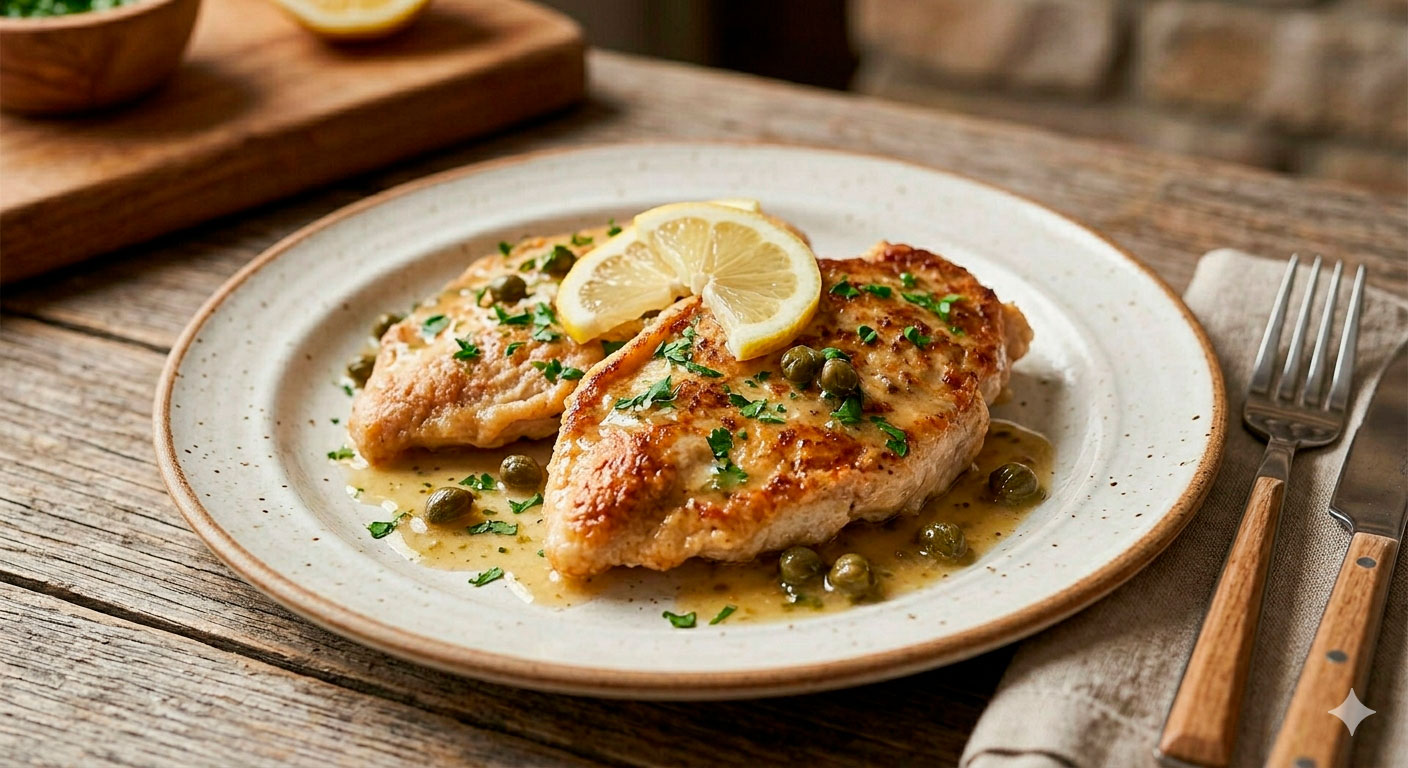
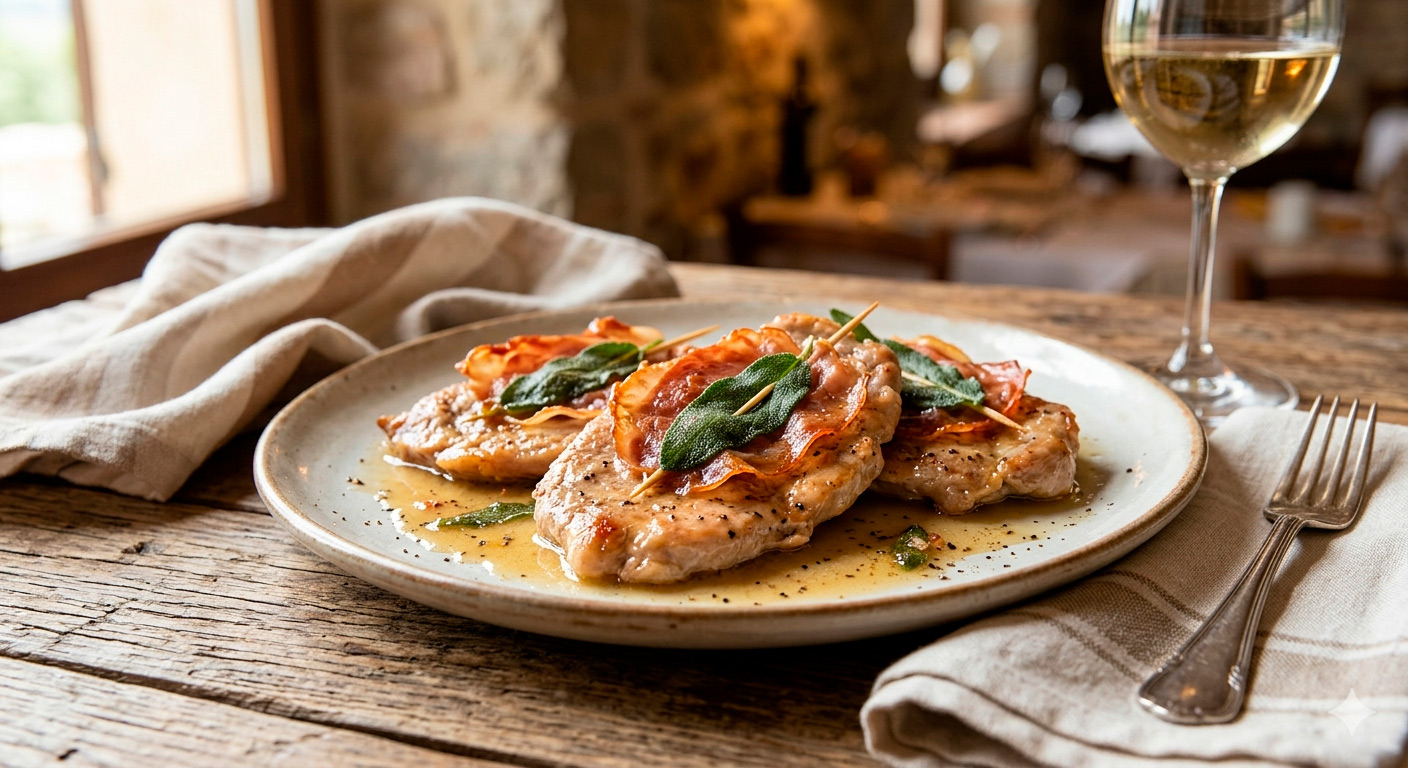
Saltimbocca alla Romana is one of the brightest pillars of Italian gastronomy and undoubtedly one of the most elegant dishes you can prepare in less than half an hour. Its name says it all: in Italian it literally means “jumps in the mouth,” a promise of flavor that is fulfilled with each bite with almost poetic precision. Originating from the Lazio region, specifically from the city of Rome, this dish has centuries of history on Italian tables and today forms part of the classic repertoire of any self-respecting cook.
What makes Saltimbocca alla Romana so special is its culinary philosophy. Italy has built its gastronomic reputation on an unshakable principle: ingredients of the highest quality, treated with respect and without unnecessary complications. In this dish, that becomes evident from the first glance. Tender veal, cured Serrano ham (or prosciutto crudo, if you can find it), fresh sage, and a good dry white wine are the only protagonists. Nothing more is needed. Each ingredient plays an irreplaceable role, and the magic arises precisely from that simplicity.
The combination of textures in this dish is what makes it truly irresistible. The veal melts in the mouth with a tenderness that few meats achieve. The Serrano ham, when seared in the pan, provides a crispy touch and a deep saltiness that balances the natural sweetness of the meat. The fresh sage, that aromatic herb with earthy and camphorous notes, perfumes the whole and gives it character. And the white wine sauce, obtained at the very moment of cooking, unifies everything with a vibrant and silky acidity that invites you to scrape the plate to the last drop.
Preparing Saltimbocca alla Romana at home is also a smart decision from a practical point of view. The total cooking time does not exceed ten minutes, making it a “minute cooking” dish: designed to be executed quickly but with results worthy of a banquet. It is ideal for last-minute elegant dinners, for surprising guests without spending hours chained to the stove, or for those weeknights when you want to eat well without sacrificing time or energy.
In this Saltimbocca alla Romana recipe, you will find the traditional technique distilled into four clear and well-explained steps. We have included ingredient tables with their regional names (because Serrano ham is called many things depending on the country), detailed nutritional information, chef’s tips to make your sauce shiny and silky, and answers to the most common doubts that arise when preparing this Roman classic for the first time.
If you wonder what occasion deserves this dish, the answer is simple: any you want to make memorable. It is perfect for an anniversary dinner, for receiving friends at home, or simply for treating yourself to eating like in a Roman trattoria without leaving your kitchen. The spring season is especially good for preparing it, when fresh sage is at its peak and markets offer it in generous and fragrant branches.
Ingredients for Saltimbocca alla Romana
Quantities for 4 servings.
Main Ingredients
- 8 veal escalopes (approx. 600 g, 5 mm thick)
- 8 very thin slices of Serrano ham or prosciutto crudo
- 8 to 16 leaves of fresh sage
- 100 g all-purpose wheat flour
- 50 g unsalted butter (plus an extra cube for the sauce)
Seasonings and Optional
- 100 ml dry white wine (Pinot Grigio or Sauvignon Blanc)
- 2 tablespoons extra virgin olive oil
- Freshly ground black pepper to taste
- Beef broth (as needed to adjust the sauce)
- 8 wooden toothpicks for securing
Ingredient and Regional Variants Table
| Ingredient | Quantity (4 people) | Name Variants by Region |
|---|---|---|
| Veal Escalopes | 8 units (approx. 600 g) | Beef steak (Mex), Milanesas (Arg), Beef fillet (Col), Beef steak (Chi) |
| Serrano Ham | 8 thin slices | Prosciutto crudo (Ita/Arg), Cured ham (Esp), Raw ham (Uru) |
| Fresh Sage | 8 to 16 leaves | Sage (Eng), Garden sage, Sacred herb |
| Wheat Flour | 100 g | Flour 0000 (Arg), Strong flour (Esp), All-purpose flour (Latam) |
| Butter | 50 g + extra for sauce | Manteca (Arg/Uru), Margarine (not recommended) |
| Dry White Wine | 100 ml | Table wine, Sauvignon Blanc, Pinot Grigio |
| Olive Oil | 2 tablespoons | EVOO (Extra Virgin Olive Oil), Pure olive oil |
| Beef Broth | q.s. (to taste) | Dark stock, Beef consomme (Mex), Caldito (Col) |
| Toothpicks | 8 units | Mondadientes (Mex/Col), Escarbadientes (Arg/Uru), Toothpicks (Eng) |
How to Prepare Saltimbocca alla Romana Step by Step
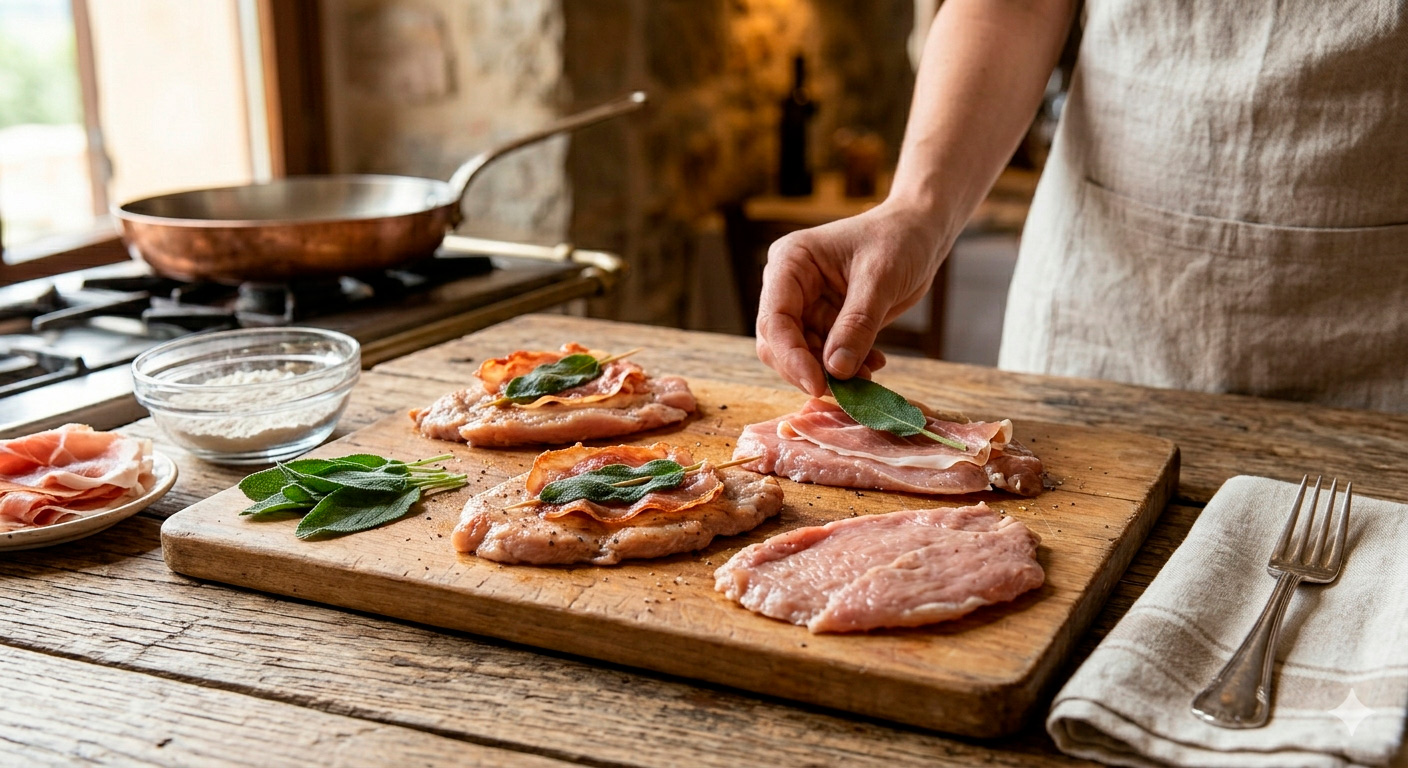
- Prepare and pound the veal: Place the escalopes between two sheets of plastic wrap or kitchen plastic. Gently pound them with a kitchen mallet or the bottom of a heavy skillet until you achieve a uniform thickness of approximately 5 mm. This step is fundamental: if the escalopes are uneven, they will cook unevenly and the meat will become tough in some areas. Once pounded, season only the side that will not have the ham. Serrano ham is naturally salty and, when seared, concentrates its salt even more; adding salt to the side of the meat that comes into contact with it would result in an excessively salty dish.
- Assemble and secure with toothpick: Spread a slice of Serrano ham over each escalope, covering the entire surface well. Place one or two leaves of fresh sage on top, depending on the size of the leaves and your aromatic preference. Pierce the assembly with a wooden toothpick horizontally, as if you were “sewing” the meat from one end to the other. This detail is not decorative: it keeps the ham and sage in place during searing in the hot pan and prevents them from separating when you flip the escalope.
- Flour and sear in the pan: Lightly flour only the bottom side of the meat (the side without ham), shaking off the excess well. Too much flour will make the final sauce pasty instead of light and fluid. In a large skillet, melt the butter together with the olive oil over medium-high heat. The oil raises the smoke point of the butter and prevents it from burning. When the butter begins to foam, place the escalopes with the ham side down first and let them cook for 1 minute without moving them. The sage in contact with the hot fat will release all its aroma. Carefully flip the escalopes and cook for 2 more minutes on the floured side. The meat should be golden but not dry. Remove the escalopes to a plate and cover them loosely to keep them warm.
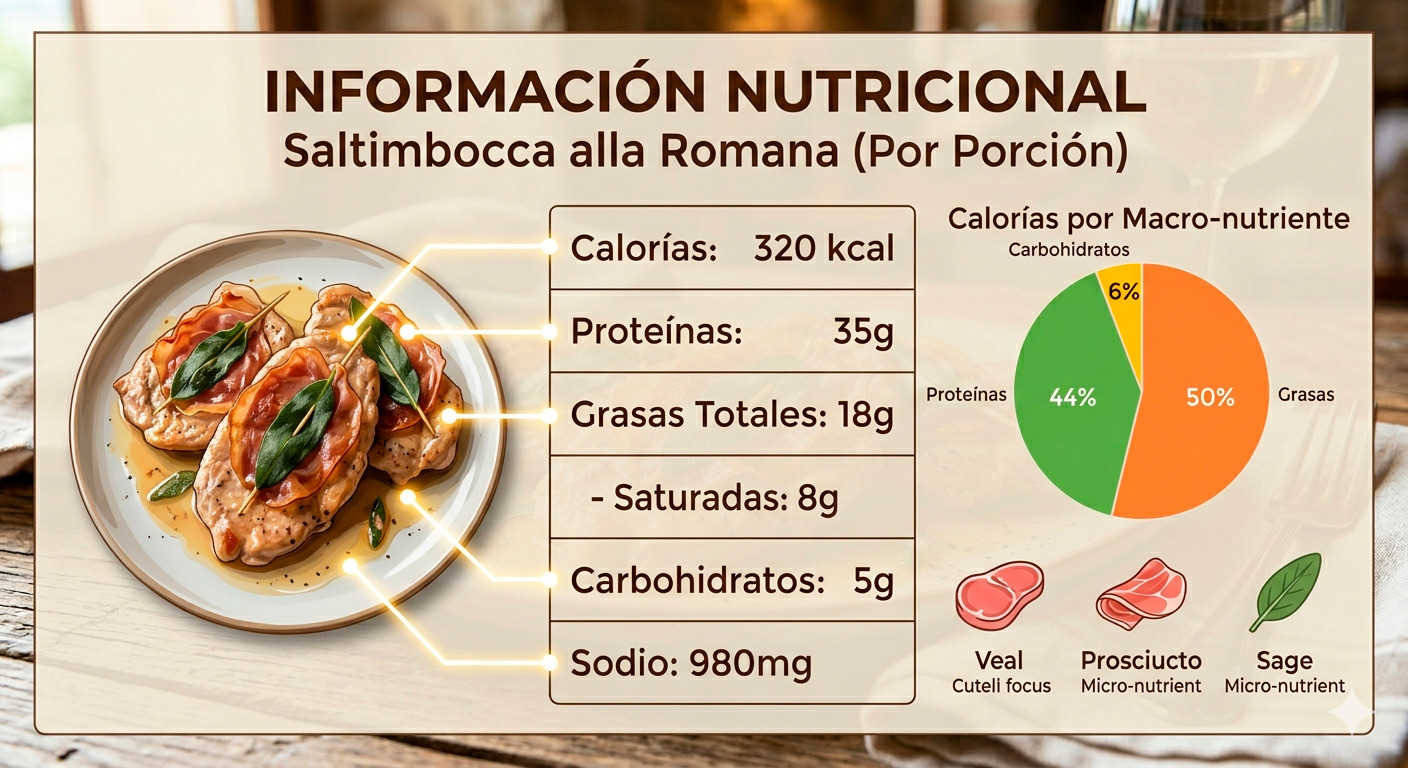
- Deglaze, emulsify, and serve: With the pan still hot, increase the heat to high and pour in the white wine all at once. Scrape the bottom of the pan with a wooden spoon to release all the caramelized juices: that’s where the soul of the sauce resides. Let the wine reduce by half, approximately 2 minutes. Remove the pan from the heat and add a cube of very cold butter. Move the pan in circular motions while continuously mixing until the butter is completely incorporated and the sauce becomes shiny, silky, and slightly thick. Return the escalopes to the pan, generously coat them with the sauce, and serve immediately.
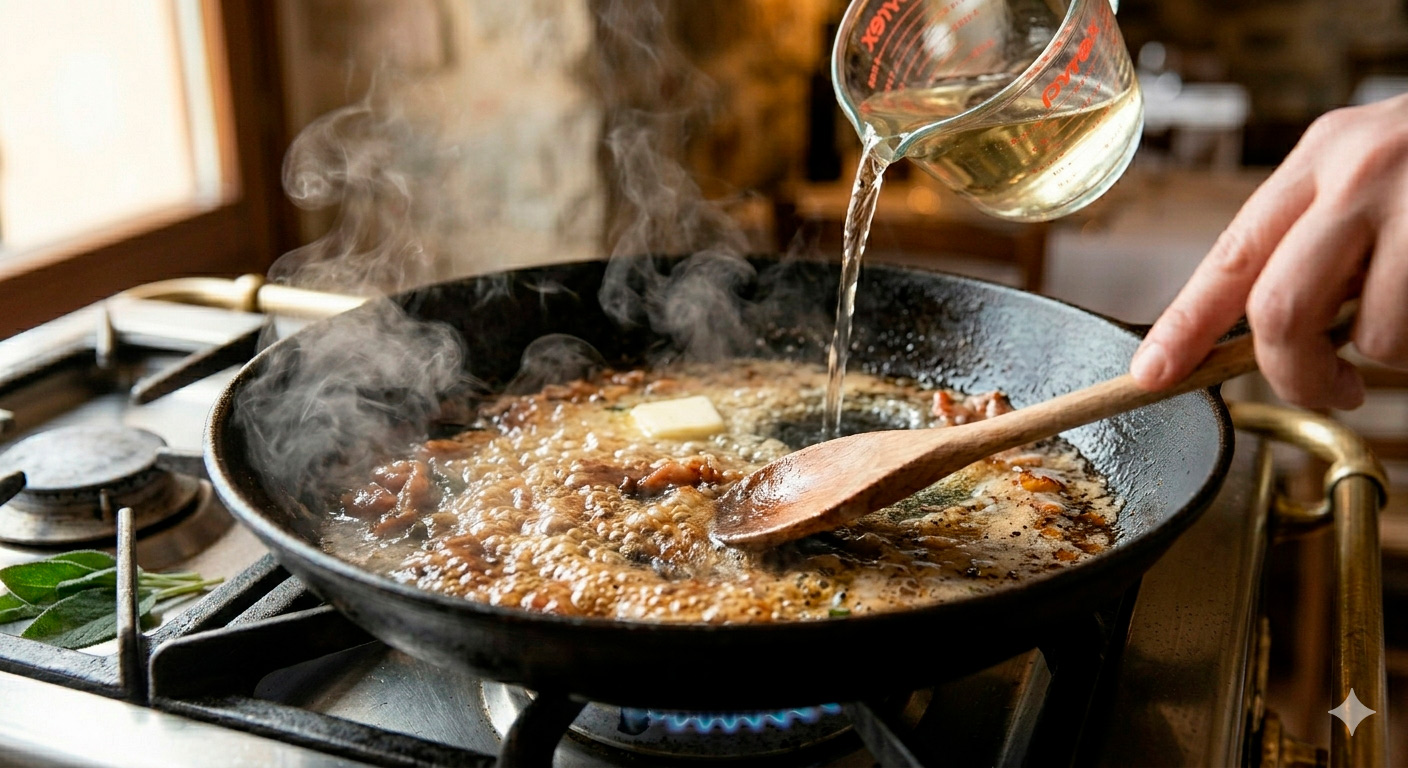
Nutritional Information for Saltimbocca alla Romana
Approximate values per serving (4 total servings). Each serving equals 2 escalopes with sauce.
| Nutrient | Per Serving | % Daily Value* |
|---|---|---|
| Calories | 320 kcal | — |
| Protein | 35 g | 70% |
| Carbohydrates | 5 g | 2% |
| Total Fat | 18 g | 23% |
| Dietary Fiber | 0.2 g | 1% |
| Sodium | 780 mg | 34% |
*Percentage based on a 2,000 kcal daily diet.
Saltimbocca alla Romana is a notably protein dish: 35 grams of protein per serving make it an excellent option for those looking for satiating and nutritious meals. Its carbohydrate content is low (only 5 g, coming from the flour used for dusting), making it compatible with low-carb diets. The moderate calorie intake of 320 kcal is mainly due to the healthy fats from the butter and olive oil. The only point to monitor is the sodium, elevated by the cured Serrano ham; those following a low-sodium diet can substitute it with low-salt cooked ham, although the flavor will be less intense.
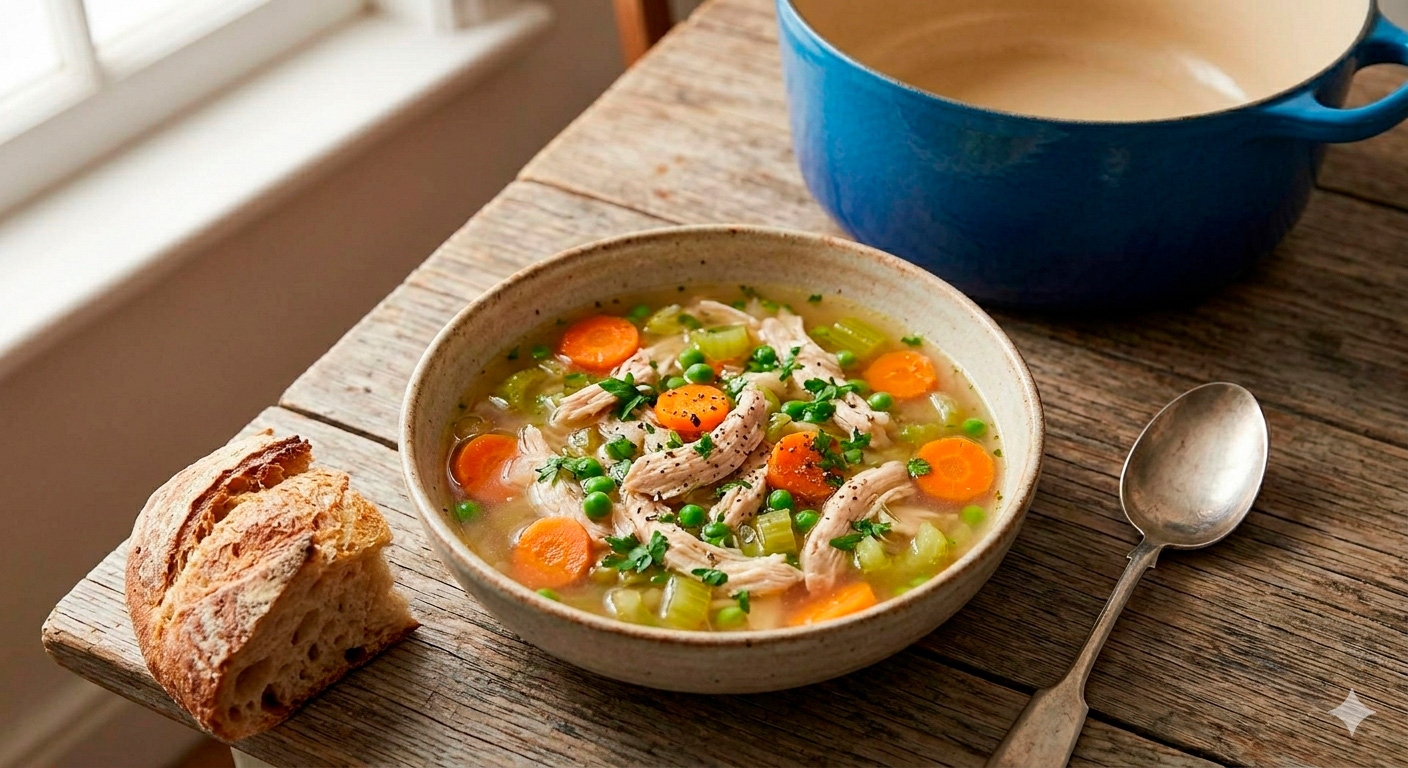
Benefits of Serving with Chicken and Vegetable Soup
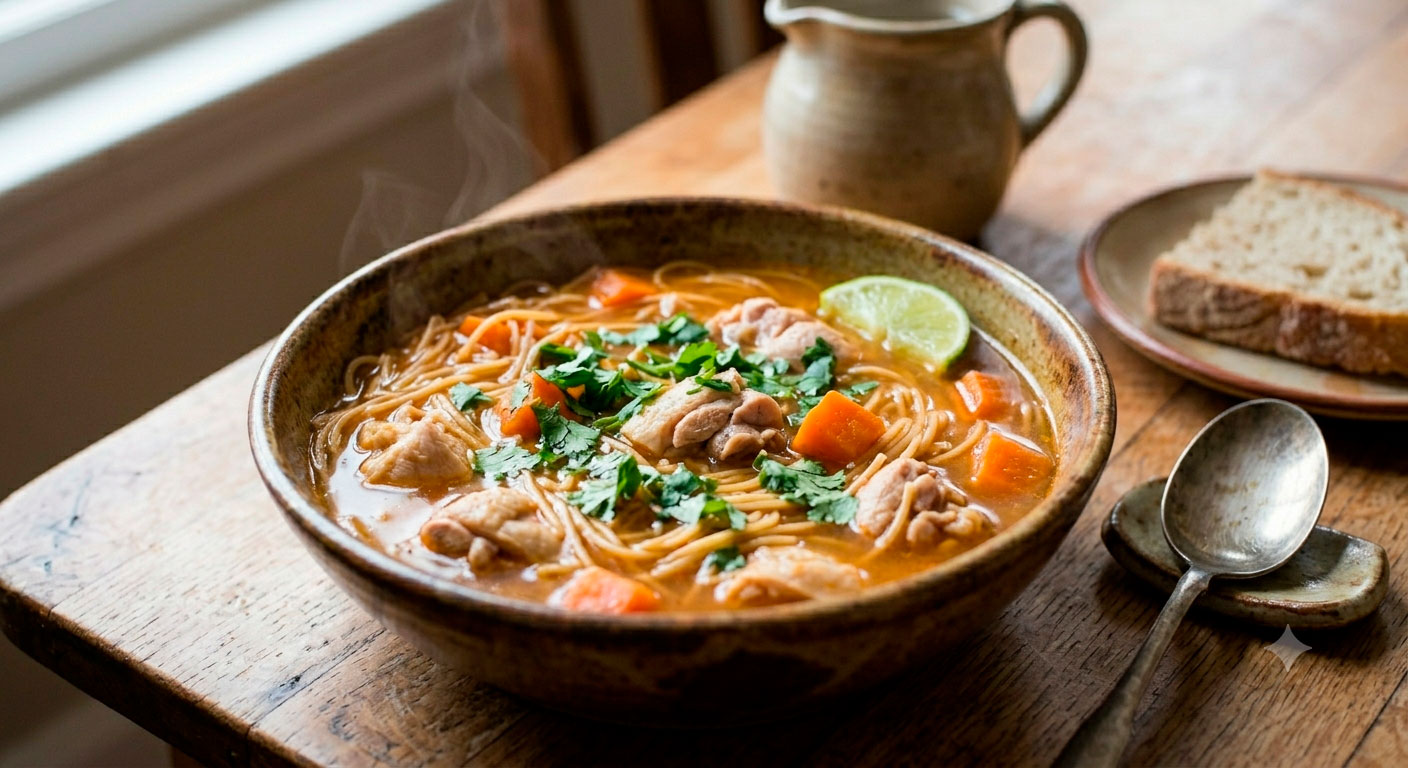
Italian culinary tradition recommends starting a complete meal with a broth or minestrone before the main course. In the case of Saltimbocca alla Romana, starting with a chicken and vegetable soup makes real nutritional sense. The broth provides hydration and prepares the digestive tract for the dense protein of the veal. Additionally, the vegetables in the soup complement the vitamins A, C, and K that Saltimbocca, being a dry and protein dish, does not offer in abundance. The satiating effect of the soup also helps control portions of the main dish, something useful for maintaining the caloric balance of the complete menu.
Tips for Making Perfect Saltimbocca alla Romana
The first professional secret for impeccable Saltimbocca alla Romana is the temperature of the pan. Many novice cooks make the mistake of putting the meat in a pan that is not hot enough, which causes the escalopes to sweat instead of sear. The correct signal is that the butter has completely foamed and the foam begins to reduce: at that exact moment you add the meat. A quick sear over high heat is what generates the golden crust and retains the juices inside.
The thickness of the escalopes makes the difference between a tender Saltimbocca alla Romana and a tough one. The goal is to reach a uniform 5 mm thickness. If you work with thicker escalopes from the supermarket, don’t cut them with a knife: use a kitchen mallet and hit with gentle but firm movements from the center towards the edges, as if you were spreading the meat. This breaks the muscle fibers without tearing the meat, achieving a uniform texture that cooks evenly in less than 3 minutes total.
Another critical point is the butter for the final sauce. For the emulsion to work, the butter you add when deglazing must be very cold, straight from the refrigerator. The temperature contrast between the cold butter and the hot sauce is precisely what generates that shiny and velvety texture you see in Italian restaurants. If you add butter at room temperature, the sauce will be greasy and without body. This trick, called “monter au beurre” in classic cuisine, is what separates a mediocre sauce from an extraordinary one.
The sage must always be fresh. Dried sage loses most of its essential oils and provides a bitter, woody, and flat flavor that has nothing to do with the earthy and camphorous fragrance of the fresh leaf. If you can’t find fresh sage in your usual market, look for it in Italian product stores, farmers’ markets, or grow it in a pot on your windowsill: it is a resistant plant that grows with little water and lots of light.
Don’t overcrowd the pan. If you cook more than four escalopes at the same time in a standard skillet, the oil temperature will drop drastically and the escalopes will start to boil instead of sear. The result will be pale meat without a crust. The solution is to work in two batches, letting the pan recover temperature between one and the other. The extra time you invest is worth it: the visual and flavor difference is evident.
About the most common mistakes: the most frequent is salting the veal on both sides. Remember that Serrano ham or prosciutto concentrate their salt when heated and can make the dish inedible if the meat is also seasoned. Always taste the sauce before adding additional salt. The second most common mistake is overdoing the flour: excessive flouring generates a crust that is too thick, making the dish heavy and thickening the sauce in a pasty way. Flour only the bottom side, shake off the excess well, and that’s it.
For storage, Saltimbocca alla Romana is a dish that lives in the moment. If you have leftovers, store them in an airtight container in the refrigerator for a maximum of 48 hours. To reheat, place it in a skillet over very low heat with a splash of beef broth and cover the container for 3 minutes. This returns moisture to the meat without overcooking it. The microwave is contraindicated: the intense and uneven heat hardens the veal irreversibly. Freezing once cooked is not recommended, as the texture of the sage and ham degrades significantly when thawed.
Variations and Substitutions for Saltimbocca alla Romana
The most popular version outside Italy is Chicken Saltimbocca: the veal is replaced by chicken breasts opened like a book and pounded. The result is more economical, somewhat lighter in calories, and with a milder flavor that gives greater protagonism to the sage. It is an ideal option for those who do not eat red meat or want to reduce costs without sacrificing the dish’s experience.
In some regions of northern Italy, a version with Fontina cheese is prepared: a thin slice of this cheese is inserted between the veal and the ham before securing it with the toothpick. When seared, the cheese melts and adds an extra unctuousness that makes the dish more substantial. A similar variant is made with Gruyère cheese or even buffalo mozzarella for those who prefer a more dairy and creamy profile.
For those who prefer to reduce fats or avoid frying in butter, there is an oven-baked version: the escalopes are briefly seared in a pan with only olive oil (without butter) for 1 minute per side, transferred to a baking dish, and finished in the oven at 180 °C (350 °F) for 8 to 10 minutes. The sauce is prepared separately by deglazing the pan with the wine. The result is somewhat less juicy than the classic version, but significantly lighter.
For a gluten-free option, simply substitute the wheat flour with rice flour or cornstarch. The resulting crust is equally golden and crispy, although slightly more delicate. Also verify that the broth you use to adjust the sauce does not contain gluten, as some commercial broths include it as a thickener.
Frequently Asked Questions about Saltimbocca alla Romana
Can you freeze Saltimbocca alla Romana?
Freezing Saltimbocca alla Romana once cooked is not recommended, as the texture of the sage degrades and the ham loses its crispy character when thawed. If you want to prepare it in advance, you can assemble the raw escalopes (with the ham and sage secured with a toothpick), cover them with plastic wrap, and refrigerate them for up to 12 hours before cooking.
How long does Saltimbocca alla Romana last in the refrigerator?
Cooked Saltimbocca alla Romana keeps in an airtight container in the refrigerator for up to 48 hours at a temperature between 2 °C and 4 °C (36-39 °F). To reheat it correctly, do it in a skillet over low heat with a splash of beef broth; avoid the microwave because it toughens the veal and ruins the sauce’s texture.
How many calories are in Saltimbocca alla Romana?
A serving of Saltimbocca alla Romana (2 escalopes with its sauce) provides approximately 320 kcal, with 35 g of protein, 18 g of fat, and only 5 g of carbohydrates. It is a protein dish and relatively light in carbohydrates, ideal for low-carb diets, although its sodium content (780 mg per serving) is high due to the cured Serrano ham.
Can you make Saltimbocca alla Romana without veal?
Yes. The most common substitution is chicken breast opened like a book and pounded, which is more economical and somewhat lighter in calories. It also works very well with pork escalopes. In both cases, the cooking time increases slightly (1 to 2 extra minutes per side) to ensure the meat is fully cooked.
How is Saltimbocca alla Romana best served?
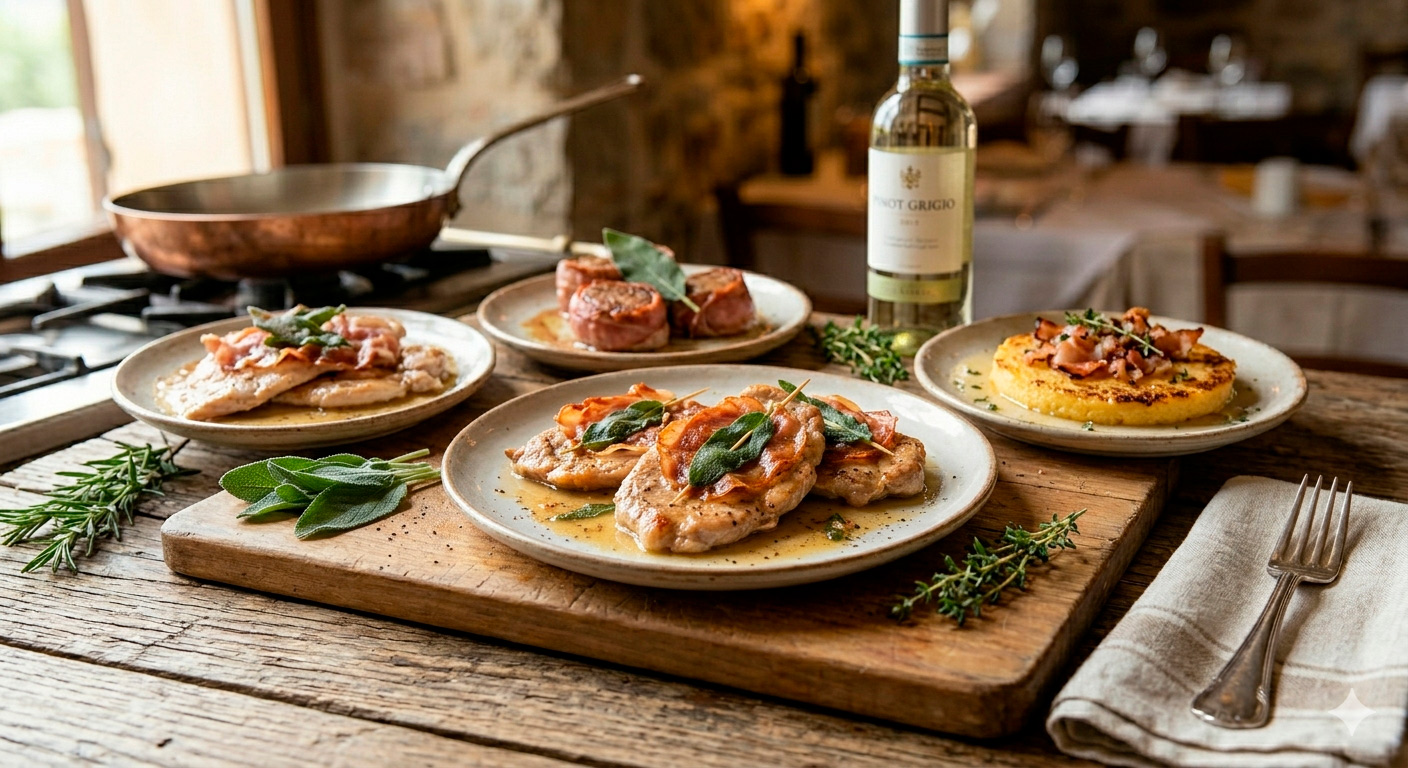
The classic Roman side dish is a risotto alla milanese or a creamy mashed potato that absorbs the white wine sauce. It also pairs very well with green beans sautéed with garlic or an arugula salad with Parmesan. For pairing, opt for the same wine you used for cooking: a chilled Pinot Grigio or a young Sauvignon Blanc enhances the acidity of the sauce without overshadowing the sage’s flavor.
Reference Sources and Resources
For more information on food safety and nutrition, consult the WHO’s healthy eating guides.
For information on the nutritional value of ingredients, you can consult The Nutrition Source from Harvard T.H. Chan School of Public Health.
Food composition information available in the database of Mexico’s National Institute of Public Health.