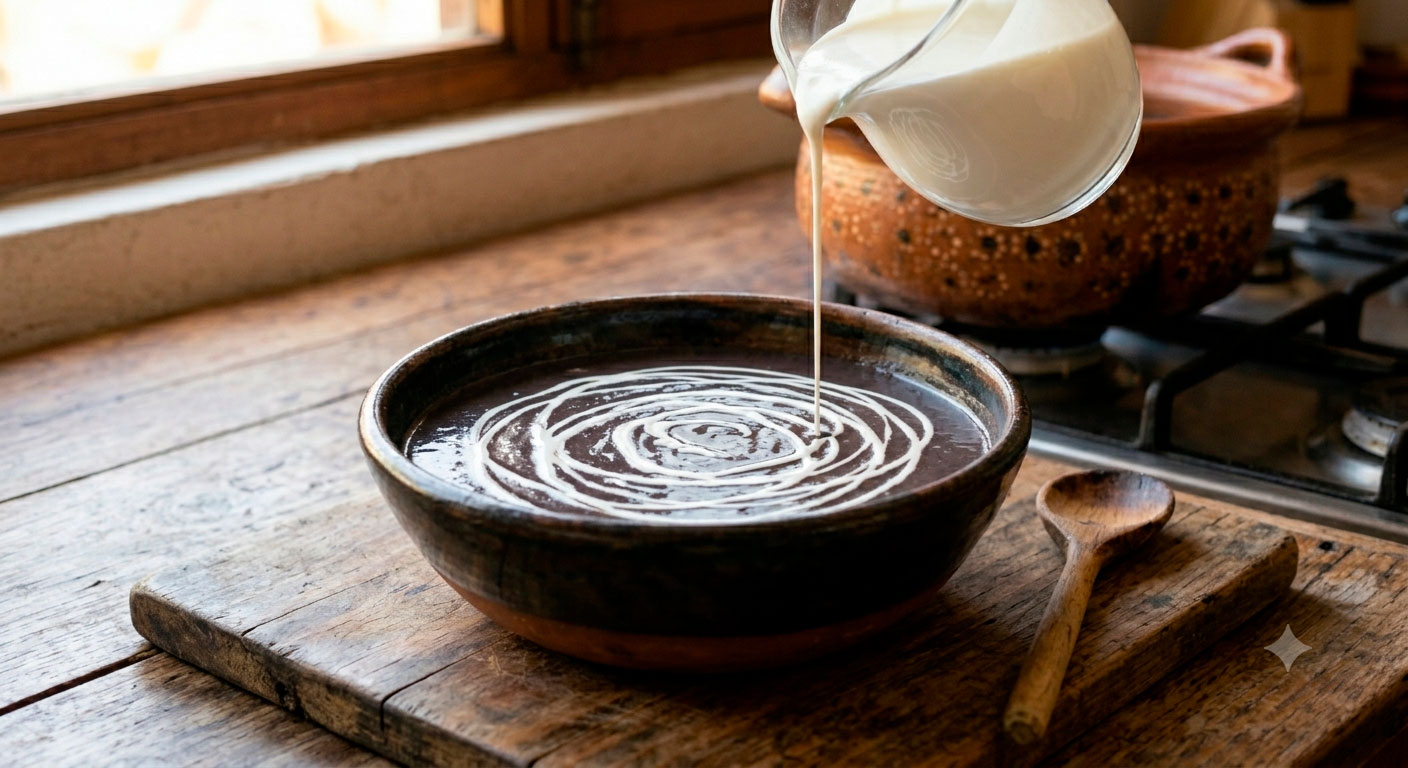
6 steps for an authentic and irresistible ossobuco in red wine with gremolata
Origin and history of ossobuco in red wine with gremolata
To understand why ossobuco in red wine with gremolata is one of the most revered dishes in Italian gastronomy, we must travel in imagination to the Lombardy region in northern Italy. More precisely, to the vibrant city of Milan, cradle of a dish that has been conquering palates for centuries with its balance between the rusticity of the cut and the elegance of its preparation.
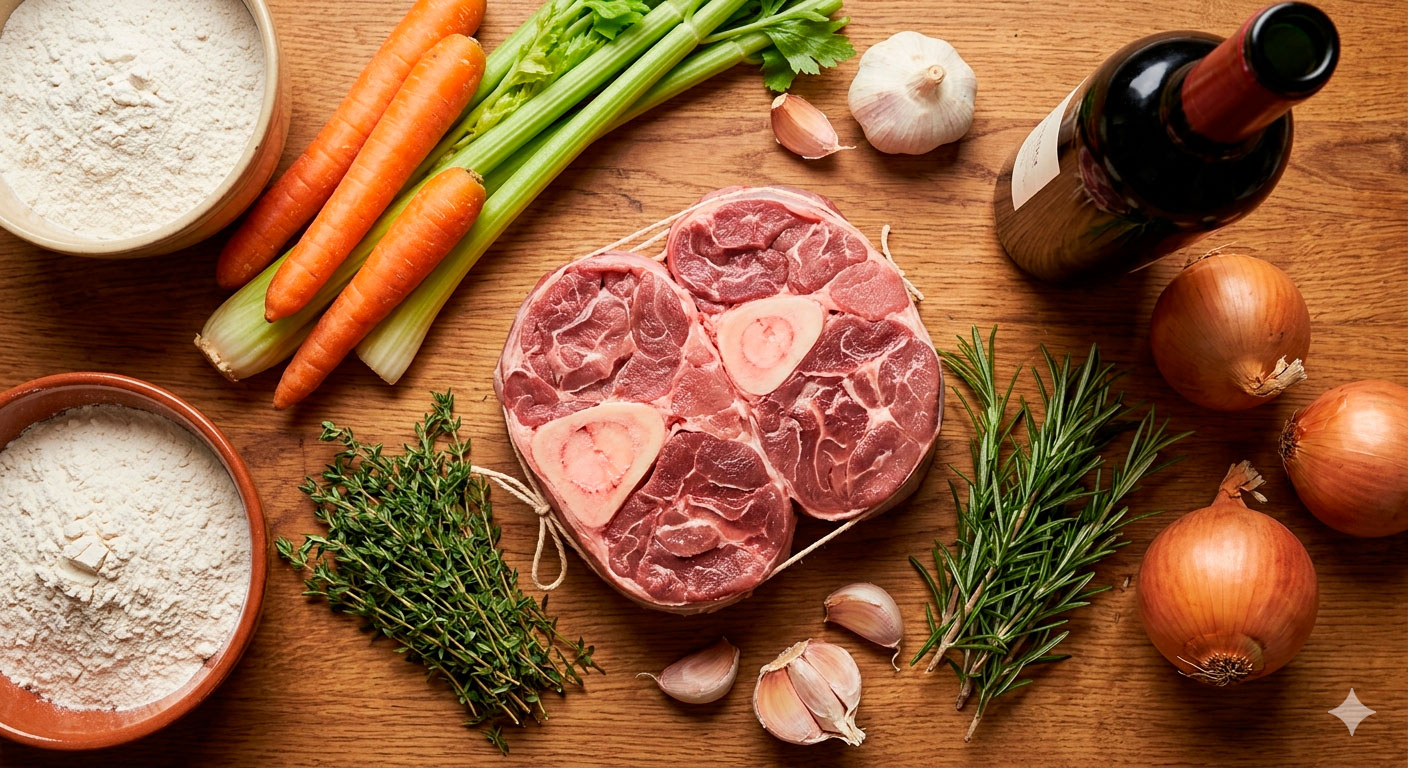
The term “ossobuco” comes from the Milanese dialect os bus, which literally means “bone with a hole.” This name directly refers to the center of the beef shank cut — also known as jarrete in Spain, chamorro in Mexico, or lagarto in Portugal — where the most coveted ingredient of the recipe resides: the bone marrow, that gelatinous treasure that enthusiasts spread directly onto toasted bread.
Historically, ossobuco has documented roots in the 19th century. In its beginnings, it was prepared in bianco, that is, without tomato, flavored only with cinnamon and seasonal herbs. Tomato — today inseparable from the most popular version — was not part of the original recipe, as its adoption in northern Italian cooking was a gradual process that took several decades.
It was not until tomato was definitively integrated into the Lombard pantry that the modern version of ossobuco in red wine with gremolata, dyed deep red and bathed in wine, took the spotlight we know today. This evolution transformed a humble tavern dish into an emblem of Italian home cooking at its finest.
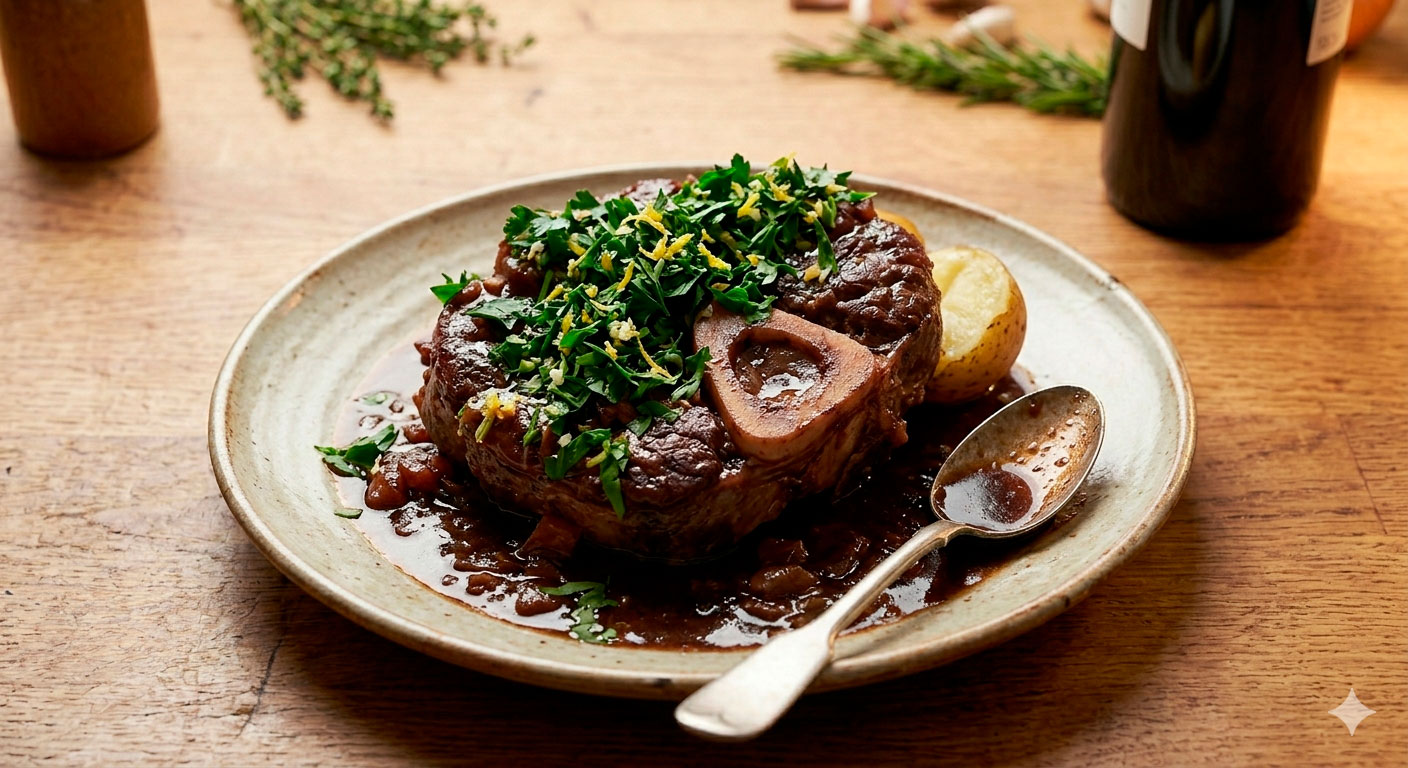
Gremolata was born as a necessary and intelligent counterpoint: a citrusy mix of fresh parsley, garlic, and lemon zest that balances the richness of the fat and concentrated collagen of the meat. It is, essentially, the aromatic signature that distinguishes ossobuco from any other stew. Without it, the dish is incomplete; with it, it becomes a sensory experience that combines the heavy and the ethereal, the rustic and the refined in a single bite.
The red wine version — different from the classic ossobuco alla Milanese which uses white wine and saffron — gained ground in the kitchens of northern Italy throughout the 20th century, especially in the countryside and mountain trattorias, where the red wines of Piedmont and Tuscany were the most accessible natural resource. Today, this version with red wine is the most widespread outside Italy, enthusiastically adopted in Latin America as a celebration dish and Sunday cooking.
What is ossobuco in red wine with irresistible gremolata and why should you make it at home?
Ossobuco in red wine with irresistible gremolata is, above all, an act of patience and respect for the product. We are not simply mixing ingredients in a pot; we are allowing time to work its magic on the meat fibers and the soul of the vegetables. If you have come to this recipe, it is because you share that almost mystical passion for the aromas that fill the house on a Sunday afternoon, those that embrace you before you have even taken the first bite.
Ossobuco in red wine is not just a dish; it is a rite of passage for any self-respecting cooking enthusiast. It represents the transformation of a humble and rough cut — beef shank — into a delicacy that falls apart at the touch of a fork. The collagen in the meat, under the influence of gentle and prolonged heat, turns into pure gelatin, providing that unctuous mouthfeel that is impossible to replicate with fast cooking methods.
What makes this red wine version truly irresistible is the aromatic depth the liquid provides. Unlike the classic alla Milanese with white wine, red wine — preferably a Nebbiolo or a Chianti — creates a robust structure that supports the intensity of the marrow and the richness of the reduced sauce. The wine not only adds flavor; its natural acidity helps tenderize the muscle fibers of the meat during the long cooking hours.
The secret of this recipe is not excessive complexity, but the quality of the initial sear and the depth of the broth. That golden sediment left on the bottom of the pot after searing the meat — product of the Maillard reaction — is pure liquid gold. It is the soul of the final sauce and should never be wasted.
The gremolata that crowns the dish is the element that separates it from any other stew. This dry mixture of finely chopped flat parsley, lemon zest, and fresh garlic acts as a flavor equalizer: it breaks the density of the stew, adds a citrus note that cleanses the palate with each bite, and provides a contrast in texture and temperature that awakens all the senses. Preparing it is fast, but its impact is monumental.
In this ossobuco in red wine with gremolata recipe, you will learn to master six fundamental techniques: proper flour dredging and searing, building a deep soffritto, deglazing with wine, slow braising at a controlled temperature, preparing an impactful gremolata, and finishing with cold butter for a shiny, silky sauce. Each of these steps has its reason and its precise moment; respecting them is the difference between a correct dish and a truly memorable one.
Ingredients for ossobuco in red wine with gremolata
Quantities for 4 servings.
Main ingredients
- 4 pieces of beef shank (ossobuco), 3-4 cm thick
- 500 ml medium to full-bodied red wine (Nebbiolo or Chianti)
- 750 ml homemade beef broth
- 2 large white onions
- 3 medium carrots
- 2 celery stalks
- 4 garlic cloves
- Wheat flour, as needed
Seasonings, gremolata, and optional
- 2 tablespoons tomato paste
- 1 bouquet garni (thyme, bay leaf, rosemary)
- 50 g unsalted butter
- 4 tablespoons extra virgin olive oil
- Sea salt and black pepper to taste
- Zest of 2 yellow lemons (preferably organic)
- 1 bunch fresh flat-leaf parsley (leaves only)
Regional variations of main ingredients
| Base ingredient | Regional names and variants |
|---|---|
| Ossobuco | Beef shank, Jarrete (Spain), Chamorro (Mexico), Lagarto (Portugal), Shin (England) |
| Celery | Celery stalk, Apio (Spanish) |
| Carrot | Carota (Italian), Carrot |
| Marrow | Bone marrow, Caracú (Argentina/Uruguay), Midollo (Italy) |
| Flat-leaf parsley | Italian parsley, Prezzemolo (Italy) |
How to prepare ossobuco in red wine with gremolata step by step
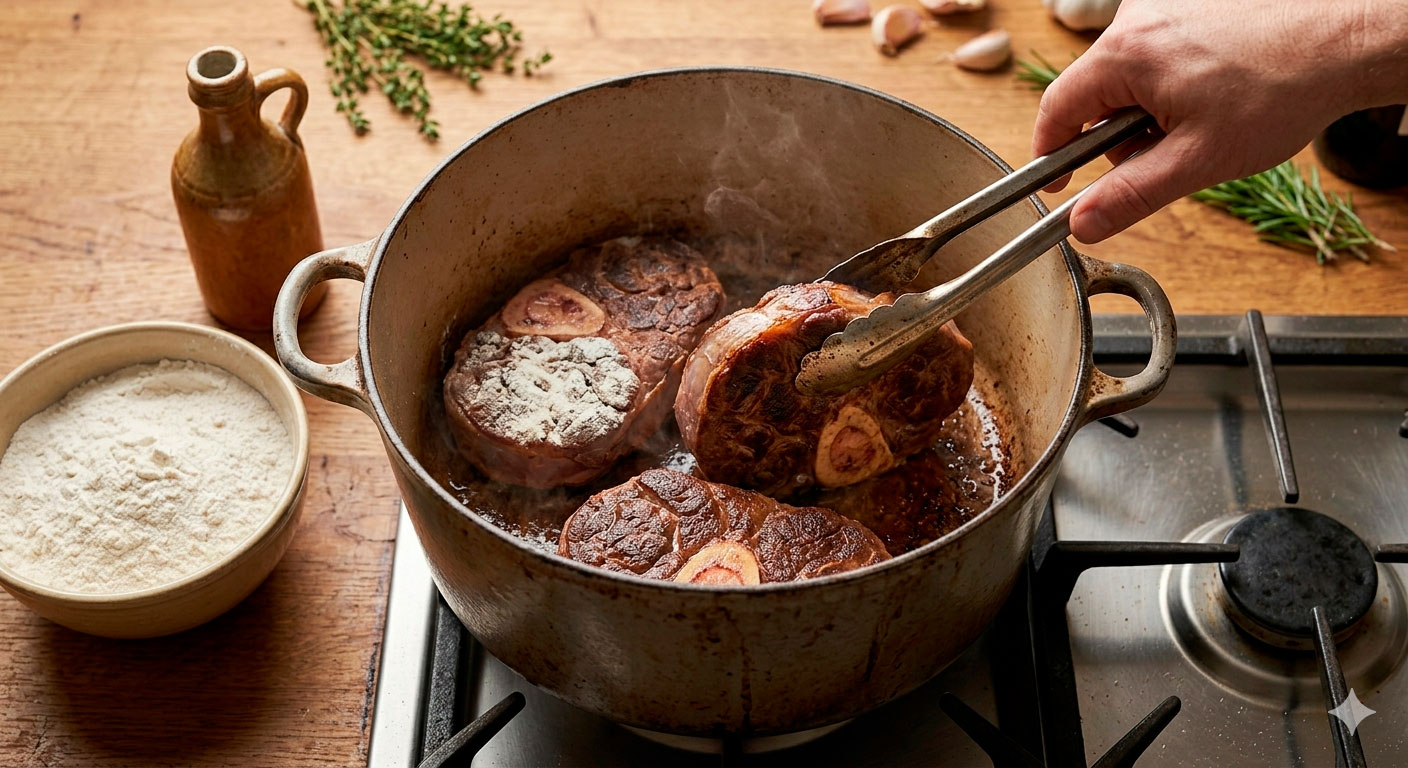
- The golden sear: Make small cuts on the outer membrane surrounding each shank to prevent the meat from shrinking or deforming during cooking. Generously season each piece with salt and pepper and dredge in flour, shaking off excess. In a heavy-bottomed pot, heat the olive oil over medium-high heat and sear the meat on both sides, seeking a deep golden crust — the Maillard reaction in action. Do not move the meat prematurely; let it release on its own. Remove the pieces and set aside. The dark sediment stuck to the bottom is the soul of your sauce; do not waste it.
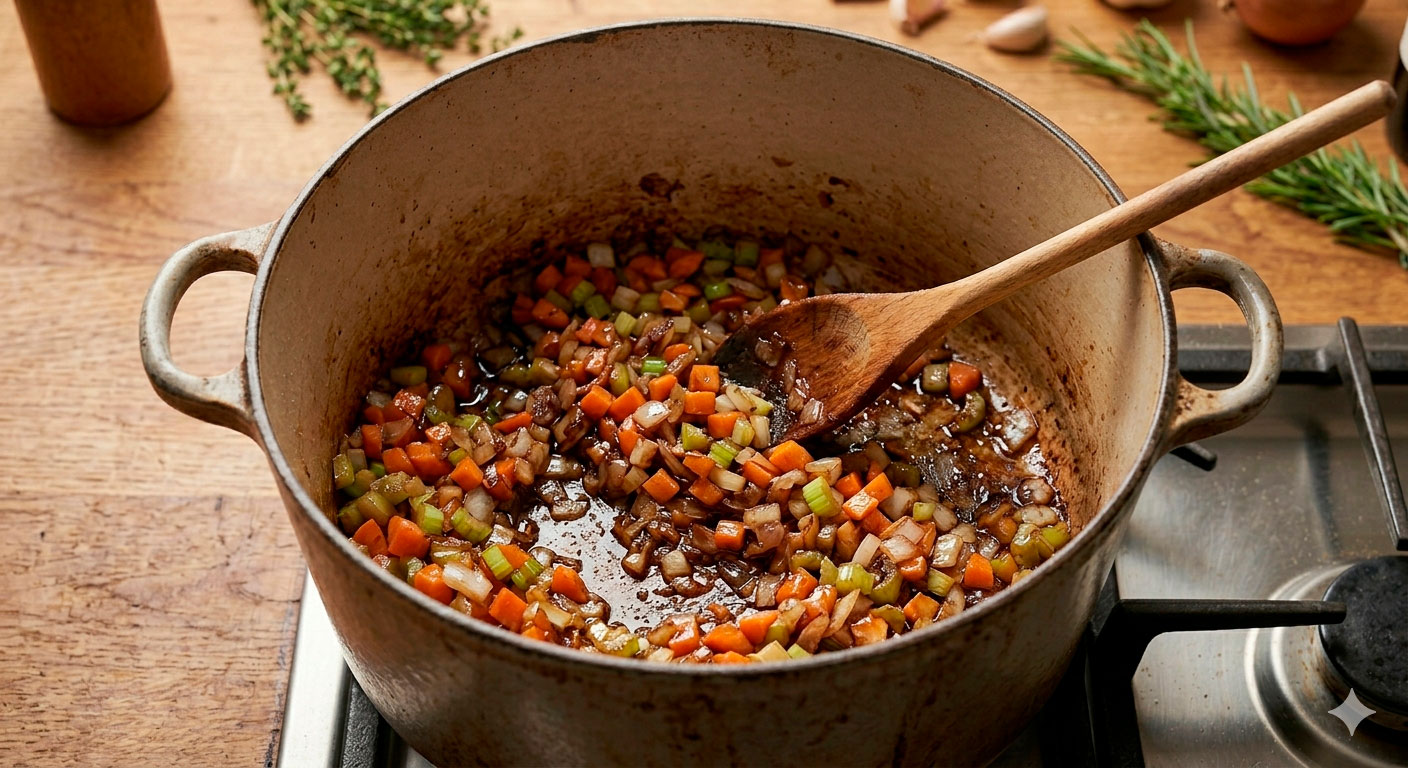
- The Soffritto: the flavor base: In the same pot, using the rendered fat from the meat, add the finely chopped onion, carrot, and celery — the classic mirepoix. Cook over low heat without rushing. The goal is for the vegetables to sweat, lightly caramelize, and absorb the juices from the previous sear. Add the 2 minced garlic cloves at the end to prevent burning. This process takes about 15 minutes, but it will give coherence, sweetness, and body to the final sauce of the ossobuco in red wine.
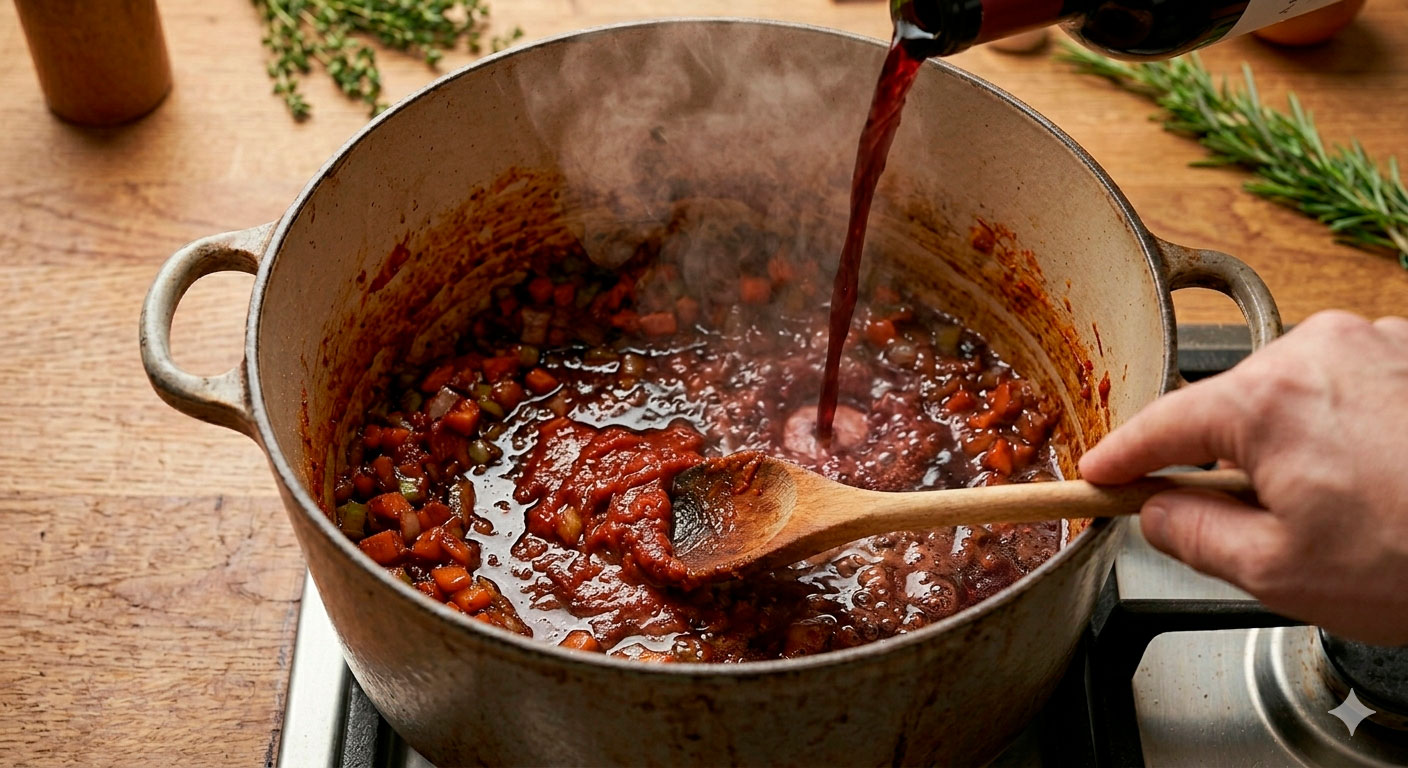
- Deglazing with red wine and tomato paste: Add the tomato paste directly to the soffritto and cook for 2 minutes, stirring, until it turns a darker, more concentrated red. This removes the raw acidity of the tomato. Increase the heat and pour in the 500 ml of red wine all at once. With a wooden spoon, vigorously scrape the bottom of the pot to release all the caramelized juices. Let the alcohol evaporate for about 5 minutes and the liquid reduce by half. The mixture will take on a velvety texture and a truly intoxicating aroma.
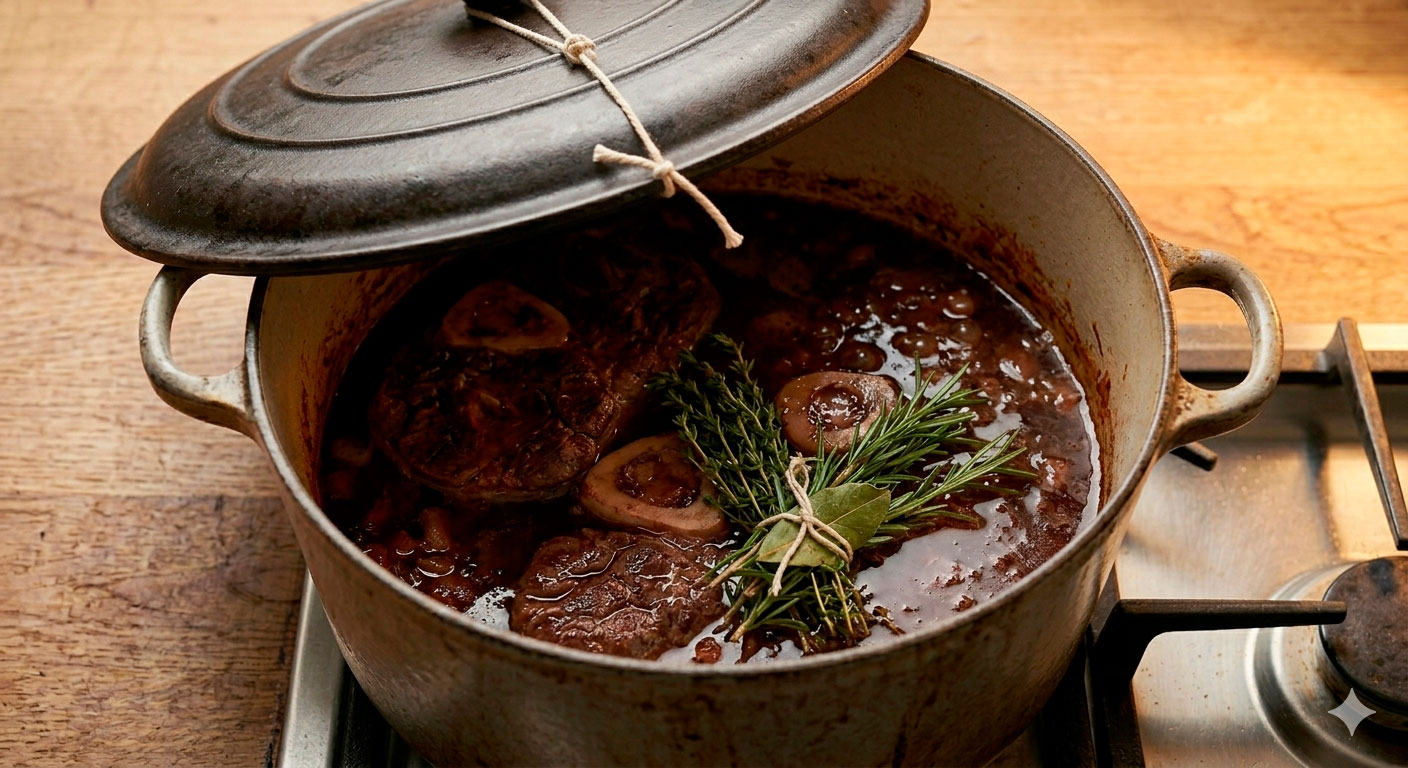
- The flavor bath and waiting time: Return the ossobuco pieces to the pot, trying not to overcrowd them. Pour in the hot beef broth — never cold, to avoid stopping the cooking process — until it covers about two-thirds of the meat. Add the bouquet garni. Cover, leaving a slight gap, or use parchment paper under the lid to create a controlled humidity environment. Lower the heat to the absolute minimum. The goal is a barely perceptible bubbling. Cook for 2.5 to 3 hours. You will know the ossobuco in red wine is ready when the meat separates from the bone almost just by looking at it.
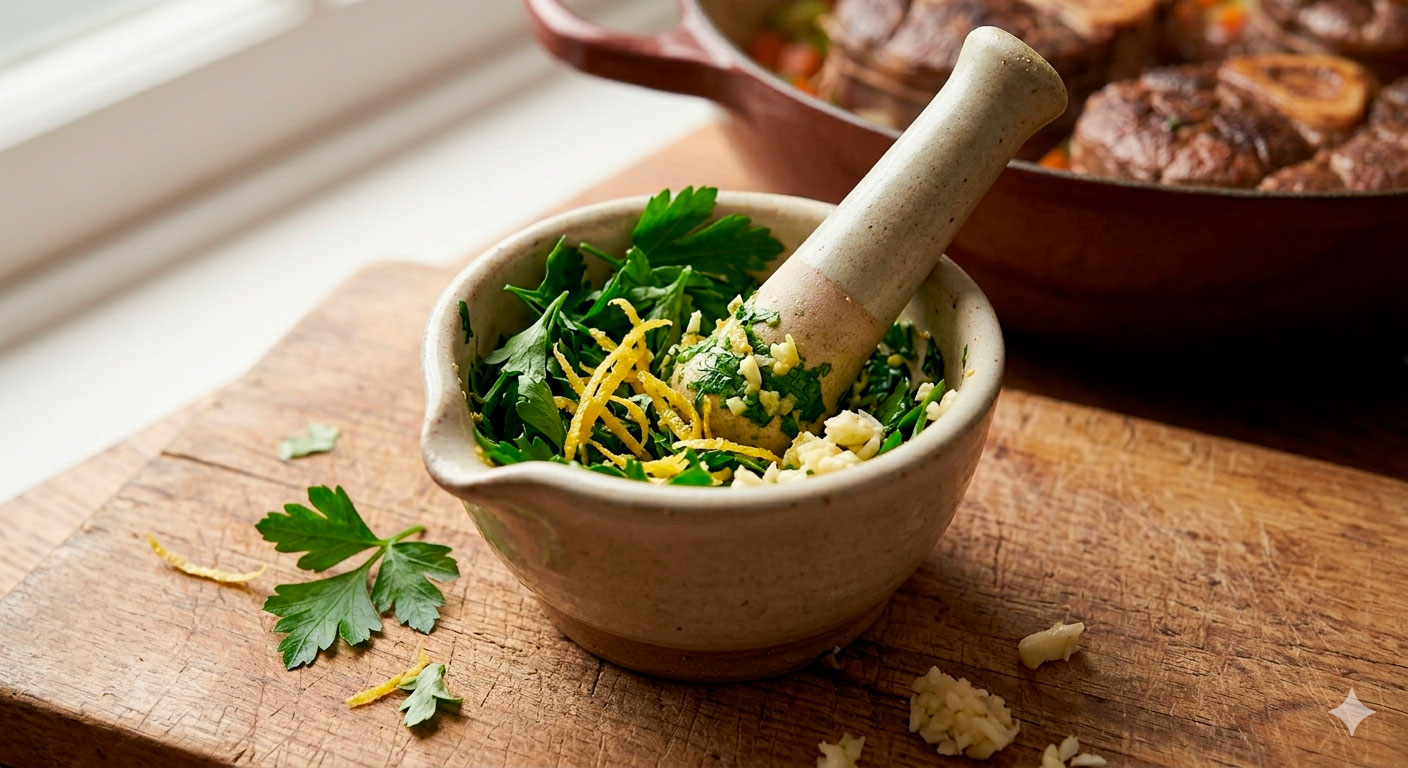
- The awakening of the senses: gremolata: While the meat turns into pure silk, prepare the final contrast. Finely chop only the leaves of the flat-leaf parsley. Mix them in a small bowl with the zest of the two lemons and one freshly grated garlic clove (never chopped in advance, as its essential oils are volatile). Do not add oil; the gremolata should be dry and volatile so its aroma explodes over the hot meat. This condiment is the citrus soul that separates a common ossobuco from a truly irresistible one.
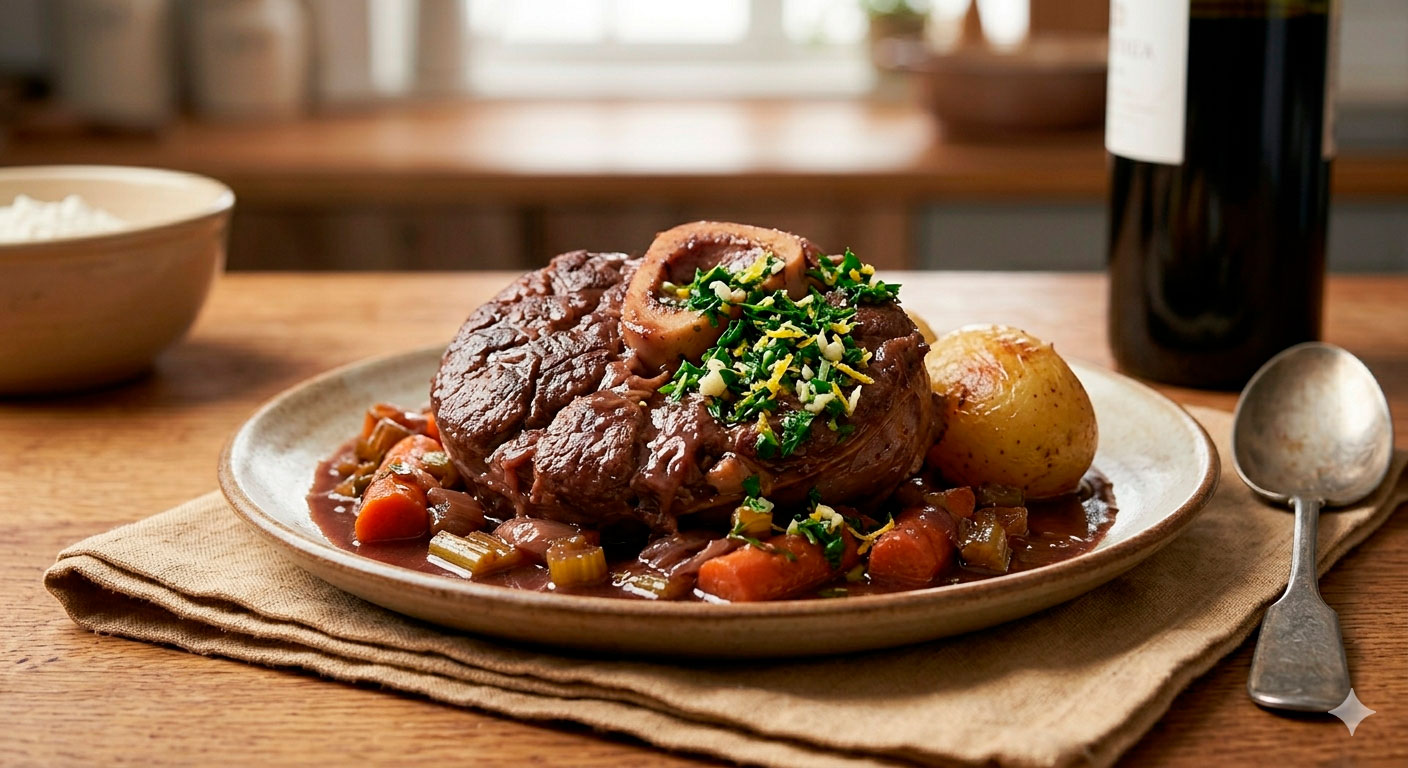
- Resting and final presentation: Carefully remove each piece of ossobuco to prevent them from falling apart. If the sauce is too thin, increase the heat and reduce until it coats the back of a spoon. Turn off the heat and add the cold butter in cubes, gently swirling the pot to create a spectacular shine — a technique known as monter au beurre. Let the dish rest for 10 minutes before serving. Serve the ossobuco generously bathed in its sauce and crown with a generous sprinkle of fresh gremolata. The contrast between the deep brown of the red wine and the vibrant green of the parsley is simply artistic.
Nutritional information for ossobuco in red wine with gremolata
Approximate values per serving (4 total servings).
| Nutrient | Per serving | % Daily value* |
|---|---|---|
| Calories | 650 kcal | — |
| Protein | 45 g | 90% |
| Carbohydrates | 18 g | 6% |
| Total fat | 32 g | 41% |
| Dietary fiber | 4 g | 14% |
| Iron | 6.2 mg | 34% |
| Vitamin C | 15 mg | 17% |
*Percentage based on a 2,000 kcal daily diet.
Expert analysis: the master touch for an irresistible ossobuco in red wine with gremolata
From my perspective behind the stove, ossobuco in red wine with gremolata is the ultimate expression of culinary comfort. What makes this version stand out above any other stew is the ability of red wine to penetrate the connective tissue of the shank during the long cooking hours. The collagen, under the influence of gentle, prolonged heat, turns into pure gelatin, which is precisely what gives that unctuous, silky, irresistible mouthfeel that no fast cooking method can replicate.
It is vital to understand that wine not only adds flavor and color; its natural acidity acts as a tenderizer for the muscle fibers. A medium to full-bodied wine like Nebbiolo — the grape of Barolo — or a good vintage Chianti creates a robust aromatic structure that supports the intensity of the marrow and the depth of the soffritto. My most important tip: if you wouldn’t enjoy drinking it in a glass, don’t put it in your pot. Slow cooking does not hide the quality of the wine; it amplifies it.
For pairing, serve this dish accompanied by the same wine you used in the cooking. A Chianti Classico or Barbera d’Asti perfectly complements the tannic structure of the reduced sauce. If you prefer a Mexican option, a full-bodied red wine from Valle de Guadalupe — such as those made with Nebbiolo or Cabernet Sauvignon from the region — works extraordinarily well. Gremolata, for its part, acts as a final equalizer: it balances the flavor balance so the dish is not heavy or cloying, and it is the element that allows you to enjoy it fully without saturating the palate.
— El Godínez Hambriento, cocinasabroso.com
Tips for preparing a perfect ossobuco in red wine with gremolata
The first tip — and the most important — is not to skip the searing. Many beginner cooks omit this step thinking the meat will cook anyway during the braise. Fatal error. The sear is not to cook the meat inside; it is to create that caramelized crust that concentrates flavors and gives deep color to the entire sauce. For a perfect sear of ossobuco in red wine, the pot must be very hot before adding the meat, and the piece must be perfectly dry — pat it dry with paper towels before dredging in flour. Moisture is the enemy of Maillard.
The second technical tip is tying the meat. Use kitchen twine to wrap around each shank like a belt. This ensures the meat stays attached to the bone during the long cooking hours and that the final presentation is impeccable. Without this step, the meat often separates from the bone prematurely inside the pot and arrives broken on the plate.
Regarding liquid temperature: never add cold broth to a hot pot. This thermal shock suddenly stops the cooking and can harden the meat fibers. Keep the broth at a gentle simmer in a separate pot and add it hot at the indicated moment. This small detail makes a notable difference in the final texture of the ossobuco in red wine with gremolata.
About common mistakes: the most frequent is turning up the heat to speed up cooking. Ossobuco cannot be rushed. Vigorous bubbling will harden the meat instead of transforming it into gelatin. If in doubt, always bet on less heat and more time. The other common mistake is not reducing the wine sufficiently before adding the broth: if the alcohol has not evaporated properly, the final sauce will have a bitter, harsh taste.
For storage: ossobuco in red wine with gremolata is one of those rare culinary wonders that tastes even better the next day. The flavors settle, the sauce gains more complexity, and the meat becomes even more tender. To reheat, always do so over very low heat in a saucepan, adding a splash of broth to recover the sauce’s fluidity. Avoid the microwave if you want to preserve the silky texture of the meat. To freeze, make sure the meat is completely covered by the sauce and store for up to 3 months.
Variations and substitutions for ossobuco in red wine with gremolata
One of the great virtues of ossobuco in red wine with gremolata is its adaptability. The classic alla Milanese version omits tomato and red wine, using dry white wine and a pinch of saffron in the broth for a more delicate and floral version. If you want to experiment, the version with dark Stout beer is extraordinary: the coffee and dark chocolate notes of the beer integrate memorably with the richness of the beef.
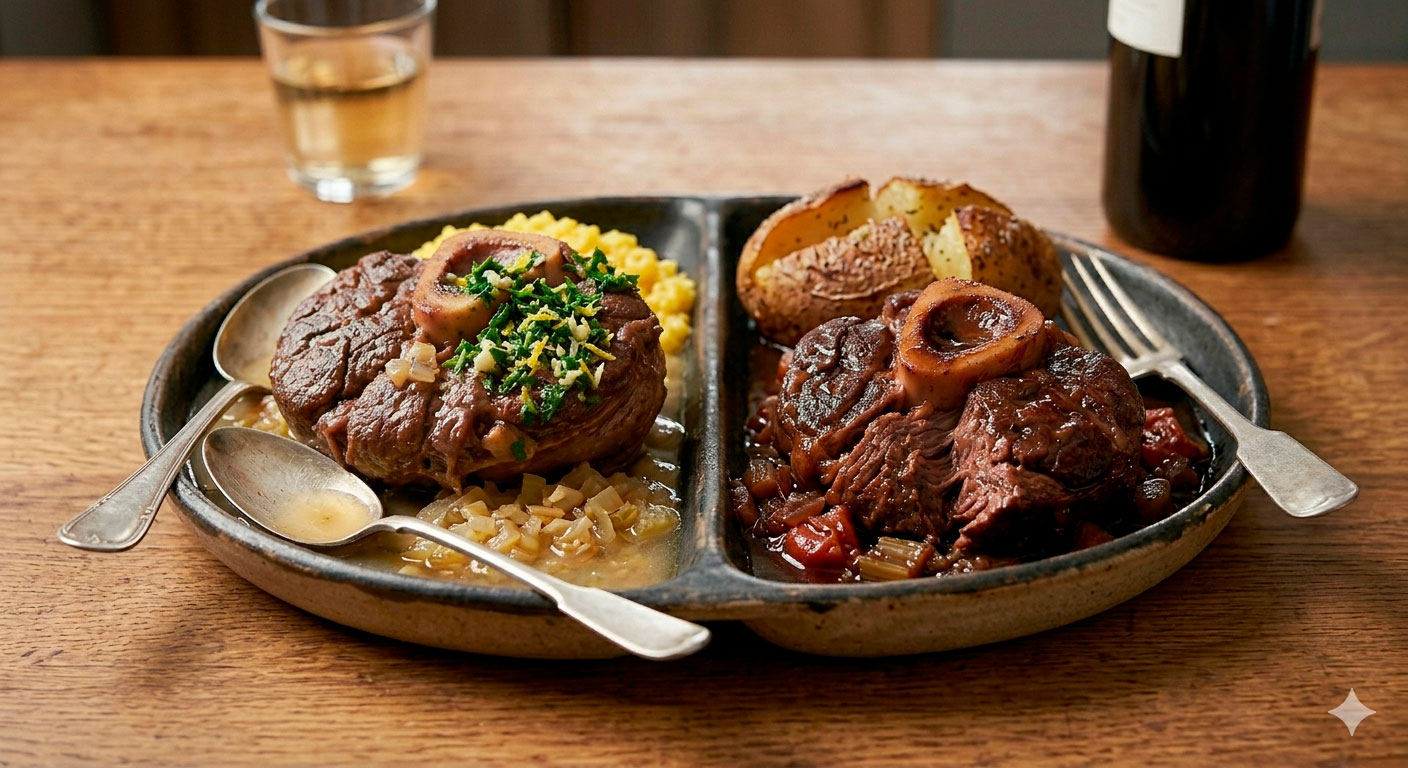
For those who cannot get beef shank, pork ossobuco is a viable alternative with a slightly shorter cooking time — about 2 hours — and a milder flavor that pairs better with white wine. As for accompaniments, although Risotto alla Milanese is the traditional partner, creamy polenta with lots of butter or a generous mashed potato work wonderfully to soak up every drop of that irresistible sauce. Celiacs can substitute wheat flour for rice flour in the dredging step without any problem.
Frequently asked questions about ossobuco in red wine with gremolata
Can ossobuco in red wine with gremolata be frozen?
Yes, ossobuco in red wine with gremolata freezes perfectly for up to 3 months. Make sure the meat is completely covered by the sauce in an airtight container to prevent freezer burn. To thaw, do so in the refrigerator for 12 hours and reheat over very low heat in a saucepan, adding a splash of broth.
How long does ossobuco in red wine last in the refrigerator?
Stored in an airtight container, ossobuco in red wine with gremolata keeps for up to 3 days in refrigeration below 4°C. You’ll know it’s no longer good if the sauce smells sour or the meat has lost its deep reddish color and has a slimy texture.
How many calories are in ossobuco in red wine with gremolata?
Each serving of ossobuco in red wine with irresistible gremolata provides approximately 650 kcal, with 45 g of protein, 32 g of total fat, and 18 g of carbohydrates. It is a hearty and nutritious dish — rich in collagen, iron, and vitamins — ideal as a main course for a family or celebration meal.
Can ossobuco be made without red wine?
Of course. You can substitute red wine with a dry full-bodied white wine, obtaining a lighter and more floral result — the classic alla Milanese version. Another option is a Stout beer, which brings coffee and dark chocolate notes. In both cases, add a little more lemon zest to the gremolata to compensate for the aromatic freshness.
How is ossobuco in red wine with gremolata best served?
The classic way is to accompany it with Risotto alla Milanese, although creamy polenta or buttery mashed potatoes are also perfect for soaking up the sauce. Always serve the fresh gremolata at the very last moment, generously sprinkled over the hot meat, so its essential oils are released with the steam of the dish and perfume every bite.
Reference sources and resources
For more information on food safety and nutrition, consult WHO healthy diet guidelines.
Regarding the nutritional value of ingredients, you can consult The Nutrition Source from Harvard T.H. Chan School of Public Health.
Food composition information available from the National Institute of Public Health of Mexico database.
Consult our disclaimer and legal notice policy before making decisions about your diet based on this content.