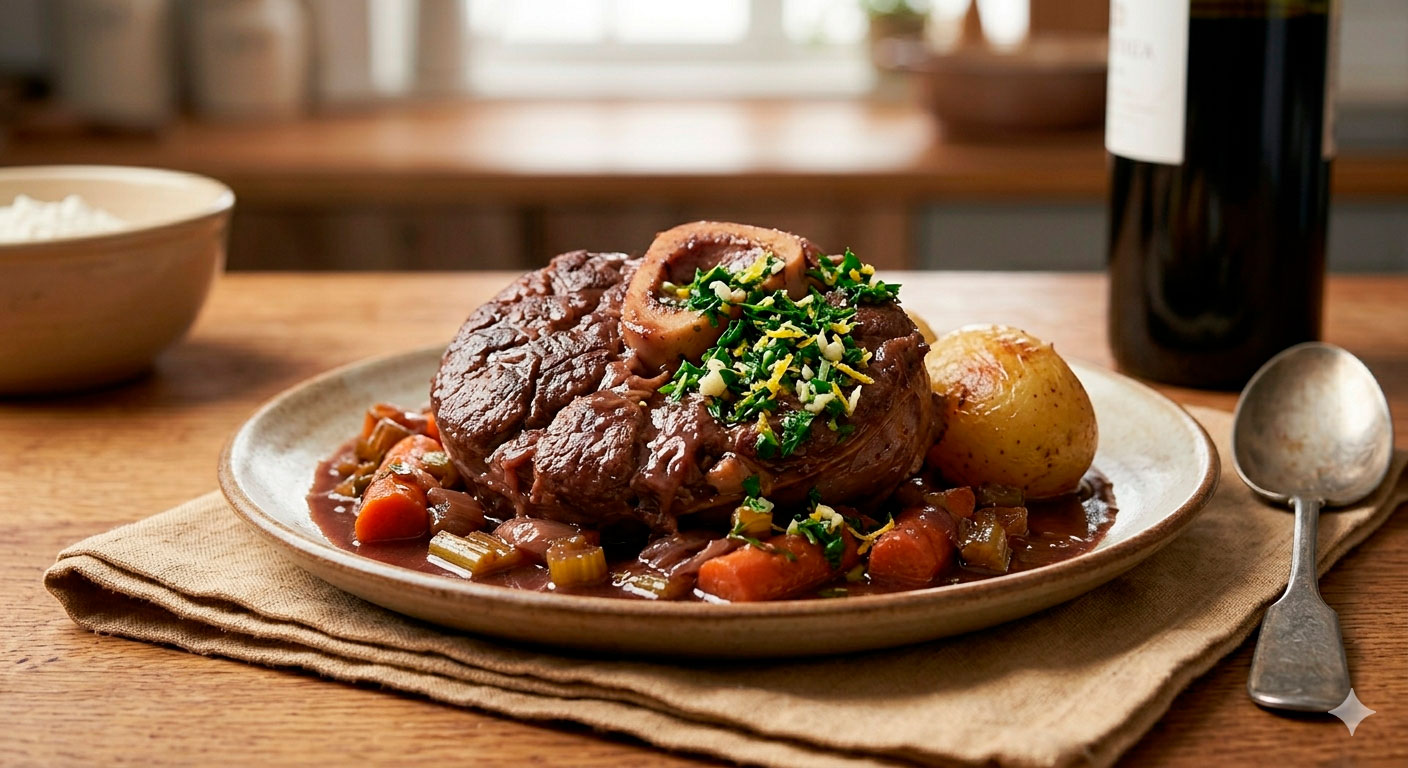
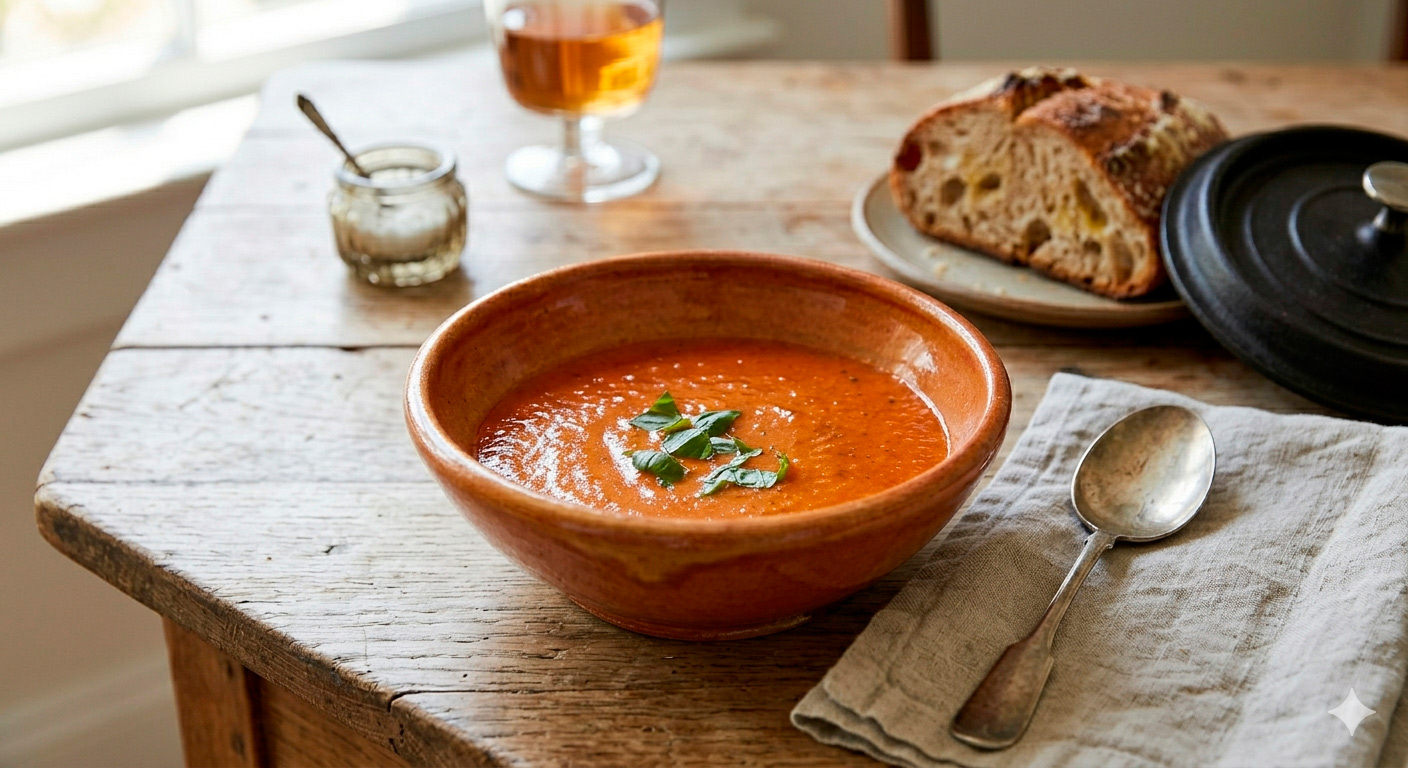
6 Steps to the Most Irresistible Traditional Tortilla Soup You’ll Try
Origin and history of traditional tortilla soup
To understand the essence of traditional tortilla soup, you must travel to the heart of central Mexico, specifically to the state of Tlaxcala. The name of this land comes from the Nahuatl Tlaxcallan, which literally translates as “place of tortillas.” In pre-Hispanic times, corn was not simply food: it was a deity in itself, the sustenance of life and the basis of all social organization.
The ancient inhabitants prepared rustic broths with roasted tomatoes, chilies, and water, in which they submerged strips of hardened or comal-cooked tortillas. The goal was to take advantage of every last piece of this sacred food. Nixtamalized corn provided energy to warriors and farmers alike, and this economy of resources was the germ of one of the most representative soups in national gastronomy.
Traditional tortilla soup as we know it today is the result of the culinary miscegenation that occurred after the arrival of the Spanish in the 16th century. European colonizers introduced farm animals that completely transformed the native gastronomic landscape. Chicken and its concentrated broth, garlic, onion, cheese, and the technique of frying in lard or vegetable oil were contributions from the Old World that merged with deeply American ingredients.
When fried corn tortilla met tomato broth seasoned with epazote — an ancestrally Mexican aromatic herb — and was topped with the creaminess of avocado and fresh cheese, a culinary work of art was born. This process of cultural synthesis and ingredients took centuries to refine: it went from rural stoves to the tables of large colonial haciendas, and from there to restaurants in Mexico City and around the world.
Today, traditional tortilla soup with avocado is internationally recognized as a symbol of Mexican culinary identity. Institutions like UNESCO have documented traditional Mexican cuisine as Intangible Cultural Heritage of Humanity, and dishes like this are ambassadors of that richness. What was born from scarcity and pre-Hispanic creativity became a timeless delicacy that demonstrates how indigenous heritage and European influence can coexist in perfect harmony inside an earthenware bowl.
What is traditional tortilla soup and why should you make it at home?
Traditional tortilla soup is one of the most emblematic preparations of Mexican cuisine: an Aztec elixir built on the base of crispy fried corn tortilla strips, bathed in a deep broth of roasted tomatoes, aromatized with epazote and enriched with the natural umami of poultry stock. It is much more than a simple broth. It is a weave of crispy, creamy, and hot textures that meet in perfect balance within each spoonful, capable of caressing the soul as powerfully as the aroma of a grandmother’s hot comal.
Unlike commercial or instant versions that flood supermarkets, homemade traditional tortilla soup respects three fundamental principles that no box of powder can replicate: the artisanal roasting of vegetables, the proper browning of day-old tortillas, and the slow infusion of fresh epazote. These three moments separate an ordinary soup from an irresistible one.
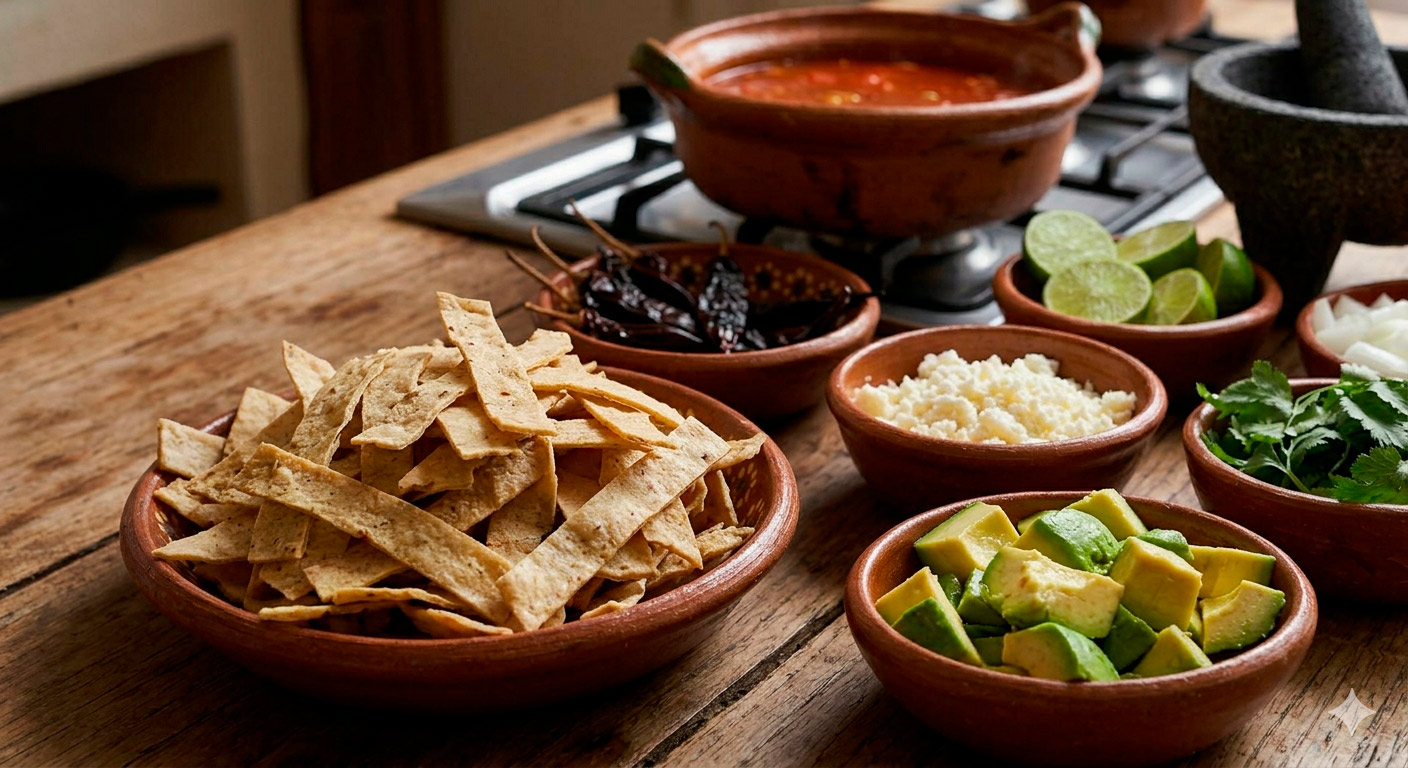
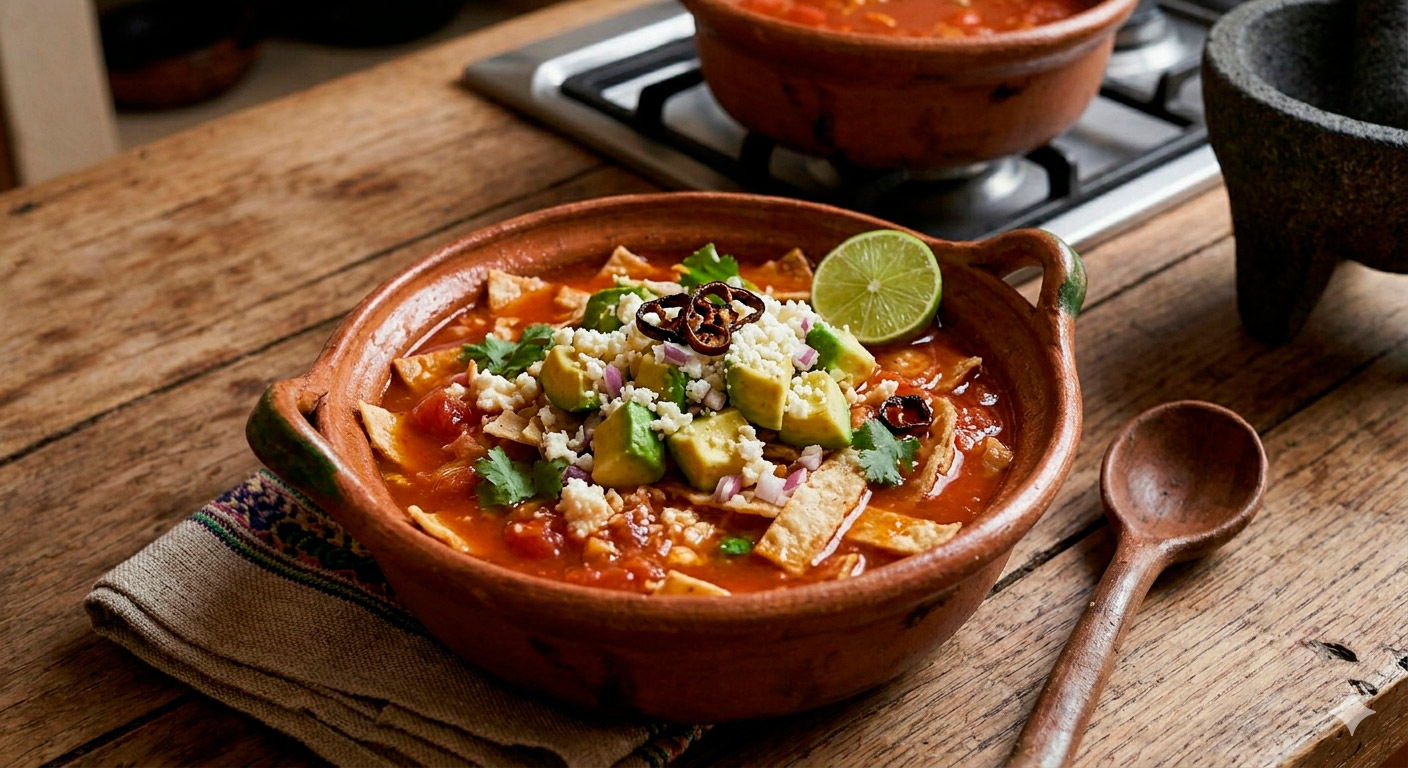
The versatility of this dish is another of its great virtues. It can be served as an elegant starter at a celebration dinner, as a family Sunday meal where everyone customizes their bowl, or as a comforting dinner on a rainy day. The topping of Hass avocado, panela cheese, sour cream, and crispy pasilla chili rings are not simple garnishes: they are functional components that balance acidity, crunch, creaminess, and spiciness in every bite.
From a nutritional standpoint, this traditional tortilla soup recipe offers a balanced profile. Each serving provides 18 grams of protein from the chicken broth and panela cheese, healthy fats from Hass avocado — rich in oleic acid — fiber from nixtamalized corn, and antioxidants like lycopene from roasted tomatoes, whose effect is enhanced when cooked with fat. It is a dish that cares for the body while delivering pleasure.
In this guide from El Godínez Hambriento, you will find every technical secret that transforms a correct recipe into an irresistible preparation: the exact oil temperature, why you should never skip the strainer, how to prevent tortillas from softening too quickly, and when to add epazote so it releases all its essential oils without bittering the broth. Follow the 6 steps carefully and you will get the most memorable traditional tortilla soup you have ever made.
Ingredients for traditional tortilla soup
Quantities for 6 servings.
Main ingredients
- 12 day-old corn tortillas
- 5 large ripe tomatoes
- 1 whole bone-in chicken breast
- 2 large ripe Hass avocados
- 1 medium white onion
- 3 large garlic cloves
- 2 liters natural chicken broth
Seasonings and toppings
- 4 dried pasilla chilies
- 1 large fresh epazote sprig
- 200 g panela cheese or fresh cheese
- 150 ml sour cream
- 500 ml vegetable oil for frying
- Salt to taste
How to make traditional tortilla soup step by step
- Dry and cut the tortillas: Use day-old tortillas to guarantee optimal crispiness. Cut them in half and then into strips approximately half a centimeter wide. Spread them on a tray and let them air dry for at least 2 hours before frying. This natural dehydration process is the secret to resisting the embrace of the hot broth without falling apart.
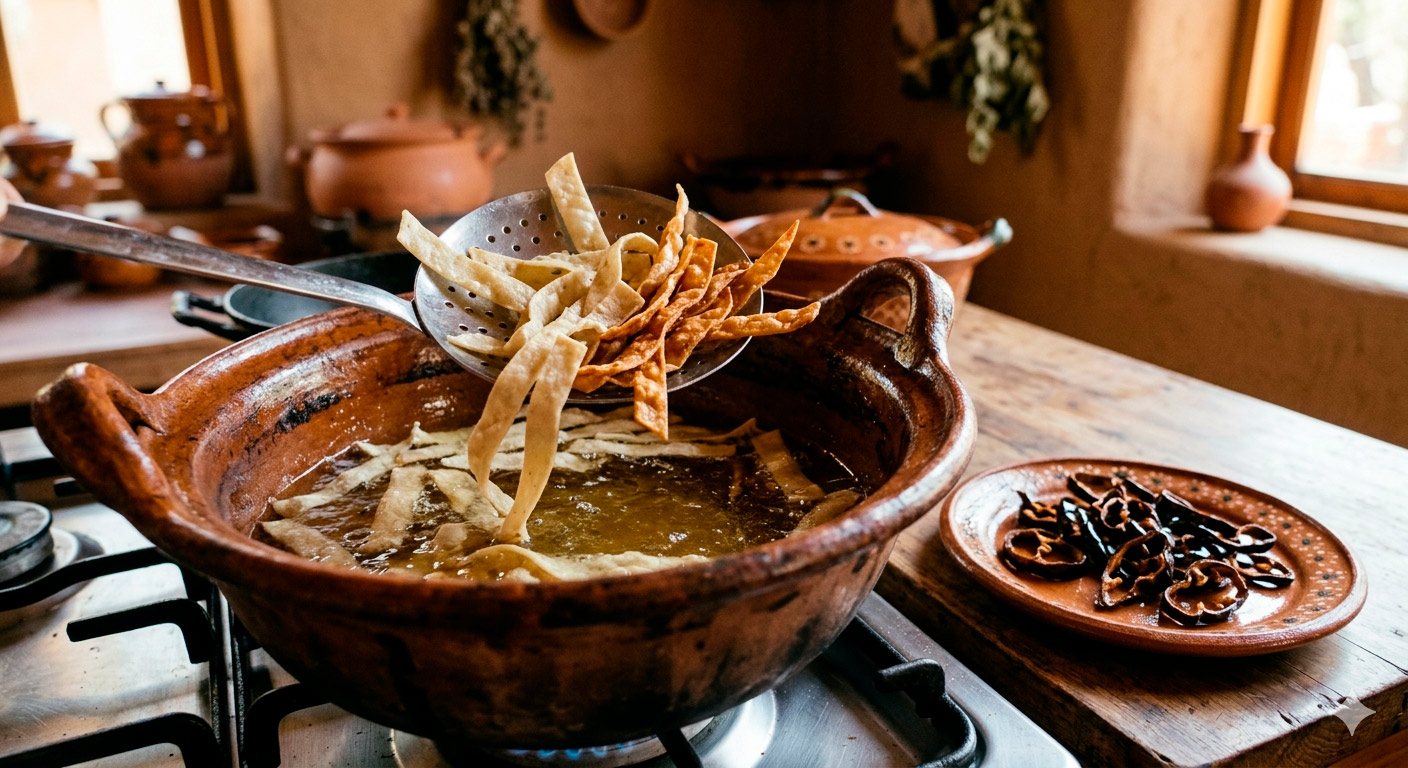
- Fry the pasilla chilies and tortillas: Heat the vegetable oil in a deep pot over medium heat. Clean the pasilla chilies with a damp cloth, remove seeds and veins, and cut them into rings. Fry them for just 10-15 seconds — burning them means bitterness in the broth — and remove them with a slotted spoon. In the same aromatic oil, fry the tortilla strips in small batches until evenly golden. Drain them on absorbent paper and set aside.
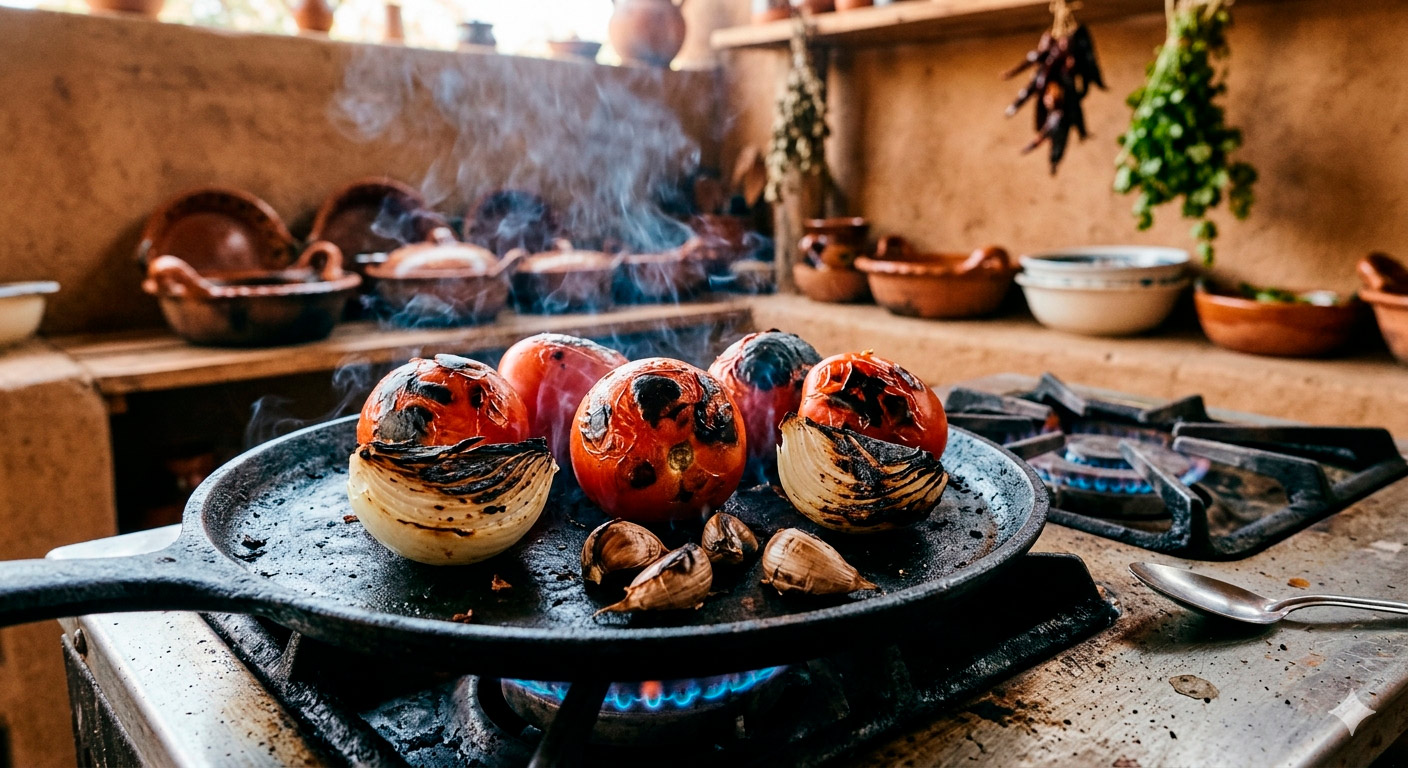
- Roast the vegetables on a comal: Place the whole tomatoes, quartered onion, and garlic cloves with skin on a very hot comal or cast iron skillet. Turn them constantly until the skin is evenly charred. This process — known as roasting — caramelizes the natural sugars of the tomato and softens the intensity of the garlic and onion, giving the broth a deep smoky flavor impossible to achieve by boiling the ingredients in water. Remove the charred skin from the garlic.
- Prepare and cook the tomato base: Blend the tomatoes, onion, roasted garlic, and one fried pasilla chili ring without adding water — only the tomatoes’ own juice — until you get a smooth puree. Pass it through a fine-mesh strainer. In a large pot, heat a tablespoon of the frying oil and pour in the strained mixture. Cook for 8 minutes over medium heat, stirring constantly, until it changes from bright red to dark orange and thickens. This color change confirms that the tomato is perfectly seasoned.
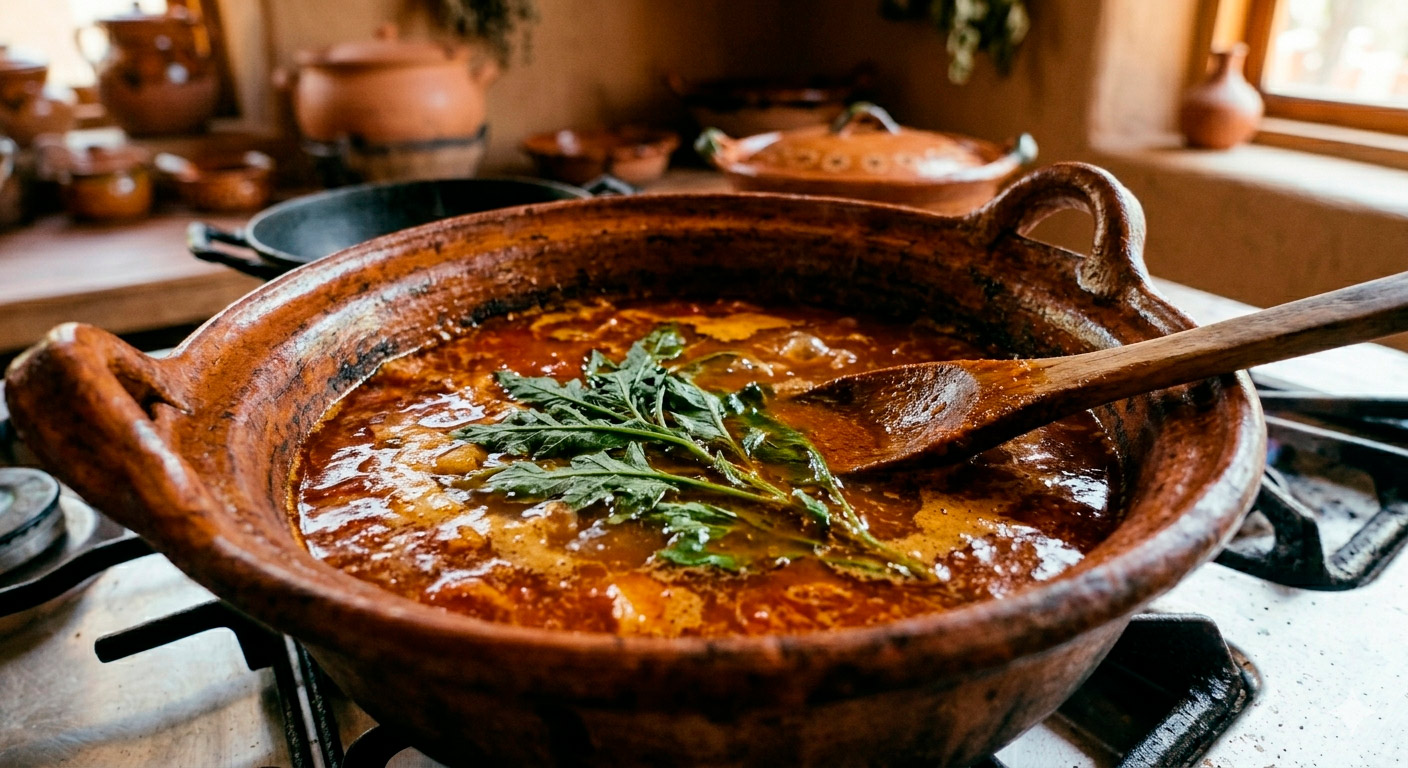
- Infuse the broth with epazote: Pour the 2 liters of chicken broth over the cooked tomato mixture. Bring to a boil over high heat, then reduce to low heat. Add the fresh epazote sprig and season with salt to taste. Cover the pot and let the flavors meld for 15 minutes. The epazote will release its essential oils, giving that characteristic herbal aroma of central Mexico. The final broth should look translucent, with body and golden shine on the surface.
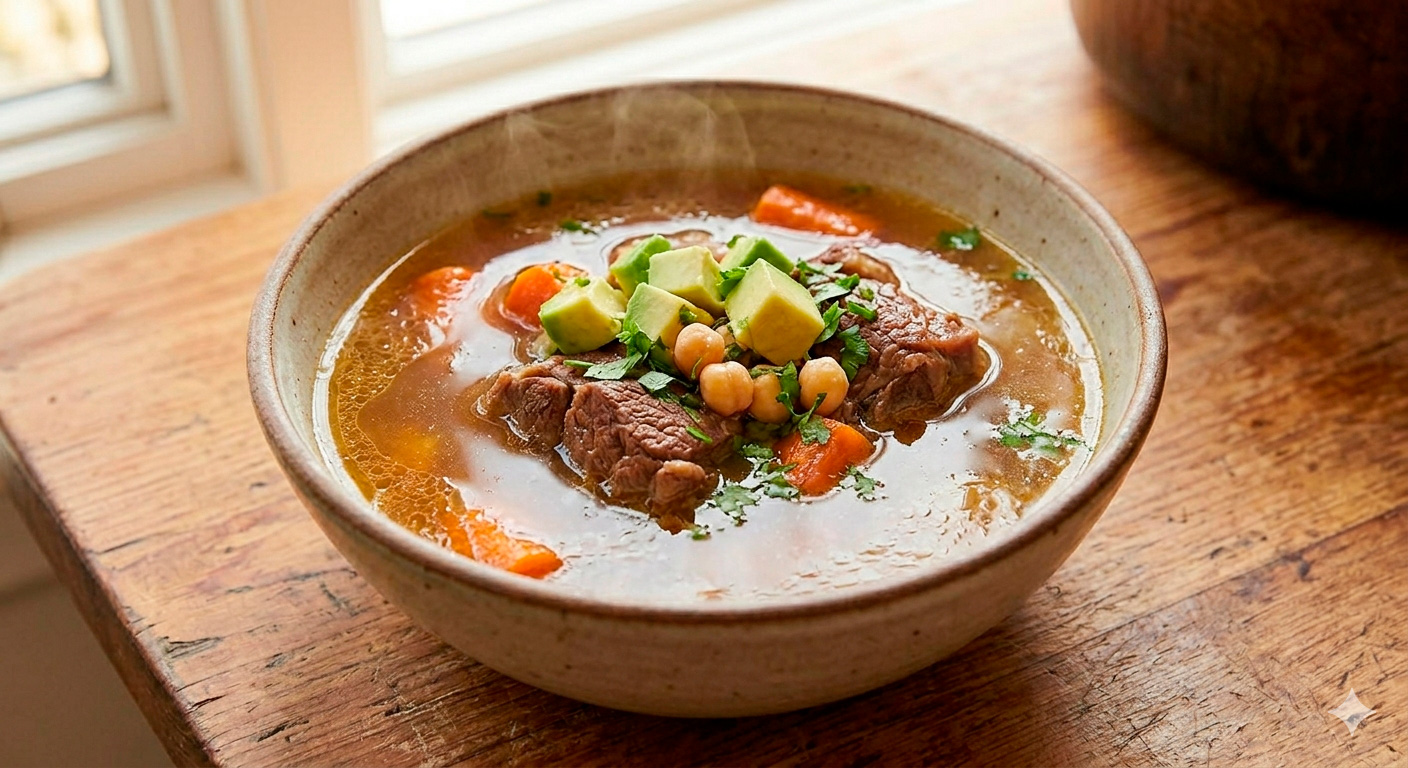
- Assemble and serve immediately: Traditional tortilla soup is assembled directly in each bowl. Place a generous mound of crispy tortilla strips at the bottom. Pour the boiling tomato broth with a ladle, partially covering the tortillas. Top with cubes of panela cheese, ripe avocado cubes, a drizzle of cold sour cream, and the reserved crispy pasilla chili rings. Serve instantly: the contrast of temperatures and textures is the soul of the dish.
Nutritional information for traditional tortilla soup
Approximate values per serving (6 servings total). Calculated with fresh ingredients and sunflower oil.
| Nutrient | Per serving | % Daily value* |
|---|---|---|
| Calories | 385 kcal | — |
| Protein | 18 g | 36% |
| Carbohydrates | 32 g | 11% |
| Total fat | 21 g | 32% |
| Saturated fat | 6 g | 30% |
| Dietary fiber | 6.5 g | 26% |
| Sodium | 680 mg | 28% |
| Potassium | 520 mg | 15% |
*Percentages based on a 2,000 kcal daily diet.
Expert Analysis: The master touch for irresistible traditional tortilla soup
The culinary genius of traditional tortilla soup does not reside in the complexity of its laboratory techniques, but in the perfect harmony of physical and chemical contrasts that occur on the diner’s palate. As a cook with over three decades between the aroma of fresh epazote and the golden smoke of fried chilies, I always explain that this dish is, above all, a lesson in textures.
On one hand, we have the crispy resistance of the fried corn tortilla, which provides a firm base and notes of toasted cereal. The boiling tomato broth lightly moistens the outer tortilla without dissolving its core, simultaneously releasing the fruit’s natural acidity balanced by the umami touch of the poultry stock. It is an almost perfect interaction between temperature, water, and starch.
The magic is completed when the toppings come into play: panela cheese adds a salty note and elastic, chewy texture; sour cream reduces the tomato’s acidity with its lactic creaminess; pasilla chili provides smoky crunch and mild heat that stimulates the taste buds; and avocado acts as a vegetable butter that envelops all components in a silky layer rich in oleic acid.
Regarding pairings, this traditional tortilla soup particularly dialogues well with beverages of a fresh and slightly acidic profile. A tamarind or hibiscus agua fresca balances the broth without competing with the epazote. For wine lovers, a white Macabeo or a dry rosé from Baja California work wonderfully: their acidity cleanses the palate between spoonfuls without crushing the herbal nuances.
The most frequent mistake I see at home is neglecting any of the four pillars of the dish: cold broth, soft tortilla, too-green avocado, or omitted cream. If one of these elements fails, the sensory structure collapses. Culinary perfection in this case resides, simply and powerfully, in taking care of every detail of the process.
— El Godínez Hambriento, traditional Mexican cuisine specialist for cocinasabroso.com
Tips to make the perfect, irresistible traditional tortilla soup
The first tip that every cook should tattoo on their memory is this: never use freshly made tortillas. Fresh tortillas absorb oil like a sponge and become limp in the broth. The day-old tortilla, or the one you let dry for two hours in the sun, has a different starch structure that allows it to create that crispy outer layer while maintaining a slightly tender core when bitten.
The oil temperature for frying is another critical point. If you don’t have a kitchen thermometer, insert a small tortilla strip: if it rises to the surface surrounded by continuous bubbles without darkening abruptly, the oil is at its ideal point (approximately 180 °C / 350 °F). Cold oil makes the tortilla absorb excess fat; too hot, it burns without browning evenly.
Never omit the fine-mesh strainer when passing the tomato mixture. Even if you have a high-powered blender, traces of seeds and skin always remain, which, if not strained, give a grainy texture that spoils the soup. The strainer takes ten seconds and transforms the broth from ordinary to velvety. It is the detail that separates the homemade version from the restaurant version.
About epazote: add it once the broth has boiled and you reduce the heat. Excessive heat destroys its volatile essential oils. Fifteen minutes over low heat and covered are enough for it to perfume the broth without adding bitterness. If when tasting you feel the epazote dominates too much, remove the sprig and the broth will balance itself in a couple of minutes.
Another little-known trick: a touch of lime juice over the avocado just before serving serves two functions. First, it prevents oxidation and blackening of the fruit. Second, its acidity enhances the earthy flavors of the pasilla chili, creating a citrus contrast that elevates the entire palate experience. Do not skip this small gesture.
For storage, the absolute secret is to always keep the components separate. The tomato broth with epazote can be refrigerated for up to 5 days in an airtight glass jar or frozen for up to 3 months. Fried tortillas keep in a sealed container with absorbent paper at the bottom for up to 6 days without losing crispiness. Avocado and cheese should be cut at serving time: avocado oxidizes and cheese loses moisture when exposed.
Variations and substitutions for traditional tortilla soup
Vegetarian and Vegan Milpa Version
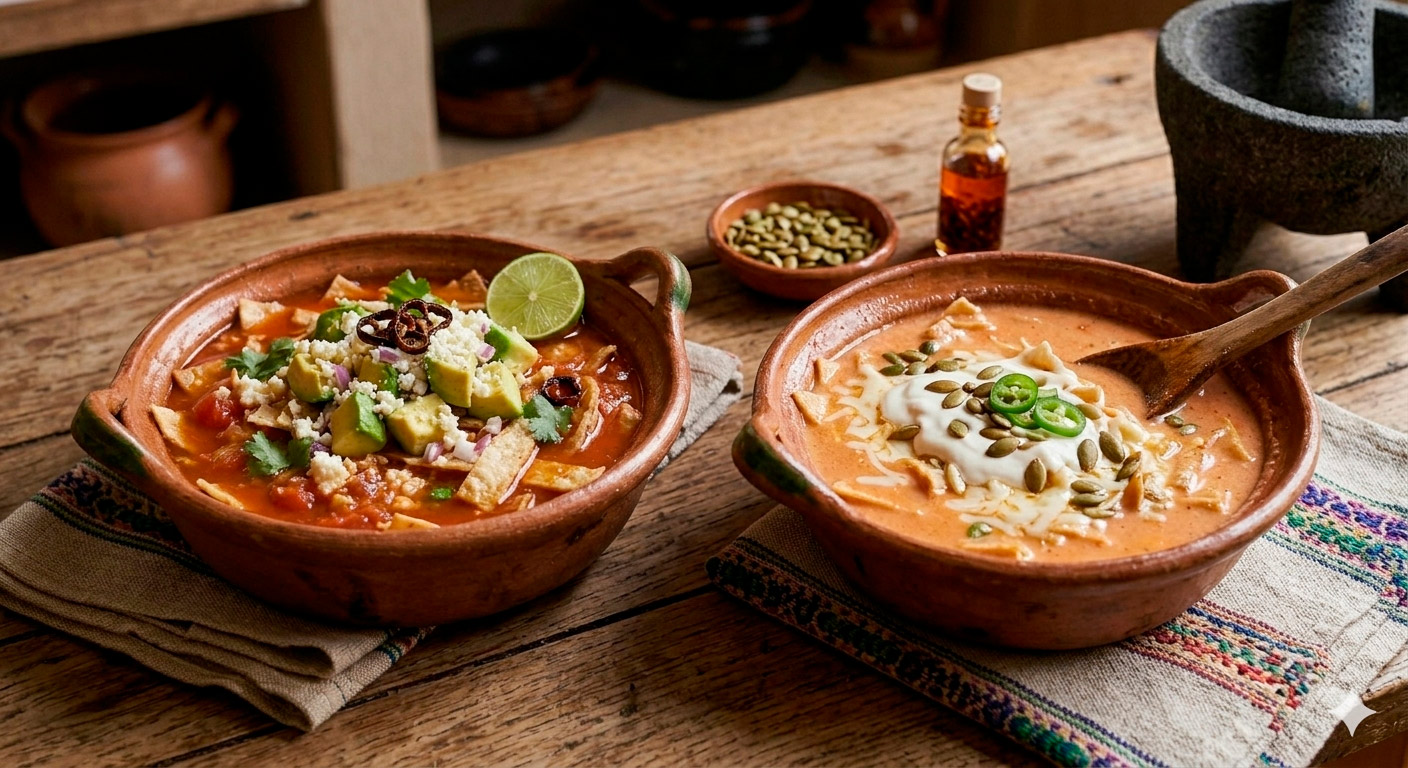
To transform this recipe into a plant-based option, substitute the chicken broth with a concentrated vegetable stock made from onion, carrot, celery, garlic, and dried mushrooms, which will provide generous doses of umami. Replace the panela cheese with cubes of firm tofu seasoned with sea salt and lime, or add fresh corn kernels and squash blossoms to the broth. Almond or cashew sour cream mimics the creaminess of dairy sour cream.
Protein-Powered Version
To turn this broth into a substantial one-dish meal, add shredded chicken breast directly to the bowl before pouring the hot broth. In some regions of Michoacán, strips of crispy pork chicharrón are added at serving time, providing extra texture and an intensity of animal fat that complements the tomato spectacularly.
Lighter Version (baked)
To reduce the caloric impact, bake the tortilla strips at 200 °C (400 °F) for 12-15 minutes instead of frying them. Spray them with oil beforehand. Replace sour cream with plain Greek yogurt and use low-fat fresh cheese to maintain the essence of the dish with fewer calories per serving.
Frequently asked questions about traditional tortilla soup
Can I substitute pasilla chili in traditional tortilla soup?
Yes, it is completely feasible. The closest and most traditional alternative is guajillo chili, which provides a more vibrant red color and slightly more pronounced acidity, though with less sweet smoky notes. For spice lovers, cascabel chili or chipotle in adobo added directly to the blender offer a spicier profile with woody notes that also pair very well with the tomato broth.
Why do tortilla strips soften too quickly when serving the soup?
This is generally due to two causes: the tortillas were not dehydrated enough before frying, or they were cut too thick, preventing even browning all the way to the core. The solution is simple: dry them for at least 2 hours, fry them to a uniform light brown color, and pour the boiling broth only when the diner is ready to eat. The time between assembly and the first spoonful should be minimal.
Is epazote essential, or can I use another herb in tortilla soup?
Epazote is the aromatic hallmark of traditional tortilla soup from central Mexico: resinous, bitter, and fresh all at once. If you cannot find it, you can substitute fresh cilantro, which shifts the profile towards more citrusy notes instead of earthy ones. The soup will still be very enjoyable, although different in aromatic character.
How do I make tortilla soup lighter and lower in calories?
The key lies in two changes: bake the tortilla strips at 200 °C (400 °F) for 12-15 minutes sprayed with oil spray instead of frying them, and replace sour cream with plain Greek yogurt. Using low-fat fresh cheese can reduce the total caloric intake without losing the essence of the dish or its texture contrasts.
What do I do if the tomato broth turned out too acidic?
Excessive acidity usually occurs when the tomatoes are not at their optimal ripeness or when the mixture was not fried long enough in the pot. To correct it, let the broth boil for a few extra minutes with the epazote sprig. If it persists, add a tiny pinch of sugar or baking soda directly to the boiling broth to neutralize the pH without altering the salty balance of the dish.
Reference resources and sources
For more information on food safety and nutrition, consult WHO healthy diet guidelines.
Regarding the nutritional value of ingredients, you can consult The Nutrition Source from Harvard T.H. Chan School of Public Health.
Food composition information is available from the database of the National Institute of Public Health of Mexico.
Mexican cuisine was recognized as Intangible Cultural Heritage of Humanity; learn more at UNESCO — Traditional Mexican Cuisine.
Check our liability policy and legal notice before making dietary decisions based on this content.