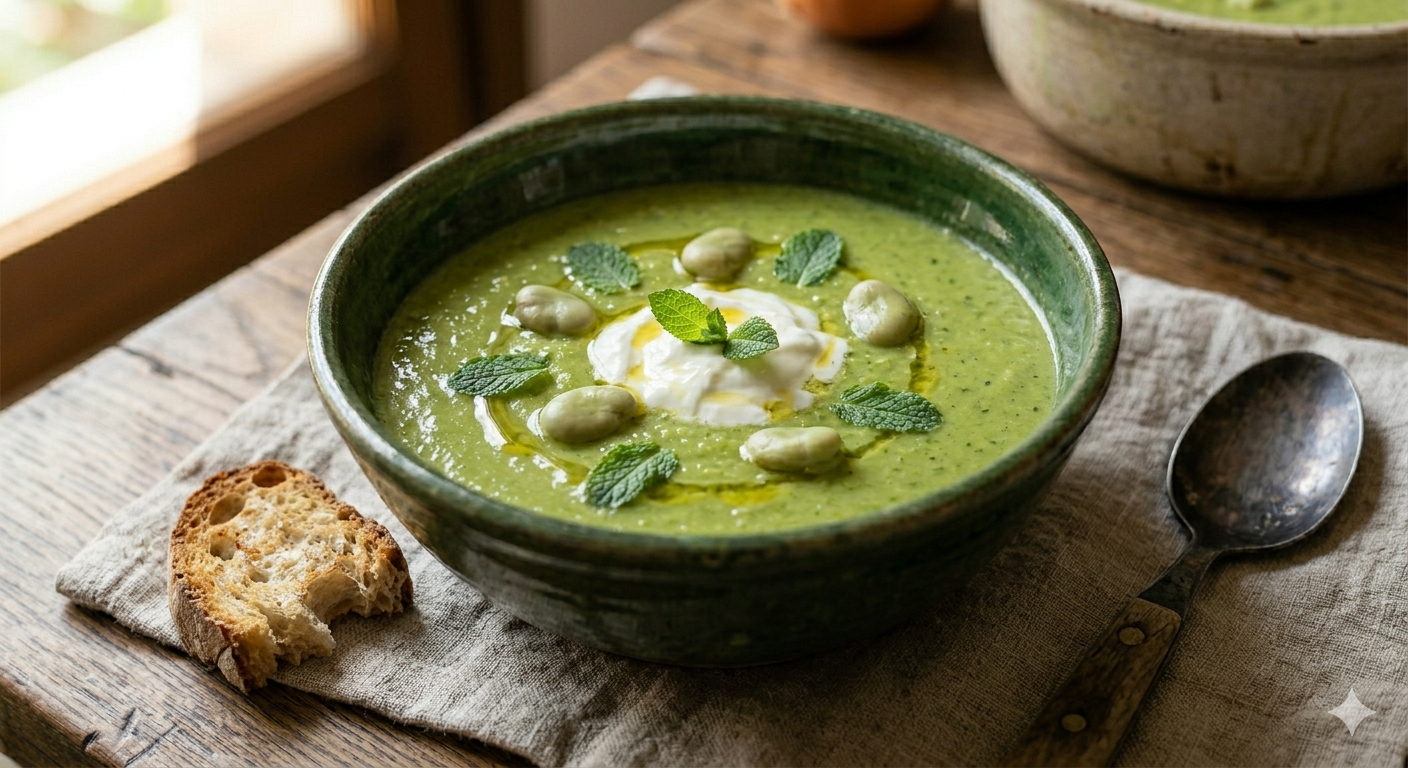
6 Steps for the Most Irresistible Homemade French Onion Soup
Origin and History of French Onion Soup
French onion soup has roots that go deep into the history of Europe, long before becoming the gastronomic emblem we know today. The onion was, since Roman times, the food of the common people: cheap, easy to grow, and with excellent storage capacity during harsh winters. The traditional onion soup was the daily sustenance of peasants and workers who needed a hot, energetic dish to get through exhausting days in the French countryside.
However, the refined version we know today is wrapped in aristocratic legend. The most widespread story points to King Louis XV as its accidental creator. It is said that one night, while staying at his hunting lodge, the monarch felt a ravenous hunger. When checking the pantry, his servants only found onions, butter, and champagne. The king decided to combine these three elements in a pot, discovering that the mixture was surprisingly delicious.
Another equally fascinating historical account attributes the merit to Stanislaus Leszczynski, Duke of Lorraine and father of the French queen consort. During a trip to Versailles, Stanislaus tasted an unforgettable onion soup at a modest inn in Chalons. He was so amazed by the flavor that he did not rest until the innkeeper revealed the exact method for softening and browning the onions without burning them. The duke brought the recipe to court, where royal chefs perfected it by adding the final gratin with select regional cheeses, elevating it to the status of haute cuisine it retains today.
During the 19th century, French onion soup became the emblem of Les Halles, the great central market of Paris. Night workers, butchers, and bohemians leaving theaters in the early morning mingled in local taverns to consume this hot broth. It served both to regain energy and to settle the stomach after a long night. It was there that the tradition of covering it with a slice of hard bread and a generous amount of grated cheese before passing it through the oven was consolidated, creating the protective crust that we now consider absolutely essential.
Since its arrival in modern world dining rooms, irresistible French onion soup has been reinterpreted in countless kitchens, but its essence remains intact: patience in caramelization, quality of the broth, and generosity of Gruyère cheese are the three pillars that can never be negotiated if one wants to achieve the authentic result.
What is French Onion Soup and Why Should You Make It at Home?
Irresistible French onion soup is, without a doubt, one of the most emblematic preparations of French gastronomy and one of the most admired comfort foods in the world. Unlike other broths that depend on expensive proteins or complex techniques, this soup transforms a humble ingredient —the onion— into a deep sensory experience through a slow caramelization process that extracts all its natural sugars. The result is a dark, sweet, full-bodied broth, crowned by an irresistible crust of melted Gruyère cheese over toasted bread that makes it unique and unmistakable.
What distinguishes French onion soup from any other vegetable soup is precisely that masterful balance between the deep sweetness of the caramelized onion, the elegant acidity of white wine, the savoriness of beef broth, and the earthy, smoky aroma of browned Gruyère. Each spoonful offers a combination of textures: the silky liquid of the broth, the soft strands of onion, and the crispy counterpoint of the bread that gradually absorbs the soup and blends with the cheese to create an extraordinary amalgam.
Making French onion soup at home offers advantages that no restaurant can match. The first and most important is absolute control over the quality of the ingredients. A homemade beef broth made with roasted bones and aromatic vegetables elevates the result far above any commercial concentrate. The second advantage is the satisfaction of the process itself: spending almost an hour in front of the fire stirring onions that slowly transform from white to golden is, for any cooking enthusiast, one of the most meditative and rewarding experiences in the culinary art.
In this irresistible French onion soup recipe, you will learn every technical detail that makes the difference between a mediocre version and a preparation worthy of the best Parisian bistros. From the correct cutting of the onion (which must follow the natural lines of the vegetable from pole to pole so that it maintains its structure during prolonged cooking), to the exact moment when the wine should be incorporated to capture all the caramelized sediments from the bottom of the pot —known in professional cooking as the “sucs”—, here you will find each step explained with the precision that a dish of this category deserves.
This recipe yields four generous servings and can be prepared in a total of ninety minutes, most of which is passive cooking time that will allow you to enjoy a glass of wine while the aroma of caramelized onions fills your home. It is the perfect dish for a leisurely weekend dinner, for an elegant evening with guests, or simply for those cold days when the body demands something hot, deep, and absolutely irresistible.
Ingredients for Irresistible French Onion Soup
Quantities for 4 servings.
Main Ingredients
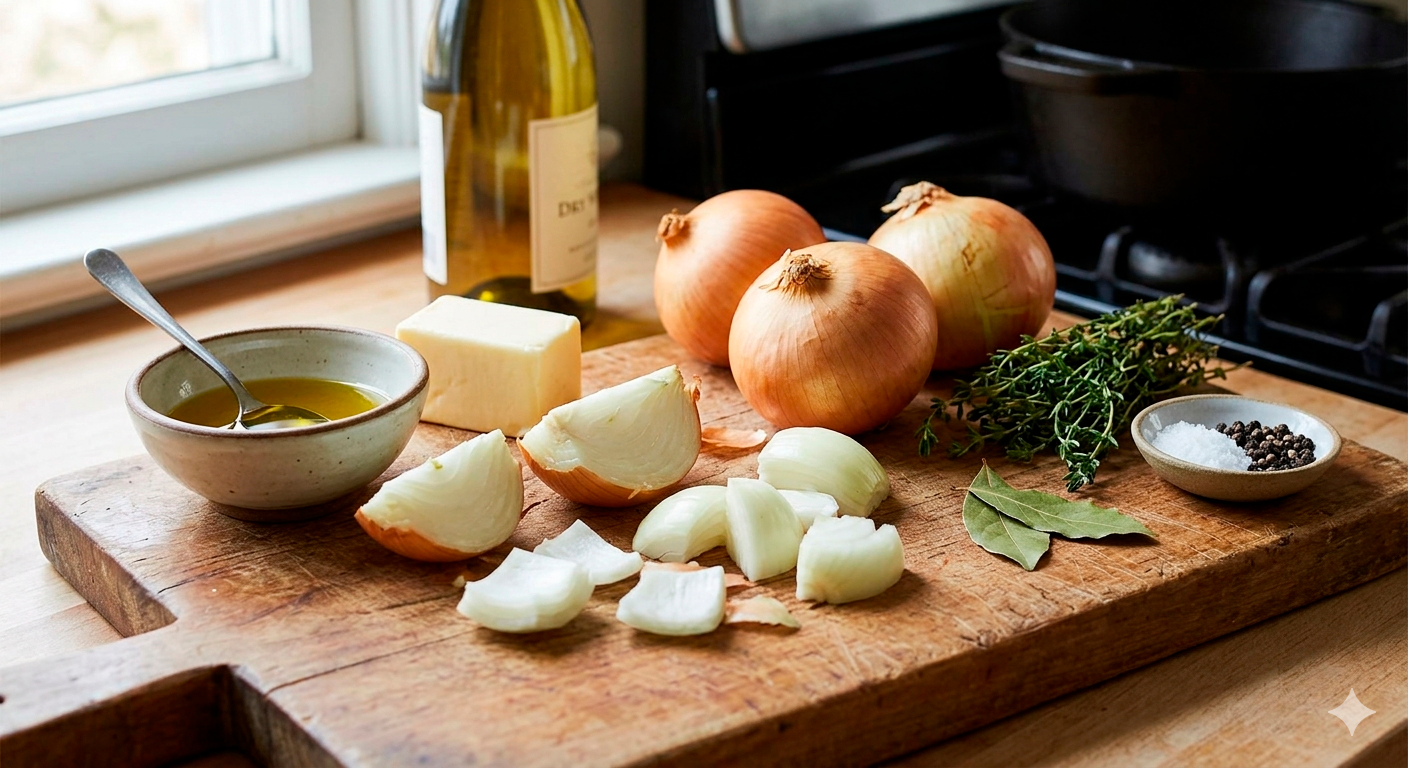
- 1.2 kg yellow onions (approx. 5-6 large)
- 60 g unsalted butter
- 2 tablespoons extra virgin olive oil
- 1.5 liters concentrated beef broth, hot
- 150 ml dry white wine
For the browning and seasoning
- 200 g grated Gruyère cheese
- 8 slices baguette (day-old)
- 2 fresh garlic cloves
- 1 tablespoon wheat flour
- 3 sprigs fresh thyme
- 1 bay leaf
- Salt and freshly ground black pepper to taste
- 1 pinch white sugar (optional, if onions are not very sweet)
Glossary of Regional Ingredient Variations
Spanish is rich and diverse. This table helps you identify key ingredients in different regions:
| Base Name | Spain | Mexico & Caribbean | South America (Arg/Chile/Col) |
|---|---|---|---|
| Yellow onion | Cebolla grano / dulce | Cebolla blanca / de huevo | Cebolla morona / cabezona |
| Butter | Mantequilla sin sal | Mantequilla | Manteca / Manteca de vaca |
| Beef broth | Caldo de buey / Consomé | Caldo de res / Fondo oscuro | Caldo de carne / Fondo de ternera |
| Gruyère cheese | Queso Gruyere | Queso Gruyere / Queso Suizo | Queso Gruyere / Emmental |
| Baguette bread | Barra de pan / Pan de flama | Bolillo / Pan francés / Birote | Pan francés / Marraqueta / Pan flauta |
How to Prepare French Onion Soup Step by Step
- Uniform cutting of the vegetables: Peel all the onions and cut them in half, from stem to root. Place the flat side on the board and make thin crosswise cuts approximately 3 mm thick to obtain perfect half-moons. It is crucial that the size is identical in all pieces so that the cooking is homogeneous and you avoid some pieces burning while others remain raw.
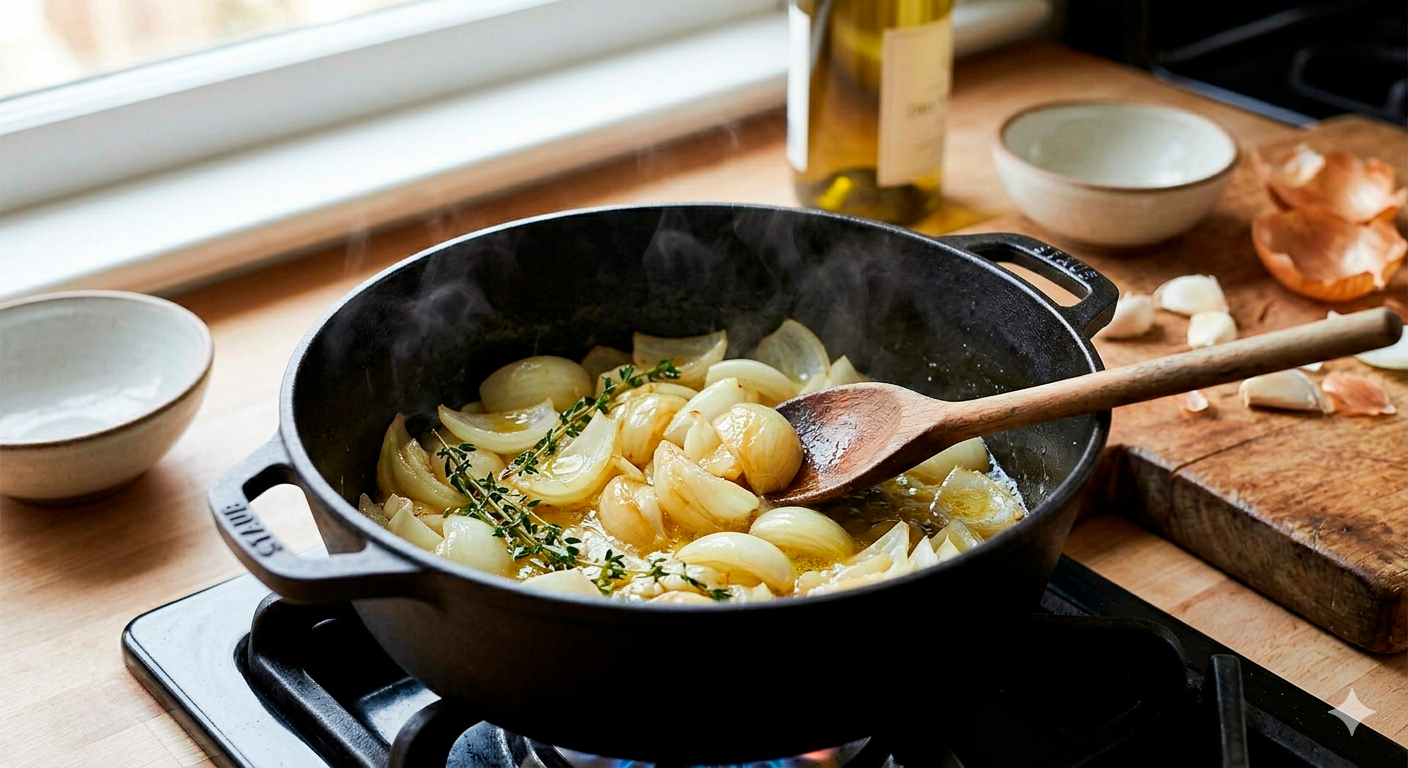
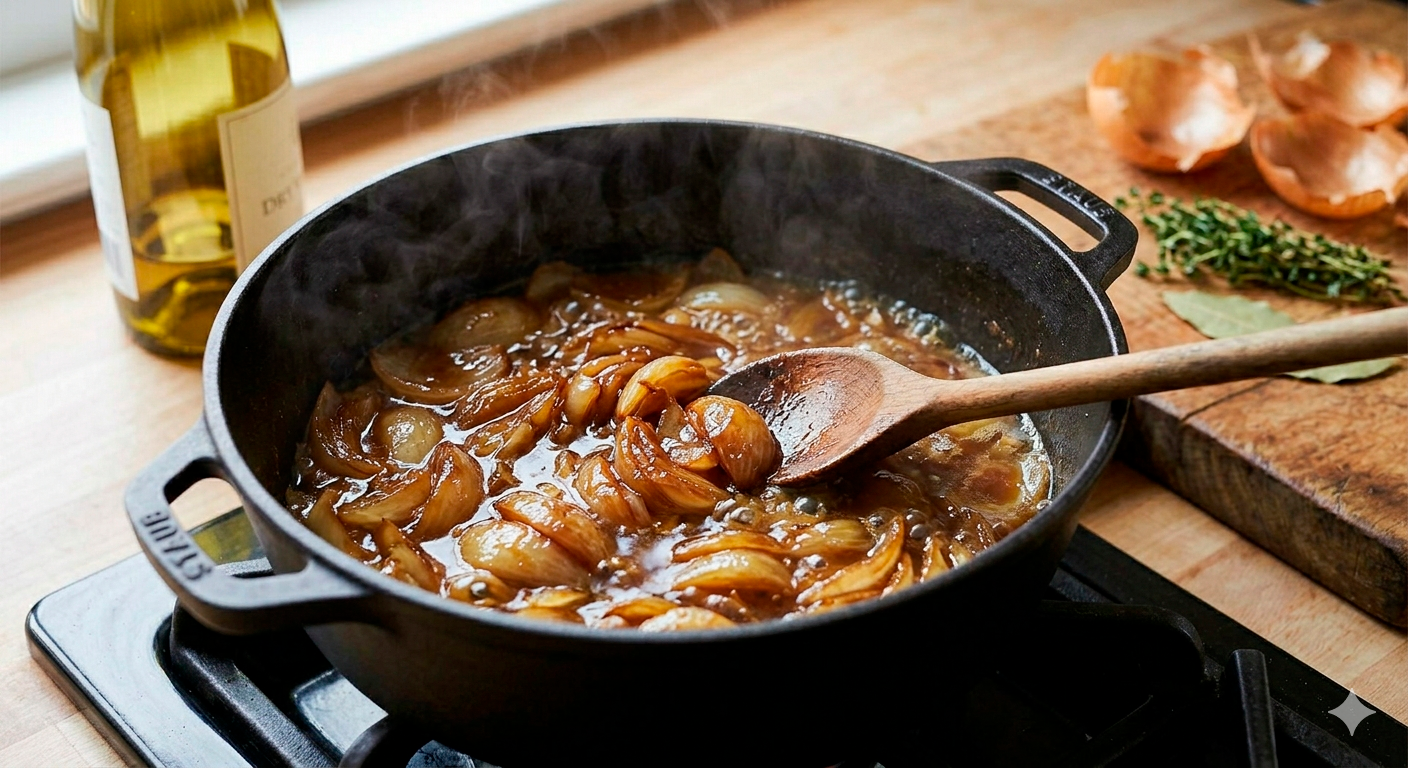
- Slow caramelization — the secret to success: In a heavy-bottomed pot (preferably cast iron), heat the olive oil together with the butter over medium-low heat. When the butter bubbles, add all the onions with a pinch of salt. Cook slowly for 40-45 minutes, stirring every 5 minutes with a wooden spatula. You will see how their volume drastically reduces and they go from white to a deep, shiny amber color. This process extracts the natural sugars without burning them.
- Thickening and deglazing the pot: When the onions are a characteristic brown color, add the minced garlic clove and the thyme sprigs. Cook for 2 more minutes. Sprinkle the flour and stir vigorously for 2 minutes to cook the starch. Pour in the dry white wine, raise the heat to medium, and use the spatula to scrape all the caramelized sediments from the bottom: this is where the greatest flavor power of the dish is concentrated.
- The fusion of liquids: When the alcohol has evaporated (you will notice it because the strong smell will stop), pour in the hot beef broth. Add the bay leaf and season with black pepper. Lower the heat to minimum, cover partially, and let simmer for 20 minutes. The broth will absorb the sweetness of the onion and acquire a silky body thanks to the cooked flour.
- Preparation of garlic croutons: Preheat the oven to 200 °C on broil mode. Place the baguette slices on a tray and toast them on both sides until crispy. When you remove them, rub the remaining garlic clove (cut in half) over the rough surface of the hot bread to impregnate it with a subtle perfume that will enhance the whole.
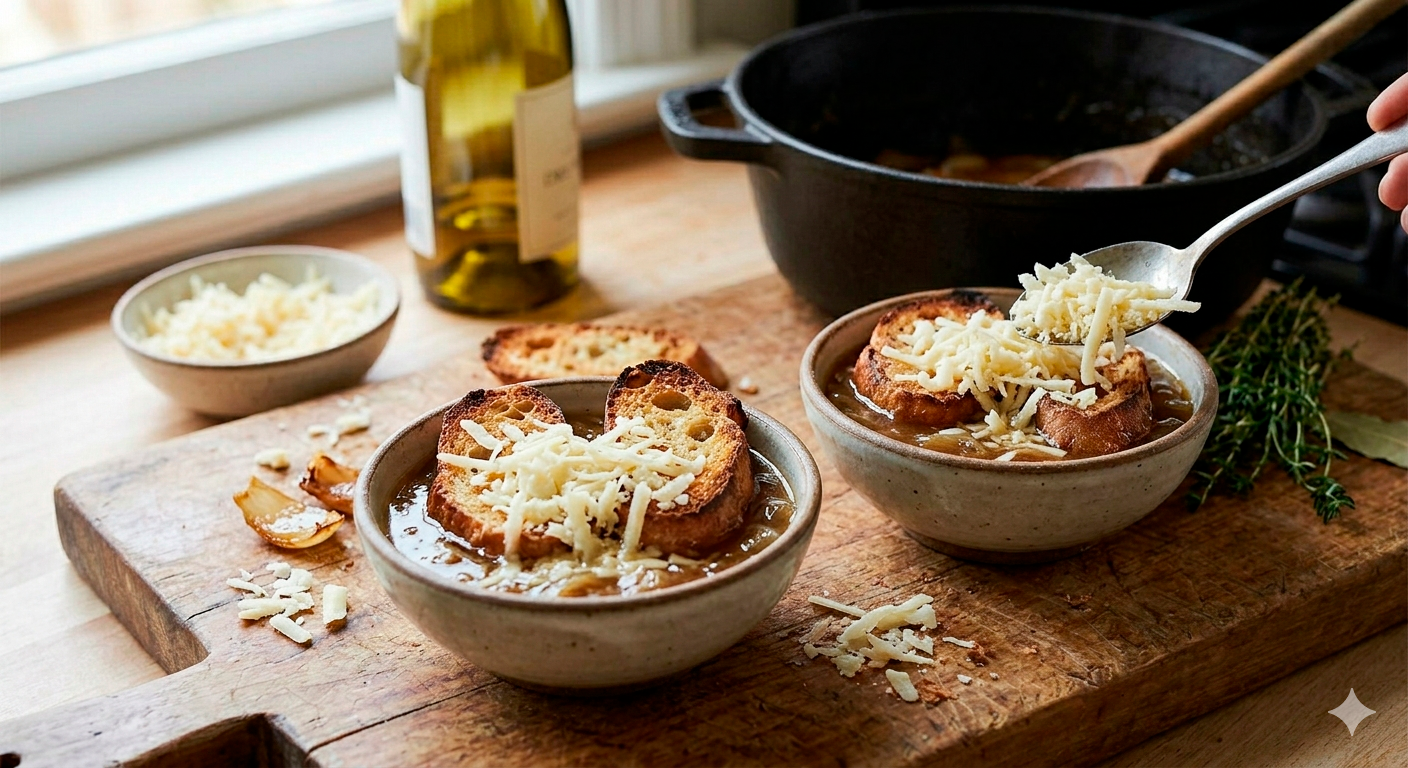
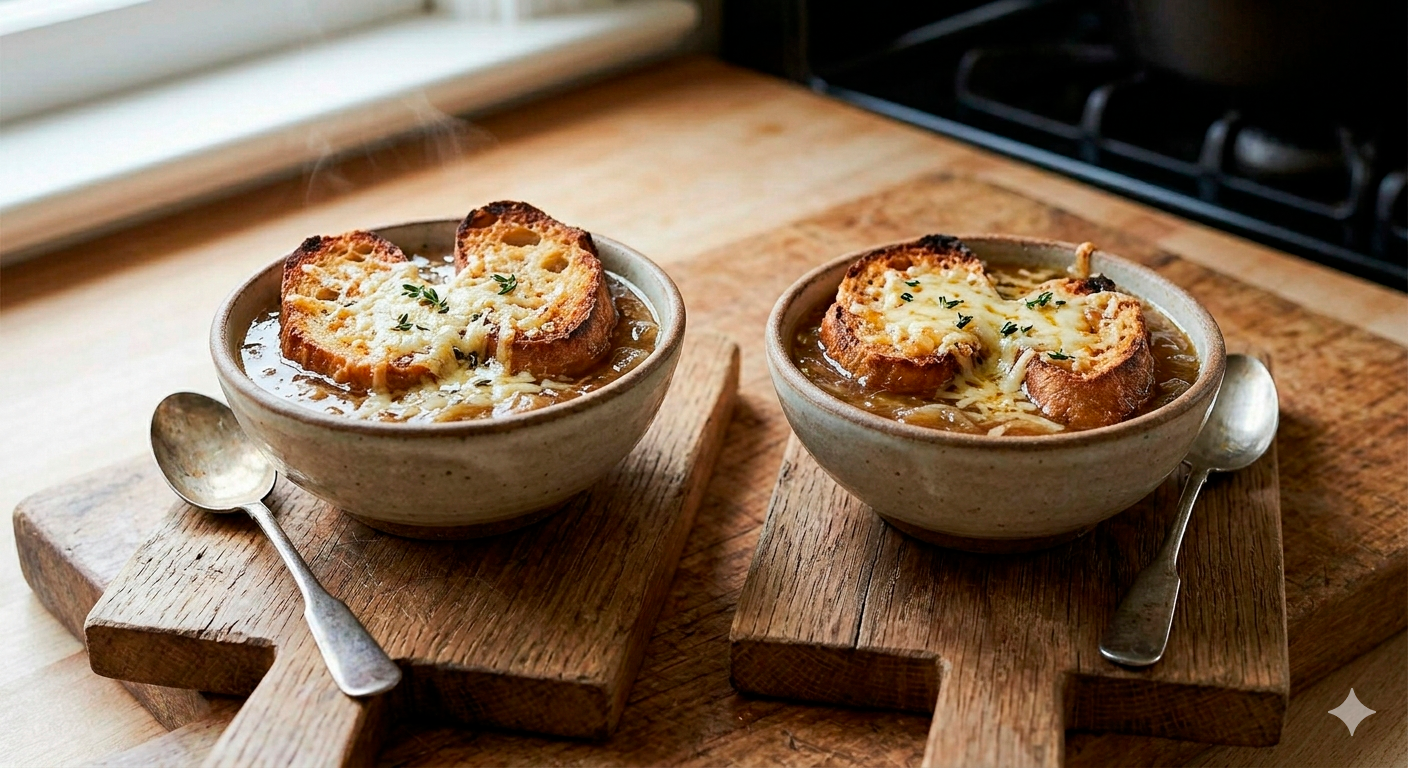
- The historic assembly and final browning: Remove the bay leaf and thyme. Adjust the salt. Distribute the hot broth with the onions into 4 individual ovenproof bowls. Place 2 slices of toasted bread on the surface of each bowl. Cover generously with the grated Gruyère cheese. Brown under the broiler for 5-7 minutes, until the cheese bubbles and acquires golden spots. Serve immediately with caution, as the bowls retain a lot of heat.
Nutritional Information for French Onion Soup
Approximate values per serving (4 servings total).
| Nutrient | Per serving | % Daily value* |
|---|---|---|
| Calories | 420 kcal | — |
| Protein | 16 g | 32% |
| Total Carbohydrates | 32 g | 12% |
| Total Fat | 18 g | 23% |
| Saturated Fat | 10 g | 50% |
| Dietary Fiber | 3.5 g | 12% |
| Sugars | 8 g | — |
| Sodium | 890 mg | 39% |
| Cholesterol | 45 mg | 15% |
| Calcium | 350 mg | 27% |
*Percentage based on a 2,000 kcal daily diet.
Benefits of eating French onion soup
- High antioxidant content: Onion is rich in quercetin, a powerful antioxidant that helps fight free radicals in the body.
- Anti-inflammatory properties: The sulfur compounds present in the onion help reduce internal inflammatory processes.
- Aids digestion: Prolonged cooking breaks down the hard fibers of the onion, facilitating processing in the stomach.
- Essential calcium intake: The generous layer of browned Gruyère cheese provides a high dose of easily absorbed calcium, ideal for bone maintenance.
- Immediate comforting effect: The heat of the broth combined with complex carbohydrates raises body temperature and improves mood on cold or rainy days.
Expert Analysis: The Master Touch for Irresistible French Onion Soup
From the perspective of someone who has spent years in the kitchen —and who has learned to distinguish a mediocre soup from one that deserves silence at the table—, French onion soup is, without a doubt, one of the litmus tests for measuring any cook’s patience. The most frequent mistake beginners make is turning up the heat to speed up caramelization. Doing this only burns the outer edges of the onion, adding an unpleasant bitter taste that will inevitably transfer to the broth and ruin the entire preparation. The true chemical transformation of the vegetable’s compounds —the Maillard reaction and the caramelization of sugars— requires low temperature, generous time, and constant attention. There are no shortcuts.
The second critical aspect is the choice of broth. An industrial cube broth will destroy the delicate balance of the dish by adding excess sodium and an artificial glutamate flavor that flattens all the nuances built patiently over nearly an hour of cooking. If you do not have a homemade dark stock made with roasted beef bones and aromatic vegetables, it is preferable to use a good quality vegetable broth before resorting to an artificial concentrate.
Regarding pairing, irresistible French onion soup finds its best companion in dry white wines with good acidity. A Chablis, a Loire Sauvignon Blanc, or a Burgundy Aligoté perfectly balance the intense sweetness of the caramelized onions and cut through the richness of the melted Gruyère cheese. If you prefer red wine, a light Burgundy Pinot Noir is a classic choice that lovers of French tradition will find impeccable. The balance between the acidity of the wine used in cooking, the sweetness of the onion, and the savoriness of the cheese is what elevates this preparation to the category of a culinary masterpiece, and it is precisely why no fast-food restaurant dish can genuinely replicate what is achieved when cooking with time and attention at home.
Tips for Preparing Perfect French Onion Soup
The first tip any experienced cook will give you is: invest in a cast iron pot. These utensils distribute heat absolutely evenly over the entire contact surface, eliminating hot spots that cause some onion slices to burn while the rest remain raw. The result is even, deep caramelization without bitterness. If you don’t have cast iron, a triple-bottom stainless steel pot is the second best option.
The second technical tip that makes the real difference in irresistible French onion soup is the direction of the onion cut. Always cut from pole to pole, following the natural lines of the vegetable, never horizontally or across the equator. When cut along the natural meridians, the structural fibers of the onion remain more intact during the hour of cooking and the strips maintain their shape instead of disintegrating into the broth. The visual and texture result is notably superior.
Use day-old bread, one or two days old. Fresh bread retains too much moisture and will collapse immediately under the weight of the hot broth before reaching the table. Aged bread, on the other hand, has the necessary firmness to hold firmly and support the mountain of cheese during the minutes of browning. This difference may seem minor, but it is decisive for the final experience.
Grate the cheese yourself at the time of preparation and do not use commercial pre-shredded cheeses. The latter contain added starches to prevent sticking inside the bag, which makes it difficult for them to melt smoothly and evenly over the soup. Freshly grated Gruyère melts silkily, bubbles uniformly, and forms that irresistible golden crust that is the visual and non-negotiable signature of the dish.
To reheat, heat the broth in a small saucepan until it boils, transfer it to the ovenproof bowls, add fresh toasted bread, cover with the cheese, and repeat the browning process in the oven exactly as in the original recipe. The result will be indistinguishable from the first day.
Variations and Substitutions for Irresistible French Onion Soup
Cooking is a living entity that adapts to local pantries and individual tastes. French onion soup accepts some variations respectful of its original concept that allow it to be adjusted to different diets and ingredient availability.
High-end vegetarian version
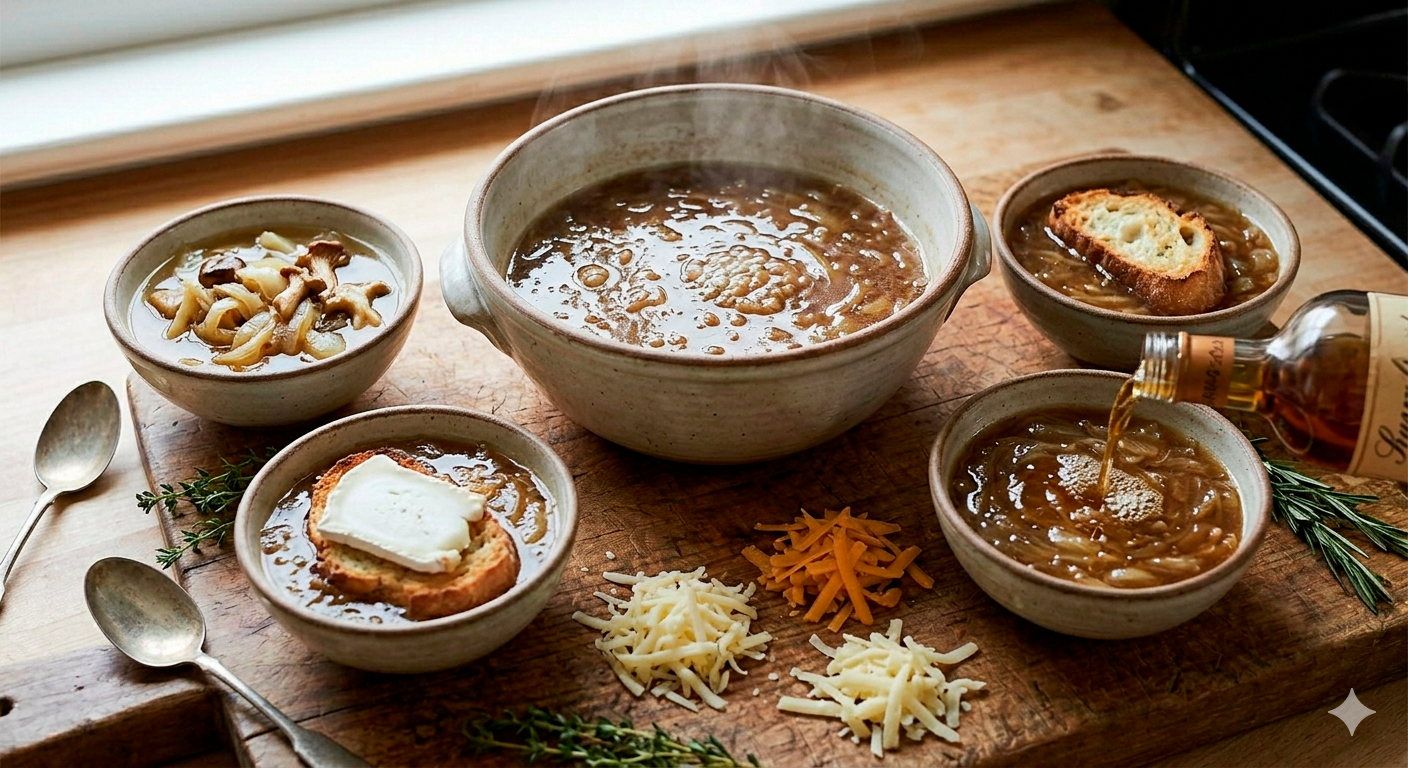
Substitute the beef broth with a concentrated consommé of dried mushrooms like porcini or shiitakes, combined with oven-toasted onions. This will maintain the deep dark color and provide the characteristic umami flavor that the dish requires, eliminating any trace of animal protein without sacrificing depth of flavor.
Variation with local cheeses
If authentic Gruyère cheese is not available in your region, you can substitute it with aged Manchego cheese, Fontina, or a good Provolone. The essential thing is that the chosen cheese has a good fat percentage to melt properly and a flavor profile that is neither excessively mild nor too acidic, so as not to unbalance the whole.
Old-school spirit touch
Some old-guard French chefs prefer to substitute white wine with a splash of Brandy or Cognac at the time of deglazing. This adds a much more intense and intriguing woody, sweet note, ideal for the harshest winter months when looking for maximum comfort food.
Frequently Asked Questions about Irresistible French Onion Soup
Can French onion soup be frozen?
Yes, the base of the French onion soup —the broth with the caramelized onions— can be frozen perfectly for up to 3 months in airtight containers or freezer bags, always leaving two centimeters of free space for liquid expansion. It is essential to keep the bread and cheese separately and not freeze the already assembled dish, as the bread would absorb all the liquid and become mushy and inedible when thawed.
How long does French onion soup last in the refrigerator?
The French onion soup base can be kept for up to 4 days in an airtight glass container in the refrigerator, as long as it has been cooled to room temperature before sealing. Signs that it is no longer in good condition: sour or rancid smell different from the wine in the preparation, strange coloration, or slimy texture. When in doubt, discard it.
How many calories are in irresistible French onion soup?
A serving of French onion soup with Gruyère cheese crust provides approximately 420 kcal, with 16 g of protein, 32 g of carbohydrates, and 18 g of total fat. It is a moderately caloric soup, mainly due to the browned cheese and butter, but it is filling and nutritious as a complete dinner.
Can French onion soup be made without white wine?
Absolutely. Substitute the 150 ml of white wine with the same amount of beef broth mixed with a tablespoon of apple cider vinegar or sherry vinegar. This will provide the necessary acidity to balance the intense sweetness of the caramelized onions without using alcohol, obtaining a result very close to the original.
Why did my French onion soup turn out bitter?
Bitterness is almost always a sign that the onions were cooked with the heat too high at some point in the process and some slices suffered superficial burns. Even if they don’t look completely black, excessive toasting transfers that bitter taste to the liquid. The solution is always the same: constant low heat during the 40-45 minutes of caramelization, stirring every 5 minutes without exception. Patience is the secret ingredient of this recipe.
Reference sources and resources
For more information on food safety and nutrition, consult WHO healthy diet guidelines.
Regarding the nutritional value of ingredients, you can consult The Nutrition Source from Harvard T.H. Chan School of Public Health.
Information on food composition available in the database of the National Institute of Public Health of Mexico.
See our liability policy and legal notice before making decisions about your diet based on this content.