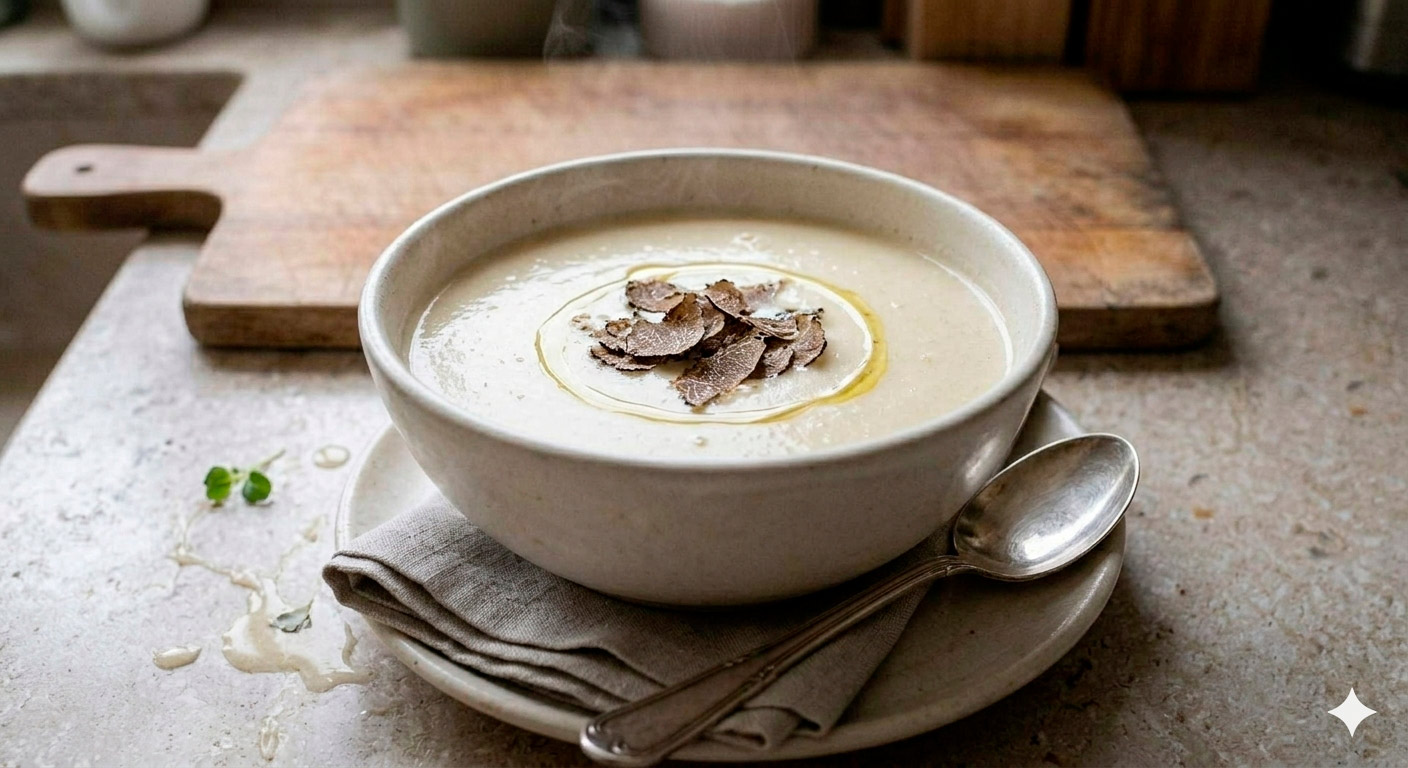
5 steps to the most irresistible fresh pea soup with Serrano ham in your kitchen
Origin and history of fresh pea soup with Serrano ham
To understand the magnitude of this preparation, you have to travel back in time to the oldest roots of European gastronomy. Peas, also known as English peas or garden peas depending on the region, are one of the oldest cultivated legumes. The earliest evidence of their cultivation dates back thousands of years to the Mediterranean basin and the Near East, where they were already valued for their high energy content and extraordinary preservation capacity.
During the Roman Empire, imperial cooks already mashed these dried legumes to feed the legions during long military campaigns. It wasn’t a luxury dish: it was the army’s fuel. However, over the centuries and with the refinement of culinary techniques, pea soup went from being a soldier’s staple to a classic of popular European cuisine.
In the Middle Ages, the dish became a fundamental pillar of Northern and Central Europe. The United Kingdom contributed its famous “London Particular,” named for the dense London fog its greyish color evoked. The Netherlands elevated the concept with its famous Erwtensoep, so thick that tradition demands a wooden spoon stand upright in the pot, consumed massively in winter as fuel for ice skaters on frozen canals.
The magic of today’s recipe lies precisely in this cultural fusion: we take that comforting base from Northern Europe and refine it with the pride of the Iberian pantry, Serrano ham. By replacing the heavy boiled sausages of the past with crispy dehydrated ham slices, we achieve a contemporary contrast that transforms a rustic pottage into a sophisticated haute cuisine cream. Crispy Serrano ham fresh pea soup today lives between two worlds: the most robust tradition and the most modern elegance.
What is fresh pea soup with Serrano ham and why should you make it at home?
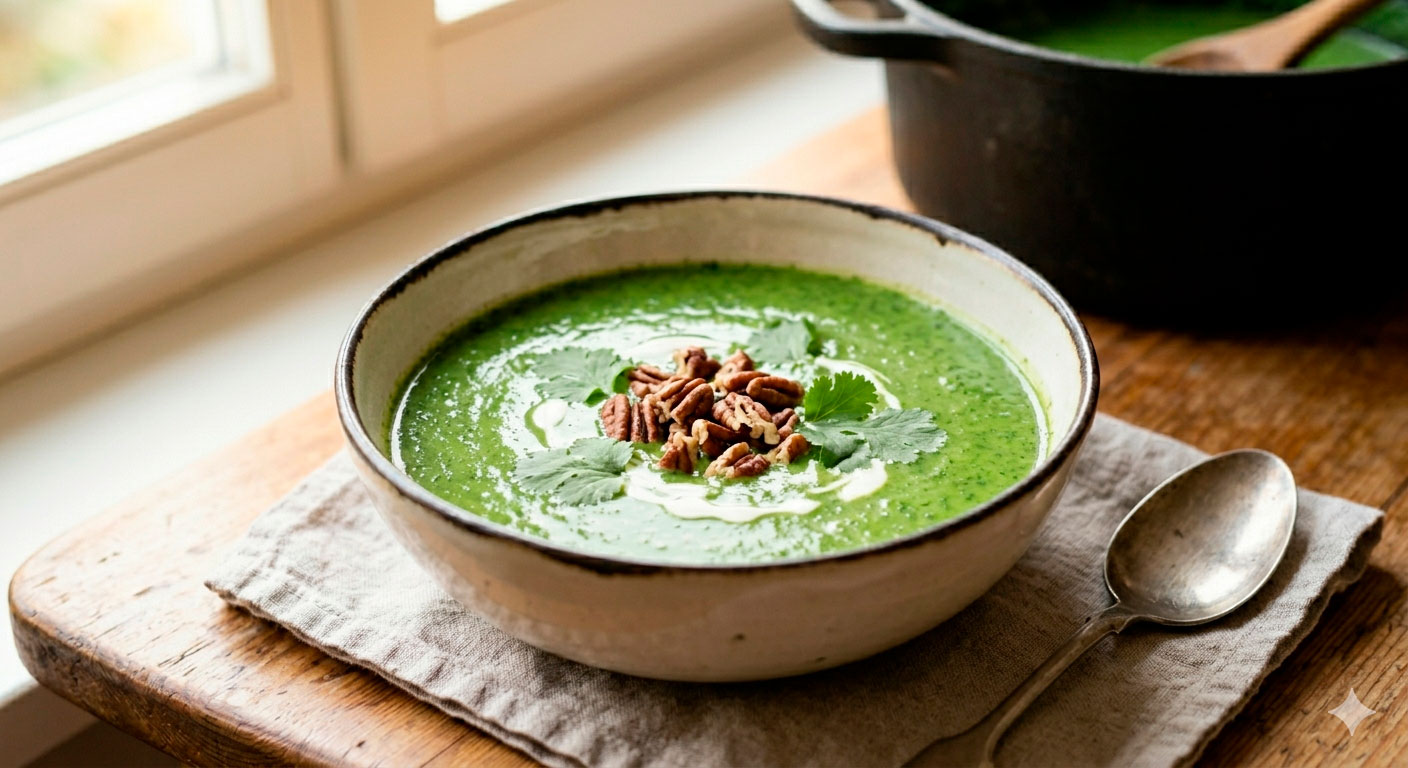
Crispy Serrano ham fresh pea soup is one of those preparations that synthesizes in a single deep bowl the true spirit of home cooking: the kind that needs no modern tricks to win over your palate. Behind its bright green color and velvety texture hides an absolute balance between the natural sweetness of tender legumes and the salty, deep, crunchy touch of good cured ham. We are not dealing with a simple purée; we are dealing with a silk that caresses the mouth, crowned by a contrast of textures that invites spoonful after spoonful without stopping.
This dish belongs to the great family of legume creams, a culinary category that has survived centuries precisely because it works: it’s nutritious, comforting, economical, and versatile. The difference that elevates fresh pea soup with Serrano ham above its simpler relatives is precisely that final touch of crispiness. The Serrano ham, dehydrated in the microwave, concentrates all its saltiness and aromas, and when it shatters on contact with the spoon, it creates an explosion of contrast that cleanses the palate and immediately calls for the next spoonful.
Making it at home has advantages that no jar or carton can offer. You control the quality of every ingredient: the cooking point of the peas to preserve that fluorescent green, the amount of salt considering the ham’s contribution, the final density of the cream. Plus, the entire process will take you just 55 minutes, including prep and plating. It’s an ideal recipe for both a weekday dinner and to surprise at a gathering with a starter that looks like it came from a restaurant.
In this fresh pea soup with Serrano ham recipe, you’ll learn the techniques that make the difference: the slow sofrito to extract the leek’s sugars, the potato cracking method to thicken without adding flour, the exact time to add the peas so they retain their chlorophyll intact, and the microwave trick to get perfect Serrano ham crispiness without frying or adding extra fat.
Peas are an extraordinary source of dietary fiber, vegetable protein, and B vitamins. Combined with the protein contribution of Serrano ham and the healthy smoothness of extra virgin olive oil, they result in a balanced dish that satisfies without weighing you down. And if you also know that you can easily adapt it to vegetarian, vegan, or low-sodium diets, it’s clear why this soup has earned a permanent spot in the weekly rotation of those who try it just once.
It doesn’t matter if in your country you call it pea soup or fresh pea soup: the recipe you’ll find below works under any name and anywhere in the world where a stove is lit. Let’s unravel every secret so this traditional dish turns out perfect on your table.
⚠️ Medical and nutritional consumption restrictions
Although crispy Serrano ham fresh pea soup is a nutritionally balanced dish suitable for most people, specific health conditions require attention before consuming it regularly.
Sodium control and blood pressure: Serrano ham is the main source of sodium in this recipe, with 580 mg per serving. People with high blood pressure or kidney failure should reduce the amount of ham by half or substitute with toasted almond slivers. It is essential to use unsalted homemade broth and avoid adding table salt.
Gout and hyperuricemia: Peas contain purines in moderate amounts. People with high uric acid levels should consult their doctor or nutritionist before including this dish frequently in their diet. An occasional serving is generally not a risk, but regular consumption should be supervised.
Irritable bowel syndrome and sensitive digestion: Legumes are rich in FODMAPs (fermentable short-chain carbohydrates), which can cause bloating, gas, or abdominal discomfort in people with IBS. In these cases, a reduced serving or using skinless peas strained through a fine mesh can improve tolerance.
Lactose intolerance: The recipe includes heavy cream. If you are lactose intolerant, substitute with light coconut cream, oat milk, or soy cream, which maintain the velvety texture without adding lactose.
Pregnancy and listeriosis: Raw cured Serrano ham may pose a risk of listeriosis during pregnancy. It is recommended to heat the ham above 70°C internally (microwaving for crispiness does not always guarantee this temperature throughout the product). Consult your doctor if you are pregnant before consuming raw cured ham.
This content is for informational purposes and does not replace professional medical advice. If you have any questions about your diet, consult your doctor or dietitian.
Ingredients for fresh pea soup with Serrano ham
Quantities for 6 servings.
| Main ingredient | Quantity | Regional names |
|---|---|---|
| Peas | 800 g | English peas, garden peas, green peas |
| Serrano ham | 150 g (thin slices) | Cured ham (Latin America), Prosciutto crudo (Italy), Presunto (Portugal) |
| Leek | 2 pieces | Wild leek, spring leek |
| White onion | 1 medium | Yellow onion, brown onion |
| Potato | 1 large | Yukon gold, russet |
| Vegetable broth | 1.2 liters | Vegetable stock |
Main ingredients
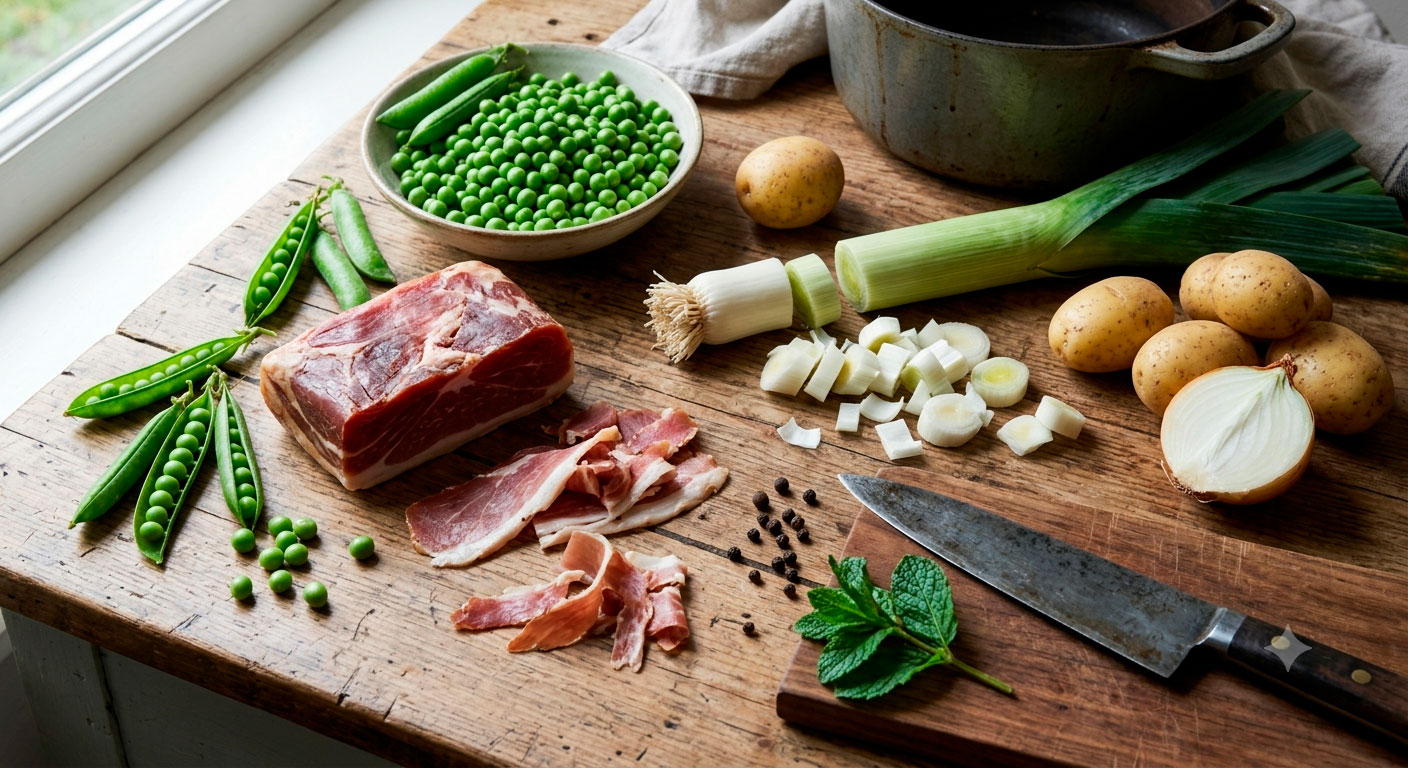
- 800 g fresh or frozen peas
- 150 g Serrano ham, thinly sliced
- 2 leeks (white and light green part only)
- 1 medium white onion
- 1 large potato
- 1.2 liters hot vegetable broth
Seasonings and optional
- 45 ml extra virgin olive oil (3 tbsp)
- 60 ml heavy cream
- 6 fresh mint leaves
- Freshly ground black pepper to taste
- Sea salt (sparingly, due to ham)
How to make crispy Serrano ham fresh pea soup step by step
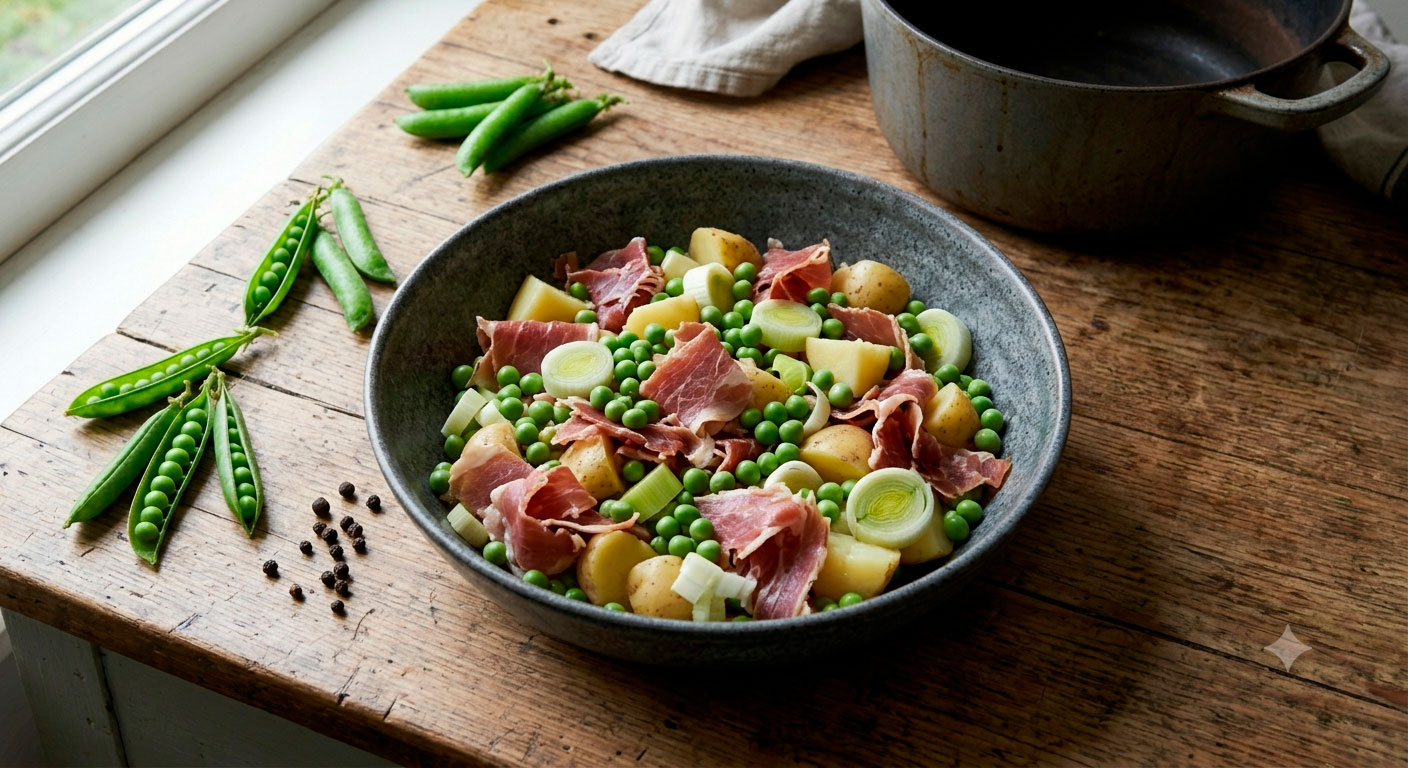
- Clean, peel, and chop the ingredients: Wash the leeks carefully, paying attention to the layers where dirt often accumulates; use only the white and light green part, slicing thinly. Peel the onion and chop it finely. For the potato, apply the “cracking” technique: insert the knife and break the piece at the end so the starch is released naturally during cooking, thickening the broth without the need for flour.
- Prepare the slow aromatic sofrito: Heat the extra virgin olive oil in a heavy-bottomed pot over medium heat. Add the chopped onion and leek with a tiny pinch of sea salt. The goal is to sweat them — not brown them — for 8 to 10 minutes, until completely translucent and soft. This process extracts and caramelizes the natural sugars from the leek and onion, creating a sweet base that will perfectly complement the slight bitterness of the peas.
- Add the potato and cook in broth: Add the cracked potato chunks to the sofrito and stir for a couple of minutes to coat them in the aromatic oil. Pour in the hot vegetable broth (hot broth prevents stopping the cooking rhythm), turn up the heat until it boils, then reduce to medium-low. Partially cover the pot and cook for 15 minutes, or until the potato is completely tender when pierced with a fork.
- Add the peas and mint, then blend: Add the 800 g of peas. If fresh, leave for 7 minutes; if high-quality frozen, 4-5 minutes is enough to maintain that intense green chlorophyll. In the last minute, add the fresh mint leaves. Remove from heat, blend at maximum power with an immersion blender or regular blender, add the heavy cream, and pass the cream through a fine-mesh strainer, pressing with a ladle to remove stubborn skins and fibers. Adjust pepper and salt.
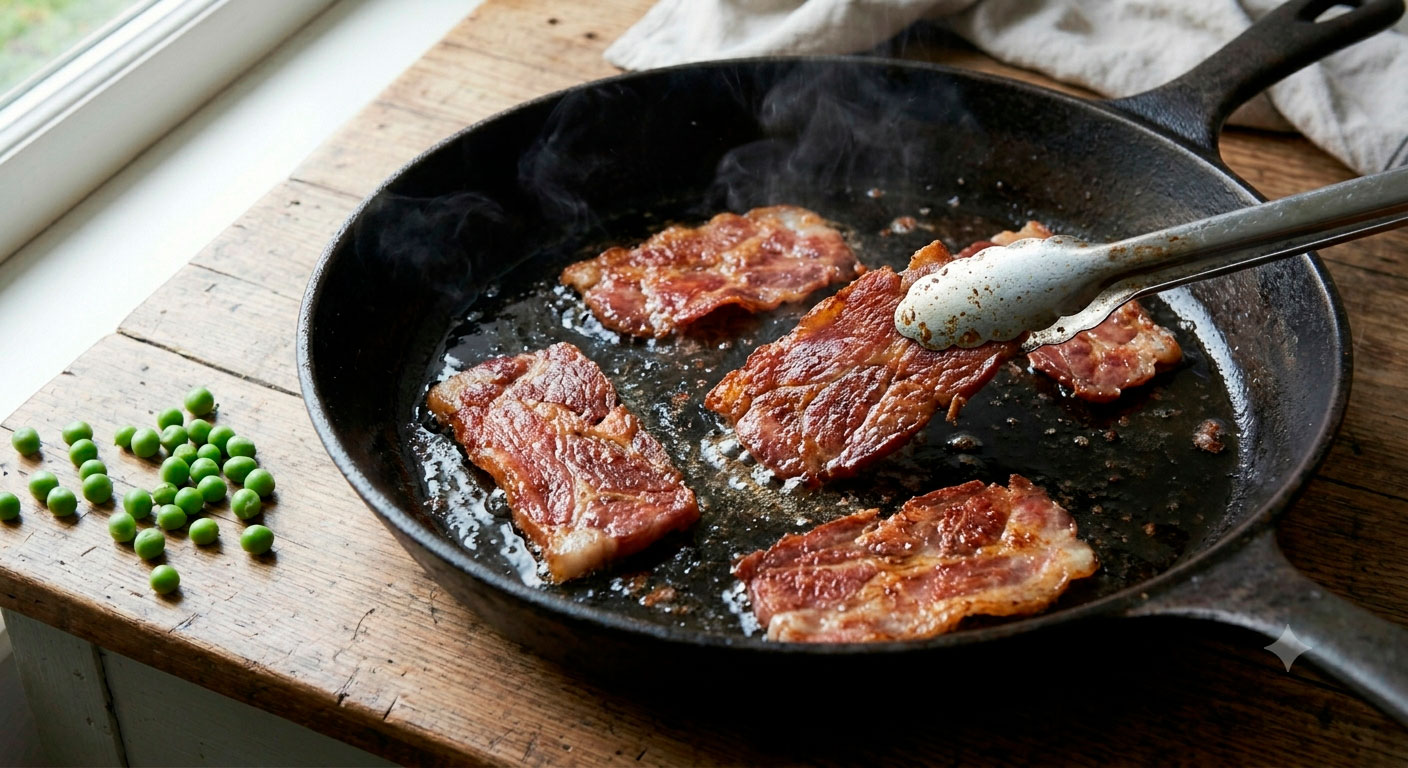
- Prepare the crispy ham and plate: Place the Serrano ham slices between two layers of paper towel on a microwave-safe plate. Put another plate on top as a weight to keep them flat. Microwave at maximum power in 30-second intervals, checking each pause, until about 2 minutes total. The ham becomes completely brittle as it cools. Serve the soup hot in deep bowls, add a drizzle of raw olive oil, and crumble the crispy ham just before bringing to the table.
Nutritional information for fresh pea soup with Serrano ham
Approximate values per serving (6 total servings).
| Nutrient | Per serving | % Daily Value* |
|---|---|---|
| Calories | 280 kcal | — |
| Protein | 16 g | 32% |
| Carbohydrates | 32 g | 11% |
| Total Fat | 9 g | 13% |
| Saturated Fat | 3 g | 15% |
| Dietary Fiber | 10 g | 40% |
| Sodium | 580 mg | 25% |
| Iron | 3.5 mg | 19% |
*Percent based on a 2,000 calorie daily diet.
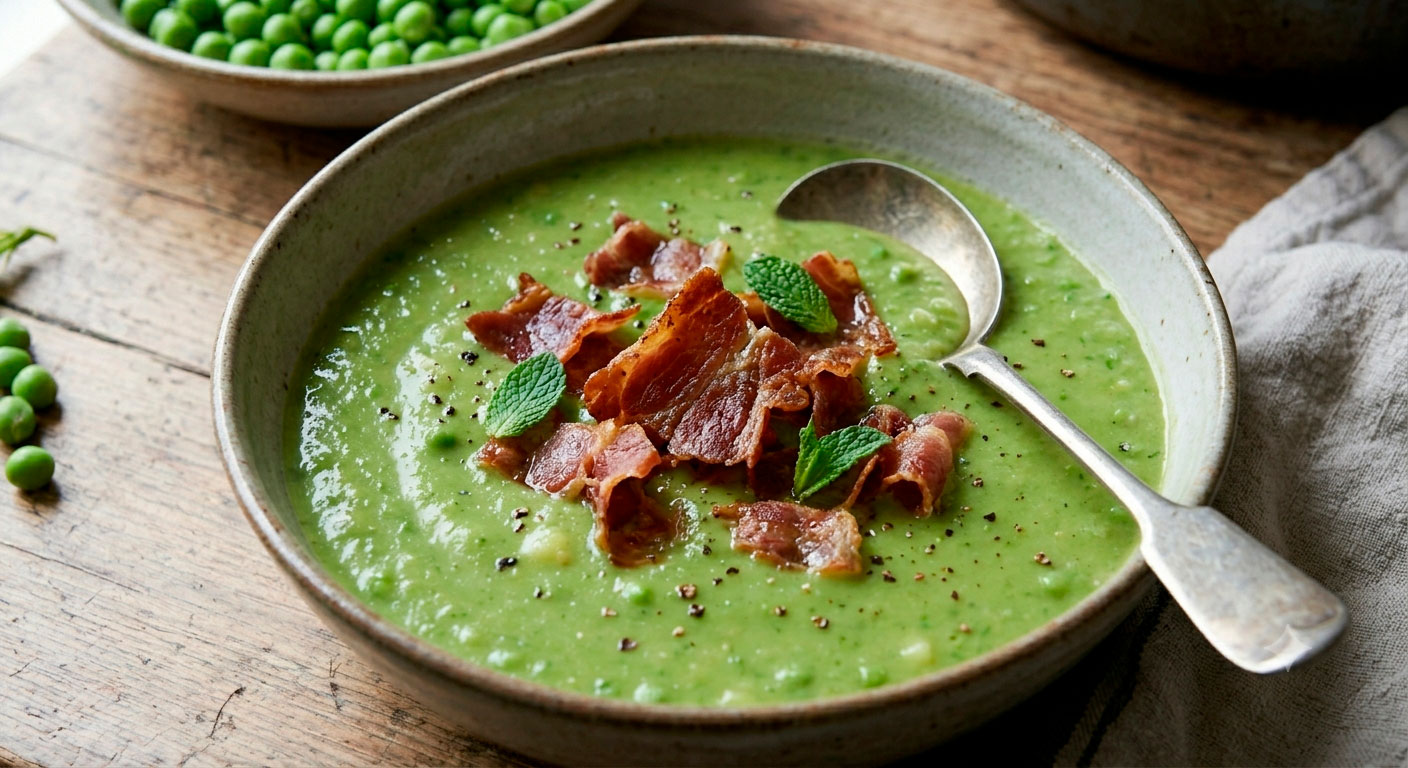
Expert Analysis: The master touch for fresh pea soup with Serrano ham
From a purely gastronomic perspective, the success of this fresh pea soup with Serrano ham lies in the impeccable handling of sensory contrasts. The most frequent mistake when preparing legume creams is the lack of textures and flavor imbalance, which often results in a flat, monotonous dish that bores you after the second ladle. Here, on the contrary, we play with thermal duality, bite resistance, and the chemical interaction between sweet and salty.
Peas have a high percentage of natural sugars that hit the palate when blended fresh. Without a contrasting element, the taste quickly saturates. The inclusion of leek in the sofrito reinforces that vegetable sweetness, while the vegetable broth provides the necessary umami background support. The true balancing axis, however, is the Serrano ham. By dehydrating it, we remove the water and concentrate the natural saltiness of the curing. When you bite into it inside the silky soup, it generates a salty explosion that cleanses the sweet saturation and invites the next spoonful.
The chromatic aspect is equally fundamental. Chlorophyll is a delicate pigment that degrades with prolonged cooking or acidic mediums, turning the bright green into an unappetizing olive brown. By adding the peas at the end and cooking them for the minimum necessary time, we preserve not only their heat-sensitive vitamins but also that color that activates the diner’s visual receptors. Mint acts invisibly: its menthol positively deceives the mouth’s thermal receptors, providing a sensation of lightness and freshness that cuts through the starchy density of the potato.
In terms of pairing, this soup finds its ideal match in a young aromatic white wine, preferably an Albariño from Rías Baixas or a Verdejo from Rueda: both have enough acidity to cut through the ham’s fat and the cream’s richness, and their herbaceous notes dialogue wonderfully with the peas and mint. If you prefer a non-alcoholic drink, sparkling water with a few drops of lemon serves the same palate-cleansing function between spoonfuls.
Tips for preparing irresistible fresh pea soup with Serrano ham
The first technical tip that distinguishes mediocre soup from memorable soup is heat control during the sofrito. Many cooks succumb to the temptation to turn up the heat to speed up the process, but browning the leek and onion instead of sweating them introduces a bitterness that contaminates the entire base. Use medium-low heat and patience: those 8 to 10 minutes of slow cooking extract the natural sugars and build an aromatic base that no flavor enhancer can replicate.
If you want a fluorescent green color that will amaze your guests, blanch the peas separately for three minutes in boiling water with a pinch of baking soda. Drain immediately and submerge them in a bowl of ice water with ice cubes. This thermal shock fixes the chlorophyll permanently, and then you can add them directly to the final purée without additional cooking.
When blending with a closed jar blender, always remove the small center cap and cover it with a clean kitchen towel. This allows steam to escape safely and prevents pressure from projecting the boiling liquid out of the jar. It’s a frequent accident in home kitchens and completely preventable with this simple measure.
The quality of the vegetable broth makes a radical difference in the final result. Tap water will never provide the depth of a good homemade stock. Take time to make a broth with onion, leek, celery, carrot, turnip, and a bay leaf, cooked slowly for 40 minutes. Your irresistible fresh pea soup with Serrano ham will gain an unparalleled richness of flavor from the first spoonful.
Regarding Serrano ham, its salt content varies enormously depending on curing time and origin. Therefore, I recommend seasoning the soup very timidly during the initial cooking phases and correcting the salt point only at the end, once you have tasted the complete combination of the cream with the finished crispiness. It’s much easier to add salt than to remove it.
To properly store leftovers, never put hot cream directly into the refrigerator, as it would raise the appliance’s internal temperature and put other food at risk. Let it cool to room temperature for a maximum of one hour before storing in an airtight glass container. It keeps perfectly for 3 to 4 days. When reheating, add a splash of broth and stir over low heat to restore its silky texture.
The crispy Serrano ham should never be stored with the soup. The refrigerator’s humidity would destroy its crunchy texture in a matter of hours. If you have leftover dehydrated ham, store it in a tightly sealed glass jar at room temperature, over a piece of paper towel that absorbs ambient humidity. It will stay crunchy for a couple of days.
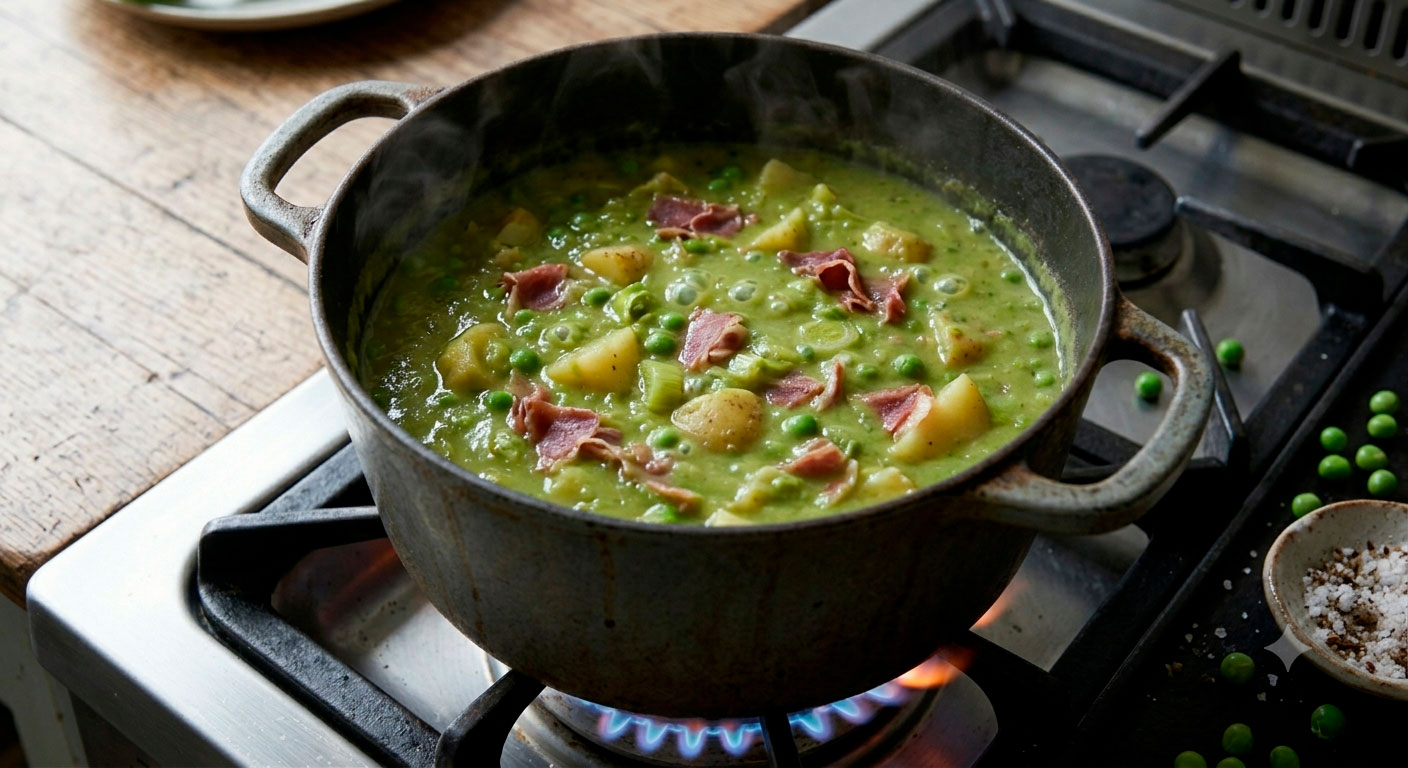
Variations and substitutions for fresh pea soup with Serrano ham
Versatility is one of the great virtues of this recipe. Depending on the ingredients available or dietary preferences, you can transform this dish while maintaining its comforting essence.
Completely vegetarian or vegan version
Substitute the heavy cream with soy cream, oat milk, or light coconut milk. The crunchy ham contrast can be perfectly replicated with dehydrated shiitake mushroom slices baked with smoked salt, or sautéed smoked tofu cubes cooked over high heat until firm and golden. The profile shifts towards more vegetal notes, but remains equally irresistible.
Seafood version with cod cubes
In some coastal regions, peas are traditionally complemented with the sea. Omit the Serrano ham and add desalted cod cubes directly to the hot soup during the last two minutes of resting. The residual heat will cook the fish, leaving it juicy and adding a refined, subtle maritime dimension that will surprise your guests.
Traditional dried legume version (Northern style)
If you prefer a much denser, rustic texture, use split dried peas instead of fresh tender ones. Soak them overnight and cook them with the broth and a ham bone for at least an hour and a half. This variation is not passed through a strainer, keeps the legume pieces whole, and produces a robust, hearty spoon dish ideal for the coldest days.
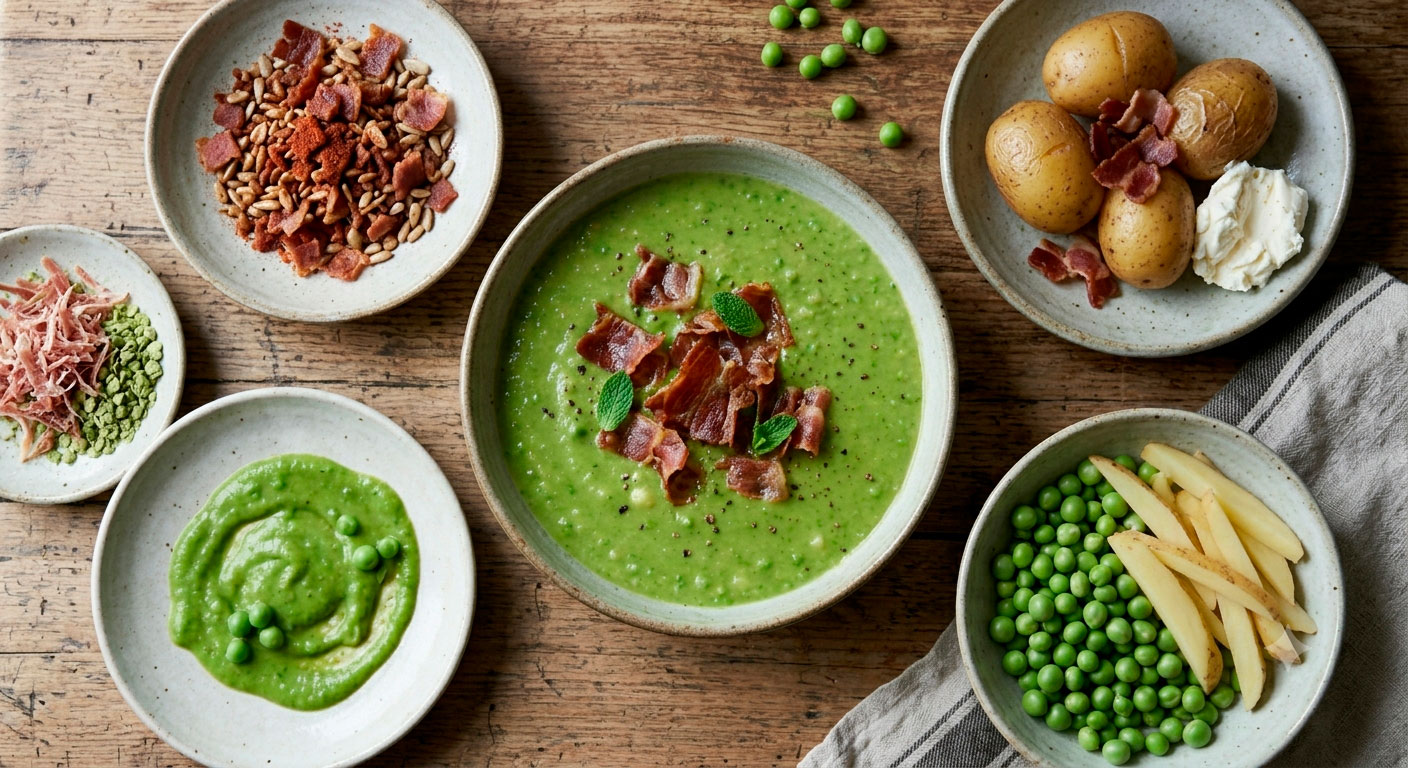
Frequently asked questions about fresh pea soup with Serrano ham
Can you freeze fresh pea soup with Serrano ham?
Yes, but it’s advisable to do so before adding the heavy cream, as dairy tends to curdle or texture oddly during thawing. Freeze the blended vegetable and legume base in suitable freezer bags for up to three months. When ready to eat, thaw in the refrigerator overnight, heat in a pot, and add fresh cream during the final boil, whisking vigorously to emulsify. Make the crispy ham fresh.
How long does fresh pea soup last in the refrigerator?
Stored in an airtight glass container, fresh pea soup with Serrano ham stays in perfect condition for 3 to 4 days in the refrigerator. It’s completely normal for it to thicken when chilled due to potato starch settling. When reheating, add a splash of vegetable broth and stir over low heat to restore its silky texture. If you notice a sour smell or the cream has turned dark yellow, discard it.
How many calories are in fresh pea soup with Serrano ham?
Each serving provides approximately 280 kcal, with 16 g protein, 32 g carbohydrates, and 9 g total fat. It’s a nutritionally balanced dish rich in dietary fiber (10 g per serving, 40% of the recommended daily value), making it an excellent option for both maintenance diets and those seeking comforting, satiating meals without excess calories.
Can you make pea soup without Serrano ham?
Absolutely. If you want to omit the ham, you can achieve the same crunchy contrast with dehydrated shiitake mushroom slices baked with smoked salt, sautéed smoked tofu cubes, or toasted almond slivers. This last option has the additional advantage of not adding sodium, making it ideal for people controlling their blood pressure. The profile shifts slightly towards sweeter, more vegetal notes, but the recipe remains completely irresistible.
How is fresh pea soup with Serrano ham best served?
Serve the soup hot in deep bowls or ceramic mugs, with a thin stream of raw extra virgin olive oil on the surface and the crumbled crispy ham just before bringing to the table, so it doesn’t lose its texture on contact with the liquid. Toasted sourdough bread slices or a light green salad pair wonderfully. For an elegant starter presentation at a formal dinner, serve in porcelain cups with the crispy ham and a fresh mint leaf as a final visual touch.
Reference sources and resources
For more information on food safety and nutrition, consult WHO healthy diet guidelines.
On the nutritional value of ingredients, you can consult The Nutrition Source at Harvard T.H. Chan School of Public Health.
Food composition information available from the Mexican National Institute of Public Health database.
To learn more about the nutritional properties of legumes, visit the FAO Nutrition portal (Food and Agriculture Organization of the United Nations).
Consult our disclaimer and legal notice policy before making decisions about your diet based on this content.
You might also be interested in our irresistible creamy leek and potato soup or the French onion soup with cheese crust.